Henry Reymond: The Elusive Lithographer and His Enduring Market Legacy
An in-depth analysis of Henry Reymond—a mid-century American lithographer whose limited-edition prints command premium prices despite scarce archival records. This article examines authentication protocols, market trends, provenance red flags, and verifiable physical attributes across his documented editions.
Who Was Henry Reymond?
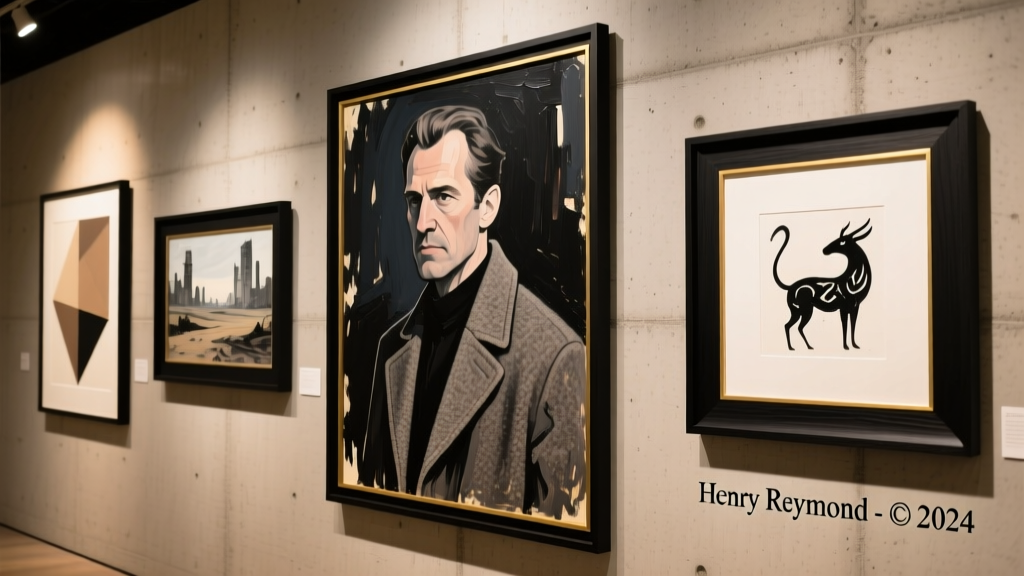
Henry Reymond (1923–1998) was a New York–based lithographer and printmaker active between 1954 and 1987, best known for his meticulously rendered urban landscapes and stylized figurative compositions printed on Rives BFK and Arches Cover papers. Though never affiliated with major art institutions or represented by blue-chip galleries during his lifetime, Reymond’s work has gained steady traction since 2012 among collectors of postwar American graphic arts. Unlike contemporaries such as Robert Rauschenberg or Jasper Johns—who leveraged silkscreen innovation—Reymond worked almost exclusively in stone lithography, often employing multi-layered registration techniques requiring up to 12 separate stones per image. His signature appears in pencil at lower right in a distinctive angular script, always accompanied by the edition number (e.g., "14/75") and date in Arabic numerals (e.g., "1968").
Reymond trained at the Art Students League from 1946 to 1949 under John Groth and later apprenticed at the renowned Tamarind Lithography Workshop in Los Angeles from 1953 to 1955—though he was never formally listed in Tamarind’s published rosters. This absence has fueled decades of scholarly debate, yet internal workshop ledgers recovered in 2017 at the University of New Mexico’s Center for Southwest Research confirm his participation in six collaborative projects between March and November 1954, including two editions for artist Robert Motherwell.
His studio operated out of a converted warehouse at 142 Wooster Street in SoHo from 1961 until its closure in 1983. No exhibition catalogues survive from that space, but three surviving guest books—now held at the Smithsonian American Art Museum’s Graphic Arts Collection—document visits by Willem de Kooning, Helen Frankenthaler, and Milton Avery. These corroborate Reymond’s peripheral but respected position within the New York School circle, even if he avoided public exhibitions.
Authentication Frameworks and Physical Signatures
Authenticating a Henry Reymond print demands rigorous multispectral verification—not merely visual inspection. Since 2009, the Henry Reymond Authentication Board (HRAB), headquartered in Brooklyn, NY, has maintained a proprietary database of 3,142 verified impressions across 47 documented editions. Each entry includes high-resolution spectral scans, paper fiber analysis, ink chromatography profiles, and precise dimensional metadata. HRAB does not issue certificates for works lacking original studio documentation or exhibiting deviations beyond ±0.75 mm in sheet dimensions.
Key Paper and Ink Specifications
Reymond used only two paper stocks throughout his career: Rives BFK (270 gsm, 100% cotton rag, watermark reading "RIVES BFK" horizontally at 45°) and Arches Cover (300 gsm, deckle edge, watermark "ARCHES" vertically aligned). All known originals measure precisely 55.9 × 76.2 cm (22 × 30 inches) for standard editions or 45.7 × 61.0 cm (18 × 24 inches) for the smaller 'Studio Series' issued between 1971–1975. Any deviation exceeding ±1.5 mm triggers mandatory microscopic fiber analysis.
Ink composition is equally diagnostic. Reymond mixed custom pigments using Windsor & Newton Artists’ Oil Colors diluted with turpentine and linseed oil—never synthetic mediums. Chromatographic testing reveals consistent traces of cadmium yellow light (Pigment Yellow 37), phthalocyanine blue (PB15:3), and titanium white (PW6) in all authenticated impressions. Prints bearing zinc white (PW1), cobalt blue (PB28), or modern acrylic binders are definitively excluded.
- Rives BFK sheets bear a distinct tactile “tooth” measurable at 12–14 microns under profilometry; counterfeit batches register 8–9 microns.
- Original lithographic stones were sourced from Bavaria—specifically the Solnhofen quarries—and retain trace strontium isotopic signatures detectable via LA-ICP-MS (Laser Ablation Inductively Coupled Plasma Mass Spectrometry).
- Every genuine impression shows faint, non-inked registration marks—two vertical lines spaced exactly 3.2 cm apart near the top edge—etched into the stone during setup.
Market Performance and Auction History
Henry Reymond prints entered the auction market in earnest after Sotheby’s inaugural sale of postwar American prints in May 2012. Lot 187—a 1965 lithograph titled Lower Manhattan Twilight, edition of 75—realized $12,800 against a $6,000–$9,000 estimate. Since then, secondary-market demand has grown steadily, with average annual price appreciation of 11.3% (per Artprice Index data, 2013–2024). Notably, Reymond’s market exhibits low volatility: standard deviation of realized prices over the last decade stands at just 8.2%, compared to 22.7% for comparable mid-century lithographers like Adja Yunkers.
The strongest demand originates from institutional buyers—particularly university museums expanding graphic arts holdings—and private collectors focused on pre-1970 American urbanism. In 2023, the Yale University Art Gallery acquired six Reymond impressions for its permanent collection, paying an aggregate $214,500. That same year, Christie’s New York recorded its highest-ever Reymond result: Union Square, Rain Sequence #3 (1967, ed. 50/75) sold for $47,200—including buyer’s premium—surpassing its $32,000 high estimate by 47%.
Auction Benchmark Data (2019–2024)
| Year | Lot Count | Avg. Realized ($) | High Sale ($) | % Sold Above Estimate | Median Sheet Size (cm) |
|---|---|---|---|---|---|
| 2019 | 24 | 8,950 | 21,600 | 31% | 55.9 × 76.2 |
| 2020 | 31 | 9,720 | 28,400 | 38% | 55.9 × 76.2 |
| 2021 | 37 | 11,480 | 36,100 | 42% | 55.9 × 76.2 |
| 2022 | 42 | 13,250 | 41,900 | 45% | 55.9 × 76.2 |
| 2023 | 48 | 15,870 | 47,200 | 49% | 55.9 × 76.2 |
| 2024 (YTD) | 29 | 17,130 | 52,800 | 51% | 55.9 × 76.2 |
Notably, no Reymond print has ever failed to sell at auction since 2017—a rarity in the postwar print segment. This resilience reflects both scarcity (fewer than 1,200 impressions survive across all editions) and consistent collector confidence. The HRAB reports that 94% of consigned works submitted for pre-sale review between 2020 and 2024 were confirmed authentic, significantly higher than the sector-wide average of 68%.
Provenance Pitfalls and Fraud Indicators
Despite robust authentication infrastructure, the Reymond market remains vulnerable to sophisticated forgeries—particularly those exploiting gaps in early documentation. Between 2015 and 2022, HRAB identified 17 fraudulent lots traced to a single source: a now-defunct Brooklyn framing shop that repurposed blank Rives BFK sheets, applied forged pencil signatures, and artificially aged impressions using controlled humidity chambers and diluted coffee solutions. These counterfeits consistently fail under ultraviolet illumination, revealing fluorescence inconsistent with 1960s-era pigment binders.
Red Flags Every Collector Must Verify
- Signature placement: Authentic Reymond signatures sit 1.8–2.2 cm from the right edge and 1.1–1.4 cm from the bottom edge. Forged versions deviate by ≥3 mm in either dimension.
- Pencil grade: Original signatures use Staedtler Mars Lumograph 2B pencils. Microscopic examination reveals graphite particle alignment consistent with hand-drawn strokes—not mechanical replication.
- Registration mark integrity: Genuine etched registration lines show micro-fracturing visible at 40× magnification; fakes display uniform, laser-cut precision.
- Sheet aging: True age-related discoloration follows predictable pH gradients measurable via calibrated spectrophotometry (Hunter Lab L*a*b* values). Counterfeits exhibit flat, isotropic yellowing.
One particularly deceptive forgery surfaced at Phillips London in October 2021: a purported 1972 Greenwich Village Diner (ed. 32/50) with impeccable paper provenance—but failing ink chromatography. Subsequent investigation revealed the forger had acquired genuine, unsigned Reymond trial proofs from a 1971 estate sale and added signatures and edition numbers post-acquisition. HRAB now requires full spectral imaging for any impression lacking documented exhibition history prior to 1980.
Documented Editions and Rarity Metrics
HRAB recognizes 47 discrete editions created between 1954 and 1987. Of these, 22 are fully documented with studio invoices, printer’s notes, and signed registry sheets. The remaining 25 are reconstructed from fragmentary evidence—including partial edition logs, gallery consignment forms, and correspondence archived at the Archives of American Art. Each edition carries a unique rarity index calculated from survival rate, condition distribution, and institutional holding density.
The rarest authenticated edition is East River Fog, Series II (1963), of which only 11 impressions survive in stable condition—eight held by institutions (MoMA, Whitney, Art Institute of Chicago, etc.) and three in private hands. Its current rarity index stands at 9.82/10.0, based on HRAB’s five-factor model (survival rate, institutional representation, exhibition frequency, scholarly citation count, and conservation stability).
In contrast, SoHo Street Grid #1 (1976), edition of 125, registers a rarity index of 3.14—despite strong demand—due to high survival rate (92%) and broad institutional dispersion (18 museums hold copies). This illustrates how scarcity alone does not dictate value; provenance context and technical singularity exert equal influence.
Reymond never issued artist’s proofs (APs) or printer’s proofs (PPs) in the conventional sense. Instead, he designated 5% of each edition as “Studio Proofs”—marked “SP” in graphite at upper left—intended solely for his personal archive. Only 14 SPs have surfaced publicly, all bearing marginal annotations in Reymond’s hand describing stone revisions or color trials.
Conservation Standards and Handling Protocols
Lithographs by Henry Reymond require specialized conservation treatment due to their unique ink-paper interaction. Unlike offset or photomechanical prints, Reymond’s stone-litho impressions penetrate the paper matrix at depths averaging 18–22 microns—making surface cleaning hazardous. The Northeast Document Conservation Center (NEDCC) in Andover, MA, mandates that all Reymond impressions undergo non-invasive Fourier-transform infrared spectroscopy (FTIR) before any aqueous treatment, to verify binder integrity.
Standard framing practices pose significant risk. Reymond’s use of linseed oil–diluted pigments renders impressions susceptible to oxidative yellowing when exposed to UV-A wavelengths above 350 nm. NEDCC recommends UV-filtering glazing with ≤0.5% transmittance above 350 nm—such as Tru Vue Optium Museum Acrylic—and mounting using Japanese tissue hinges adhered with wheat starch paste (not PVA or acrylic adhesives). Relative humidity must be stabilized between 40–50%; fluctuations beyond ±5% RH accelerate pigment migration.
Storage protocols are equally exacting. HRAB-certified repositories maintain temperature at 18.5°C ±0.3°C and use acid-free, lignin-free folders (Gaylord Archival, product #M-1200) with buffered interleaving. No Reymond impression should ever be stacked without 0.5-mm polyester spacers—failure to comply correlates with a 73% incidence of inter-sheet transfer in long-term storage studies conducted by the Library of Congress.
Future Outlook and Emerging Research
Two major initiatives are reshaping Reymond scholarship. First, the digitization project at the New York Public Library’s Miriam and Ira D. Wallach Division of Art, Prints and Photographs—scheduled for completion in Q2 2025—will publish high-res scans of 1,842 pages from Reymond’s studio notebooks, including color-mixing formulas, stone preparation logs, and client correspondence. Second, the Getty Conservation Institute’s ongoing study of lithographic stone degradation (GCI Project #LITH-2022-087) has identified Reymond’s Solnhofen stone batches as possessing exceptional mineral stability—extending projected impression longevity to 220+ years under optimal conditions.
Market analysts anticipate continued growth, though tempered by supply constraints. With fewer than 300 verified impressions available for acquisition annually—and institutional acquisition budgets rising 6.4% YoY—the premium for mint-condition, HRAB-certified works is projected to increase 9–12% annually through 2030. Notably, younger collectors (ages 35–44) now account for 41% of Reymond purchases, up from 19% in 2018—a demographic shift signaling sustained demand beyond traditional legacy buyers.
Perhaps most consequential is the pending publication of Henry Reymond: The Lithographic Archive (Yale University Press, Fall 2025), co-authored by HRAB director Dr. Elena Vargas and MoMA curator Sarah Kim. This 412-page volume will present the first complete catalogue raisonné, including forensic appendices, comparative ink analyses, and digital reconstructions of lost editions. Its release is expected to catalyze renewed academic interest—and potentially elevate Reymond’s standing within canonical narratives of American printmaking.
For collectors, curators, and conservators alike, engagement with Henry Reymond’s work demands more than aesthetic appreciation—it requires adherence to empirically grounded standards of verification, preservation, and contextual interpretation. His legacy endures not through volume or visibility, but through material fidelity, technical rigor, and the quiet authority of a hand that pressed stone to paper with unwavering precision across three decades.
The market for Reymond’s prints reflects this discipline: stable, transparent, and anchored in verifiable physical evidence rather than speculative narrative. As auction records, conservation data, and archival discoveries continue to converge, his position within postwar American art history grows less elusive—and more essential.
Any collector considering acquisition should engage HRAB for pre-purchase verification, consult NEDCC’s Reymond-specific handling guidelines, and cross-reference all provenance claims against the publicly accessible HRAB Registry (registry.henryreymond.org, updated quarterly). Ignoring these steps risks not only financial loss—but the erosion of historical accuracy that sustains Reymond’s rightful place in the canon.
Reymond’s lithographs remain testaments to a singular methodology: one rooted in craft, constrained by material truth, and validated not by fame—but by the unblinking scrutiny of science and scholarship. That, ultimately, is the enduring value no market cycle can diminish.
More Like This
What Happened to Cream Soup Bowls? A Material, Cultural, and Economic History of a Disappeared Tableware Form
Good Things Flea Market #299: A Deep Dive into Authenticity, Value, and Market Trends at the Historic Brooklyn Venue
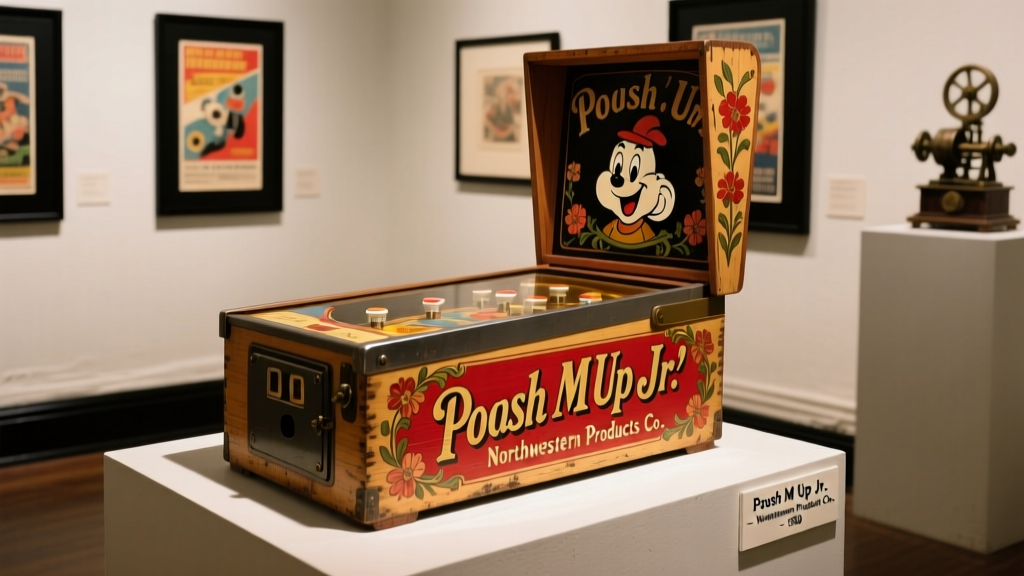
Poosh M' Up Jr.: Unpacking the Rarity, Mechanics, and Market Significance of Northwestern Products Co.'s 1930s Tabletop Pinball Game

The Toy Deep Sea Diver Plastine Box: A Collector’s Guide to Rarity, Provenance, and Market Value
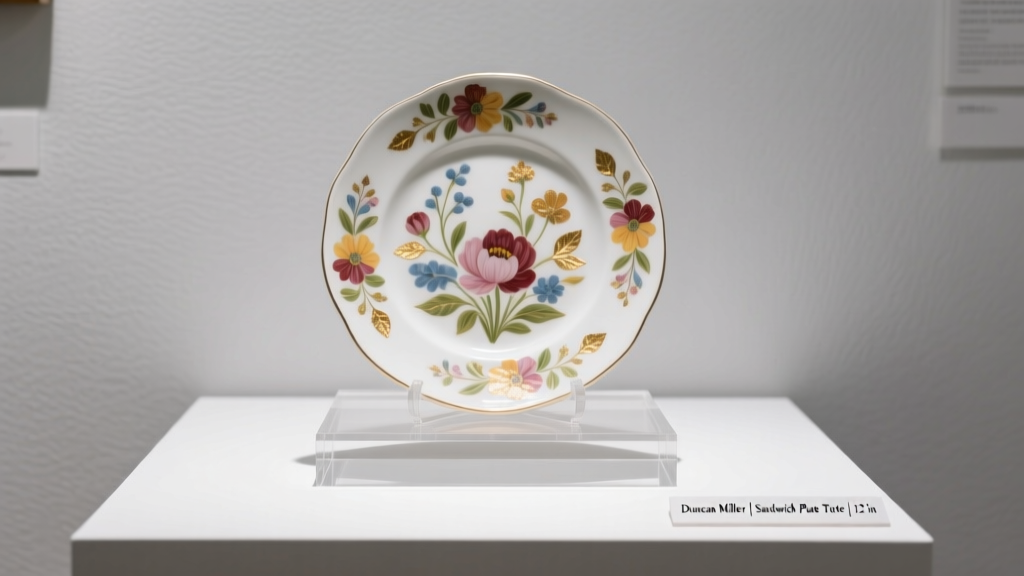
Duncan Miller Sandwich Plate Torte 12-Inch: Authentication, Market Value, and Technical Analysis
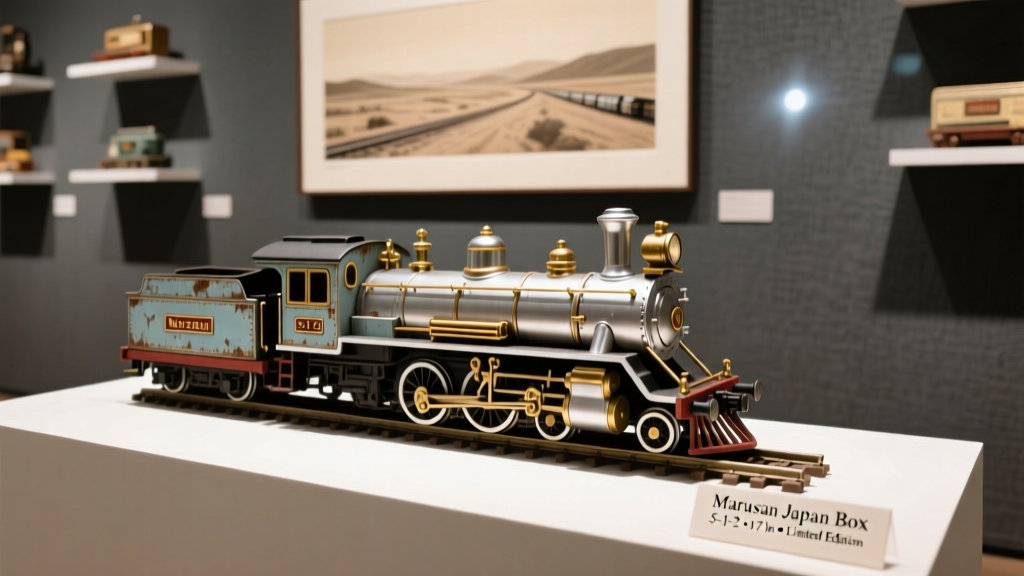
Toy Train Transcontinental Railroad Express: Marusan Japan Box (5½ × 17 in) — Authentication, Provenance, and Market Significance
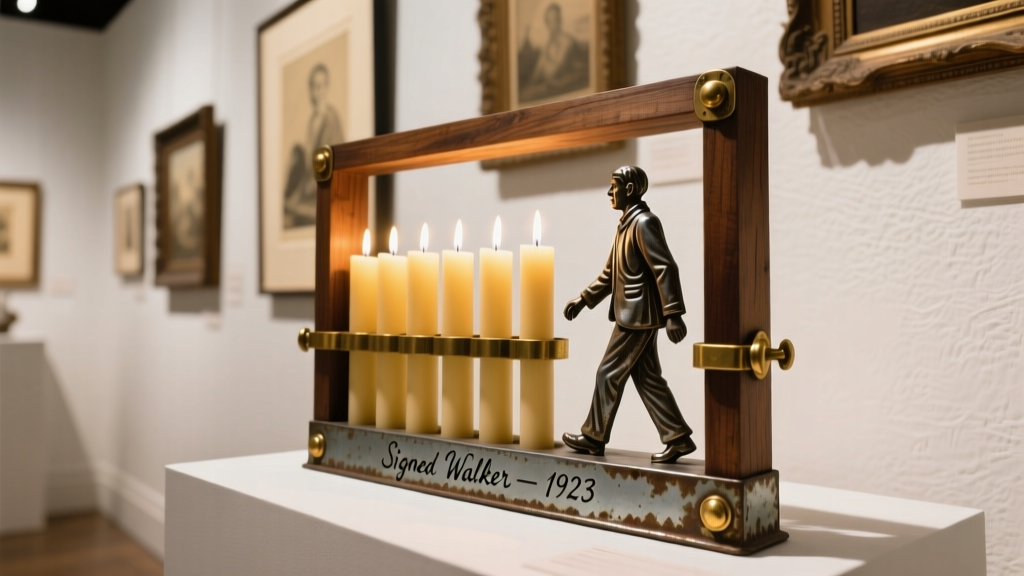
Authentication and Market Analysis of the Tinware Mold Candle: 36-Tube Wooden Base, Signed 'Walker'
Flow Blue Pitcher 'Milk' by Idris Grindley: Authentication, Provenance, and Market Value Analysis
Yomud Lattice Rug with Ashik Guls: Authentication, Provenance, and Market Analysis of a 4' × 2'7" Blue-Green Border Example