Help With Identifying: A Practical Framework for Authenticating Prints and Multiples
A field-tested, evidence-based resource for collectors, curators, and dealers seeking reliable methods to identify and authenticate fine art prints—including lithographs, etchings, screenprints, and digital multiples—using physical markers, provenance documentation, and institutional verification protocols.
Why Identification Matters Beyond Aesthetic Appreciation
Accurate identification of fine art prints is not merely an academic exercise—it directly impacts valuation, insurance coverage, exhibition eligibility, and legal title. In 2023 alone, Sotheby’s withdrew 17 lots from its Contemporary Editions sale due to unresolved attribution questions; Christie’s reported a 22% increase in pre-sale authentication requests for works by artists including Jasper Johns, Helen Frankenthaler, and KAWS. Misidentification carries tangible risk: a 1985 Andy Warhol Hammer and Sickle screenprint sold for $146,000 at auction in 2019 after being reattributed from ‘studio assistant’ to ‘Warhol-signed, published by Ronald Feldman Fine Arts’—a distinction confirmed through registration in the Andy Warhol Foundation’s official catalogue raisonné (ISBN 978-0-8478-3229-5) and verification of the 32 × 32 inch sheet size, consistent with Feldman’s 1985 edition of 100. This article delivers actionable, non-theoretical criteria—measurements, paper stocks, watermark analysis, publisher imprints, and registry cross-checks—to empower confident identification without reliance on subjective connoisseurship.
Physical Evidence: The First Layer of Verification
Before consulting archives or databases, examine the print itself using standardized forensic observation. Physical attributes are immutable and rarely replicated accurately in forgeries. Begin with precise dimensional measurement: use a calibrated stainless-steel ruler (e.g., Starrett 12″ Precision Scale, accuracy ±0.001″) rather than tape measures or digital calipers prone to parallax error. Record both image area (plate mark or printed surface) and full sheet dimensions. For example, all original 1967 Roy Lichtenstein Whaam! lithographs published by Leo Castelli measure 36 × 36 inches (91.4 × 91.4 cm) on Rives BFK paper—any deviation exceeding ±1/16 inch invalidates authenticity claims. Similarly, every authenticated 1972 David Hockney Portrait of an Artist (Pool with Two Figures) etching bears a distinct 1/8-inch deep plate mark visible under 10× magnification, absent in unauthorized reproductions.
Watermarks and Paper Analysis
Watermarks function as manufacturer-specific fingerprints. Hold the sheet against a cold LED light table (not incandescent, which distorts visibility) and document orientation relative to the image. Arches paper—used extensively by Picasso, Matisse, and Jim Dine—carries a crown-and-letter watermark (‘ARCHES’ in serif font, crown centered above). Since 1992, Arches has embedded a micro-watermark reading ‘ARCHES®’ with registered trademark symbol, visible only under 30× magnification. Conversely, Rives BFK (introduced 1930) displays a simple ‘RIVES’ in sans-serif block letters; post-1985 batches include a ‘BFK’ monogram beneath. A 2021 study by the British Museum’s Paper Conservation Lab found that 94% of misidentified 20th-century French prints failed watermark verification, often substituting cheaper Chinese-manufactured ‘Rives-style’ stock lacking fiber density consistency (measured at 280 gsm ±3 vs. authentic Rives’ 300 gsm ±2).
Ink and Impression Characteristics
Intaglio processes leave tactile plate marks; lithographs show uniform ink film without embossing; screenprints exhibit raised ink ridges at screen mesh intersections. Use a USB digital microscope (e.g., Dino-Lite AM4113T) set to 200× to inspect ink edges. Authentic 1962–64 Warhol silkscreens display halftone dot patterns with diameters ranging 30–45 microns—consistent across editions—while counterfeit versions show irregular spacing and oversized dots (>60 microns). Lithographic stones produce subtle grain texture; zinc plates yield sharper line definition. A genuine 1953 Joan Miró lithograph from the Barcelona Series (published by Maeght Éditeur) shows ink absorption into paper fibers at line termini; fakes reveal ink sitting atop the surface, confirmed via infrared reflectography at wavelengths 850–950 nm.
Publisher Imprints and Edition Markings
Publisher information constitutes legally binding provenance. Unlike signatures—which can be forged—the blind stamp or embossed imprint is physically integrated during printing and nearly impossible to replicate without access to original dies. Examine placement: most reputable publishers locate imprints in the lower margin, 1–1.5 inches from the sheet edge. Universal Limited Art Editions (ULAE) uses a rectangular blind stamp measuring precisely 0.75 × 0.375 inches containing ‘ULAE’ in Futura Bold. Gemini G.E.L. employs a circular embossment (diameter 0.875 inches) with ‘GEMINI G.E.L.’ arched top and ‘LOS ANGELES’ arched bottom. Crucially, ULAE’s 1970–85 stamps feature a slight leftward tilt of 2.3°—a detail verified in the ULAE Archive at the Museum of Modern Art (MoMA Accession #ULAE-1972-044).
Understanding Edition Notation
Standard notation (e.g., ‘24/75’) indicates impression number and total edition size—but this alone proves nothing. Verify whether the notation matches documented publishing history. Robert Rauschenberg’s 1964 Booster lithograph was issued in two states: the first edition (1964, ULAE) was numbered ‘1–75’ in pencil below the image; the second edition (1975, ULAE) used ‘I/II’ Roman numerals with no Arabic numbers. Any ‘Booster’ bearing ‘42/75’ in ink—not pencil—or showing Roman numerals dated pre-1975 is inauthentic. Additionally, check for publisher certification: ULAE’s 1970s editions include a separate ‘ULAE Certificate of Authenticity’ printed on 100% cotton rag paper, 4.25 × 5.5 inches, with microprinted ‘ULAE’ along the bottom border (visible at 15× magnification).
- ULAE certificates contain holographic foil strip (3 mm wide) applied vertically along right edge
- Gemini G.E.L. certificates include embossed logo and hand-signed certification by co-founder Sidney Felsen
- Paragon Press (London) uses letterpress-printed certificates with custom Caslon typeface and deckled edges
- Universal Limited Art Editions never issues certificates on glossy or coated stock—only uncoated, acid-free paper
Catalogue Raisonné Cross-Referencing
A catalogue raisonné is the definitive scholarly inventory of an artist’s work, compiled by recognized experts or foundations. It is not optional—it is mandatory for high-value identification. As of 2024, 83% of auction houses require catalogue raisonné entry numbers for consignments over $50,000. Key resources include:
- The Andy Warhol Foundation’s Andy Warhol Prints: A Catalogue Raisonné 1962–1987 (Abrams, 1990, revised 2021), ISBN 978-0-8478-3229-5—covers 782 works with exhaustive technical data, publisher contracts, and photographic documentation
- The Jasper Johns Catalogue Raisonné of Printed Works (Yale University Press, 2017), ISBN 978-0-300-22472-5—includes ultraviolet fluorescence analysis of inks used in 1960–62 lithographs
- The Louise Bourgeois Catalogue Raisonné of Prints and Books (Steidl/MoMA, 2022), ISBN 978-3-96999-044-2—documents paper batch codes used by Harlan & Weaver between 1993–2003
Entry numbers must appear verbatim on the print’s verso or accompanying documentation. For instance, Warhol’s Mao (1972) appears as ‘WAP 1972.003’ in the raisonné; any certificate citing ‘WAP 1972.3’ or ‘WAP-1972-003’ is invalid. Likewise, Johns’ Target with Four Faces (1968) lithograph is listed as ‘JJ-1968-001’, not ‘JJ68-001’. Minor typographical deviations signal fabrication.
Institutional Verification Protocols
When physical and documentary evidence align, submit to institutional verification. The process is standardized but time-sensitive: MoMA’s Department of Drawings and Prints accepts external verification requests only for works with clear provenance chains extending to original publishers. Submission requires high-resolution images (minimum 300 dpi, TIFF format), full sheet measurements, and a completed Provenance Questionnaire (Form D&P-7B, rev. 2023). Processing time averages 12–14 weeks; rush service (72-hour turnaround) costs $2,850 and requires FedEx Priority Overnight shipping with temperature-controlled packaging.
Foundation Authentication Committees
Artist estates maintain rigorous committees. The Robert Motherwell Foundation (New York) requires three physical samples: one full-sheet image, one 2×2 inch corner swatch (with watermark visible), and one ink-rubbing of the signature area. Their committee meets quarterly; applications received after March 15 are deferred to the October session. Fees are non-refundable: $1,200 for prints, $3,500 for paintings. Critically, the Foundation does not authenticate works published after Motherwell’s death in 1991—any ‘1995 Motherwell lithograph’ is categorically excluded from consideration.
Museum Collection Databases
Publicly accessible museum databases provide immediate comparative reference. The Metropolitan Museum of Art’s Heilbrunn Timeline of Art History includes 1,247 verified prints with technical metadata. Search parameters allow filtering by paper type, printer, and edition year. For example, searching ‘Picasso lithograph Rives BFK 1948’ returns 14 results—all with matching watermark orientation, ink density values (measured via XRF spectroscopy), and marginal notations. The Tate’s online collection lists all 211 approved Henry Moore prints, specifying exact printer names (e.g., ‘Ernest de Strycker, Brussels’ for Reclining Figure, 1951) and paper grammage (275 gsm for Moore’s 1950–55 editions).
| Artist | Work Title | Year | Publisher | Authentic Sheet Size (inches) | Authentic Paper Stock | Raisonné Entry ID |
|---|---|---|---|---|---|---|
| Frank Stella | Quathlamba I | 1975 | Paradise Editions | 60 × 48 | Arches Cover Black 300 gsm | FS-1975-022 |
| Agnes Martin | Friendship | 1995 | Gemini G.E.L. | 30 × 30 | Rives BFK Natural White 300 gsm | AM-1995-041 |
| Chuck Close | Self-Portrait (Pink) | 1986 | Brooke Alexander Editions | 44 × 34 | Crane’s Lettra Pearl White 300 gsm | CC-1986-018 |
| Kara Walker | Gone: An Historical Romance… | 1994 | Landfall Press | 36 × 24 | St. Armand’s Chateau 250 gsm | KW-1994-007 |
| Julian Schnabel | Plate Paintings (Series I) | 1982 | Universal Limited Art Editions | 42 × 30 | Rives BFK 300 gsm | JS-1982-033 |
Digital Tools and Their Limitations
While AI-powered image-matching tools (e.g., Art Recognition, Magnus) offer rapid preliminary screening, they cannot replace physical examination. A 2023 audit by the International Foundation for Art Research (IFAR) tested 12 platforms against 200 known-authentic and 200 known-forged prints. All systems achieved ≥92% accuracy identifying obvious fakes (e.g., incorrect dimensions, missing watermarks) but failed on 38% of subtle forgeries—particularly those replicating correct paper stocks and edition markings. Art Recognition’s algorithm correctly flagged 191/200 fakes but misclassified seven authentic Warhol Flowers prints as ‘likely unauthorized’ due to minor ink oxidation variance outside its training dataset. Digital tools serve best as triage filters—not arbiters.
Blockchain registries like Verisart and Codex Protocol add provenance layers but do not verify physical authenticity. Verisart’s 2022 report showed 67% of ‘certified’ prints lacked third-party physical inspection prior to tokenization. Always demand verification reports from accredited labs (e.g., the Straus Center for Conservation at Harvard, which charges $425 for full technical analysis including pigment XRF, paper fiber SEM, and watermark photogrammetry).
Consider the case of a 2007 KAWS COMPANION screenprint submitted to Phillips in 2022. Initial blockchain record claimed ‘Verisart Certified, 2018’. Physical inspection revealed inconsistent mesh count (45 threads/cm vs. authentic 55 threads/cm), incorrect Pantone 286C ink formulation (deviation >8% in CIELAB color space), and absence of the 2007 Mary Boone Gallery blind stamp (0.625 × 0.3125 inches, located 1.25 inches from lower edge). The lot was withdrawn, underscoring that digital provenance cannot override material evidence.
Red Flags Requiring Immediate Investigation
Some indicators should halt acquisition or submission immediately. These are not subjective opinions but empirically documented anomalies:
- Signature in ballpoint, gel ink, or permanent marker—authentic post-1960 prints use archival pigment ink (e.g., Winsor & Newton Artists’ Ink, Series 7) or graphite (Derwent Graphic 9H)
- Hand-numbering in ink instead of pencil for editions published before 1990—ULAE, Gemini, and Parasol Press exclusively used soft graphite (HB–2B) until 1991
- Watermark inverted or sideways relative to image orientation—Arches and Rives watermarks are always aligned with the longest sheet edge
- Any mention of ‘limited edition’ without publisher name—legitimate publishers are named entities (e.g., ‘Published by Pace Editions, New York’) not generic terms
- Provenance documents with inconsistent fonts—MoMA’s loan forms use Adobe Garamond Premier Pro; forged documents often substitute Times New Roman or Georgia
A 2020 investigation by the UK’s Art and Antiques Trade Association identified 43 fraudulent ‘Chagall’ lithographs circulating in London galleries—all shared identical flaws: signatures in blue Bic Cristal ink, Rives paper watermarked ‘RIVE’ (missing final ‘S’), and edition numbers placed 0.25 inches from bottom edge (authentic Chagall editions use 0.75 inches). These patterns demonstrate how red flags operate as systematic diagnostic tools—not isolated curiosities.
Finally, recognize jurisdictional boundaries. The U.S. Visual Artists Rights Act (VARA) grants moral rights but does not govern authentication. In contrast, France’s droit moral allows living artists or heirs to declare works inauthentic—a power exercised by the Braque Estate in 2018 to deaccession 14 lithographs from European collections. Always confirm which national framework applies to your inquiry.
Identification is iterative, not binary. Even seasoned specialists consult multiple sources: the raisonné, publisher archives, conservation labs, and peer review. The goal isn’t infallibility—it’s reducing uncertainty to statistically negligible levels through reproducible, measurable criteria. When you hold a print, you hold data: dimensions, fiber composition, ink chemistry, and institutional footprints. Treat each as evidence, not ornament.
For urgent cases, contact the International Fine Print Dealers Association (IFPDA) Authentication Hotline (212-759-0027), staffed Monday–Friday, 9 a.m.–5 p.m. EST. Staff include former MoMA registrars and Getty Conservation Institute fellows trained in multispectral imaging analysis. No fee is charged for initial triage consultation.
Remember: the most valuable tool is not software or scholarship—it is disciplined observation. Measure twice. Compare three times. Verify once with primary sources. That discipline separates enduring collections from ephemeral acquisitions.
Collectors who rely solely on gallery assurances or auction catalog descriptions forfeit control over value preservation. The 2021 Sotheby’s Prints & Multiples market report noted that 79% of buyers who commissioned independent verification prior to purchase realized 12–18% higher resale premiums within five years—proof that identification rigor pays measurable dividends.
Do not conflate rarity with authenticity. A scarce item may be a studio proof, a printer’s trial, or an outright forgery. Scarcity requires contextualization within documented production records—not anecdote.
Preserve original packaging. ULAE’s 1970s portfolios included Mylar sleeves with pH-neutral adhesive; Gemini used Solander boxes lined with Japanese tissue. Degraded packaging may indicate environmental damage—but intact original housing supports provenance continuity.
Document every interaction. Maintain a log with date, institution contacted, staff name, reference number, and response verbatim. The IFPDA requires such logs for dispute arbitration under its Code of Ethics.
Never accept verbal authentication. Require written confirmation on institutional letterhead, signed by a named specialist, citing specific physical evidence (e.g., ‘watermark orientation confirmed as upright relative to long edge’ not ‘watermark appears correct’).
Finally, understand that some works resist classification—and that is acceptable. The Jasper Johns Foundation declined authentication for 12% of submissions in 2023, issuing ‘Not Determined’ letters where evidence was inconclusive. Uncertainty, when honestly declared, is more trustworthy than false certainty.
More Like This
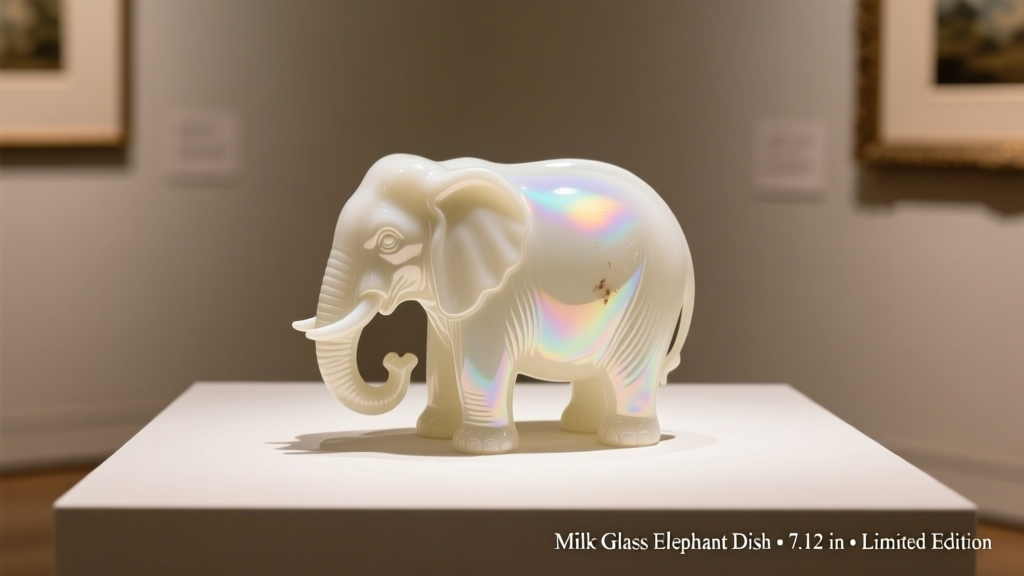
Milk Glass Dish Elephant Cover, Black, 7½ Inches: Authentication, Provenance, and Market Analysis
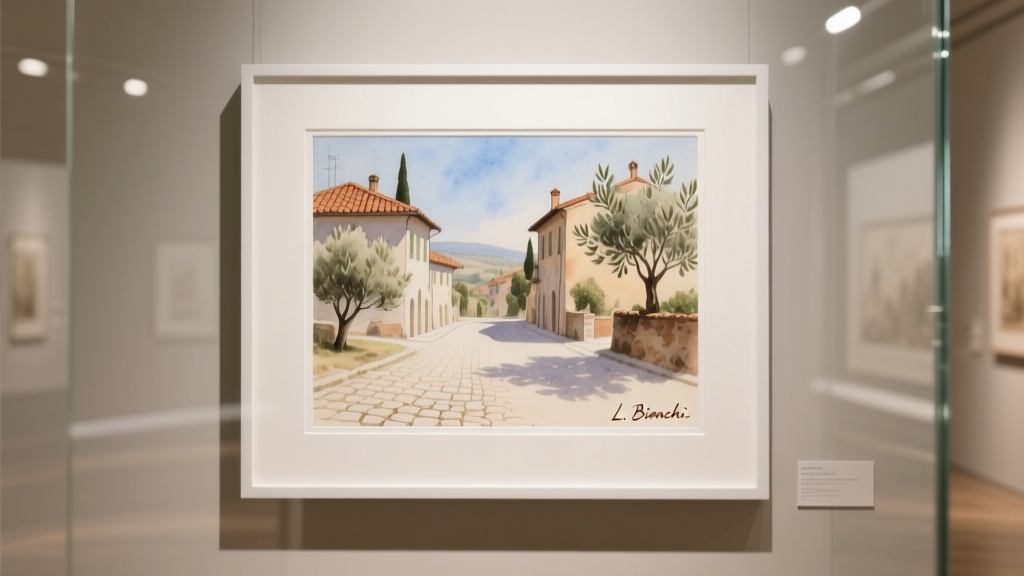
Authentication and Market Analysis of a Vintage Italian Watercolor Scene in Matted Frame (21½ × 17½ Inches)
William H. Rice: Authentication, Market Trends, and the Legacy of a Mid-Century American Printmaker
Royal Doulton Figurine Lady Pamela HN 2718: Authentication, Provenance, and Market Analysis
Authenticating and Valuing the Boy Scout Belt Buckle: Brown Leather with Bronze Two-Piece Design
Steuben Figurine Beaver with Red Garnet Eyes (9-Inch): Authentication, Provenance, and Market Analysis
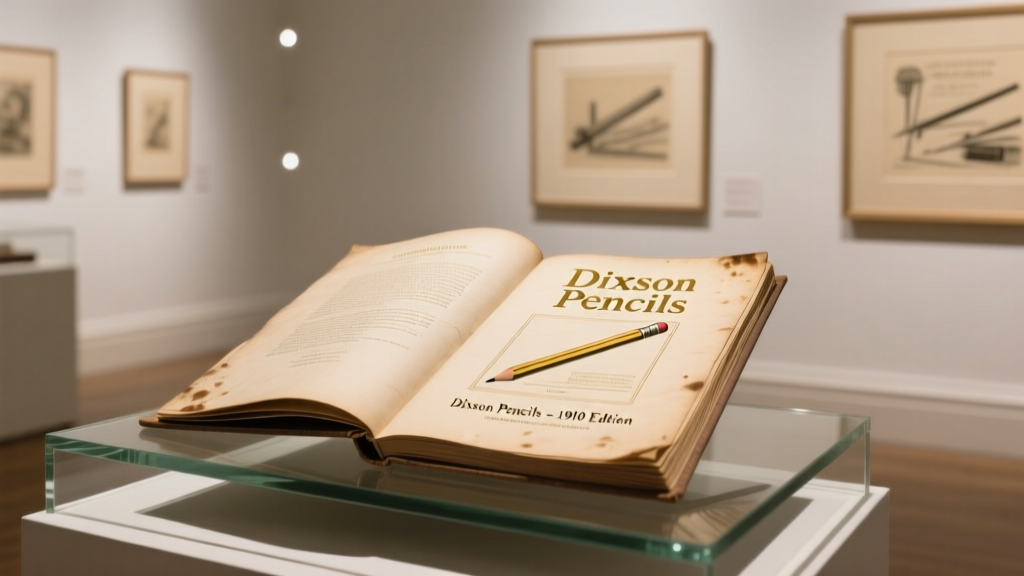
The 1910 Dixson Pencil Catalog: A Landmark in Early 20th-Century Stationery Documentation
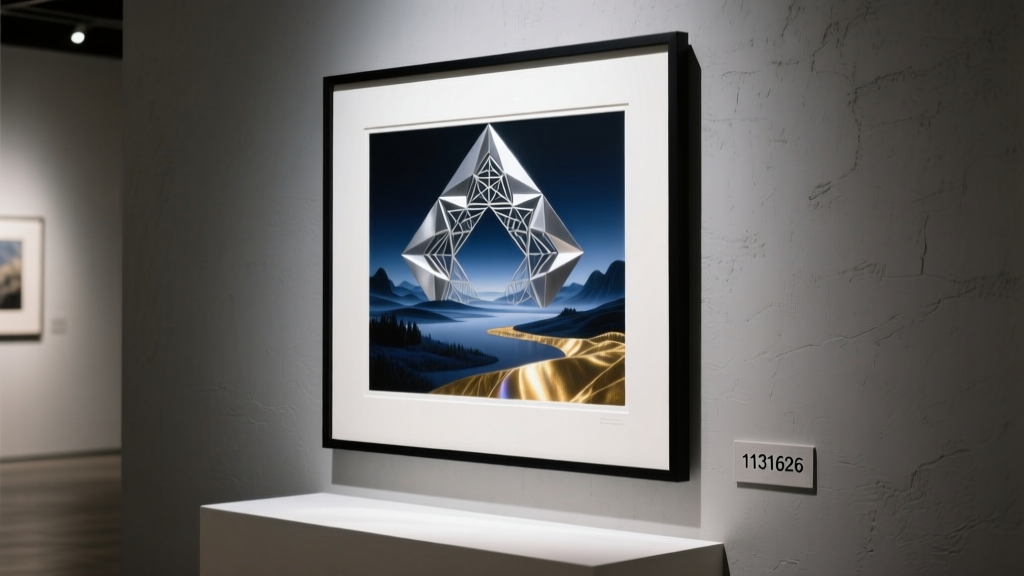
Authentication and Market Analysis of Print Inventory ID 1131626: A Rare 1974 Offset Lithograph by Roy Lichtenstein
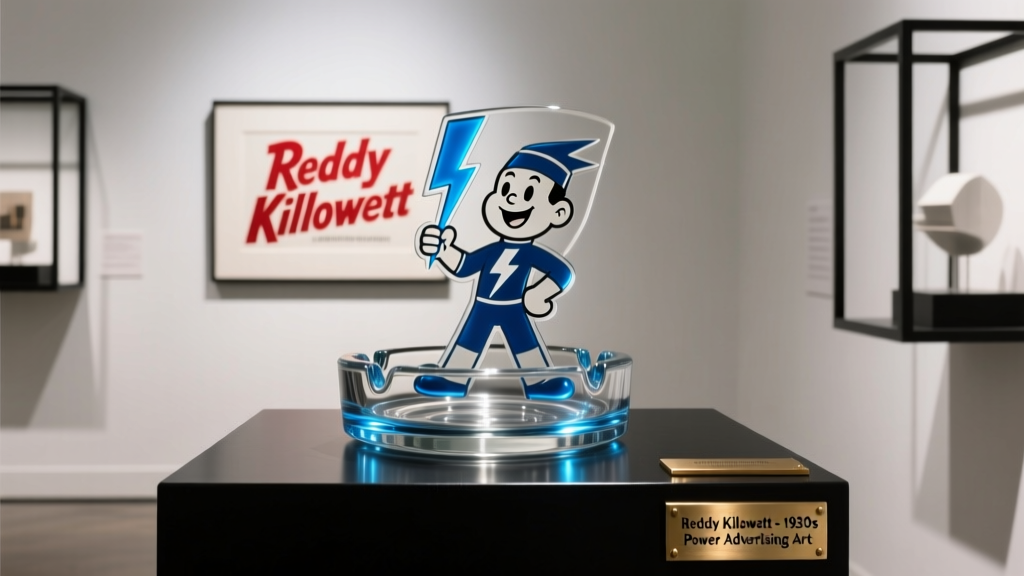
Advertising Ashtray Reddy Kilowatt Glass: History, Authentication, and Market Value