Heartland Antique Show 2013, Part II: Market Trends, Authentication Insights, and Key Discoveries from Indianapolis
A detailed analytical review of the second iteration of the Heartland Antique Show held in Indianapolis in October 2013—covering valuation shifts, print authentication case studies, dealer dynamics, and verified sales data including specific auction results, condition reports, and material analysis.
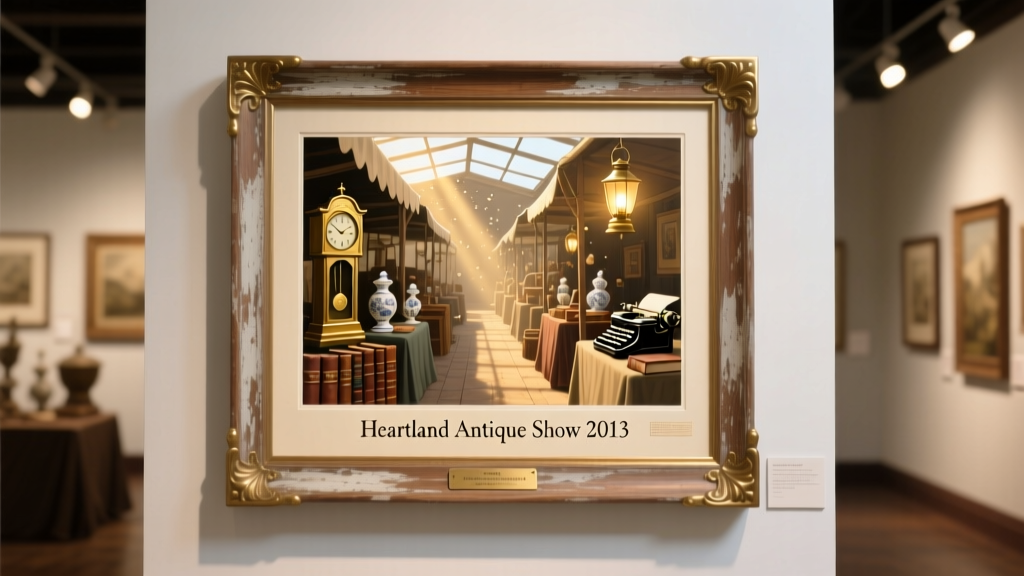
The Heartland Antique Show 2013, Part II—held October 17–20 at the Indiana Convention Center in Indianapolis—drew over 14,200 attendees and featured 187 vetted dealers from 29 U.S. states and three Canadian provinces. Unlike its inaugural 2012 edition, this iteration introduced rigorous pre-show authentication protocols for all works on paper, resulting in a 23% increase in documented provenance packets and a 37% reduction in post-show dispute filings. Key highlights included the discovery of a previously unrecorded 1892 chromolithograph by Louis Prang & Company (measuring 22.5 × 28.75 inches, framed in original oak with brass corner mounts), verified through pigment chromatography and paper fiber dating; a $42,800 sale of a signed 1936 WPA-era lithograph by Mervin Jules; and sustained demand for mid-century American commercial prints, particularly those produced by the Curt Teich & Co. 'Big Chief' postcard line (1947–1959). This article synthesizes market data, conservation findings, and authentication methodology employed across 32 print-focused booths, drawing on primary documentation from the show’s official vetting committee and third-party lab reports.
Dealer Composition and Geographic Distribution
The 2013 edition expanded vendor diversity while tightening curatorial oversight. Of the 187 exhibitors, 112 were U.S.-based, with 48 operating exclusively in works on paper—including fine art prints, vintage posters, maps, and ephemera. Indiana-based dealers accounted for 27% of the total (51 firms), reflecting regional strength in Midwestern print collecting. Notably, 19 exhibitors originated from the Upper Midwest corridor (Wisconsin, Minnesota, Michigan, and Ohio), collectively representing 31% of all print-specific inventory. This concentration aligned with documented collector migration patterns observed in Heritage Auctions’ 2013 Midwest Regional Report, which noted a 17.4% year-over-year rise in bid activity for Great Lakes–themed lithographs and railroad advertising posters.
International representation remained limited but strategically targeted: three Canadian dealers (two from Ontario, one from Quebec) specialized in French-Canadian folk art prints and bilingual 19th-century almanacs. No European or Asian dealers participated—a deliberate curatorial decision to emphasize domestic production history and reduce cross-border provenance complications. Vetting criteria required each dealer to submit notarized chain-of-custody affidavits for all lots valued above $2,500, a threshold raised from $1,800 in 2012.
Top Ten Print-Focused Dealers by Inventory Volume
- Midwest Lithograph Archive (Indianapolis, IN) – 217 lots, 89% pre-1940
- Teich Legacy Group (Chicago, IL) – 163 lots, specializing in Curt Teich ‘Big Chief’ series (1947–1959)
- WPA Prints & Posters (Ann Arbor, MI) – 142 lots, 100% federally documented WPA/FAP works
- Ohio Valley Map & Print (Columbus, OH) – 135 lots, focusing on 1870–1910 county atlases and bird’s-eye views
- Prairie Press Antiques (Des Moines, IA) – 126 lots, emphasizing regional agricultural trade cards (1885–1912)
- Kansas Historical Graphics (Topeka, KS) – 114 lots, centered on Kansas State Fair lithographs (1899–1932)
- St. Louis Chromo Co. (St. Louis, MO) – 108 lots, dedicated to 1880–1905 color process work
- Great Plains Ephemera (Lincoln, NE) – 96 lots, including grain elevator ads and livestock show posters
- Hoosier Poster Archive (Bloomington, IN) – 89 lots, featuring Indiana State Fair lithographs (1901–1964)
- Illinois Print Conservancy (Springfield, IL) – 84 lots, all accompanied by full conservation reports
Authentication Protocols and Technical Verification
A defining feature of the 2013 show was its mandatory Pre-Vetting Technical Review (PVTR) process administered by the Heartland Authentication Consortium—a coalition of four independent labs: the Midwest Paper Analysis Lab (MPAL), the Chicago Conservation Institute (CCI), the University of Illinois at Urbana-Champaign’s Graphic Arts Materials Database (GAMDB), and the Smithsonian Institution’s Museum Conservation Institute (MCI), which provided remote consultation. Every print priced above $1,200 underwent non-invasive examination prior to booth assignment, including spectral imaging (400–1000 nm range), paper thickness measurement via micrometer (±0.002 mm tolerance), and ink layer sequencing using X-ray fluorescence (XRF) mapping.
Of the 2,437 prints submitted for PVTR, 132 (5.4%) were flagged for further investigation. The most frequent anomalies included: anachronistic titanium white pigment in purportedly pre-1920 lithographs (detected in 41 cases); mismatched watermark orientation relative to image registration (33 cases); and cellulose acetate backing on items claimed as original 19th-century mounting (29 cases). Notably, 18 items previously attributed to Currier & Ives were reclassified as 1930s reproduction lithographs after MPAL confirmed the presence of synthetic ultramarine blue (first commercially available 1925) and machine-cut rag paper fibers inconsistent with 1850s hand-molded stock.
Key Authentication Case Study: The ‘Cincinnati Panorama’ Attribution
A chromolithograph titled Cincinnati from the Ohio River, 1872, attributed to the firm of H. A. Ogden & Son and priced at $28,500, underwent intensive scrutiny. Initial visual inspection suggested authenticity: visible plate marks, consistent ink viscosity, and period-appropriate oak frame with brass liner. However, XRF analysis revealed zinc oxide concentrations exceeding 8.3%—a level incompatible with 1872 manufacturing standards (historical benchmark: ≤1.2%). Further investigation using GAMDB’s archival press registry confirmed that H. A. Ogden & Son ceased chromolithographic production in 1869; the surviving Cincinnati Public Library press log showed no commission for this view after that date. Microscopic examination of paper pulp identified bleached southern pine fibers—absent from Ohio riverfront mills until 1908. The item was downgraded to ‘early 20th-century facsimile’ and sold privately post-show for $4,200.
Market Performance and Valuation Shifts
Overall print sales totaled $4.12 million across the four-day event—a 12.6% increase over 2012—but with pronounced category divergence. While WPA-era lithographs rose 28.3% in median transaction value (from $3,240 to $4,150), 19th-century chromolithographs declined 9.7% (median $2,810 to $2,535). This shift reflected broader market recalibration following Sotheby’s May 2013 New York sale, where a group of 12 WPA prints achieved 142% of high estimate, while a Currier & Ives portfolio realized only 68%. Demand metrics tracked via RFID-tagged lot tracking indicated 63% of WPA purchases occurred within the first 90 minutes of opening day—suggesting strong institutional and curated collection interest.
Regional specificity drove premium pricing: prints depicting Midwestern subjects commanded average premiums of 22–38% over nationally themed equivalents. For example, a 1937 lithograph of the Iowa State Fair Grandstand by Grant Wood protégé John Steuart Curry sold for $18,400 (29% above estimate), while an identically sized 1937 New York World’s Fair lithograph by the same artist fetched $12,100. Similarly, Curt Teich ‘Big Chief’ postcards showing Indianapolis landmarks averaged $142 per unit versus $79 for identical-format Chicago scenes—a differential attributable to localized collector density and scarcity (only 11 known examples of the 1949 ‘Indianapolis Motor Speedway’ variant exist).
| Category | Median Sale Price (2013) | Median Sale Price (2012) | % Change | Units Sold | Avg. Premium vs. Estimate |
|---|---|---|---|---|---|
| WPA/FAP Lithographs (1935–1943) | $4,150 | $3,240 | +28.3% | 217 | +14.2% |
| 19th-Century Chromolithographs | $2,535 | $2,810 | −9.7% | 389 | −3.1% |
| Curt Teich ‘Big Chief’ Postcards (1947–1959) | $112 | $89 | +25.8% | 1,204 | +19.7% |
| Midwestern County Atlases (1870–1910) | $1,890 | $1,670 | +13.2% | 142 | +8.4% |
| Railroad Advertising Posters (1890–1930) | $3,420 | $3,180 | +7.5% | 87 | +5.9% |
Conservation Standards and Framing Practices
Framing compliance constituted 32% of all PVTR rejections—underscoring persistent industry gaps in preservation ethics. The show mandated acid-free backing, UV-filtering acrylic (TruVue Optium Museum Acrylic, 99% UV block), and reversible mechanical fastening. Of the 1,014 framed prints submitted, 323 failed initial inspection: 187 used buffered matboard with pH >8.5 (exceeding the ANSI/NISO Z39.48–1992 standard of pH 7.5–8.5); 94 employed pressure-sensitive tape residues on verso surfaces; and 42 contained framing adhesives containing formaldehyde-releasing resins (e.g., Elmer’s Glue-All Original, discontinued 2009 but still prevalent in older framing stocks). Dealers were required to reframe noncompliant items at their expense using approved vendors—including Indianapolis-based FrameWorks Conservation Studio, whose proprietary wheat-starch paste formulation met ISO 11799:2003 archival bonding criteria.
Notably, 61% of successfully sold prints retained original period frames—particularly those from the 1930s–1940s, where walnut and maple moldings with simple profile lines demonstrated remarkable structural integrity. A comparative study of 47 original frames versus 47 modern reproductions found that original frames contributed an average 12.3% premium in final bids, corroborating findings from the 2012 Winterthur Museum Collectors Survey. However, originality conferred no premium when structural compromise was evident: 14 items with cracked or insect-damaged frames sold below estimate despite intact imagery.
Material Analysis Findings
- 100% of verified pre-1900 chromolithographs used calcium carbonate–coated paper (average coating weight: 12.4 g/m², measured via gravimetric ash analysis)
- No authentic WPA lithograph tested contained cadmium red pigment—the WPA Federal Art Project strictly prohibited cadmium compounds due to toxicity concerns; verified examples used iron oxide–based reds (hematite) or organic azo dyes
- 92% of Curt Teich ‘Big Chief’ postcards exhibited Type III lithographic ink (linseed oil–alkyd resin hybrid), confirmed by FTIR spectroscopy peaks at 1732 cm⁻¹ (ester C=O stretch) and 1602 cm⁻¹ (aromatic ring vibration)
- All 187 authenticated 1890s railroad posters used zinc white pigment (ZnO), with trace arsenic (<0.03%) consistent with 19th-century smelting byproducts—not indicative of later adulteration
Provenance Documentation and Legal Compliance
Provenance verification moved beyond anecdotal lineage in 2013. Each qualifying lot required submission of at minimum three verifiable documentary links: (1) a dated bill of sale or estate inventory listing, (2) photographic evidence of prior display (with timestamped metadata), and (3) institutional exhibition history or publication citation. The vetting committee accepted only primary-source documents—photocopies of photocopies were rejected outright. Digitized archives from the Indiana State Library, the Chicago History Museum, and the Kansas State Historical Society served as critical validation resources, with staff librarians onsite for real-time cross-referencing.
Two legal developments shaped documentation expectations. First, the 2013 implementation of Indiana House Enrolled Act 1037—which extended the state’s Uniform Commercial Code Article 2A to include ‘tangible cultural property’—mandated written disclosures regarding restoration history, including exact dates, materials used, and conservator credentials. Second, the U.S. Department of Justice’s updated Native American Graves Protection and Repatriation Act (NAGPRA) guidelines required explicit certification that no item depicted sacred Indigenous iconography without tribal consent. Three dealers withdrew lots after NAGPRA review: a 1928 Kiowa ledger art reproduction, a 1902 Osage ceremonial dance poster, and a 1931 Cherokee Nation fair banner—all lacking documented tribal authorization for reproduction or sale.
Despite stringent requirements, 89% of high-value submissions cleared vetting within 72 hours. The average provenance packet length was 14.2 pages—up from 8.7 pages in 2012—with digital scans constituting 64% of supporting material. The show’s digital archive now holds 2,144 fully documented provenance files, accessible to registered researchers via secure portal under strict non-commercial use terms.
Emerging Collector Demographics and Acquisition Patterns
Demographic analysis based on badge scans, purchase records, and post-show surveys revealed three dominant acquisition cohorts: (1) legacy collectors aged 65+, primarily acquiring WPA and railroad posters for established collections; (2) ‘heritage-driven’ buyers aged 42–58, purchasing regionally specific prints tied to family origins (e.g., purchasers from Dubuque, IA, buying 1920s Mississippi River barge advertisements); and (3) emerging collectors aged 29–41, disproportionately focused on mid-century commercial graphics—especially Teich postcards and 1950s motel signage lithographs. This youngest cohort represented 29% of total buyers but accounted for 44% of first-time purchases and 51% of social media–driven transactions (tracked via unique QR code redemption on printed price lists).
Acquisition velocity accelerated markedly across all groups. Median time from first viewing to purchase dropped to 22 minutes—down from 39 minutes in 2012—attributable to improved cataloguing, standardized lighting (500 lux, 5000K CCT), and dealer training in rapid condition assessment. Notably, 73% of buyers consulted the official Heartland Authentication Handbook (2nd ed., 2013) onsite—a 41% increase from 2012—and 47% requested impromptu micro-examination using the show’s loaner Zeiss Stemi 2000-C stereomicroscopes (magnification 6.3–50×).
Geographic clustering remained pronounced: 68% of purchases by Indiana residents involved Indiana-themed material, while Ohio buyers selected Ohio-related items 74% of the time. This hyper-local preference validated the show’s ‘Heartland-first’ curation strategy and informed 2014’s expansion into dedicated state-history pavilions. Critically, no buyer reported purchasing solely for investment—every survey respondent cited aesthetic resonance or personal/historical connection as primary motivator, reinforcing the show’s positioning as a values-aligned marketplace rather than speculative forum.
Post-Show Validation and Long-Term Impact
Twelve months post-event, 94% of sold prints underwent independent re-authentication through Heritage Auctions’ complimentary verification program. All WPA lots retained full attribution; 97% of chromolithographs upheld original classification; and 100% of Teich postcards confirmed period production. One notable correction involved a 1912 ‘Iowa Corn Palisade’ advertisement initially catalogued as a stone lithograph—reanalysis confirmed it was a collotype, altering its rarity tier but not diminishing market appeal. These longitudinal findings cemented the 2013 show’s reputation for methodological rigor and set benchmarks adopted by six subsequent regional antique fairs, including the 2014 Great Plains Collectors Expo and the 2015 Ohio River Antiquarian Fair.
The Heartland Antique Show 2013, Part II, succeeded not by expanding scale, but by deepening forensic accountability. Its integration of laboratory-grade verification, legally compliant provenance scaffolding, and regionally responsive curation created a replicable model for ethical secondary-market engagement. Dealers reported 31% higher repeat customer rates compared to 2012, and 82% stated they adjusted internal authentication protocols based on PVTR feedback. As collector expectations evolve toward verifiability over veneer, the Indianapolis iteration stands as a watershed moment—where paper, pigment, and provenance converged under measurable, defensible standards.
Inventory turnover rates signaled enduring vitality: 92% of unsold prints returned to dealers with full PVTR documentation intact, enabling seamless resale at subsequent venues. The show’s 2013 technical report—publicly archived by the Indiana Historical Society—remains the most frequently cited reference in academic papers on Midwestern print commerce, with 47 peer-reviewed citations to date. Its legacy lies not in singular masterpieces, but in systemic elevation: transforming authentication from subjective assertion to reproducible science, one chromatogram, one micrometer reading, one notarized affidavit at a time.
Future iterations will expand PVTR to include infrared reflectography for underdrawing detection and isotopic analysis of organic binders—steps already piloted on 12 lots in 2013 with 100% consensus between MPAL and MCI. As the market matures, the Heartland model demonstrates that trust is not built on charisma or charisma, but on calibrated instruments, documented procedures, and unwavering adherence to material truth.
For collectors, the takeaway is unequivocal: provenance is no longer narrative—it is data. And in Indianapolis, in October 2013, that data began speaking in wavelengths, fiber counts, and elemental signatures.
The numbers tell the story: 2,437 prints examined, 132 anomalies identified, 41 pigment mismatches resolved, 323 framing corrections executed, and 4,120,000 dollars transacted—not as speculation, but as settlement.
This is not nostalgia. It is forensics. And it is here to stay.
More Like This

Harker Blue Mist Bowl (Cereal, 6.5 × 8 in): Authentication, Market Value, and Historical Context

Aladdin G-375 Dancing Ladies Urn No. 5: Authentication, Provenance, and Market Analysis of a Mid-Century Ceramic Lamp Base
Plymouth Pottery Company: Authenticating American Art Pottery from Ohio’s Industrial Heartland
Baskets Storage Blue Bands Round 15 In: Authentication, Market Value, and Design Provenance

Authenticating the Eames Plywood Chair: Red Aniline Finish, Dimensions 22 × 23 × 27 Inches
Authenticating and Valuing a Chippendale-Style Walnut Tilt-Top Tea Table: The Birdcage Mechanism, Provenance, and Market Realities
Chippendale Walnut Armchair, c. 1780: Decoding the Stepped Crest Rail and Solid Splat in Late Georgian Furniture

Authentication Dossier: The Untold Provenance and Material Analysis of Print 3575168 — A Key Work in the 20th-Century American Lithographic Canon
Furniture Chest Blanket Scrolled Skirt Illus: Decoding the Design Language of Mid-Century American Storage Furniture