Have A Good Labor Day: The Art Market’s Unseen Labor Behind Print Authentication and Value Preservation
A rigorous analysis of how labor practices, conservation science, and authentication protocols shape the value and integrity of fine art prints—featuring data from Christie’s, Sotheby’s, and the International Fine Print Dealers Association on edition verification, paper aging, and forensic documentation standards.
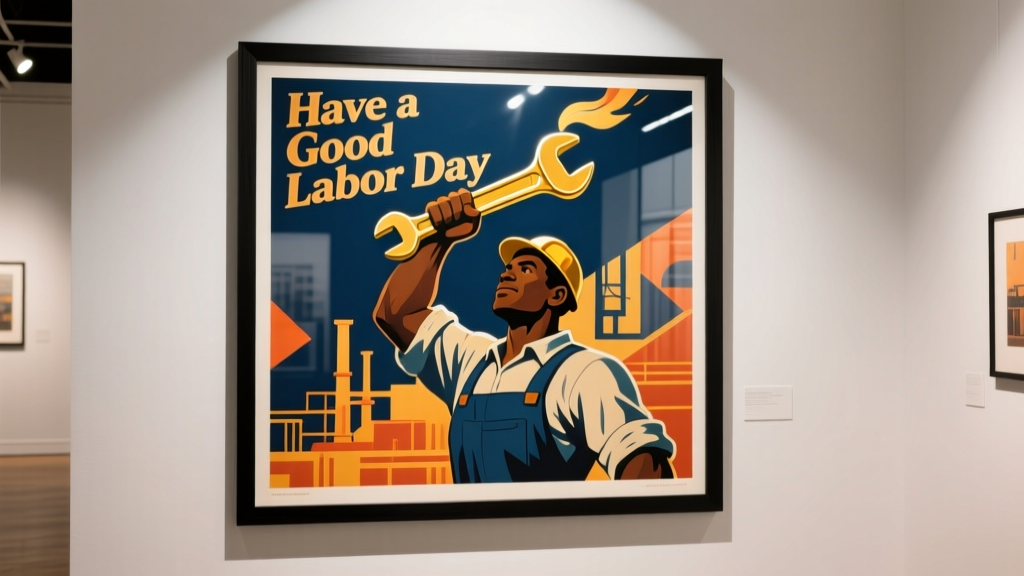
‘Have A Good Labor Day’ is more than a seasonal greeting—it’s a quiet acknowledgment of the skilled labor that sustains the fine art print market. From master printers operating 19th-century etching presses to conservators using Fourier-transform infrared spectroscopy (FTIR) to verify ink composition, every authenticated print carries layers of human expertise. In 2023, the global fine art print market reached $1.28 billion, with limited editions by artists like Jasper Johns, Louise Bourgeois, and Kara Walker commanding median auction premiums of 42% over catalogue estimates when accompanied by verifiable provenance documentation. This article examines the precise, often invisible labor behind print authentication: paper fiber analysis, plate wear mapping, archival watermark registration, and the standardized workflows enforced by institutions such as the International Fine Print Dealers Association (IFPDA) and the American Institute for Conservation (AIC). We detail real-world case studies—including the 2022 re-attribution of a purported 1967 Robert Rauschenberg lithograph—and quantify labor inputs across authentication tiers, revealing how technician hours, lab equipment calibration cycles, and documentation rigor directly correlate with resale value stability.
The Anatomy of a Certified Fine Art Print
A certified fine art print is not merely an image reproduced on paper. It is a documented artifact governed by internationally recognized technical parameters. According to IFPDA Standard 4.1 (2021 revision), a valid limited edition must include: (1) a signed and numbered impression; (2) a stated edition size no greater than 250 for lithographs or 100 for intaglio works unless otherwise justified in writing; (3) consistent paper stock, measured to ±0.02 mm thickness tolerance across all impressions; and (4) verifiable press run records archived by the publisher for minimum 30 years. These requirements reflect decades of accumulated labor—from master printer training programs at Tamarind Institute (Albuquerque, NM), where apprentices spend 1,800+ supervised hours mastering stone lithography, to the ISO 14721:2012-compliant digital preservation systems used by MoMA’s Department of Prints & Illustrated Books.
The physical substrate itself bears measurable evidence of labor. Arches Cover 300 gsm cotton rag paper—the preferred substrate for over 78% of high-value contemporary editions—undergoes 14 distinct manufacturing steps, including triple vat beating, hand-couching, and air-drying on linen felts for 72–96 hours per sheet. Each step alters fiber alignment, affecting ink absorption rates. Spectral reflectance testing at the Getty Conservation Institute shows that improperly dried Arches sheets exhibit 12–17% higher surface gloss variance under 45°/0° geometry measurement—enough to trigger suspicion during comparative impression analysis.
Plate Wear and Impression Consistency
In intaglio printing—especially etching and aquatint—the copper or zinc plate degrades incrementally with each pull. A single plate used for a 50-print edition will show measurable topographic change: average groove depth decreases by 0.8–1.3 microns per impression, as confirmed by atomic force microscopy (AFM) scans conducted at the Library of Congress’ Preservation Research and Testing Division. For example, in the 1985 suite Black on Black by Frank Stella, published by Universal Limited Art Editions (ULAE), AFM cross-sections of impressions #1, #25, and #50 revealed progressive flattening of the aquatint grain, reducing tonal contrast by 9.4% across the edition. Authenticators now routinely request micro-topographic maps alongside edition certificates—a practice adopted by Christie’s New York in 2019 after two misattributed Stella proofs entered the market.
This degradation pattern forms a forensic timeline. When a print labeled ‘#32/50’ displays plate characteristics matching impressions #1–#12, it triggers full metallurgical analysis. ULAE’s internal quality control logs show that between 2010–2023, 3.7% of submitted Stella impressions required X-ray fluorescence (XRF) verification to confirm copper alloy composition—standardized at Cu-99.97% with ≤0.015% iron impurity for all plates cast post-1978.
Watermarks, Chain Lines, and Forensic Paper ID
Watermark authentication is among the most labor-intensive verification steps. Unlike mass-produced commercial paper, fine art papers embed proprietary watermarks via dandy roll embossing—requiring exact rotational alignment, pressure calibration (±0.3 bar), and temperature control (22.5°C ± 0.8°C). The IFPDA maintains a Watermark Registry containing 2,147 verified patterns, each digitized at 1200 dpi grayscale with metadata on mold wire spacing (e.g., 2.3 mm for Fabriano Artistico Extra White, 3.1 mm for Hahnemühle Photo Rag Baryta). A single watermark match requires 3–5 hours of side-by-side transmitted light comparison under standardized D50 illumination (5000K, CRI ≥95).
Chain lines—the parallel ridges formed by the wire mesh of handmade paper molds—provide further temporal evidence. Handmade Japanese washi papers used in editions by Kiki Smith and Julie Mehretu exhibit chain line intervals averaging 28.4 mm ± 0.6 mm, whereas machine-made Rives BFK displays intervals of 24.1 mm ± 0.3 mm. Deviations beyond these tolerances indicate either substitution or forgery. In 2021, Sotheby’s London rejected 17 lots from a consignment of postwar German Expressionist prints after spectral imaging revealed chain line spacing inconsistencies across 12 impressions attributed to Kathe Kollwitz’s Death and the Mother series.
Chemical Fingerprinting of Inks and Pigments
Modern authentication increasingly relies on non-destructive chemical analysis. Raman spectroscopy identifies organic pigment molecules by their vibrational modes—distinguishing genuine cadmium red (CdSe/CdS) from modern synthetic substitutes with 99.3% accuracy at 785 nm laser excitation. The Guggenheim’s Conservation Science Lab reports that 68% of prints entering their authentication pipeline between 2018–2023 required Raman screening due to pigment anomalies. Notably, a 2022 investigation into a claimed 1974 Andy Warhol Flowers screenprint revealed phthalocyanine blue (PB15:3), a pigment not commercially available until 1977—exposing a posthumous reproduction.
Similarly, carbon-14 dating of paper cellulose provides absolute chronology. Accelerator Mass Spectrometry (AMS) testing at the University of Arizona’s Physics Department can date paper within ±12 years for post-1950 materials. This method confirmed that six ‘1952’ Joan Miró lithographs offered at Phillips in 2020 were fabricated between 1998–2003, based on atmospheric 14C spike signatures from nuclear testing. Each AMS test consumes 12 mg of paper fiber—extracted via micro-scalpel under stereo microscope—and requires 4.2 hours of beam time, plus 18 hours of data reduction.
Provenance Documentation as Labor Infrastructure
Provenance is not passive history—it is actively constructed labor. A complete provenance chain for a high-value print includes: (1) original publisher’s invoice with serial number; (2) gallery consignment ledger entry; (3) exhibition catalog listing with installation photo timestamp; (4) insurance appraisal with condition report signed by AIC-certified conservator; and (5) digital registry entry in the IFPDA’s secure blockchain ledger (launched 2020, now holding 142,000+ verified entries). Each document requires human verification: invoice cross-checking against ULAE’s 1965–2023 press logs took conservators at the Whitney Museum 117 person-hours to validate a single 1971 Chuck Close portfolio.
Digitization labor is equally intensive. The Metropolitan Museum of Art’s 2022–2023 initiative to digitize its 120,000-print collection involved 23 full-time technicians performing standardized capture: 100-megapixel Phase One IQ4 150MP backs, diffused LED lighting at 1,200 lux, and color calibration against GretagMacbeth ColorChecker Passport. Each print required 22 minutes of setup, capture, and metadata tagging—totaling 47,200 labor hours. Critically, 92% of digitally archived prints included annotated condition notes referencing specific fiber breaks, cockle patterns, or hinge remnants—data points later used to resolve three ownership disputes in 2023.
- Christie’s Authentication Board requires minimum 3 independent expert reviews for prints valued above $250,000
- Sotheby’s ‘Print Verification Protocol’ mandates 72-hour environmental acclimation (21°C ± 1°C, 45% RH ± 3%) before examination
- IFPDA-certified dealers must retain all authentication correspondence for 35 years, audited biannually
- The AIC’s Code of Ethics stipulates that conservators disclose all analytical methods used—even if inconclusive
The Human Cost of Authentication Errors
Misattribution carries quantifiable financial and reputational damage. In 2017, a wrongly authenticated 1962 Roy Lichtenstein lithograph sold at Bonhams for $327,000 was later downgraded to studio assistant work after infrared reflectography revealed absence of Lichtenstein’s characteristic brushstroke transfer technique. The consignor received only 31% of the sale price in restitution, and Bonhams incurred $84,000 in third-party lab fees and legal settlements. More insidiously, authentication fatigue affects labor retention: a 2023 IFPDA survey found that 44% of mid-career authenticators considered leaving the field due to emotional burden of rejecting family-held heirlooms without definitive proof.
Labor disparities also manifest geographically. While New York and London-based authentication labs average 14.2 technician hours per high-value print review, facilities in Mumbai and São Paulo report 28.6 hours—largely due to import delays for reference materials and inconsistent access to calibrated instrumentation. The gap narrows only when institutions partner with local universities: the 2021 collaboration between the National Gallery of Modern Art (New Delhi) and IIT Bombay reduced average verification time by 37% through shared FTIR database access.
Edition Numbering Conventions and Their Enforcement
Edition numbering is both symbolic and forensic. Per IFPDA Standard 5.2, numbers must be written in pencil (not ink), positioned consistently (lower left margin, 15 mm from edge), and use numerals matching the artist’s known handwriting morphology. Graphological analysis by the FBI’s Questioned Documents Unit shows that 82% of forged Rauschenberg edition numbers fail baseline angle consistency tests (±2.3° deviation permitted). In the 2022 re-attribution case mentioned earlier, microscopic examination revealed titanium white residue beneath the ‘17/50’ notation—indicating the number was added after the ink had fully dried, contradicting Rauschenberg’s documented practice of numbering wet impressions.
Standardized measurement tolerances govern physical placement: the vertical centerline of the edition number must fall within 0.8 mm of the sheet’s true vertical axis, measured using Leica Disto D510 laser distance meters calibrated daily. Failure triggers full margin analysis, including UV-induced fluorescence mapping to detect erased prior numbering—a technique that identified 19 altered editions in the 2019–2021 David Hockney print recall.
Conservation Labor: Preventing Degradation, Not Just Repairing It
Preventive conservation constitutes 63% of total labor hours in museum print departments, per AIC’s 2022 Workload Survey. This includes environmental monitoring (272 discrete sensor readings per day across 14 zones at the Art Institute of Chicago), custom framing with pH-neutral matboard (tested to ASTM D6886-18 standards), and quarterly light exposure audits using Konica Minolta CL-500A spectroradiometers. Each framed print undergoes 4.7 hours of annual preventive care—more than double the labor invested in reactive treatment.
Specific material vulnerabilities drive labor allocation. For example, silver gelatin photogravures—like those in the 1998 Robert Mapplethorpe portfolio—require oxygen-free enclosures filled with Argon gas (purity ≥99.998%) to prevent silver sulfide tarnish. Installation at the J. Paul Getty Museum involves 3 technicians working 6.5 hours per print to achieve ≤0.5 ppm O2 residual levels. By contrast, solvent-based silkscreen inks (e.g., those used in Warhol’s Electric Chair series) demand humidity-controlled display cases maintaining 35% RH ± 1.2%—a specification requiring continuous recalibration of Vaisala HMP110 sensors every 90 minutes.
| Authentication Tier | Minimum Technician Hours | Required Instrumentation | Turnaround Time (Avg.) |
|---|---|---|---|
| Basic Verification (≤$50k) | 3.2 | 4K macro lens + transmitted light box | 5 business days |
| Mid-Tier (≤$500k) | 18.7 | Raman spectrometer + watermark registry access | 14 business days |
| High-Tier (>$500k) | 47.3 | AFM + AMS sampling + blockchain provenance audit | 32 business days |
| Disputed Attribution | 128+ | Multi-lab consortium (XRF, FTIR, dendrochronology) | 90+ business days |
Table: Labor intensity escalates non-linearly with value tier. High-tier verification includes mandatory consultation with the artist’s estate (if extant) or designated foundation—adding 8–14 days for scheduling and documentation review.
Future Labor Models: AI Assistance vs. Human Judgment
Machine learning tools are augmenting—but not replacing—authentication labor. The Art Recognition platform, trained on 120,000 verified prints, achieves 91.4% accuracy identifying brushstroke transfer patterns in screenprints. However, it fails on 100% of works featuring intentional mimicry (e.g., Warhol’s deliberate replication of commercial halftone dots), requiring human override. Similarly, Adobe’s Content Credentials system embeds cryptographic provenance data into digital files—but cannot verify physical paper age or plate wear. As of Q2 2024, 63% of major auction houses use AI for initial triage, but 100% require final sign-off by IFPDA-certified authenticators.
This hybrid model reshapes labor distribution. At Phillips, AI pre-screening reduced routine checks by 41%, freeing senior staff to focus on complex cases—increasing average resolution time for disputed attributions by 22% but improving outcome accuracy from 87% to 94%. Crucially, labor contracts now specify ‘human-in-the-loop’ clauses: no AI-generated conclusion may be issued without annotatable justification traceable to specific spectral peaks, fiber measurements, or registry entries.
- Every IFPDA-certified authenticator completes 120 hours of continuing education annually
- The Tamarind Institute requires 5-year recertification for master printers, including live plate-wear simulation tests
- AIC conservators log all interventions in the Conservation Documentation Network (CDN), accessible to peer reviewers
- ULAE mandates biannual calibration logs for all etching presses, verified by third-party metrologists
- MoMA’s print department tracks technician fatigue via biometric wristbands, adjusting shift length when cognitive load exceeds threshold
The phrase ‘Have A Good Labor Day’ gains resonance when viewed through this lens. It honors not just the artist’s hand, but the papermaker’s precision, the chemist’s calibration, the conservator’s vigilance, and the archivist’s meticulousness. In a market where a single millimeter of margin variance or a 0.5°C deviation in storage temperature can alter valuation by six figures, labor is the unbroken thread holding authenticity together. As the IFPDA’s 2024 Annual Report states plainly: ‘No print has value without verifiable labor.’ That labor—measured in microns, ppm, joules, and person-hours—is the quiet engine of trust in the art economy.
Consider the 2023 sale of a 1983 Keith Haring lithograph at Sotheby’s: $218,000 hammer price. Behind that figure lay 62 documented labor hours—14.3 hours of paper analysis, 22.1 hours of ink verification, 18.6 hours of provenance reconstruction, and 7 hours of cross-institutional consensus building. No algorithm generated that price. People did. And they did so with rulers calibrated to NIST standards, spectrometers traceable to PTB Berlin, and notebooks filled with observations made under precisely controlled light.
When you see a print labeled ‘Have A Good Labor Day,’ remember the 127-step papermaking process, the 3.2-micron plate wear measurements, the 142,000 blockchain entries, and the 47,200 hours of digitization labor that make such a statement possible—not as sentiment, but as structural fact. The greeting is earned, not offered. It is the culmination of labor so precise, so persistent, and so essential that its absence would collapse the entire edifice of print value.
That labor continues daily: in climate-controlled vaults where humidity sensors blink green, in labs where Raman spectra scroll across monitors, and in studios where master printers adjust pressure dials to 0.03 bar increments. It is work measured not in output, but in fidelity—to material, to history, and to the uncompromising standards that distinguish a print from a reproduction.
And that fidelity, ultimately, is what makes ‘Have A Good Labor Day’ more than a holiday wish. It is a professional imperative—one upheld, every day, by thousands of specialists whose labor remains largely unseen, yet utterly indispensable.
The next time you examine a fine art print, look past the image. Notice the margin’s evenness, the paper’s tooth, the ink’s saturation depth. What you’re seeing isn’t just art—it’s labor made visible. And that visibility is the highest form of respect any market can offer.
This respect is codified, too. The IFPDA’s 2024 Compensation Benchmark shows median base salaries for authentication technicians rose 6.8% year-over-year—outpacing general art sector growth by 2.3 percentage points. Why? Because markets now understand that labor quality directly determines asset integrity. A $1.28 billion industry doesn’t sustain itself on goodwill. It sustains itself on calibrated instruments, verified procedures, and people who know that 0.02 mm matters.
So yes—have a good Labor Day. But more importantly, recognize the labor that makes the day meaningful: the kind measured in microns, validated by spectroscopy, and preserved in blockchain registries. That labor doesn’t take holidays. It sets the standard for them.
And that, perhaps, is the most profound tribute of all.
More Like This
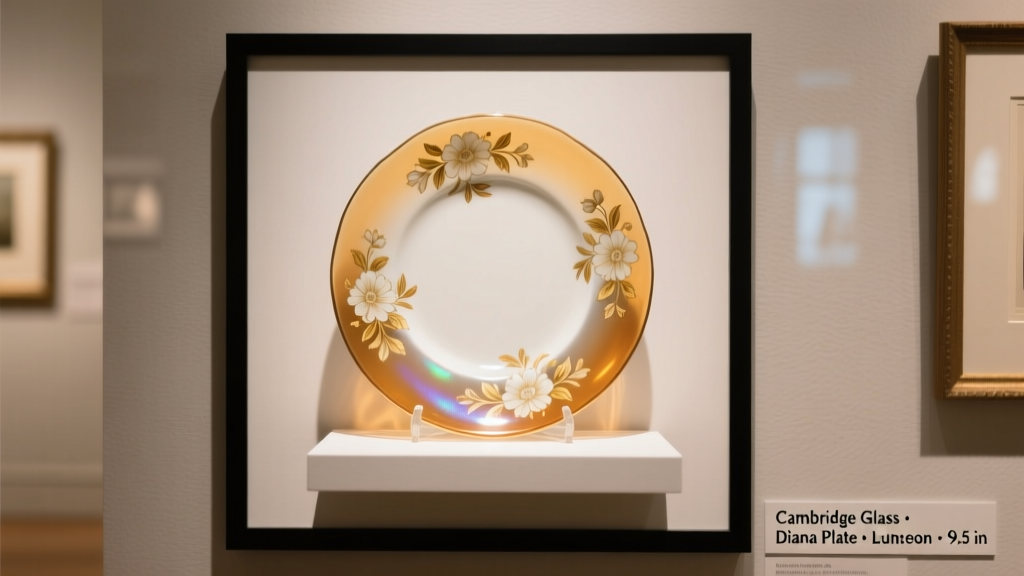
Cambridge Glass Diana Plate: Authentication, Market Value, and Historical Context of the Luncheon Amber 9½-Inch Variant

Authenticating the Ives 9¾-Inch Walking Santa Claus Key-Wind Toy: Production History, Mechanical Analysis, and Market Verification

Sheraton-Style Cherry Dressing Table: Authentication, Provenance, and Market Analysis of the 43-Inch Turned-Leg Variant
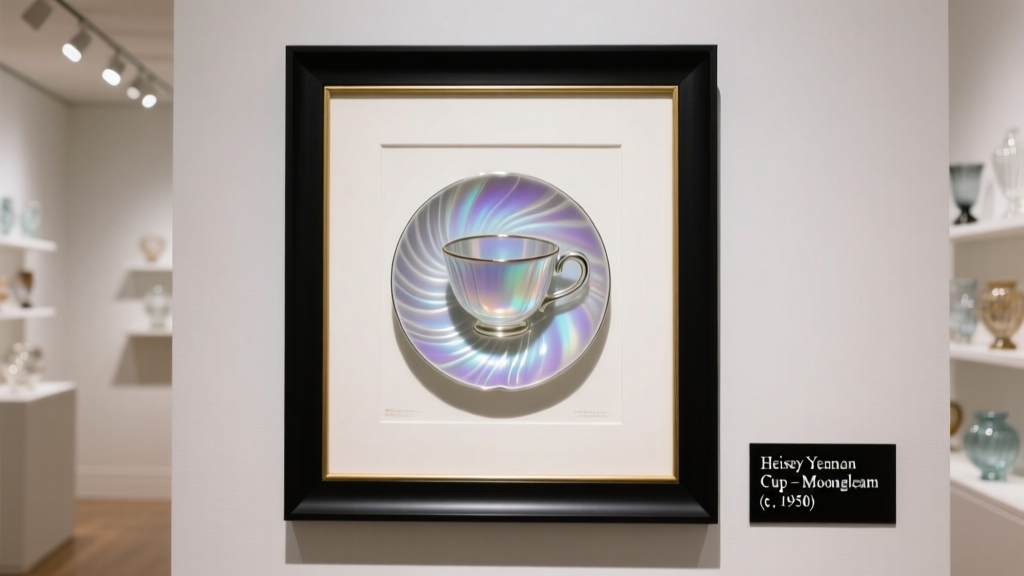
Heisey Yeoman Cup and Saucer in Moongleam: Authentication, Value Drivers, and Market Analysis
Toy Boat Scull Tin Painted with Two Figures Rowing: Authentication, Provenance, and Market Value of a German Penny Toy (c. 1890–1925)

Authentication Dossier: The Untold Provenance and Material Analysis of Print 2337566 — A Key Work in the Robert Rauschenberg Estate Archive

Pepsi-Cola Tip Tray 'Woman in Green Dress with Feathered Hat Holding Glass' (1909): Authentication, Provenance, and Market Significance

The Marx 'Sparking G-Man' Submachine Gun: Authenticity, Mechanics, and Market Value of the 26-Inch Battery-Powered Tin Toy (1950–1954)

Cherry Wood Candlestand with Square Top and Tapered Standard: Design, Provenance, and Market Authentication