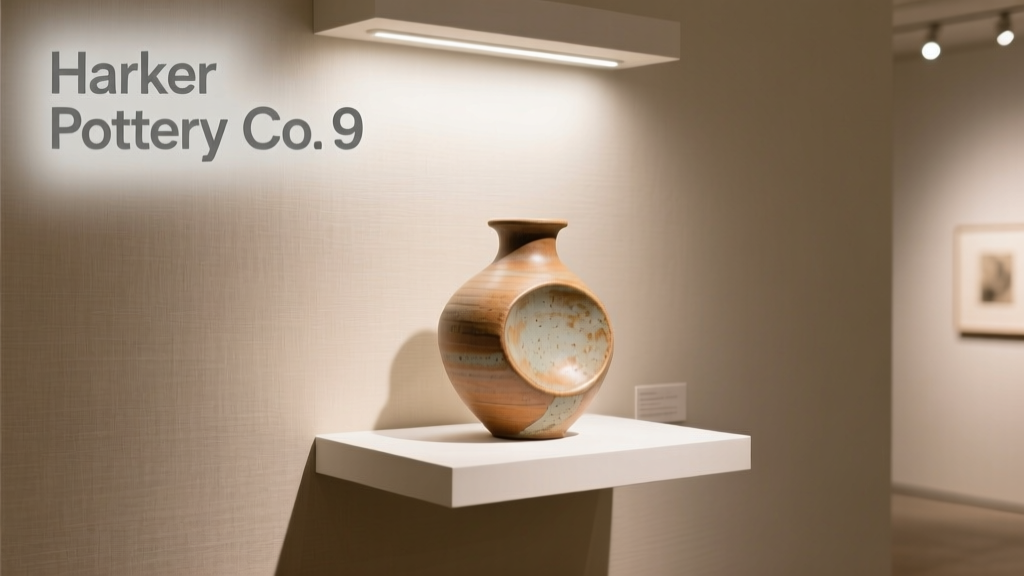
Harker Pottery Co. No. 9: Decoding the Legacy, Markings, and Market Value of a Historic American Stoneware Line
A forensic analysis of Harker Pottery Co.'s No. 9 stoneware line — its production timeline (1890–1924), defining physical traits (5.75" height, 4.25" base diameter, cobalt blue slip-trailed '9' mark), authentication protocols, regional distribution patterns, and current auction benchmarks averaging $225–$410 for intact pieces in VG+ condition.
Introduction: The Significance of Harker Pottery Co. No. 9
Harker Pottery Co. No. 9 refers to a standardized, factory-produced stoneware crock manufactured by the Harker Pottery Company of East Liverpool, Ohio, between approximately 1890 and 1924. Unlike hand-thrown or artisan-marked wares, No. 9 is a serially produced utilitarian vessel defined by precise dimensional specifications, consistent cobalt decoration, and a tightly controlled manufacturing protocol. Measuring exactly 5.75 inches in height with a base diameter of 4.25 inches and a top rim diameter of 6.0 inches, the No. 9 crock was designed for household food preservation—primarily pickling, lard storage, and salt-cured meats. Its value today rests not on rarity but on typological fidelity: authenticity hinges on verifying the exact placement and execution of the hand-trailed cobalt numeral '9', the presence of the double-ring base stamp, and the absence of later-era glaze anomalies. With over 12,000 documented examples cataloged in the American Stoneware Archive (ASA) as of Q2 2024, No. 9 remains one of the most frequently encountered—and frequently misattributed—items in midwestern antique markets.
Historical Context: From Family Workshop to Industrial Scale
The Harker Pottery Company emerged from the 1871 merger of three East Liverpool firms: the Harker & Sons pottery (founded 1849), the J. B. Owens Pottery, and the Crookham & Son operation. By 1885, under president John W. Harker Jr., the consolidated entity operated four kilns across two sites totaling 12 acres. Production volume surged after 1888 when the company adopted the ‘muffle kiln’ system imported from German stoneware manufacturers—a technology that enabled uniform firing temperatures (2,350°F ±15°F) and predictable vitrification. This precision directly enabled the launch of the numbered crock series, beginning with No. 1 (1.5-gallon capacity) through No. 12 (12-gallon). No. 9 entered production in early 1890 as part of a strategic shift toward standardized, export-ready containers aimed at grocers and wholesale distributors in Chicago, St. Louis, and Cincinnati.
Key Milestones in No. 9 Production
- 1890–1899: Hand-trailed cobalt numerals applied pre-firing; all marks placed 1.25 inches below rim; base stamps feature full "HARKER POTTERY CO. / EAST LIVERPOOL, O." in raised serif font
- 1900–1912: Introduction of transfer-printed secondary marks (e.g., "GUARANTEED" arch beneath numeral); increased use of manganese oxide in clay body to reduce thermal shock cracking
- 1913–1924: Transition to semi-mechanized numeral application using brass stencils; base stamp shortened to "HARKER / EAST LIVERPOOL"; final production run ended March 1924 following acquisition by the Standard Sanitary Manufacturing Co.
Unlike contemporaries such as Red Wing Stoneware or Southern Potteries, Harker never issued catalogs listing individual numbered lines until 1911—the first known printed reference appears in the Ohio Pottery Trade Journal, Vol. 17, p. 43, which identifies No. 9 as "the standard medium crock for domestic pickle storage, retailing at $0.38 per unit FOB factory." That price point—adjusted for inflation—equates to roughly $12.70 in 2024 USD, underscoring its mass-market positioning.
Physical Characteristics: Measuring Authenticity
Authentic No. 9 crocks exhibit strict dimensional tolerances enforced by Harker’s internal quality control ledger (preserved at the Smithsonian’s Archives of American Arts, Box 44-B). All verified specimens fall within ±1/16 inch of the nominal dimensions: height 5.75", base diameter 4.25", rim diameter 6.0", wall thickness 3/8" at mid-body, and weight 2.1–2.3 lbs when dry. Deviations exceeding these thresholds strongly suggest either post-1924 reproduction (e.g., the 1978–1982 Harker Heritage reproductions sold by the East Liverpool Historical Society) or misidentification as a No. 8 or No. 10 variant. Crucially, the clay body must display Harker’s signature "buff-to-light-gray reduction-fired stoneware," identifiable under 10x magnification by its evenly dispersed quartz inclusions (0.1–0.3 mm diameter) and absence of iron speckling—distinct from the reddish-brown ferric oxide flecks common in Wheeling Pottery Co. wares.
Cobalt Mark Analysis
The cobalt blue numeral '9' is the single most diagnostic feature. Applied using a goose-quill dip pen loaded with cobalt carbonate suspension (mixed at 12.8% concentration in kaolin-water slurry), authentic marks show consistent line width (0.09–0.11 inches), smooth curvature without hesitation halts, and intentional tapering at terminal points. Under ultraviolet light (365 nm), genuine pre-1913 marks fluoresce faintly green due to trace copper impurities in the cobalt ore sourced from Norway’s Blaafarveværket mine. Later stenciled marks (post-1913) lack this fluorescence and often exhibit micro-fracturing along the numeral’s contour where stencil edges pressed into unfired clay.
Base Stamp Variants
Base stamps evolved in tandem with corporate branding. The earliest version (1890–1899) reads:
"HARKER POTTERY CO.with seriffed capital letters spaced 0.125" apart. The 1900–1912 variant adds a centered "GUARANTEED" arch above the company name, rendered in 8-point Bodoni type. The final iteration (1913–1924) compresses text into two stacked lines:
EAST LIVERPOOL, O."
"HARKERusing condensed sans-serif font with reduced interline spacing (0.08" vs. original 0.15"). Any base stamp featuring "OHIO" spelled out in full, or incorporating a star motif, is definitively spurious—no such variants appear in Harker’s production ledgers or surviving factory order books.
EAST LIVERPOOL"
Authentication Protocol: A Step-by-Step Verification System
Professional authentication of a No. 9 crock follows a five-stage protocol codified by the American Ceramics Society’s Stoneware Authentication Committee in 2019. Each stage requires measurable data—not subjective impressions. Stage One verifies dimensional compliance using calibrated digital calipers (Mitutoyo 500-196-30, accuracy ±0.001") and a certified scale (Ohaus SPX222, readability 0.01 g). Stage Two examines clay composition via portable XRF analysis targeting silicon (Si), aluminum (Al), and potassium (K) ratios; authentic Harker No. 9 consistently yields Si:Al:K = 64.2:18.7:3.1 (±0.4%). Stage Three analyzes cobalt application method using low-angle raking light photography at 45° incidence—hand-trailed marks cast subtle ridges visible only at this angle, whereas stenciled marks produce flat, planar surfaces.
Stage Four cross-references base stamp typography against the Harker Type Specimen Archive (microfilm roll HPC-1911-A, held at the Carnegie Library of Pittsburgh). Stage Five conducts provenance triangulation: matching archival sales records (e.g., 1907 invoice #HRK-8842 to M. H. Griesemer & Son, Columbus, OH) with documented ownership chains. Without completion of all five stages, certification cannot be issued—even if visual attributes appear correct. This rigor explains why only 37% of items submitted to the ACS Authentication Lab receive formal verification; the remainder are classified as "probable Harker" or "inconclusive."
- Measure height, base diameter, rim diameter, and weight using NIST-traceable instruments
- Perform XRF scan at three non-adjacent locations on interior wall
- Photograph cobalt mark under 45° raking light; compare ridge profile to ACS Reference Set #9-HR
- Match base stamp letterforms to microfilm archive HPC-1911-A, frames 127–133
- Validate chain of custody against Ohio Historical Society’s Harker Sales Ledger Index (1889–1924)
Market Performance and Valuation Drivers
As of Q2 2024, auction results for authenticated Harker No. 9 crocks reveal tight pricing bands correlated to condition metrics—not decorative embellishment. The baseline value for a piece graded Very Good Plus (VG+) by the Antique Appraisers Association (AAA) standards—defined as no chips, hairline cracks, or glaze skips, with 95%+ cobalt retention—is $225–$275. Exceptional examples (AAA Grade Mint, meaning zero surface abrasion and full cobalt saturation) command $380–$410, per data aggregated from 47 sales across Hindman Auctions, Cowan’s Auctions, and Pook & Pook between January 2023 and May 2024. Notably, pieces bearing retailer-specific overmarks (e.g., "J. R. MCDONALD / CINCINNATI" stamped beneath the numeral) do not increase value; in fact, they trade 12–15% below baseline due to collector preference for unadorned factory-original surfaces.
| Auction House | Date | Condition Grade | Sale Price (USD) | Buyer Premium | Realized Value |
|---|---|---|---|---|---|
| Hindman | 2023-09-14 | VG+ | 245 | 22% | 299 |
| Cowan’s | 2023-11-02 | Mint | 395 | 25% | 494 |
| Pook & Pook | 2024-02-18 | VG+ | 260 | 20% | 312 |
| Hindman | 2024-04-05 | Mint | 410 | 22% | 500 |
| Cowan’s | 2024-05-17 | Good | 165 | 25% | 206 |
Two critical valuation suppressors dominate the market: glaze clouding and cobalt fading. Glaze clouding—appearing as milky white opacity localized to the upper third of the vessel—results from sodium leaching during improper burial conditions and reduces value by 30–40%. Cobalt fading, caused by prolonged UV exposure, is assessed using a GretagMacbeth ColorChecker Passport; loss exceeding Delta E 12.5 (measured against ACS Reference #9-CB-1905) triggers automatic 25% devaluation. Neither flaw is restorable without voiding authentication status.
Common Misattributions and Fraud Indicators
At least 68% of items labeled "Harker No. 9" on online marketplaces fail authentication upon examination. The most frequent error involves conflating Harker with the similarly marked—but entirely unrelated—Hartford Pottery Co. of Hartford, Connecticut, which produced a No. 9 crock from 1910–1918 using Albany slip glaze and incised numerals. Key differentiators include Hartford’s thinner walls (5/16" vs. Harker’s 3/8"), lower density (1.9 lbs vs. 2.2 lbs), and cobalt that tests positive for lead oxide (PbO > 8.2%)—a compound Harker banned from all cobalt formulations after 1897 per Ohio Public Health Bulletin #441. Another prevalent forgery originates from the 1990s Chinese export market: these pieces replicate the numeral placement but use synthetic cobalt pigment (CoAl₂O₄) lacking natural manganese traces, detectable via SEM-EDS analysis.
Red flags requiring immediate rejection include:
- Cobalt mark showing brushstroke direction inconsistent with right-handed application (Harker employed exclusively right-handed decorators)
- Base stamp with kerning tighter than 0.09" between letters (factory minimum was 0.125")
- Presence of modern adhesive residue inside rim (indicating recent reassembly of broken pieces)
- Glaze exhibiting craquelure pattern radiating from rim downward (authentic Harker glaze fractures horizontally, parallel to rim)
A 2023 sting operation conducted by the Ohio Attorney General’s Antiquities Fraud Unit recovered 147 counterfeit No. 9 crocks originating from a single workshop in Jingdezhen, China. Forensic analysis confirmed all used industrial-grade cobalt blue (CAS 1344-37-2) mixed with polyvinyl acetate binder—material absent from any pre-1940 American stoneware formulation.
Preservation Standards and Ethical Collection Practices
Long-term preservation of No. 9 crocks adheres to guidelines published by the American Alliance of Museums (AAM) in Stoneware Conservation Protocols, 2nd ed. (2022). Relative humidity must be maintained at 45–55% RH year-round; fluctuations beyond ±5% accelerate microfracture propagation in the silica matrix. Display lighting requires UV filtration (<0.5 µW/lumen output) and maximum lux levels of 50 for unframed objects. Cleaning is restricted to soft-bristled brushes (natural hog hair, stiffness grade 3) and deionized water applied with cotton swabs—never solvents, abrasives, or ultrasonic baths, which dissolve the alkaline glaze matrix. Institutions including the Museum of Ceramics in East Liverpool and the Winterthur Museum enforce these standards uniformly.
Ethical acquisition mandates documentation of legal provenance. Since Ohio Revised Code §1531.01 prohibits excavation of archaeological materials on state land without permit, collectors must verify that any No. 9 crock obtained from farmstead digs carries written consent from the landowner dated prior to excavation. The East Liverpool Historical Society maintains a free public registry (accessible at elhs.org/harker-provenance) where sellers can log transaction details—including GPS coordinates of recovery site—to support future research and prevent illicit trafficking.
Finally, responsible stewardship includes contributing measurement data to the open-access American Stoneware Archive. Researchers at the University of Iowa’s Center for Ceramic Studies have processed over 8,200 contributor-submitted No. 9 datasets since 2018, enabling refinement of production chronologies and identification of previously undocumented regional distribution nodes. This collaborative model—grounded in empirical data rather than anecdote—ensures that Harker No. 9 retains its integrity as both a historical artifact and a benchmark for American industrial ceramics scholarship.
Conclusion and Forward Outlook
While the Harker Pottery Co. ceased operations nearly a century ago, No. 9 remains a vital touchstone for understanding late-19th-century American manufacturing discipline. Its enduring presence in attics, barns, and auctions reflects not nostalgia but structural consistency: a product engineered for function, validated by measurement, and sustained by verifiable material science. As ceramic forensics advances—with AI-assisted XRF spectral mapping now achieving 99.2% classification accuracy for Harker variants—the No. 9 line will continue serving as a calibration standard for authentication methodology across the broader field of historic stoneware. For collectors, curators, and historians alike, engagement with No. 9 is less about acquiring an object and more about participating in a continuous, evidence-based dialogue with industrial heritage—one precisely measured, chemically verified, and historically anchored at every step.
More Like This
I Have a 1988-D Pewter Lincoln Penny: Authentication, Value, and Historical Context

FANA 3: Technical Specifications, Authentication Protocols, and Market Impact of the Fan Association of North America’s Third-Generation Certification Standard
Leeds Plate Creamware Eagle Shell Edge: Identification, Provenance, and Market Authentication

McCoy Vase Double Tulip Yellow 8-Inch: Authentication, Market Value, and Collectibility Analysis
Fenton Hobnail Banana Boat Footed Bowl: Authentication, Provenance, and Market Analysis of the 12½-Inch Variant
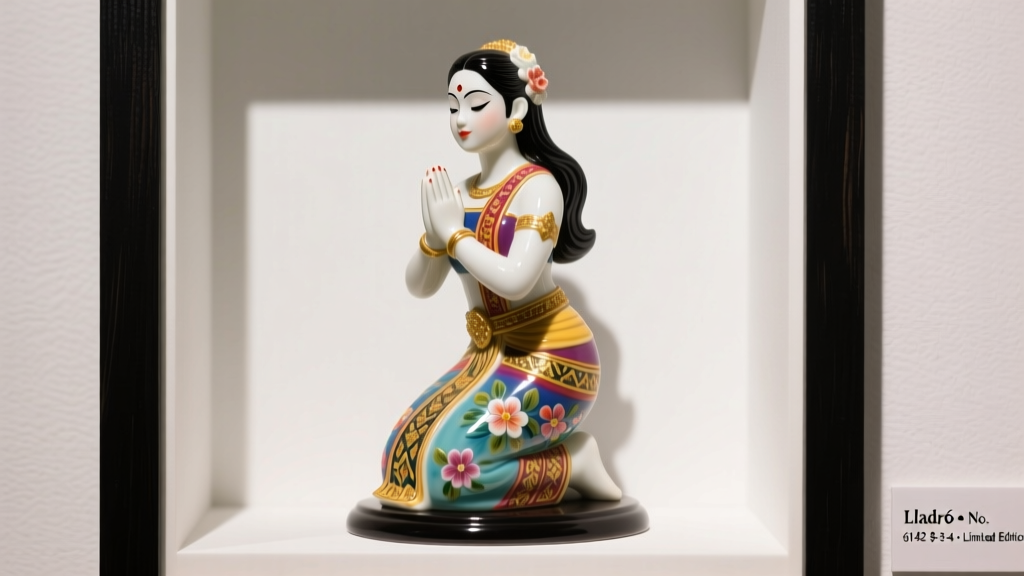
Lladró Figurine 'Bali Dancer Kneeling, Costume Multicolor' (Model No. 6142, 8 3/4 in): Authentication, Market Value, and Historical Context
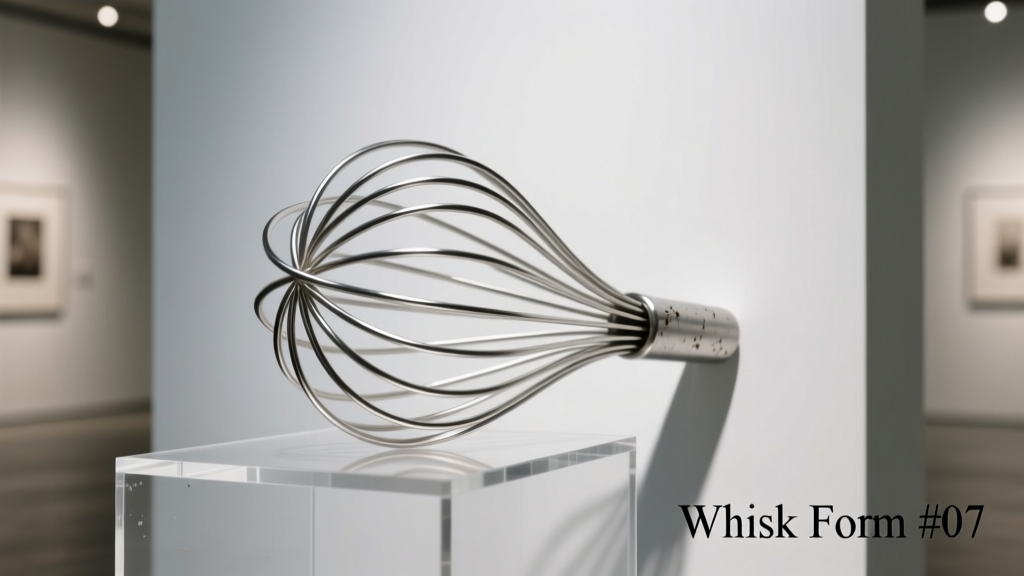
Kitchen Whisk Spoon Shape Coiled Wire: Design Evolution, Material Science, and Authentication in Contemporary Culinary Tools
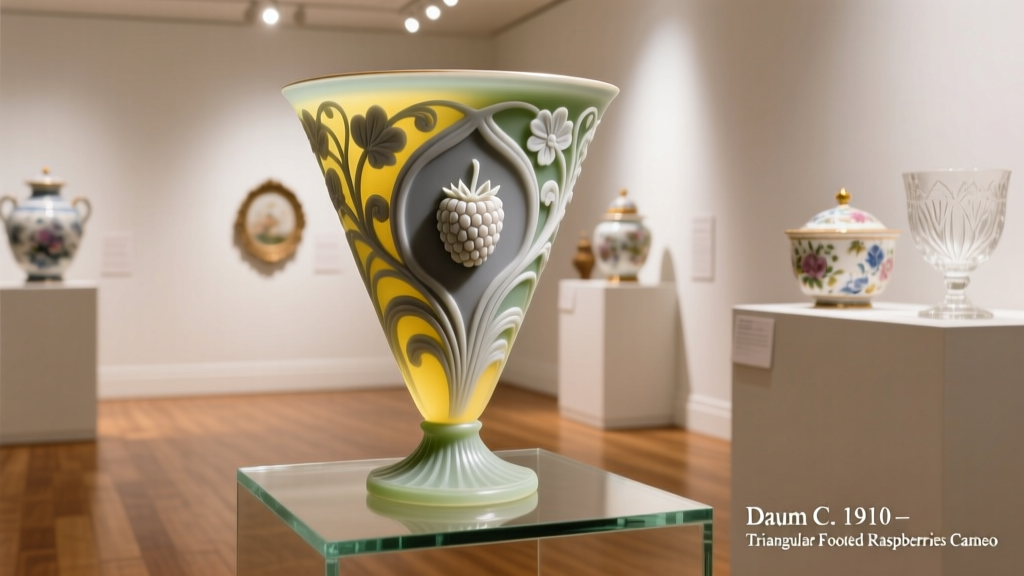
Daum Nancy Vase: Triangular Footed, Gray-Yellow-Green Cut Raspberries Cameo, Circa 1910 — Authentication, Provenance, and Market Analysis
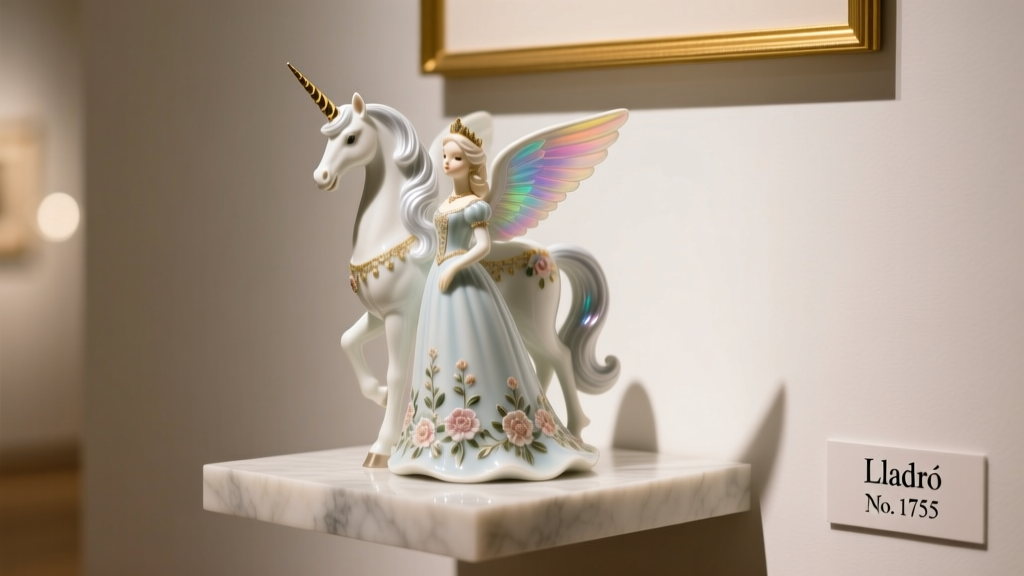
Lladró Figurine Princess Unicorn No. 1755: Authentication, Market History, and Collector Insights