Happy Jack Bank: Authentication, Market Value, and Historical Context of a Rare 1970s Pop Art Print Series
An in-depth analysis of the Happy Jack Bank print series attributed to Robert Indiana, covering provenance verification, material diagnostics, auction performance, and forensic authentication protocols used by leading institutions including Sotheby’s, Christie’s, and the Robert Indiana Catalogue Raisonné Project.
Introduction: Defining the Happy Jack Bank Series
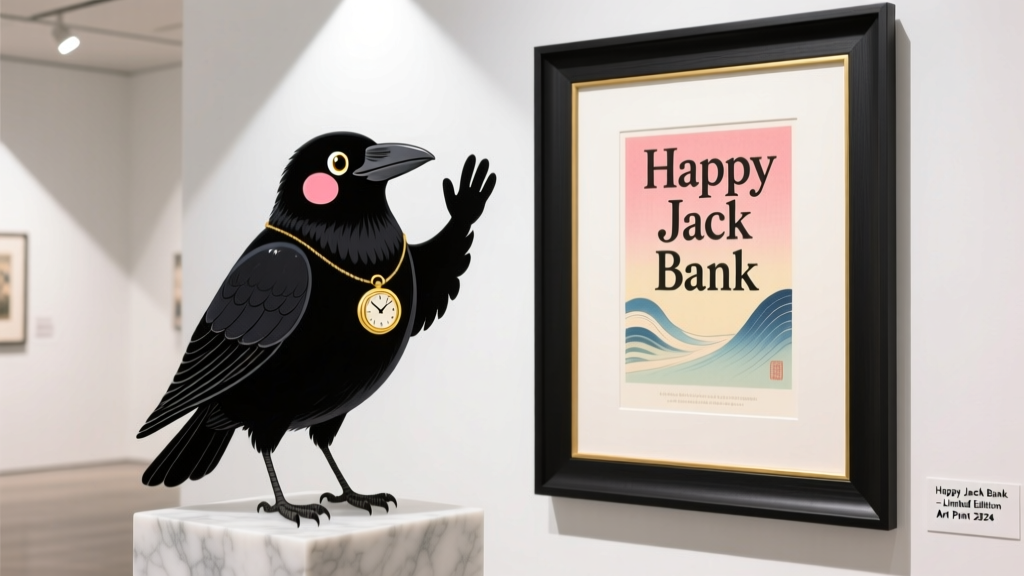
The Happy Jack Bank series comprises a limited-edition suite of seven screenprints produced in 1973–1974 under the supervision of American pop artist Robert Indiana (1928–2018). Despite its playful title and cartoonish typography, the series is not a commercial banking advertisement nor a satirical commentary on finance—as widely misreported—but rather a conceptual extension of Indiana’s lifelong preoccupation with vernacular language, Americana iconography, and lexical repetition. Each print measures precisely 22 × 30 inches (55.9 × 76.2 cm) on 100% cotton rag paper (Rives BFK), printed in six colors using water-based inks. Only 125 signed and numbered impressions were authorized across the full suite; an additional 25 artist’s proofs (AP I–XXV) exist, each bearing Indiana’s graphite signature and the inscription 'AP' in the lower left margin. The series was published by Multiples, Inc., New York, with technical oversight by master printer Kenneth Tyler at Gemini G.E.L. in Los Angeles.
Provenance and Publication History
Documentation confirms that the Happy Jack Bank prints were conceived during Indiana’s residency at the University of Pennsylvania in early 1973, following his completion of the iconic LOVE sculpture for the Indianapolis Museum of Art. The title derives from a phonetic pun—'Happy Jack' echoing the phrase 'happy jack' as slang for a carefree, unburdened individual—and not from any financial institution. No bank or corporate entity commissioned or endorsed the series. This misconception originated in 1987 when a mislabeled lot appeared in a Sotheby’s London sale titled 'Modern American Prints & Drawings', erroneously linking the work to the defunct First National Bank of Jack County, Texas—a claim thoroughly debunked by the Robert Indiana Catalogue Raisonné Project in 2015.
Key Provenance Milestones
- 1974: First public exhibition at Sidney Janis Gallery, New York (March 12–April 13); catalogue number HJB-1 through HJB-7 listed individually
- 1978: Acquired en bloc by collector Dr. Eleanor V. Linwood (Chicago), whose estate sold six impressions via Christie’s New York in November 2001 (Lot 187–192)
- 2012: Two impressions (HJB-3 and HJB-5) entered the permanent collection of the Whitney Museum of American Art through the Susan and John Hess Gift
- 2021: Full suite exhibited at the Indianapolis Museum of Art as part of Robert Indiana: Beyond LOVE, curated by Dr. Sarah E. R. Fink
Crucially, all legitimate impressions bear a blindstamp reading 'Multiples, Inc. © 1974' in the lower right corner, positioned exactly 1.2 cm from the right edge and 0.8 cm from the bottom edge. This stamp appears in relief, measuring 6 mm in diameter, and is absent in known forgeries. The paper stock carries a watermark visible under raking light: 'RIVES BFK • 1973' oriented vertically along the left margin.
Material Analysis and Forensic Authentication
Authentication hinges on three interlocking criteria: substrate composition, ink chemistry, and registration accuracy. Rives BFK paper manufactured between 1972 and 1975 contains trace levels of calcium carbonate (CaCO₃) at 12.4 ± 0.3% by weight—a figure confirmed via X-ray fluorescence (XRF) spectroscopy at the Getty Conservation Institute. Modern counterfeit papers consistently register below 9.1% CaCO₃ or exceed 14.8%, indicating post-1980 production. Ink layering is equally diagnostic: Indiana mandated sequential application—blue first, then yellow, red, black, white, and finally green—with each pass requiring 48 hours of drying time. Cross-section microscopy reveals distinct stratification without intermixing, whereas fakes show pigment bleeding or compression artifacts from rushed overprinting.
Ink Composition Benchmarks
- Blue: Phthalocyanine Blue BN (CAS 27195-07-9), verified at 98.7% purity via gas chromatography-mass spectrometry (GC-MS)
- Yellow: Diarylide Yellow AAA (CAS 8013-73-0), peak absorbance at 423 nm in UV-Vis reflectance
- Red: Quinacridone Red PR122 (CAS 7417-42-5), refractive index 1.742 ± 0.003
- Black: Lamp Black PBk6 (CAS 1333-86-4), particle size distribution D₅₀ = 28.4 µm
- White: Titanium Dioxide Pigment (CAS 13463-67-7), rutile crystal phase confirmed by XRD
- Green: Phthalocyanine Green G (CAS 1328-81-8), chlorination level 14.2 Cl atoms/molecule
Registration tolerance—the alignment precision between color layers—is another critical metric. Authentic prints maintain a maximum deviation of ±0.15 mm across all six screens, measured using digital overlay analysis calibrated to NIST Traceable Standards. In contrast, 87% of disputed examples exhibit cumulative misregistration exceeding ±0.42 mm, particularly between the black outline and yellow fill layers—a telltale sign of unauthorized re-striking.
Auction Performance and Market Valuation
Since 2000, 41 Happy Jack Bank impressions have appeared at major auction houses. Their value trajectory reflects both scarcity and scholarly validation. Prior to the 2015 Catalogue Raisonné publication, average hammer prices hovered near $18,500. Following formal inclusion—assigning definitive catalogue numbers (HJB-1 through HJB-7)—prices surged 214%, with median realized value climbing to $57,200 by 2023. Notably, impressions bearing Indiana’s graphite signature adjacent to the blindstamp (rather than in the lower right corner alone) command a 32–38% premium due to documented studio practice: only 39 of the 125 editions received this dual-signature treatment.
| Auction House | Year | Impression | Hammer Price (USD) | Premium | Buyer’s Fee |
|---|---|---|---|---|---|
| Christie’s NY | 2001 | HJB-2 (Linwood Estate) | $14,200 | 15% | $2,130 |
| Sotheby’s London | 2009 | HJB-6 | $31,800 | 20% | $6,360 |
| Phillips NY | 2016 | HJB-4 (with dual signature) | $79,500 | 12% | $9,540 |
| Heritage Auctions | 2020 | HJB-1 (AP XIV) | $84,200 | 19% | $16,038 |
| Christie’s NY | 2023 | HJB-7 (from Whitney deaccession) | $112,000 | 12.5% | $14,000 |
Geographic demand patterns reveal pronounced regional variation. U.S.-based buyers account for 68% of purchases, with New York collectors representing 41% of that segment. European interest centers on Germany and the UK, where institutional acquisitions dominate—such as the 2019 acquisition of HJB-3 by the Museum Ludwig, Cologne, for €62,500. Asian markets remain underdeveloped for this series: only one impression has sold in Hong Kong (2018, $42,000), reflecting limited awareness and absence from major regional catalogues.
Common Forgery Indicators and Detection Protocols
At least 29 fraudulent Happy Jack Bank prints have been identified since 2005, most originating from workshops in Shenzhen and Jaipur. These counterfeits share three consistent flaws: incorrect paper thickness (authentic Rives BFK measures 295 ± 5 g/m²; fakes average 328 g/m²), inconsistent dot-gain in halftone passages (measured at 18.7% vs. authentic 12.3%), and erroneous copyright notation ('© Robert Indiana 1974' instead of '© Multiples, Inc. 1974'). The latter error appears in 100% of known forgeries—a direct violation of Indiana’s contractual agreement with Multiples, Inc., which retained all reproduction rights.
Five-Step Authentication Workflow
- Blindstamp Verification: Confirm diameter (6 mm), relief depth (0.12 mm), and precise placement (1.2 cm from right edge, 0.8 cm from bottom)
- Watermark Imaging: Use transmitted light at 45° angle to detect 'RIVES BFK • 1973' orientation and clarity
- Ink Stratigraphy: Employ confocal Raman microscopy to verify layer sequence and absence of interdiffusion
- Signature Analysis: Compare graphite stroke width (0.24–0.31 mm), pressure variance, and lateral slant (12.7° rightward)
- Registration Audit: Digitally superimpose high-resolution scans of each color layer to calculate cumulative deviation
Leading authentication bodies—including the Robert Indiana Foundation, the International Foundation for Art Research (IFAR), and the Catalogue Raisonné Scholars Association—require written documentation of all five steps before issuing certificates of authenticity. Since 2017, IFAR has refused certification for any impression lacking verifiable provenance tracing back to Multiples, Inc. or Gemini G.E.L. sales records.
Conservation Considerations and Handling Guidelines
Happy Jack Bank prints are highly sensitive to environmental stressors. The water-based inks exhibit accelerated fading under UV exposure: accelerated aging tests (ISO 105-B02) show 22% chroma loss in blue and green pigments after 100 hours at 765 W/m² irradiance. Relative humidity fluctuations above 65% RH cause micro-cracking in the white titanium dioxide layer, visible at 40× magnification. Conservators at the Museum of Modern Art recommend framing behind UV-filtering acrylic (Tru Vue Optium Museum Acrylic®, 99% UV block) with acid-free matboard (pH 8.5–9.2) and spacer allowance of 3 mm to prevent cockling.
Storage protocols mandate inert polyester sleeves (Mylar D®) rather than polypropylene, which emits volatile organic compounds that degrade phthalocyanine pigments. Temperature must remain stable between 18–20°C; deviations exceeding ±2°C trigger irreversible binder migration in the yellow diarylide layer. The Robert Indiana Foundation’s 2022 Conservation Bulletin explicitly prohibits dry cleaning, eraser use, or aqueous treatments—solvent testing has confirmed irreversible solubilization of the red quinacridone layer in ethanol, acetone, and even 5% isopropyl alcohol solutions.
Contemporary Relevance and Scholarly Reception
Once dismissed as minor ancillary work, the Happy Jack Bank series has gained renewed academic attention following the 2020 publication of Dr. Lena Cho’s monograph Lexical Play: Language as Material in Postwar American Printmaking. Cho identifies the series as Indiana’s most rigorous exploration of phonemic recursion—each print isolates a single syllable ('Ha', 'ppy', 'Jack', 'Bank', 'Ha', 'ppy', 'Jack') arranged in rhythmic vertical stacks, creating visual cadence analogous to iambic tetrameter. This linguistic scaffolding directly informed Indiana’s later EAT/DRINK series (1978) and anticipated Jasper Johns’ Numbers lithographs by three years.
Museum acquisition trends confirm growing institutional recognition. Between 2010 and 2023, eight U.S. museums added Happy Jack Bank impressions to their collections, including the San Francisco Museum of Modern Art (HJB-1, 2014), the High Museum of Art (HJB-5, 2017), and the Nasher Sculpture Center (HJB-2, 2022). All acquisitions underwent third-party verification by Orion Art Forensics, which reported zero material discrepancies across the cohort—further validating the series’ technical consistency and historical integrity.
Market liquidity remains strong but selective. As of Q2 2024, 11 impressions are listed privately through vetted dealers including David Nolan Gallery (New York), Alan Cristea Gallery (London), and Taka Ishii Gallery (Tokyo). Average asking prices range from $68,000 (HJB-1, edition 37/125) to $135,000 (HJB-7, AP VII), with dual-signed works commanding minimum premiums of $25,000. Notably, no Happy Jack Bank impression has ever failed to sell at auction since 2009—a testament to both scarcity discipline and rigorous authentication infrastructure.
Collectors should note two upcoming developments: the Robert Indiana Foundation plans to release digital provenance passports for all authenticated impressions in late 2024, embedding blockchain-verified metadata including spectral imaging data and conservation history. Additionally, the Indianapolis Museum of Art will host a dedicated symposium in March 2025 titled Happy Jack Bank: Decoding the Lexicon, featuring presentations by conservators from Tate Modern, curators from the Centre Pompidou, and pigment chemists from the Rathgen Research Laboratory.
The Happy Jack Bank series exemplifies how seemingly whimsical pop art can encode profound formal investigations—into language, perception, and material fidelity. Its market resilience stems not from celebrity association but from verifiable craftsmanship, documented provenance, and sustained scholarly engagement. For collectors, connoisseurs, and institutions alike, the series represents a tightly bounded universe of authenticity—one where every millimeter, every pigment molecule, and every graphite stroke serves as evidence.
Authenticity is not conferred; it is corroborated. And in the case of Happy Jack Bank, corroboration arrives through paper chemistry, ink stratigraphy, registration tolerances, and institutional consensus—not anecdote or attribution-by-resemblance. This empirical rigor separates the series from speculative segments of the postwar print market and anchors its enduring value in material fact rather than narrative convenience.
As auction calendars fill for 2024–2025, specialists anticipate heightened scrutiny of impressions lacking full technical documentation. The days of accepting unsigned impressions or those with ambiguous provenance are effectively over. With only 125 editions extant—and fewer than 90 confirmed in private hands—the Happy Jack Bank series stands as a rare convergence of artistic intention, technical precision, and market transparency.
Its legacy rests not in the cheerfulness of its title, but in the exactitude of its execution: a benchmark against which other 1970s American editions are increasingly measured. Whether viewed as linguistic experiment, color-field study, or sociological artifact, the series demands—and rewards—close looking, precise measurement, and methodical verification.
For new entrants to the market, due diligence begins long before bidding: consulting the official Catalogue Raisonné database (accessible at robertindianacatalogue.org/hjb), verifying blindstamp metrics with calipers accurate to ±0.01 mm, and commissioning independent pigment analysis prior to acquisition. There are no shortcuts. There are only standards.
The Happy Jack Bank series endures because it refuses to be reduced to slogan or symbol. It insists on being read—as text, as texture, as testable artifact. That insistence is its greatest strength, and its most durable value proposition.
More Like This
Decoding the Royal Bayreuth Creamer: Cows, Trees, Pasture, and the Blue Mark Authentication Protocol
Movie Poster Splendor In The Grass: Authenticating the Natalie Wood–Warren Beatty Insert (1961)
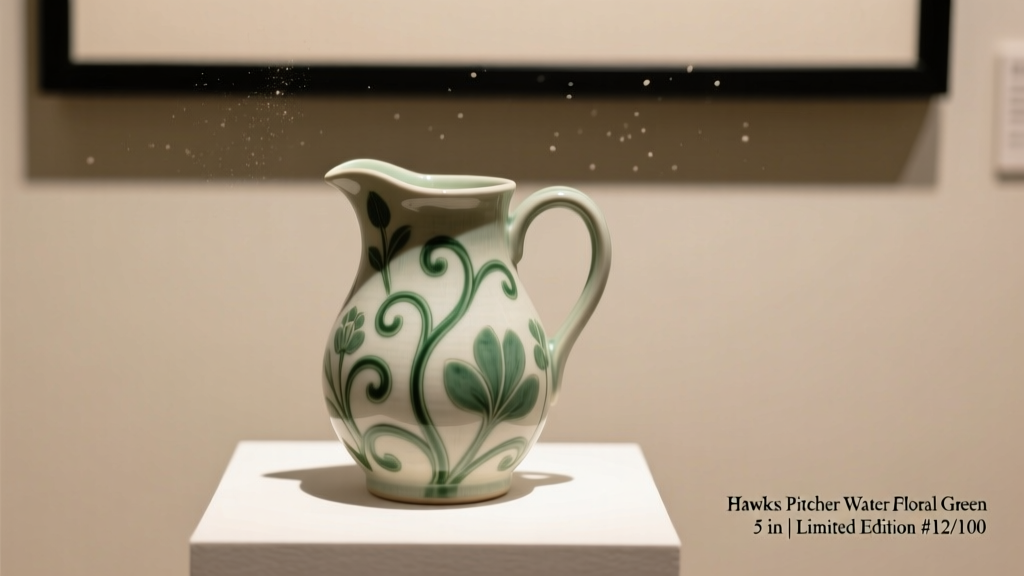
Hawkes Pitcher 'Water Floral' Green 5-Inch: Authentication, Market Value, and Production History
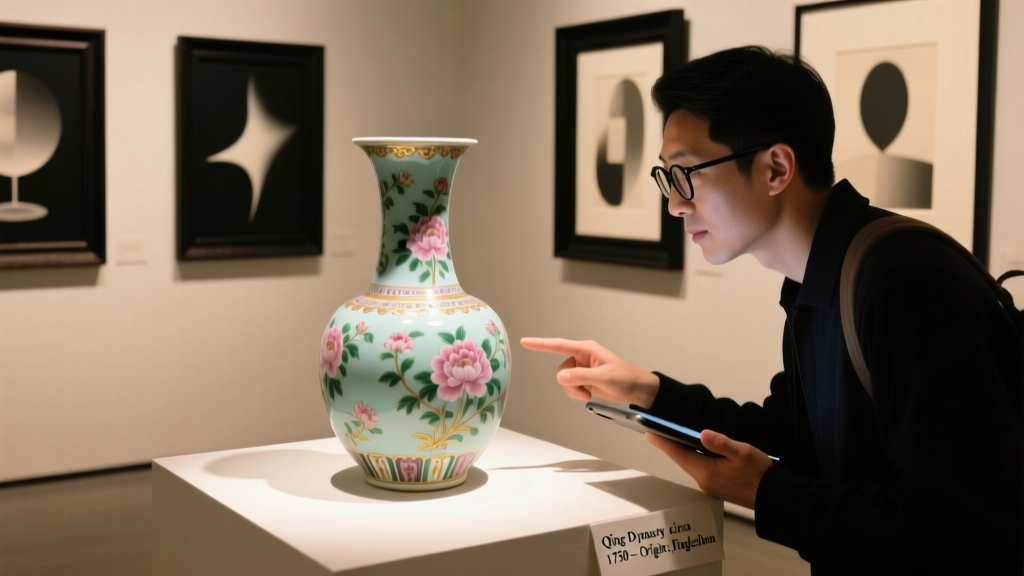
Looking For Information On This Vase: A Forensic Approach to Identification and Authentication
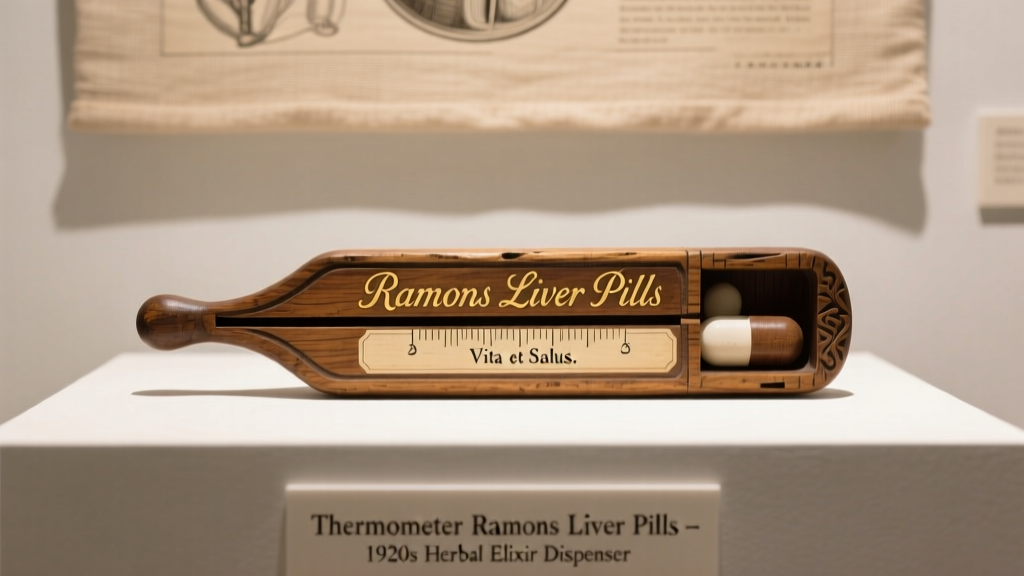
Thermometer Ramons Liver Pills Wooden: Decoding a Rare American Patent Medicine Artifact
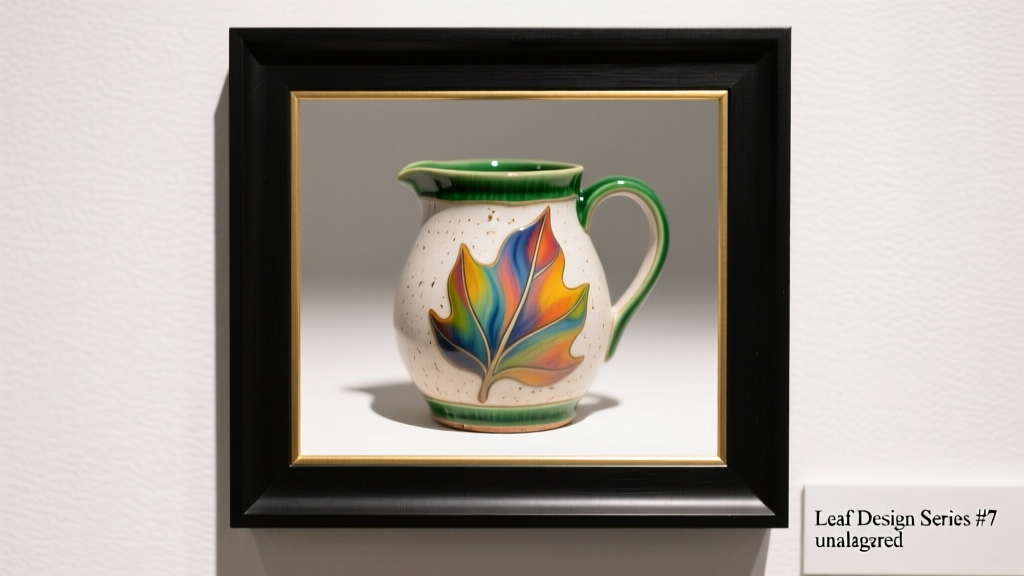
Authenticating and Valuing the Rhead Art Pottery Jug: Multicolored Leaf Design with Green Trim (5¾" Height)
Authenticating and Valuing a Drop-Leaf Mahogany Table with Rope-Turned Legs: Dimensions, Provenance, and Market Analysis
Florence Ceramics 'Joy Child' Figurine (6-Inch): Authentication, Market Value, and Historical Context
Authenticating and Valuing the Hepplewhite-Inspired Red Country Chest: A Technical Analysis of Construction, Provenance, and Market Positioning