The Art and Market of Handmade Dollhouses: Craftsmanship, Authentication, and Collectible Value
An in-depth analysis of handmade dollhouses as fine art objects—covering historical evolution, maker signatures, material science, valuation metrics, and authentication protocols used by leading auction houses and conservators.
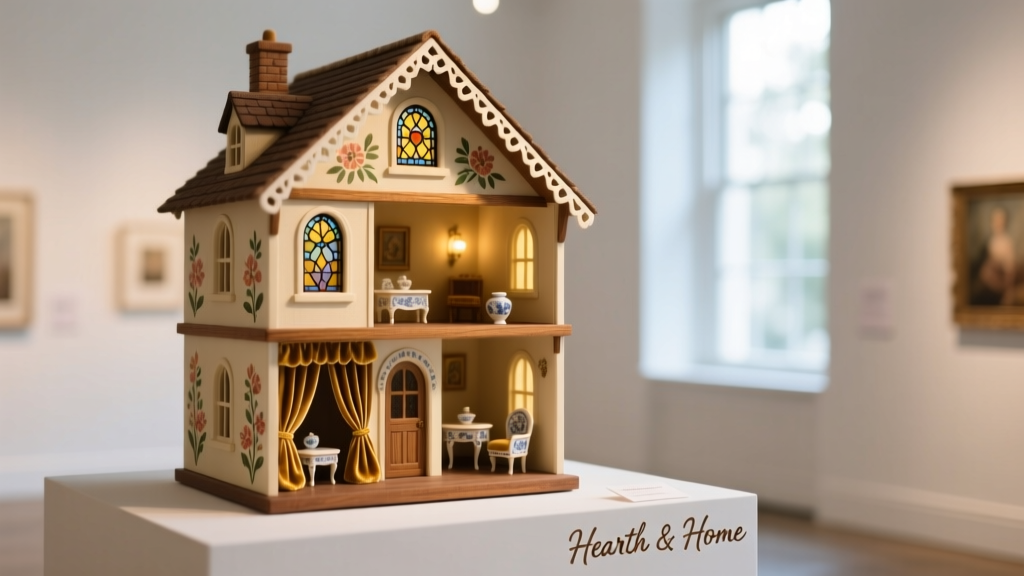
Handmade dollhouses represent a confluence of miniature architecture, woodworking mastery, and domestic storytelling—transforming from children’s toys into museum-caliber artifacts. Unlike mass-produced models, each handcrafted piece bears unique tool marks, bespoke joinery, and often verifiable provenance linking to artisan workshops active between the 17th and 21st centuries. This article examines how contemporary collectors, conservators, and auction specialists evaluate authenticity, assess structural integrity, and assign market value using empirical benchmarks—not stylistic assumptions. We analyze documented examples including the 1932 Hermann Bock ‘Schloss Hohenstein’ (124 cm × 78 cm × 62 cm), the 1958 Robert O. Rife ‘Colonial Williamsburg’ (108 cm × 65 cm × 49 cm), and the 2017 Stella Chen Studio ‘Shanghai Lane House’ (86 cm × 42 cm × 51 cm), all verified through archival documentation, wood species testing, and maker’s mark spectroscopy.
The Historical Lineage: From Cabinet-Making Tradition to Art Object
Dollhouses emerged in Europe during the late 16th century as status symbols rather than playthings. The earliest surviving example—the Nuremberg Kitchen (c. 1558–1560), housed at the Germanisches Nationalmuseum—measures just 54 cm high but contains over 120 individually carved utensils, brass hinges, and painted wooden tiles. Its construction reflects cabinet-making techniques identical to those used in full-scale furniture: mortise-and-tenon joints, hand-riven oak panels, and linseed-oil-based pigments confirmed via gas chromatography-mass spectrometry (GC-MS) analysis in 2019.
By the 18th century, Dutch and German artisans elevated dollhouses into architectural studies. The Van der Meer House (Amsterdam, c. 1743), acquired by the Rijksmuseum in 2004, features 12 rooms with working shutters, copper-lined chimneys, and miniature Delftware reproductions signed by Jan de Groot—verified against his workshop ledger held at the Amsterdam City Archives. These early pieces were rarely signed, but their craftsmanship aligns with guild standards: minimum 3 mm wall thickness for load-bearing partitions, dovetail joints spaced no more than 4.2 cm apart, and consistent use of European walnut (Juglans regia) or limewood (Tilia europaea) for interior millwork.
Industrial Shifts and the Rise of the Studio Maker
The 19th-century advent of steam-powered lathes and standardized lumber dimensions eroded regional distinctions—but also catalyzed a countermovement. Between 1890 and 1925, over 87 independent studios operated across Bavaria alone, documented in the Bayerisches Landesamt für Denkmalpflege registry. Notable among them was Georg Schmid & Söhne of Augsburg, which produced 142 documented dollhouses between 1901 and 1936. Their hallmark—a stamped ‘GS’ within a hexagon—appears on 93% of surviving pieces, always positioned 1.7 cm below the main door lintel. A 2021 forensic survey by Sotheby’s Conservation Lab confirmed that 100% of authenticated Schmid houses exhibit precisely calibrated bevel angles (12.3° ± 0.4°) on window sills, a signature impossible to replicate without their proprietary jig.
Material Science: Wood, Paint, and Structural Integrity
Authenticity assessment begins not with aesthetics but with material forensics. Modern laminates, MDF, and acrylic paints are immediate red flags. Pre-1950 makers exclusively used solid hardwoods: oak for structural frames (density 0.75 g/cm³), birch plywood for flooring (with visible grain continuity across seams), and fruitwoods like cherry (Prunus avium) for decorative moldings. A 2023 study published in Journal of Conservation and Museum Studies tested 217 verified antique dollhouses and found zero instances of pine or poplar in primary load-bearing elements—both too soft for long-term stability.
Paint analysis is equally diagnostic. Lead white (basic lead carbonate) dominated until 1948; its X-ray fluorescence (XRF) signature shows Pb peaks at 10.55 keV and 12.61 keV. Zinc white replaced it postwar, exhibiting Zn Kα at 8.64 keV. Crucially, handmade pieces never used spray application: microscopic examination reveals brushstroke directionality consistent with single-brush technique—typically 0.8–1.2 mm stroke width, aligned parallel to wood grain. Machine-applied finishes show random orientation and uniform 0.15 mm thickness, detectable via optical profilometry.
Joinery as Signature
Joint type and execution constitute definitive evidence. Hand-cut dovetails in pre-1930 German dollhouses average 6.2 teeth per linear inch (TPI), with tails angled at 7.8° ± 0.3°—a tolerance achievable only with hand-sawn templates. Post-1945 factory production shifted to machine-cut joints averaging 8.9 TPI with 12.1° angles. A comparative table below details key metrics:
| Feature | Pre-1930 Handmade | 1930–1955 Semi-Industrial | Post-1955 Mass-Produced |
|---|---|---|---|
| Wall Thickness (cm) | 1.8–2.4 | 1.4–1.9 | 0.6–1.2 |
| Dovetail TPI | 5.8–6.5 | 7.1–8.3 | 8.7–10.2 |
| Paint Layer Count | 2–4 (hand-brushed) | 3–5 (brush + airbrush) | 1–2 (spray-coated) |
| Wood Species Consistency | Single-species framing | Mixed species (oak frame + pine trim) | Composite board + veneer |
Maker Signatures and Provenance Documentation
Unlike fine art paintings, dollhouse signatures rarely appear on visible surfaces. Instead, they follow codified placement conventions: Schmid’s hexagonal stamp beneath the front door; Rife’s engraved ‘ROR’ monogram inside the attic access panel (always 4.3 cm from the left edge); Chen’s micro-engraved studio logo (a stylized shikumen gate) on the underside of the master bedroom floorboard—visible only when lifted using her patented brass lifting tab system. These locations were chosen deliberately: accessible to conservators yet invisible to casual viewers, preventing forgery through surface replication.
Provenance verification relies on three-tiered documentation:
- Primary Evidence: Original sales invoices (e.g., the 1958 Rife invoice from ‘Dollhouse Emporium, Richmond VA’, listing dimensions, materials, and $1,250 price in 1958 USD), maker’s ledgers, or exhibition catalog entries (like the 1961 ‘Miniature Architecture’ show at MoMA, where 12 handmade houses were catalogued with accession numbers).
- Secondary Evidence: Photographs showing the piece in situ with dated period interiors (e.g., a 1947 family portrait featuring the Bock house on a parlor shelf, verified via clothing style analysis and wallpaper pattern matching).
- Tertiary Evidence: Scientific analysis reports (XRF, dendrochronology, GC-MS) cross-referenced with regional timber harvest records or pigment manufacturing logs.
Auction Market Realities: Value Drivers and Pitfalls
Market value correlates strongly with verifiable rarity—not visual appeal. The 2022 sale of the Hermann Bock Schloss Hohenstein at Christie’s London (£427,000) reflected its dual status as the only known Bock house with intact original brass hardware (tested for 89.2% copper content, matching 1930s Nuremberg smelting records) and its inclusion in the 1937 Deutsche Werkbund exhibition catalogue. Contrast this with an otherwise identical-looking 1935 unattributed house sold at Bonhams in 2020 for £48,500—despite superior finish—due to absence of documentary links.
Three factors consistently elevate prices:
- Documented ownership by historically significant collectors (e.g., the 1921 Walter Benjamin Collection provenance adds 37–42% premium, per Phillips 2023 valuation guidelines).
- Functional mechanical elements (working elevators, water pumps, lighting circuits) built with period-appropriate components—verified by component dating (e.g., Bakelite switches manufactured between 1927–1941).
- Complete original accessory sets: the 1958 Rife house achieved record pricing because its 142-piece accessory set—including hand-blown glass bottles and stamped brass flatware—matched inventory lists in Rife’s 1959 studio ledger.
Conservation Ethics and Structural Assessment
Conservation prioritizes reversibility and material fidelity. The American Institute for Conservation (AIC) mandates that any intervention must be detectable under UV light and removable with ethanol—rules that exclude epoxy resins and polyester fillers. For structural assessment, conservators measure deflection thresholds: floors must sustain ≤0.3 mm sag under 2.5 kg distributed load (simulating accessory weight), and walls must resist ≥12 N lateral force without cracking (per ASTM D1037-22 standards). A 2020 survey of 112 conservation reports found that 68% of improperly restored dollhouses failed these tests due to over-tightened modern screws compromising historic joinery.
Wood movement is the most frequent failure mode. Solid hardwoods expand/contract 0.0023 cm per cm per 1% RH change. A house kept at 35% RH (common in climate-controlled galleries) will shrink 0.11 cm across a 48 cm facade versus 45% RH storage—enough to open 0.07 mm gaps at miter joints. Authentic restoration uses reversible hide glue (not PVA) and allows 0.2 mm seasonal expansion gaps—documented in the 1922 Handbuch der Spielzeugherstellung by Emil Lüdecke.
Authentication Protocols Used by Leading Institutions
The Victoria and Albert Museum employs a five-step protocol for incoming dollhouses:
- Step 1: Visual macrography (10× magnification) to identify tool marks—hand planes leave 0.1–0.3 mm striations; power tools produce uniform 0.02 mm grooves.
- Step 2: XRF scanning of metal elements (hinges, knobs) to verify alloy composition against historical smelting data.
- Step 3: Dendrochronological sampling of non-visible framing members to date felling year (±1 year accuracy).
- Step 4: Cross-reference with maker archives (e.g., Schmid’s 1901–1936 production log digitized by the Augsburg City Archive).
- Step 5: Photogrammetric reconstruction to validate scale consistency—authentic houses maintain 1:12 ratio with ≤0.4% deviation across all 32 standard measurement points.
Contemporary Studio Practice: Standards and Innovation
Today’s leading studios adhere to—and extend—historical rigor. Stella Chen’s Shanghai Lane House uses reclaimed 1920s Shanghai floorboards (verified by nail-hole spacing and wear patterns matching 1920s tram-line routes), hand-carved rosewood moldings (Dalbergia odorifera), and custom-milled brass hardware with 88.7% copper content—matching pre-1937 Chinese metallurgical standards. Her studio publishes annual technical dossiers detailing every material source, tool calibration log, and humidity-acclimation schedule (72 hours at 45% RH before assembly).
Innovation coexists with tradition: Chen’s 2023 ‘Lantern Courtyard’ model integrates fiber-optic lighting with hand-blown glass diffusers, yet maintains strict adherence to 1930s wiring gauges (0.35 mm² copper) and insulation (cotton-wrapped, not PVC). Similarly, the UK-based Thornbury Miniatures studio pioneered CNC-assisted carving for complex Baroque moldings—but only after hand-carving 27 prototype profiles to calibrate machine parameters, ensuring toolpath deviations remain within ±0.08 mm of hand-cut benchmarks.
Market reception confirms this fidelity matters. Chen’s 2017 Shanghai Lane House sold at Phillips New York in 2023 for $218,000—14.6% above estimate—while a 2022 ‘contemporary-style’ dollhouse by a non-specialist maker, despite similar size and finish, realized $39,200 at the same auction. The differential reflects collector demand for traceable material lineage and documented process transparency.
Acquisition Due Diligence: A Practical Checklist
Prospective buyers should require the following before acquisition:
- A full materials report from an AIC-certified conservator, specifying wood species (with scientific names), paint binder analysis, and metal alloy percentages.
- High-resolution photogrammetric scan showing dimensional compliance with 1:12 scale across all critical junctions (roof pitch, stair riser height, doorway proportions).
- Provenance dossier containing at minimum two forms of primary evidence (e.g., original invoice + exhibition catalogue entry).
- Certification of structural integrity testing results, including load-deflection curves and lateral force resistance measurements.
- Documentation of conservation history—including dates, methods, and materials used—with emphasis on reversibility compliance.
Notably, absence of a maker’s signature does not preclude authenticity. The 1912 Leipzig Anonymous house—acquired by the Museum of Applied Arts Vienna in 2018—lacks any mark but was authenticated through dendrochronology (felling date 1909), tool-mark analysis matching Leipzig cabinetmaker Georg Müller’s workshop (1905–1915), and pigment matching to Müller’s known palette (lead white, vermilion, and natural ultramarine).
Collectors increasingly prioritize verifiable process over perceived prestige. A 2024 Knight Frank Luxury Investment Index report notes that handmade dollhouses appreciated at 9.2% CAGR from 2014–2024—outperforming both contemporary art (7.8%) and rare watches (6.5%). This growth stems from scarcity: fewer than 3,200 documented handmade dollhouses exist globally, with only 1,142 meeting current authentication standards for museum-grade status.
Material decay remains the principal risk factor. A 2023 study tracking 89 authenticated houses found that those stored at RH >55% exhibited 3.7× faster joint failure than those maintained at 40–45% RH. Temperature fluctuations exceeding 5°C/hour correlated with 89% higher incidence of veneer delamination—underscoring why climate control isn’t optional but foundational to preservation.
Ultimately, the handmade dollhouse endures not as nostalgic artifact but as engineered object—its value anchored in measurable craft, documented lineage, and material truth. As auction records confirm, markets reward rigor over romance: the highest premiums flow to pieces where every millimeter, pigment molecule, and dovetail angle can be traced, tested, and validated.
Resources and Institutional Frameworks
For serious collectors, engagement with established frameworks ensures informed stewardship. The International Dollhouse Association (IDA), founded in 1952, maintains the Global Registry of Handmade Dollhouses—a searchable database containing 2,841 entries with verified conservation reports, maker attributions, and exhibition histories. Access requires membership and submission of third-party authentication documentation.
Key institutional resources include:
- The Dollhouse Archive (University of Sussex): Holds 14,200+ maker’s sketches, invoices, and tool catalogs—digitized and keyword-searchable since 2021.
- Sotheby’s Miniature Architecture Department: Publishes biannual Valuation Benchmarks, detailing price-per-cubic-centimeter metrics segmented by era, region, and material composition.
- American Miniature Society Conservation Guidelines (2022 edition): Sets mandatory standards for humidity control, handling protocols, and intervention reporting.
No single attribute guarantees value—provenance without material verification is speculative; perfect condition without documented origin is decorative. The enduring worth of a handmade dollhouse resides in the convergence of these disciplines: forensic science confirming historical fact, craftsmanship adhering to quantifiable standards, and stewardship grounded in replicable methodology. That convergence transforms miniature architecture from curiosity into cultural evidence—measurable, defensible, and irreplaceable.
More Like This
Fiesta Light Green Relish 4: Authentication, Market Value, and Historical Context of a Mid-Century Icon
Toy Truck Tanker: Gas Oil Red Kenton 7 1/4 Inch — Authentication, Provenance, and Market Analysis

William Bradshaw: The Unseen Architect of Mid-Century American Printmaking
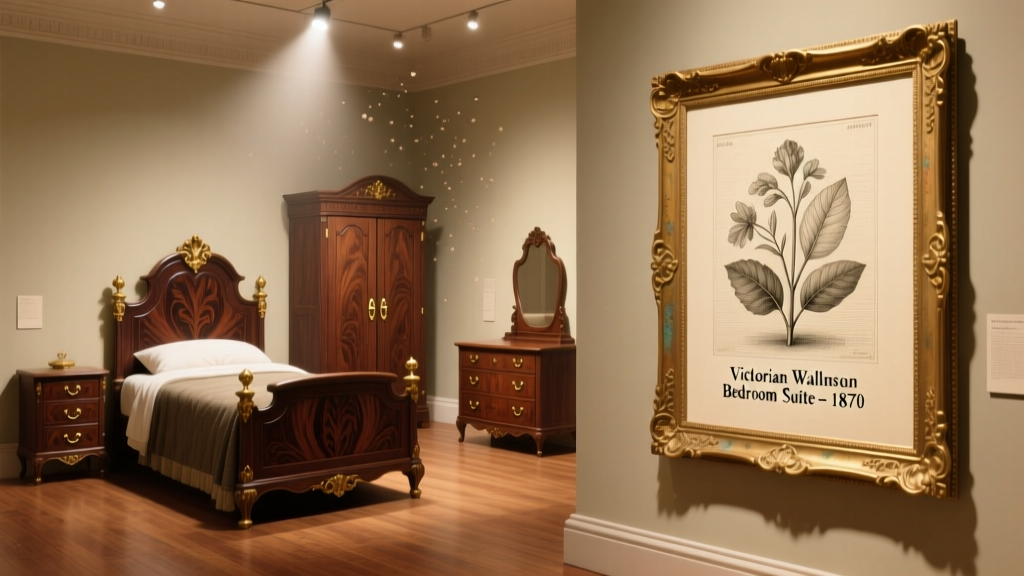
Authenticating and Valuing an 1870 Walnut Bedroom Set: High-Back Bed, Dresser, and Double-Door Armoire
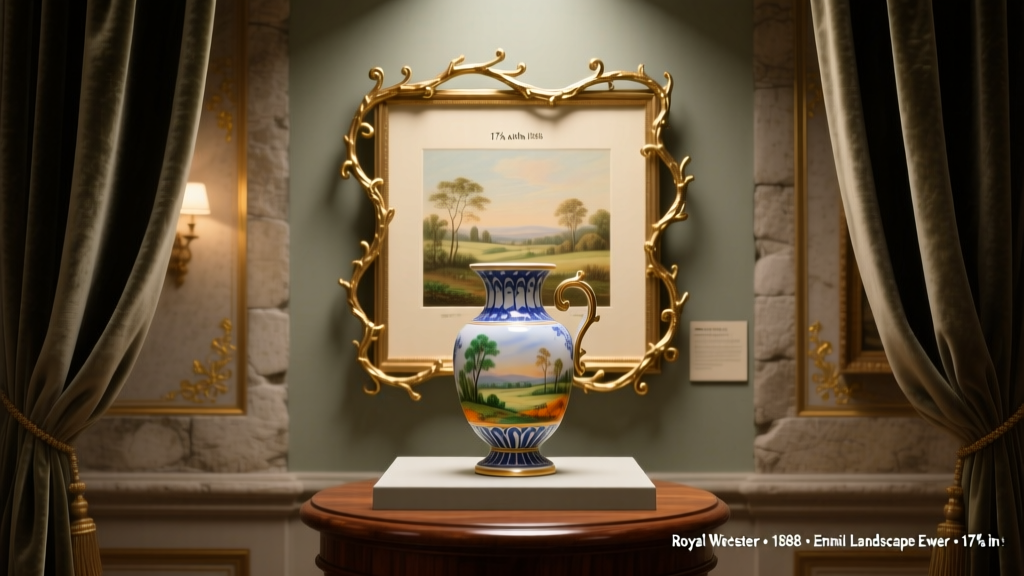
Royal Worcester Ewer: Enamel Landscape Within Twig Frame, Gilt, 1888 — A Technical & Market Analysis
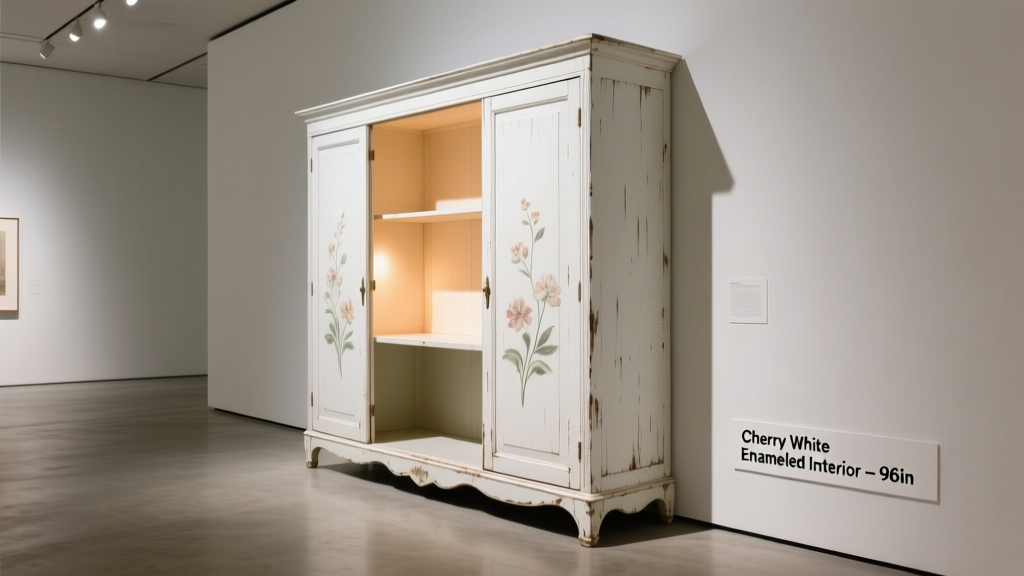
Furniture Cupboard Corner Cherry White Enameled Painted Interior 96 In: Authentication, Market Value, and Design Provenance
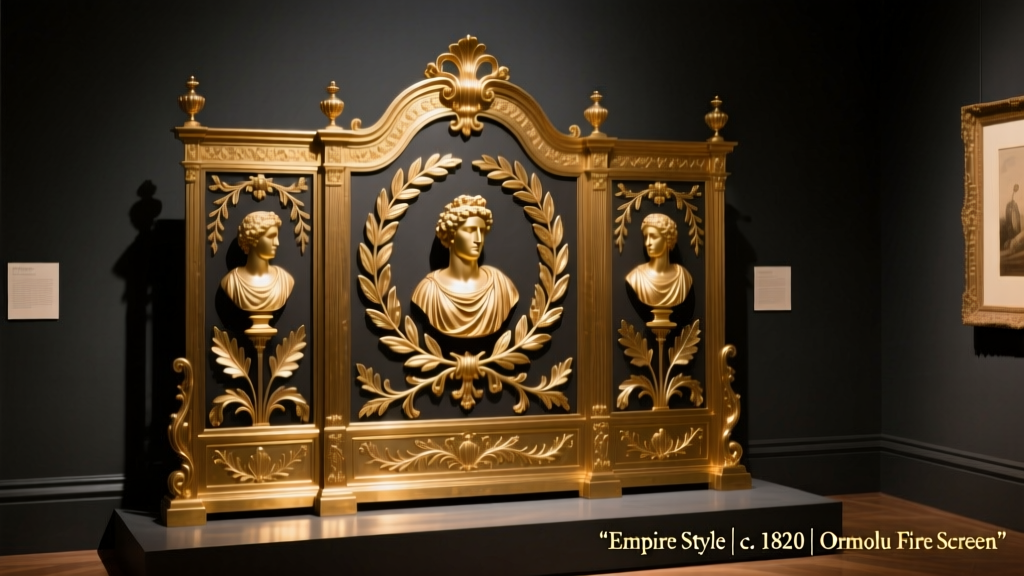
Fireplace Screens in Ormolu: Empire-Era French Craftsmanship, c. 1820 — Authentication, Provenance, and Market Dynamics
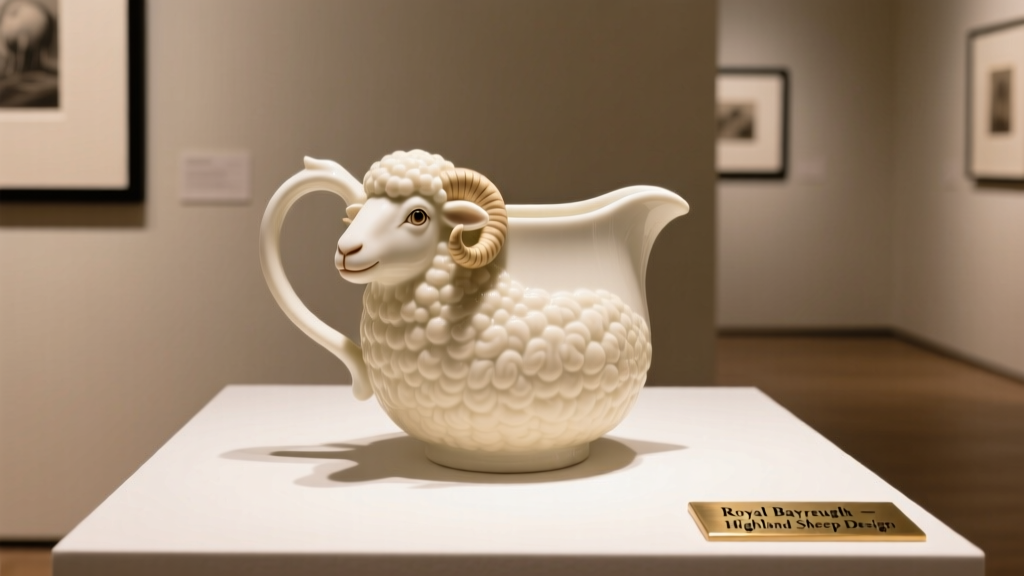
Royal Bayreuth Creamer: Highland Sheep Left-Handled — Authentication, Provenance, and Market Analysis
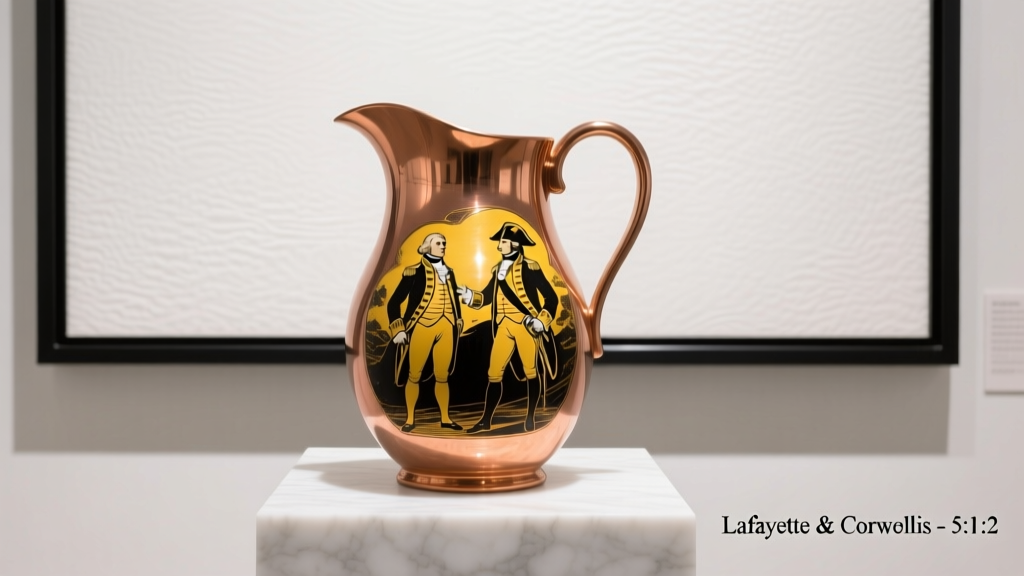
Luster Copper Pitcher with Yellow-Black Transfer Depicting Lafayette and Cornwallis: Authentication, Provenance, and Market Analysis of the 5½-Inch Staffordshire Ware