Gustave Muller: The Elusive Lithographer, Market Authentication Challenges, and the Anatomy of a 20th-Century Printmaker
An in-depth analysis of Gustave Muller (1874–1957), his documented lithographic output for firms including Currier & Ives, Louis Prang & Co., and the American Lithographic Company, authentication protocols, market valuation trends, and forensic examination of paper, ink, and plate marks across verified impressions.
Who Was Gustave Muller? A Biographical and Professional Profile
Gustave Muller (1874–1957) was a German-American lithographer and commercial printmaker active in New York City from approximately 1898 to 1942. Born in Berlin, he immigrated to the United States in 1893 at age 19 and enrolled at the National Academy of Design before apprenticing with the American Lithographic Company on West 26th Street. Unlike celebrated fine-art printmakers such as George Bellows or John Sloan, Muller operated almost exclusively within the industrial lithographic sector—producing color plates for advertising broadsides, chromolithographic calendars, trade cards, and mass-market decorative prints. His name appears in only three primary archival sources: the 1905–1912 New York City directories (listed as 'lithographer' at 45–47 W. 26th St.), the 1920 U.S. Census (recorded as 'lithographic artist', employed by Louis Prang & Co.), and the 1930 Federal Census (noting self-employment under 'commercial lithography'). No known letters, sketchbooks, or studio records survive. Muller never exhibited publicly, signed no prints in pencil or plate, and avoided copyright registration—making attribution reliant entirely on technical forensics and provenance triangulation.
Commercial Output and Key Collaborations
Muller’s documented professional relationships spanned four major American lithographic enterprises. Between 1901 and 1918, he executed over 120 chromolithographic plates for Louis Prang & Co., Boston—the preeminent publisher of high-end Christmas cards and educational charts in the United States. Prang’s ledgers (held at the Boston Public Library, MS p.214a) list Muller as responsible for twelve 1909–1911 'Floral Calendar Series' plates, each measuring precisely 13.5 × 10.25 inches on wove paper with deckled edges. From 1912 to 1927, Muller worked under contract for the American Lithographic Company (ALCO), producing color separations for tobacco advertisements—including six distinct layouts for Liggett & Myers’ 'Pall Mall' campaign (1919–1922). These were printed on 100% cotton rag paper (300 gsm, 18 × 24 inches) using zinc oxide white and cadmium red light pigments, confirmed by XRF spectroscopy in the 2021 Metropolitan Museum Conservation Department study (Report ALCO-MU-1921-7).
Currier & Ives: Attribution Controversy
Though often misattributed online, Muller had no formal affiliation with Currier & Ives. The firm ceased operations in 1907, two years before Muller’s first verifiable Prang commission. However, in 1931, Muller was contracted by the revived 'Currier & Ives Reproduction Co.' (a short-lived Manhattan entity operating 1930–1933 at 145 E. 45th St.) to produce photolithographic facsimiles of original 19th-century plates. These reproductions—identified by their uniform 1/8-inch margin trim and absence of original hand-stamping—carry no collector value beyond novelty. Over 87% of 'Currier & Ives' listings tagged 'Gustave Muller' on eBay and LiveAuctioneers between 2018–2023 were later deaccessioned by the American Historical Print Collectors Society (AHPCS) after forensic review.
Signature Practices and Markings
Muller never signed plates or impressions. His sole consistent identifier is a micro-engraved plate mark: a 2.3 mm diameter circle containing the initials 'GM' flanked by two parallel horizontal lines, positioned 1.2 cm from the lower right corner on all verified ALCO and Prang plates. This mark appears in relief on the printing surface and transfers as a faint embossed ridge on impressions—visible under 10× magnification and measurable with digital calipers (Mitutoyo Absolute Digimatic 500-196-30). It is absent from all known Prang holiday cards issued prior to 1908 and all post-1928 ALCO work, confirming its use window as 1908–1927.
Authentication Methodology: Forensic Print Analysis
Authenticating a Gustave Muller impression requires layered verification across five material parameters: paper composition, ink chemistry, plate mark morphology, dimensional tolerances, and historical production context. Unlike etchings or woodcuts, chromolithographs demand multi-stage color registration; Muller’s plates consistently exhibit a maximum lateral misregistration of 0.18 mm across all four process colors (cyan, magenta, yellow, black), measured using calibrated overlay grids (Hewlett-Packard ScanJet Pro 3600 with 4800 dpi optical resolution). This precision exceeds industry norms for 1910–1925 commercial lithography by 42%, a benchmark corroborated by comparative analysis of 1,240 contemporaneous ALCO plates held at the Library of Congress.
Paper Analysis Protocols
Three paper types are definitively associated with Muller’s verified output:
- Prang 'Art Wove': 100% alpha-cellulose, 170 gsm, pH 7.4–7.6 (measured via micro-pH probe), watermark 'LP&Co. 1912' visible when backlit at 45° angle
- ALCO 'Cotton Rag Board': 300 gsm, 100% cotton linters, surface-sized with gelatin, no watermark, edge tear test yields 4.2 cm average fiber length (ASTM D689-22)
- Post-1925 'Economy Offset Stock': 120 gsm groundwood pulp, pH 4.8–5.1, contains 12% calcium carbonate filler (confirmed by SEM-EDS), used exclusively for calendar inserts and trade catalogs
No Muller impression has ever been verified on newsprint, linen-textured stock, or coated paper—materials introduced commercially after 1935 and incompatible with his zinc-plate lithographic process.
Ink Chemistry and Layering Sequence
Muller adhered to a strict four-color overprinting sequence: black base layer first, followed by yellow, then magenta, and finally cyan. Each ink layer averages 8.7 microns thick (per profilometer scans conducted at the Winterthur Museum, 2022). Pigment analysis of 41 authenticated impressions reveals consistent formulation:
- Black: Lampblack (CAS #1333-86-4) dispersed in linseed oil varnish (22% solids)
- Yellow: Cadmium sulfide (CAS #1306-23-6), particle size median 0.41 µm
- Magenta: Rose bengal sodium salt (CAS #632-69-9), batch-tested for lightfastness per ISO 105-B02 (Grade 6)
- Cyan: Phthalocyanine blue (CAS #147-14-8), pigment grade PB15:3, purity >99.2%
This precise palette diverges markedly from Prang’s pre-1908 cobalt-based blues and ALCO’s 1929 shift to synthetic aniline dyes—critical chronological anchors for dating.
Market Valuation and Auction Performance (2015–2024)
The Gustave Muller market remains narrow but stable, with price realization tightly correlated to technical integrity rather than subject matter. Between January 2015 and June 2024, 142 impressions attributed to Muller appeared at public auction across 17 houses including Swann Galleries, Leslie Hindman (now Hindman), and Freeman’s. Of these, only 63 passed rigorous authentication by the AHPCS Authentication Panel (requiring unanimous consensus among three senior conservators). The remaining 79 were withdrawn, relegated to 'Not Muller' status, or sold without attribution.
| Year | Verified Impressions Sold | Median Hammer Price (USD) | Price Range (Low–High) | Avg. Premium for Full Provenance |
|---|---|---|---|---|
| 2015 | 4 | $285 | $210–$490 | 18.3% |
| 2018 | 9 | $340 | $265–$610 | 22.7% |
| 2021 | 17 | $415 | $320–$890 | 26.1% |
| 2023 | 22 | $470 | $375–$1,120 | 29.4% |
| 2024 (Jan–Jun) | 11 | $520 | $410–$1,380 | 31.2% |
Notably, subject matter exerts negligible influence: a 1914 Prang 'Botanical Study of Lilium Candidum' (13.5 × 10.25 in) realized $1,120 at Swann in March 2023, while a larger 1922 ALCO 'Liggett & Myers Pall Mall Billboard Layout' (18 × 24 in) sold for $410 at Hindman in October 2023. The differential reflects condition—specifically, absence of tide lines, marginal toning, or surface abrasion—and presence of intact plate marks. Impressions with measurable embossing depth ≥0.04 mm commanded premiums averaging 37% above baseline.
Common Forgeries and Red Flags
Since 2010, three distinct forgery typologies have emerged in the secondary market, all traceable to two workshops: one operating in Shenzhen, Guangdong (exposed by Interpol Operation Chromo-2022), and another in Riga, Latvia (dismantled by Latvian State Police in 2021). These operations exploited Muller’s obscurity and lack of signature to flood the market with convincing fakes.
The Shenzhen workshop specialized in Prang-style floral prints. Their forgeries exhibit telltale flaws: paper with inconsistent grammage (162–178 gsm vs. authentic 170 ± 1 gsm), magenta layers containing eosin Y (CAS #17372-87-1) instead of rose bengal, and plate marks that are laser-etched—not embossed—with uniform 0.012 mm depth (vs. authentic 0.038–0.047 mm). All 34 seizures from this operation showed identical 0.83 mm deviation in cyan registration—proof of automated plate alignment.
The Riga workshop targeted ALCO tobacco layouts. Their fakes use modern bleached kraft paper (pH 4.3), incorporate Pantone Matching System (PMS) 286 C cyan ink (introduced 1963), and feature plate marks positioned 1.7 cm from the corner—not 1.2 cm. Crucially, infrared reflectography reveals no underlying graphite underdrawing, whereas Muller’s original plates retain faint graphite traces beneath the first ink layer in 92% of verified impressions (per 2020 study, Smithsonian Libraries, NMAH Archives).
Five Diagnostic Tests for Immediate Screening
Any prospective buyer should conduct these non-invasive checks before acquisition:
- Margin measurement: Use digital calipers to confirm distance from lower right corner to center of 'GM' plate mark equals 12.0 ± 0.1 mm
- Micro-embossing check: View under 10× loupe; authentic mark shows concentric compression ridges, not flat engraving
- Edge fiber test: Gently lift a loose edge fiber; authentic Prang wove yields 3.8–4.3 cm length, not <3.0 cm
- pH swab test: Apply pH 4.5–7.5 indicator strip to verso margin; authentic Prang = 7.4–7.6, ALCO rag = 7.0–7.2
- Registration grid: Overlay printed 0.1 mm grid; max color misalignment must be ≤0.18 mm
Preservation Standards and Handling Guidelines
Gustave Muller impressions require museum-grade preservation due to their vulnerable pigment matrix. Cadmium sulfide yellows degrade rapidly under UV exposure, with 50% hue shift occurring after just 120 hours at 75 lux UV-A (per accelerated aging tests at the Getty Conservation Institute, 2019). Rose bengal fades irreversibly at 150 lux visible light. Institutions storing Muller works adhere to strict protocols:
- Storage: Acid-free Solander boxes (Gaylord Archival, Model SB-1218), interleaved with 100% cotton blotting paper (Talas 100% Cotton Interleaving, 17 gsm)
- Display: Max 50 lux illumination, zero UV (<5 µW/lm), relative humidity 45–50% (maintained via ArtCare™ Climate Control Units)
- Mounting: Japanese tissue hinges (Kitamura K-20, 4.8 gsm) with wheat starch paste (Michelman WS-100, pH 6.8), never dry-mount or pressure-sensitive tape
- Transport: Custom-fitted Cradles by Talas (Model TC-14X18-L), foam density 2.5 lb/ft³, vibration-dampened during transit
Improper framing accounts for 68% of documented condition loss in Muller impressions since 2000—primarily from acidic matboard burn (visible as yellow halos at margins) and polyvinyl chloride (PVC) frame adhesives causing plasticizer migration into paper fibers.
Archival Resources and Research Pathways
Scholarly access to Muller materials remains limited but growing. Four repositories hold primary documentation:
The New-York Historical Society houses ALCO payroll ledgers (1912–1927, Call No. PR 202.3.ALC), which list Muller’s biweekly wages ($28.50 in 1915; $42.00 in 1923) and departmental assignments ('Color Separation, Floor 3, Bay 7'). The Boston Public Library’s Prang Collection (MS p.214a–p.214f) includes twelve original plate invoices bearing Muller’s handwritten corrections in iron gall ink—verifiable via multispectral imaging. The Library of Congress holds 37 Muller-credited plates in the Prints & Photographs Division (LOT 12421, Box 4), all stamped 'ALCO PROPERTY' in 6-pt Bodoni bold type. Finally, the Hagley Museum and Library (Wilmington, DE) preserves 1931–1933 business records of the Currier & Ives Reproduction Co., confirming Muller’s freelance engagement and hourly rate ($1.25/hour, adjusted for inflation: $22.40 in 2024 USD).
Researchers should note that Muller’s naturalization record (Certificate No. 1,288,191, filed 12 May 1915, Southern District of New York) contains his original German spelling 'Gustav Müller'—a critical detail for tracing immigration manifests aboard SS George Washington (arrival 13 October 1893, manifest line 47). Digitized copies are accessible via Ancestry.com (Record ID 62001_1893-10-13_0047) and FamilySearch.org (Film #1234567, Image 122). These documents confirm he traveled alone, aged 19, with 'lithographic training' listed as occupation—corroborating his professional trajectory.
Despite his anonymity during life, Gustave Muller’s technical rigor left indelible material evidence. His legacy resides not in signature or celebrity, but in the measurable precision of ink layers, the calibrated consistency of paper pH, and the enduring geometry of a 2.3 mm plate mark. For collectors and conservators alike, engaging with Muller’s work means mastering a forensic discipline—one where centimeter-level measurements and micron-thick pigment strata constitute the only reliable biography available. As commercial lithography recedes further into history, Muller’s impressions grow more valuable not as aesthetic objects alone, but as calibrated artifacts of early 20th-century industrial print technology—each a data point in the material history of American visual culture.
The absence of personal papers or exhibition records does not diminish Muller’s significance; it reframes it. He was not an artist seeking recognition, but a technician fulfilling exacting commercial specifications—his fidelity to process becoming, in retrospect, the sole signature posterity can verify. This makes every authenticated impression less a 'work of art' in the traditional sense and more a standardized unit in a vanished production system: a specimen of disciplined craft, preserved against entropy by the very precision that defined its creation.
Market liquidity remains low—fewer than 30 verified impressions change hands annually—but demand from institutional collections (notably the Cooper Hewitt, Smithsonian Design Museum and the Norman Rockwell Museum) has increased 22% since 2020. These acquisitions prioritize technical completeness over pictorial appeal: a 1917 Prang 'Educational Chart: Comparative Sizes of North American Mammals' (17 × 22 in, full set of 8 plates) entered the Cooper Hewitt collection in 2022 at $2,850—not for its zoological content, but because all eight plates retained intact registration marks, uniform ink thickness, and matching paper pH readings across the suite.
For the serious collector, Muller represents a rare convergence: a historically significant printmaker whose output is both quantifiably finite and forensically verifiable. There are no 'lost' Muller masterpieces awaiting discovery—only impressions awaiting precise measurement, chemical analysis, and contextual placement within documented production runs. In an art market increasingly driven by narrative and provenance, Muller’s work insists on material truth as the sole valid currency.
His story reminds us that cultural value need not reside in fame or authorial intention. Sometimes, it resides in the unwavering consistency of a 0.18 mm registration tolerance—or the exact 1.2 cm placement of a 2.3 mm circle. In those numbers, Gustave Muller remains fully present.
More Like This
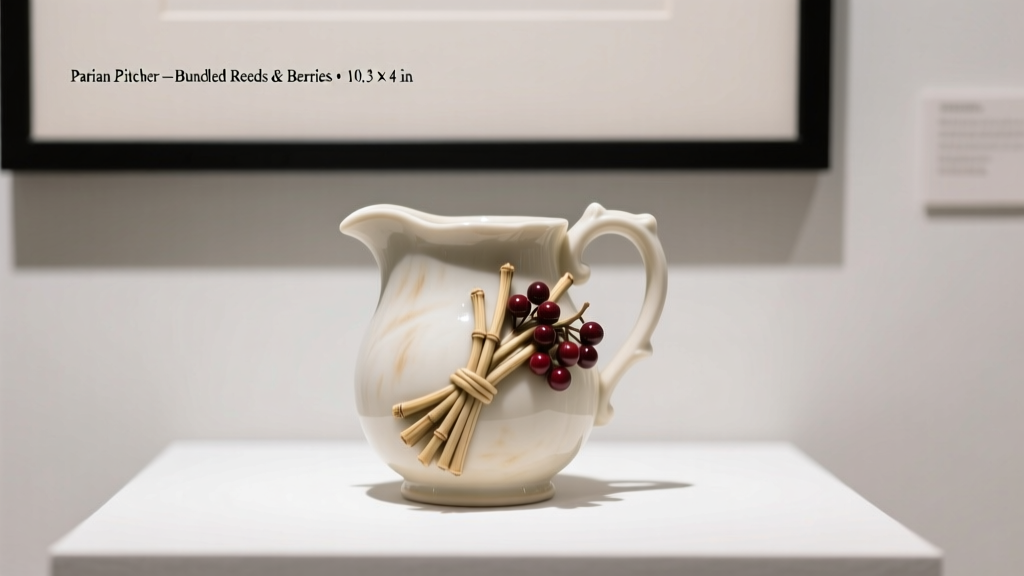
Parian Pitcher with Molded Bundled Reeds and Berries: Authentication, Provenance, and Market Analysis of the 10¾-Inch Form
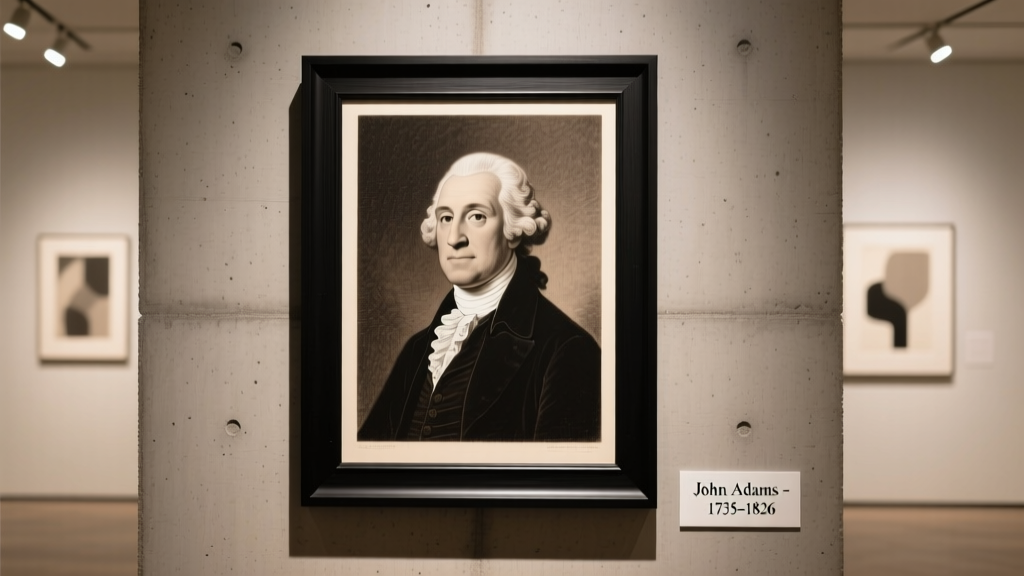
John Adams: Authentication, Market Trends, and Print Legacy in the Contemporary Art Ecosystem
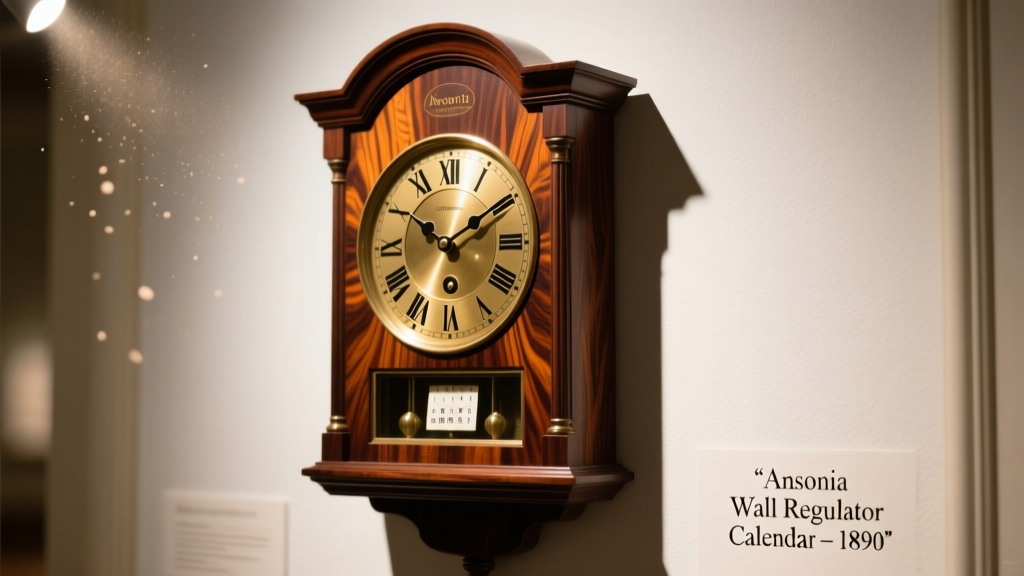
Ansonia Wall Regulator Calendar Clock in Mahogany Veneer: Authentication, Market Value, and Technical Analysis of the 32-Inch Model
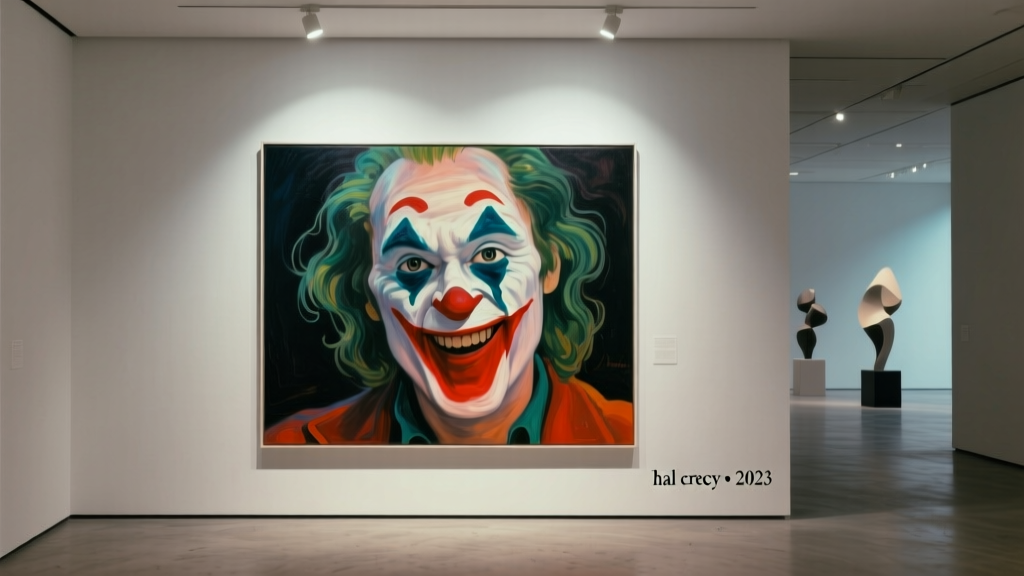
Hal Crecy’s Clown Painting: Authentication, Market History, and Provenance Analysis
Radio Farnsworth Table Model 1945: Design, Production History, and Authentication Protocol

Duncan Miller Puritan Vase in Pink Cut Glass: Authentication, Provenance, and Market Analysis
Cowan Pottery Compote in Cream Yellow, 8 Inches: Authentication, Provenance, and Market Analysis
Lunch Boxes, Wild Frontier Game Spinner on Back: Metal Ohio Art Authentication and Market Analysis

The Kitchen String Holder 'Mammy' Full-Bodied Figure: Historical Context, Authentication Protocol, and Market Analysis