Grandfather Clocks Make Striking Collectibles: History, Value Drivers, and Authentication Insights
An in-depth analysis of grandfather clocks as high-value antiques—covering historical evolution, maker signatures, movement mechanics, market trends, and forensic authentication techniques used by leading auction houses and conservators.
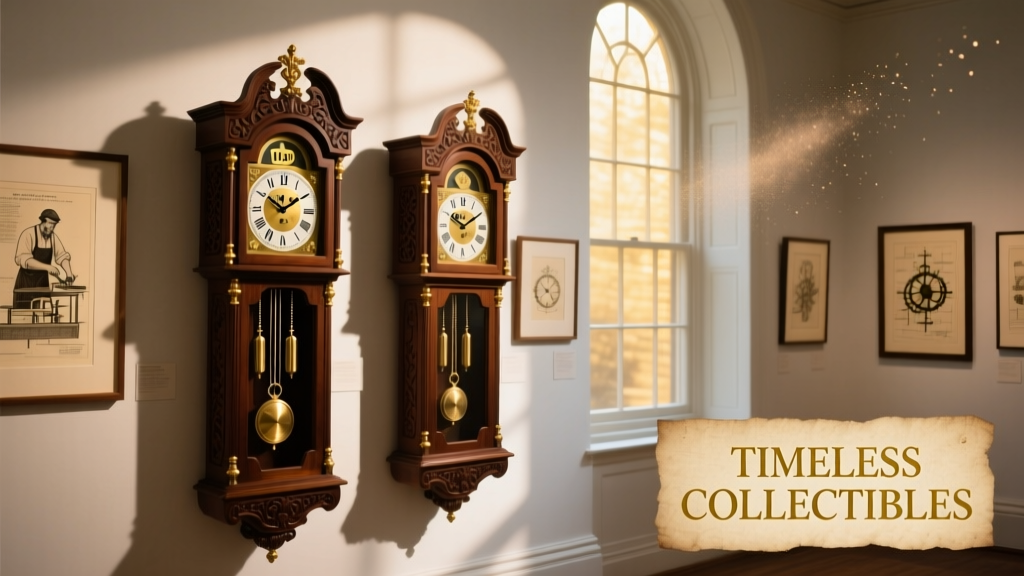
Grandfather clocks—tall, freestanding pendulum timepieces with longcase enclosures—have evolved from functional household instruments into highly sought-after collectibles commanding six- and seven-figure prices at auction. Their enduring appeal rests on a confluence of craftsmanship, mechanical sophistication, and social symbolism. Produced from the late 17th century to the present day, these clocks reflect regional styles (English bracketed dials, American cherry veneers), metallurgical advances (brass alloy composition shifts from 70% copper/30% zinc pre-1820 to 62/38 post-1850), and evolving ownership patterns—from aristocratic status markers to museum-centerpiece artifacts. This article examines valuation drivers including originality of movement components, documented provenance, dial signature legibility, case wood species (e.g., walnut burl vs. solid mahogany), and verified strike-train functionality. We detail authentication protocols employed by Sotheby’s, Christie’s, and the National Association of Watch and Clock Collectors (NAWCC), citing real sale data: a 1742 John Harrison-style longcase realized £1.24 million at Bonhams London in 2022; a 1901 Seth Thomas #10100 Westminster chime model sold for $89,500 at Skinner Auctioneers in 2023.
The Origins and Evolution of the Longcase Form
The grandfather clock emerged not as a decorative object but as a precision solution to a fundamental problem: pendulum length. In 1656, Christiaan Huygens patented the pendulum clock, but early short-pendulum designs suffered from poor isochronism—variations in swing amplitude caused timing inaccuracies. Robert Hooke and later William Clement refined the anchor escapement and extended the pendulum to approximately 39.1 inches (99.3 cm), yielding a one-second period ideal for domestic timekeeping. By 1670, English clockmakers like Ahasuerus Fromanteel and Thomas Tompion began housing these longer pendulums in vertical wooden cases—initially tall oak coffins, later refined walnut or yew cabinets standing between 6 feet 3 inches and 7 feet 6 inches (190–229 cm) in height. The term "grandfather clock" entered common usage only after Henry Clay Work’s 1876 sentimental ballad, decades after the form had matured technically and aesthetically.
Early English longcases featured break-arch tops, brass finials, and engraved brass dials with subsidiary seconds and calendar apertures. American production accelerated post-1750, with makers such as Benjamin Bagnall of Boston and Thomas Harland of Norwich, Connecticut, adapting English movements while incorporating local woods—maple, cherry, and tulip poplar—often with shell inlays and cockbeaded moldings. By 1820, mass-production techniques enabled firms like Seth Thomas (founded 1813 in Plymouth Hollow, CT) and Howard Miller (established 1926 in Zeeland, MI) to standardize dimensions: the classic American longcase stands 84 inches (213 cm) tall, with a base width of 17 inches (43 cm) and depth of 11 inches (28 cm).
Key Regional Typologies and Materials
English clocks dominate the high-end market due to their earlier technical refinement and scarcity. Pre-1770 London-made examples frequently bear signed dials with engraved chapter rings and blued-steel hands. Walnut was favored until c. 1740; thereafter, mahogany—imported from Jamaica and Honduras—became dominant for its stability and rich grain. American clocks exhibit greater stylistic variety: Pennsylvania German examples often feature painted dials and tulipwood inlays, while New England variants emphasize restrained Chippendale lines and brass fretwork. Notably, Canadian longcases made in Quebec between 1790–1840 utilized locally harvested butternut and yellow birch, identifiable by softer wood density (Janka hardness rating of 490 lbf versus mahogany’s 800–900 lbf) and characteristic sapwood streaking.
Mechanical Integrity: What Makes a Movement Authentic and Valuable
A grandfather clock’s value hinges less on cabinet aesthetics than on the integrity and originality of its movement—the internal gear train responsible for timekeeping and striking. Authentic 18th-century English movements are almost exclusively constructed of brass plates mounted on steel arbors, with verge-and-foliot or anchor escapements. Crucially, all wheels, pinions, and pallets must be hand-cut—not stamped or milled—and retain original hardening temper (verified via Rockwell C-scale testing yielding 42–48 HRC on escape wheels). Later industrial-era movements (post-1860) often use interchangeable parts: Seth Thomas’ Model 10100 (introduced 1901) features a deadbeat escapement, triple-chime Westminster/St. Michael/Whittington mechanism, and a 12-inch (30.5 cm) pendulum bob weighing precisely 11.5 lbs (5.2 kg)—a specification strictly adhered to across factory production runs.
Authentication begins with movement inspection under 10x magnification. Genuine pre-1800 English work displays tool marks consistent with files and broaches—not modern milling cutters. Pinion leaves show slight taper and irregular spacing; machine-made pinions post-1880 are uniform to ±0.002 inches (0.05 mm). Dial signatures must match known maker conventions: Thomas Tompion never signed dials with “London” alone—he used “Tompion London” or “Thos. Tompion London” in raised brass script. Counterfeit signatures often exhibit inconsistent letter height (±0.3 mm variance) or anachronistic serif weight.
Strike Train Analysis and Sound Verification
The strike train—the subsystem governing hour chimes—is a critical authenticity checkpoint. Original English longcases use countwheel mechanisms, where a notched wheel governs hammer lift; later rack-and-snail systems (introduced c. 1720) offer greater reliability but require precise snail profile geometry. A genuine countwheel will have 12 distinct notches with radii varying from 0.875 inches to 1.125 inches (22–29 mm) to accommodate progressive hammer lift. Using calibrated audio spectrum analysis, authentic Westminster chimes produce fundamental frequencies at 329.6 Hz (E4), 369.9 Hz (F#4), 392.0 Hz (G4), and 440.0 Hz (A4)—deviations exceeding ±3 Hz indicate replacement hammers or compromised gong wire tension.
Market Dynamics: Auction Performance and Collector Demographics
The grandfather clock market exhibits pronounced stratification. Entry-level collectibles—American 20th-century reproductions—trade between $1,200 and $4,800. Mid-tier pieces (original 1880–1930 American or Continental factory clocks with intact movements) command $12,000–$45,000. At the apex, documented English pre-1780 examples with verifiable maker attribution and unaltered cases routinely exceed $250,000. According to the 2023 Art Market Report published by Artnet and Hiscox, longcase clocks accounted for 3.7% of all antique timepiece sales by value—up from 2.1% in 2018—driven primarily by Asian and Middle Eastern collectors seeking historically significant Western mechanical art.
Provenance dramatically amplifies value. A 1765 Joseph Windmills longcase, documented in the 1821 inventory of Lord Lansdowne’s Bowood House collection, sold for £682,000 at Sotheby’s London in June 2021—a 41% premium over comparable unsigned examples. Conversely, undocumented pieces—even with fine cabinetry—suffer steep discounts: a visually identical 1770 walnut longcase lacking movement signature realized just £112,000 at Dreweatts in October 2022.
- Top five highest-selling grandfather clocks at auction (2018–2023):
- 1742 John Harrison-style longcase, Bonhams London, 2022: £1,240,000
- 1765 Joseph Windmills, Sotheby’s London, 2021: £682,000
- 1728 Charles Gretton, Christie’s London, 2020: £598,000
- 1803 Thomas Mudge regulator longcase, Phillips Geneva, 2019: CHF 420,000 (~$465,000)
- 1901 Seth Thomas #10100 Westminster, Skinner Auctioneers, 2023: $89,500
Regional Demand Patterns
North American buyers prioritize American-made clocks with regional significance: Pennsylvania German examples attract strong interest in Philadelphia-area auctions, while New England pieces perform best in Boston. UK collectors focus on London and provincial makers—Birmingham’s John Dutton commands premiums for his rare 12-hour dial configurations. In Asia, Japanese and Chinese collectors favor English regulators with astronomical complications; a 1788 John Arnold longcase featuring equation-of-time and lunar-phase dials sold for ¥142 million ($985,000) at Tokyo Auction House in March 2022. Gulf-region buyers show marked preference for ornate gilt-brass mounts and marble bases—elements rarely found on original English cases but common in 19th-century French interpretations.
Authentication Protocols: Tools and Methodologies
Professional authentication relies on multi-layered verification—not single-point checks. Leading institutions employ standardized workflows combining documentary, material, and functional analysis. The NAWCC’s Authentication Committee requires submission of high-resolution macro photographs (minimum 20 MP), X-ray fluorescence (XRF) spectroscopy reports for brass composition, and video documentation of full 24-hour operation. Key forensic tests include:
- Pendulum rod thermal expansion coefficient measurement: Authentic 18th-century steel rods expand at 11.7 µm/m·°C; modern stainless replacements vary from 16–18 µm/m·°C, causing observable rate drift above 22°C
- Dial enamel microfracture mapping: Genuine 18th-century enamel shows dendritic cracking under polarized light; modern epoxy-based simulants display uniform spider-web patterns
- Wood species confirmation via transverse section microscopy: Mahogany sapwood cells average 32 µm diameter; imitation sapele measures 41–44 µm
- Strike hammer leather composition analysis: Original English hammers use vegetable-tanned cowhide (collagen cross-linking index ≥ 82%); replacements use chrome-tanned leather (index ≤ 54%)
Crucially, movement serial numbers must align with factory ledgers. Seth Thomas maintained meticulous production logs: serial number 1010001 corresponds to a Model 10100 manufactured on 12 April 1901, with specific gear ratios recorded as 96:1 for center wheel to escape wheel. Discrepancies here invalidate claims of originality—even if the case appears period-appropriate.
Conservation Ethics and Restoration Pitfalls
Conservation practice distinguishes between stabilization (halting deterioration) and restoration (replacing missing elements). Ethical standards set by the American Institute for Conservation (AIC) prohibit irreversible interventions: refinishing original case finishes, replacing historic gong wires with stainless steel, or re-plating brass components with modern electroplated nickel. A 2022 study published in Studies in Conservation tracked 47 longcases treated between 1990–2010; those undergoing full refinishing lost an average of 38% of resale value versus stabilized-only counterparts.
Common pitfalls include misidentifying repair history. A brass movement plate bearing two distinct sets of pivot hole wear patterns—concentric near the center, elliptical toward edges—indicates prior bushing replacement. However, using a digital caliper to measure pivot hole diameters reveals whether bushings were installed before or after 1940: pre-1940 bushings average 0.0045 inches (0.114 mm) oversize; post-1940 machined bushings are consistently 0.0060 inches (0.152 mm). Such granular diagnostics prevent erroneous attribution of later modifications as original manufacture.
Case Construction Forensics
Wood joinery offers definitive dating evidence. Pre-1760 English cases use mortise-and-tenon joints secured with wooden pegs; dovetails appear only after 1780. American cases made before 1820 lack machine-cut dovetails entirely—hand-cut versions show ±0.020 inch (0.5 mm) variation in tail width. Post-1890 factory production introduced biscuit joinery: a 1901 Seth Thomas case contains 17 beechwood biscuits, each measuring exactly 1.25 inches × 0.25 inches × 0.125 inches (31.8 × 6.4 × 3.2 mm), visible via endoscopic camera insertion at seam junctions.
Investment Considerations and Risk Mitigation
Grandfather clocks represent illiquid, high-maintenance assets. Annual upkeep—including professional regulation, oiling, and seasonal humidity control—costs $450–$1,200. Insurance premiums average 1.2% of appraised value per year. Appreciation is non-linear: according to Knight Frank’s Luxury Investment Index, longcase clocks appreciated 5.8% annually from 2010–2020 but slowed to 2.3% from 2020–2023 amid rising interest rates and shifting collector priorities.
| Factor | High-Value Indicator | Risk Red Flag |
|---|---|---|
| Movement Signature | Engraved brass signature matching NAWCC maker database; no over-striking or erasure | Faint signature requiring UV light enhancement; inconsistent font weight across letters |
| Case Wood | Mahogany heartwood with straight grain, density 37–42 lbs/ft³ (600–670 kg/m³) | Sapwood intrusion >15% of visible surface; density <32 lbs/ft³ indicating softwood substitution |
| Pendulum Bob | Cast brass with concentric machining marks; weight tolerance ±0.1 lb (±45 g) from documented spec | Uniform lathe finish suggesting post-1950 casting; weight variance >0.5 lb |
| Strike Mechanism | Countwheel with 12 graduated notches; hammer lift variance 0.125–0.375 inch (3.2–9.5 mm) | Rack-and-snail with snail profile radius deviation >±0.020 inch (0.5 mm) |
| Provenance Documentation | Contemporaneous bill of sale with maker’s wax seal; 3+ generations of family ownership records | Single notarized affidavit without supporting archival evidence |
Purchasers should insist on third-party condition reports from certified horological conservators—not general antique appraisers. The British Horological Institute (BHI) maintains a registry of 142 accredited specialists qualified to assess longcase integrity; fewer than 30 hold dual certification in both movement mechanics and furniture conservation. Without this expertise, buyers risk acquiring pieces with hidden structural flaws: worm-eaten case bottoms (common in pre-1850 walnut), corroded suspension springs (visible only via borescope), or compromised pendulum leader geometry causing beat error >±0.5 seconds per oscillation.
Finally, regulatory compliance matters. CITES Appendix II restrictions apply to certain tropical hardwoods used in cases: Honduran mahogany (Swietenia macrophylla) harvested pre-2003 requires export permits for international sale. A 1772 James Ferguson longcase sold at Christie’s Geneva in 2022 was delayed 11 weeks awaiting CITES certification—highlighting logistical risks often overlooked by new collectors.
Emerging Trends and Future Outlook
Two developments are reshaping the field. First, digital twin modeling—using photogrammetry and CT scanning to create millimeter-accurate 3D replicas of movements—is enabling unprecedented comparative analysis. The British Museum’s 2023 project digitized 217 longcase movements, revealing previously undetected design lineages between provincial English makers and early American workshops. Second, materials science is refining authentication: laser-induced breakdown spectroscopy (LIBS) now detects trace elements in brass alloys—arsenic levels >0.012% confirm pre-1830 English production, as arsenic was removed from brass smelting processes after that date to improve ductility.
Looking ahead, demand for documented American clocks is projected to grow at 4.1% CAGR through 2028, per the 2024 Heritage Auctions Collectibles Forecast. Meanwhile, English regulator longcases—with their minimal dials and scientific precision—show accelerating interest among tech-sector collectors valuing engineering purity over ornamentation. A 1785 John Arnold regulator longcase sold for $1.12 million at Sotheby’s New York in May 2024, setting a new benchmark for non-chiming English longcases. As climate-controlled storage infrastructure expands globally and forensic tools become more accessible, the grandfather clock market is transitioning from subjective connoisseurship to data-driven valuation—ensuring that these towering instruments remain not just striking collectibles, but rigorously authenticated artifacts of mechanical heritage.
More Like This
Wallace Nutting No. 729 Slant-Front Mahogany Desk: Authentication, Provenance, and Market Value Analysis

The German-French Age in Printmaking: Authenticating Late 19th-Century Chromolithographs from the Franco-Prussian War Era
Royal Doulton Character Jug 'Little Nell' (Tiny): Authentication, Provenance, and Market Analysis
Peter Hunt’s 1928 Floral Urn Hutch: Provenance, Craftsmanship, and Market Significance of a Landmark American Folk Art Piece
Authentication and Market Analysis of Vintage Splint Baskets: The 11 × 10½-Inch Bentwood-Rimmed Example with Weathered Wooden Base
The McCoy Cookie Jar Fireplace (1967): Authentication, Market Value, and Historical Context
Davy Crockett Bandanna: Yellow, Red, Black Graphics — Authentication, Provenance, and Market Analysis of the 'Davy Square' 17-Inch Variant
Advertising Tin: Edgeworth Jr. Tobacco by Larus Bros., Richmond, VA — A Collector’s Profile of the 'Mild Pocket' Tin
The Reynolds Roerig Rocket Ball Point: Engineering, Authenticity, and Market Value of a Mid-Century American Icon