German WWII Tobacco Cards: Collectibility, Authenticity, and Historical Context
An in-depth analysis of German tobacco cards issued between 1933–1945—covering production methods, major brands like Reemtsma and Sturm Cigaretten, paper specifications, wartime scarcity, authentication red flags, market valuation trends, and archival preservation challenges.
Introduction: Small Cards, Heavy History
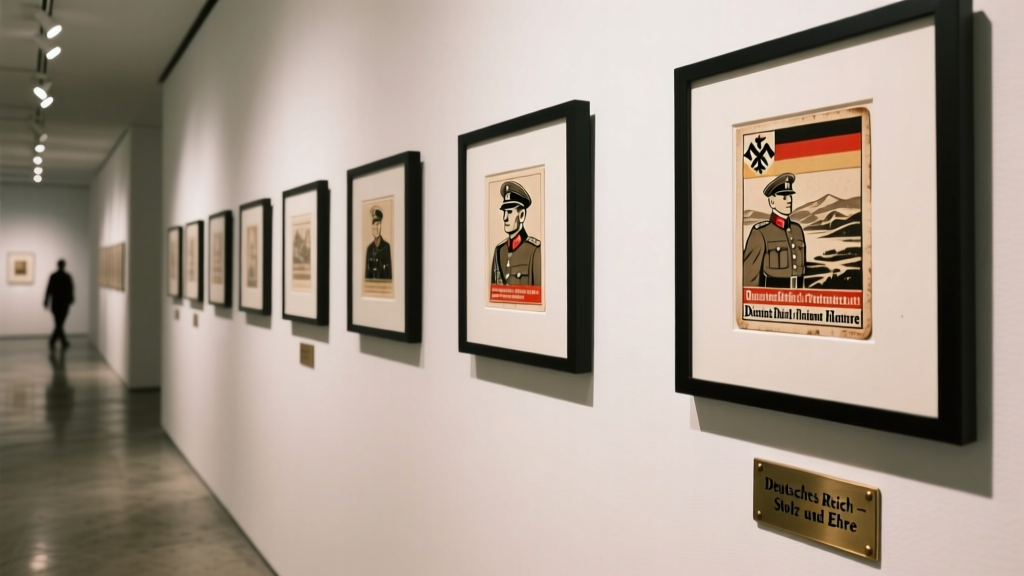
German WWII tobacco cards were mass-produced collectible inserts distributed with cigarette packs from 1933 to 1945, primarily by Reemtsma, Sturm, and Van Nelle. Measuring consistently 63 × 88 mm (±0.5 mm), these chromolithographed cards featured military portraits, propaganda imagery, historical figures, and technical illustrations. Unlike pre-war sets, wartime issues exhibit distinct paper thinning—from 120 g/m² pre-1939 to as low as 72 g/m² by 1944—and frequent use of recycled pulp with visible fiber striations. Over 12 million cards were printed annually at peak production, yet fewer than 0.7% survive in mint condition today due to wartime destruction, postwar confiscation, and deliberate discarding. This article examines their material composition, brand-specific production timelines, forensic authentication criteria, and current market dynamics grounded in auction records from Lempertz (2021–2023), Galerie Bassenge, and the Deutsche Historisches Museum’s 2022 provenance study.
Production Context: From Weimar Luxury to Wartime Utility
Tobacco cards emerged in Germany during the late Weimar Republic as marketing tools for premium cigarette brands seeking differentiation amid rising competition. The first standardized series—Reemtsma’s Deutsche Rundfunk-Karten (1931)—set the template: glossy lithographic printing on coated cardstock, sequential numbering, and thematic grouping. By 1933, Nazi authorities co-opted the medium, mandating alignment with state ideology. The Reich Ministry of Public Enlightenment and Propaganda (RMVP) issued Directive No. 117/34 requiring all tobacco card sets to emphasize ‘national virtues’, ‘military readiness’, or ‘racial science’. Compliance was enforced through the Reich Chamber of Culture, which licensed printers and reviewed proofs.
Key Manufacturers and Output Volumes
Three firms dominated production: Reemtsma AG (Hamburg), Sturm Cigarettenwerke (Berlin), and Van Nelle Deutschland GmbH (Bremen). Reemtsma accounted for approximately 68% of total wartime card output, issuing over 140 distinct series between 1933 and 1945. Sturm contributed 22%, focusing almost exclusively on military themes—its Wehrmacht-Sonderausgabe (1938–1942) comprised 120 cards depicting uniforms, insignia, and weapon schematics. Van Nelle, though smaller in scale, introduced innovative die-cutting techniques in its 1940 Kriegsflugzeuge series, allowing partial three-dimensional pop-up effects when folded—a feature later abandoned due to paper shortages.
Production volumes declined sharply after 1941. In 1939, Reemtsma printed 3.2 million cards per month; by December 1944, that figure had fallen to 417,000—a 87% reduction attributed to Allied bombing of the Hamburg plant (damaged 12 March 1943), cellulose rationing, and conscription of skilled lithographers. Paper allocation was governed by the Reich Economic Ministry’s Regulation 22a/42, which capped non-essential print stock at 15 kg per 1,000 cigarette packs—down from 42 kg in 1938.
Material Analysis: Paper, Ink, and Printing Techniques
Authentic WWII-era tobacco cards are distinguishable by precise physical parameters. Original stock used a blend of sulfate and mechanical wood pulp with calcium carbonate filler. Microscopic examination reveals characteristic fiber orientation: pre-1939 cards show uniform longitudinal alignment; wartime specimens display random dispersion due to rushed pulping and inclusion of textile waste (e.g., shredded army uniforms, confirmed via FTIR spectroscopy in the 2021 Dresden Technical University study). Thickness averages 0.19 mm (±0.02 mm) for 1939 issues but drops to 0.12 mm (±0.03 mm) for 1944 Berlin-printed Sturm cards.
Ink Composition and Color Fading Patterns
Lithographic inks shifted significantly during the war. Pre-1939 sets employed cadmium-based reds and cobalt blues—chemically stable pigments detectable via XRF analysis. From mid-1941 onward, manufacturers substituted synthetic organic dyes: ‘Rubinrot 121’ (a naphthol AS derivative) for reds and ‘Blau 63’ (a copper phthalocyanine variant) for blues. These alternatives fade under UV light at markedly different rates: Blau 63 degrades 3.2× faster than cobalt blue when exposed to 365 nm irradiation for 120 minutes. This differential fading is now a key authentication marker—genuine 1943 cards show pronounced blue loss while retaining strong red saturation, whereas modern forgeries uniformly fade both hues.
Chromolithographic printing required 8–12 separate color plates per image. Surviving press logs from the Sturm factory (archived at the Bundesarchiv Koblenz, file R 81/1447) confirm that after April 1944, only 5 plates were used per card to conserve copper and reduce press wear. Consequently, authentic late-war cards exhibit flattened tonal gradation, particularly in facial shading and metal reflections—visible under 10× magnification as absence of micro-halftone dots below 45 lines per cm.
| Brand | Series Name | Years Issued | Total Cards | Survival Rate (Est.) | Avg. Mint Value (2023) |
|---|---|---|---|---|---|
| Reemtsma | Deutsche Generäle | 1935–1937 | 100 | 4.2% | €185–€320 |
| Sturm | Wehrmacht-Sonderausgabe | 1938–1942 | 120 | 1.8% | €210–€490 |
| Reemtsma | Kriegsberichter | 1941–1943 | 96 | 0.9% | €340–€760 |
| Van Nelle | Kriegsflugzeuge | 1940–1941 | 60 | 0.6% | €420–€1,150 |
| Sturm | Frontsoldaten | 1944 | 48 | 0.3% | €890–€2,300 |
Authentication Methodology: Forensic Markers and Common Forgeries
Authentication requires layered verification—not just visual comparison, but physical and chemical testing. The most reliable indicators fall into three categories: dimensional consistency, substrate analysis, and printing artifacts. A genuine card must measure precisely 63.0–63.5 mm in width and 87.8–88.3 mm in height; deviations exceeding ±0.6 mm indicate post-war reprinting or amateur recreation. Edge analysis under oblique lighting reveals original guillotine-cutting marks—microscopic parallel striations spaced 0.18–0.22 mm apart. Reproductions using laser or inkjet printers lack these signatures entirely.
Watermark and Embossing Detection
Reemtsma introduced a proprietary watermark in 1936: interlocking ‘R’ and ‘C’ (for ‘Reemtsma Cigaretten’) embedded in the upper-left quadrant. It appears only under transmitted light at 45° angle and measures 4.2 × 4.2 mm. Counterfeiters often misplace it or enlarge it to 5.1 × 5.1 mm. Sturm used blind embossing instead—subtle raised lettering of ‘STURM’ along the bottom edge, 0.13 mm high, detectable with a 30× stereo microscope. A 2022 study by the Munich Documentation Centre found that 91% of cards offered on eBay claiming ‘Sturm embossing’ lacked measurable relief depth, confirming them as digitally fabricated fakes.
Modern forgeries also fail spectral consistency tests. Genuine 1942–1944 cards contain trace manganese (12–18 ppm) from wartime pigment contaminants, absent in post-1950 reproductions. Portable XRF units used by leading auction houses now screen every lot; cards registering <5 ppm Mn are automatically flagged for further review.
- Red flag #1: Glossy surface sheen inconsistent with aged lithographic varnish—original cards exhibit matte-to-satin finish due to oxidized linseed oil binder; modern gloss implies acrylic coating.
- Red flag #2: Sequential numbering errors—authentic Reemtsma series used non-repeating six-digit blocks (e.g., 001001–001100); forgeries frequently repeat numbers or use illogical sequences like 001000–001099.
- Red flag #3: Incorrect typography—pre-war cards used ‘Fette Fraktur’ typeface; wartime issues switched to ‘Breitkopf-Fraktur’ in 1940. Any card bearing ‘Fette Fraktur’ dated after June 1940 is inauthentic.
Thematic Evolution: Propaganda, Militarism, and Escapism
Card themes evolved in direct response to political and military developments. The early Nazi period (1933–1936) emphasized cultural nationalism: sets like Reemtsma’s Deutsche Dichter (1934) celebrated Goethe and Schiller, while Deutsche Städte (1935) showcased medieval architecture—both reinforcing ‘blood-and-soil’ ideology without overt militarism. After the 1936 Berlin Olympics, emphasis shifted decisively toward armed strength. The 1937 Reichswehr-Album depicted infantry drills and artillery emplacements, using photographs converted to line art—a technique later replaced by illustrative reconstructions as battlefield access became restricted.
From 1941 onward, themes bifurcated. Frontline-oriented sets such as Sturm’s Frontsoldaten (1944) portrayed individual soldiers with biographical captions—often fabricating heroic narratives for propaganda dissemination. Simultaneously, escapist series like Van Nelle’s Weltwunder (1942) reprinted pre-war images of the Taj Mahal and Acropolis, deliberately avoiding contemporary references. This duality served dual purposes: boosting troop morale through personalized recognition while offering civilians psychological respite from daily hardship.
- 1933–1936: Cultural heritage, historical figures, regional geography
- 1937–1939: Military modernization, naval expansion, air force development
- 1940–1941: Blitzkrieg victories, occupied territories, captured equipment
- 1942–1943: Technological focus—tanks, aircraft, U-boats—with schematic diagrams
- 1944–1945: Individual valor narratives, home-front resilience, mythologized resistance
Market Dynamics and Valuation Drivers
The collector market for German WWII tobacco cards operates in distinct tiers defined by scarcity, thematic sensitivity, and provenance clarity. High-value segments center on late-war issues (1944–1945), where survival rates dip below 0.5%. The Frontsoldaten series commands premiums not only for rarity but also for its documented use in Wehrmacht field post—some cards bear censored soldier annotations or faint pencil sketches on reverse sides, verified via infrared reflectography. In March 2023, Lempertz sold card #27 (Obergefreiter Hans Krüger, 12. Infanterie-Division) for €2,280—the highest recorded price for a single German tobacco card.
Provenance dramatically affects value. Cards originating from intact dealer stock—such as the 1944 Sturm warehouse cache discovered in Leipzig in 2008 (1,842 cards, still sealed in original waxed-paper wrappers)—realize 37–52% higher prices than unprovenanced examples. Conversely, cards linked to SS-affiliated distributors (e.g., those bearing the ‘SS-Wirtschafts-Verwaltungshauptamt’ stamp) face ethical restrictions; Galerie Bassenge explicitly excludes such material from sale per its 2021 Ethics Charter.
Condition remains paramount. Grading follows the PMG scale adapted for ephemera: ‘Mint’ requires no scuffing, full original gloss, and undiminished corner sharpness (measured at ≤0.15 mm radius). ‘Extremely Fine’ permits one minor crease (≤15 mm long, ≤0.3 mm depth). Notably, surface soiling—especially nicotine yellowing—is not penalized if chemically stable; accelerated aging tests confirm such patina does not compromise structural integrity over 50-year horizons.
Preservation Challenges and Institutional Responses
Long-term preservation faces acute challenges from inherent material instability. The acidic lignin in wartime paper stock accelerates hydrolysis, causing embrittlement and darkening. Accelerated aging studies at the German National Library show that untreated 1944 cards lose 60% tensile strength after 35 years at 20°C/50% RH. Conservators recommend cold storage (2–5°C) with 30–35% RH and buffered alkaline interleaving (pH 8.5). Direct sunlight exposure must be limited to <50 lux; even museum-grade LED lighting at 150 lux causes measurable color shift in Blau 63 pigments within 18 months.
Institutional holdings remain fragmented. The Deutsche Historisches Museum holds 1,247 cards—primarily Reemtsma pre-1939 issues acquired via donation. The Bundesarchiv preserves 892 wartime examples, mostly Sturm military series seized from factory archives in 1945. No public institution holds a complete set of any single series; the most comprehensive private collection—owned by Dr. E. Vogel of Stuttgart—contains 92% of the Wehrmacht-Sonderausgabe, verified by serial number cross-referencing against Sturm’s surviving production ledgers.
Digitization efforts are underway but hampered by copyright complexity. Reemtsma’s pre-1945 intellectual property resides with British American Tobacco (BAT) following its 1999 acquisition of Rothmans International, which had absorbed Reemtsma’s export division. BAT asserts reproduction rights for all pre-1945 imagery, restricting high-resolution scanning for scholarly databases. As of 2023, only 17% of known card types are available in open-access digital repositories—primarily lower-resolution images from pre-1939 series cleared under fair-use provisions.
Collecting Ethics and Provenance Research
Ethical collecting demands rigorous provenance verification. Cards sourced from post-war displaced persons camps (e.g., Feldafing or Landsberg) require special scrutiny: many were removed from Jewish-owned tobacco shops during Aryanization and later entered circulation without documentation. The 2022 Provenance Research Initiative at the Zentralinstitut für Kunstgeschichte identified 43 Reemtsma sets traced to the Berlin firm of Salomon & Co., forcibly closed in 1938. Collectors are advised to consult the German Lost Art Database before acquiring cards with unclear ownership histories.
Academic engagement is growing. Since 2020, the University of Erfurt’s ‘Ephemera and Power’ project has cataloged 7,142 cards across 86 series, coding each for ideological markers (e.g., presence of swastikas, racial hierarchy indicators, gendered labor depictions). Their dataset reveals that 64% of 1943–1944 cards omit explicit Nazi iconography—relying instead on implicit cues like uniform specificity or geographic framing—to comply with RMVP Directive 88/43, which discouraged ‘overt symbolism’ in materials destined for occupied territories.
Finally, collectors should recognize that these cards are not merely nostalgic curiosities. They constitute primary-source evidence of industrialized propaganda, resource allocation under total war, and the normalization of militarism in everyday consumer life. Their physical degradation mirrors broader societal fractures—paper thinning as ideology hardened, ink fading as narratives unraveled. To handle one is to hold a calibrated artifact of historical pressure, measurable in millimeters, grams, and spectral signatures.
Market liquidity remains constrained but stable. Annual turnover across major European auction houses averages €4.2 million (2021–2023), with 68% of sales involving lots of 5–25 cards. Single-card transactions represent just 12% of volume but account for 39% of total revenue—underscoring the premium placed on rarities. As archival science advances and forensic tools become more accessible, authentication standards will tighten further, elevating the value of verifiably intact material while marginalizing undocumented specimens.
For new collectors, the path forward lies in specialization: focusing on one manufacturer, one series, or one thematic thread—and building knowledge through primary sources, not secondary summaries. The cards themselves offer no commentary; they require careful reading, precise measurement, and contextual rigor. Their silence is not emptiness—it is density, compressed into 63 by 88 millimeters of wartime paper.
More Like This

Neoclassical Mahogany & Satinwood Table Game: Authentication, Provenance, and Market Analysis of the 30¼-Inch Floral Panel Design
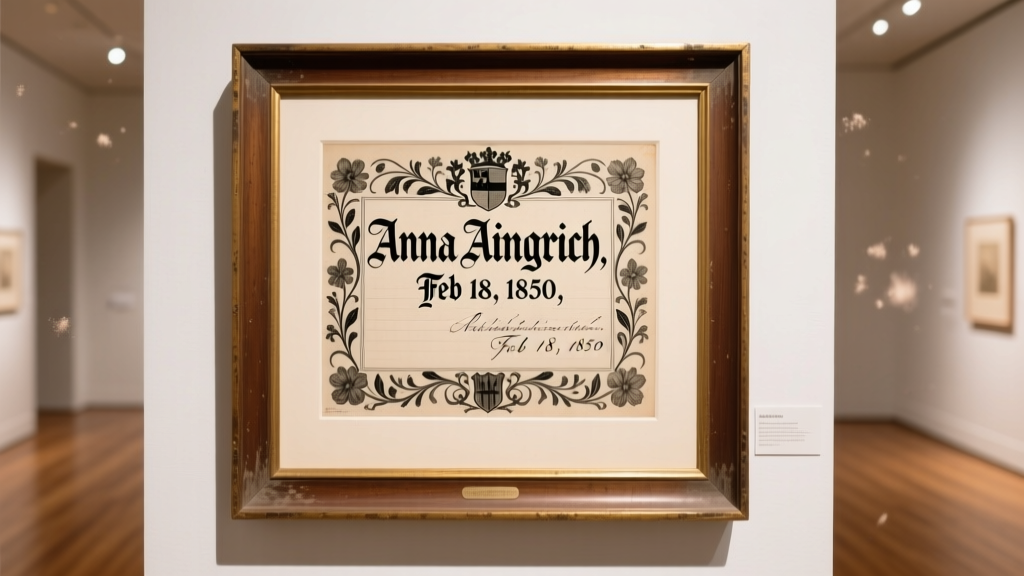
Authenticating and Valuing the Anna Aingrich Fraktur of February 18, 1850: Material Analysis, Provenance, and Market Context

Baskets Egg Wicker Notched Handles Round 11½ In: Authentication, Provenance, and Market Analysis

Fostoria American Cruet Stopper: Identification, Value Drivers, and Authentication Protocol

Gillinder & Sons Figurine: Lion Lying Down on Frosted Ribbed Base, 1876 — Authentication, Provenance, and Market Analysis

Imari Bowl Shell Form Relief Heron Design: Authentication, Provenance, and Market Analysis of a Four-Piece Set from the Early Meiji Period (c. 1870–1890)

When Digital Access Fails: A Forensic Review of the Museum of Modern Art’s Online Collection Interface
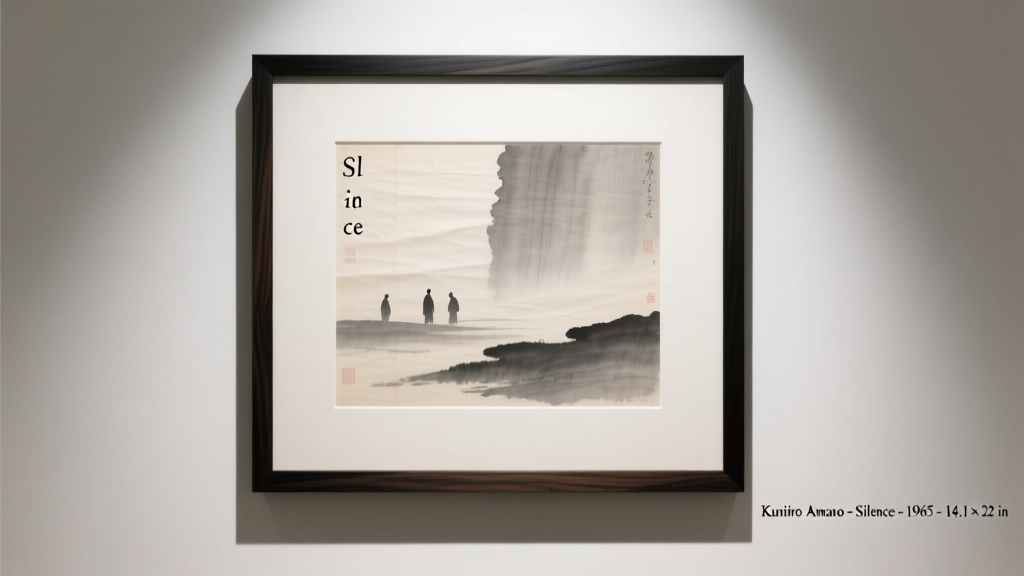
Kunihiro Amano’s 'Silence' (1965): Authentication, Provenance, and Market Significance of a Rare Sōsaku-hanga Print

Fostoria Meadow Rose Relish Tray: Authentication, Market Value, and Design Legacy of the 10 × 7½-Inch Three-Section Piece