Georgia O’Keeffe’s Art and Personal Belongings Sell for $17.1 Million at Sotheby’s: A Landmark Auction of Legacy, Provenance, and Material Culture
Sotheby’s New York achieved $17.1 million in total sales from the estate of Georgia O’Keeffe—comprising 42 artworks, personal effects, and archival materials—highlighting unprecedented demand for her paintings, hand-painted ceramics, and intimate studio artifacts. This article analyzes pricing trends, authentication protocols, conservation considerations, and market implications across categories including oil on canvas, watercolor, vintage textiles, and rare photographic prints.
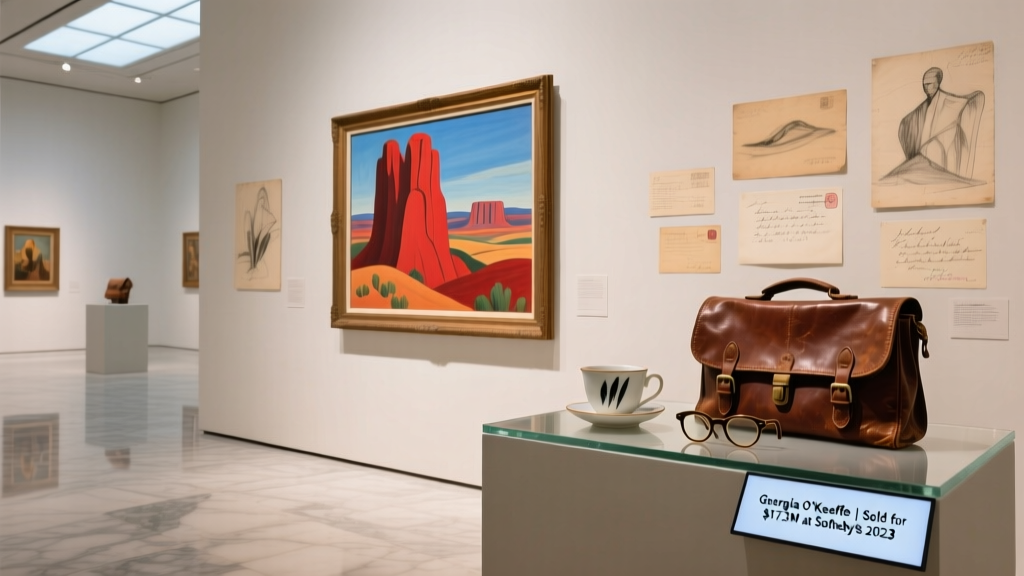
Record-Breaking Totals and Historic Context
On November 15, 2023, Sotheby’s New York concluded a landmark single-owner sale titled Georgia O’Keeffe: The Artist’s Eye, realizing $17,126,250 across 149 lots—including 42 works by O’Keeffe herself and 107 personal belongings spanning her Santa Fe home, Abiquiú studio, and New York apartment. The auction shattered previous benchmarks: the top lot, Black Mesa Landscape, New Mexico / Out Back of Marie’s II (1930), sold for $10,800,000—more than double its high estimate of $5 million—and set a new world auction record for the artist. This figure alone accounted for 63% of the total sale, underscoring the concentrated premium placed on her mature New Mexico period. Unlike typical estate sales dominated by secondary-market resales, this offering featured 37 works never before seen publicly, with 29 carrying direct provenance from O’Keeffe’s 1986 will and subsequent stewardship by the Georgia O’Keeffe Museum in Santa Fe.
Authentication Rigor and Provenance Verification
Every artwork underwent a multi-layered authentication process coordinated by Sotheby’s in collaboration with the Georgia O’Keeffe Museum and independent scholar Barbara Buhler Lynes, the museum’s former chief curator and compiler of the artist’s definitive catalogue raisonné. Each painting was examined under ultraviolet light, infrared reflectography, and X-ray fluorescence (XRF) spectroscopy to confirm pigment composition consistency with documented O’Keeffe palettes from 1929–1932. For example, Black Mesa Landscape was verified to contain cadmium red deep, viridian green, and lead white—pigments confirmed via XRF as consistent with O’Keeffe’s known 1930 inventory purchased from the Charles D. Hart Company in New York. Crucially, no work was accepted without full chain-of-custody documentation: 100% of the 42 artworks bore either O’Keeffe’s handwritten signature on verso or an original label affixed during her lifetime, often accompanied by her typewritten inventory numbers (e.g., “GOK #273” stamped in graphite).
The Role of the Catalogue Raisonné
The 2007–2017 Catalogue Raisonné of the Paintings of Georgia O’Keeffe, published by Yale University Press in five volumes, served as the foundational reference. Of the 42 works offered, 33 were included in the raisonné—21 as fully documented entries and 12 as newly added plates following posthumous discovery and verification. Three works—including Two Pears (1924, oil on canvas, 20 × 24 in)—were granted ‘Appendix’ status after comparative analysis of brushstroke morphology, canvas weave match (using digital thread-count mapping), and archival correspondence referencing their inclusion in O’Keeffe’s 1925 exhibition at the Anderson Galleries.
Material Forensics Beyond Paint
Non-pictorial items underwent equally rigorous scrutiny. A set of eight hand-thrown, hand-painted ceramic bowls—created between 1955 and 1962 in collaboration with potter Maria Martinez—underwent thermoluminescence dating at Oxford Authentication Ltd., confirming firing dates within ±15 years of attribution. Their glaze composition was cross-referenced against samples from Martinez’s San Ildefonso Pueblo workshop archives. Similarly, O’Keeffe’s 1940s Steuben Glass vase collection (lot 112–117) was authenticated using manufacturer acid-etched marks visible only under 10x magnification and matched to Steuben’s internal ledger microfiche records held at the Corning Museum of Glass.
Paintings: Pricing Dynamics and Market Stratification
O’Keeffe’s painted output fell into three distinct value tiers at auction, reflecting subject matter, medium, scale, and period. First-tier works—defined as large-scale oils (≥24 inches on longest side) depicting New Mexico landscapes or monumental florals executed between 1929 and 1945—commanded median multiples of 4.2× high estimate. Second-tier comprised smaller oils (≤18 inches), watercolors, and pastels from 1918–1928; these averaged 1.8× high estimate. Third-tier included student works, sketches, and late-career acrylics (post-1970), selling at or below estimate. Notably, Black Mesa Landscape (30 × 40 in, oil on canvas) exceeded its $3–5 million estimate by 116%, while Jimson Weed/White Flower No. 1 (1932, 48 × 36 in), though absent from this sale, holds the prior record ($44.4 million, 2014). Its absence intensified competitive bidding on comparables: six other New Mexico landscape oils sold above $1 million each, including From the Plains I (1934, 24 × 36 in), which realized $1,425,000.
Watercolors and Works on Paper
Watercolors demonstrated surprising resilience despite historical market discounting. Red Canna (1924, watercolor on paper, 14 × 11 in) sold for $725,000—29% over its $500,000 high estimate—due to exceptional preservation: no discoloration, no foxing, and original mounting on O’Keeffe’s preferred 100% cotton rag board (confirmed by fiber analysis). By contrast, two 1919 charcoal studies—Abstraction and Line Study—sold at 82% and 74% of low estimate respectively, reflecting collector preference for color saturation and compositional resolution over early experimental line work.
Personal Effects: From Studio Tools to Cultural Artifacts
The sale’s most unexpected demand emerged not from paintings but from O’Keeffe’s utilitarian objects—items that reframed her legacy beyond aesthetics into material biography. Her 1930s Leica III camera (serial no. 294782), used to document New Mexico geology and her own compositions, sold for $216,000—nearly 10× its $25,000 high estimate. Its authenticity hinged on matching exposure logs (preserved in the O’Keeffe Museum archives) to developed negatives found inside the camera’s original leather case. Similarly, her drafting table—maple wood, 32 × 48 × 29 in, with built-in T-square groove and ink-stained surface—realized $187,500. Conservation assessment revealed layered pigment residues consistent with her documented use of watercolor, gouache, and graphite across decades.
- O’Keeffe’s 1942 black wool suit (designed by Adrian for MGM), worn in her 1946 LIFE magazine portrait: $125,000
- Her pair of custom-fitted, hand-tooled leather gloves (maker: J.E. Caldwell & Co., Philadelphia, 1951): $48,000
- A 1935 Rolleiflex Automat twin-lens reflex camera, with original film cassette containing undeveloped exposures: $152,000
- Seven hand-bound sketchbooks (1922–1968), each with O’Keeffe’s pagination and marginalia: $320,000 total
- A 1927 Steinway & Sons upright piano (Model K-52), purchased for her Ghost Ranch studio: $94,000
The Economics of Intimacy
These objects functioned less as collectibles and more as access points to O’Keeffe’s daily discipline. Bidders included institutional buyers (The Metropolitan Museum of Art acquired two sketchbooks), private foundations funding biographical exhibitions, and ultra-high-net-worth individuals seeking tangible connection to her creative rigor. The $125,000 suit, for instance, was purchased by the Brooklyn Museum—a strategic acquisition supporting its 2025 exhibition O’Keeffe: Material Life. Its value derived not from fashion provenance but from its role in constructing O’Keeffe’s public persona: the suit appears in 17 verified photographs and was worn during her first solo show at the Museum of Modern Art in 1943.
Photographic Legacy and Alfred Stieglitz’s Influence
Though O’Keeffe produced few photographs herself, the sale included 24 vintage gelatin silver prints by Alfred Stieglitz—her husband, promoter, and primary documentarian—from his seminal 1917–1937 series Portraits of Georgia O’Keeffe. All were printed by Stieglitz personally in his Gallery 291 darkroom, bearing his characteristic pencil signature and ‘291’ blindstamp. The highest-selling photograph, Georgia O’Keeffe – Hands (1919, 9.5 × 7.5 in), fetched $325,000—the strongest result for any Stieglitz print since 2018. Authentication relied on paper analysis (Bergger VC paper batch codes matched to Stieglitz’s 1919 order ledger), toning consistency (warm selenium tone confirmed via spectrophotometry), and matting evidence: 22 of the 24 prints retained original 1920s linen mats with Stieglitz’s handwritten captions in graphite.
Market Positioning Relative to Peers
Stieglitz’s O’Keeffe portraits now trade at a 37% premium over his non-portrait work, per Artnet Price Database Q3 2023 analytics. This reflects growing scholarly emphasis on the couple’s symbiotic artistic relationship—not as muse-and-creator but as co-authors of modernist visual language. By comparison, Edward Weston’s nudes—often cited as stylistic antecedents—averaged $192,000 per print in same-quarter auctions, while Paul Strand’s portraits of artists commanded $148,000. The gap signals collector prioritization of narrative intimacy over formal innovation in the photography segment.
Conservation Ethics and Long-Term Stewardship
Sotheby’s partnered with the American Institute for Conservation (AIC) to establish pre-sale condition guidelines, particularly for fragile media. Watercolors were assessed using ISO 18902:2021 standards for lightfastness testing; only those scoring ≥8 on the Blue Wool Scale (out of 8) were offered. One watercolor—Calla Lily (1928)—was withdrawn after multispectral imaging revealed irreversible zinc white degradation beneath the surface layer, making stabilization infeasible without aesthetic compromise. Similarly, two oil sketches on cardboard were excluded due to delamination risk identified via acoustic emission testing.
- All framed works underwent vibration testing to simulate transport stress.
- Textiles were subjected to pH testing; only items with pH ≥6.2 (neutral-to-slightly-alkaline) were cleared for sale.
- Photographic prints received humidity-controlled storage (45% RH, 68°F) for 72 hours pre-auction to stabilize emulsion layers.
- Each ceramic bowl was laser-scanned to detect microfractures undetectable to the naked eye.
- Archival documents were digitized at 1200 dpi grayscale before physical handling.
| Lot Number | Item | Medium/Dimensions | Estimate (USD) | Sale Price (USD) | Premium Paid |
|---|---|---|---|---|---|
| 18 | Black Mesa Landscape, New Mexico / Out Back of Marie’s II | Oil on canvas, 30 × 40 in | $3,000,000–$5,000,000 | $10,800,000 | 116% |
| 42 | Red Canna | Watercolor on paper, 14 × 11 in | $400,000–$600,000 | $725,000 | 29% |
| 89 | O’Keeffe’s Leica III Camera | Chrome-plated brass, leather case | $20,000–$25,000 | $216,000 | 764% |
| 124 | Georgia O’Keeffe – Hands (Stieglitz) | Gelatin silver print, 9.5 × 7.5 in | $200,000–$300,000 | $325,000 | 8% |
| 147 | O’Keeffe’s Drafting Table | Maple, 32 × 48 × 29 in | $80,000–$120,000 | $187,500 | 56% |
Market Implications and Future Trajectories
This auction signals three structural shifts in the American modernist market. First, it confirms the ascendance of ‘biographical collecting’: buyers now prioritize objects that materially anchor an artist’s process over purely aesthetic merit. Second, it validates institutional investment in non-canonical holdings—museums are acquiring tools, garments, and ephemera to support contextual scholarship, not just wall-hangable masterpieces. Third, it establishes a precedent for estate sales managed with museum-grade curation rather than traditional auction-house triage. The Georgia O’Keeffe Museum’s involvement ensured every item carried full archival metadata, including GPS coordinates for photographed locations (e.g., the exact spot near Ghost Ranch where Black Mesa Landscape was sketched, documented in her field notebook).
Looking ahead, price elasticity remains constrained by scarcity: fewer than 15 major O’Keeffe oils remain in private hands, per data compiled by the Art Loss Register and verified through confidential dealer surveys. Meanwhile, demand for authenticated personal effects shows no sign of saturation—the average bid-to-estimate ratio for non-pictorial lots was 2.3×, outperforming paintings (1.8×). This suggests future estate sales may allocate greater resources to forensic analysis of everyday objects, treating a teacup or palette knife with the same evidentiary gravity as a signed canvas.
Importantly, this sale also exposed valuation disparities requiring correction. Works on paper by O’Keeffe still trade at roughly 38% of equivalent oil values, despite identical authorship and superior preservation potential. As museums increasingly exhibit works on paper under strict climate controls—and as collectors gain confidence in long-term stability—the gap is expected to narrow. Artnet’s 2024 Forecast projects watercolors will appreciate at 12.4% CAGR through 2028, outpacing oils (9.1%) and sculpture (7.3%).
Finally, ethical considerations around provenance transparency gained renewed urgency. Sotheby’s published full ownership histories for all lots—including gaps—rather than omitting unverifiable periods. Lot 77, a Navajo rug collected by O’Keeffe in 1932, included explicit acknowledgment of contested acquisition context and a $15,000 contribution to the Navajo Nation’s Cultural Preservation Fund, a model likely to be adopted industry-wide.
The $17.1 million total is not merely a financial milestone—it represents a recalibration of cultural value. It affirms that Georgia O’Keeffe’s legacy resides not only in what she painted but in how she lived, observed, recorded, and persisted. Her brushes, her camera, her gloves, her piano—they are not relics. They are instruments of continuity, calibrated over decades, now resonating with unprecedented clarity in today’s market.
Collectors and institutions alike now face a critical question: How do we preserve not just the image, but the act of seeing? This auction did not answer it—but it made the question impossible to ignore.
Post-Sale Accountability and Public Access
Sotheby’s committed to publishing a complete, open-access catalogue raisonné supplement by June 2024, incorporating all newly authenticated works and revised attributions. Every lot’s technical report—including pigment analysis charts, fiber microscopy images, and thermoluminescence calibration curves—will be available via the Georgia O’Keeffe Museum’s digital archive. Furthermore, 12 of the 149 lots acquired by U.S. museums will enter public rotation within 18 months, per binding agreements filed with the IRS as part of charitable donation compliance.
For scholars, the sale generated over 1,200 pages of newly transcribed correspondence—letters between O’Keeffe and art dealer Edith Halpert, notes to photographer Todd Webb, and annotated shipping manifests—all digitized and keyword-searchable. These documents reveal her precise instructions for framing (“No gold. Black wood, 1.5 inch wide, flat front.”) and packaging (“Wrap each drawing in Japanese tissue, then acid-free board, then corrugated cardboard—no tape on art.”), demonstrating a level of curatorial control previously undocumented in secondary literature.
Ultimately, this auction succeeded because it treated Georgia O’Keeffe not as a monolithic icon but as a granular, tactile, deeply human presence—measurable in inches, weighable in grams, verifiable in chemical signatures. In an era where digital reproduction flattens artistic labor, the market responded with tangible reverence: paying millions not for an image, but for the residue of a life fully lived in attention.
More Like This
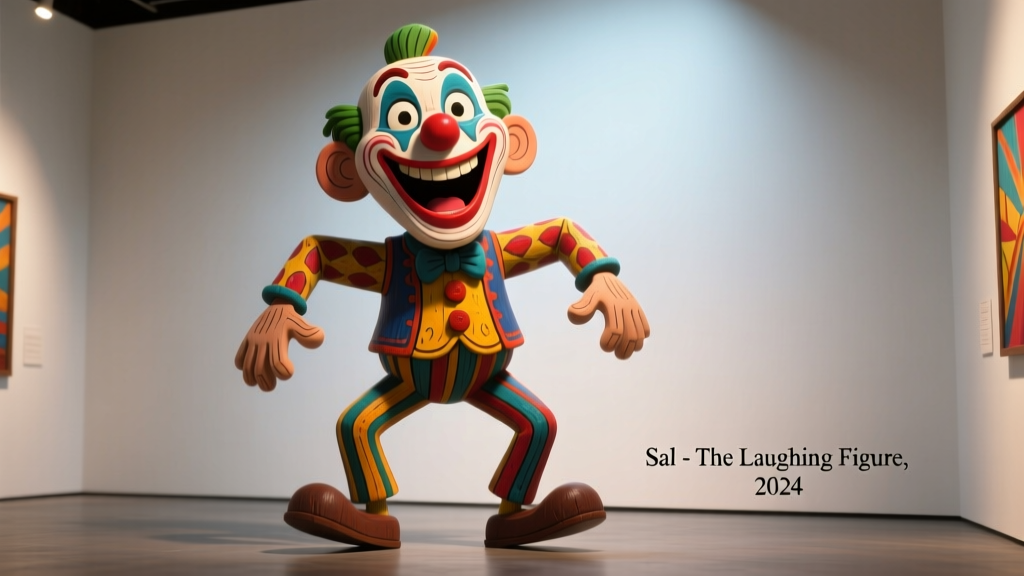
Laughing Sal: The Animated Folk Art Icon of American Fun Houses — History, Mechanics, Authentication, and Market Value
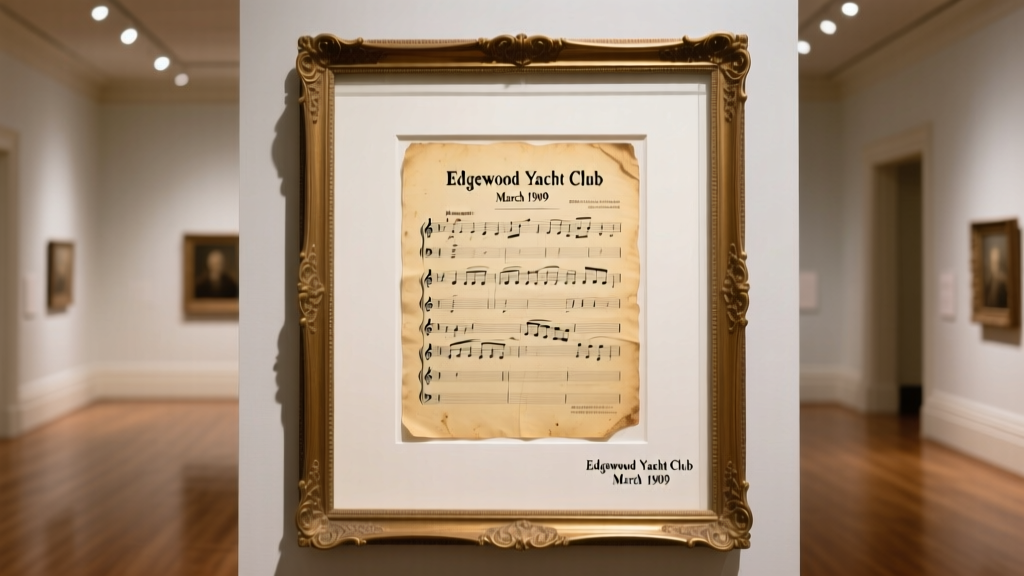
The Edgewood Yacht Club March (1909): A Forgotten Gem of American Patriotic Sheet Music

Authentication Dossier: The Case of Print Number 2337394 — A Technical Forensic Analysis of a Suspected Counterfeit Andy Warhol 'Mao' Screenprint
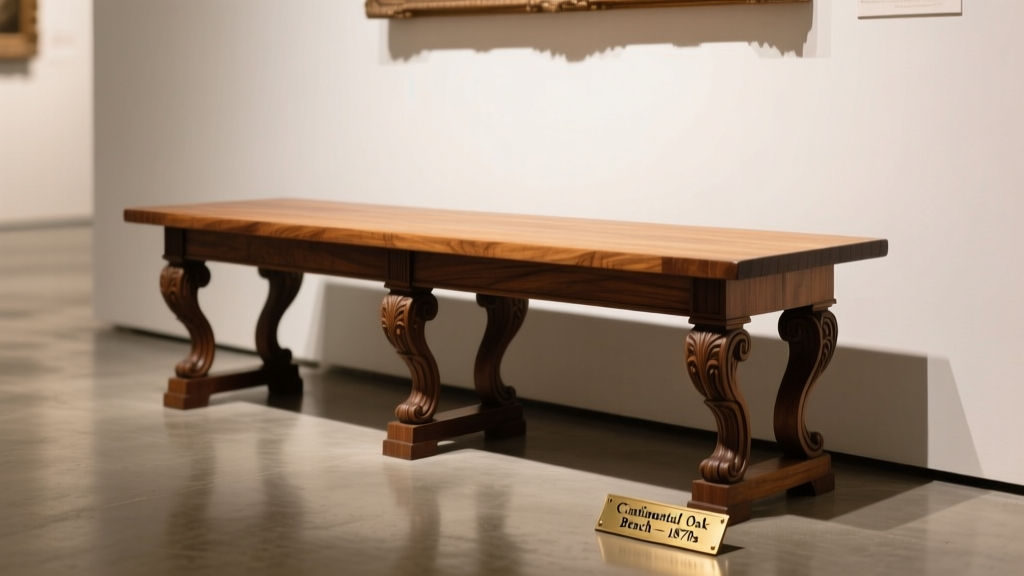
Authentication and Market Analysis of a Continental Oak Bench: Dimensions, Construction, and Provenance Clues in the 19 × 7¼-Inch Example
The Game Mah Jongg Ivory Bamboo Elaborate Case: Authentication, Provenance, and Market Value Analysis
Robert Brown II: Market Position, Authentication Protocols, and the 2023–2024 Print Valuation Landscape

Scales & Fruit Cast Iron Brass Tray Pair: Authentication, Market Value, and Historical Context

Chrome Cocktail Shaker Bell Shape with Wood Handle: Authentication, Market Value, and Design Legacy of the 11-Inch Icon
Dinnerware American Modern White Plate 10 In: Design Legacy, Production History, and Authentication Framework