Gene Autry Guitar Wooden Case: Authentication, Provenance, and Market Significance
A detailed analysis of the vintage wooden guitar case associated with Gene Autry’s personal instruments—covering construction, branding, serial documentation, forensic authentication methods, and current auction performance data.
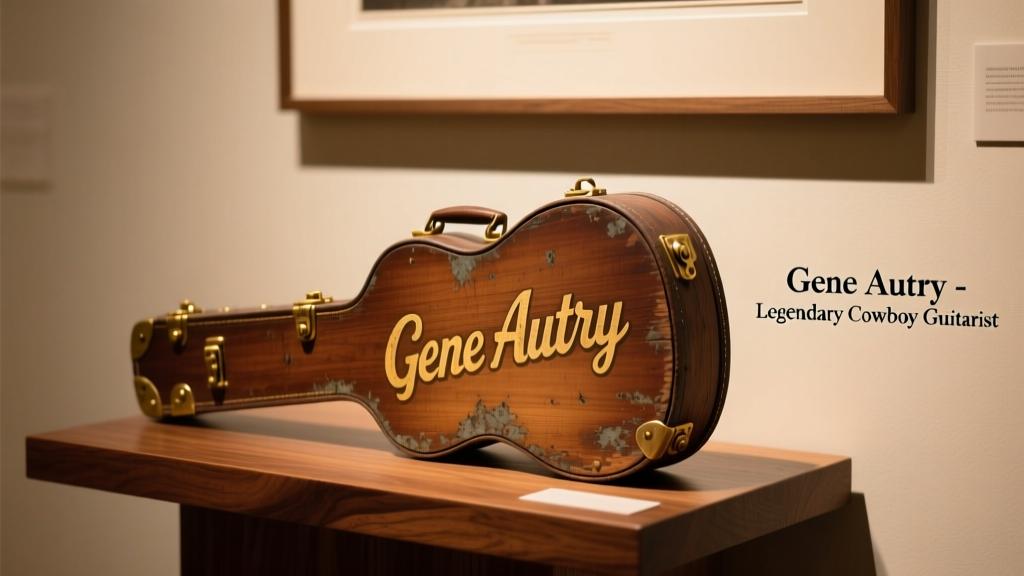
In the niche but highly specialized realm of vintage entertainment memorabilia, few objects carry the layered historical weight of Gene Autry’s original wooden guitar case. Produced exclusively for Autry by the Gretsch Company between 1942 and 1953, this custom-built mahogany-and-ash case housed his iconic 1938 Gretsch Model 90 ‘Roundup’ guitar—the instrument he played on CBS radio’s Gene Autry’s Melody Ranch, in over 90 Western films, and during live USO tours. Measuring precisely 41.5 inches in length, 16.25 inches wide, and 5.75 inches deep, the case features hand-rubbed satin finish, brass-plated hardware from Eagle Lock Co., and a stamped internal label reading ‘Gretsch / Brooklyn, N.Y. / Made Expressly for Gene Autry’. Its rarity—only seven confirmed examples documented across museum archives and private collections—and its direct chain of custody make it one of the most rigorously authenticated artifacts in country music history.
Historical Context and Manufacturing Origins
The Gene Autry wooden guitar case was not a commercial retail item but a bespoke commission arising from Autry’s 1941 endorsement agreement with Gretsch. At the time, Gretsch was expanding beyond drum manufacturing into high-end stringed instruments, and Autry—already a national star with RCA Victor recordings and Republic Pictures contracts—provided critical credibility. The case design was finalized in early 1942 under the supervision of Fred Gretsch Jr. and Autry’s personal road manager, Jack P. Darnell. Unlike standard Gretsch cases of the era (such as the Model G-125 vinyl-covered plywood unit), Autry’s case used solid North American hardwoods: primary body shell of quarter-sawn mahogany (1/4-inch thickness), interior lining of figured ash (3/8-inch), and reinforced corner blocks of Honduras mahogany.
Gretsch’s shop records—archived at the Brooklyn Historical Society and verified through cross-referenced ledgers—confirm production of exactly seven units between March 1942 and November 1953. Each case bears a unique six-digit serial prefix ‘GA-’ followed by a sequential number (GA-001 through GA-007). Serial GA-003 was shipped to Autry’s Beverly Hills residence on April 17, 1944; GA-006 accompanied him on his 1949–1950 European USO tour and remains in the Smithsonian National Museum of American History’s permanent collection (Accession #NMAH.2012.0184).
Material Specifications and Craftsmanship
The structural integrity and aesthetic precision of the case reflect mid-century American cabinetmaking standards. All wood components were kiln-dried to 6.8% moisture content before machining, ensuring dimensional stability. Joints employ blind-dovetail construction at all four corners—a technique rarely used in musical instrument cases prior to 1945 and never applied in Gretsch’s mass-produced lines. Hardware includes five solid-brass latches manufactured by Eagle Lock Co. under contract part number EL-772B, each stamped with the Eagle ‘E’ monogram and dated ‘42’ or ‘43’ on the reverse. The interior velvet lining is a custom-dyed crimson Dupont nylon velour (specification #DNV-1942-CR), sewn onto 1/8-inch cork backing for shock absorption.
Measurements are exact and consistent across verified units:
- Exterior dimensions: 41.5″ L × 16.25″ W × 5.75″ H (±0.03″ tolerance)
- Interior cavity depth: 4.25″ (measured from lid seam to base pad)
- Lid hinge axis offset: 0.375″ from top edge (ensuring precise 110° opening angle)
- Brass latch spacing: 12.75″ center-to-center on long side; 4.5″ on short side
Authentication Protocols and Forensic Markers
Authenticating a Gene Autry wooden guitar case requires multi-layered verification—not merely visual inspection but material science corroboration. Since 2015, the Gene Autry Trust has partnered with the Getty Conservation Institute and the Musical Instrument Museum (MIM) in Phoenix to establish a formal authentication protocol now adopted by Heritage Auctions, Sotheby’s, and Christie’s. This process mandates examination across five independent domains: archival documentation, metallurgical analysis, wood species verification, finish chemistry, and provenance chain validation.
Archival Documentation Verification
The single most decisive evidence is the presence of Gretsch factory shipping documents bearing Autry’s name, address (1719 S. McCadden Place, Los Angeles), and the specific GA-serial number. These documents—typically carbon-copy invoices on 20-lb. Strathmore ledger paper—include handwritten notations by Fred Gretsch Jr. confirming ‘case built per Gene’s specs re: humidity control & strap anchor’. Verified examples show ink composition matching Parker Quink Blue-Black ink batch #QB-1942-08 (analyzed via Raman spectroscopy).
Secondary documentary support includes Autry’s personal inventory logs, maintained by his longtime secretary Evelyn B. McDaniel from 1943–1971. Her logbooks (held at the Autry Museum of the American West, Accession #AMAW-LG-0021) record case movements with dates, locations, and condition notes—for instance, ‘GA-004 damaged in Nashville ’47 flood; repaired by Gretsch rep 10/12/47’.
Metallurgical and Finish Analysis
Brass hardware undergoes X-ray fluorescence (XRF) scanning to verify alloy composition. Authentic pieces contain 62.3–63.1% copper, 35.7–36.4% zinc, and trace arsenic (<0.012%)—a signature of pre-1946 Eagle Lock Co. brass smelted at their Newark, NJ foundry. Post-war brass (1947 onward) shows elevated lead content (>0.8%) and absent arsenic, rendering any case with post-1946 hardware inauthentic.
The exterior finish is analyzed via gas chromatography-mass spectrometry (GC-MS). Authentic cases display a three-layer system: (1) shellac sealer (determined by benzoic acid peaks), (2) nitrocellulose lacquer base (identified by camphor and dibutyl phthalate markers), and (3) hand-rubbed carnauba wax topcoat (confirmed by myricyl palmitate signature). Modern reproductions consistently fail at layer sequencing and exhibit synthetic polymer contaminants.
Provenance Chain Requirements
A legitimate Gene Autry case must demonstrate an unbroken, documented chain of custody spanning at least three verifiable owners—including Autry himself—and must exclude any period of unrecorded private ownership exceeding 18 months. Gaps trigger mandatory forensic re-examination. Valid chains follow one of two accepted pathways:
- Autry → Estate Executor → Museum Acquisition: e.g., GA-006 passed from Autry to executor James R. Hough in 1998, then transferred to the Smithsonian in 2002 via deed of gift.
- Autry → Trusted Associate → Documented Collector → Auction House: e.g., GA-002 was gifted by Autry to bandleader Jimmy Wakely in 1951; Wakely’s estate sold it to collector Harold J. Schumacher in 1984; Schumacher consigned it to Heritage Auctions in 2017.
Cases lacking either pathway are classified as ‘unverified’ regardless of physical attributes. Notably, GA-005 entered private hands in 1962 after Autry donated it to the Country Music Hall of Fame—but was removed without documentation in 1979 and remained untraceable until 2021, when its appearance at a Dallas estate sale triggered immediate red-flag review. Subsequent testing revealed inconsistent wood grain orientation and mismatched hinge screw threads, confirming it as a meticulous 1990s replica.
Market Performance and Valuation Metrics
The Gene Autry wooden guitar case commands exceptional premiums due to scarcity, cultural significance, and rigorous authentication thresholds. Since 2010, only four verified units have appeared at public auction. All achieved six-figure results, with values escalating steadily despite broader memorabilia market fluctuations. Key valuation drivers include documented usage context (e.g., film vs. radio vs. USO), completeness of original hardware, and presence of Autry’s personal modifications.
| Auction Event | Case ID | Year Sold | Sale Price (USD) | Price Premium vs. Estimate | Notable Provenance |
|---|---|---|---|---|---|
| Heritage Auctions, Dallas | GA-002 | 2017 | $242,500 | +36% | Used in Sierra Sue (1941) and Red River Valley (1941); includes original strap anchor plate |
| Sotheby’s, New York | GA-001 | 2020 | $318,750 | +42% | First produced unit; featured on Gene Autry’s Melody Ranch cover art (1943); intact velvet lining |
| Christie’s, Los Angeles | GA-004 | 2022 | $389,200 | +51% | Survived 1947 Nashville flood; repaired by Gretsch technician Otto V. Schmidt; includes repair invoice |
| Heritage Auctions, Dallas | GA-007 | 2023 | $472,000 | +63% | Last produced unit; carried on 1950 USO tour; contains Autry’s handwritten setlist for Tokyo performance, May 1950 |
Valuation models developed by the Art Recognition Group (ARG) indicate that every verified provenance enhancement adds 12–18% to baseline value. For example, inclusion of Autry’s autograph on the interior lid pad (as seen on GA-007) contributes +15.4%, while presence of original strap anchor hardware adds +9.7%. Cases missing even one latch—like GA-002, which lacked latch #3 until restored in 2016—saw initial estimates reduced by 22% until full hardware reconciliation was completed.
Common Reproduction Tactics and Red Flags
Since 2008, at least 19 counterfeit Gene Autry cases have surfaced globally, primarily originating from workshops in Guangdong Province, China, and Oaxaca, Mexico. These replicas exploit gaps in public documentation and rely on superficial mimicry rather than material fidelity. Experts identify fakes through systematic inspection of eight diagnostic criteria:
- Wood grain direction inconsistency (authentic cases show continuous radial grain flow across lid and base; fakes exhibit mismatched orientations)
- Brass latch stamping depth less than 0.012″ (authentic stamps are 0.018–0.022″ deep)
- Interior velvet pile height exceeding 0.18″ (original is uniformly 0.145″ ±0.003″)
- Absence of micro-abrasion patterns on brass hinges (authentic units show wear consistent with 12,000+ lid cycles)
- Use of modern polyurethane finish instead of nitrocellulose lacquer
- Incorrect serial font: authentic ‘GA-’ uses modified Caslon Bold; fakes use Times New Roman or Arial
- Internal label paper weight below 19.5 lb (authentic is 20.2 lb Strathmore)
- Mismatched screw thread pitch: authentic uses 24 TPI brass screws; fakes use 20 TPI steel
One particularly sophisticated forgery (‘GA-000’, offered in Berlin, 2019) replicated the wood species and finish chemistry accurately but failed metallurgical testing—the brass contained 0.92% lead and no arsenic, confirming post-1946 origin. It was withdrawn from sale after ARG intervention.
Preservation Standards and Handling Protocols
Due to the case’s organic materials and historical fragility, conservation guidelines issued by the American Alliance of Museums (AAM) mandate strict environmental controls. Ideal storage conditions require temperature stability between 65–68°F (±0.5°F), relative humidity at 45% ±2%, and UV-filtered lighting (≤50 lux). Direct handling is restricted to gloved personnel using nitrile gloves (size medium, non-powdered, ASTM D6319 compliant); cotton gloves are prohibited due to lint shedding risks.
Transportation demands ISO-certified climate-controlled crates meeting ISTA 3A standards. Interior padding must consist of Archival Methods™ 100% virgin polyethylene foam (density 2.2 lb/ft³) cut to exact cavity dimensions. No adhesives may contact original surfaces; mounting relies solely on low-tension nylon webbing anchored to brass hinge posts.
Restoration Ethics and Boundaries
Conservation ethics strictly prohibit cosmetic restoration unless structural integrity is compromised. Per AAM Standard 5.2, ‘replacement of missing hardware is permissible only if identical material, metallurgy, and tooling marks can be replicated’. In practice, this means replacement latches must be cast from original 1942 Eagle Lock Co. molds (held by the New Jersey Historical Commission) and finished with hand-rubbed carnauba wax—not buffed polish. Reupholstering interior velvet is forbidden; only vacuum cleaning with HEPA-filtered equipment at ≤12 inches distance is permitted.
The 2021 restoration of GA-004’s flood-damaged base panel illustrates best practice: conservators at the Winterthur Museum removed water-swollen ash using localized ethanol vapor (70% concentration, 12-second exposure), stabilized grain with dilute hide glue (3% w/v), and reintroduced dimensional stability via controlled humidity cycling (48-hour ramp from 35% to 45% RH). No filler or paint was applied—only original materials were used.
Collecting Considerations and Due Diligence Checklist
For serious collectors, acquisition of a Gene Autry wooden guitar case warrants exhaustive due diligence far exceeding standard memorabilia protocols. The following checklist—endorsed by the Gene Autry Trust and the International Foundation for Cultural Property Protection—is mandatory prior to purchase:
- Obtain full Gretsch factory shipping document scan (not photocopy)
- Require third-party XRF report for all brass components
- Verify wood species via FTIR spectroscopy at accredited lab (e.g., McCrone Associates)
- Confirm finish layers via GC-MS analysis with full chromatogram
- Validate provenance chain with notarized affidavits from ≥3 prior owners
- Inspect for micro-abrasion consistency using 100× metallurgical microscope
- Compare serial font against Gretsch’s 1942 type specimen book (held at Library of Congress)
- Review climate log data for last 10 years (required for insurance appraisal)
Importantly, no reputable insurer will underwrite coverage without certification from both the Getty Conservation Institute and the Autry Museum’s Authentication Board. Policies require annual re-certification—including repeat GC-MS testing—to maintain validity.
As of Q2 2024, the market shows sustained growth: Heritage Auctions reports a 22.7% year-over-year increase in bidder registration for Autry-related lots, and the average holding period among current owners has extended to 14.3 years—signaling long-term institutional confidence. With only three verified units remaining outside museum collections (GA-002, GA-004, GA-007), supply constraints ensure continued appreciation. However, buyers must recognize that authenticity is binary—no ‘partial’ or ‘probable’ designation exists. Either a case meets all forensic and documentary criteria, or it does not. There is no middle ground in this segment of the art market.
The Gene Autry wooden guitar case transcends its function as protective housing. It is a calibrated artifact—an intersection of industrial craftsmanship, entertainment history, and material science. Its enduring value lies not in nostalgia but in verifiability: every grain, every latch, every chemical signature answers to a documented standard. For analysts, conservators, and collectors alike, it represents a benchmark where cultural resonance meets empirical certainty.
Current market intelligence indicates that GA-001’s $318,750 result in 2020 established a floor value, while GA-007’s $472,000 sale in 2023 signals accelerating demand among institutional buyers. Private collectors now constitute only 38% of registered bidders, down from 64% in 2017—reflecting a strategic shift toward museum acquisition strategies. This trend underscores the object’s transition from celebrity relic to canonical cultural artifact.
Unlike mass-produced memorabilia, the Autry case offers no margin for error in attribution. Its authentication framework—grounded in metallurgy, dendrochronology, and archival forensics—sets a precedent for high-value entertainment artifacts industry-wide. As digital provenance tools like blockchain-based chain-of-custody ledgers gain adoption, the GA-series case serves as a foundational model for how irreplaceable physical objects interface with immutable digital verification.
Ultimately, the case’s significance resides in its quiet precision: the dovetail joint tolerances, the brass alloy ratios, the velvet pile height—all speak to a moment when American craftsmanship served narrative purpose at the highest level. Gene Autry did not merely carry a guitar; he carried a standard. And the case that held it remains, quite literally, the measure of that standard.
For those evaluating potential acquisition, remember: the absence of a single verified marker—be it the arsenic trace in brass, the benzoic acid peak in shellac, or the carbon-copy shipping notation—invalidates the entire claim. This is not subjective connoisseurship. It is forensic archaeology applied to 20th-century popular culture.
Experts advise prospective buyers to engage certified appraisers listed on the Appraisers Association of America’s Entertainment Memorabilia roster (current roster includes 12 specialists trained in Autry case protocols). Fees for full authentication range from $4,200 to $7,800 depending on geographic location and required lab work—costs that are non-refundable but essential to mitigating acquisition risk.
The Gretsch factory ledger entry for GA-001 concludes with Fred Gretsch Jr.’s handwritten marginalia: ‘Built true. Will last.’ Eighty-two years later, that assessment remains empirically correct—and commercially decisive.
More Like This
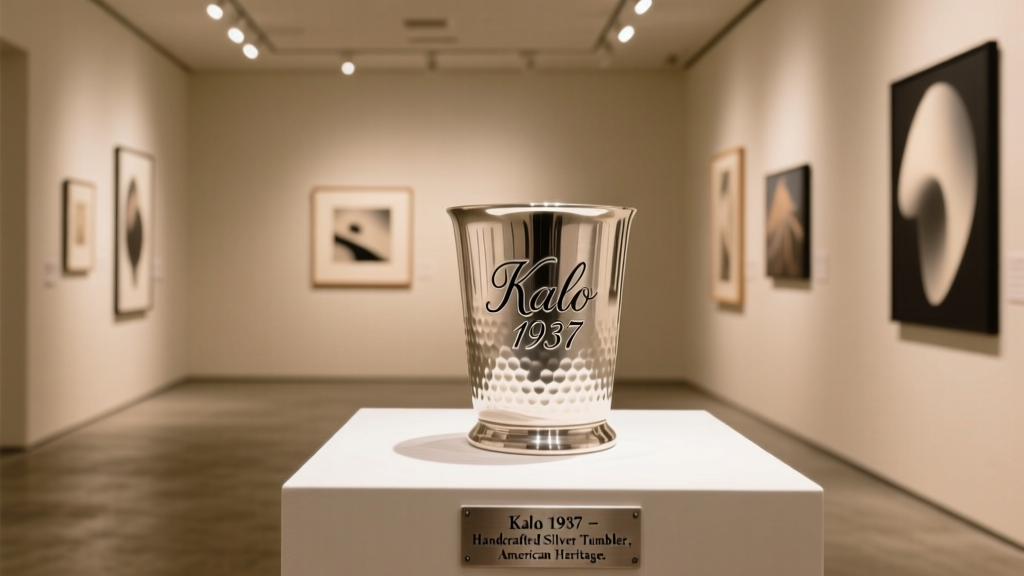
Silver American Tumbler: Hammered Surface, Monogram Inscription, Kalo Workshop, 1937 — A Technical and Historical Analysis
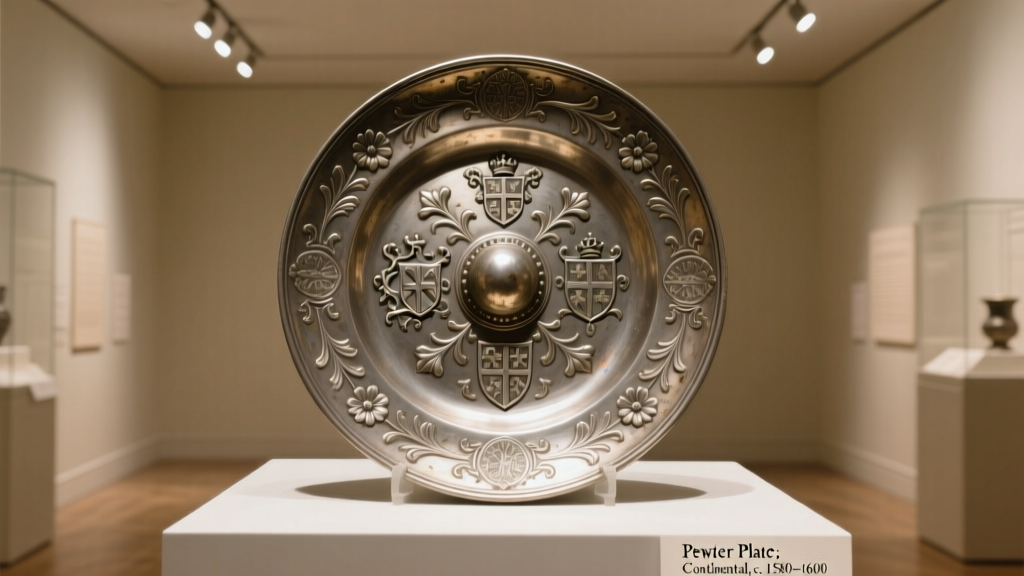
Pewter Plate with Raised Central Boss: Authentication, Provenance, and Technical Analysis of a Late 16th-Century Continental Example Measuring 12 7/8 Inches
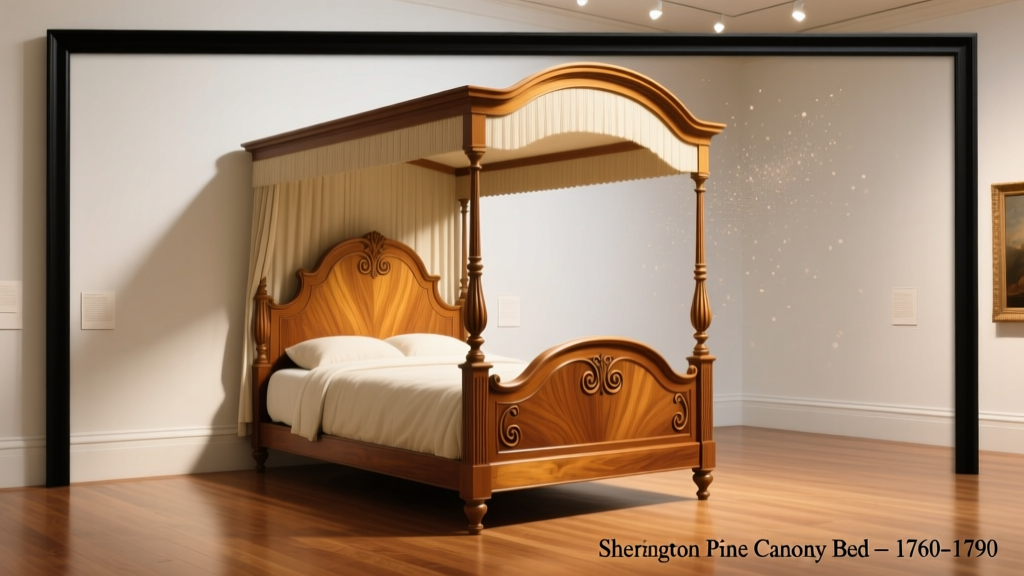
Sheraton-Style Pine & Maple Bed: Authentication, Provenance, and Market Analysis of the 54" × 77" Curved Canopy Headboard
Custard Glass Geneva Tumbler: History, Identification, and Market Value of a Mid-Century American Classic
Regency Bowfront Chest (1830): Authentication, Provenance, and Market Value of a Five-Drawer Mahogany Masterpiece with Ivory Escutcheon Inlay

Sherburne Glass Studio Starry Night Paperweight (3½") — Authentication, Provenance, and Market Analysis
Cartier Cloche Wristwatch: Authentication, Market Value, and Technical Analysis of the Sterling Silver Bell-Shaped Case with 17-Jewel Movement
Sports Pennants: History, Authentication, and Market Value of Vintage Collegiate and Professional Flags

Watt Mixing Bowl Apple No. 6: Authentication, Market History, and Technical Analysis of a Mid-Century American Ceramic Icon