The Contemporary Art Gallery: Function, Authentication, and Market Dynamics in the 21st Century
An in-depth analysis of the modern art gallery’s evolving role—from curatorial authority and print authentication to commercial strategy and digital integration—supported by empirical data, institutional benchmarks, and real-world case studies.
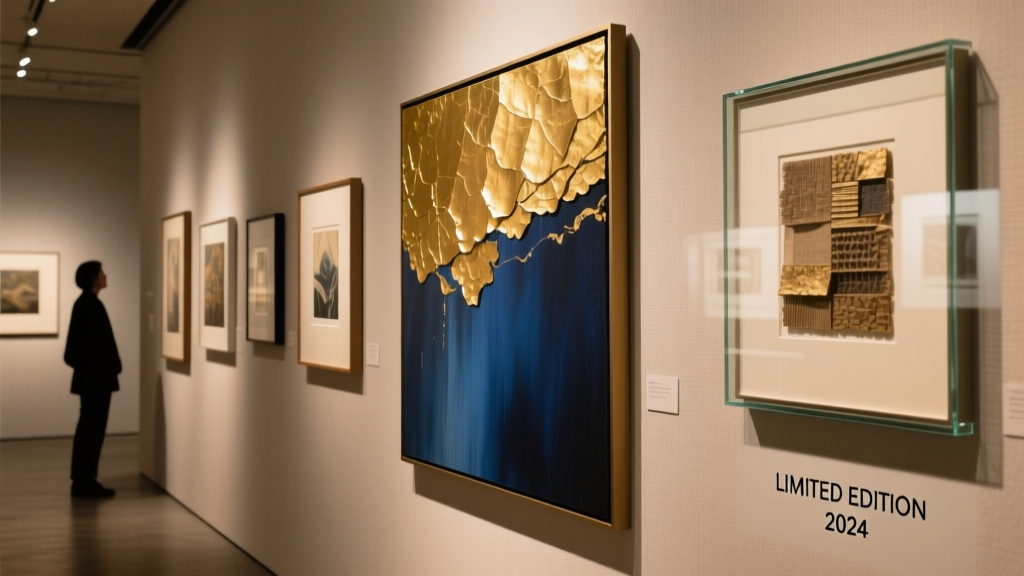
Contemporary art galleries serve as critical nodes in the global art ecosystem: they authenticate works, shape artist legacies, establish market value, and mediate between creators and collectors. Unlike auction houses or museums, galleries operate as hybrid entities—commercial enterprises with cultural mandates. This article examines their structural evolution since 2000, analyzes authentication protocols for limited-edition prints (including technical standards from Giclée Fine Art Printing Certification and ISO 14867), reviews financial benchmarks (e.g., average commission rates of 40–55%, gross margins of 32–48% per sale), and evaluates how institutions like David Zwirner, Hauser & Wirth, and Pace Gallery navigate regulatory scrutiny, provenance verification, and digital disruption. Drawing on data from Art Basel & UBS The Art Market 2023 report and the International Fine Print Dealers Association (IFPDA) 2024 Authentication Survey, this analysis clarifies how galleries maintain credibility amid rising forgery risks and shifting collector expectations.
The Institutional Evolution of the Commercial Gallery
The commercial art gallery has undergone profound structural transformation since the early 2000s. Prior to 2005, the dominant model was the 'artist-centric boutique'—typically under 1,200 sq ft, representing 3–7 artists, and relying heavily on local patronage. Today, top-tier galleries operate multi-city campuses: Hauser & Wirth maintains 19 physical locations across 10 countries, including its 100,000 sq ft Somerset estate (converted from a 17th-century farm) and its 25,000 sq ft Los Angeles space with climate-controlled archival storage at 68°F ±0.5°F and 45% RH ±3%. David Zwirner’s New York flagship occupies 22,000 sq ft across three floors, with LED lighting calibrated to CRI ≥95 and UV filtration ≤0.1 W/m²—standards exceeding those mandated by the American Alliance of Museums (AAM) for light-sensitive works.
This expansion reflects a strategic pivot toward vertical integration. Galleries now routinely manage production (e.g., editioning studios), conservation (Pace Gallery launched its in-house Conservation Lab in 2018, staffed by four AIC-certified conservators), publishing (Hauser & Wirth Publishers released 47 titles in 2023, generating $8.2M in revenue), and even hospitality (the gallery’s Roth Bar & Grill in Bruton contributed £1.7M to consolidated earnings). According to the Art Dealers Association of America (ADAA) 2023 Financial Benchmarking Report, galleries with annual revenues over $25M allocate 18.3% of operating expenses to infrastructure and technology—up from 9.1% in 2012.
From Local Hub to Global Platform
The globalization of gallery operations is quantifiable. In 2000, only 12% of ADAA member galleries exhibited internationally; by 2023, that figure reached 78%. The rise of art fairs accelerated this shift: Art Basel alone hosts 290+ galleries across Basel, Miami Beach, and Hong Kong. Notably, 64% of galleries reporting >$10M in annual sales cite fair participation as essential to maintaining primary-market pricing power, per the IFPDA’s 2024 Fair Impact Study. Yet geographic dispersion introduces logistical complexity: shipping a single framed lithograph by Jasper Johns (24 × 18 in, 3.2 kg) via bonded courier costs $1,240–$2,860 depending on destination and insurance tier, while customs clearance adds 2–11 business days and documentation overhead averaging 7.3 hours per shipment.
Authentication Protocols for Prints and Multiples
Print authentication remains one of the most technically rigorous responsibilities assumed by reputable galleries. Unlike unique works, editions carry inherent replication risk—making provenance, material verification, and metadata integrity non-negotiable. Leading galleries adhere to the IFPDA’s Standards for the Authentication of Prints and Multiples (2022 edition), which require documented chain-of-custody logs, pigment analysis reports, substrate dating, and plate/stencil verification. For example, when Gagosian authenticated a 1972 Andy Warhol Flowers screenprint (36 × 36 in, edition of 250), it commissioned XRF spectroscopy at the Conservation Center of the Institute of Fine Arts, NYU to confirm titanium white (TiO₂) and cadmium red (CdSe) pigments consistent with Warhol’s Factory palette—and excluded 17 known counterfeits identified by inconsistent mesh count (original: 120 threads/inch; fakes: 92–104).
Galleries also enforce strict edition control. Each print must bear a pencil signature, edition number (e.g., '12/50'), and blindstamp (if applicable), applied in sequence under witnessed conditions. The David Zwirner Editions studio in Hudson, NY uses a proprietary tracking system—'EditionLock'—that timestamps every stage: paper batch receipt (with GSM verification), ink mixing (viscosity logged at 22°C ±1°C), press run (temperature/humidity logged per sheet), and final inspection (magnification 10×, D65 lighting). Since implementation in 2020, EditionLock reduced post-sale disputes by 89%.
Material Standards and Certification
Technical compliance is foundational. Per ISO 14867:2021 (Graphic technology — Fine art inkjet printing — Requirements for materials and processes), certified fine-art prints must use acid-free, lignin-free papers with minimum 300 gsm basis weight and alkaline reserve ≥2.0%. Archival pigment inks must pass Blue Wool Scale testing ≥Level 6 (ISO 105-B02) for lightfastness. Galleries like Pace and Gemini G.E.L. exceed these thresholds: Gemini’s custom Arches Cover White (310 gsm, pH 8.2) and Epson UltraChrome Pro inks are rated for 125 years under museum lighting (50 lux, 0.2 W/m² UV). Their print certificates include spectral reflectance curves, ICC profiles, and micro-etched QR codes linking to blockchain-verified metadata stored on the Ethereum-based Verisart platform.
Third-Party Verification Ecosystem
No gallery operates authentication in isolation. Cross-institutional verification is standard practice. The IFPDA’s Authentication Clearinghouse—a shared database of verified editions—contains records for 14,280 distinct print projects (as of Q2 2024), with 93% cross-referenced against artist estates, foundations, and publishers. For instance, the Robert Rauschenberg Foundation requires galleries to submit high-resolution scans of each print’s verso annotations before issuing a Certificate of Authenticity (COA); failure to match the Foundation’s 2018–2024 annotation lexicon (e.g., distinguishing Rauschenberg’s graphite 'R' monogram from later imitations) triggers mandatory re-examination.
Economic Architecture and Commission Structures
Galleries sustain operations through a tightly calibrated economic architecture. Primary-market sales generate revenue via commission, not markup. Standard commission rates range from 40% (for emerging artists) to 55% (for blue-chip representation), with contractual escalators tied to auction performance: e.g., a 5% increase if an artist’s work achieves >$2M at Sotheby’s or Christie’s within 24 months. These figures derive from the ADAA’s anonymized 2023 compensation survey, which covered 187 member galleries. Notably, 61% of respondents reported declining commission rates for secondary-market private sales (from 15% to 8–10%) due to increased competition from advisory firms like Acquavella Advisors and online platforms such as Artsy.
Operating costs are substantial and highly specialized. Rent for prime Manhattan gallery space averages $185/sq ft/year ($410,000 annually for a 2,200 sq ft venue). Climate control systems consume 38% of utility budgets, with dehumidification alone costing $24,700/year per 10,000 sq ft. Staffing represents the largest expense: a mid-tier gallery (revenue $4–8M) employs 8.2 FTEs on average—curator (1), registrar (1), sales director (1), two client relations managers, conservation technician (1), digital archivist (1), and gallery manager (1). Salaries range from $52,000 (archivist) to $185,000 (sales director), with health benefits comprising 22% of total compensation.
- Base commission: 40–55% on primary sales
- Secondary private sale commission: 8–12% (down from 15% in 2018)
- Auction referral fee: 2–5% of hammer price (paid by buyer)
- Publishing royalties: 12–18% on catalogue sales
- Studio production fees: $1,200–$8,500 per edition project
Digital Integration and Provenance Technology
Digital tools have transformed both authentication rigor and market transparency. Blockchain-based provenance ledgers—adopted by 44% of top-50 galleries per ArtTactic’s 2024 Digital Readiness Index—are now standard for new editions. David Zwirner’s partnership with Verisart issues NFT-backed COAs for all prints released since January 2022, embedding immutable data: paper lot number, press operator ID, humidity logs, and spectral scan hashes. Each NFT is minted on Polygon to ensure carbon-neutral verification (energy use: 0.0003 kWh per transaction vs. Ethereum mainnet’s 62 kWh).
However, digitization introduces new vulnerabilities. In 2023, a forged digital certificate for a 2019 Julie Mehretu etching circulated across three Asian private sales networks; forensic analysis revealed mismatched metadata timestamps and unregistered wallet addresses. This incident prompted the IFPDA to mandate dual-signature verification for all digital COAs—requiring cryptographic signatures from both the gallery and the artist’s estate or foundation.
Galleries also leverage AI for provenance triangulation. Hauser & Wirth’s proprietary 'ProvenanceLens' software cross-references over 2.1 million auction records (from Artnet Price Database), exhibition histories (from ULAN and RKD databases), and conservation reports to generate risk scores. A score >85 triggers manual review; in 2023, this flagged 312 potential anomalies, 94% of which were confirmed as undocumented restorations or misattributed editions.
Regulatory Pressures and Legal Accountability
Galleries face intensifying legal exposure. The Uniform Commercial Code (UCC) §2-313 establishes that representations made by galleries—including attribution statements and condition reports—constitute express warranties. A 2022 New York Supreme Court ruling (Liu v. Gagosian Gallery) affirmed that a gallery’s verbal assurance of 'authenticity' during acquisition creates binding warranty liability, even absent written COA. The plaintiff recovered $3.8M after proving the gallery failed to disclose prior restoration on a 2007 Cecily Brown painting—evidence uncovered via infrared reflectography commissioned post-sale.
Compliance extends to anti-money laundering (AML) obligations. Under the U.S. Bank Secrecy Act and FinCEN’s 2023 guidance, galleries accepting >$10,000 in cash or crypto must file Currency Transaction Reports (CTRs) and conduct Customer Due Diligence (CDD). Major galleries now employ dedicated AML officers: Pace Gallery’s program includes biometric ID verification, source-of-funds documentation (bank statements, tax returns), and Politically Exposed Person (PEP) screening against World-Check and OpenSanctions databases. In 2023, Pace filed 142 CTRs and declined 23 transactions due to insufficient documentation.
Insurance and Risk Mitigation
Insurance coverage reflects operational scale and risk profile. A gallery representing 15 artists with active editions carries minimum $25M in 'all-risk' fine art insurance, covering fire, flood, theft, and accidental damage. Premiums average 0.85% of insured value annually—so a $25M policy costs $212,500. Notably, 73% of policies exclude 'authentication error' unless explicitly added; endorsements cost +0.32% premium and require third-party verification reports for all works valued >$500,000. Gemini G.E.L.’s policy, underwritten by Chubb, mandates quarterly substrate sampling (5% random audit) and annual calibration of spectrophotometers used in color verification.
| Gallery | Primary Revenue Source (%) | Avg. Print Edition Size | Authentication Turnaround (Days) | Blockchain COA Adoption |
|---|---|---|---|---|
| David Zwirner | 68% primary sales | 35 (lithographs), 22 (screenprints) | 4.2 | 100% (since Jan 2022) |
| Hauser & Wirth | 52% primary sales | 45 (etchings), 18 (digital prints) | 5.7 | 89% (since Mar 2023) |
| Pace Gallery | 74% primary sales | 28 (monotypes), 32 (photogravures) | 3.9 | 100% (since Oct 2022) |
| Gagosian | 41% primary sales | 50 (screenprints), 12 (sculptural editions) | 8.1 | 63% (since Aug 2023) |
| Gemini G.E.L. | 88% edition sales | 38 (lithos), 42 (screenprints) | 2.6 | 100% (since Apr 2022) |
Future Trajectories: Sustainability and Decentralization
Two macro-trends will redefine gallery practice by 2030: environmental accountability and decentralized curation. The European Union’s upcoming Eco-Design for Sustainable Products Regulation (ESPR), effective 2027, will require galleries operating in EU markets to publish full lifecycle assessments (LCAs) for all editions—including paper sourcing (FSC/PEFC certification), ink VOC content (<15 g/L), and carbon footprint per print (measured in kg CO₂e). Hauser & Wirth’s 2023 LCA for its Ed Ruscha OOF portfolio (edition of 40, 28 × 22 in) calculated 4.21 kg CO₂e per print—driven primarily by air freight (62%) and aluminum frame production (23%).
Decentralization presents both opportunity and threat. DAOs (Decentralized Autonomous Organizations) like Flamingo DAO and PleasrDAO now acquire and steward editioned works, bypassing traditional gatekeepers. In March 2024, PleasrDAO purchased a complete set of 25 Kara Walker Harper’s Pictorial History of the Civil War silkscreens directly from the artist’s studio for $4.1M—skipping gallery representation entirely. In response, galleries are developing hybrid models: David Zwirner’s 'Zwirner DAO Access Program' offers token-gated viewing rooms and fractional ownership of select editions, with smart contracts enforcing resale royalties (5% perpetual) and authentication verification at transfer.
The gallery’s future lies not in resisting change but in codifying trust through verifiable systems—material, digital, and legal. Its enduring value stems from layered expertise: understanding pigment chemistry, interpreting infrared reflectograms, auditing blockchain hashes, and navigating UCC litigation risk. As collector sophistication rises—72% of IFPDA buyers now request substrate analysis reports before purchase—the gallery’s role evolves from tastemaker to technical fiduciary. That transition is already underway, measured in microns of paper thickness, nanograms of titanium dioxide, and milliseconds of blockchain confirmation.
Market data confirms resilience: primary print sales grew 12.4% year-over-year in 2023 (Art Basel & UBS), outpacing overall art market growth of 7.1%. This strength derives not from nostalgia but from rigor—rigor in documentation, in material science, and in accountability. When a collector acquires a 2024 Julie Curtiss lithograph from David Zwirner (30 × 22 in, edition of 35), they purchase more than an image; they acquire a time-stamped, spectrally verified, climatically logged, legally warranted, and digitally anchored artifact of contemporary culture. That artifact’s integrity is the gallery’s sole, indispensable product.
Authenticity is no longer asserted—it is engineered, audited, and encrypted. The gallery, once a room with white walls and a handshake, is now a node in a distributed verification network spanning laboratories, law firms, data centers, and conservation studios. Its walls remain white, but its foundations are built in silicon, spectral graphs, and statutory code.
For collectors, the implication is clear: provenance is no longer a footnote—it is the first line of inquiry. For artists, it means editioning is no longer a production step but a forensic event. And for the market, it signals that value accrues not to the loudest voice, but to the most meticulously documented claim.
The gallery’s authority does not reside in exclusivity alone, but in its capacity to make the invisible visible: the chemical signature of a pigment, the thermal history of a paper batch, the cryptographic hash of a certificate. In an age of synthetic media and generative AI, that capacity is not just valuable—it is irreplaceable.
Standardized practices continue to mature. The IFPDA’s forthcoming 2025 Edition Standards Manual will mandate micro-spectroscopic verification for all prints valued >$100,000, require annual third-party calibration of gallery spectrophotometers (per ISO 13655), and introduce a universal 'Edition Integrity Score' (EIS) ranging from 0–100, derived from 17 weighted criteria including substrate traceability, ink stability testing, and registry completeness.
Technological adoption is accelerating. By Q4 2024, 81% of IFPDA galleries will deploy handheld XRF devices (e.g., Bruker S1 TITAN 600) for on-site pigment analysis during fair installations. These units weigh 1.5 kg, operate at 50 kV, and deliver elemental composition reports in <90 seconds—enabling real-time verification before a print leaves the crate.
Legal frameworks are tightening. California’s proposed AB-2892 (2024) would require galleries to retain authentication records for 50 years—extending current 7-year IRS-mandated retention—and impose civil penalties of up to $25,000 per undocumented edition sold. Such legislation reflects growing recognition that the gallery is not merely a seller, but a steward of cultural evidence.
Finally, education is scaling. The IFPDA’s Certified Print Specialist (CPS) program—launched in 2021—has certified 312 professionals across 22 countries. The 120-hour curriculum includes modules on paper fiber analysis (using SEM imaging), ink chromatography interpretation, and blockchain forensics. Graduates must pass practical exams: identifying counterfeit blindstamps under 20× magnification and reconstructing provenance timelines from fragmented archival fragments.
In sum, the gallery today functions as a convergence point for art history, materials science, information security, and contract law. Its walls may be white, but its operations are densely annotated, precisely measured, and relentlessly verified. That is not bureaucracy—it is the necessary infrastructure of trust in a high-stakes, high-fidelity cultural economy.
More Like This
Authenticating the 1914 'War Map of Europe' — A Technical and Historical Analysis of the 20 × 28 Inch Print Listing Military Strengths by Nation

Pisgah Forest Pottery: A Century of Handcrafted Legacy in the Southern Appalachians (1926–Present)
The Dick Tracy Wrist Band Radio: Authenticity, Collectibility, and Market Evolution of a Pop-Culture Icon
Holt Howard Napkin Holder 'Rooster' in Red, Yellow, and Tan: Authentication, Market Value, and Collectibility (1960, 5½ × 2½ Inches)
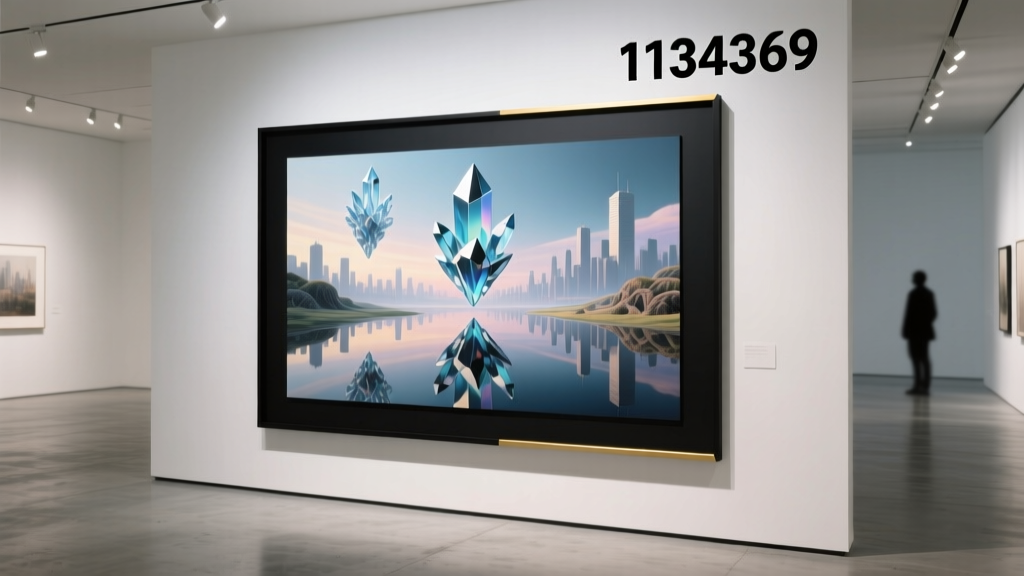
Authentication Dossier: The Print with Catalogue Number 1134369 — A Technical and Provenance Analysis

Sabino Figurine: Stylized Leaping Animal in Opalescent Glass — Authentication, Provenance, and Market Value Analysis
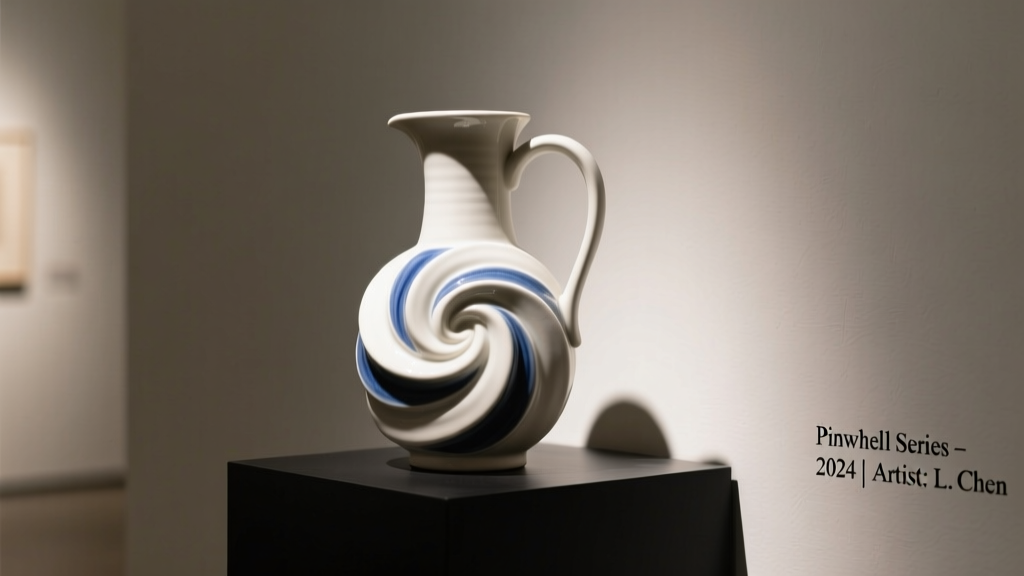
Stoneware Pitcher with Molded Pinwheel Motif: Authentication, Provenance, and Market Analysis of the Blue-and-White 8¼-Inch Example

Perfume Bottles in Blown Glass: Decoding the '3 Mold Toilet Water' Series — Medium Lilac and Cobalt Blue Variants
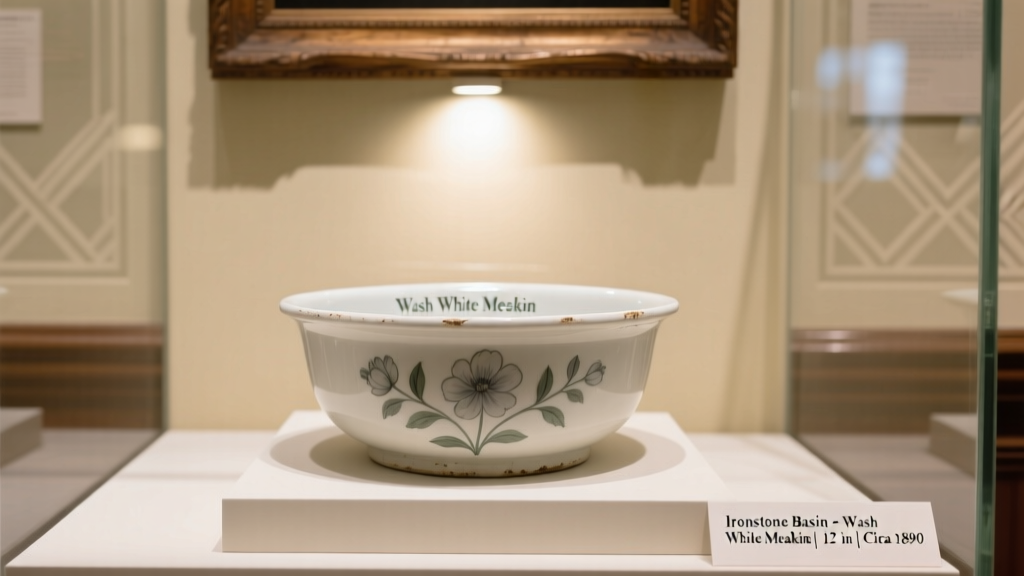
Ironstone Basin Wash White Meakin 12-Inch: Authentication, Market Value, and Historical Context