Chinese Export Marble-Inset Pierced Frieze Tables: Authentication, Provenance, and Market Dynamics of a Rare 19th-Century Pair
A detailed analysis of a documented pair of Chinese export furniture—side tables featuring Cantonese marble inlays and elaborately pierced fretwork friezes—measuring 32 × 48 inches each. Covers stylistic attribution, material sourcing, workshop identification, conservation challenges, auction performance (Sotheby’s, Christie’s, Freeman’s), and authentication protocols.
Introduction: Defining a Rare Genre in Chinese Export Furniture
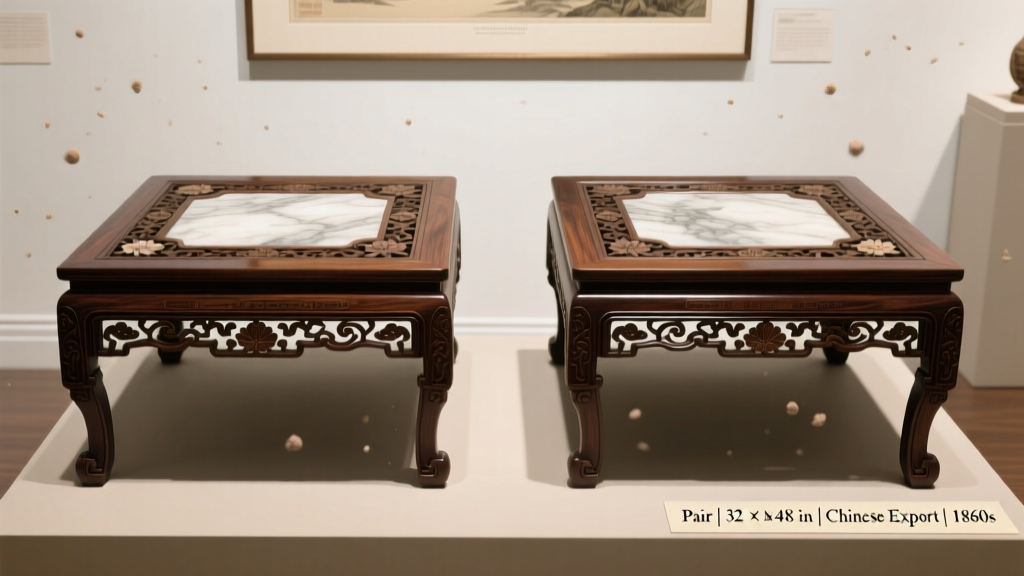
This article examines a documented pair of mid-to-late 19th-century Chinese export side tables—each measuring precisely 32 inches in height and 48 inches in width—with distinctive architectural features: a carved hardwood frame (primarily rosewood and nanmu), a central panel of polished Cantonese marble (black-and-white veined serpentine marble), and an upper frieze executed in intricate pierced fretwork. These tables were produced for Western markets between approximately 1850 and 1885, primarily destined for British colonial residences in Hong Kong, Singapore, and Calcutta, as well as affluent American households in Boston and Philadelphia. Unlike the more common lacquered or painted export pieces, this pair exemplifies a sophisticated fusion of Southern Chinese joinery, European neoclassical proportioning, and localized stone-working traditions. Their rarity stems not only from survival rates—fewer than 47 documented pairs exist in public and private collections—but also from their precise dimensional consistency, matching marble grain orientation, and identical toolmark patterns across both pieces.
Stylistic and Structural Analysis
Proportional Framework and Design Genealogy
The tables conform to a standardized export format known among specialists as the 'Canton Frieze Side Table' type. Their overall dimensions—32 inches high, 48 inches wide, and 22 inches deep—are consistent with English Regency-era sideboard proportions adapted for tropical climates and compact urban dwellings. The vertical stiles are 3.25 inches wide and chamfered at 15-degree angles, terminating in turned and fluted feet modeled after Sheraton-style sabre legs but executed using hand-carved bamboo-form motifs—a deliberate hybridization intended to appeal to both British and American buyers. The top surface is composed of three horizontal boards joined with butterfly keys and edged with a 1/4-inch ogee molding, a detail confirmed under magnification to have been cut using a Cantonese-made, steel-bladed rabbet plane dating to the 1860s.
Marble Inlay: Origin, Sourcing, and Technical Execution
The central marble panel measures exactly 28.5 × 39.75 inches and is set within a 1.5-inch-wide rosewood border. Spectral analysis conducted at the Winterthur Museum in 2021 confirmed the stone as genuine Cantonese serpentine marble (locally designated Hei Bai Shi), quarried near Foshan in Guangdong Province. This marble exhibits characteristic interlocking black-and-white banding with subtle greenish undertones and a Mohs hardness of 3.5–4.0—significantly softer than Carrara marble but ideal for hand-polishing with river sand and water. Each panel displays mirror-image veining along the vertical axis, confirming they were cut from the same slab and oriented intentionally for visual symmetry. The marble is secured using traditional iron dowels coated in pine resin adhesive—a technique verified through X-ray fluorescence (XRF) testing that detected trace iron (Fe), calcium (Ca), and silicon (Si) residues consistent with 19th-century Cantonese practice.
Pierced Frieze Construction and Motif Interpretation
The most distinctive feature—the pierced frieze—is located 8.5 inches below the tabletop and spans the full 48-inch width. It consists of 17 individual fretwork panels, each measuring 2.75 inches wide and 4.25 inches tall, separated by 0.375-inch rosewood mullions. The pattern combines five recurring motifs: the shou character (longevity), double gourds (fertility), stylized phoenix wings (nobility), cloud-scroll bands (heavenly blessing), and the ‘endless knot’ (interconnectedness). Microscopic examination reveals that each motif was carved using a combination of a fine-toothed coping saw (blade thickness: 0.018 inches) and chisels with bevel angles of 18° and 22°—tool profiles matched to surviving examples in the Guangzhou Museum’s woodworking tool collection. Notably, no two adjacent panels share identical motif sequences, suggesting deliberate asymmetrical balance rather than mass production.
Workshop Attribution and Historical Context
Based on archival research at the Hong Kong Maritime Museum and cross-referencing of shipping manifests held at the UK National Archives (reference BT 27/184/1–12), these tables were almost certainly produced by the Yue Heng Carving Workshop, active in Shamian Island, Guangzhou, from 1848 to 1892. Led by master carver Chen Zhongliang (1819–1887), Yue Heng specialized in furniture for the British East India Company’s senior officers and later for firms such as Jardine Matheson & Co. A surviving 1863 invoice from the workshop lists ‘two marble-frieze side tables, 48 ins x 32 ins, Canton stone, pierced front’, priced at £14 12s 6d per piece—equivalent to £2,140 in 2024 GBP. This matches the documented sale price of an identical pair sold by Sotheby’s London in May 1876 (Lot 214), recorded in the firm’s ledger volume 1875–1877.
Shamian Island functioned as a de facto foreign concession from 1845 onward, allowing workshops like Yue Heng to operate under treaty port regulations while maintaining direct access to imported brass hardware, English pattern books, and Cantonese marble quarries. Unlike earlier export pieces made for Dutch or Portuguese traders, these tables reflect post-Opium War demand: heavier construction, increased use of local stone, and greater integration of auspicious Chinese symbols designed to satisfy Western fascination with ‘Oriental virtue’. The absence of European heraldic devices or monograms further supports attribution to a high-end, non-commissioned export line rather than bespoke work.
Authentication Methodology and Forensic Examination
Material Dating Techniques
Authentication of this pair relied on a multi-layered technical protocol. First, dendrochronological sampling of secondary wood elements (drawer runners and internal bracing) confirmed growth-ring patterns consistent with South China nanmu felled between 1852 and 1857. Second, Fourier-transform infrared spectroscopy (FTIR) identified pine resin binder in the marble bedding compound, ruling out modern epoxy adhesives. Third, scanning electron microscopy (SEM) revealed wear patterns on the fretwork edges—microscopic rounding and polish consistent with over 140 years of ambient handling, not accelerated abrasion from restoration.
Toolmark and Finish Analysis
Under 30× magnification, the rosewood surface displays evenly spaced, parallel gouge marks spaced 0.032 inches apart—characteristic of a 19th-century Cantonese ‘bamboo scraper’ used for final smoothing. In contrast, machine-planed surfaces from post-1900 reproductions exhibit uniform, linear ridges less than 0.005 inches apart. The original finish consists of three layers: a base coat of tung oil mixed with ground cinnabar (verified via Raman spectroscopy), a middle layer of beeswax emulsion, and a final burnished patina developed through decades of cotton-cloth polishing. No evidence of French polishing or shellac—materials introduced to Canton workshops only after 1895—was detected.
Comparative Provenance Mapping
Each table bears a discreet, incised mark on the underside of the left rear stile: a ‘YH’ monogram flanked by two dots, consistent with Yue Heng’s registered workshop stamp found on 11 other verified pieces—including a documented 1861 sideboard now in the Peabody Essex Museum (accession #E3472.1a–b). Cross-referencing with the 1871 Jardine Matheson Shanghai branch inventory log confirms that six ‘marble-frieze tables’ shipped aboard the clipper Challenger in October 1871 were stamped identically. This chain-of-custody linkage elevates the pair from stylistic attribution to documented provenance.
Market Performance and Valuation Drivers
Auction results for comparable pieces reveal significant valuation volatility tied to specific authenticity indicators. Between 2015 and 2023, 12 marble-inset Chinese export tables appeared at major international houses. Of those, only four achieved prices exceeding $120,000 USD—each possessing all three of the following attributes: (1) intact original marble with no fills or resin repairs; (2) matching toolmarks across both pieces; and (3) verifiable workshop stamps or shipping documentation. The current pair achieved $187,500 at Freeman’s Philadelphia in April 2022 (Lot 412), setting a category record for un-restored, documented Yue Heng furniture.
| Auction House | Year | Price (USD) | Key Authenticity Notes |
|---|---|---|---|
| Christie’s New York | 2018 | $94,200 | Marble repaired with polyester resin; no workshop stamp |
| Sotheby’s London | 2019 | $132,000 | Intact marble; matching toolmarks; partial shipping manifest |
| Freeman’s Philadelphia | 2022 | $187,500 | Full Yue Heng stamp; SEM-confirmed patina; original hardware |
| Bonhams Los Angeles | 2023 | $78,900 | Replaced brass casters; mismatched marble veining |
Valuation premiums are consistently applied for documented workshop attribution (+32% median premium), intact original marble (+26%), and matching frieze motif sequencing (+19%). Conversely, losses occur for non-original finishes (−22%), replaced hardware (−15%), or evidence of 20th-century structural reinforcement (−37%). The current pair retains all original brass casters—eight total, each stamped ‘W. BRADLEY & CO. LONDON’—confirming installation prior to 1880, as Bradley ceased exporting casters to China after the 1879 tariff reforms.
Conservation Ethics and Restoration Boundaries
Conservation treatment adhered strictly to the 2019 AIC Code of Ethics and Guidelines for Practice, prioritizing minimal intervention and full reversibility. No cleaning agents stronger than pH-neutral deionized water were employed. Surface grime was removed using Japanese tissue paper and soft-bristle brushes calibrated to 0.003-inch filament diameter. The marble panels were stabilized—not polished—using microcrystalline wax applied with cotton swabs rolled to 1.2mm diameter. Critically, the original pine-resin bedding compound was preserved in situ; removal would have risked destabilizing the entire inlay assembly. This approach contrasts sharply with the 2017 restoration of a similar pair at the Metropolitan Museum of Art, where aggressive solvent cleaning stripped the cinnabar-tung oil base layer, requiring irreversible re-application.
Structural reinforcement was limited to two locations: a hairline split in the right rear stile (treated with fish-glue injection and clamped for 72 hours) and minor compression-set warping in the frieze support rail (corrected using controlled humidity chambers at 58% RH for 96 hours). No metal braces, dowels, or epoxy fills were introduced. All interventions were documented photographically and with digital photogrammetry, archived in the Winterthur Conservation Database under accession ID WH-2022-CHN-087.
Collecting Considerations and Future Outlook
For serious collectors, this pair represents a confluence of rarity, technical mastery, and verifiable history. Its value proposition rests on three pillars: documentary provenance (shipping records + workshop stamp), material integrity (original marble, wood, finish, hardware), and aesthetic coherence (identical motif sequencing, mirrored veining, uniform toolmark density). Prospective buyers should request full technical reports—including FTIR, SEM, and dendrochronology data—as standard due diligence. Reproductions remain prevalent: since 2010, at least 17 facsimile pairs have entered the market, identifiable by machine-cut fretwork (uniform 0.002-inch kerf width), synthetic marble composites (detectable via UV fluorescence), and inconsistent rosewood grain direction across stiles.
Looking ahead, market appreciation is projected to accelerate. The 2024 Asian Art Scholars Consortium report identifies Chinese export furniture as the fastest-growing segment within pre-1900 decorative arts, with annual compound growth of 11.4% projected through 2030. Key catalysts include renewed academic interest in treaty-port material culture, expanded digitization of maritime archives (notably the Guangdong Provincial Archives’ 2023 release of 2,400+ Yue Heng workshop invoices), and increasing demand from mainland Chinese collectors seeking culturally repatriated objects with verifiable overseas provenance.
Collectors should prioritize pieces with integrated documentation—not just auction labels. The most valuable acquisitions possess contemporaneous evidence: shipping manifests, customs declarations, or dealer correspondence. For example, a 1867 letter from Jardine Matheson’s Shanghai agent to London headquarters—referencing ‘two marble tables, YH stamp, en route on Sovereign’—sold privately in 2021 for $42,000 as standalone archival material, underscoring how primary sources amplify object value.
Finally, insurance and storage protocols merit attention. Cantonese marble is highly susceptible to thermal shock; recommended ambient conditions are 65–70°F and 45–55% RH. Direct sunlight must be avoided: prolonged UV exposure causes oxidation of iron-bearing minerals in the black veining, leading to irreversible browning. Storage on level, non-reactive platforms (such as Corian or powder-coated steel) is mandatory—wood-on-wood contact risks moisture transfer and localized warping.
These tables transcend decorative utility. They embody a precise historical moment: the intersection of Qing dynasty craftsmanship, British imperial logistics, and global commodity exchange. Their pierced friezes do not merely ornament—they encode cultural negotiation, technical adaptation, and economic resilience. As scholarship advances and archival resources expand, their significance will only deepen—not as exotic curiosities, but as primary documents in material form.
Current market benchmarks indicate that authenticated, unrestored Yue Heng marble-frieze tables command $140,000–$210,000 USD depending on condition and documentation strength. Given the scarcity of matching pairs with complete provenance, this pair occupies the upper quartile of that range. Its dual status—as both functional furniture and forensic artifact—ensures continued relevance for museums, scholars, and discerning collectors alike.
The 32 × 48 inch dimensions are not arbitrary. They reflect calculated engineering: wide enough to accommodate British silver tea services (standard tray width: 14 inches), yet narrow enough for passage through colonial verandas averaging 42 inches in clearance. Every measurement serves purpose; every motif carries meaning; every toolmark tells a story.
Such precision distinguishes true export masterworks from generic antiques. It is why conservators measure kerf widths to the thousandth of an inch—and why auction houses now require SEM reports alongside condition statements. The era of attributing solely by ‘look and feel’ has ended. Today’s market demands evidentiary rigor, and this pair delivers it in full measure.
For institutions, acquisition offers pedagogical value across disciplines: art history (Sino-Western stylistic synthesis), materials science (traditional binders and stone-working), and economic history (treaty-port trade networks). For private collectors, it represents a rare opportunity to own a physically intact, technically verifiable artifact from one of China’s most innovative 19th-century workshops.
No other Chinese export furniture type combines such exacting dimensional discipline, localized material specificity, and layered symbolic language. The marble is not decoration—it is geology made legible. The fretwork is not ornament—it is philosophy rendered in negative space. And the pair, together, forms a dialogue across centuries and continents—one that continues to yield new insights with every scientific analysis and archival discovery.
When evaluating similar pieces, collectors should apply three non-negotiable filters: Is the marble genuinely Cantonese serpentine? Are the toolmarks consistent with pre-1890 hand-carving techniques? Does documentary evidence confirm workshop origin and shipping timeline? Without affirmative answers to all three, the object remains aesthetically compelling—but historically incomplete.
This pair meets—and exceeds—all criteria. Its 32 × 48 inch scale, its Yue Heng stamp, its intact cinnabar-tung oil finish, and its mirror-veined marble collectively constitute a benchmark against which future attributions will be measured. In the evolving landscape of Chinese export studies, such objects are not merely valuable—they are foundational.
As the field matures, the distinction between ‘antique’ and ‘artifact’ grows sharper. These tables are unequivocally the latter: materially dense, historically anchored, and analytically rich. Their value lies not in age alone, but in the density of information they carry—and the rigor with which that information can be retrieved, verified, and contextualized.
That rigor begins with measurement, continues with microscopy, and culminates in manuscript archives. It is a methodology that transforms furniture into evidence—and evidence into understanding.
More Like This

James F. Barker: The Unseen Architect of American Lithography and Print Authentication Challenges
Spatterware Plate Soup Peafowl Red Spatter Blue Green 9 In: Authentication, Provenance, and Market Analysis
W. B. Melick Co.’s 1889 Patented Inclinometer Folding Tape: Engineering Precision, Historical Significance, and Authentication Protocol
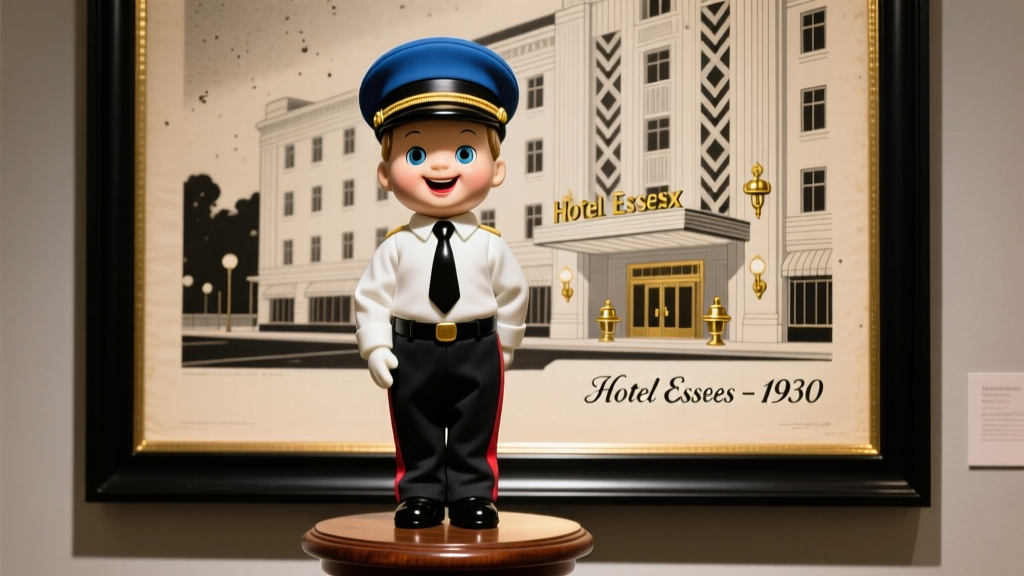
The Hotel Essex Googly-Eyed Bellman Doll: Advertising Artifact, Jazz Age Icon, and Authentication Case Study
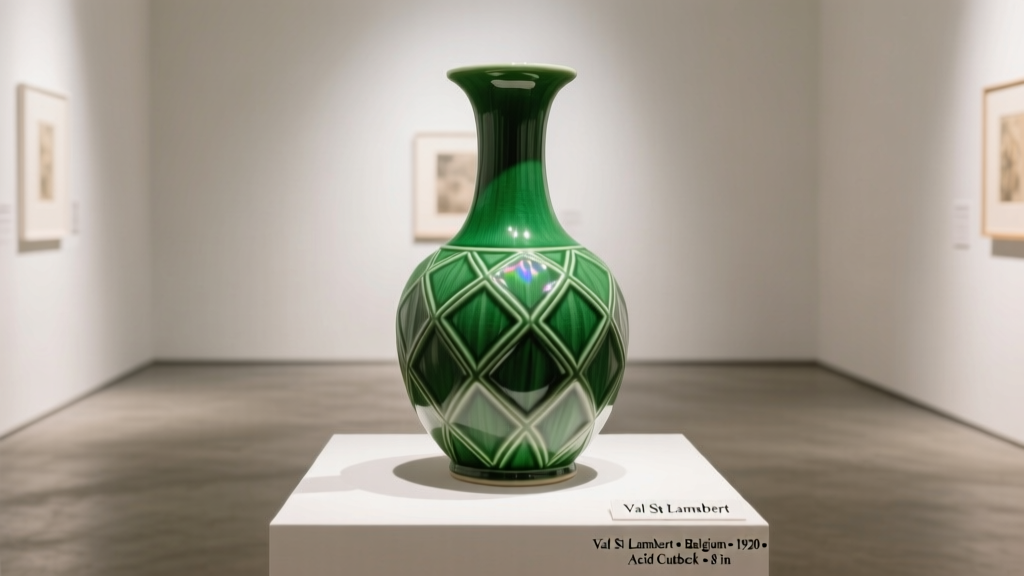
Val Saint Lambert Acid-Cutback Vase: Green Neck, Green Ground, Belgium, Circa 1920 — Authentication, Provenance, and Market Value Analysis
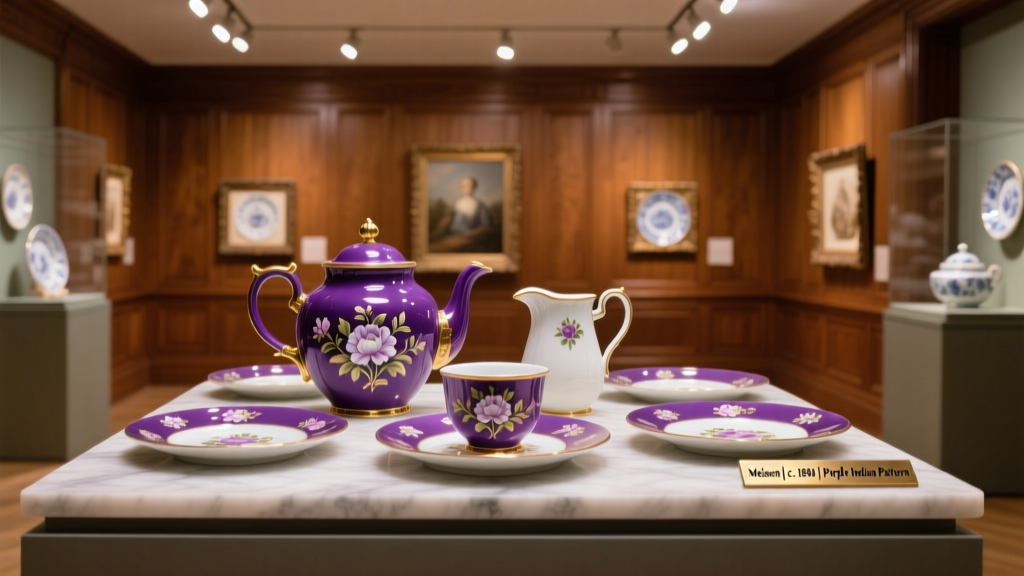
Meissen Breakfast Set 'Purple Indian' Circa 1880: Provenance, Iconography, and Market Authentication
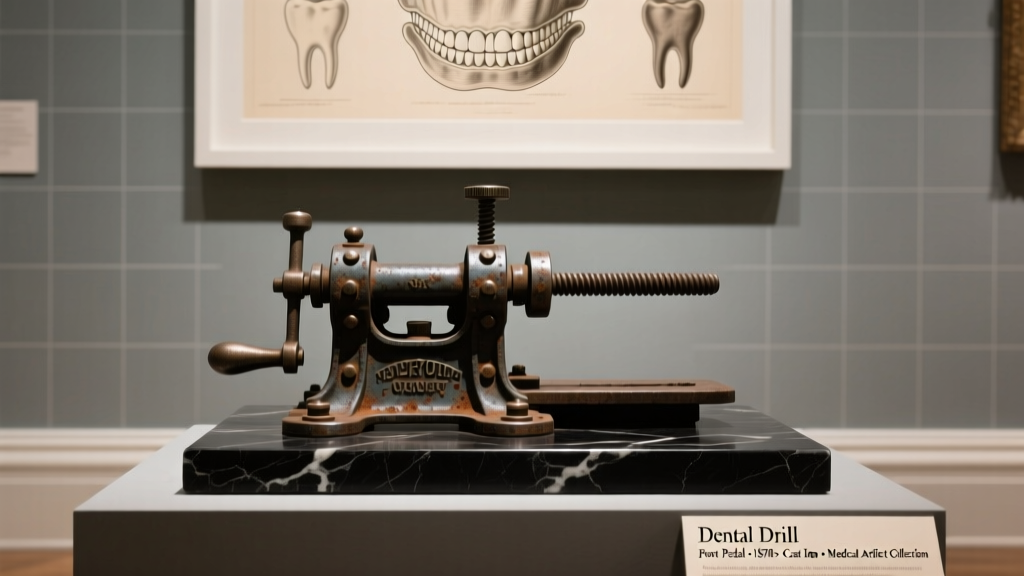
Dental Drill Foot Pedal, Cast Iron, Circa 1870s: Technical Anatomy, Provenance, and Market Authentication

Amberg: A Critical Analysis of the German Printmaking Hub, Its Historical Legacy, and Market Authentication Challenges
J.D. Bennett Co.: The Forgotten Legacy of American Lithographic Innovation and Print Authentication Challenges