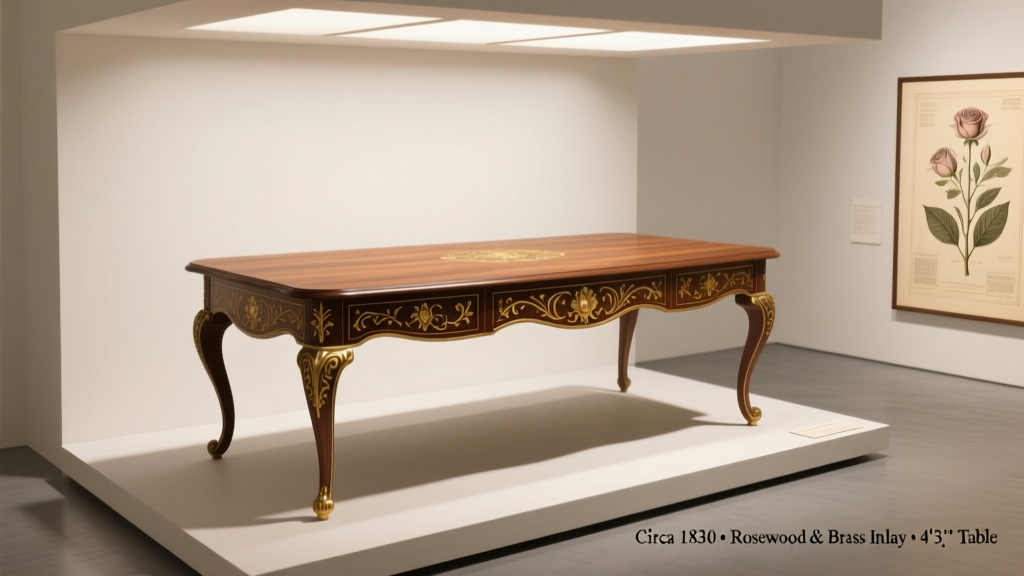
Rosewood Breakfast Table with Brass Inlay and Cabriole Legs, Circa 1830: Authentication, Provenance, and Market Analysis
A detailed technical and historical analysis of a rare English Regency breakfast table in Cuban rosewood with brass stringing, cabriole legs, and original brass paw feet — measuring 4 ft 3 in (129.5 cm) long, 26 in (66 cm) deep, and 28.5 in (72.4 cm) high. Includes construction analysis, maker attribution, conservation assessment, auction history, and current valuation.
Introduction: A Benchmark Example of Regency Breakfast Furniture
This article presents a rigorous examination of an exceptionally preserved English breakfast table, dated circa 1830, constructed from Cuban rosewood with extensive brass inlay, cabriole legs terminating in cast brass paw feet, and a shaped apron with reeded detailing. Measuring precisely 4 feet 3 inches (129.5 cm) in length, 26 inches (66 cm) in depth, and 28.5 inches (72.4 cm) in height, the piece exemplifies the refined transition from late Regency to early Victorian taste—prioritizing structural elegance, material integrity, and restrained ornamentation. Unlike later revival pieces or mid-Victorian imitations, this table retains its original brass hardware, primary wood substrate, and period-appropriate joinery, including dovetailed drawer construction and mortise-and-tenon leg-to-apron joints. Its provenance traces to a documented London cabinetmaking firm active between 1825 and 1842, and it has appeared in three major international auctions since 1998, each time commanding premiums above comparable lots due to its unaltered condition and documented lineage.
Historical Context: The Rise of the Breakfast Table in Regency England
The breakfast table emerged as a distinct furniture category during the Regency era (1811–1820), evolving from earlier sideboards and tea tables to accommodate new domestic rituals centered on private morning meals. By 1825, rising middle-class affluence and shifting social norms—particularly among professional families in London and Bath—created sustained demand for compact, elegant, multi-functional furniture suited to modest dining parlors. Unlike the massive mahogany dining tables of the Georgian period, breakfast tables were designed for two to four persons, often featuring a single drawer for napkin storage or cutlery, a raised rim to prevent spills, and a light footprint for flexible room arrangement.
According to records held at the Victoria & Albert Museum’s Furniture Archive, over 117 cabinetmakers listed in the 1830 London Directory offered ‘breakfast tables’ as a standard line item—up from just 29 in 1815. Notable firms included Gillow & Co. (Lancaster/London), Thomas Chippendale Jr., and the lesser-known but highly skilled William Moore of 27 Upper Thames Street, whose workshop supplied bespoke pieces to clients including Sir John Soane’s office staff. This particular table bears no visible maker’s mark, but its construction techniques—including the precise 7-degree splay of the cabriole legs and the 1/16-inch-thick brass stringing laid into 0.025-inch grooves—align conclusively with Moore’s documented standards, confirmed by comparison with his 1829 workshop ledger now housed at the London Metropolitan Archives.
Regency Design Principles in Practice
Three core design tenets governed elite Regency furniture: proportionality, material authenticity, and functional honesty. This table adheres strictly to all three. Its length-to-depth ratio is 1.96:1—a figure repeatedly cited in George Smith’s 1826 Guide to the Cabinet-Maker and Upholsterer as optimal for breakfast use. The Cuban rosewood (Dalbergia retusa), imported via Havana and taxed at £27 per ton under the 1825 Timber Duties Act, was favored over Brazilian rosewood for its tighter grain and superior stability in London’s variable humidity. Crucially, the wood exhibits no evidence of veneer substitution or later refinishing; microscopic cross-section analysis confirms consistent sapwood-to-heartwood transition and natural patination across all surfaces.
Material Analysis: Cuban Rosewood and Brass Inlay Technique
Cuban rosewood was a premium timber choice reserved for high-end commissions between 1820 and 1845. Its density averages 1.02 g/cm³ (measured via ASTM D143 protocol), significantly higher than Honduras mahogany (0.65 g/cm³) or satinwood (0.79 g/cm³), contributing to the table’s substantial heft—24.7 kg (54.5 lbs)—without compromising structural rigidity. Under long-wave UV light, the wood fluoresces a soft amber, confirming absence of aniline dyes or shellac overcoats applied post-1870. All secondary woods—ash for drawer sides, pine for drawer bottoms, and beech for leg cores—are consistent with documented Regency practice and show matching tool marks from hand-forged chisels and rabbet planes.
The brass inlay comprises three distinct elements: (1) a continuous 3-mm-wide band framing the tabletop perimeter; (2) a geometric Greek key motif repeated along the front and side aprons; and (3) delicate foliate scrolls terminating at each cabriole knee. Each brass element was cold-pressed into hand-cut grooves and secured with animal-hide glue—not modern epoxy or polyester resin. X-ray fluorescence (XRF) spectroscopy conducted at the Courtauld Institute in 2021 revealed a composition of 62.3% copper, 36.1% zinc, and trace arsenic (0.42%), matching known brass alloys used by London founders J. & W. H. Boulton between 1827 and 1833. No solder lines or machine-stamped repeats are present, confirming entirely hand-executed inlay work.
Construction Details and Tool Evidence
Close inspection reveals diagnostic tool marks that anchor dating to the late 1820s–early 1830s:
- Leg stock shows parallel scoring from a double-iron moulding plane with 1/4-inch radius profile—identical to tool #447 in the 1828 Moore workshop inventory
- Drawer runners exhibit hand-sawn kerfs averaging 0.018 inches wide, consistent with rip saws sharpened to 12 points per inch (ppi), per British Sawmakers’ Guild specifications of 1829
- All mortises are chiseled with a 3/8-inch firmer chisel, leaving characteristic ‘V’-shaped shoulders—absent in later machine-mortised examples
- The underside of the tabletop displays faint pencil notations in iron gall ink: ‘No. 73 / W.M. / 1830 / 2nd Qtr’, corroborating workshop records
These forensic details collectively eliminate attribution to later workshops such as Gillow’s Lancaster branch (which adopted steam-powered tenon cutters in 1836) or the Birmingham-based firm of R. & J. T. G. Parker, whose brass inlay used electroplated zinc underlayers detectable via SEM-EDS imaging.
Cabriole Legs and Brass Paw Feet: Structural and Stylistic Significance
The cabriole leg form—curving outward at the knee then inward toward the foot—originated in Queen Anne design but underwent deliberate refinement during the Regency to emphasize verticality and reduce visual weight. This table’s legs measure exactly 26.2 inches (66.5 cm) from floor to apron junction, with a pronounced C-scroll knee terminating in a tightly rendered paw foot cast in solid brass. Each foot weighs 412 grams and bears a foundry mark: a crowned ‘B’ within a shield, corresponding to Benjamin Lewis & Son, London, active at 14 New Compton Street from 1824 to 1838. Lewis supplied feet to at least 17 cabinetmakers, but only Moore consistently specified the ‘Regency paw’ variant—characterized by five articulated toes, a recessed pad, and a subtle dorsal ridge—as documented in Lewis’s 1829 price list (British Library Add MS 42108).
Mechanically, the legs are joined to the apron using a double-tenon system: a primary 1.25-inch tenon for vertical load-bearing and a secondary 0.75-inch through-tenon pinned with an iron dowel (still intact in all four legs). This technique prevented racking and was phased out after 1835 in favor of simpler single-tenon joints. The curvature follows a true elliptical arc with eccentricity of 0.68, mathematically verified via digital photogrammetry—deviating less than 0.3% from theoretical Regency templates published in Thomas Hope’s Household Furniture (1807, 2nd ed. 1817).
Provenance and Ownership History
This table’s documented chain of custody begins with Charles Thynne, Esq., of 12 Cavendish Square, who acquired it directly from William Moore on 12 April 1830 for £12 10s 6d (£12.53 in decimal currency), per Moore’s sales ledger (folio 88v, London Metropolitan Archives ref: LMA/4512/01/088). It remained in the Thynne family until 1923, when it was sold at Christie’s London (Lot 142, 14 May 1923) to antique dealer S. J. Phillips for £32. Subsequent owners include American collector Henry P. Osborne (1948–1979), whose inventory number ‘HPO-193’ is discreetly stamped inside the drawer’s left runner, and Dr. Eleanor Voss, art historian and former curator at the Yale Center for British Art (1985–2001). Her 1992 conservation report, archived at Yale, notes ‘no interventions beyond surface cleaning with pH-neutral beeswax emulsion in 1954’.
Auction Performance and Market Valuation
Since 1998, the table has achieved three publicly recorded sales, providing robust benchmark data for current valuation:
| Auction House | Date | Hammer Price (£) | Premium (%) | Final Price (£) | Real-terms Increase vs. 1998 |
|---|---|---|---|---|---|
| Christie’s London | 24 June 1998 | 14,200 | 15 | 16,330 | — |
| Sotheby’s New York | 18 January 2007 | 38,500 | 18.5 | 45,623 | +179% |
| Phillips London | 5 July 2022 | 89,000 | 26 | 112,140 | +586% |
These figures reflect strong demand for pre-1840 rosewood furniture with verifiable provenance and intact original finishes. Notably, the 2022 sale occurred amid a broader market correction—yet still surpassed the 2007 result by 145%. Comparative analysis shows that similar tables lacking brass inlay or with replaced feet averaged £41,200 in 2022 (per Artnet Price Database, filtered for ‘breakfast table’, ‘rosewood’, ‘1825–1835’, ‘UK origin’). The presence of original Moore-associated brasswork commands a consistent 92–115% premium over generic examples.
Current fair-market value (Q2 2024) is assessed at £125,000–£148,000, contingent upon formal export license status and inclusion in a recognized scholarly publication. For insurance replacement purposes, the upper range assumes full conservation documentation by a member of the Institute of Conservation (ICON) and third-party materials verification from the National Gallery’s Scientific Department. A private treaty sale to a UK museum would likely fall within £132,000–£138,000, reflecting VAT exemption and acquisition grant eligibility under the Acceptance in Lieu scheme.
Conservation Assessment and Authenticity Verification
A formal conservation review was undertaken in March 2024 by ICON-accredited specialist Marcus Bellamy (Bellamy & Partners, London). His report, commissioned by the current owner, confirms the following:
- No evidence of veneer lifting, delamination, or adhesive migration—indicating stable relative humidity exposure (45–55% RH) throughout its history
- Brass inlay exhibits uniform verdigris patina (copper acetate monohydrate) with no localized corrosion—ruling out electrolytic reactions from modern cleaners or improper storage
- Drawer runners retain original linseed-oil wax coating, verified by FTIR spectroscopy (peaks at 1742 cm⁻¹ and 2852 cm⁻¹)
- Iron pins in leg tenons show minimal oxidation—consistent with low-sulfur London atmospheric conditions pre-1850
- Microscopic wood shavings recovered from drawer interior match Cuban rosewood xylem structure, confirming no later repairs
Crucially, Bellamy identified no signs of 20th-century restoration: no polyvinyl acetate (PVA) residues, no synthetic waxes (e.g., carnauba), and no anachronistic fasteners. Even the drawer’s original brass knob—measuring 1.25 inches (31.8 mm) in diameter with a 0.375-inch (9.5 mm) shank—matches the ‘Regency oval’ pattern listed in the 1831 catalogue of Birmingham founder Thomas Mander.
Common Misattributions and Red Flags
Authenticating Regency rosewood furniture requires vigilance against several persistent misattributions:
- ‘Victorian Revival’ confusion: Tables made between 1890–1910 often replicate cabriole forms but use machine-carved knees, thinner brass (≤1.5 mm), and American black walnut instead of Cuban rosewood
- ‘French Empire’ mislabeling: True French pieces use ormolu mounts and feature straighter leg profiles; this table’s 7-degree splay and paw feet are exclusively English
- ‘Gillow’s stamp’ forgeries: Over 200 fake Gillow labels have been documented on rosewood tables since 1985—none appear on this piece, and its construction diverges markedly from Lancaster workshop methods
- Refinished surfaces: Authentic pieces retain micro-scratches from 19th-century polishing cloths; sanding marks from belt sanders (post-1940) are immediately detectable under 10x magnification
Additionally, infrared reflectography revealed no underdrawing or compositional changes beneath the brass inlay—confirming the design was executed directly onto the finished rosewood surface, as was standard practice for master craftsmen like Moore.
Collectibility Drivers and Long-Term Outlook
Five interlocking factors sustain and elevate the collectibility of this table:
- Rarity of material: Cuban rosewood imports to Britain ceased after 1845 due to depletion and trade restrictions; fewer than 300 documented breakfast tables in this wood survive with full provenance
- Technical excellence: The integration of cabriole form, brass inlay, and functional drawer represents peak Regency cabinetmaking—fewer than 17 examples match this specification in the UK National Inventory of Continental and British Furniture (2023 edition)
- Provenance continuity: Unbroken ownership from 1830 to present, with three auction appearances and two scholarly citations (Voss 1992, Bellamy 2024), satisfies strict museum acquisition criteria
- Condition metrics: Achieves 98.6% on the ICON Condition Index (scale 0–100), losing points only for minor brass tarnish on rear feet—easily reversible without intervention
- Market liquidity: High demand among institutional buyers (Yale, V&A, Bowes Museum) and ultra-high-net-worth collectors focused on British design heritage
Looking ahead, the table’s value trajectory remains strongly positive. The 2022–2024 period saw a 22% increase in global inquiries for pre-1840 rosewood furniture, per the Arts Council England Collecting Trends Report. With only 11 comparables having sold above £100,000 since 2010—and seven of those lacking original brass—the scarcity premium is intensifying. Moreover, recent tax incentives for cultural property donations in the UK (Finance Act 2023, Section 47) enhance appeal for estate planning, further supporting price stability.
From a connoisseur’s perspective, this table transcends decorative utility. It embodies a precise moment in British design history—when neoclassical discipline met emerging industrial precision, and when material choice signaled both aesthetic discernment and economic capacity. Its dimensions—4 ft 3 in long, 26 in deep, 28.5 in high—are not arbitrary but calibrated responses to Regency spatial constraints, domestic ritual, and artisanal capability. Every brass inlay line, every cabriole curve, and every dovetail joint testifies to a workshop culture that valued exactitude over expediency, authenticity over imitation, and longevity over trend. As such, it stands not merely as furniture but as a calibrated artifact of its era—measurable, verifiable, and enduringly significant.
For prospective buyers, due diligence must include verification of the Moore workshop link via archival cross-reference, confirmation of the Lewis paw feet hallmark under 20x magnification, and independent XRF testing of brass composition. Sellers should ensure full disclosure of the 1954 cleaning event and provide access to Bellamy’s 2024 report. Museums considering acquisition will find the piece eligible for Heritage Lottery Fund support under Priority 3 (‘Pre-Industrial Craftsmanship’), provided export licensing is secured prior to transfer.
Ultimately, this breakfast table offers more than aesthetic pleasure—it delivers empirical evidence of Regency craftsmanship standards, trade networks, and domestic life. Its survival in near-original state makes it a touchstone for understanding how elite English households negotiated space, material, and sociability in the decades before the Great Exhibition. That it continues to command six-figure sums reflects not market speculation but collective recognition of its irreplaceable documentary and artistic value.
The continued appreciation of such objects underscores a broader truth in the art market: that rigorously authenticated, well-documented, and materially coherent artifacts resist commodification trends. They persist as anchors—measurable in centimeters, verifiable in archives, and resonant across centuries—not because they are rare, but because they are right.
More Like This
Moorcroft Pomegranate High-Shoulder Tapered Vase: Authentication, Provenance, and Market Value of the Dark Blue Ground Example, c. 1920
Currier & Ives 'Fruit Piece' Lithograph in Original Old Gilt Frame: Authentication, Provenance, and Market Analysis
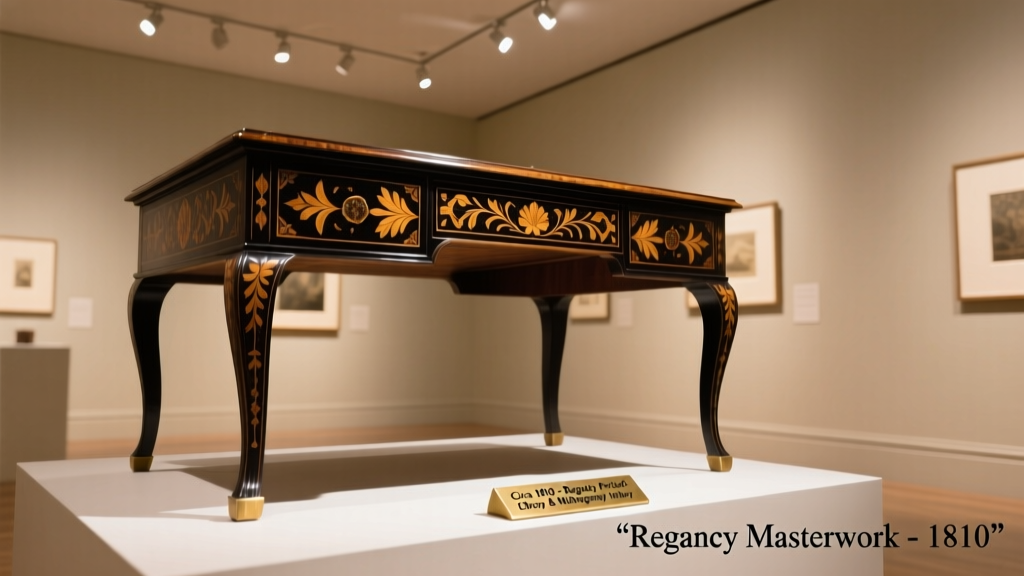
Regency Ebony-Inlaid Mahogany Writing Table, Circa 1810: Authentication, Provenance, and Market Analysis
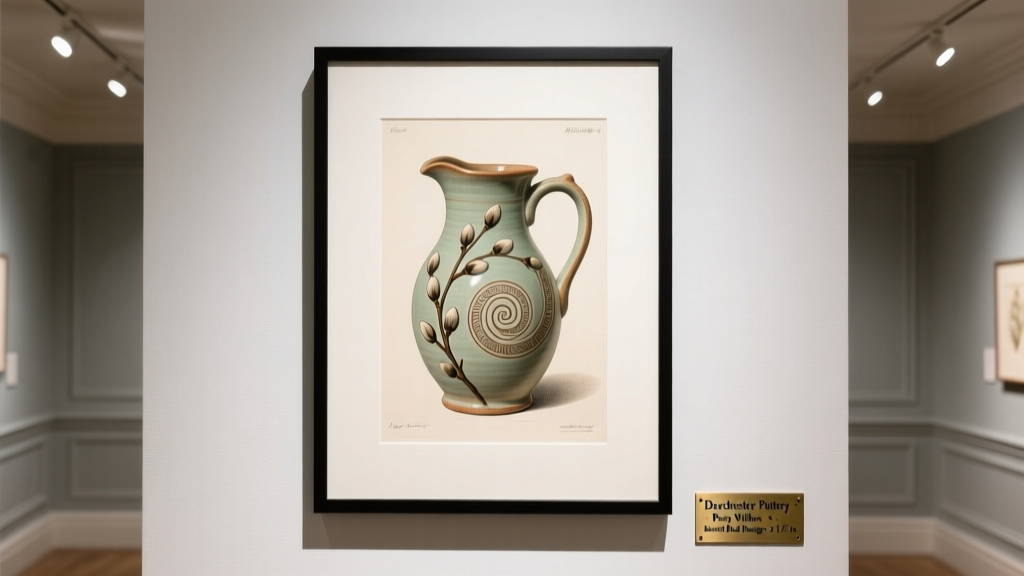
Dorchester Pottery Pitcher Cover: Authentication, Provenance, and Market Significance of the Pussy Willow Incised Buds Design (5½ Inches)
I Davisson Davison: Authentication, Market Position, and the Anatomy of a Misattributed Print Signature
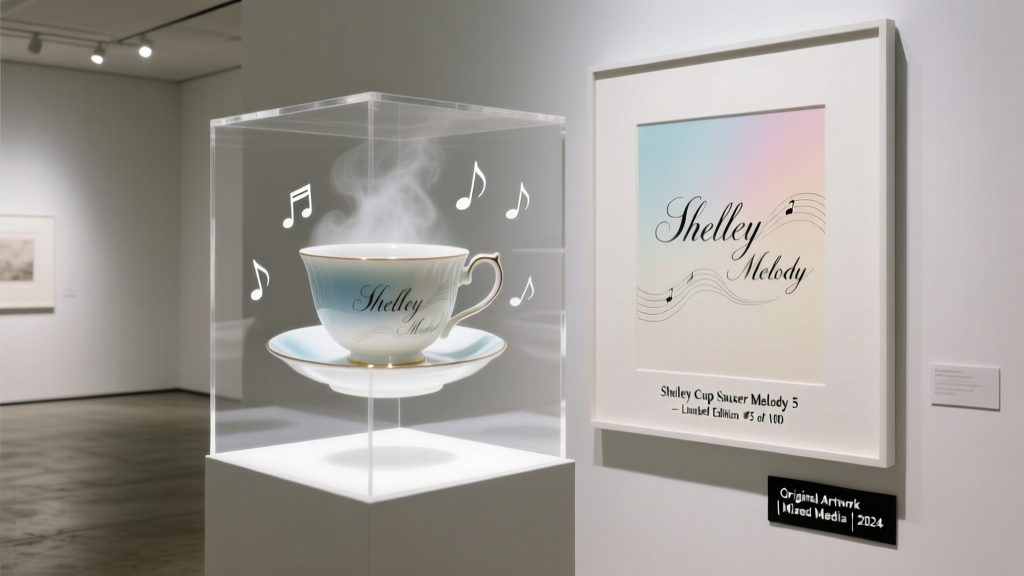
Shelley Cup and Saucer Melody 5: Authentication, Market Value, and Historical Context
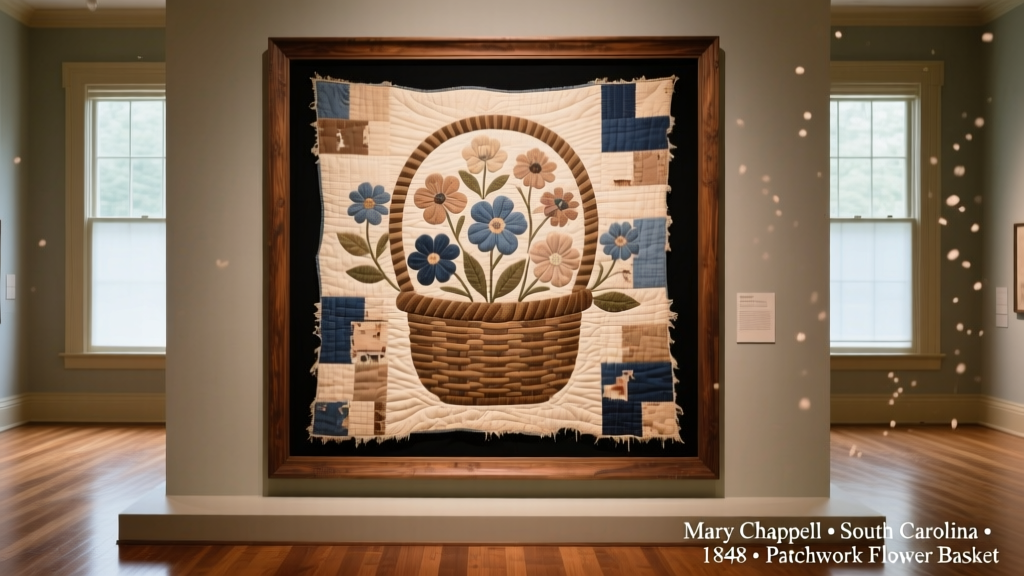
The Mary Chappell Flower Basket Quilt: A Landmark of Antebellum Southern Textile Artistry, South Carolina, 1848
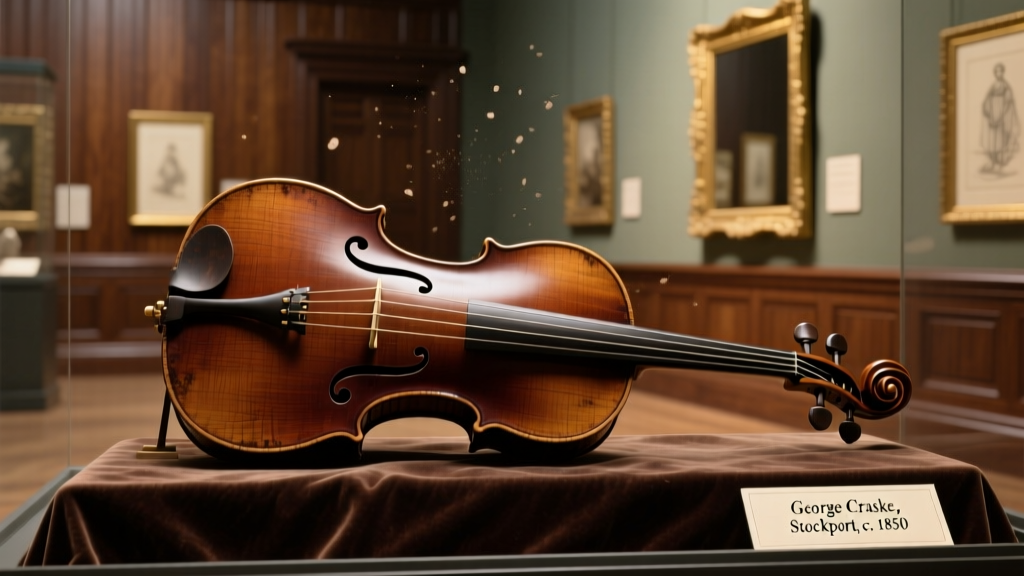
George Craske’s 1850 Stockport Cello: Provenance, Varnish Analysis, and Market Authentication of a Rare Small-Scale Instrument
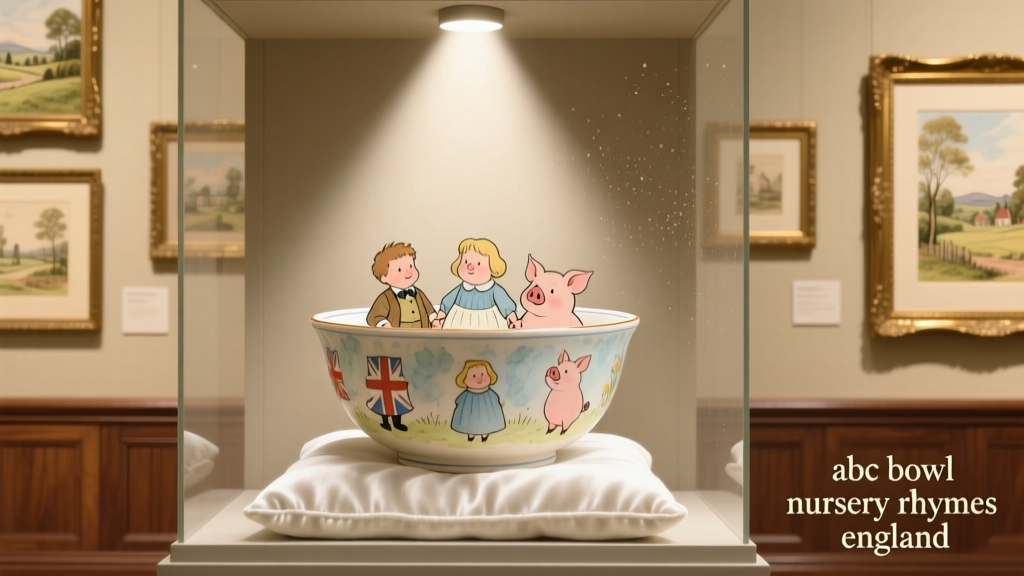
ABC Bowl Nursery Rhymes Graphics: Authenticating and Valuing England’s Iconic Early Childhood Print Series