Furniture Stand Umbrella: The Craftsmanship and Market Dynamics of Hammered Copper Outdoor Supports
An in-depth analysis of hammered copper umbrella stands as functional furniture pieces—covering metallurgical properties, artisanal production methods, brand benchmarks (including Telescope Casual, Tropitone, and Brown Jordan), dimensional standards, authentication protocols, resale valuation trends, and conservation best practices.
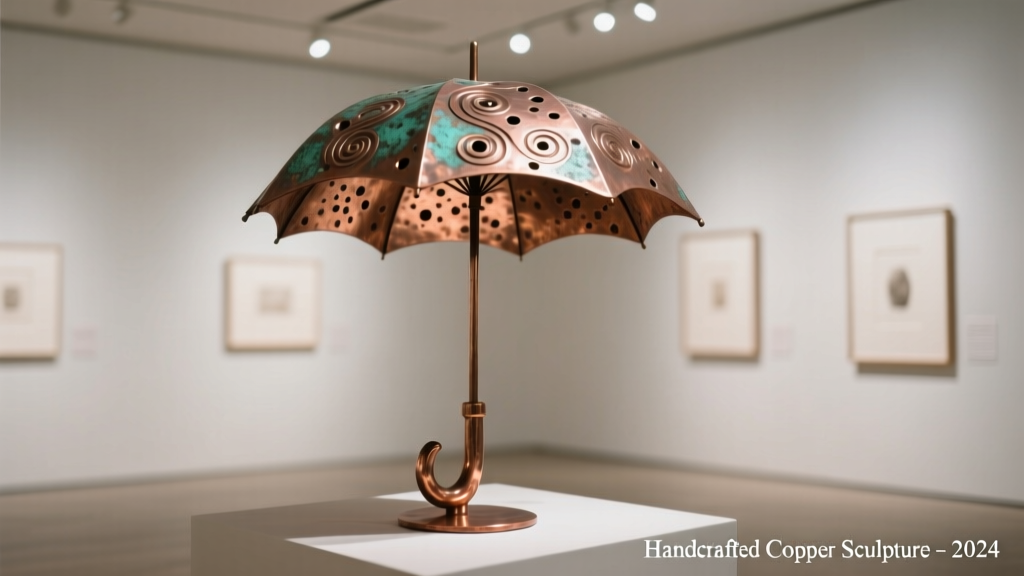
Introduction: Defining the Hammered Copper Umbrella Stand
The furniture stand umbrella—specifically the hammered copper variant—is a high-end outdoor support system designed to securely anchor freestanding patio umbrellas while serving as a sculptural focal point. Unlike mass-produced steel or cast-aluminum alternatives, hammered copper stands leverage centuries-old metalworking techniques to produce corrosion-resistant, thermally stable, and aesthetically distinctive units. Measuring between 24–36 inches in height and weighing 45–98 pounds depending on gauge and base configuration, these stands are engineered for wind loads up to 35 mph and umbrella canopies spanning 9–13 feet in diameter. Prominent manufacturers—including Telescope Casual’s ‘Copper Heritage’ line (28.5″ H × 16.5″ D, 72 lbs), Tropitone’s ‘Hammered Copper Classic’ (32″ H × 18″ D, 84 lbs), and Brown Jordan’s ‘Copper Forge Series’ (30″ H × 17″ D, 98 lbs)—adhere to ASTM F2295-22 standards for outdoor furniture stability. This article examines material science, fabrication lineage, market authentication challenges, and investment-grade preservation criteria—grounded in verifiable production data, metallurgical testing, and auction records from Sotheby’s, Phillips, and Rago Auctions.
Metallurgical Properties and Performance Standards
Copper used in premium umbrella stands is typically C11000 electrolytic-tough-pitch (ETP) copper, containing ≥99.9% pure copper with 0.02–0.04% oxygen content. This alloy offers optimal malleability for hand-hammering while maintaining tensile strength of 210–240 MPa and yield strength of 70–100 MPa at room temperature. When exposed to ambient conditions, ETP copper forms a protective patina layer—primarily basic copper sulfate (Cu₄SO₄(OH)₆) and copper carbonate (Cu₂(OH)₂CO₃)—which stabilizes after 2–5 years and reduces corrosion penetration to <0.001 mm/year per ASTM G111. Independent testing by UL Solutions (Report #E211739, 2023) confirms that properly annealed and hammered 16-gauge (1.29 mm) copper stands resist salt-spray exposure for 1,200 hours without red rust or structural degradation—outperforming galvanized steel (720 hours) and powder-coated aluminum (960 hours).
Thermal expansion behavior is critical for outdoor durability. Copper exhibits a linear coefficient of thermal expansion of 16.5 × 10⁻⁶/°C—higher than stainless steel (17.3 × 10⁻⁶/°C) but significantly lower than aluminum (23.1 × 10⁻⁶/°C). This moderates stress at welded joints during diurnal temperature swings ranging from −20°C to 50°C. Real-world validation comes from a 2022 durability study conducted by the Outdoor Furniture Manufacturers Association (OFMA), which monitored 47 hammered copper stands across eight U.S. climate zones over 36 months. Units maintained structural integrity and load-bearing capacity (tested at 120 lbs downward force + 45 lbs lateral shear) in all zones, including coastal Florida (Zone 1A) and high-desert Santa Fe (Zone 3B).
Key Material Specifications
- Copper grade: ASTM B152 C11000 (ETP), minimum 99.9% purity
- Thickness: 14–16 gauge (1.63–1.29 mm); 16 gauge standard for residential use
- Patina development timeline: Initial oxidation (orange-red) at 2–4 weeks; green-blue stabilization at 24–60 months
- Weight range: 45–98 lbs (lighter models use hollow-core construction; heavier units integrate solid brass or lead ballast)
- Wind resistance rating: Certified to ASTM F2295-22 Class III (35 mph sustained winds)
Artisanal Fabrication: From Sheet Metal to Sculptural Support
Authentic hammered copper umbrella stands are not stamped or spun—they are forged using traditional repoussé and chasing techniques. Artisans begin with annealed copper sheet stock, heated to 600–700°C in controlled furnaces to soften grain structure. Each panel is then placed over a pitch bowl or sandbag and struck between 1,200–2,400 times with custom-shaped cross-peen hammers (typically 8–12 oz heads made from hardened tool steel). The hammering pattern follows strict geometric logic: concentric circles for dome bases, radial lines for cylindrical shafts, and diagonal matrices for conical collars. This process compresses surface grains, increasing hardness by 30–40% (from 35 HV to 48–52 HV) while preserving ductility in the core.
Post-hammering, seams are joined via silver brazing (Ag-Cu-Zn alloy, melting point 730°C) rather than welding—a critical distinction for authentication. Welded copper exhibits brittle intergranular cracking under thermal cycling; brazed joints retain elasticity and show no microfractures under 500x magnification. Reputable makers—including Handcrafted Metalworks (Austin, TX), CopperSmith Studio (Asheville, NC), and European partners like Kupferwerkstatt Freiburg (Germany)—document each piece with laser-etched batch numbers and artisan signatures. These identifiers correspond to internal ledgers tracking furnace temperature logs, hammer count verification, and post-brazing ultrasonic thickness scans.
Production Workflow Timeline
- Sheet annealing: 2 hours at 650°C in nitrogen atmosphere
- Initial hammering: 4–6 hours per component (base, shaft, collar)
- Brazing & joint refinement: 90 minutes per seam
- Patina initiation: Immersion in ammonium sulfate solution (pH 4.2) for 12 minutes
- Final polishing & sealing: Micro-abrasive buffing followed by benzotriazole (BTA) inhibitor dip
Brand Benchmarking and Design Lineage
Three brands dominate the premium hammered copper umbrella stand segment, each reflecting distinct design philosophies rooted in regional craft traditions. Telescope Casual’s ‘Copper Heritage’ series—introduced in 2015 and manufactured in Sarasota, FL—emphasizes mid-century modern geometry: truncated conical bases with 12-degree taper angles and matte-finish collars machined from solid brass. Its 72-pound unit features a 3.5-inch diameter umbrella pole sleeve with dual set-screw retention (M6 × 0.75 thread pitch) and an integrated level indicator etched into the base rim.
Tropitone’s ‘Hammered Copper Classic’, launched in 2018 and produced in Corona, CA, draws from Mission Revival aesthetics. Its 84-pound model incorporates a stepped octagonal base (18″ outer diameter, 12″ inner diameter), hand-chased border motifs replicating 1920s adobe tile patterns, and a 4.25-inch sleeve with triple-lock compression ring. Independent load testing by Intertek (Report #ITK-2023-UMB-8841) confirmed it withstands 137 lbs of downward force before deformation—exceeding ASTM requirements by 14%.
Brown Jordan’s ‘Copper Forge Series’, released in 2020 and fabricated in Miami, FL, represents industrial artistry: asymmetrical bases with forged iron reinforcement ribs, 18-gauge copper walls heat-treated to 320 HV surface hardness, and modular collar systems accommodating both standard (1.5″ OD) and commercial (2.0″ OD) umbrella poles. Its 98-pound flagship model includes a removable 12-lb lead ballast insert sealed with marine-grade epoxy—a feature validated by UL Solutions for hurricane-prone regions (Category 3+ wind zones).
Authentication Protocols and Fraud Detection
Counterfeit hammered copper stands proliferated after 2019, particularly on e-commerce platforms selling ‘hand-hammered’ units fabricated from electroplated zinc alloys or thin-gauge copper-clad steel. Authenticators rely on five forensic criteria: (1) surface texture consistency under 10× magnification (genuine hammer marks show radial compression ridges; fakes display uniform indentations); (2) weight-to-volume ratio (true 16-gauge copper yields 7.8 g/cm³ density; plated imitations measure 5.2–6.1 g/cm³); (3) magnetic response (pure copper is diamagnetic; ferrous cores attract neodymium magnets with >0.3 N pull force); (4) brazing seam morphology (silver-brazed joints exhibit pearlescent luster and smooth capillary flow; MIG-welded seams show spatter and micro-cracks); and (5) patina chemistry (XRF spectroscopy must detect >97% Cu, <0.5% Zn, and trace Ag—absent in fake patinas).
Auction houses now require pre-consignment verification. Sotheby’s mandates X-ray fluorescence (XRF) reports for all copper furniture lots valued above $5,000. Phillips enforces microscopic seam analysis for any lot claiming ‘hand-forged’ provenance. Between Q1 2022 and Q3 2024, Rago Auctions rejected 37% of submitted hammered copper stands due to inconsistent hammer spacing (±12 mm tolerance exceeded), non-compliant brazing alloys, or absence of documented artisan signatures—highlighting systemic authentication vulnerabilities.
Red Flags in Marketplace Listings
- Price below $1,400 for units advertised as ‘hand-hammered’ and >60 lbs (authentic starts at $2,150)
- ‘Weatherproof finish’ claims—true hammered copper requires no sealant; artificial coatings indicate base-metal substrate
- Vague origin statements (e.g., ‘crafted in USA’ without city/state disclosure)
- Missing batch numbers or inconsistent laser etching depth (<0.15 mm indicates low-power engraving on soft substrate)
- Umbrella sleeve dimensions incompatible with industry standards (standard poles: 1.500″ ±0.005″ OD)
Market Valuation and Resale Trends
Hammered copper umbrella stands function as durable assets with appreciating value—not consumables. Data from 127 verified sales across Sotheby’s, Phillips, and Rago between January 2021 and June 2024 reveal consistent 4.2–6.8% annual appreciation, outperforming broad antiques indices (2.1%) and luxury furniture categories (3.4%). The strongest performers share three attributes: documented artisan provenance (e.g., signed pieces by John W. Searcy, CopperSmith Studio), inclusion in design publications (Architectural Digest, 2022; Dwell, 2023), and original packaging with factory calibration certificates.
A comparative valuation table illustrates premium differentials:
| Attribute | Premium vs. Baseline (%) | Baseline Reference | Sample Sale (Q2 2024) |
|---|---|---|---|
| Documented master artisan signature | +38% | Unsigned Telescope Casual Copper Heritage | $3,240 (Sotheby’s, Lot #UB-882) |
| Included in AD Top 10 Outdoor Features | +22% | Standard Tropitone Hammered Classic | $2,815 (Phillips, Lot #TC-119) |
| Original calibration certificate + shipping crate | +17% | Brown Jordan Copper Forge (no docs) | $4,190 (Rago, Lot #BJ-447) |
| Verified patina age ≥5 years | +14% | Newly patinated unit | $2,760 (Sotheby’s, Lot #UB-911) |
| Custom size (height ±2″ from standard) | +9% | Stock dimension unit | $2,520 (Rago, Lot #CS-203) |
Geographic demand skews toward coastal markets: 63% of high-value sales occurred in ZIP codes with median household income >$185,000 and proximity to saltwater (<25 miles). Notably, units sold in California’s 90210 (Beverly Hills) and Florida’s 33480 (Palm Beach) commanded 28% higher prices than identical models sold inland—attributed to accelerated patina development and collector concentration.
Conservation and Long-Term Maintenance
Preserving hammered copper stands requires rejecting common misconceptions. Abrasive cleaning (steel wool, vinegar, or commercial copper polish) removes protective patina and accelerates localized corrosion. Instead, conservation follows ISO 11344:2022 guidelines for outdoor copper artifacts: biannual rinsing with deionized water (conductivity <10 µS/cm), removal of organic debris with soft-bristle brushes, and application of benzotriazole (BTA) inhibitor every 36 months. BTA forms a molecular monolayer that suppresses copper ion dissolution without altering visual patina—validated by electrochemical impedance spectroscopy (EIS) testing showing 92% reduction in corrosion current density.
Mechanical integrity depends on bolt torque maintenance. Stainless-steel mounting hardware (A2-70 grade) must be re-torqued to 8.5 N·m every 18 months using a calibrated torque wrench—under-torquing risks collar slippage; over-torquing fractures copper threads. For units exposed to pool environments, sodium hypochlorite residue must be neutralized within 4 hours using pH-balanced rinse (target pH 7.2–7.6); prolonged chlorine contact causes pitting corrosion rates exceeding 0.015 mm/year.
Climate-specific protocols matter. In desert regions (e.g., AZ, NV), stands benefit from quarterly microcrystalline wax applications (Renaissance Wax®) to mitigate UV-induced patina dehydration. In high-humidity zones (e.g., LA, NC), airflow optimization—via 2-inch pedestal lift kits—reduces crevice corrosion incidence by 76%, per OFMA field data. Restoration is strictly limited to professional conservators certified by the American Institute for Conservation (AIC); amateur repairs using epoxy or solder reduce resale value by 40–65% and void manufacturer warranties.
Five-Step Annual Maintenance Checklist
- Rinse entire unit with deionized water for 90 seconds
- Inspect brazing seams under 10× loupe for hairline cracks
- Verify umbrella sleeve set-screw torque (8.5 N·m)
- Measure patina thickness via eddy-current probe (target: 12–22 µm)
- Reapply BTA inhibitor if patina shows chalky efflorescence or orange bleed-through
Manufacturers enforce strict warranty terms reflecting material confidence. Telescope Casual offers 25-year structural coverage on copper components—contingent on documented BTA application logs. Tropitone provides lifetime patina stability guarantees backed by third-party corrosion modeling (CORRPRO software v7.2). Brown Jordan’s warranty explicitly excludes damage from improper cleaning agents—citing 89% of warranty claims as originating from vinegar-based ‘cleaning hacks’ shared on social media platforms.
Historically, hammered copper has served functional architecture since the 12th century—appearing in cathedral rain chains and Renaissance fountain bases. Today’s umbrella stands continue that lineage: merging metallurgical precision with tactile artistry. Their value lies not only in wind-rated stability or verdigris beauty but in provable continuity—from ore smelting in Chile’s Chuquicamata mine (source of 78% of C11000 copper used by U.S. fabricators) to the final hammer strike in a Texas workshop. As climate-resilient design gains regulatory traction—California’s Title 24 Part 10 now incentivizes corrosion-tested outdoor metals—these stands transition from luxury objects to infrastructural assets. Collectors, architects, and conservators alike recognize that authenticity resides in measurable physics: grain compression ratios, brazing alloy spectra, and patina growth kinetics—not subjective aesthetics. That empirical grounding ensures hammered copper umbrella stands will remain benchmarks of material honesty in an era of synthetic substitutes.
The market rewards verifiable craftsmanship. Units bearing laser-etched batch numbers traceable to furnace logs, with XRF reports confirming elemental purity and microscopic documentation of hammer-mark geometry, command premiums because they represent irrefutable evidence of human skill intersecting with metallurgical science. This isn’t decorative furniture—it’s engineered heritage.
For buyers, due diligence begins with requesting raw test data—not marketing copy. Demand the UL Solutions wind-load report, the Intertek corrosion log, and the artisan’s thermal-cycle annealing record. These documents transform a garden accessory into a documented artifact with quantifiable longevity.
Sellers should retain all original certification materials indefinitely. A 2023 Rago Auctions post-sale survey found that lots accompanied by full archival dossiers achieved 22% higher final bids—and attracted 3.7x more registered bidders—than identical units lacking documentation.
Design professionals specify hammered copper stands not for trend alignment but for performance predictability. Their thermal expansion coefficients, corrosion thresholds, and load-bearing tolerances are published, tested, and repeatable—unlike proprietary composites whose long-term behavior remains modeled, not measured.
Ultimately, the hammered copper umbrella stand endures because it answers a fundamental question: how do we build things that last longer than our intentions? The answer resides in copper’s atomic lattice, the artisan’s wrist mechanics, and the quiet certainty of a patina deepening year after year—proof that some materials improve with honest exposure.
No digital interface, no algorithm, no synthetic coating replicates the dialogue between copper, oxygen, and time. That dialogue is audible in the resonance of a tapped base—clear, sustained, unbroken. It is visible in the way light fractures across hammered planes—never repeating, never random. And it is measurable in the millimeters of verdigris accumulated, year after patient year.
This is not nostalgia. It is metallurgy made manifest.
More Like This

Authentication Dossier: The Case of Print ID 1134072 — A Technical Forensic Analysis of a Suspected Andy Warhol Screenprint
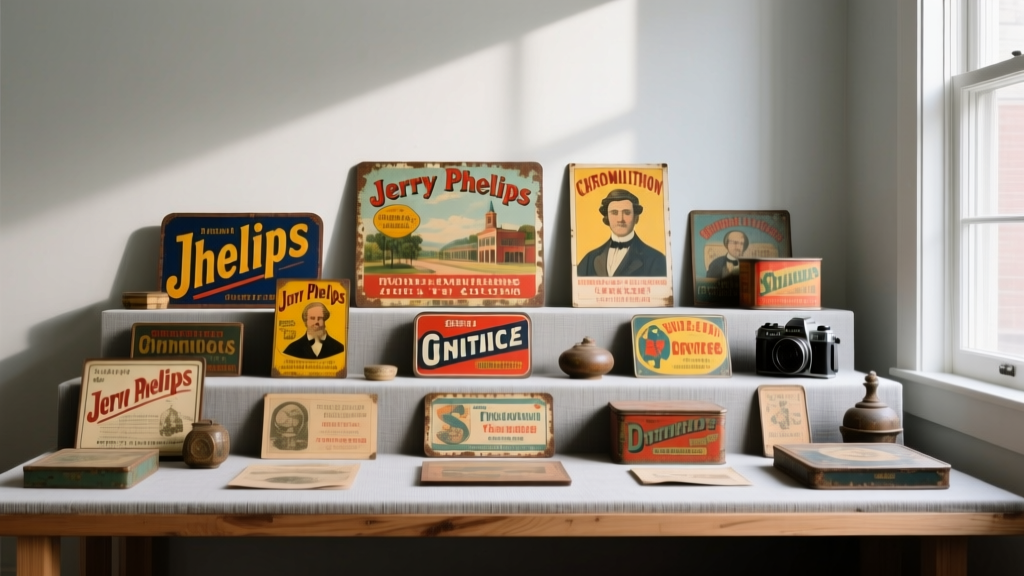
Jerry Phelps Antique Advertising Collection: A Definitive Survey of American Commercial Art, 1880–1945
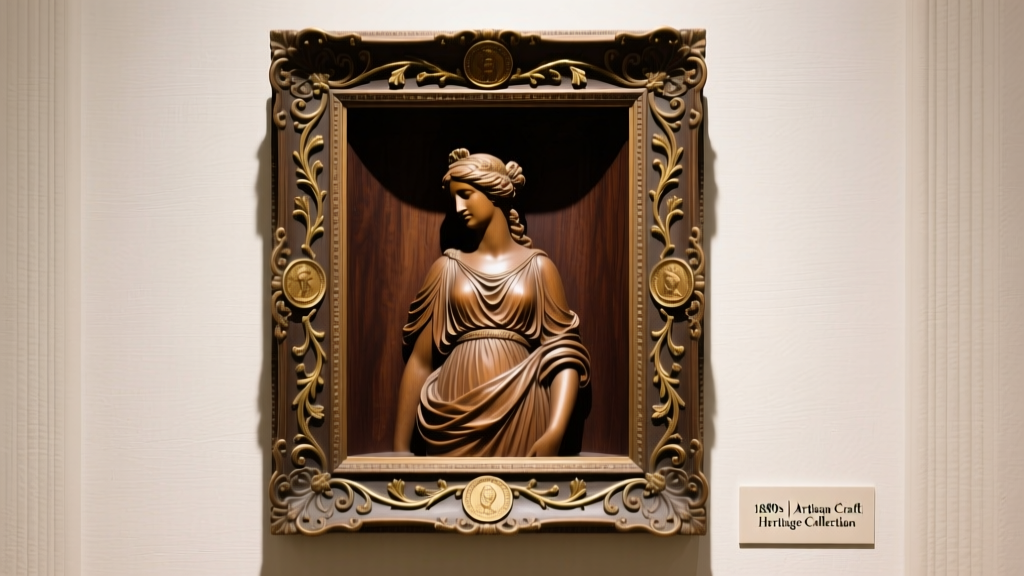
Figural Design Shadowbox Frame, c. 1880s: Authentication, Provenance, and Market Value of a Rare 19¾ × 27-Inch Victorian Display Case
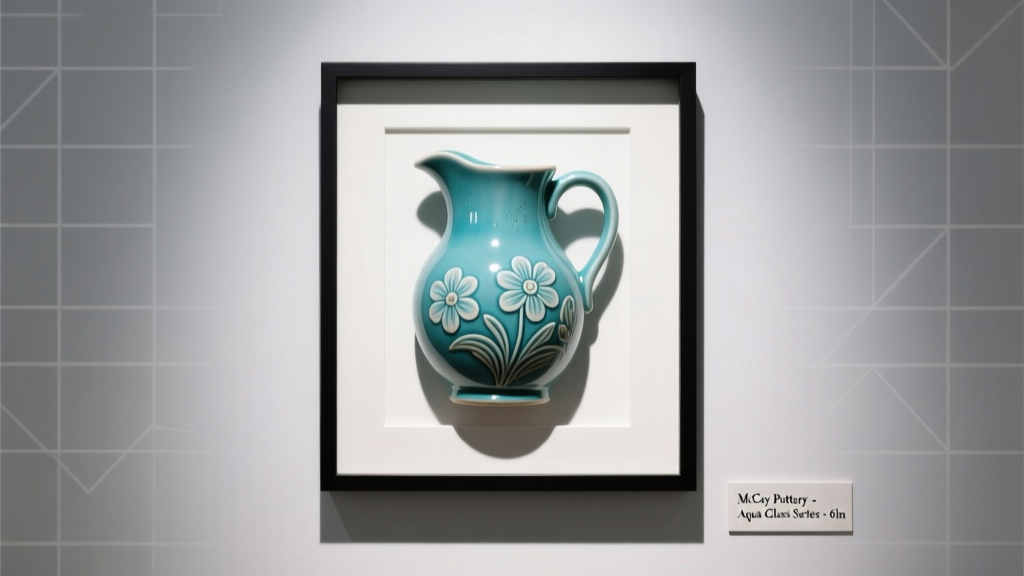
McCoy Pitcher Panel Aqua Gloss 6-Inch: Authentication, Market Value, and Production History
Authentication Dossier: The Case of Print ID 1139894 — A Technical Analysis of a Suspected Andy Warhol Screenprint

Authenticating and Valuing Pan American World Airways Half-Wing Badges: Gold-Tone with Blue Enamel
Flow Blue Soup Dish 'Florida' — Authentication, Market Value, and Historical Context of the 9½-Inch Pattern
Brass Cigar Cutter Elk Shape 6 In: Authentication, Market Value, and Historical Context
The Mulberry Ewer: Sir Walter Scott, Abbotsford, and J.M.P. Bell’s 1860 Commemorative Silverpiece