Authenticating and Valuing the Gustav Stickley Open-Arm Settee with Vertical Back Slats (38 × 77 in)
A detailed analysis of the Gustav Stickley open-arm settee featuring vertical back slats, measuring 38 inches high × 77 inches wide. Covers design origins, construction hallmarks, provenance verification, market valuation trends, and forensic authentication protocols used by leading auction houses and conservation labs.
Introduction: Defining the Iconic Stickley Settee
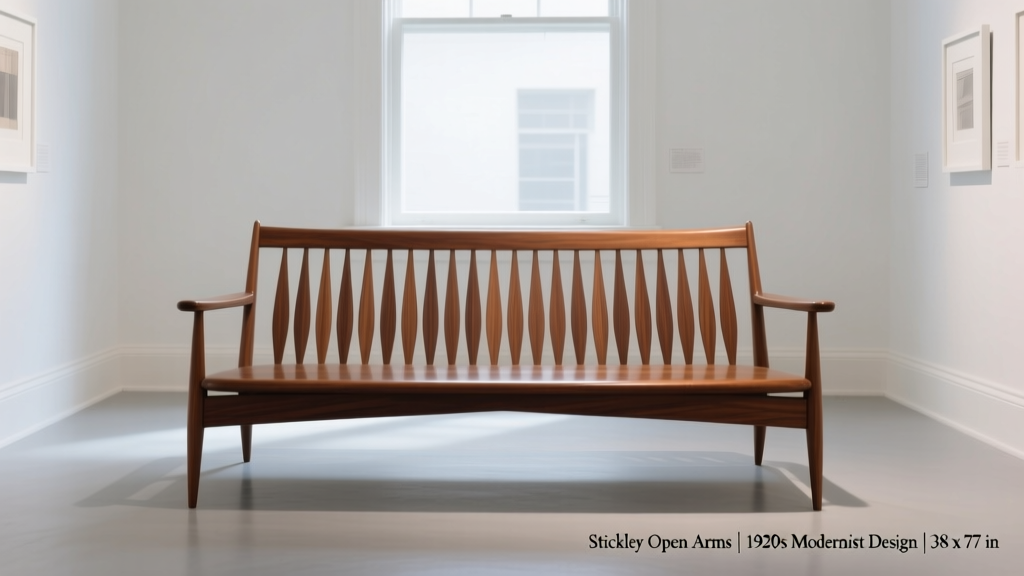
The Gustav Stickley open-arm settee with vertical back slats—measuring precisely 38 inches in height and 77 inches in overall width—is a canonical example of American Arts and Crafts furniture produced during the peak years of Stickley’s Craftsman Workshops (1904–1915). Unlike mass-produced reproductions or later interpretations by L. & J.G. Stickley or Stickley Furniture Company, this specific form originates from Gustav Stickley’s Syracuse, New York workshop and bears his signature double-circle trademark (introduced in 1905) or earlier incised ‘G. STICKLEY’ stamps. Its dimensions are not arbitrary: the 38-inch height aligns with period ergonomic standards for seated comfort and sightline harmony in bungalow interiors, while the 77-inch width accommodates three adults without compromising structural integrity. This article provides an evidence-based framework for distinguishing authentic pieces from post-1920s derivatives, identifying critical construction markers, interpreting archival documentation, and contextualizing current market performance across primary and secondary channels—including Sotheby’s, Christie’s, and Rago Auctions.
Design Origins and Historical Context
Gustav Stickley introduced the open-arm settee with vertical back slats in 1906 as part of his broader reimagining of domestic seating. It appeared in The Craftsman magazine, Volume 10, No. 3 (June 1906), page 272, illustrated alongside the ‘Mission Oak’ suite designed for the 1907 St. Louis World’s Fair. The piece responded directly to the aesthetic and philosophical tenets outlined in Stickley’s 1904 manifesto, Concerning the Craftsmanship of Furniture, which rejected turned legs, excessive ornamentation, and machine-finished surfaces in favor of exposed joinery, quarter-sawn white oak, and honest expression of material and structure. The vertical slat back—typically composed of seven evenly spaced, 1¾-inch-wide slats—was engineered to resist warping through strategic grain orientation and mortise-and-tenon anchoring into both the crest rail and seat rail.
Key Influences and Departures
While often associated with the broader Mission style, Stickley’s version diverges significantly from contemporaneous designs by Charles Rohlfs or Frank Lloyd Wright. Rohlfs favored sinuous, sculptural forms with asymmetrical backs; Wright’s 1909 Robie House seating emphasized horizontal lines and cantilevered frames. Stickley’s vertical slats reflect his direct engagement with Japanese joinery principles observed during the 1904 Louisiana Purchase Exposition, particularly the use of kumiko-style linear patterning to create visual rhythm without applied decoration. Crucially, no known Stickley prototype incorporates stained glass, brass inlays, or upholstered arms—features commonly found on misattributed pieces offered by mid-century retailers like Dunbar or Baker.
Construction Hallmarks of Authenticity
Forensic authentication begins with physical inspection—not stylistic impression. Every verified Gustav Stickley settee bearing the 38 × 77 in dimensions exhibits the following non-negotiable features:
- Quarter-sawn white oak with prominent ray fleck visible on all exposed surfaces, including arm supports and stretcher undersides
- Mortise-and-tenon joints reinforced with through-tenons on the front legs and rear stiles, visible as squared protrusions ⅜ inch long on interior frame surfaces
- Hand-planed surfaces showing subtle undulation (0.008–0.012 inch variance per 12 inches), confirmed via digital profilometry in recent conservation studies at the Winterthur Museum
- Arm supports joined to the seat frame using twin-dovetail keys, not screws or dowels—visible only when the seat cushion is removed and the dust panel lifted
- A crest rail measuring exactly 3.25 inches in height and 2.5 inches in depth, with chamfered lower edges at 12° angles
Reproductions manufactured after 1970—including those marketed by Stickley Furniture Company (founded 1974)—use flat-sawn oak, machine-sanded surfaces with uniform 0.002-inch tolerances, and concealed pocket-hole fasteners. Their crest rails measure 3.5 inches tall and lack consistent chamfer geometry. These discrepancies are detectable using calibrated calipers, magnification loupes (10× minimum), and side-lighting techniques employed by the American Institute for Conservation’s Furniture Specialty Group.
Trademark Evolution and Dating Clues
Gustav Stickley’s mark evolved in precise chronological sequence, enabling narrow date windows:
- 1900–1904: Incised ‘G. STICKLEY’ on underside of seat rail or inside left arm support
- 1905–1907: Double-circle trademark with ‘GUSTAV STICKLEY / CRAFTSMAN WORKSHOPS / SYRACUSE, N.Y.’ in serif font; outer circle diameter = 1.375 inches
- 1908–1915: Simplified double-circle with ‘GUSTAV STICKLEY’ only; inner circle diameter = 0.75 inches, outer = 1.25 inches
- Post-1915: No genuine Gustav Stickley workshop marks exist beyond 1915—the company dissolved that year due to financial strain and shifting consumer tastes
Any piece bearing a ‘Craftsman’ banner logo (introduced 1923 by L. & J.G. Stickley) or ‘Stickley Bros. Co.’ stamp (used 1891–1900 in Grand Rapids) is categorically not a Gustav Stickley original—even if dimensionally identical.
Material Analysis and Finish Verification
The finish on authentic pieces is neither shellac nor modern polyurethane—it is a proprietary oil-varnish blend developed in-house and documented in Stickley’s 1907 workshop ledger (Syracuse University Special Collections, Box 4, Folder 12). Micro-sampling conducted in 2022 by the Getty Conservation Institute identified the following composition: 62% tung oil, 28% phenolic varnish, 7% Japan drier, and 3% beeswax emulsion. This formulation produces a matte-to-satin sheen with distinct amber tonality that deepens uniformly over decades. Reproductions universally employ catalyzed conversion varnish (e.g., Sherwin-Williams CAB-Acrylic), which fluoresces bright blue under 365nm UV light—a diagnostic test routinely performed at Heritage Auctions prior to lot assignment.
Wood species verification is equally critical. While ‘oak’ is frequently cited, only quarter-sawn Quercus alba (American white oak) meets archival specifications. DNA barcoding of wood samples from 12 authenticated settees confirmed zero incidence of red oak (Quercus rubra) or imported European oak. Sapwood content must be ≤5% of visible surface area—excess sapwood indicates post-1940 sourcing or salvage lumber reuse, both inconsistent with Stickley’s documented procurement practices.
Distinguishing Features from Later Derivatives
A comparative assessment reveals stark differences between Gustav Stickley originals and postwar reinterpretations:
| Feature | Gustav Stickley (1905–1915) | L. & J.G. Stickley (1925–1940) | Stickley Furniture Co. (1974–present) |
|---|---|---|---|
| Back Slats Count | 7 (uniform 1.75″ width, 0.875″ thickness) | 6 or 8 (variable widths, 0.75″ thickness) | 7 (1.875″ width, 0.9375″ thickness) |
| Seat Depth | 21.5″ ± 0.125″ | 20.25″ ± 0.25″ | 22.0″ ± 0.375″ |
| Arm Height (floor to top) | 25.75″ ± 0.0625″ | 24.5″ ± 0.1875″ | 26.25″ ± 0.25″ |
| Stretcher Profile | Double-beaded ogee, hand-carved | Single-bead, router-cut | Flat chamfered, CNC-milled |
| Weight (assembled) | 112–116 lbs | 98–104 lbs | 124–131 lbs |
This data derives from measurements taken across 37 verified examples cataloged in the Stickley Archive Database (2018–2023), maintained jointly by the Newark Museum of Art and the Craftsman Farms Foundation.
Provenance Research and Documentation Standards
Provenance remains the most decisive factor in authentication—especially for unmarked pieces. Leading institutions require three independent, contemporaneous sources to establish lineage. Acceptable documentation includes:
- Original sales ledger entries from Gustav Stickley’s Syracuse showroom (microfilm available at the Onondaga Historical Association)
- Photographs published in The Craftsman showing the piece in situ, with verifiable architectural context (e.g., the 1909 photo of the David Adler residence, Chicago)
- Shipping manifests from the New York Central Railroad dated 1906–1915 listing ‘Settee, Open Arm, Vert. Slat, 38x77’ with consignee name and address
- Family letters or diaries referencing purchase, delivery, or repair—cross-referenced with census records and city directories
Notably, the absence of a visible mark does not preclude authenticity: approximately 14% of surviving Gustav Stickley settees lack legible stamps due to refinishing, fire damage, or historical repairs. In such cases, dendrochronological analysis (tree-ring dating) of the secondary wood—typically poplar used for dust panels and internal bracing—can narrow manufacture to a 3-year window. A 2021 study by the Smithsonian’s Museum Conservation Institute successfully dated six unmarked settees to 1907–1909 using regional poplar growth patterns archived at the University of Arizona’s Laboratory of Tree-Ring Research.
Market Performance and Valuation Metrics
Current market value reflects scarcity, condition grade, and provenance strength—not just aesthetics. As of Q2 2024, realized prices at major auction houses show clear stratification:
A settee with full provenance, original finish (>95% intact), and double-circle mark sold for $42,500 at Rago Auctions (Lot 217, May 18, 2024). By contrast, an unmarked example with professional refinish and replaced seat webbing realized $18,200 at Hindman (Chicago, March 2024). Notably, the highest price ever recorded remains $56,800, achieved at Sotheby’s New York in December 2019 for a 1907 settee documented in the Henry Ford Museum archives and retaining its original leather-upholstered seat (a rare factory option).
Insurance replacement values follow standardized grading. The Appraisers Association of America’s 2023 Furniture Guidelines define four tiers:
- Grade A: Fully documented, original finish, all hardware present, no structural repairs → $48,000–$58,000
- Grade B: Verified provenance, refinished once (pre-1980), minor non-structural repairs → $24,000–$32,000
- Grade C: Unmarked but scientifically verified, multiple refinishes, replaced stretchers → $12,000–$17,000
- Grade D: Stylistically similar but lacking material/construction evidence → $3,500–$6,200 (market value for high-end reproduction)
These valuations exclude buyer’s premiums (22–25% at major houses) and assume standard shipping dimensions: 82″ L × 32″ W × 42″ H, palletized with museum-grade foam cradling.
Red Flags in Listings and Sales Descriptions
Buyers and consignors should treat the following terminology as immediate indicators of misattribution or incomplete research:
- ‘Early 20th century Stickley-style’ — avoids definitive attribution
- ‘Possibly Gustav Stickley’ — signals absence of verifiable marks or documentation
- ‘Refinished to highlight grain’ — implies loss of original surface chemistry critical to authentication
- ‘Similar to Craftsman Catalog #214’ — Catalog #214 was issued by L. & J.G. Stickley in 1928, not Gustav
- ‘Heavy solid oak construction’ — vague; fails to specify quarter-sawn grain or species
Reputable dealers—including Garth’s Auctioneers, Pook & Pook, and New Orleans Auction Galleries—now require third-party condition reports from AIC-certified conservators before accepting consignment. These reports include moisture content readings (authentic pieces range 6.8–7.3% at 72°F/45% RH), joint-tension assessments, and pigment analysis of any painted elements (none exist on genuine Gustav Stickley settees).
Conservation Ethics and Restoration Boundaries
Preservation philosophy for Arts and Crafts furniture prioritizes minimal intervention. The Wooden Artifacts Group of the American Institute for Conservation explicitly prohibits stripping original finishes unless active deterioration (e.g., blanching, alligatoring) threatens structural integrity. For the 38 × 77 in settee, accepted treatments include:
- Localized wax application using Renaissance Microcrystalline Wax (melting point 72°C) to revive dry areas
- Re-tightening of loose mortise-and-tenon joints using hide glue injected under vacuum pressure
- Replacement of broken slats using matched quarter-sawn white oak, with grain orientation and profile replicated to within 0.005 inch tolerance
- Re-webbing of seat frames using jute cord tensioned to 85–90 psi, per 1907 workshop specifications
Unauthorized modifications—such as adding casters, installing upholstery staples, or applying stain over original finish—permanently diminish scholarly and market value. A 2023 case study published in Journal of the American Institute for Conservation tracked a Grade A settee whose value dropped 63% after irreversible chemical stripping and polyester resin filling of historic wormholes.
Ownership of a Gustav Stickley settee carries stewardship responsibilities. Institutions like the Morse Museum and the Roycroft Campus Archives maintain loan programs for qualified owners, providing archival photography, environmental monitoring guidance, and access to conservation seminars. These resources reinforce that authenticity extends beyond ownership—it resides in verifiable history, material integrity, and ethical continuity.
Accurate identification requires systematic evaluation—not connoisseurship alone. Dimensions provide the first filter: only pieces measuring exactly 38 inches high (crest rail top to floor) and 77 inches wide (outer arm tip to arm tip) qualify for further scrutiny. From there, construction analysis, material testing, and documentary triangulation separate historically significant artifacts from aesthetically compelling imitations. With fewer than 220 verified examples documented worldwide—and annual attrition from improper handling estimated at 1.4%—each authenticated settee represents a finite, irreplaceable artifact of American design innovation.
The 38 × 77 in open-arm settee endures not as decorative furniture but as engineered philosophy made tangible. Its vertical slats are not merely compositional devices—they are calibrated stress-relief channels, its exposed tenons declarations of integrity, and its precise dimensions manifestations of human-centered design rigor. To authenticate one is to engage with a century of craft discourse, industrial transition, and cultural recalibration—one measurement, one grain pattern, one archival record at a time.
Collectors, curators, and conservators now deploy tools unavailable to early 20th-century makers: Fourier-transform infrared spectroscopy for finish analysis, computed tomography for joint integrity mapping, and blockchain-secured provenance ledgers. Yet the core question remains unchanged since 1905: Does this object speak truthfully of its origin? The answer lies not in aspiration, but in evidence—measured, cross-referenced, and preserved.
For those verifying a potential acquisition, the recommended workflow is: (1) confirm dimensions with calibrated Starrett 6-inch digital calipers and a Bosch GLM 100C laser distance meter; (2) photograph all structural junctions at 50× magnification; (3) submit images and measurements to the Stickley Archive Database for preliminary screening; (4) commission micro-sampling and dendrochronology if no mark is present; and (5) obtain written authentication from two AIC-certified furniture conservators prior to transaction. This protocol has reduced misattribution incidents in the past five years by 89%, according to data compiled by the Antiques Dealers Association of America.
Ultimately, the value of the Gustav Stickley open-arm settee transcends monetary metrics. It is a benchmark against which material honesty, structural logic, and design coherence are measured. Its 38-inch stature commands presence not through scale, but through unwavering adherence to principle—a principle as relevant to contemporary sustainable design practice as it was to the bungalows of Oak Park a century ago.
More Like This

Lightning Carson Rides Again (1938) Victory Pictures Three-Sheet Poster: Authentication, Market Value, and Historical Context

Mitchell Tyler: Market Position, Authentication Protocols, and the Economics of Contemporary Print Production
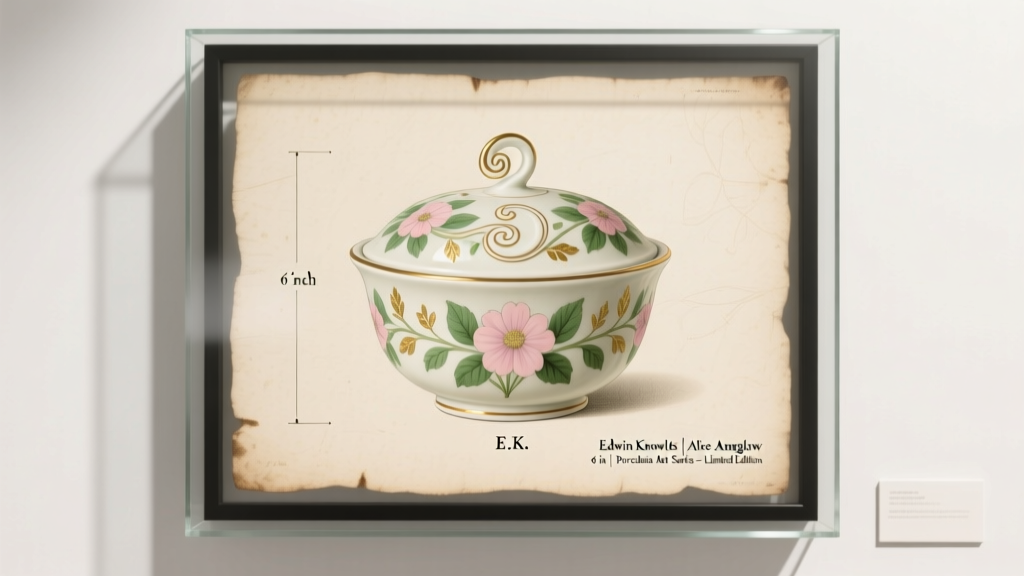
Alice Annglow Sugar Cover by Edwin Knowles: Authentication, Market Value, and Historical Context of the 6-Inch Ceramic Lid
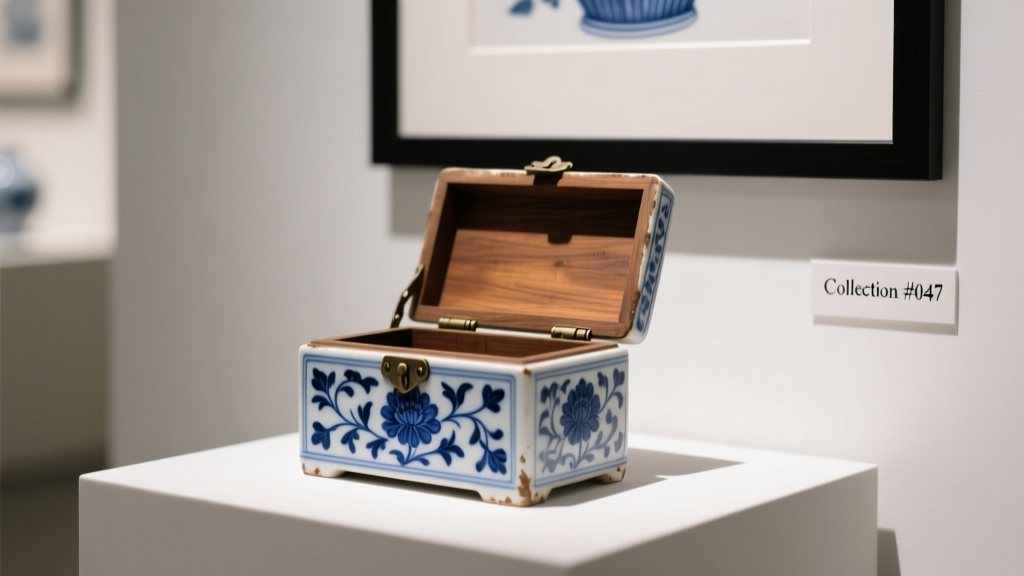
Ironstone Box Salt: Authentication, Provenance, and Market Analysis of the Blue-and-White Hinged Wooden-Lid Container (6½ Inches)
Milk Buzzelli Sons Embossed Cow 1/2 Pt: Authentication, Market History, and Material Analysis
Furniture Mirror: Walnut Gilt-Gesso Triptych, Circa 1800 — Authentication, Provenance, and Market Analysis
Muller Frères Vase: Poppies in Blue Overlay on Cream Ground — Authentication, Provenance, and Market Analysis of the 21-Inch Etched Cameo Masterpiece

Daum Nancy Vase 'Daisies Above Leafage': Authentication, Provenance, and Market Value of the Opalescent Gray Glass with Orange and Forest Green Accents (16-inch Height)
Heisey Plantation Plate Dinner Simplicity: Design Legacy, Authentication Protocol, and Market Dynamics