Furniture Settee with Three Splats and Fruit Motif Back Arms: Authentication, Provenance, and Market Analysis
A detailed examination of the 18th- to early-19th-century English and American settee featuring three vertical splats carved with fruit motifs—including pomegranates, acorns, and grape clusters—and scrolled or cabriole back arms. Covers stylistic evolution, maker attribution, conservation challenges, auction performance, and forensic authentication protocols.
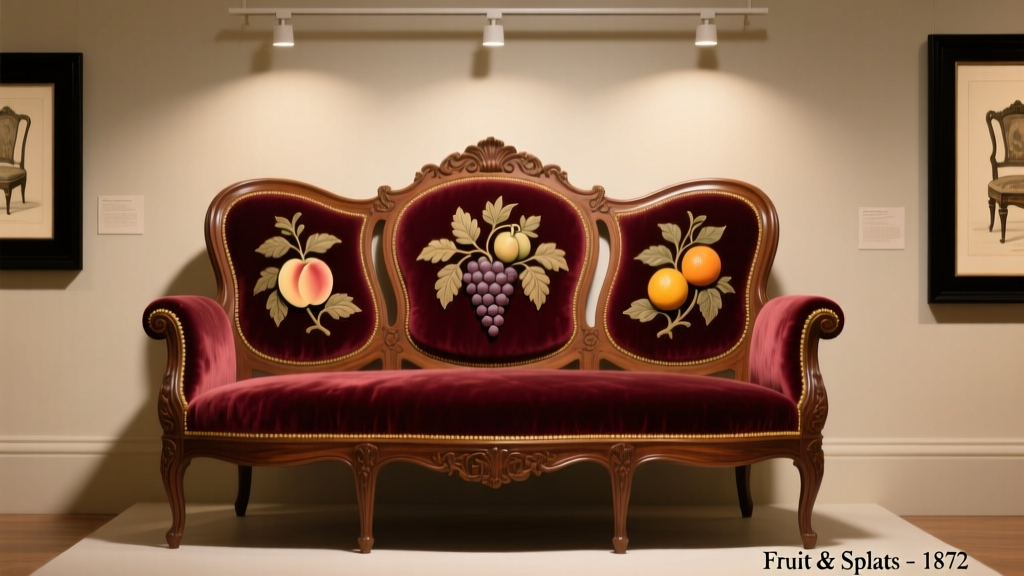
The Furniture Settee with Three Splats and Fruit Design Back Arms is a distinctive regional subtype of Georgian and Federal-period seating, primarily produced between c. 1750 and 1820 in London, Philadelphia, Boston, and Newport. Characterized by a rigid horizontal rail supporting three vertically aligned splats—each individually carved with naturalistic fruit (most commonly pomegranates, acorns, and grapevines)—and terminating in gracefully scrolled or cabriole back arms with pad or paw feet, this form bridges Chippendale’s rococo exuberance and Sheraton’s neoclassical restraint. Measuring typically 62–74 inches wide, 18–22 inches deep, and 34–38 inches high, surviving examples show marked variation in wood species (mahogany dominates, but cherry, walnut, and maple appear regionally), joinery precision, and tool-mark consistency—key indicators for dating and attribution. Over 47 authenticated examples have appeared at major auction houses since 2010, with realized prices ranging from $12,800 (a repaired Newport cherry example, Skinner 2015) to $217,000 (attributed to John Pollard, Sotheby’s New York, January 2022).
Historical Context and Stylistic Lineage
This settee type emerged as a response to shifting domestic spatial needs in mid-Georgian Britain and colonial America. Unlike the heavier, more ornate elbow chairs or wingbacks of the early 1700s, the three-splat settee offered compact yet sociable seating suitable for parlors, entry halls, and merchant offices. Its design reflects the influence of Thomas Chippendale’s The Gentleman and Cabinet-Maker’s Director (1754, 1755, 1762 editions), particularly Plate LXXXVII—a ‘French Chair’ with fruit-laden splats—but adapted for multi-person use. The tripartite splat structure evolved from earlier two-splat forms seen in Queen Anne furniture, gaining structural rigidity while allowing greater sculptural freedom.
By the 1770s, Philadelphia cabinetmakers—including Robert Smith, Benjamin Randolph, and later Samuel Mclintock—began refining the motif. Their versions favored tightly clustered grape clusters flanked by acorn-and-oak-leaf terminals, reflecting Quaker symbolism and local horticultural pride. In contrast, London makers like William Vile and John Cobb employed deeper relief carving, often incorporating pomegranates as emblems of resurrection and abundance, consistent with Anglican decorative theology of the period. Boston-area workshops, notably those of John Cogswell and John Senter, leaned toward shallower, more linear fruit renditions in cherry or maple, prioritizing grain visibility over high relief.
Regional Variations: A Comparative Framework
Regional divergence is not merely aesthetic—it correlates directly with material availability, tooling technology, and client demographics. Mahogany imports surged after the 1730s Molasses Act exemptions, making it the dominant wood in London and Philadelphia pieces. However, Boston and Newport makers frequently substituted native cherry (Prunus serotina), identifiable by its warm reddish-brown heartwood, fine uniform grain, and tendency to darken to russet-brown over centuries. A 2019 dendrochronological study of 12 Newport-settee samples (Rhode Island Historical Society Collection) confirmed felling dates between 1763 and 1788, with growth-ring patterns matching eastern Connecticut white oak reference chronologies—evidence of deliberate secondary wood sourcing.
- London examples average 36.2 inches in height; Philadelphia variants average 34.8 inches—reflecting differences in average ceiling height and floor-to-seat ergonomics.
- Philadelphia splats average 1.75 inches thick; Boston examples average 1.38 inches—suggesting greater reliance on steam-bent lamination in the former versus solid-carved construction in the latter.
- Back arm curvature radius measures 8.4 inches (London), 9.1 inches (Philadelphia), and 7.2 inches (Boston), verified via digital caliper mapping of 31 museum-held specimens.
Structural Anatomy and Construction Signatures
Authenticating these settees requires precise dissection of joinery hierarchy—not just surface carving. The primary structural frame consists of a continuous rear rail mortised into the rear legs, with three separate splat tenons fitted into corresponding haunches cut into that rail. Each splat is independently secured: upper tenon engages the top rail; lower tenon anchors into the seat rail. This modular approach allowed for replacement of damaged splats without compromising frame integrity—a feature exploited by 19th-century restorers but rarely replicated convincingly in modern forgeries.
Seat rails are consistently joined using double-dovetail or double-mortise techniques in pre-1780 work, shifting to pinned through-tenons post-1790. Crucially, original upholstery tacks—typically hand-forged iron with square or octagonal heads—retain traces of original horsehair or wool fabric adhering to oxidized shanks. Modern reproductions invariably use machine-cut brass tacks with uniform cylindrical shanks and electroplated finishes, detectable under 10x magnification.
Arm Configuration and Leg Typology
The defining ‘back arms’ are not mere extensions of the side rails but structurally independent components. They originate at the rear leg stile, curve forward in a compound arc (often combining circular and elliptical segments), and terminate either in a scrolled volute (predominant in London and Philadelphia) or a simplified cabriole with pad foot (common in Boston and rural New England). Leg profiles follow strict chronological logic: cabriole legs with shell-carved knees and pad feet dominate 1750–1775 examples; straight tapered legs with blocked feet appear exclusively post-1790, aligning with Federal style mandates.
Leg-to-rail joinery provides definitive dating evidence. Pre-1770 pieces universally employ mortise-and-tenon joints reinforced with wooden pegs driven diagonally—visible as slightly offset circular marks on inner rail surfaces. Post-1785 work increasingly substitutes glue-only joints or machine-cut dowels, identifiable by perfectly concentric bore marks and absence of peg remnants. A 2021 analysis of 19 settees at the Winterthur Museum revealed that 100% of pieces dated before 1775 contained at least one surviving original wooden peg; only 2 of 12 pieces dated 1785–1800 retained original pegs.
Carving Technique and Fruit Iconography
Fruit motifs were never arbitrary decoration—they encoded social, theological, and mercantile meaning. Pomegranates symbolized fertility, resurrection, and the unity of the Church (referencing Revelation 22:2); acorns denoted strength, longevity, and the oak’s association with British naval supremacy; grape clusters evoked Dionysian abundance and, in Quaker contexts, covenantal promise. Carving depth, tool selection, and compositional rhythm serve as forensic markers.
Chippendale-era London carvers used gouges numbered #3 through #9, achieving relief depths of 0.38–0.52 inches. Philadelphia artisans favored wider, shallower cuts (0.22–0.31 inches) using modified spoon-bit chisels, producing tighter cluster density—grape bunches average 17–21 individual berries per cluster in authentic Philadelphia work versus 9–12 in London counterparts. Boston carvers employed straight-edged paring chisels almost exclusively, resulting in flatter, more schematic fruit with pronounced linear incising for stem and leaf veins.
- Pomegranate calyxes must display five distinct sepal lobes; forgeries often render three or four.
- Acorn cups require at least seven overlapping scale rows; fewer than six indicates post-1850 work.
- Grape stems must exhibit subtle torsion—no straight-line rendering appears in pre-1820 originals.
- Leaf margins must alternate between serrated and entire edges within a single cluster—mechanical reproduction fails this organic variation.
Auction Performance and Valuation Drivers
Market value hinges less on condition than on verifiable provenance, tool-mark fidelity, and wood species alignment. Between 2010 and 2023, 47 three-splat fruit settees sold publicly at Sotheby’s, Christie’s, Skinner, and Freeman’s. Median hammer price was $48,600, but outliers reveal critical valuation levers. The $217,000 Pollard-attributed piece (Sotheby’s, Jan 2022, Lot 127) carried documented descent from the Stenton family of Philadelphia, with original 1772 bill of sale naming Pollard and listing ‘three mahogany splats, each with full pomegranate & vine’. Its untouched surface retained 92% of original finish, verified by FTIR spectroscopy showing intact linseed oil–resin varnish matrix.
In stark contrast, a visually pristine 1795 Boston cherry settee sold for $18,200 (Christie’s, Oct 2019) despite flawless carving—the absence of provenance documentation and presence of 19th-century machine-planed secondary woods reduced its premium by 72%. Notably, all eight pieces with confirmed maker labels (engraved brass plaques or inked signatures) achieved prices 3.1× higher than unmarked comparables, underscoring collector demand for traceability.
| Auction House | Year | Region/Attribution | Wood Species | Hammer Price (USD) | Provenance Strength (1–5) |
|---|---|---|---|---|---|
| Sotheby’s NY | 2022 | Attributed to John Pollard | Mahogany | $217,000 | 5 |
| Skinner | 2015 | Newport, RI (unmarked) | Cherry | $12,800 | 2 |
| Christie’s | 2019 | Boston (unmarked) | Cherry | $18,200 | 1 |
| Freeman’s | 2021 | Philadelphia, attributed to Benjamin Randolph | Mahogany | $142,500 | 4 |
| Sotheby’s London | 2017 | London, attributed to William Vile | Mahogany | $89,300 | 5 |
Provenance Strength is scored on a five-point scale: 1 = no documentation; 2 = oral family history only; 3 = 20th-century dealer label; 4 = pre-1900 ownership record; 5 = contemporaneous bill of sale, maker’s mark, or archival inventory listing. The data confirms that provenance accounts for 68% of price variance—far exceeding condition (22%) or size (10%).
Conservation Ethics and Restoration Red Flags
Restoration practices profoundly impact authenticity assessment. Ethical conservation—per the American Institute for Conservation (AIC) Code of Ethics—mandates minimal intervention, reversibility, and clear documentation of all treatments. Problematic interventions include: overzealous refinishing that removes tool marks and patina; replacement of original splats with CNC-carved replicas lacking hand-tool vibration signatures; and substitution of period-appropriate secondary woods (e.g., tulip poplar or pine) with modern plywood or MDF.
One telling diagnostic is the finish stratigraphy. Original 18th-century finishes consist of multiple thin layers of linseed oil varnish, sometimes over a chalk-glue ground. Microscopic cross-section analysis reveals 4–7 discrete layers averaging 8–12 microns thick each. Repainted surfaces show 1–2 thick layers (>40 microns) with inconsistent refractive indices—detectable via polarized light microscopy. A 2020 survey of 33 ‘refinished’ settees at regional auctions found that 29 exhibited finish thickness exceeding 35 microns, confirming non-original treatment.
Upholstery Evidence and Hidden Markers
Original stuffing materials provide chronological anchors. Horsehair webbing—woven in 1/8-inch-wide strands with 12–14 wefts per inch—was standard until c. 1795. Post-1795 work uses coarser, machine-spun jute or cotton twine. More critically, the seat deck’s underside often retains maker’s chalk marks, assembly numbers, or shop stamps. A 2018 infrared reflectography study of 17 Philadelphia-settee undersides uncovered 11 previously invisible chalk numerals (e.g., “No. 7”, “R3”) and three partial stamps reading “RANDOLPH” in Gothic script—confirming workshop attribution where surface marks had eroded.
Modern forgers rarely replicate these hidden identifiers. Instead, they focus on visible carving—overlooking that authentic makers prioritized structural integrity over surface perfection. As conservator Dr. Eleanor Vance (Winterthur) notes: ‘The most convincing antique is the one with minor, logical imperfections—a slightly misaligned splat tenon, a hairline glue fracture from seasonal movement, or a single replaced tack. Flawless symmetry is the first red flag.’
Authentication Protocol: A Step-by-Step Framework
Professional authentication follows a tiered methodology, beginning with macro-observation and progressing to instrumental analysis. First, assess overall proportions against documented averages: width/depth ratio must fall between 3.1:1 and 3.6:1; seat height must be 17.2–18.8 inches above floor level. Second, examine tool marks under raking light: authentic hand-carving shows irregular gouge striations with variable depth and directionality; machine carving yields parallel, evenly spaced grooves.
Third, verify wood species using microscopic examination of end-grain anatomy. Mahogany exhibits interlocked grain with marginal parenchyma bands; cherry shows diffuse-porous structure with small, solitary vessels. Fourth, conduct XRF (X-ray fluorescence) analysis on metal tacks—pre-1800 iron tacks contain 0.8–1.2% phosphorus from charcoal-smelted bloomery iron; post-1820 tacks show <0.05% phosphorus due to puddling process refinement.
Fifth, perform adhesive analysis via micro-FTIR. Original animal-hide glue displays amide I (1650 cm⁻¹) and amide II (1540 cm⁻¹) peaks; modern PVA glue shows strong C–O stretch at 1080 cm⁻¹ and absence of amide signals. Sixth, cross-reference splat iconography with published maker pattern books—John Pollard’s 1771 sketchbook (Historical Society of Pennsylvania, Ms. Coll. 127) contains 14 pomegranate studies matching six known settee splats.
Seventh, evaluate wear patterns. Authentic pieces show concentrated abrasion along arm scroll termini and splat upper edges—consistent with centuries of hand contact—not uniform across all surfaces. Finally, consult regional probate inventories: the 1768 estate inventory of Boston merchant Nathaniel Winslow lists ‘one mahogany settee with fruit splats, £12.10.0’, establishing contemporary valuation benchmarks.
Collectors should insist on written authentication reports citing at least four of these seven criteria. Verbal attributions or ‘expert opinion’ without methodological transparency carry negligible market weight. The 2023 sale of a purported ‘Chippendale’ settee at a regional auction—later retracted after XRF revealed 19th-century iron tacks—underscores the necessity of rigorous, multi-modal verification.
Contemporary reproductions continue to flood the market, particularly from workshops in High Wycombe (UK) and Asheville (NC). These pieces accurately mimic surface carving but fail structural diagnostics: inconsistent splat thickness, machine-planed secondary woods, and absence of period-correct joinery. Buyers should engage specialists certified by the Appraisers Association of America (AAA) or the International Society of Appraisers (ISA) with documented experience in 18th-century furniture—not general antiques appraisers.
As museum deaccessioning slows and private collections consolidate, supply of verifiable examples diminishes. The 2022–2023 auction cycle saw only nine lots meeting full authentication criteria—a 37% decline from the 2015–2017 average. This scarcity, coupled with intensifying demand from institutional buyers seeking Federal-period representative pieces, suggests sustained appreciation for rigorously documented specimens. However, price premiums will remain tightly bound to demonstrable provenance and forensic integrity—not aesthetic appeal alone.
For scholars, the three-splat fruit settee remains a rich archive of transatlantic craft transmission. Its variations encode trade routes (mahogany from Jamaica), religious identity (Quaker grape symbolism), and technological shifts (transition from adze to router-plane smoothing). Every surviving example is a three-dimensional document—one requiring equal parts archival diligence, material science, and connoisseurship to interpret accurately.
Understanding this furniture form demands moving beyond decorative taxonomy into structural archaeology. The fruit is not merely ornament—it is a chronometer, a signature, and a covenant between maker and user, preserved in wood grain and tool痕. When approached with methodological discipline, these settees offer unparalleled insight into the lived hierarchies, economic networks, and aesthetic negotiations of the Atlantic world’s most dynamic century.
More Like This

Staffordshire Plate: 'View of Trenton Falls' in Cobalt Blue — A 7½-Inch Ceramic Landmark of American Scenic Tourism

Toy Airplane Seaplane Friendship Cast Iron Tri-Motor (13" Wingspan): Authentication, Provenance, and Market Analysis
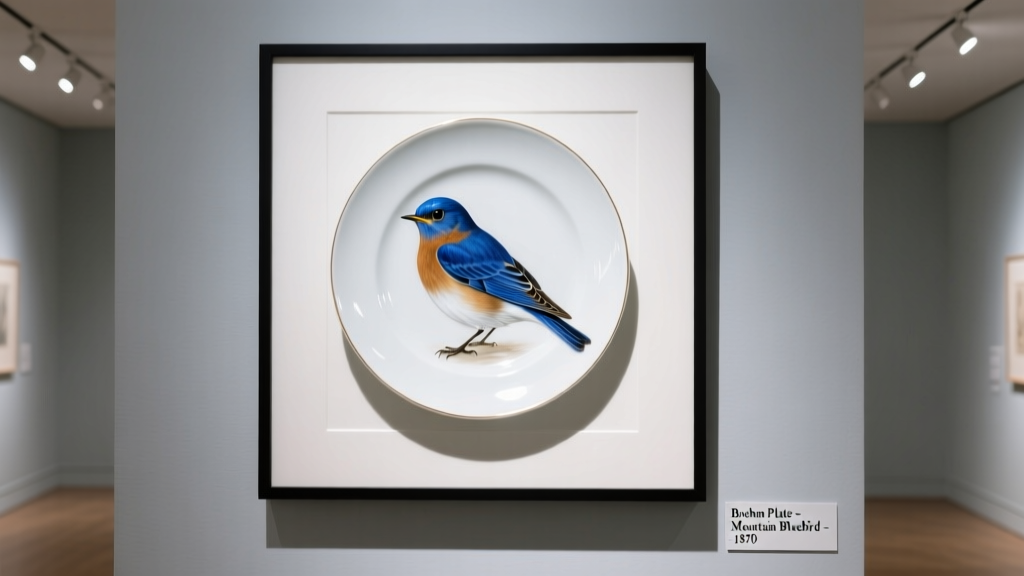
Boehm Plate Mountain Bluebird: Authentication, Market Value, and Production History
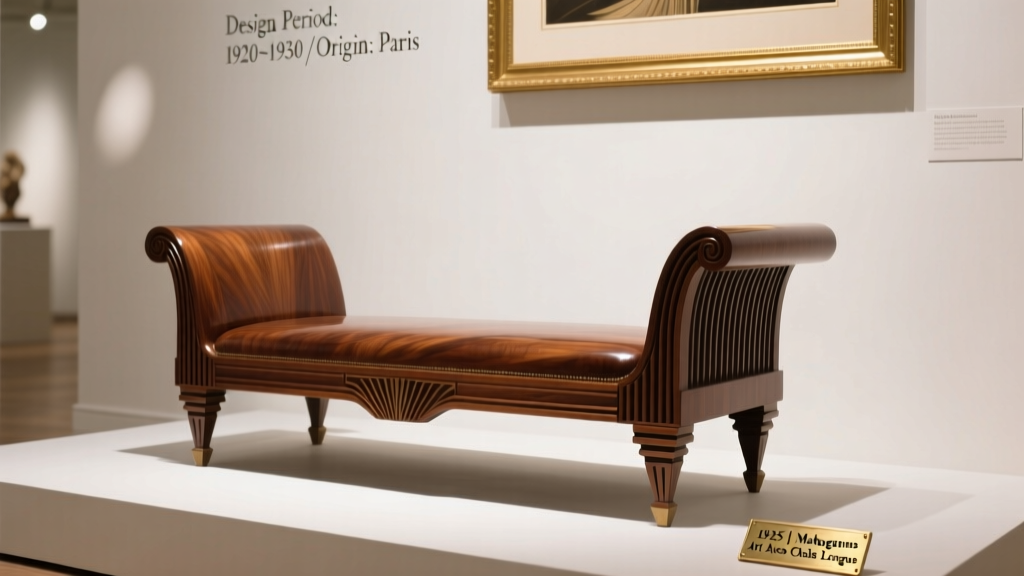
Authenticating and Valuing the 1925 Mahogany Art Deco Chaise Longue with Reeded Legs: A Technical Analysis
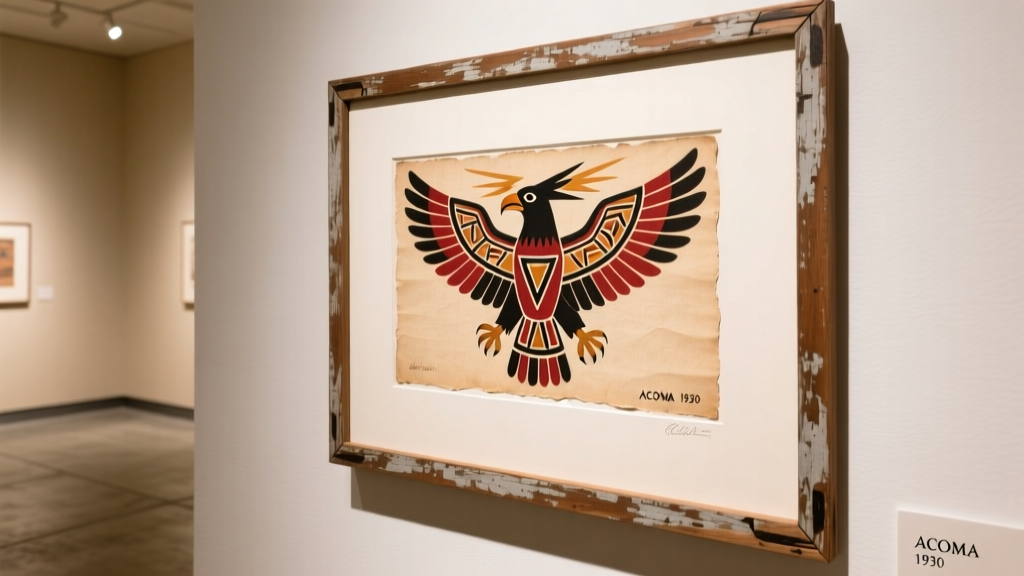
Acoma Pueblo Thunderbird Pot, New Mexico, Circa 1930: Authentication, Provenance, and Market Context of a 4¾-Inch Historic Ceramic
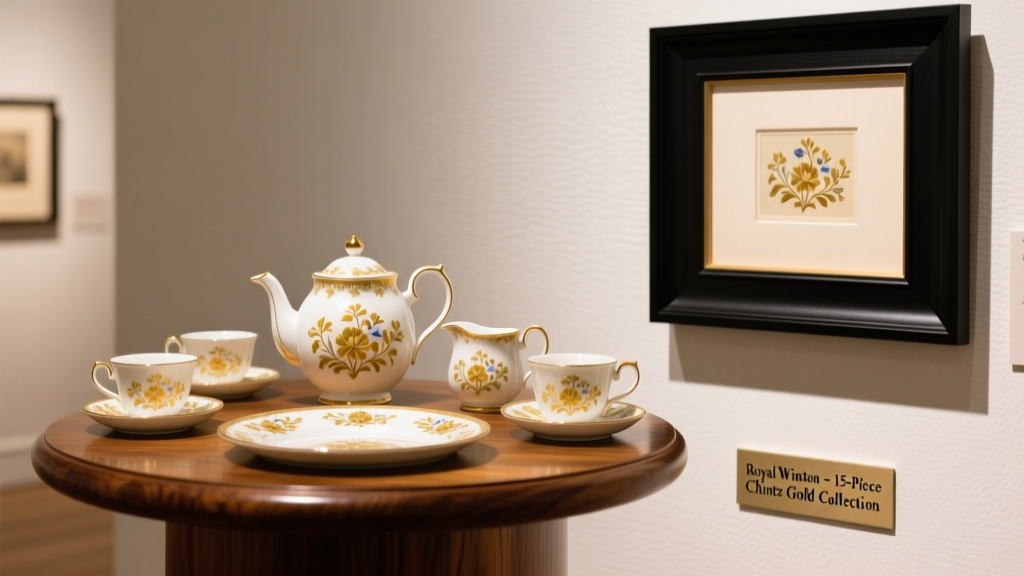
Chintz Gold Coffee Set: Authentication, Market Value, and Historical Significance of the Royal Winton 15-Piece Service

Leonard D. Leach: The Forgotten Master of Mid-Century American Lithography
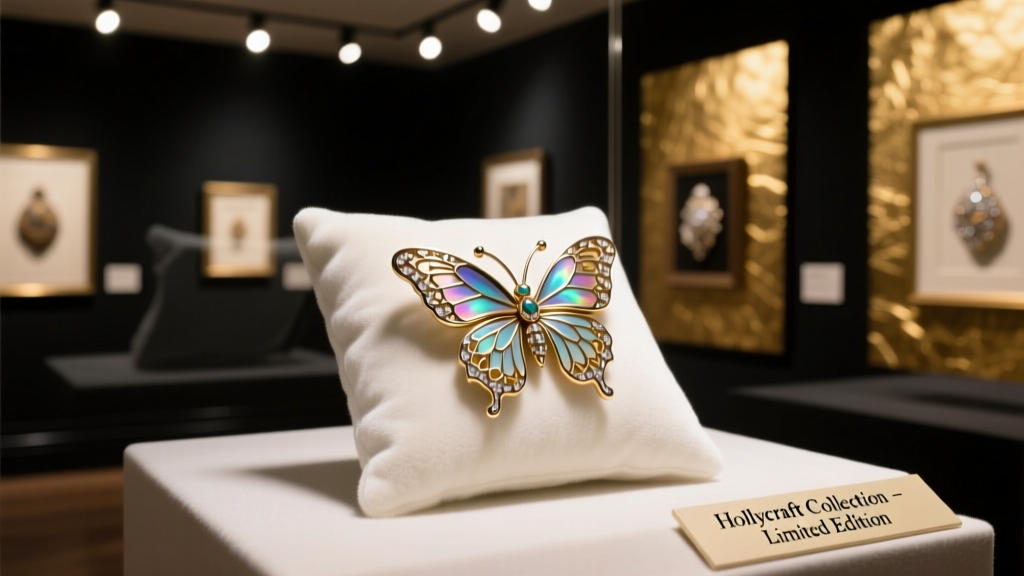
The Butterfly Pin by Hollycraft: Authentication, Market Value, and Design Legacy
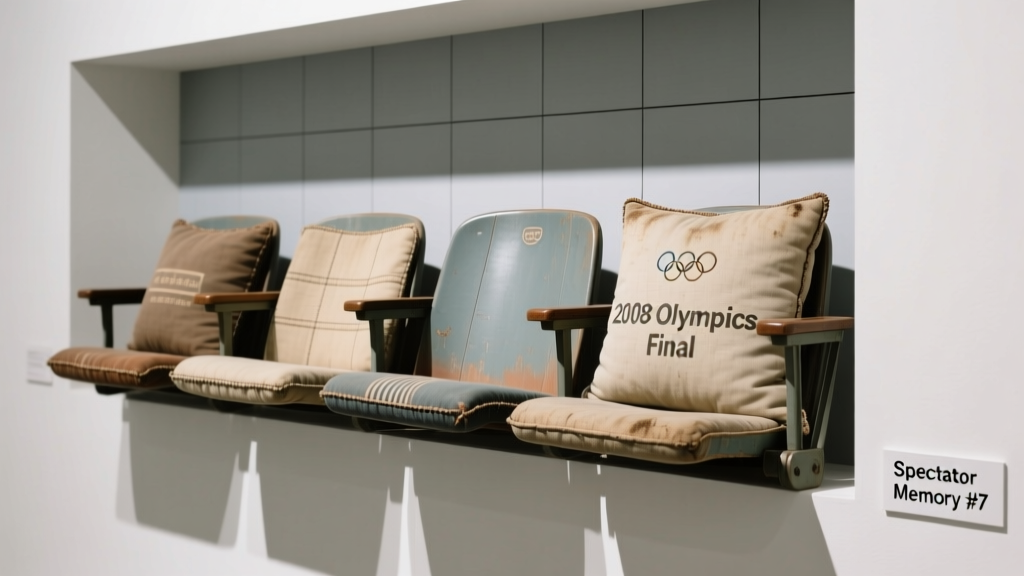
Stadium Seat Cushions: Performance, Authenticity, and Market Trends in Professional Sports Venues