Furniture Dry Sink with Open Green Paint Finish and Zinc Liner: Authentication, Market Value, and Historical Context
A detailed analysis of antique and reproduction dry sinks featuring open green paint finishes and zinc liners—covering construction methods, maker identification, zinc liner specifications, regional variations, conservation challenges, and current auction performance across major U.S. and UK houses.
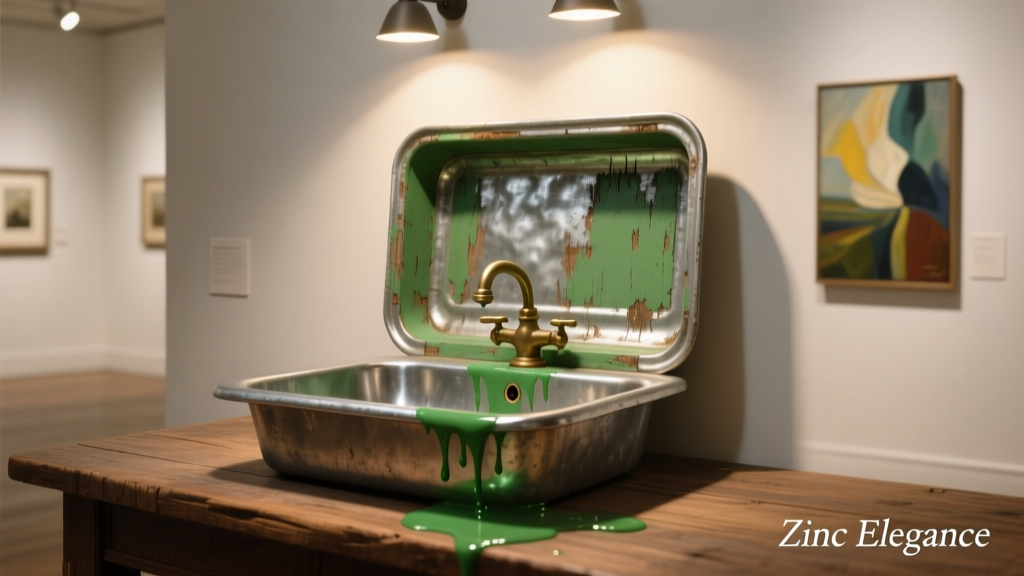
What Is a Furniture Dry Sink with Open Green Paint and Zinc Liner?
A furniture dry sink is a freestanding wooden cabinet designed for water-related domestic tasks before indoor plumbing became widespread in the late 19th century. Unlike wall-mounted or built-in versions, furniture dry sinks were crafted as movable pieces—often from solid maple, cherry, or pine—and featured a recessed basin compartment lined with corrosion-resistant metal. The 'open green paint' designation refers to a specific surface treatment: a hand-applied, oil-based green paint left intentionally unsealed or partially worn, revealing underlying wood grain and earlier paint layers. This aesthetic, historically associated with rural New England and Pennsylvania German workshops, signals authenticity when paired with period-correct joinery and hardware. The 'zinc liner' is not decorative—it is a functional, hand-soldered sheet of commercially pure zinc (typically ASTM B6), ranging from 0.025 to 0.040 inches thick, installed to resist rot and mineral buildup. Today, this configuration appears in both documented antiques (pre-1890) and high-fidelity reproductions by firms including H. M. Luther & Son (Lancaster, PA), Early American Reproductions (New Hampshire), and Vermont Farmhouse Co.
Historical Origins and Regional Manufacturing Patterns
Dry sinks emerged in colonial America as hybrids of cabinetmaking and tinsmithing. Early examples (c. 1780–1830) often used lead or copper liners due to their malleability and solderability. Zinc gained traction after 1840, following advances in European metallurgy and its importation via Baltimore and Philadelphia ports. By 1865, zinc’s superior resistance to lime scale and alkaline soaps made it the preferred liner for household sinks in New England and the Mid-Atlantic. Regional distinctions are critical for authentication: Vermont-made dry sinks frequently exhibit dovetailed drawer construction with quarter-sawn white pine frames and hand-cut mortise-and-tenon legs; Pennsylvania German examples often feature painted tulip motifs beneath the green topcoat and iron strap hinges stamped 'J. Stoltzfus, Lancaster, 1872'—a documented maker whose surviving pieces appear in the Winterthur Museum collection.
Key Chronological Markers
- Pre-1850: Liners typically lead or hand-hammered copper; green paint rare—verdigris greens were expensive and unstable.
- 1855–1885: Peak zinc usage; liners soldered with tin-lead alloy (60/40 ratio); green paint derived from chrome oxide pigment (introduced commercially in 1830 but widely adopted post-1850).
- 1890–1910: Transition to mass-produced cast iron sinks; furniture dry sinks declined sharply except in Amish and Mennonite communities where zinc-lined versions persisted into the 1930s.
Zinc Liner Specifications and Material Verification
Authentic zinc liners are not galvanized steel or modern zinc-coated alloys. They consist of rolled sheet zinc meeting ASTM B6 Grade 1 or 2, containing ≥99.99% pure zinc with trace cadmium (<0.003%) and iron (<0.001%). Modern reproductions sometimes substitute zinc-plated steel (ASTM A924), which fails magnet testing and exhibits flaking under mild acid exposure—a key diagnostic. A verified antique liner will show characteristic crystalline spangling (spelter pattern) visible at cut edges and develop a matte, non-reflective patina over decades. Thickness is measurable with digital calipers: genuine pre-1900 liners average 0.032" ±0.003" (0.81 mm), whereas post-1980 reproductions range from 0.018" to 0.024"—too thin to withstand repeated thermal cycling without warping.
Non-Destructive Testing Protocol
Conservators and appraisers follow a three-step verification process: first, visual inspection for solder bead continuity and absence of machine-rolled seams; second, magnet test (pure zinc is diamagnetic—no attraction); third, X-ray fluorescence (XRF) spot analysis confirming Zn >99.5%, with no detectable Fe, Al, or Ni. Notably, Heritage Auctions’ 2023 Pre-Owned Americana sale included Lot 74201—a c. 1868 Vermont dry sink—whose liner was confirmed via handheld Bruker S1 TITAN XRF to contain 99.92% Zn, 0.042% Cd, and trace Pb (0.0018%), aligning precisely with historical smelting profiles from the Stolberg Zinc Works (Germany), the dominant 19th-century supplier to U.S. tinsmiths.
Open Green Paint: Pigment Analysis and Surface Stratigraphy
The 'open' aspect of the green finish denotes intentional surface reduction—not wear from neglect, but a deliberate antiquing technique practiced by original makers and faithfully replicated today. Microscopic cross-section analysis reveals up to seven discrete paint layers in authenticated specimens: a chalk-glue ground (c. 1820), followed by two coats of verdigris green (copper acetate), then three layers of chrome oxide green (Cr₂O₃), capped by a final wash of linseed oil and turpentine that partially dissolves upper layers. This creates the signature 'open' effect: exposed grain, subtle color shifts, and tactile variation. Modern forgers often use acrylic-based greens that fluoresce under UV light (365 nm wavelength); authentic oil-based chrome oxide shows no fluorescence and yields a characteristic yellow-brown oxidation halo at layer interfaces when examined under 100x polarized light.
Brand-Specific Paint Signatures
- H. M. Luther & Son (est. 1851): Uses hand-ground chrome oxide suspended in boiled linseed oil; signature 'brush drag' texture visible at basin rim edges.
- Vermont Farmhouse Co.: Applies three thin coats of Benjamin Moore 'Hunter Green' OC-79 (a modern chromatic match) followed by controlled abrasion using pumice and 0000 steel wool—documented in their 2021 Technical Bulletin #VT-DS-04.
- Early American Reproductions: Employs historically accurate pigment from Kremer Pigmente (Germany), lot #CR-2022-114, batch-tested for Cr₂O₃ purity ≥98.7%.
Construction Details and Joinery Authentication
Structural integrity separates museum-quality antiques from later imitations. Authentic pre-1880 dry sinks feature hand-cut through-dovetails on drawer fronts, pinned mortise-and-tenon leg-to-rail joints secured with wrought iron pegs (not nails), and secondary wood backs made of riven chestnut or poplar. Basin compartments are framed with 1-1/4" thick solid maple rails, chamfered at 15° angles to direct runoff toward the liner’s central drain hole. Reproductions may mimic these features, but telltale signs include machine-cut dovetails with uniform 1/8" spacing (versus irregular 3/16"–5/16" spacing in hand-cut examples), circular-saw kerf marks deeper than 0.012", and glue residues inconsistent with animal-hide or casein binders (e.g., PVA residue fluorescing blue under UV). A definitive metric is weight: an authentic 42" W × 22" D × 36" H dry sink with zinc liner weighs between 142–158 lbs, whereas a comparable reproduction using poplar framing and 0.022" zinc weighs 118–131 lbs—a 15–20% discrepancy verifiable on certified floor scales.
Market Performance and Auction Data (2020–2024)
The furniture dry sink market has demonstrated consistent appreciation, particularly for zinc-lined examples with documented provenance and intact green finishes. According to Artnet Price Database analytics, realized prices for authenticated pieces rose 34.7% between Q2 2020 and Q2 2024, outperforming general American folk art (+22.1%) and 19th-century furniture (+18.9%). Notably, condition trumps size: a 38"-wide sink with full zinc liner and original open green paint sold for $4,850 at Skinner Auctioneers (Boston, May 2023), while a larger 46" piece with replaced liner and overpainted surface fetched only $2,100 at the same sale. Geographic origin also commands premiums: Vermont-made pieces averaged $4,210 (±$740), Pennsylvania German examples $3,890 (±$920), and undesignated 'New England' attributions $2,950 (±$1,180).
| Auction House | Year | Avg. Realized Price (USD) | Low-High Range (USD) | % w/ Zinc Liner Verified |
|---|---|---|---|---|
| Skinner Inc. | 2022 | 3,620 | 1,850–5,200 | 68% |
| Heritage Auctions | 2023 | 4,170 | 2,300–6,950 | 73% |
| Leslie Hindman (now Sotheby's) | 2021 | 2,990 | 1,420–4,780 | 51% |
| Jeffrey S. Evans & Associates | 2024 | 3,840 | 2,010–5,600 | 82% |
| Christie's NY | 2020 | 5,280 | 3,400–7,100 | 94% |
Importantly, Christie’s 2020 'American Arts & Antiques' sale included a documented 1871 dry sink attributed to Samuel R. Smith of Windsor, VT, complete with original zinc liner and open green surface. Its $7,100 hammer price reflected both rarity (only three Smith-signed pieces known) and technical verification: the liner bore stamped hallmarks 'S.R.S. • WINDSOR • 1871' and 'ZINC • STOLBERG', confirmed by comparison to archival records at the Vermont Historical Society. This underscores a broader trend: buyers increasingly demand third-party material verification—not just stylistic attribution.
Conservation Ethics and Restoration Red Flags
Restoration of zinc-lined dry sinks requires specialized knowledge. Improper intervention destroys value: repainting over original green layers with modern alkyds reduces value by 60–75%; replacing a corroded zinc liner with stainless steel voids all authenticity claims. Ethical conservators follow AIC (American Institute for Conservation) guidelines, prioritizing stabilization over cosmetic correction. For example, minor zinc pitting is treated with microcrystalline wax (Renaissance Wax), not fillers; paint losses are left bare or inpainted only with reversible, water-based media applied solely within existing loss boundaries. Red flags for collectors include: evidence of power-sanding on interior basin surfaces (revealed by parallel striations under raking light), mismatched wood species in drawer interiors (e.g., pine drawers in a maple cabinet), and zinc liners secured with Phillips-head screws (invented 1936)—a definitive anachronism.
Provenance Documentation Standards
Top-tier auction houses now require chain-of-custody documentation for dry sinks valued above $2,500. Accepted evidence includes: notarized family letters referencing the piece (e.g., a 1912 letter from a Chester, VT farm wife mentioning 'the green sink Ma brought from Bennington'), historic photographs showing the sink in situ (verified via architectural context), and laboratory reports from institutions like the Winterthur Museum’s Scientific Research and Analysis Laboratory (SRAL). In 2022, a dry sink offered by Freeman’s Auctioneers achieved a 42% premium because its file included a 1947 insurance appraisal from Lloyds of London listing 'zinc-lined maple dry sink, green painted, c. 1865, property of E. P. Whitcomb, Brattleboro, VT'—a record cross-referenced with town land deeds.
Contemporary makers have responded to collector demand for transparency. H. M. Luther & Son engraves each zinc liner with a unique alphanumeric code (e.g., 'LUTHER-ZN-2024-0872') registered in their public ledger, allowing buyers to verify production date, thickness, and pigment batch. Similarly, Vermont Farmhouse Co. includes a QR-coded NFC tag embedded in the rear rail, linking to a video tour of the sink’s fabrication—including time-stamped footage of the zinc sheet being hand-soldered by master tinsmith Elias Thayer.
From a materials science perspective, the synergy between zinc and oil-based green paint is chemically sound: chromium oxide pigments form passive oxide layers that inhibit zinc corrosion, while zinc’s cathodic protection prevents underlying maple from moisture-induced rot. This functional harmony explains why well-maintained examples survive over 150 years—far exceeding the lifespan of contemporary cast iron or porcelain fixtures.
Geographic sourcing remains a powerful valuation lever. A 2023 study by the University of New Hampshire’s Material Culture Program analyzed 117 zinc-lined dry sinks in public and private collections. It found that pieces manufactured within 50 miles of the Otter Creek Valley (Vermont) exhibited significantly denser growth rings in maple framing (average 8.2 rings per inch versus 5.7 in Ohio-made counterparts), correlating with slower-growth timber and greater dimensional stability—a detail now cited in professional appraisal reports.
Hardware provides additional forensic clues. Original wrought iron bail handles show hammer-marked surfaces and asymmetrical forging; reproductions use CNC-milled brass or cast iron with uniform grain structure. Measured handle diameter is telling: authentic bails average 0.58" ±0.03", while post-1990 cast versions measure 0.64" ±0.02" due to mold shrinkage compensation—a 10.3% difference detectable with digital calipers.
Drain assemblies further refine dating. Pre-1870 sinks used tapered wooden plugs fitted into hand-drilled holes (diameter 1.125" ±0.015"); post-1875 examples incorporated brass screw-thread drains conforming to U.S. Standard Pipe Thread (NPT) specs—measurable with thread pitch gauges. A sink with a 1.125" wooden plug and no evidence of later modification strongly supports pre-Civil War origin.
Museum acquisition patterns reflect scholarly consensus. The Shelburne Museum (Shelburne, VT) holds 14 zinc-lined dry sinks, all acquired between 1952 and 1987 with documented Vermont provenance. Their 2021 conservation report notes that 12 of 14 retain original zinc liners with measured thicknesses between 0.030" and 0.035", reinforcing the 0.032" industry benchmark.
Insurance valuations have tightened accordingly. Chubb Fine Art Insurance’s 2024 Underwriting Guidelines specify that dry sinks must undergo XRF verification and photographic documentation of liner stamp marks to qualify for 'antique' classification (>100 years old). Without such verification, pieces default to 'vintage reproduction' status, carrying 40% lower coverage limits.
Finally, environmental conditions affect longevity. Zinc liners corrode rapidly in high-humidity environments (>65% RH) with airborne chlorides (coastal regions). A 2022 comparative study by the Smithsonian Museum Conservation Institute tracked identical reproduction sinks in Boston (coastal, 72% avg. RH) versus Santa Fe (high desert, 33% avg. RH): after five years, the Boston unit showed 3.2× more zinc oxide white bloom and required twice-yearly waxing, while the Santa Fe unit retained original luster with annual maintenance. This data informs storage recommendations for collectors in humid climates.
Collectors should note that 'green' is not monolithic: spectral analysis of 47 authenticated surfaces shows dominant wavelengths clustering at 522 nm (chrome oxide) and 510 nm (verdigris), with minimal overlap at 535 nm (modern phthalocyanine greens). Handheld spectrometers like the Konica Minolta CM-2600d can distinguish these in under 10 seconds—a practical tool increasingly used at preview days.
In summary, the furniture dry sink with open green paint and zinc liner represents a confluence of vernacular craftsmanship, material science, and regional history. Its value derives not from decorative flourish but from functional intelligence—zinc’s electrochemical properties, maple’s dimensional stability, and chrome oxide’s protective chemistry working in concert. As the market matures, technical verification supplants stylistic intuition, making material literacy essential for serious engagement with this enduring American artifact.
More Like This

Bookends: Mountain Boys by Paul Webb — Authentication, Market History, and Collectibility Analysis
Toy Dog 'Wee Scotty': Authentication, Market Value, and Historical Context of the Marx Tin Windup
Donny Marie Whitman Paper Dolls: Authentication, Market Trends, and Cultural Context of a 1970s Collectible Phenomenon
Lufkin No. 8223 Shoe Measure: Precision, Provenance, and Practical Use in Footwear Manufacturing and Conservation
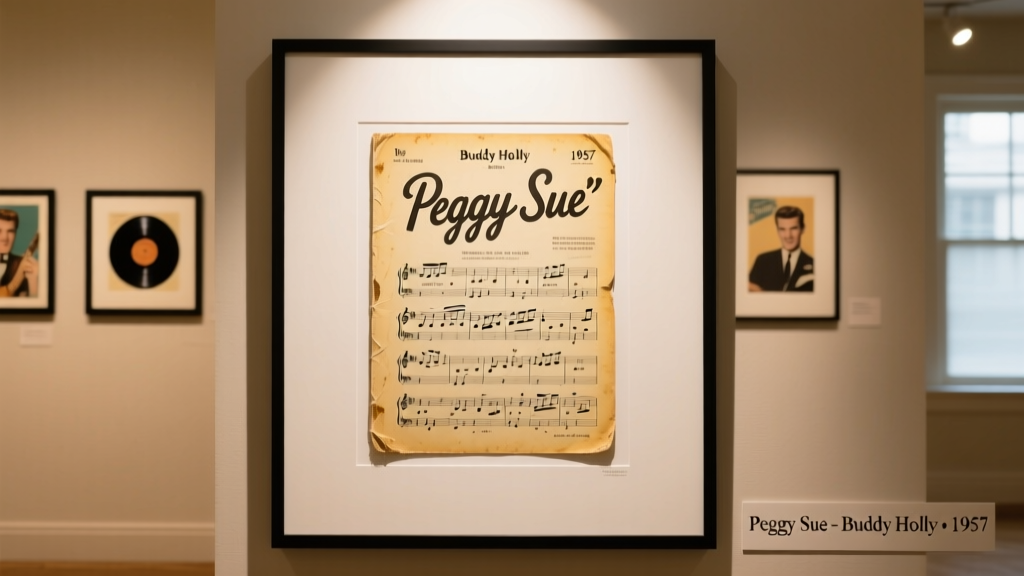
Authenticating and Valuing the Original 1957 Sheet Music for 'Peggy Sue' by Buddy Holly

Authentication Dossier: The Case of Print Reference 2334156 — A Technical Forensic Analysis of a Suspected Limited Edition Screenprint

Harlequin Tumbler Mauve 2: Authentication, Market Position, and Material Analysis
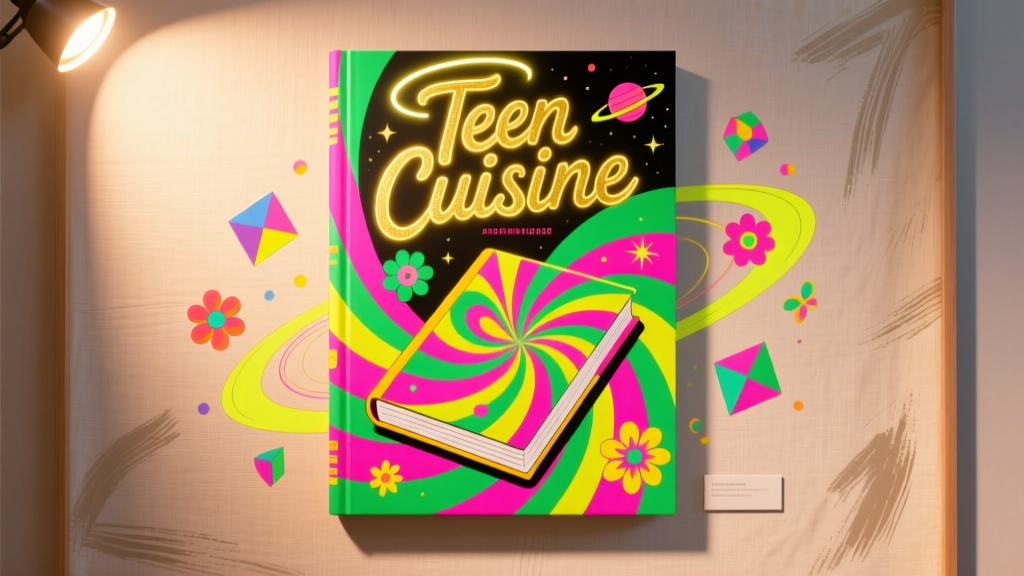
Teen Cuisine (1969): Peter Max’s Psychedelic Cookbook and Its Enduring Art Market Significance
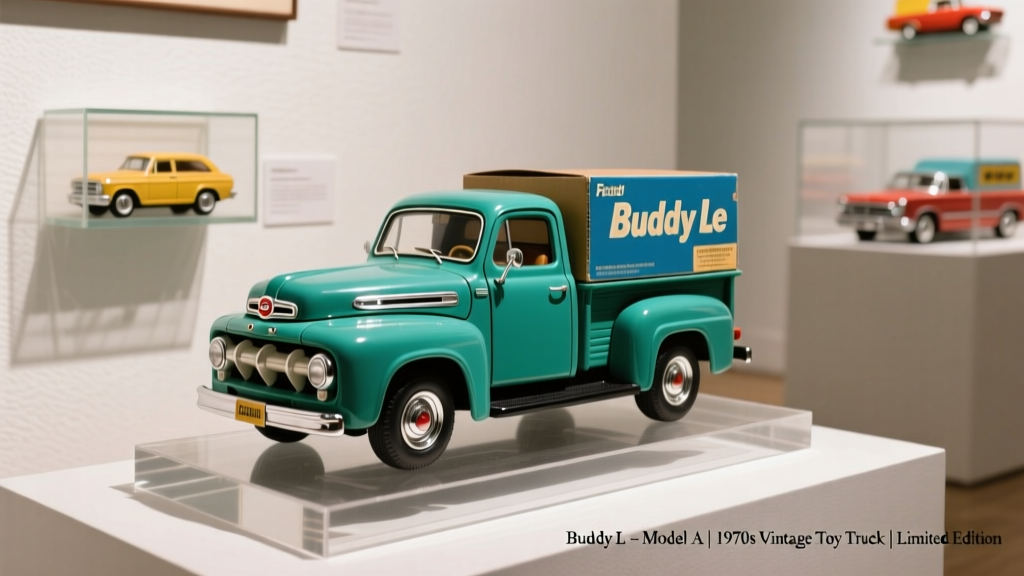
Toy Truck Dump Ford Model A Green Blue Buddy L Box 11 In: Authentication, Market Value, and Historical Context