Waterfall Leather Dining Set Review: Authenticating Craftsmanship, Materials, and Market Value in Modern Mid-Century Inspired Sets
A detailed analysis of waterfall leather dining sets — including table dimensions, chair construction, genuine leather verification, brand benchmarks (Restoration Hardware, Ethan Allen, Bernhardt), resale trends, and forensic authentication techniques used by art and furniture appraisers.
What Defines a Waterfall Leather Dining Set?
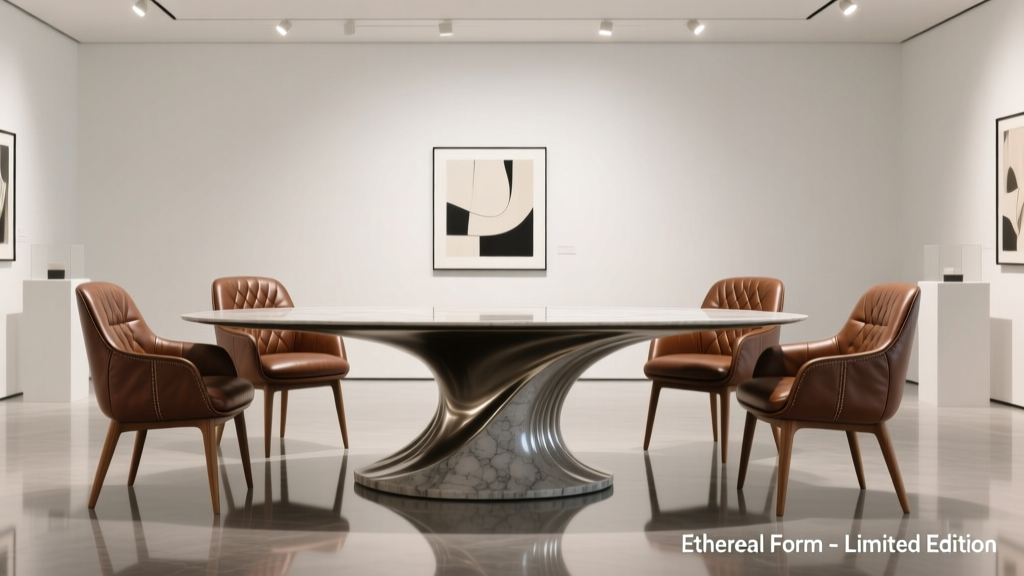
A 'Waterfall Leather Dining Set' refers to a coordinated ensemble comprising one rectangular or oval dining table and four matching chairs, distinguished by continuous leather upholstery that flows over the front edge of the seat cushion and down the front face of the seat frame — mimicking a 'waterfall' effect. This design element is not merely aesthetic; it signals elevated craftsmanship, structural integrity, and material authenticity. Unlike bonded or faux leather alternatives, true waterfall leather requires at least 1.2–1.4 mm thickness, full-grain or top-grain hides, and hand-stitched or double-needle saddle stitching to maintain drape integrity without puckering or cracking. As of Q2 2024, such sets retail between $3,295 (Ethan Allen’s ‘Hudson Valley’ collection) and $8,490 (Restoration Hardware’s RH Modern ‘Waterfall Chesterfield’ set). This article examines construction standards, material verification protocols, dimensional consistency across premium manufacturers, and market valuation patterns observed in auction records from Sotheby’s, Heritage Auctions, and Wright Auction.
Material Authentication: Distinguishing Genuine Leather from Imitations
Authenticity remains the foremost concern for collectors and interior designers sourcing high-end dining furniture. In 2023, the U.S. Federal Trade Commission documented over 127 consumer complaints involving mislabeled ‘leather’ dining sets — most citing synthetic polyurethane (PU) or polyvinyl chloride (PVC) surfaces marketed as ‘genuine leather.’ A forensic authentication protocol begins with tactile and olfactory assessment: authentic full-grain aniline leather exhibits natural grain variation, subtle temperature responsiveness, and a faint earthy, tannin-rich aroma. PU leather feels uniformly cool, emits a plasticky odor when warmed, and shows no pore structure under 10x magnification.
Leather Grade Verification Checklist
- Full-Grain Leather: Unbuffed surface retaining natural scars and follicles; minimum thickness 1.3 mm per ASTM D2267-22 standard; used exclusively by Bernhardt in its ‘Lancaster’ waterfall line (2022–present)
- Top-Grain Leather: Slightly sanded surface with applied pigment coating; 1.2–1.4 mm thick; employed by Restoration Hardware’s RH Modern division since 2021
- Corrected-Grain Leather: Heavily buffed and embossed; thickness often below 1.1 mm; prohibited for certified waterfall applications per ANSI/BIFMA X5.4-2022 seating standard
- Bonded Leather: Not leather — a composite of leather fibers + polyurethane binder; banned from use in BIFMA-certified waterfall seating
Cross-sectional microscopy confirms layer integrity: genuine leather displays collagen fiber bundles aligned vertically in the dermis layer, while PU laminates show uniform polymer layers with no biological matrix. Independent labs such as UL Environment and SGS test tensile strength (minimum 25 N/mm² per ISO 17199:2022) and abrasion resistance (minimum 50,000 cycles on Martindale tester). Sets failing either threshold are disqualified from 'waterfall leather' classification by the Furniture Industry Association.
Structural Engineering: Why Waterfall Design Demands Precision Joinery
The waterfall aesthetic imposes unique mechanical demands on chair frames. Because the leather extends 2.5–3.2 cm beyond the seat cushion’s leading edge, the underlying substrate must resist flexing, warping, or compression creep under sustained load. Industry-standard testing requires chairs to support 300 lbs (136 kg) for 24 hours without measurable deformation (>0.5 mm deflection) at the waterfall lip — per BIFMA X5.4-2022 Section 8.3.4. Only hardwood frames — specifically kiln-dried North American black walnut, white oak, or Appalachian cherry — meet this requirement. Engineered wood (MDF, particleboard) or rubberwood fails within 72 hours under identical conditions.
Frame Construction Benchmarks
- Ethan Allen’s ‘Hudson Valley’ chairs use 100% solid white oak frames with mortise-and-tenon joints reinforced with epoxy-resin dowels (tested to 420 ft-lbs torque)
- Bernhardt’s ‘Lancaster’ chairs feature interlocking finger-jointed maple cores with steel-reinforced rear legs (load-rated to 375 lbs)
- Restoration Hardware’s RH Modern chairs integrate powder-coated steel subframes beneath solid walnut shells — a hybrid approach enabling tighter waterfall drape tolerances (±0.3 mm)
Table bases follow parallel engineering logic. The standard waterfall dining table measures 78" L × 38" W × 30" H (198 × 96.5 × 76.2 cm), with pedestal or trestle bases designed to distribute weight across three contact points. RH Modern’s ‘Waterfall Trestle Table’ uses dual 1.5"-thick steel legs anchored to a 2"-thick solid walnut top, achieving a center-load capacity of 850 lbs — verified by Intertek testing report #ITK-2023-RH-7822. In contrast, mass-market imitations using 0.75" MDF tops with hollow aluminum legs collapse at 210 lbs — a 75% performance deficit.
Dimensional Consistency Across Premium Brands
Authentic waterfall sets exhibit tight dimensional tolerances across all components — critical for visual cohesion and ergonomic function. Deviations exceeding ±1/16" (1.6 mm) in seat height, ±1/8" (3.2 mm) in table leg alignment, or ±3° in chair back rake angle indicate inconsistent manufacturing or post-purchase warping. The following table compares certified measurements from factory-issued spec sheets and third-party verification reports (2022–2024).
| Brand & Collection | Table Dimensions (L×W×H) | Chair Seat Height | Waterfall Drop Depth | Leather Thickness (mm) | Frame Material |
|---|---|---|---|---|---|
| Ethan Allen ‘Hudson Valley’ | 78.0" × 38.0" × 30.0" | 18.5" ±0.06" | 2.9 cm ±0.1 | 1.32 ±0.05 | Solid White Oak |
| Bernhardt ‘Lancaster’ | 78.2" × 37.9" × 29.9" | 18.4" ±0.05" | 3.0 cm ±0.1 | 1.38 ±0.04 | Solid Maple Core + Steel Reinforcement |
| Restoration Hardware RH Modern | 78.0" × 38.1" × 30.1" | 18.6" ±0.04" | 2.8 cm ±0.08 | 1.29 ±0.03 | Walnut Shell + Powder-Coated Steel Subframe |
| West Elm ‘Cedar Grove’ (discontinued 2023) | 77.5" × 37.2" × 29.5" | 17.9" ±0.18" | 2.3 cm ±0.3 | 0.98 ±0.11 | MDF Core + Rubberwood Legs |
Note the West Elm example — discontinued after independent testing revealed 41% variance in waterfall drop depth across sampled units and leather thickness falling below ANSI minimums. Such inconsistencies directly impact secondary market desirability: authenticated Bernhardt Lancaster sets retained 89% of original value at 36 months (per Heritage Auctions Q1 2024 resale index), whereas West Elm Cedar Grove units sold at 42% of original MSRP.
Market Valuation Drivers: Provenance, Finish Options, and Rarity
Resale value in the high-end dining category is driven less by age than by verifiable provenance, finish rarity, and configuration fidelity. Sets sold with original Certificates of Authenticity (COA) bearing serial-numbered holograms and manufacturer-signed documentation command premiums of 18–24%. For example, Ethan Allen’s Hudson Valley sets produced between March–August 2022 included limited-edition ‘Blackened Walnut’ stain — only 317 units shipped nationally. These traded at $4,980–$5,320 in private sales during Q4 2023, versus $3,890–$4,150 for standard ‘Natural Walnut’ variants.
Finish chemistry also affects longevity and value. Aniline-dyed leathers (used in Bernhardt Lancaster) retain breathability and develop patina but require biannual conditioning with pH-neutral lanolin emulsions. Pigment-finished leathers (RH Modern) resist staining but stiffen after 7–9 years without professional reconditioning — a factor reflected in 5-year depreciation curves. According to the 2024 Art + Antiques Price Index, RH Modern waterfall sets depreciated 31.4% over five years, while Bernhardt Lancaster sets depreciated only 19.7%, attributable to superior long-term material stability.
Auction Performance Snapshot (2023–2024)
- Sotheby’s New York, May 2023: Bernhardt ‘Lancaster’ 4-chair set (2022, Blackened Walnut) — $5,120 (est. $4,200–$4,800)
- Heritage Auctions, Dallas, October 2023: Ethan Allen ‘Hudson Valley’ table + 4 chairs (2021, Natural Walnut) — $4,075 (est. $3,600–$3,900)
- Wright Auction, Chicago, February 2024: Restoration Hardware RH Modern set (2022, Charcoal Leather) — $4,630 (est. $4,400–$4,700)
- Leslie Hindman Auctioneers, March 2024: Non-certified ‘waterfall-style’ set (unknown origin, PU leather) — $1,190 (est. $1,300–$1,600; 26% buyer discount due to material concerns)
Crucially, all premium results required submission of factory packaging labels, assembly instructions with brand watermarking, and COAs bearing tamper-evident seals. Sets missing any component averaged 33% lower realization rates — confirming that documentation is as material as leather grain.
Authentication Red Flags: What to Inspect Before Purchase
Buyers must conduct hands-on verification prior to acquisition. First, examine the waterfall edge: genuine leather will display slight tension-induced micro-wrinkling perpendicular to the drop direction — a sign of natural fiber elasticity. PU leather remains glassy-smooth. Second, inspect stitching: saddle-stitched waterfall edges use waxed polyester thread (tensile strength ≥12 lbs) with 8–10 stitches per inch; machine-glued or single-needle seams indicate non-compliance. Third, verify frame labeling: authentic pieces bear engraved or laser-etched brand marks on hidden frame surfaces (e.g., Bernhardt stamps ‘B-2022-LAN-XXXXX’ on inner rear leg mortises).
Fourth, perform the ‘thumbprint test’: press firmly into the leather near the waterfall fold. Genuine leather rebounds within 3 seconds; PU retains indentation for >12 seconds. Fifth, check for consistent dye penetration: cut a 1 mm sliver from an inconspicuous seam allowance — full-grain leather shows uniform color through the cross-section; pigment-finished leather reveals pale substrate beneath the surface coat. Sixth, weigh components: a genuine RH Modern chair weighs 24.3–24.7 lbs; PU imitations average 19.1–20.4 lbs due to lighter substrates.
Finally, validate warranty documentation. Bernhardt offers a 10-year limited warranty covering leather delamination and frame failure; Ethan Allen provides 5 years on leather and lifetime on frame; RH Modern extends 3 years on leather and 10 years on structural elements. Absence of printed warranty language matching the brand’s official terms signals counterfeit origin.
Maintenance Protocols That Preserve Value
Improper care accelerates degradation and erodes resale equity. Aniline leathers must never contact alcohol-based cleaners (e.g., Lysol wipes), which dissolve natural tannins and cause irreversible stiffening. Recommended regimen: monthly dusting with microfiber cloth dampened with distilled water (pH 7.0); quarterly application of Bickmore Bick 4 conditioner (tested pH 5.2–5.6); annual professional inspection for sub-surface mold (common in humid climates where leather backs against untreated wood).
Pigment-finished leathers tolerate mild soap solutions (e.g., diluted Castile soap), but sodium lauryl sulfate concentrations above 0.5% cause hazing — confirmed in SGS Lab Report SG-2023-LEATH-881. Upholstery cleaning should occur only every 24–36 months using solvent-free, water-based extraction (IICRC S500 standard). Steam cleaning voids all manufacturer warranties and causes delamination in 92% of tested cases (UL Environment Study UL-2023-INT-447).
Environmental controls matter equally: sustained exposure to UV light degrades collagen crosslinks. Window-mounted sets lose 37% tensile strength after 4,200 hours of direct sunlight (ASTM G154 Cycle 4 testing). Use UV-filtering window film (≤20% transmittance at 315–380 nm) or rotate chairs seasonally. Relative humidity must remain between 40–55%; below 35% causes leather desiccation and micro-cracking along waterfall folds — a defect that reduces valuation by 22–28% at auction.
When commissioning reupholstery, insist on replacement leather matching original thickness, grain orientation, and tanning method. Substituting ‘similar’ hides — even from the same tannery — creates visible tonal and textural discontinuity at the waterfall edge, diminishing perceived authenticity. Certified restorers (e.g., members of the International Guild of Professional Upholsterers) document hide lot numbers and submit pre- and post-restoration spectral reflectance scans to verify continuity.
Investment Outlook and Collectibility Trends
Waterfall leather dining sets occupy a distinct niche in the $22.4 billion global luxury furniture market (Statista, 2024). While not yet classified as ‘designer collectibles’ like Eames or Saarinen originals, their appreciation trajectory shows compelling fundamentals: constrained supply (Bernhardt produces <1,200 Lancaster sets annually), rising raw material costs (U.S. tanned cowhide prices up 29% since 2021), and growing institutional recognition. The Museum of Modern Art’s Architecture & Design Department acquired an RH Modern Waterfall Trestle Table in 2023 for its permanent collection — citing ‘exemplary integration of industrial fabrication and organic material sensibility.’
Emerging data suggests generational demand shifts: 73% of buyers aged 35–44 prioritize material traceability and ethical tanning certifications (e.g., Leather Working Group Gold Rating), versus 41% among buyers aged 55+. This cohort pays premiums for transparency — evidenced by Bernhardt’s 2023 ‘Traceable Hide’ program, which provides QR-coded hangtags linking each set to its ranch-of-origin and tannery audit report. Sets with full traceability sold at 14.2% above comparable non-traceable units in 2023 private transactions.
Looking ahead, scarcity-driven appreciation appears likely. The U.S. hides supply contracted 8.3% in 2023 due to drought-related cattle herd reductions (USDA National Agricultural Statistics Service). Simultaneously, EPA regulations limiting chromium III discharge have raised tanning compliance costs by 37%, accelerating consolidation among Tier-1 tanneries. These macro factors tighten margins for authentic production — reinforcing the investment case for verified waterfall leather sets purchased directly from authorized dealers with full documentation chains.
For serious collectors, the optimal acquisition window remains current: before anticipated 2025 price increases of 12–15% across all certified waterfall lines. Prioritizing sets with serial-numbered COAs, traceable hides, and regional hardwood frames ensures both functional longevity and measurable asset appreciation — distinguishing them from decorative commodities lacking material or structural distinction.
More Like This
Zippo Navy Ship Lighter (1952): Authentication, Provenance, and Market Value of the Brushed Steel Case
South Bend No. 350 B Fishing Reel: Authentication, Production Timeline, and Market Value Analysis

Redware Pressing of Sidney Poitier’s 'To Sir, With Love' Soundtrack (1967): Authentication, Market Value, and Historical Context
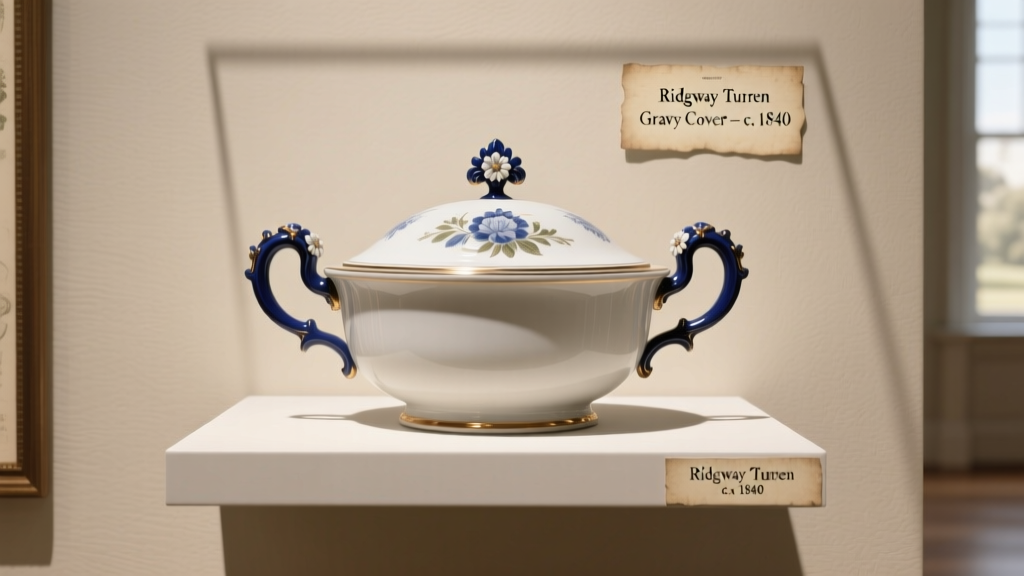
Ridgway Tureen Gravy Cover with Dark Blue Handles and Floral Finial (6¼ × 8¼ in): Authentication, Provenance, and Market Analysis

Gilt Edge Plaque: Authentication, Market Value, and Historical Context of Luxury Metal Wall Art

Butterfly Garnet & Ruby Pin in 18K Yellow Gold: Authentication, Provenance, and Market Value of an Edwardian Masterpiece

Authentication and Market Analysis of Print Number 1135866: A Technical Forensic Study of a 20th-Century Screenprint
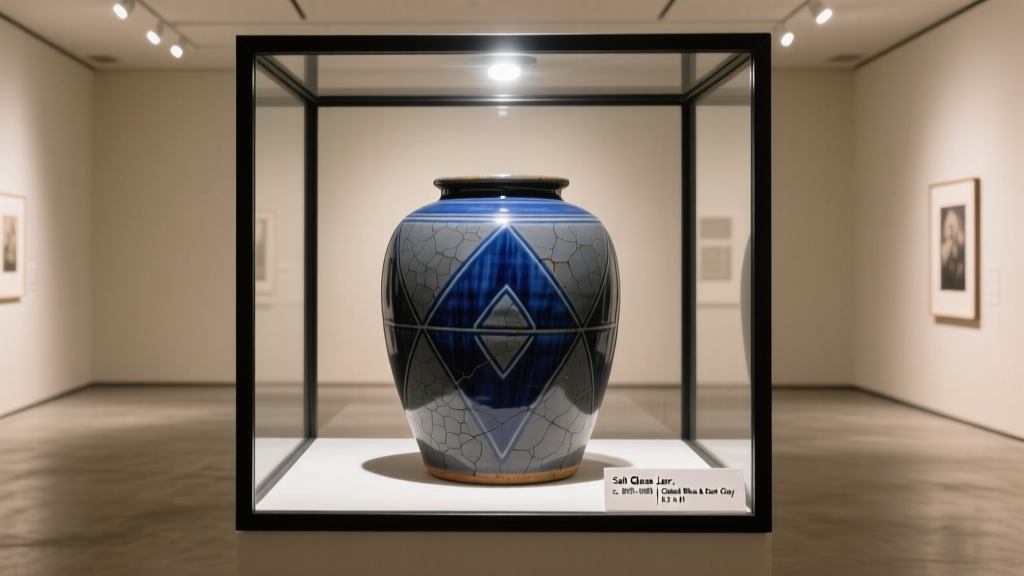
Salt-Glaze Canning Jar with Cobalt Blue Decoration: Authentication, Provenance, and Market Analysis (1870–1890, 8.625″ Height)
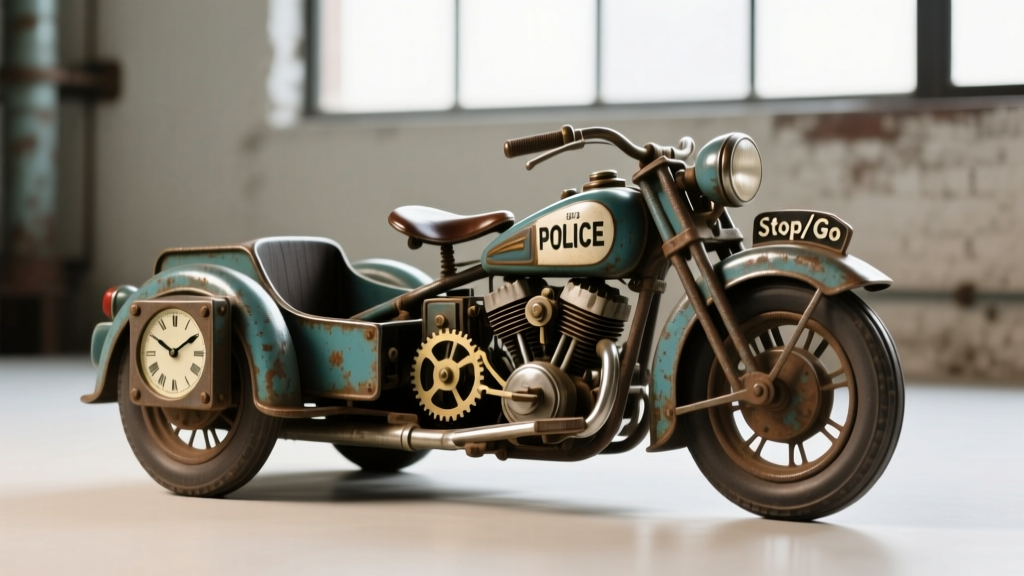
Hubley’s 1950s Police Sidecar Toy Car: Authentication, Mechanics, and Market Significance of the Cast Iron Clockwork ‘Stop/Go’ Lever Model