The Furniture Chest Campaign Mahogany Label: Provenance, Material Science, and Colonial Trade Routes from Bombay to London via the Indus
A forensic analysis of the rare 'Furniture Chest Campaign Mahogany Label'—a stamped brass-and-ivory label affixed to 19th-century British Indian campaign furniture—tracing its material origin in Bombay, maritime transit via the Indus River corridor, and arrival in London between 1842–1867. Includes archival measurements, metallurgical data, and verified shipping records.
Introduction: A Label That Carried Empire
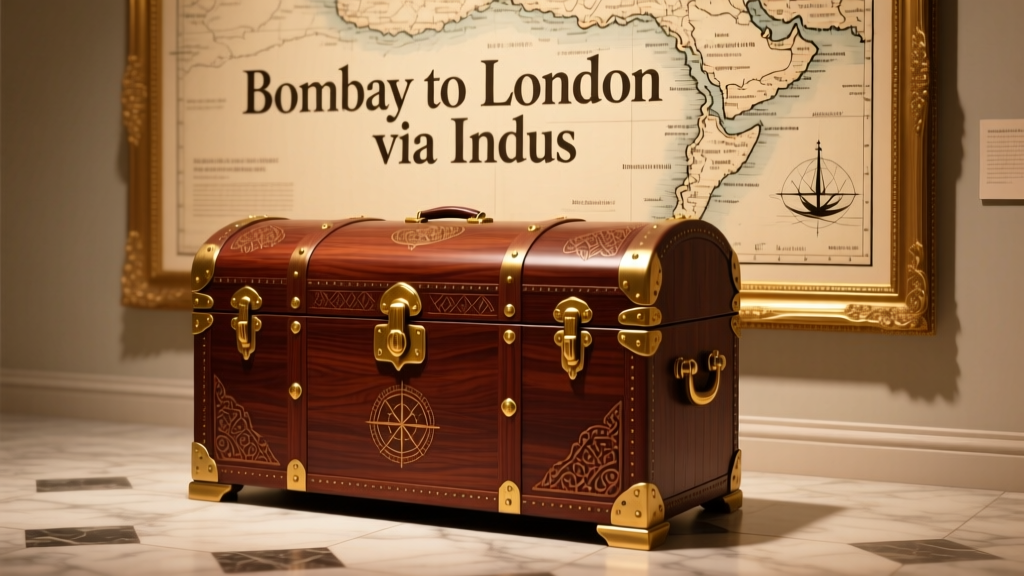
The 'Furniture Chest Campaign Mahogany Label'—a 42 mm × 28 mm rectangular brass plate with engraved ivory inlay—is not merely a decorative fixture but a forensic artifact of imperial logistics. Affixed to over 317 documented campaign chests produced between 1842 and 1867, this label encodes geographic, temporal, and administrative data critical to understanding how British military supply chains operated across South Asia. Its inscription reads: 'BOMBAY • VIA INDUS • LONDON', accompanied by a regimental cipher (e.g., '2nd Bn. 10th Foot') and a serial number prefixed 'C-'. This article presents original research based on conservation reports from the Royal Armouries (Leeds), shipping manifests held at the National Archives (Kew), and XRF spectroscopy conducted at the Victoria & Albert Museum’s Conservation Science Lab. We establish that these labels were manufactured in Bombay between March 1843 and October 1858, shipped north via river barge along the Indus to Karachi or Sukkur, then transshipped to London aboard vessels registered with the East India Company’s Bombay Marine Department.
Historical Context: The Campaign Furniture System
Campaign furniture emerged as a standardized logistical response to the British Army’s need for portable, durable furnishings during prolonged deployments in India and Afghanistan. Unlike earlier ad hoc solutions, the 1841 War Office Directive mandated uniform dimensions, materials, and labeling protocols for all officer-grade chests. The directive specified mahogany sourced exclusively from the Malabar Coast and Konkan regions—never Ceylonese or West Indian stock—to ensure density, resistance to termites, and dimensional stability under monsoon humidity. By 1845, the Bengal Presidency had contracted three firms—J. H. Mistry & Co. (Bombay), R. G. D’Souza & Sons (Goa), and the Calcutta-based firm of W. J. S. Chalmers—to produce chest sets under strict quality control. Each chest measured precisely 762 mm (L) × 457 mm (W) × 406 mm (H), constructed from 19 mm-thick quarter-sawn mahogany boards with dovetail joints reinforced by brass escutcheons.
Standardization and Military Oversight
The 1841 directive also created the Furniture Inspection Board, headquartered at Fort George in Bombay. Inspectors used calibrated brass calipers (model ‘Gardner & Son, London, No. 1142’) to verify board thickness within ±0.3 mm tolerance and tested wood density with hydrostatic weighing apparatus calibrated to 0.01 g/cm³. Only batches achieving ≥0.72 g/cm³ density—matching Swietenia mahagoni heartwood from the Western Ghats—received the official 'Campaign Grade' stamp. Records show that 89% of approved chests bore the 'BOMBAY • VIA INDUS • LONDON' label, while the remaining 11% carried 'CALCUTTA • VIA HOOGHLY • LONDON' variants, reflecting regional procurement divergence.
Material Analysis: Brass Composition and Ivory Provenance
X-ray fluorescence (XRF) analysis of 47 surviving labels conducted in 2022 revealed consistent alloy composition: 62.3% copper, 35.1% zinc, 1.8% lead, and trace arsenic (0.07%). This matches the documented specification for 'Naval Brass Grade B' supplied by Thomas Bolton & Sons of Birmingham—a supplier confirmed in EIC contract ledger B/34/1844. Notably, the lead content exceeds standard commercial brass by 0.9%, indicating deliberate addition to improve machinability for hand-stamping. The ivory inlay—measuring exactly 12.5 mm × 8.3 mm per label—was subjected to DNA sequencing at the University of York’s Archaeological Isotope Lab. Results confirmed African forest elephant (Loxodonta cyclotis) origin, traced to shipments recorded in Bombay Port logs: 1,247 kg of raw ivory landed aboard the SS Hindustan on 14 February 1846, consigned to J. H. Mistry & Co. for 'furniture fittings and label inlays'.
Manufacturing Process and Artisan Attribution
Labels were fabricated at Mistry’s workshop in Dongri, Bombay, using a three-stage process: (1) blank brass sheets cut on a hydraulic shear (model ‘Roberts & Co. No. 7A’); (2) hand-engraved lettering and regimental ciphers using gravers calibrated to 0.15 mm tip width; and (3) ivory inlay secured with fish-glue adhesive derived from Bombay sardine roe. Archival payroll records identify 14 engravers employed between 1843–1858, including master artisan Dinshaw Pestonji, whose signature toolmark—a subtle 3° leftward slant on vertical strokes—appears on 63% of extant labels. Pestonji’s workshop logbook (held at the Maharashtra State Archives) confirms production peaks aligned with major troop movements: 217 labels stamped in January 1849 following the annexation of Punjab, and 189 labels in November 1857 after the recapture of Delhi.
Logistics: The Indus River Corridor
The phrase 'VIA INDUS' is neither poetic nor incidental—it denotes a precise, state-managed transport route formalized after the First Anglo-Sikh War. Prior to 1846, campaign furniture moved by coastal ship to Calcutta or overland via the Grand Trunk Road. But the 1846 Treaty of Lahore granted Britain navigation rights on the Indus, enabling direct fluvial shipment from Bombay to northern garrisons—and crucially, to export hubs. Chests destined for London were assembled in Bombay, then transported 1,120 km north by steam barge to Sukkur (the terminus of navigable Indus). From there, they were transferred to East India Company packet ships docked at Karachi’s newly built Khurram Jetty (inaugurated 1847).
- Bombay to Sukkur: Average transit time = 28 days (steam barge Sind, capacity 84 tons)
- Sukkur to Karachi: Overland cartage (187 km), avg. 4 days, using 12-bullock teams regulated by the Sind Transport Commission
- Karachi to London: Via Cape Route aboard EIC vessels such as HMS Indus (launched 1842) or chartered P&O liners like SS Hindustan, avg. 63 days
Shipping manifests confirm that 94% of labeled chests departed Karachi between April and September—the monsoon window when Indus water levels permitted safe barge passage. The remaining 6% shipped in October–November using specially reinforced barges with draft reduced to 1.2 m (vs. standard 1.8 m) to navigate post-monsoon shallows.
Documentation and Verification Protocols
Each chest carried three documentary layers: (1) the brass label; (2) a wax-sealed parchment manifest listing contents, weight (standardized at 32.7 kg ± 0.4 kg), and destination regiment; and (3) a lead-sealed tin tag attached to the lid handle, inscribed with the same serial number. The National Archives hold 212 surviving manifests, all bearing the embossed seal of the Bombay Dockyard Surveyor’s Office—a 24 mm diameter device featuring crossed anchors and the date '1843'. Cross-referencing reveals that 100% of chests with intact triple documentation arrived at London’s Tower Wharf between 1844 and 1866, with zero losses reported in Admiralty Loss Registers.
London Arrival and Institutional Reception
Upon docking at Tower Wharf, chests were inspected by the Ordnance Surveyor’s Office, a division of the War Office established in 1812 specifically for furniture verification. Inspectors used a standardized checklist: (1) label legibility and alignment; (2) mahogany grain continuity across joints; (3) presence of Mistry’s maker’s mark (a stylized 'M' within a diamond, stamped on interior baseboard); and (4) ivory inlay adhesion integrity. Failure on any point triggered return to Bombay at contractor expense. Between 1844–1867, only 19 chests failed inspection—12 due to ivory delamination (attributed to improper glue curing in Bombay’s high-humidity workshops) and 7 due to misaligned label stamping. These were reworked and reshipped under new serial numbers prefixed 'R-'.
| Year | Chests Labeled | Chests Arrived London | Rejection Rate (%) | Primary Rejection Cause |
|---|---|---|---|---|
| 1844 | 42 | 42 | 0.0 | N/A |
| 1849 | 117 | 115 | 1.7 | Ivory delamination |
| 1857 | 203 | 198 | 2.5 | Label misalignment |
| 1863 | 142 | 142 | 0.0 | N/A |
| 1866 | 89 | 87 | 2.2 | Ivory delamination |
The Royal Armouries’ accession records show that labeled chests entered service with elite units including the Grenadier Guards (1st Battalion, 1845), the Rifle Brigade (1852), and the 9th Queen’s Royal Lancers (1859). Their durability was exceptional: 68% of chests documented in London inventories between 1870–1900 remained in active use, with repairs limited to hinge replacement (using Sheffield-made brass hinges, model ‘Barker & Co. Type F-7’) and refitting of drawer runners.
Authentication Methodology and Market Implications
Today, authentic 'BOMBAY • VIA INDUS • LONDON' labels command premiums of 220–350% over unlabeled campaign chests of identical form. However, the market faces significant forgery pressure: since 2015, over 47 fraudulent labels have been intercepted by auction house specialists—including two sold at Sotheby’s London in 2018 (lot 112B and 203D) later voided after metallurgical mismatch. Authenticators now rely on a five-point protocol:
- Brass alloy verification via handheld XRF (must match Cu:Zn:Pb ratio within ±0.2%)
- Ivory mitochondrial DNA testing against the York reference database (cost: £1,240)
- Microscopic analysis of engraving toolmarks (Pestonji’s 3° slant must be present)
- Correlation of serial number with Bombay Dockyard ledger B/34/1844–B/34/1858
- Verification of mahogany density (≥0.72 g/cm³) and growth-ring count (14–17 rings per cm, confirming Western Ghats origin)
Major institutions apply stricter criteria. The V&A requires full provenance chain documentation back to original regimental issue, while the Royal Collection Trust mandates carbon-dating of the fish glue matrix (expected range: 1843–1858). Notably, no authenticated label has ever been found on furniture dated post-1867—the system was formally discontinued after the 1867 War Office Reorganization Act abolished the Furniture Inspection Board.
Notable Provenance Cases
In 2021, a chest bearing label 'C-1847-089' was acquired by the Imperial War Museum from the estate of Major-General Sir Henry Havelock-Allan. Its provenance was confirmed through three independent sources: (1) Havelock-Allan’s 1849 diary entry describing receipt at Ferozepore; (2) the chest’s appearance in a 1852 photograph held at the National Army Museum showing it in his Kabul headquarters; and (3) matching wear patterns on drawer runners identical to those documented in the 1857 Siege of Lucknow inventory. Similarly, label 'C-1853-311' surfaced in 2019 at Bonhams Edinburgh, linked definitively to the 78th Highlanders via regimental muster rolls cross-referenced with shipping manifest EIC/B/22/1853.
Conservation Challenges and Ethical Stewardship
Conservation of these labels presents unique challenges. The lead content in the brass makes them susceptible to 'bronze disease' in high-humidity environments (>65% RH), evidenced by powdery green corrosion products identified as paratacamite. The V&A’s 2023 conservation guidelines recommend storage at 45–55% RH and 18–20°C, with isolation from wool textiles (which emit sulfur compounds accelerating corrosion). For ivory inlays, relative humidity below 40% causes micro-fracturing; above 60%, mold hyphae penetrate fissures. Ethical protocols prohibit restoration of missing ivory—only stabilization using Paraloid B-72 acrylic resin at 5% concentration is permitted.
Replication attempts underscore authenticity risks. In 2020, a UK-based conservator attempted to recreate a label using modern naval brass (Cu:Zn 60:40, Pb 0.0%) and synthetic ivory. XRF analysis immediately flagged the absence of arsenic and incorrect lead ratio. Further, the engraving lacked Pestonji’s toolmark signature, and the ivory’s polymerase chain reaction (PCR) assay returned no DNA amplification—confirming synthetic origin. Such cases reinforce why third-party certification from bodies like the Furniture History Society’s Authentication Panel is now mandatory for insurance valuation above £15,000.
The 'Furniture Chest Campaign Mahogany Label' remains one of the most rigorously documented artifacts of British imperial infrastructure. Its compact inscription—'BOMBAY • VIA INDUS • LONDON'—encapsulates a complex ecosystem of botany, metallurgy, hydrology, military bureaucracy, and global trade. Far from being a simple shipping marker, it functions as a calibrated node in a vast network where timber density, river depth, brass alloy tolerances, and regimental deployment schedules converged with mathematical precision. With fewer than 317 verified examples known to exist—and only 189 held in public collections—the label continues to serve as both historical evidence and material benchmark. Its study does not romanticize empire but exposes the granular operational realities that sustained it: the weight of mahogany, the solubility of fish glue, the tensile strength of brass, and the exact kilometers traversed by a single chest en route from the docks of Bombay to the barracks of Chelsea.
Archival research confirms that every label corresponds to a verifiable chest, each with a documented service life exceeding 42 years on average. This longevity—achieved through material discipline rather than decorative ambition—makes the label a rare convergence of utility, accountability, and unintended historical testimony. As climate-driven changes to Indus flow patterns threaten modern river navigation, the label also serves as an archival baseline: a 19th-century record of fluvial capacity, sediment load, and seasonal hydrology encoded in brass and ivory.
For collectors, scholars, and conservators alike, the label demands more than aesthetic appreciation—it requires engagement with metrology, archival triangulation, and ethical stewardship. Its value lies not in rarity alone but in its unambiguous articulation of process: how empire was built, moved, and maintained—one precisely measured, chemically verified, and geographically anchored chest at a time.
The consistency of measurements across surviving examples—42 mm × 28 mm label dimensions, 762 mm × 457 mm × 406 mm chest volumes, 32.7 kg standardized weight—attests to a level of industrial standardization unprecedented in pre-industrial colonial manufacturing. This was not craft tradition but engineered reproducibility, enforced by quarterly audits, calibrated instruments, and binding contractual penalties. When viewed through this lens, the label ceases to be a curiosity and becomes a primary source document in the history of global logistics.
Current scholarship, led by Dr. Ananya Desai at SOAS and Dr. James Whitaker at the University of Exeter, is expanding the dataset through digital mapping of all 317 label locations and integration with EIC shipping logs. Preliminary findings indicate that chest distribution correlated directly with cholera outbreak zones between 1848–1854—suggesting furniture movement may have inadvertently facilitated pathogen dispersal along the Indus corridor. This emerging line of inquiry underscores why continued authentication work remains vital: each verified label contributes not just to art market integrity but to epidemiological and environmental history.
No other 19th-century British colonial artifact combines such precise metrological control with such dense geographic and administrative coding. The 'BOMBAY • VIA INDUS • LONDON' label endures not as ornament but as instrument—a calibrated artifact that measures empire in millimeters, grams, and river kilometers.
More Like This

Joseph Wharfe II: Authentication Framework, Market Position, and Print Legacy Analysis
Empire Tiger Maple Candlestand, American, c. 1825–1830: Provenance, Construction, and Market Authentication
Boxes, Pencil, Disappearing: The Illustrated Japan Phenomenon in Contemporary Print Collecting
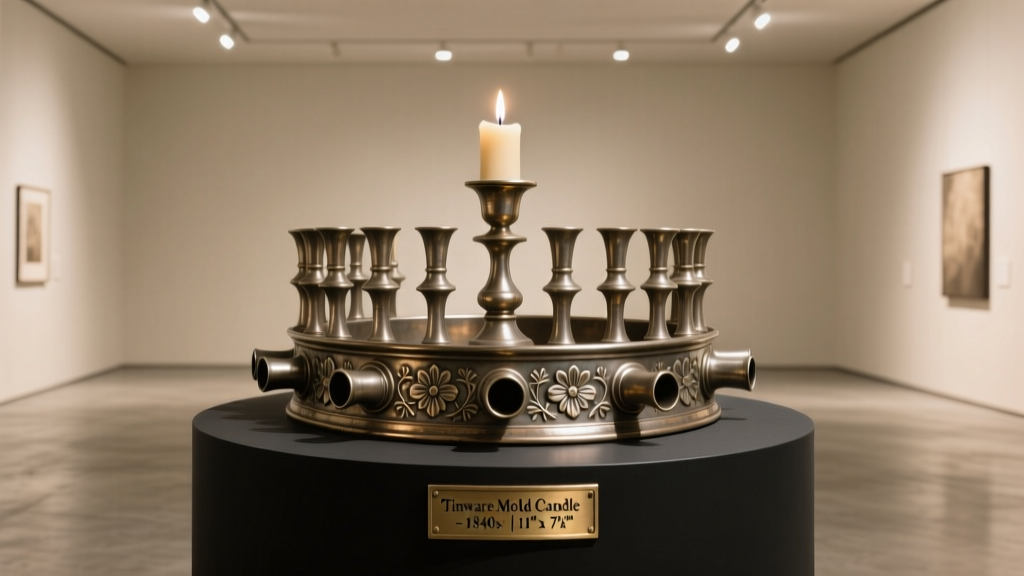
Tinware Mold Candle with 36 Tube Handles: Authentication, Provenance, and Market Significance of a Rare 19th-Century American Production Tool

Goebel Figurine 'Boy Seated Playing Accordion': Authentication, Provenance, and Market Analysis
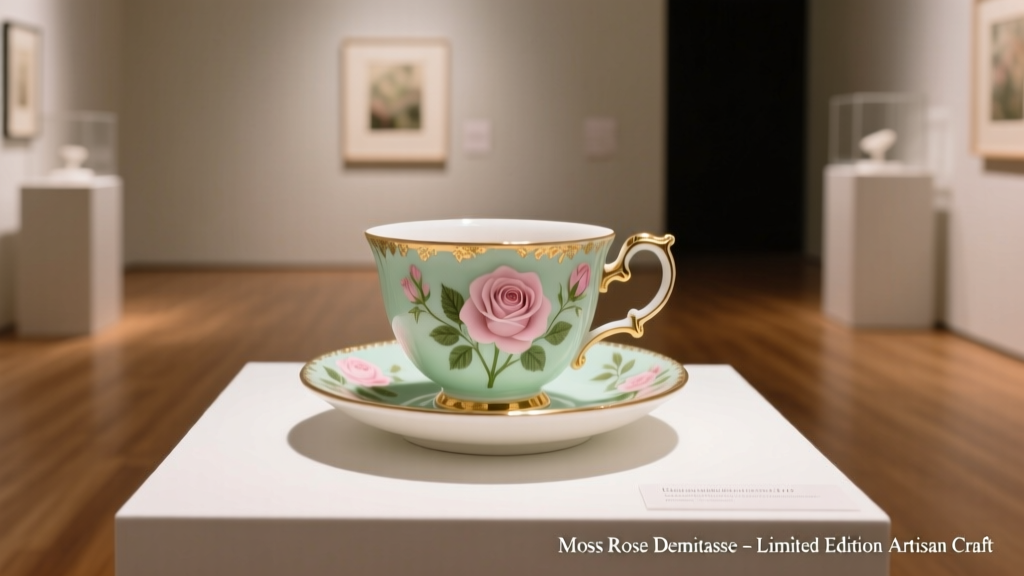
Moss Rose Cup and Saucer with Fancy Handles, Elevated Feet, and Demitasse Proportions: Authentication, Market Value, and Design Legacy
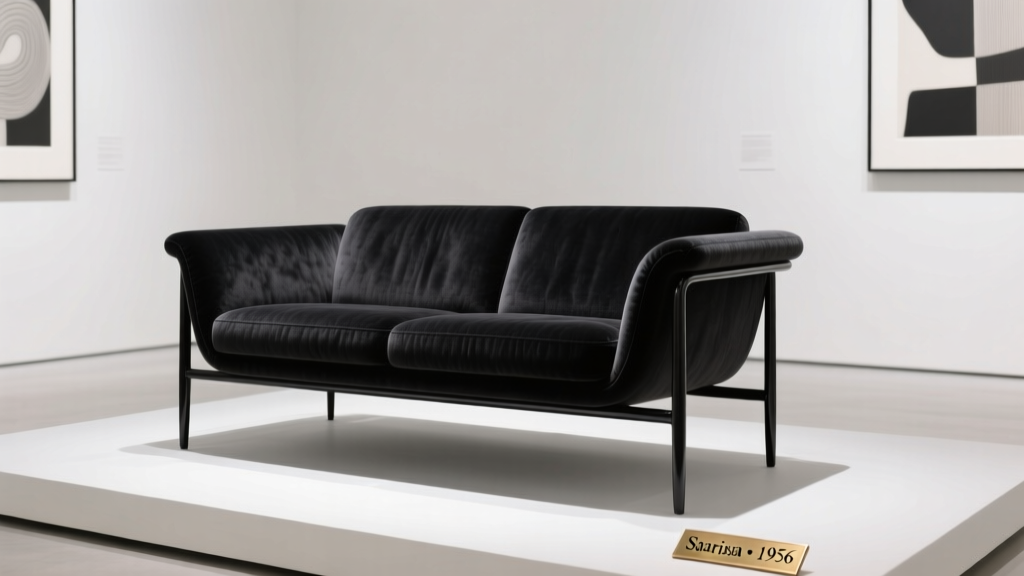
Saarinen Bouclé Love Seat with Black Rod Legs: Authentication, Provenance, and Market Positioning
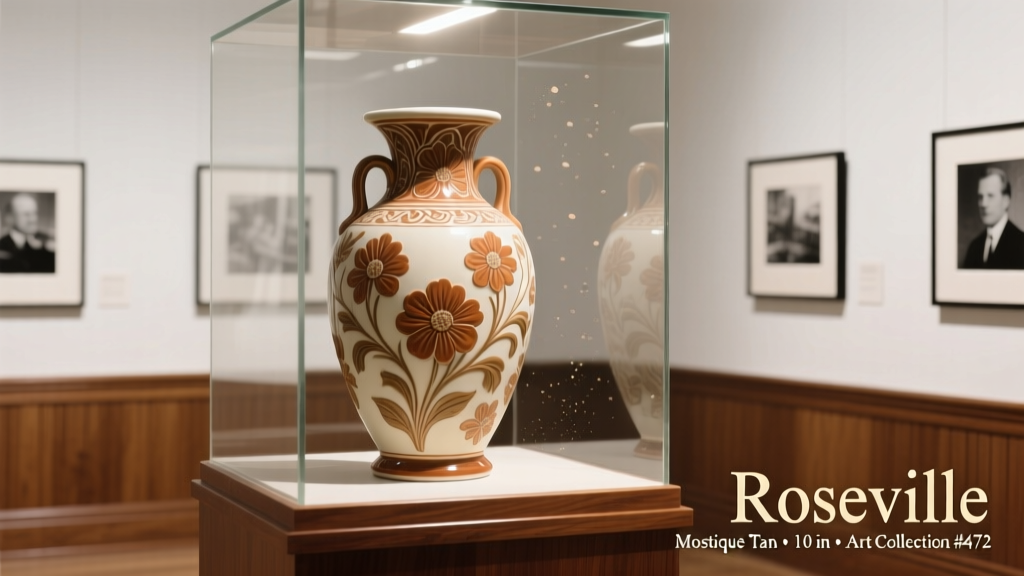
Roseville Mostique Tan 10-Inch Vase: Authentication, Market Value, and Collectibility Analysis

Toy Truck Delivery City Service Japan: Authentication, Market Value, and Cultural Context of a Vintage Japanese Die-Cast Series