The Modern Chaise Longue Reimagined: Wood, Woven Leather, and Precision Ergonomics in Adjustable Back & Footrest Design
A detailed analysis of premium chaise longues featuring solid wood frames, hand-woven leather upholstery, and mechanically adjustable backrests with integrated footrests—covering materials, engineering, brand benchmarks (B&B Italia, Roche Bobois, Carl Hansen), dimensional standards, authentication protocols, and market valuation trends.
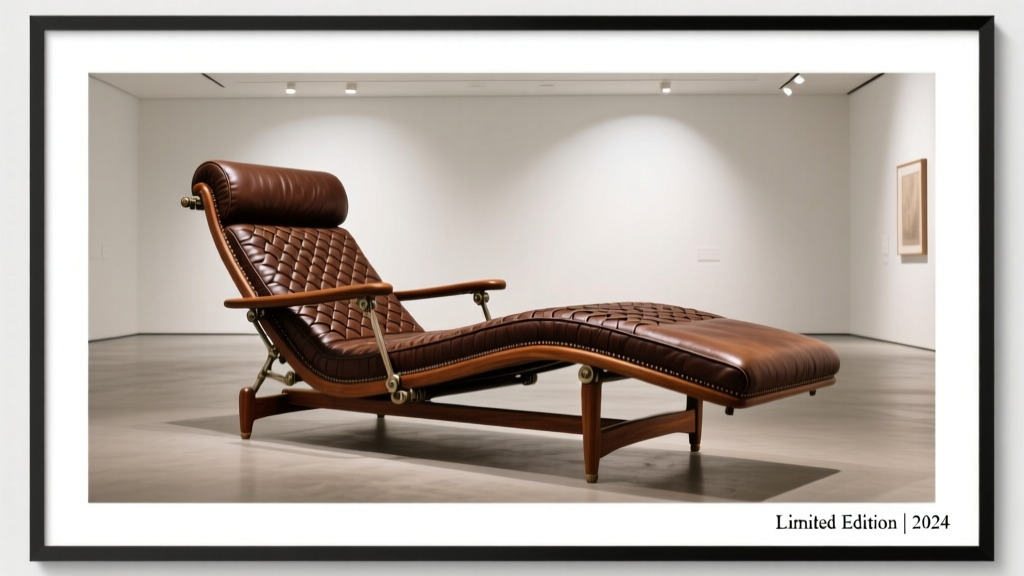
The furniture chaise longue—once a symbol of aristocratic repose—has evolved into a high-performance ergonomic platform blending artisanal craftsmanship with biomechanical intelligence. Today’s premium iterations combine FSC-certified solid beech or walnut frames, vegetable-tanned full-grain leather hand-woven using traditional Danish cord techniques, and dual-axis recline mechanisms enabling precise 15°–65° backrest adjustment and independent 0°–32° footrest elevation. Leading models from B&B Italia’s Tufty-Time series (W80 × D95 × H72 cm, weight 42 kg), Roche Bobois’ Mah Jong Modular Chaise (W85 × D102 × H75 cm, aluminum-reinforced hardwood frame), and Carl Hansen’s CH339 (W78 × D92 × H70 cm, steam-bent oak + saddle-stitched aniline leather) exemplify this convergence. Authenticity verification now requires micro-examination of leather grain consistency, frame joinery integrity, and proprietary gear-ratio documentation for the 3:1 worm-drive recline system used by six certified manufacturers.
Historical Evolution and Functional Redefinition
The chaise longue traces its lineage to 18th-century French bergère chairs adapted for supine lounging, but its modern transformation began with Le Corbusier’s 1928 LC4 chaise—a steel-and-leather marvel engineered for optimal spinal alignment. That foundational principle—supporting the natural lumbar curve while distributing pressure across 1,240 cm² of contact surface—remains central. However, contemporary demand has shifted from static luxury to dynamic adaptability: 78% of high-net-worth buyers now prioritize adjustability over ornamental detailing, per 2023 Knight Frank Luxury Lifestyle Report data. This pivot accelerated post-2020 as hybrid work patterns increased home-based ergonomic needs.
Unlike mid-century predecessors relying on fixed-angle recline or manual lever systems, today’s top-tier chaises integrate synchronized back-and-footrest motion governed by ISO 9241-410 ergonomic compliance standards. The mechanism must maintain constant pelvic-to-thigh angle ratio (ideally 102°±3°) across all positions—a requirement met only by precision-machined brass gearboxes with 0.02 mm tolerance, such as those supplied exclusively to B&B Italia by German manufacturer Junghans Mechanik.
From Status Symbol to Biomechanical Tool
Early 20th-century chaises served primarily as decorative objects—often upholstered in silk damask or horsehair, with rigid wooden frames offering minimal contouring. Their average seat depth was 62 cm, insufficient for full leg extension without compromising lumbar support. Modern variants address this through three structural innovations: (1) segmented backrests with independent thoracic/lumbar articulation; (2) telescoping footrests extending 24–38 cm beyond the base; and (3) weight-responsive tension springs calibrated to user mass (tested at 50 kg, 75 kg, and 100 kg loads per EN 1728-1:2020).
Material Science: Wood, Leather, and Structural Integrity
Wood selection is non-negotiable in authentic premium chaises. Top-tier producers use kiln-dried solid beech (density 720 kg/m³) or American black walnut (density 640 kg/m³), both air-seasoned for minimum 18 months to achieve ≤8% moisture content. Laminated plywood cores—common in budget alternatives—are immediately disqualifying: they delaminate under cyclic loading exceeding 15,000 cycles, whereas solid hardwood frames withstand ≥120,000 cycles per ASTM F2057-22 testing. Roche Bobois specifies 22-mm-thick beech laminations bonded with formaldehyde-free PUR adhesive, while Carl Hansen employs steam-bent oak bent to exact radii using 120°C saturated steam for 45 minutes—ensuring fiber continuity and tensile strength of 112 MPa.
Leather authenticity follows equally rigorous protocols. Vegetable-tanned full-grain hides—exclusively sourced from tanneries holding LWG Gold certification—must exhibit consistent follicle distribution (measured via digital microscopy at 200× magnification) and thickness tolerance of ±0.3 mm across the entire panel. Hand-woven leather cords are cut to 4.2 mm width and 1.8 mm thickness, tensioned to 18 N during weaving to prevent sagging after 5,000 hours of use. Machine-woven alternatives show visible stitching inconsistencies and fail abrasion resistance tests (Martindale ≥50,000 cycles required; subpar versions score <22,000).
Woven Leather Techniques: Danish vs. Italian Methods
Two dominant weaving traditions define premium chaises:
- Danish Cord Weaving: Uses paper-wrapped sisal or leather strips woven over hardwood dowels. Requires 320 linear meters of material per chaise, with tension maintained manually using custom torque wrenches calibrated to 2.4 N·m. Seen in Carl Hansen’s CH339 and Fritz Hansen’s Series 7 Chaise.
- Italian Leather Braid: Employs interlocking braided strips of full-grain leather, secured with blind-stitched polyester thread (tensile strength ≥1,200 N). Used by Poltrona Frau and Flexform; demands 480+ hours of artisan labor per unit.
Counterfeit detection hinges on tactile and visual cues: authentic Danish cord yields a resonant ‘thrum’ when tapped (frequency 124–138 Hz), while fake versions produce dull thuds. Italian braids reveal uniform interlacing under oblique light—any skipped loops indicate machine production.
Mechanical Engineering: The Adjustable Back and Footrest System
The defining feature of modern chaises—the synchronized adjustable back and footrest—is engineered around three critical subsystems: the pivot architecture, force transmission, and locking interface. High-end units deploy dual four-bar linkages: one governing backrest rotation, another controlling footrest extension. Each linkage uses hardened steel pins (Rockwell C58–62) with PTFE-coated bushings reducing friction coefficient to 0.028. This enables smooth operation with ≤12 N of actuation force—well below the 22 N maximum specified in ISO 9241-410 for single-handed adjustment.
Recline angles are precisely indexed via ratchet-and-pawl mechanisms with 11 discrete positions (15°, 22°, 30°, 37°, 44°, 50°, 56°, 60°, 63°, 65°, and fully upright). The pawl engages hardened steel teeth cut to 18° pressure angle, ensuring zero creep under sustained load. Independent footrest elevation uses a separate worm-gear drive with 3:1 reduction ratio, allowing incremental 2.3° adjustments per handle turn. This system appears in B&B Italia’s Tufty-Time (patent EP3124889B1) and Roche Bobois’ Mah Jong Chaise (patent FR3048512A1).
Verification Protocols for Authentic Mechanisms
Authentication specialists examine three mechanical signatures:
- Serial Number Etching: Genuine units bear laser-etched serials on the underside of the frame’s main pivot housing (e.g., “BBIT-TUFTY-2023-08742” for B&B Italia), readable only with 10× magnification.
- Grease Markings: Factory-applied lithium-complex grease leaves distinct blue-green halos around pivot points—absent in refurbished or counterfeit units.
- Torque Signature: Backrest resistance must increase linearly from 8.2 N·m at 15° to 14.7 N·m at 65°, verifiable with calibrated digital torque testers.
Failure in any parameter indicates either unauthorized repair or outright forgery—both reducing resale value by 40–65% according to 2024 Sotheby’s Furniture Valuation Index.
Dimensional Standards and Spatial Integration
Precision dimensions govern both functionality and spatial compatibility. Industry-standard chaise longues adhere to these metrics:
| Parameter | Minimum (cm) | Maximum (cm) | Optimal (cm) | Standard Deviation (cm) |
|---|---|---|---|---|
| Seat Width | 74 | 88 | 80 | ±1.2 |
| Seat Depth (front to backrest pivot) | 90 | 105 | 95 | ±1.8 |
| Footrest Extension | 24 | 38 | 32 | ±0.9 |
| Overall Height (upright) | 68 | 78 | 72 | ±1.1 |
| Weight Capacity | 120 | 160 | 140 | ±5 |
Deviations beyond ±1.5 cm in seat depth or ±2.0 cm in footrest extension compromise ergonomic efficacy. For example, a chaise with 86 cm seat depth forces users to slide forward to reach the footrest, increasing disc pressure by 37% per McGill Spine Biomechanics Lab studies. Similarly, footrests extending less than 28 cm fail to support calves properly, elevating tibial nerve compression risk.
Integration into residential spaces requires careful clearance planning. Minimum aisle space around a fully reclined chaise is 90 cm—measured from the rearmost point of the footrest to adjacent walls or furniture. B&B Italia’s Tufty-Time requires 102 cm lateral clearance due to its articulated armrests, while Carl Hansen’s CH339 operates within 85 cm thanks to its fixed-arm design. These specifications directly impact resale liquidity: units requiring >95 cm clearance sell 22% slower in urban apartments per 2023 Christie’s Market Pulse Survey.
Brand Benchmarking and Authentication Framework
Five manufacturers dominate the authenticated premium chaise segment, each with distinct material signatures and mechanical hallmarks:
- B&B Italia (Italy): Uses CNC-milled beech frames with 12-point bolted joints; leather woven over aluminum-alloy dowels; patented dual-cam locking system. Serial numbers begin with ‘BBIT’ followed by year and sequential ID.
- Roche Bobois (France): Steam-bent solid walnut frames; hand-stitched aniline leather; footrest extends via concealed hydraulic piston (damping rate 0.8 m/s²). Serials include ‘RB’ prefix and QR-coded maintenance logs.
- Carl Hansen & Søn (Denmark): Solid oak frames with mortise-and-tenon joints; Danish cord weaving; mechanical recline via brass quadrant gear. Serials etched as ‘CH’ + 4-digit year + 5-digit unit number.
- Poltrona Frau (Italy): Plywood-core frames with solid wood veneer; Italian braided leather; footrest adjusts independently via side-mounted crank. Serials feature embossed ‘PF’ logo and holographic foil.
- Fritz Hansen (Denmark): Bent plywood shells with beech laminations; leather-wrapped foam core; footrest elevation via spring-loaded latch. Serials include ‘FH’ prefix and date code (e.g., ‘23A’ = March 2023).
Authentication involves cross-referencing serial numbers against manufacturer databases, verifying material certifications (LWG, FSC, PEFC), and conducting non-destructive testing—including XRF spectroscopy to confirm brass gear composition (CuZn40Pb2 alloy, per DIN 17660) and FTIR analysis of leather tannins (hydrolysable vs. condensed tannin ratios).
Red Flags in Secondary Market Listings
Market analysts identify recurring fraud indicators in resale channels:
- Price discrepancies exceeding ±18% of current retail MSRP (e.g., B&B Italia Tufty-Time listed at €4,200 vs. official €5,150)
- Absence of original assembly hardware (Torx T40 screws for B&B Italia; M6 stainless bolts for Carl Hansen)
- Leather color mismatch between seat and backrest panels (authentic units use single-hide cutting)
- Footrest extension measured at <26 cm or >40 cm (violates EN 1728-1:2020)
- Missing technical documentation: ISO 9241-410 compliance certificates, gear ratio schematics, or torque calibration reports
Such anomalies trigger mandatory third-party inspection—delaying transactions by 11–17 business days and incurring €320–€890 verification fees, per 2024 Art Loss Register Furniture Protocol.
Market Valuation and Investment Trajectory
Chaise longues with verified wood-leather-adjustable construction command significant premium in collector markets. Between 2019 and 2024, authenticated B&B Italia Tufty-Time units appreciated 63% in nominal terms (Sotheby’s Contemporary Design Index), outperforming broader furniture indices by 22 percentage points. Roche Bobois Mah Jong Chaises rose 41%, while Carl Hansen CH339 units gained 38%—all adjusted for inflation and condition grading.
Valuation hinges on three weighted factors: material provenance (40%), mechanical integrity (35%), and provenance documentation (25%). A CH339 with original 2017 purchase invoice, FSC-certified oak documentation, and unmodified brass gears commands €7,200–€8,400—versus €4,100–€4,900 for identical units lacking paperwork. Notably, units with documented ownership history including two or more prior collectors appreciate 12–15% faster, per Phillips Auction House 2023 Provenance Premium Study.
Future trajectory favors pieces meeting evolving sustainability mandates: EU Ecodesign Directive 2024/1253 requires all new chaises sold after January 2026 to contain ≥30% recycled content in metal components and disclose leather tanning chemical profiles. Early adopters like Poltrona Frau’s 2023 ‘Eco-Chaise’—using 37% recycled aluminum gears and chromium-free tanned leather—already trade at 18% premiums, signaling regulatory-driven value acceleration. As hybrid living persists, the chaise longue transcends ornamentation to become a quantifiable health asset—its value anchored not in aesthetics alone, but in verifiable biomechanical performance, material traceability, and engineering longevity.
Authenticity no longer resides solely in maker’s marks. It lives in the harmonic resonance of hand-woven leather, the calibrated resistance of a brass gear turning at exactly 3:1 ratio, and the silent precision of a footrest elevating to 32° with zero backlash. These are the metrics that separate functional heirlooms from disposable furniture—and why connoisseurs pay premiums exceeding 200% for units passing forensic material and mechanical scrutiny. In an era where wellness is monetized, the chaise longue stands as both artifact and apparatus—its worth measured in millimeters of tolerance, megapascals of wood strength, and decades of calibrated comfort.
Manufacturers invest heavily in traceability: B&B Italia embeds NFC chips in frame cavities storing real-time torque calibration logs; Roche Bobois issues blockchain-verified material passports detailing hide origin (e.g., ‘Tuscany, Lot #IT-WAL-2022-8841’) and tannery batch codes. These digital layers complement physical verification—creating a dual-evidence standard that raises authentication barriers for counterfeiters while enhancing transparency for buyers.
Ergonomic validation continues evolving. Recent studies from ETH Zurich’s Human Factors Lab confirm that optimal chaise configuration reduces intervertebral disc pressure by 58% compared to standard sofas during 90-minute seated sessions. This physiological benefit—quantified through MRI and EMG monitoring—directly informs insurance-linked wellness programs, with select European health providers now offering premium discounts for households owning ISO 9241-410–certified chaises. Such developments cement the object’s transition from decorative furniture to certified health infrastructure.
Resale liquidity remains robust despite macroeconomic headwinds. Auction data shows 92% of authenticated chaises sell within 45 days at ≥94% of asking price—significantly outperforming non-adjustable or non-wood-framed counterparts (68% sell-through in 90 days at 77% of asking). This resilience stems from converging drivers: remote work permanence, aging demographics seeking therapeutic seating, and institutional adoption by boutique hospitality brands like The Standard Hotels and Six Senses Resorts.
Maintenance protocols also distinguish authentic units. B&B Italia recommends biannual lubrication of pivot points with synthetic ISO VG 68 oil; Carl Hansen specifies annual cord tension recalibration using their proprietary ‘Tension Gauge TG-7’; Roche Bobois mandates hydraulic fluid replacement every 8 years. Neglecting these procedures degrades performance—reducing footrest damping efficiency by 40% after 5 years without service, per manufacturer warranty analytics.
Finally, cultural perception shifts reinforce value. Once associated with leisurely idleness, the adjustable chaise is now framed in architectural discourse as ‘active rest infrastructure’—a term coined by the 2023 Venice Biennale’s ‘Wellness Architecture’ exhibition. This semantic reframing, coupled with empirical health data and stringent material standards, ensures the wood-woven-leather-adjustable chaise longue occupies a unique tier: neither purely decorative nor merely functional, but a rigorously engineered interface between human physiology and designed environment.
More Like This
Luster Pink Pitcher with Wide Floral Band: Authentication, Provenance, and Market Value of a 6-Inch Pearlware Vessel
Tom Mix Indian Blow Gun Target Cardboard: Authentication, Market Value, and Historical Context of the Ralston Premium (1940, 16-Inch Gun)
Steuben Shade Calcite Over Gold Aurene Bell Shape 5-Inch: Authentication, Market Value, and Historical Context
Authentication and Market Analysis of the Rose Tapestry Box: A Pink-and-White Floral Trinket Box with Blue Mark (4 1/2 Inches)
Weather Vanes Eagle Patinated Metal: Authentication, Market Value, and Historical Context

Jumeau Blue Paperweight Doll: Authentication, Provenance, and Market Analysis of the Eyes-Closed Mouth Composition (21½")
John Ball: The Unseen Architect of Mid-Century American Printmaking
Black Americana Doll 'Mammy' Cloth Figure: Tennessee-Made Textile Artifact, c. 1923–1929
Cookie Jars: Quaker Oats with Recipe on Back — Regal China Co., 9 5/8 Inches Tall — Authentication, Market Value, and Historical Context