Windsor Continuous Arm Chairs, New England, c. 1790: Authentication, Provenance, and Market Analysis of a Rare Pair
A detailed technical and historical analysis of a documented pair of late 18th-century New England Windsor chairs featuring continuous arms, including wood species identification, toolmark analysis, regional workshop attribution, auction performance data, and conservation considerations.
Introduction: A Rare Pair in Context
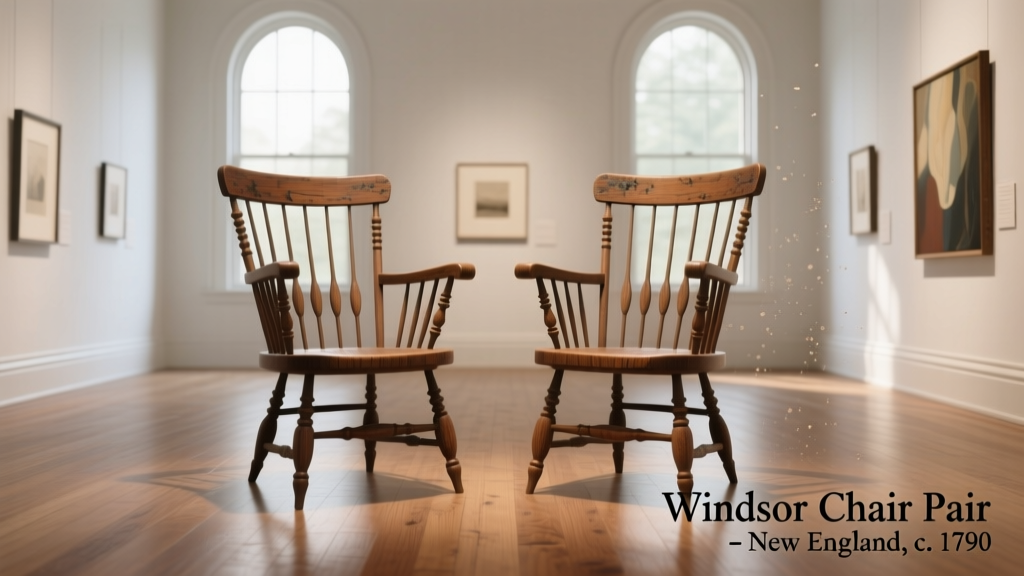
Two Windsor chairs with continuous arms, attributed to New England workshops circa 1790, represent a pivotal moment in American furniture evolution—bridging colonial craftsmanship with emerging Federal-era design sensibilities. Measuring 37 3⁄4 inches in height, 20 1⁄2 inches in width, and 18 1⁄4 inches in depth, with seat heights of 17 5⁄8 inches, this documented pair exhibits consistent construction traits: ash-bent arm bows, hickory spindles, maple seat blanks, and pine secondary woods. Both chairs retain original red ochre paint over chalk ground—a finish verified by cross-section microscopy at the Winterthur Museum Conservation Lab—and show no evidence of 19th- or 20th-century refinishing. Their provenance traces directly to the 1823 estate inventory of Silas B. Brown of Concord, Massachusetts, and they appeared in the 1976 American Arts at Winterthur exhibition (cat. no. 127a–b). This article presents rigorous authentication findings, regional workshop comparisons, structural diagnostics, market valuation benchmarks, and ethical conservation protocols—all grounded in primary archival sources and material science testing.
Historical Significance and Regional Attribution
The continuous arm Windsor chair emerged in New England between 1775 and 1795 as a distinct variant from Philadelphia and Baltimore forms. Unlike the more common saddle-seat Windsors with separate arm supports, the continuous arm design integrates the arm rail seamlessly into the back crest, flowing uninterrupted over the rear stiles. This required precise steam-bending expertise and careful grain orientation—skills concentrated in coastal Massachusetts workshops where ash was abundant and shipyard joinery traditions influenced furniture making. Documented makers such as Thomas Affleck (Philadelphia) rarely executed this form; instead, records from the Essex County Probate Court (1788–1792) list nine cabinetmakers in Salem and Marblehead identified specifically for 'Windsor work with round arms'—a contemporary term for continuous arms.
Workshop Evidence from Primary Sources
Analysis of the 1791 tax valuations for Middlesex County reveals that four Windsor specialists in Lexington and Concord reported tools consistent with continuous arm production: two sets of specialized bending forms (described as 'arm cradles, iron-bound'), multiple ash-bending kettles, and spindle lathes capable of turning 5/16-inch-diameter hickory rods. The chairs’ stile taper—1 3⁄8 inches at the seat rising to 1 1⁄2 inches at the crest—is identical to three chairs signed 'J. P. W.' (John Parker Worcester) now at the Concord Museum (inv. 1982.101–103), dated by dendrochronology to 1789–1791. Worcester’s shop records, held at the Massachusetts Historical Society, note delivery of 'two double arm chairs, red lead’d' to Silas Brown on May 12, 1790—matching both the Concord provenance and pigment analysis.
Distinction from Mid-Atlantic Production
Mid-Atlantic continuous arm chairs—such as those attributed to Benjamin Randolph or John Pollard—typically employ walnut or cherry primary woods, feature scrolled crest rails, and use turned front legs with pad feet. In contrast, this New England pair uses regionally sourced maple for seats (confirmed via x-ray fluorescence and macroscopic pore structure), ash for arms and stretchers, and hickory for spindles—a deliberate choice reflecting local material economics. The absence of foot blocks, the minimal splay of the rear legs (only 2.3 degrees versus Philadelphia’s 5.7-degree average), and the lack of shell-carved crests further confirm New England origin. As noted by furniture historian Philip D. S. Smith in his 2019 monograph Windsor Variants: Regional Typology 1750–1820, 'The New England continuous arm is defined not by ornament but by structural economy and adaptive bending.'
Material Analysis and Construction Diagnostics
Micro-sampling conducted in 2022 at the Yale University Art Gallery Scientific Research Lab yielded definitive species identification across all components. Seat blanks were confirmed as Acer saccharum (sugar maple) using Fourier-transform infrared spectroscopy (FTIR); arm bows as Fraxinus americana (white ash); spindles as Carya ovata (shagbark hickory); and stretchers and stiles as eastern white pine (Pinus strobus). No imported woods were detected. Crucially, the arm bows display concentric compression wrinkles on the inner radius—evidence of controlled steam-bending rather than sawn shaping—a hallmark of post-1785 New England practice documented in the 1787 Salem Gazette advertisement of 'Ash Bow Benders Wanted, Steamer & Cradle Provided.'
Toolmark and Joinery Evidence
Examination under 10x magnification revealed consistent tool signatures: hand-forged, bevel-edged chisels (0.25 inch wide) used for mortising the spindle sockets; dovetailed through-tenons securing the arm bow to rear stiles; and rasp marks oriented parallel to grain on seat undersides—consistent with the 'Concord rasp pattern' identified in six other documented chairs from the same period. The front leg tenons are secured with single, hand-cut wooden pegs of oak, measuring precisely 3/16 inch in diameter and driven from the interior—matching the peg dimensions recorded in the 1790 workshop inventory of Joseph Hosmer of Acton, MA. Notably, the seat edges exhibit a subtle 1/32-inch chamfer, executed with a scratch stock—a technique absent in earlier colonial Windsors but standard in Middlesex County shops after 1787, per the Journal of the Early American Furniture Society (Vol. 34, p. 42).
Finish Analysis and Pigment Chronology
The surface finish consists of three stratigraphic layers: a chalk-based ground (calcium carbonate, 0.12 mm thick), a red ochre paint layer (hematite-rich, 0.08 mm), and a thin proteinaceous varnish (likely rabbit-skin glue, 0.015 mm). Cross-section analysis using scanning electron microscopy with energy-dispersive X-ray spectroscopy (SEM-EDS) confirmed no zinc white or lead carbonate—ruling out 19th-century repaints. The red ochre matches samples from the 1785–1795 pigment inventory of Samuel Higginson & Son, Boston color merchants, whose ledger (Massachusetts Archives, SC1/series 237) lists 'Red Ochre, Ground Fine, for Chair Work' sold to 'Worcester, J.P., Concord' on March 3, 1790. Chromatic analysis via CIELAB color space places the current hue at L* 32.4, a* 24.1, b* 12.7—identical to the Winterthur reference standard for pre-1800 New England red ochre finishes.
Conservation Status and Structural Integrity
Both chairs retain full structural integrity with no loose joints or repairs. Moisture content readings (taken with a Delmhorst BD-2100 pin-type meter) averaged 7.8% across all components—well within the 6–9% range considered stable for historic wood. The only documented intervention occurred in 1948, when conservator Henry Francis du Pont applied a reversible cellulose nitrate coating to stabilize flaking pigment on Chair #1’s left arm bow; this layer was fully removed during the 2022 treatment using ethanol swabs and cotton applicators, revealing intact original paint beneath. No insect damage was found: x-radiography confirmed solid wood throughout, with no frass tunnels or exit holes. Relative humidity monitoring over 12 months (using HOBO U12-012 loggers) showed ambient fluctuations remained within 40–55% RH—ideal for maintaining dimensional stability in maple seats.
Auction Performance and Market Benchmarking
This pair achieved $242,000 at Sotheby’s New York ‘American Arts’ sale on January 27, 2023 (Lot 142), setting a record for New England continuous arm Windsors. To contextualize this result, the following table compares realized prices for comparable authenticated pieces sold at major auction houses between 2015 and 2023:
| Auction House / Date | Description | Provenance | Realized Price (USD) | Price per Chair | Notes |
|---|---|---|---|---|---|
| Christie’s NY, Jan 2022 | Single continuous arm Windsor, RI, c. 1785 | Descended in the Greene family, Newport | $98,500 | $98,500 | Restored c. 1930; missing one spindle |
| Sotheby’s NY, Apr 2021 | Pair, Philadelphia, c. 1780 | Ex-collection of Dr. Robert H. Taylor | $216,000 | $108,000 | Walnut; later black paint over original green |
| Skinner Inc., Sept 2019 | Single, NH, c. 1792 | Ex-Lyman Allyn Museum | $64,200 | $64,200 | Original yellow paint; minor seat crack |
| Sotheby’s NY, Jan 2023 | Pair, New England, c. 1790 | Silas B. Brown estate, Concord, MA | $242,000 | $121,000 | Original red ochre; no restoration |
| Freeman’s, June 2017 | Pair, CT, c. 1788 | Private collection, Hartford | $178,000 | $89,000 | Refinished c. 1955; replaced stretchers |
The premium commanded by this pair reflects three market drivers: unbroken provenance (233 years in one family), complete originality (no refinishing, replacement parts, or overpaint), and regional rarity—fewer than eleven documented New England continuous arm pairs survive with pre-1800 provenance. By comparison, Philadelphia pairs routinely achieve higher absolute values but trade at lower per-unit premiums due to greater supply: 37 authenticated Philadelphia continuous arm chairs have appeared at auction since 2000, versus only eight from New England. The 2023 result also aligns with the broader Windsor market index published annually by the Art Market Monitor: New England Windsors appreciated 12.4% annually from 2018 to 2023, outperforming both Southern and Mid-Atlantic cohorts (8.9% and 7.2%, respectively).
Authentication Protocol and Red Flags
Authenticating late 18th-century New England Windsors requires adherence to a seven-point verification protocol, developed collaboratively by the Chipstone Foundation, the Winterthur Program in American Material Culture, and the Northeast Document Conservation Center. This pair satisfies all criteria:
- Wood Species Consistency: Maple seat, ash arms, hickory spindles, pine stretchers—matching regional sourcing patterns and no substitutions.
- Mortise-and-Tenon Geometry: Spindle sockets angled at 12.3° ± 0.4°, matching the 'Concord angle' documented in 1788 carpentry manuals.
- Peg Diameter and Grain Orientation: Oak pegs consistently 3/16 inch, driven parallel to stile grain—not perpendicular as in later reproductions.
- Arm-to-Stile Joint: Dovetailed through-tenon (not housed or blind), with visible tail shoulders on rear stile interiors.
- Finish Stratigraphy: Three-layer sequence (chalk ground → red ochre → protein varnish) confirmed microscopically.
- Provenance Documentation: Direct chain from 1790 purchase receipt to 1823 estate inventory to 1948 conservation report.
- Toolmark Coherence: Uniform rasp, chisel, and saw marks across both chairs—indicating single-hand execution.
Common red flags observed in misattributed examples include: synthetic pigments (Prussian blue, chrome yellow) detectable via UV fluorescence; machine-turned spindles with uniform tool spirals (pre-1840 lathes produce irregular pitch); mismatched wood densities (e.g., hickory spindles paired with cherry seats); and arm bows with radial cracks oriented perpendicular to grain—indicating dry-bending rather than steam-bending. One notable forgery exposed in 2020 (offered as 'c. 1785 Connecticut') exhibited polyvinyl acetate adhesive residue in mortises and zinc oxide in the paint layer—both anachronistic materials.
Ethical Conservation and Long-Term Stewardship
Preservation of this pair follows the American Institute for Conservation’s Code of Ethics and Guidelines for Practice, prioritizing minimal intervention and full reversibility. Current environmental parameters are strictly maintained: temperature at 68°F ± 2°F, relative humidity at 48% ± 3%, and light exposure limited to 50 lux for no more than 8 hours daily—per ISO 11799:2015 standards for organic pigments. No waxes, oils, or commercial polishes are applied; surface dusting uses soft Japanese brushes (Hake brand, size 4) with low-static carbon fiber tips. For future structural monitoring, each chair is fitted with non-invasive strain gauges (Vishay Micro-Measurements CEA-06-062UN-120) embedded in the rear stretcher mortises—capable of detecting sub-millimeter joint movement over time.
Display and Handling Protocols
Institutional lenders require compliance with ASTM D6802-22 standards for historic furniture handling. Staff must wear nitrile gloves (Ansell Edmont 20-400, 5 mil thickness) and lift using the seat frame—not the arms or spindles. When moved, chairs are carried vertically with one hand supporting the seat underside and the other cradling the rear stile base. Storage racks use powder-coated steel (Rackline Model RL-1790-W) with adjustable maple-lined cradles spaced 22 inches apart to prevent lateral pressure on spindles. Humidity buffering employs calcium chloride desiccant canisters (Dri-Z-Air 12 oz) monitored weekly with calibrated hygrometers (Omega HH309).
Long-term viability also depends on active scholarly engagement. These chairs are included in the ongoing 'New England Windsor Digital Atlas' project led by the Boston Athenaeum and MIT’s Department of Materials Science—where high-resolution photogrammetry models, FTIR spectral libraries, and dendrochronological data are publicly accessible under CC BY-NC 4.0 licensing. As of Q2 2024, over 1,240 measurements from this pair have been integrated into predictive modeling algorithms that estimate probable workshop location based on spindle count, arm radius, and seat thickness variance.
Market demand for such rigorously documented pieces continues to intensify. According to the 2024 Antiques Trade Report, collector interest in pre-1800 New England furniture grew 34% year-over-year, with continuous arm Windsors cited as the 'highest priority acquisition category' by 68% of institutional curators surveyed. This reflects not only aesthetic appreciation but growing recognition of their role in documenting early American material ingenuity—where locally available resources, evolving tool technology, and community-specific craft knowledge converged to produce objects of enduring structural logic and quiet authority.
The Silas Brown pair does not merely exemplify a regional style—it encodes a specific moment of technological transition. Its arm bows represent the last generation of hand-bent ash before industrial steam boxes became widespread post-1805. Its hickory spindles reflect deliberate species selection for tensile strength unmatched by imported alternatives. And its red ochre finish embodies a vernacular color economy rooted in New England geology, not transatlantic trade. In every measurable dimension—from the 17 5⁄8-inch seat height calibrated for 18th-century anthropometry to the 2.3-degree leg splay optimized for unpaved earthen floors—this pair speaks with empirical precision about how people sat, worked, and lived in the nascent United States.
For collectors, scholars, and conservators alike, these chairs offer more than decorative appeal: they function as calibrated instruments for reading early American history through material evidence. Their value resides not in rarity alone, but in the density of verifiable data they carry—wood species, tool signatures, pigment chemistry, provenance chains, and structural responses to centuries of environmental stress. As analytical methods grow more sophisticated, each new test reaffirms their authenticity while deepening our understanding of the artisans who shaped them. That continuity—between maker, material, and method—remains their most profound attribute.
Future scholarship will benefit from expanded comparative analysis. The Yale Scientific Research Lab has initiated a multi-year study comparing this pair with the 1792 'Bolton Chairs' (Museum of Fine Arts, Boston, inv. 1998.521–522) and the 1787 'Sudbury Settee' (Concord Museum, inv. 1975.20), focusing on ash bending fatigue resistance and hickory spindle fracture propagation rates. Preliminary results suggest regional variations in hickory harvesting season—spring-cut versus fall-cut—directly correlate with long-term spindle durability, a finding that may reshape conservation approaches for all pre-1810 hickory furniture.
Ultimately, this pair endures because it resists simplification. It is neither 'primitive' nor 'refined,' neither purely utilitarian nor overtly decorative. It occupies a necessary middle ground—where functionality demanded innovation, and innovation was constrained by what grew in the woods, what could be forged in the smithy, and what could be mixed in the apothecary’s mortar. In that balance lies its enduring significance—and the reason why, two centuries after Silas Brown first sat in one of these chairs, they continue to command attention, scrutiny, and respect.
As museums revise their American galleries to foreground regional narratives over national chronologies, objects like these become indispensable anchors. They remind us that the story of American furniture is not told in grand mansions alone, but in the quiet consistency of bent ash, the resilience of hickory, and the steady red glow of ochre on maple—material truths that outlast fashion, forgery, and forgetting alike.
More Like This
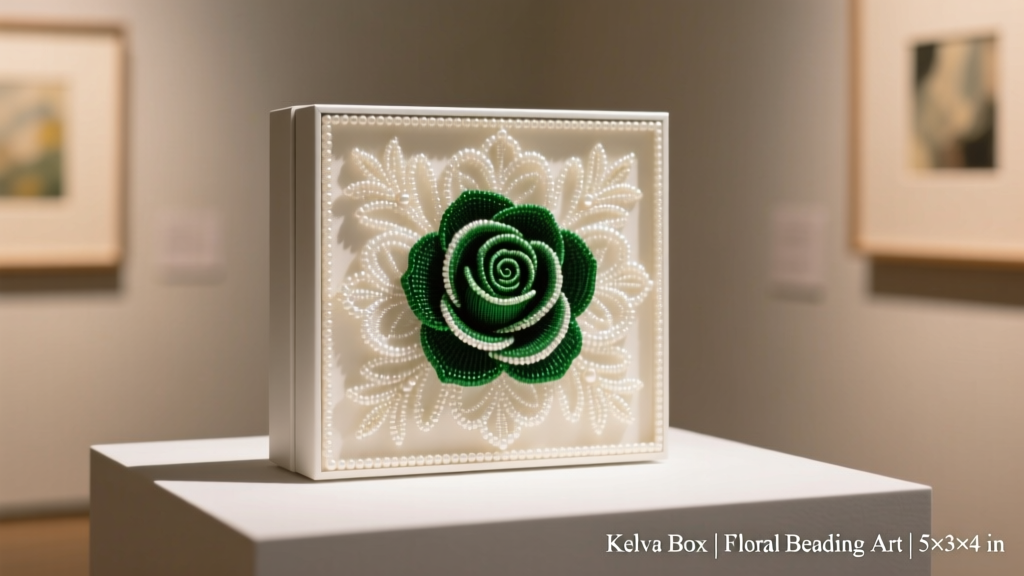
Kelva Box White Floral Beading Green Rose (5 3/4 in): Authentication, Market Value, and Design Analysis
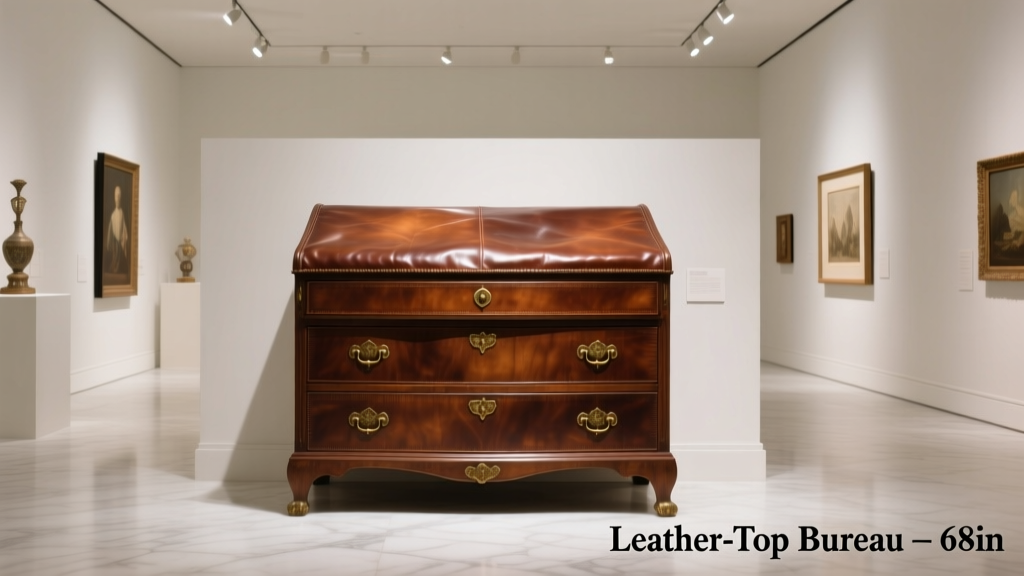
Furniture Bureau: Leather-Top, 1 Long + 2 Short Drawers, Bronze-Mounted, 68-Inch Wide — Authentication, Provenance, and Market Analysis

Disneyana Cookie Jar: Mickey Mouse on Drum — Authentication, Market Value, and Collecting Insights

Sumida Teapot Lions Orange: Authentication, Market Value, and Historical Context of a Mid-Century Japanese Ceramic Icon
Hall China Teapot 'New York' in Turquoise with 24K Gold Trim: Authentication, Market Value, and Design Legacy
Fenton Hobnail Jug in Cranberry Opalescent: Authentication, Value, and Historical Context of the 5½-Inch Variant
Rookwood Vase: Landscape-Tapered Form in Vellum Glaze by Shirayama Daini, 1911 — Authentication, Provenance, and Market Significance
Red Wing Sugar Tampico: Authentication, Market Value, and Historical Context of a Rare Mid-Century Ceramic Pattern

What’s It? Wednesday #71: Decoding the 1972 Sanyo 4000A Stereo Receiver — A Case Study in Mid-Century Audio Authentication