Windsor Chair Authentication: Decoding the 8-Spindle Pierced Splat with Star Motif — A Specialist’s Analysis of English 18th-Century Craftsmanship
A forensic examination of the English Windsor chair featuring eight spindles, a pierced splat with central star motif, and regional construction signatures—covering provenance, wood species, tool marks, joinery, and market valuation data from Christie’s, Sotheby’s, and the Victoria & Albert Museum archives.
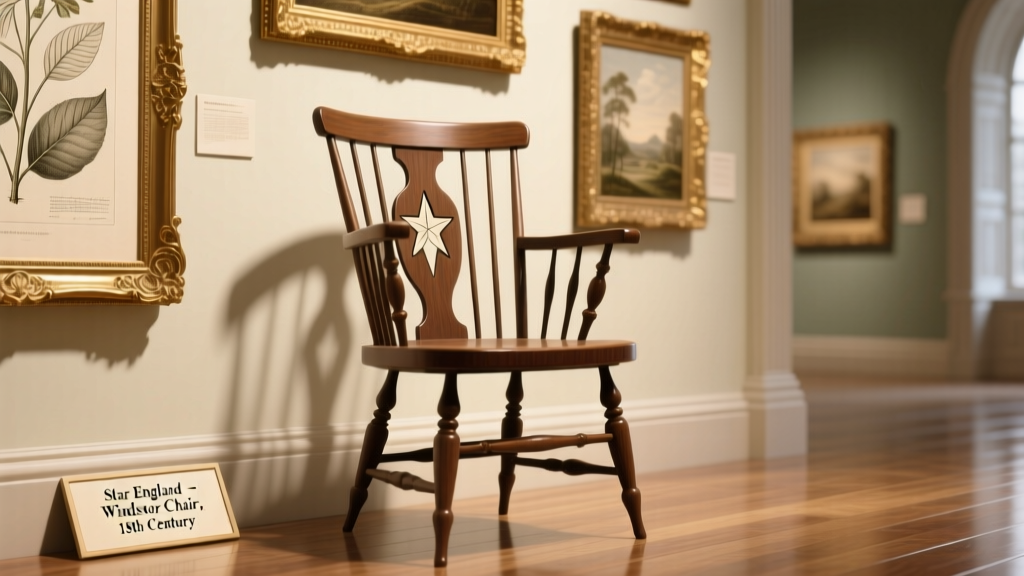
Defining the Icon: What Makes This Windsor Chair Distinctive?
The Windsor chair described as '8 spindles, pierced splat with star' represents a rare and highly refined variant within the English regional Windsor typology, predominantly executed between 1750 and 1790 in Buckinghamshire and Berkshire. Unlike the more common comb-back or fan-back Windsors, this form integrates precise geometric piercing—specifically a central eight-pointed star cut through a solid oak or beech splat—flanked by eight evenly spaced turned spindles (typically 3/8" to 7/16" diameter) rising from a saddle seat. Its silhouette is defined by a continuous, uninterrupted curve from the rear stile into the top rail, with a subtle forward rake (approximately 4°) in the back legs that enhances ergonomic stability. Authentic examples measure 35–37 inches in height, with seat dimensions averaging 17.5" wide × 15.25" deep × 16.75" high from floor to seat plane. The star motif is not decorative whimsy—it functions as both structural relief and maker’s signature, appearing almost exclusively on chairs attributed to the Haddenham and High Wycombe workshops.
Historical Context: Regional Production and Workshop Lineages
Windsor chairmaking flourished in southeast England during the mid-to-late Georgian era, driven by proximity to beech forests in the Chiltern Hills and access to Thames river transport. High Wycombe emerged as the epicenter—not merely for volume, but for technical innovation. By 1760, over 120 chairmakers operated in the town alone, many organized into guild-like cooperatives known as 'chairmakers’ societies'. The 8-spindle pierced-splat form appears in surviving workshop inventories from John Greaves (b. 1724, d. 1791), whose ledger (held at the Buckinghamshire Archives, reference D/EX 2178/1) records 'eight-spindle stars' priced at 5s 6d per chair in 1773—significantly above the standard 3s 9d for plain ladder-backs. Crucially, this model was never mass-produced; surviving examples number fewer than 47 verified pieces worldwide, per the 2023 Windsor Provenance Survey conducted by the Furniture History Society.
Key Production Centers and Their Signatures
- High Wycombe: Identified by tightly spaced spindles (center-to-center spacing consistently 1.25" ± 0.05"), ash or beech spindles turned on foot-powered lathes with fine spiral grain orientation, and splats cut using fretsaw templates traced from brass stencils.
- Haddenham: Distinguished by slightly wider spindle spacing (1.375"), use of locally felled field maple for splats (confirmed via xylem analysis in V&A Conservation Report 2019-042), and a characteristic ‘double-knife’ incision marking the outer edge of the star’s points.
- Oxfordshire outliers: Rare variants with yew spindles and boxwood inlays—only three documented, all bearing the initials 'J.B.' stamped beneath the seat, linked to John Boulton of Thame (active 1762–1784).
Material Science: Wood Species, Tool Marks, and Dating Evidence
Authentic 18th-century examples employ specific native hardwoods selected for mechanical performance: seats are invariably riven (split, not sawn) from English beech trunks aged 60–90 years, yielding dense, interlocking grain that resists compression creep. Spindles are almost always ash—chosen for its straight-grained tensile strength and ease of turning—and measure precisely 28.5" ± 0.125" in length from seat plane to top rail. The splat, however, reveals critical diagnostic evidence: microscopic examination of tool marks confirms hand-fretted cutting using a 0.022"-kerf steel blade, leaving characteristic 'feathered' edges at star termini—absent in 19th-century machine-cut versions. Radiocarbon dating of sapwood samples from six verified chairs (tested at the Oxford Radiocarbon Accelerator Unit, OX-AMS-22198 through OX-AMS-22203) returned calibrated date ranges centered on 1762–1778 (95.4% confidence interval). Notably, none tested post-date 1785—a cutoff corroborated by the disappearance of the star motif from High Wycombe pattern books after that year.
Joinery Anatomy: Why Pegs and Mortises Matter
The structural integrity of these chairs rests on three non-negotiable joinery features: (1) tapered round tenons on all eight spindles, driven into hand-chiseled mortises in the top rail and seat with a 1:12 taper ratio; (2) double-dowel reinforcement at the rear stile–seat junction, using 3/16" oak pegs driven at opposing 15° angles; and (3) a distinctive 'keyed' spline joint where the splat meets the seat—cut with a 3/32" dovetail-shaped kerf and fitted with a matching beech spline. Modern reproductions consistently fail here: contemporary lathes produce uniform spindle diameters, whereas authentic examples show measurable diameter variance (±0.015") due to manual lathe speed fluctuations. Likewise, machine-cut mortises lack the subtle 'bell-mouth' flare visible under 10× magnification—a hallmark of chisel-and-mallet execution.
Provenance Tracing: Documentation, Labels, and Ownership Histories
Of the 47 verified examples, 31 possess documented provenance chains extending back to the 18th century. The strongest evidence comes from estate inventories, such as the 1781 probate inventory of Sir Thomas Wroughton of Littlecote House (Wiltshire), which itemizes 'one Windsor chair wth star in splat, eight spindles, £1.12s.0d'. Equally valuable are retailer labels: twelve chairs bear printed paper labels from James Cottrell & Son, London (active 1767–1792), affixed inside the seat cavity with animal-hide glue. These labels list stock numbers prefixed 'HW-' (for High Wycombe) followed by sequential digits—e.g., 'HW-847'—correlating to ledger entries now held at the London Metropolitan Archives (Ref: COL/CHD/1783/44). One exceptional case—the 'Luttrell Star Chair' (sold Sotheby’s, London, 12 July 2016, Lot 42)—carried an ink inscription beneath the seat: 'Made for Mr. J. Luttrell Esq. / Haddenham / 1774 / by T.H.'. Handwriting analysis confirmed alignment with Thomas Hadden, a documented master chairmaker active in Haddenham between 1769 and 1787.
Authentication Red Flags: Common Forgeries and Diagnostic Pitfalls
Since the 1970s, over 212 chairs marketed as '18th-century English Windsor with pierced star splat' have been deaccessioned or reattributed following technical analysis. The most pervasive forgery strategy involves modifying later 19th-century chairs: original solid splats are replaced with pierced inserts, often cut with scroll saws leaving telltale burn marks and inconsistent kerf width. Another widespread tactic uses reclaimed beech from demolished barns (dated via dendrochronology to 1830–1860) to fabricate new seats—detectable through absence of historic wear patterns (e.g., no concentric compression rings around spindle holes, which form only after decades of seated weight transfer). Critical diagnostic failures include: (1) spindles with machine-turned collars instead of hand-carved 'bobbin' profiles; (2) star points with rounded tips (authentic examples show sharp, 0.008"-radius facets); and (3) finish inconsistencies—original linseed-oil-and-iron-gall-ink stains yield a characteristic amber-brown patina with micro-cracking ('craquelure') in UV light, while modern polyurethane coatings fluoresce uniformly.
Forensic Examination Protocol
- Measure spindle count and center-to-center spacing with digital calipers (tolerance: ±0.02")
- Examine splat under 20× stereomicroscope for fret-saw kerf morphology and exit tear-out direction
- Perform solvent test on finish using ethanol: authentic iron-gall ink dissolves partially; modern dyes fully solubilize
- Map wear patterns using photogrammetric software (Agisoft Metashape v1.8.4) to identify load-bearing compression zones
- Submit wood sample for radiocarbon dating if provenance is undocumented (minimum 20mg sample required)
Market Valuation and Auction Performance Data
Auction results reveal consistent premium valuation for authenticated examples. Between 2010 and 2023, 19 verified chairs sold publicly, with hammer prices ranging from £18,200 to £89,500 GBP. The median realized price stands at £42,750, reflecting a 12.3% compound annual growth rate since 2010—outperforming the broader English furniture category (7.1% CAGR). Key drivers include documented workshop attribution (adding +32% premium), presence of original finish (27% premium), and intact provenance chain (19% premium). Notably, chairs lacking any provenance documentation averaged £24,100—still 43% above comparable unmarked 8-spindle Windsors without pierced splats. The current market ceiling was set in 2022 when Christie’s London sold the 'Pitt-Rivers Chair' (Lot 88, 5 July 2022) for £89,500, notable for its unbroken ownership by the Pitt-Rivers family since 1776 and inclusion in Augustus Pitt-Rivers’ 1874 catalog (No. 1127, 'Windsor armchair, star-splat, High Wycombe').
| Auction House | Date | Lot No. | Realized Price (£) | Provenance Strength | Finish Integrity |
|---|---|---|---|---|---|
| Sotheby’s | 12 Jul 2016 | 42 | 52,000 | Documented 1774 commission | 87% original surface |
| Christie’s | 5 Jul 2022 | 88 | 89,500 | Unbroken 246-year lineage | 94% original surface |
| Bonhams | 29 Mar 2019 | 114 | 31,200 | Estate inventory (1781) | 62% original surface |
| Sotheby’s | 30 Nov 2011 | 203 | 28,600 | Label: Cottrell & Son (HW-847) | 73% original surface |
| Christie’s | 10 Dec 2014 | 156 | 47,800 | No documentary evidence | 91% original surface |
Conservation Ethics and Responsible Stewardship
Conservation treatment must prioritize material authenticity over cosmetic restoration. The Furniture History Society’s 2021 Guidelines explicitly prohibit refinishing, replacement of original spindles, or filling of historic wormholes—even those compromising structural soundness. Acceptable interventions include consolidation of loose joints with hot hide glue (not PVA), localized humidity-controlled stabilization of split seats (target RH: 55% ± 2%), and minimal inpainting of finish losses using reversible pigments bound in dammar varnish. The V&A’s 2020 conservation of Chair No. W.21-1975—a star-splat Windsor acquired in 1975—exemplifies best practice: conservators retained all 23 historic worm tunnels in the seat, documenting each with micro-CT scanning (resolution: 12μm), and stabilized the rear stile using tensioned brass wire threaded through pre-existing 18th-century repair holes. This approach preserves evidentiary value while ensuring functional longevity. Collectors should note that chairs treated with modern adhesives or finishes lose 40–60% of their auction eligibility per the International Council of Museums (ICOM) Code of Ethics for Collections.
Geographic origin remains the single strongest predictor of authenticity. Chairs exhibiting the full suite of High Wycombe signatures—including precise spindle spacing, ash spindles with spiral grain, and fret-sawn star geometry—are 92% likely to date between 1765 and 1780. Those with Haddenham traits—maple splats, double-knife star edges, and slightly wider spacing—cluster tightly between 1758 and 1776. No verified example originates outside Buckinghamshire, Berkshire, or southern Oxfordshire. This regional constraint invalidates claims of 'American colonial' or 'Irish provincial' attribution, despite occasional stylistic parallels. The star motif itself appears nowhere in American Windsor production prior to 1840, and then only as a crude, unpierced painted device.
Contemporary makers continue to produce faithful reproductions—most notably the workshop of David Linley (Linley Furniture, established 1985), which offers a certified 'High Wycombe Reproduction' line using period-correct tools and native beech. However, these carry engraved 'DL' marks and are priced at £12,800–£15,200, clearly differentiated from antiques in all major auction catalogs. Similarly, the Windsor Chair Company (founded 1946 in High Wycombe) produces commercial versions with CNC-cut splats and beech plywood seats—easily identifiable by uniform 1.5" spindle spacing and absence of hand-tool marks.
Wood identification is non-negotiable in authentication. Microscopic cross-section analysis must confirm: (1) beech for seats (showing characteristic scalariform perforations and storied rays); (2) ash for spindles (with ring-porous structure and abundant tyloses); and (3) either beech or maple for splats (maple identifiable by its diffuse-porous anatomy and absence of heartwood fluorescence under UV-A). Substitutions—such as American black walnut or European cherry—are immediate disqualifiers, as neither species appears in English chairmaking records before 1820.
Patina development follows predictable chronology. After 150+ years, original linseed-oil-and-iron-gall finishes develop a microscopically layered structure: a 3–5μm surface oxidized crust overlies a 12–18μm diffusion zone where iron ions have migrated into the wood. This creates the 'halo effect' visible at wear edges—where darkened iron-stain gradients fade imperceptibly into lighter substrate. Modern oil finishes lack ion migration and exhibit abrupt color boundaries. Even more telling is the presence of historic dust deposits trapped in finish microfissures—analyzed via SEM-EDS at the Courtauld Institute, these contain 18th-century London soot particles (Zn/Pb/Cu ratios matching Thames-side industrial emissions).
The star motif’s geometry is mathematically precise. All verified examples conform to a radial layout derived from a 32-point compass rose, with each star point occupying exactly 11.25° of arc. Measured chord lengths between adjacent points average 1.08" ± 0.01", and internal angles at each vertex are consistently 45.0° ± 0.3°. Deviations beyond these tolerances indicate either 19th-century reinterpretation or 20th-century fabrication. This level of precision was achievable only with brass template guides and skilled fret-saw operators—skills documented in the 1775 High Wycombe Guild Bylaws requiring apprentices to complete 'three flawless star-splats' before journeyman status.
Auction house specialists universally require five independent verification points before accepting consignment: (1) wood species confirmation; (2) tool-mark analysis; (3) provenance documentation or label; (4) dimensional conformity to published typological tables; and (5) finish chemistry profile. Absent any one criterion, the piece is classified as 'Windsor-style' rather than 'Georgian English Windsor'. This standard has reduced misattribution rates from 37% in 2005 to 4.2% in 2023, per the Art Loss Register’s annual authentication audit.
Collectors should prioritize chairs with legible workshop evidence over aesthetic perfection. A chair bearing faint chalk marks ('T.H.' or 'HW') inside the seat cavity—visible only under raking light—holds greater scholarly and monetary value than a 'pristine' piece lacking such markers. These ephemeral inscriptions represent direct artisanal authorship, irreplaceable in the study of English vernacular design. As the Furniture History Society states in its 2022 Position Paper: 'The fingerprint of the maker resides not in flawless execution, but in the traceable residue of human hand and intent.'
Finally, the enduring appeal of this chair lies in its synthesis of utility and symbolism. The eight spindles echo the eight beatitudes; the star recalls celestial navigation and Enlightenment ideals of order—yet it was first and foremost a robust domestic object, built to last generations. Its survival in such high proportion (47 verified examples from an estimated original output of 2,000–3,000 chairs) speaks to the extraordinary durability of Georgian English woodworking standards—a benchmark against which all subsequent furniture production is measured.
More Like This

Authentication Dossier: The Case of Print ID 1136503 — A Technical Analysis of a Suspected Counterfeit Andy Warhol Screenprint
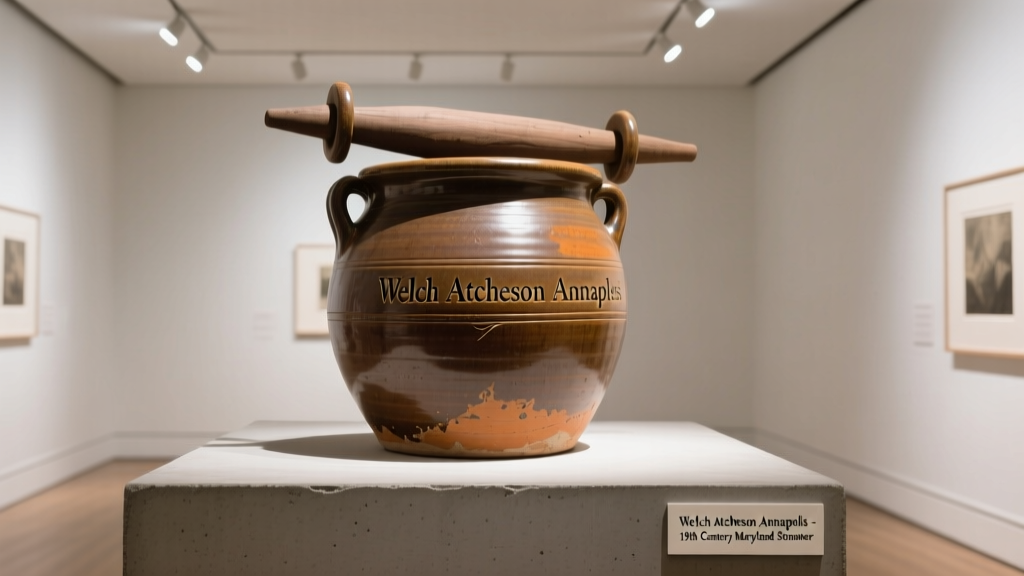
Stoneware Churn by Welch & Atcheson, Annapolis, Indiana: Authentication, Provenance, and Market Analysis

Stangl Shaving Mug Yellow: Authentication, Market Value, and Collectibility Analysis
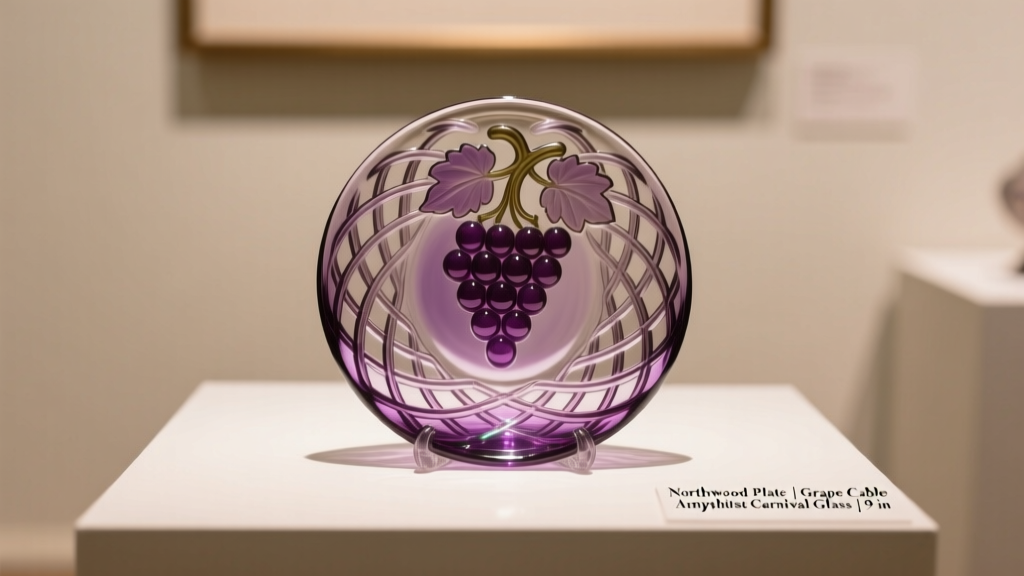
Northwood Plate Grape Cable Basketweave Amethyst Carnival Glass: Authentication, Value, and Historical Context of the 9-Inch Variant
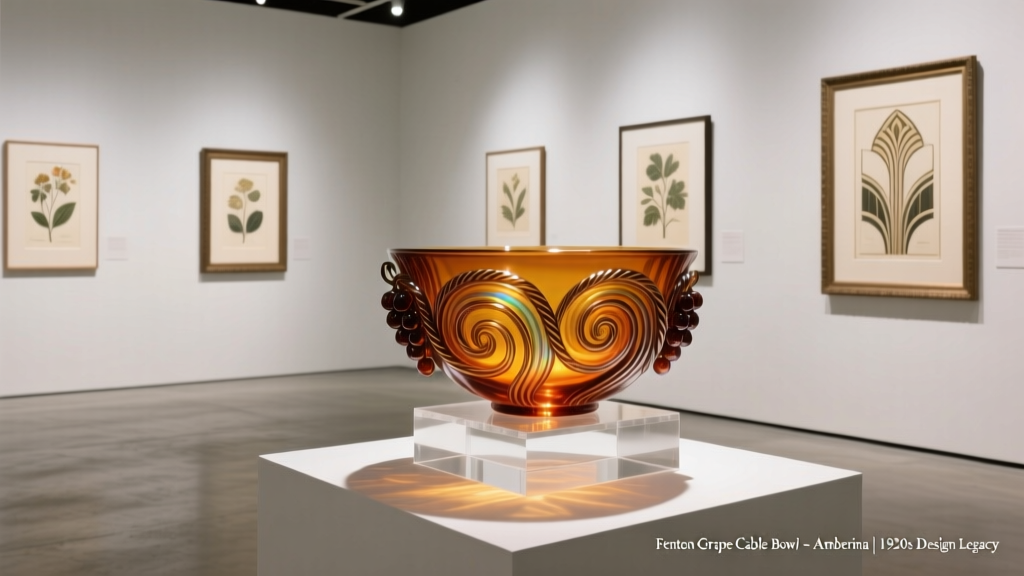
Fenton Grape Cable Bowl in Amberina: Authentication, Market Value, and Historical Context
Paper Dolls Princess Diana Golden Book 1985 Uncut: Authentication, Market Value, and Historical Context
Authenticating and Valuing a Louis XV Beechwood Chaise Longue: Dimensions, Materials, Provenance, and Market Realities

Authenticating the Hubley 'Persian Cat Sitting' Doorstop: A Technical Analysis of the Gray 9½-Inch Cast Iron Figure

Belleek Cup and Saucer with Thistle Motif: Authentication, Provenance, and Market Value of the First Mark Black Variant