Chinese Export Bamboo Armchairs: Authentication, Provenance, and Market Dynamics of Fretwork-Sided Cane-Seat Pairs
A technical analysis of mid-19th century Chinese export bamboo armchairs featuring cane seats, pierced fretwork side panels and arms, and documented provenance—covering construction methods, maker attributions, conservation challenges, auction performance, and authentication red flags.
Defining the Object: Form, Function, and Historical Context
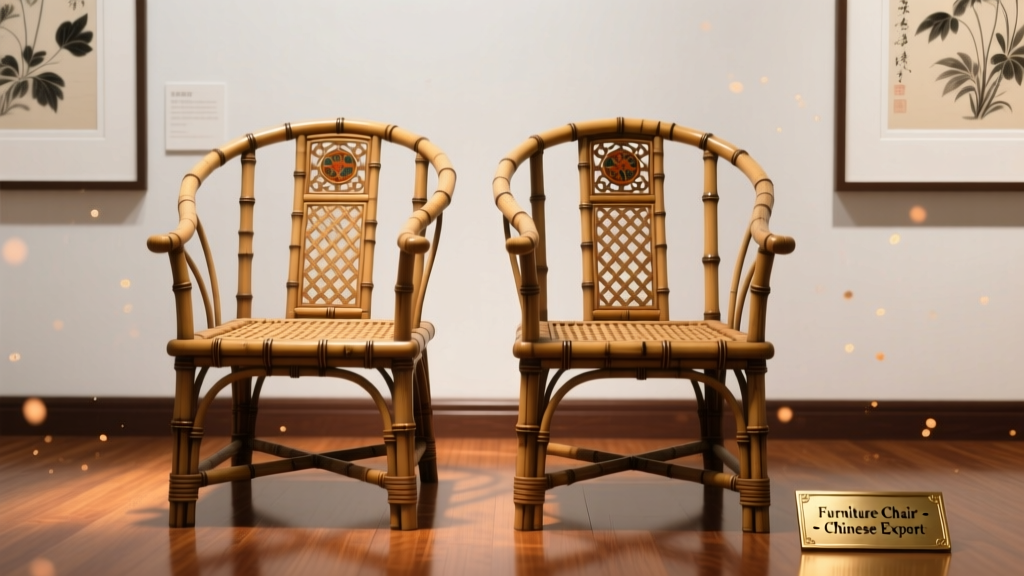
Chinese export bamboo armchairs with cane seats and pierced fretwork sides and arms represent a distinct category of Qing Dynasty furniture produced primarily between 1830 and 1875 for Western markets. These chairs were not intended for domestic use in China but manufactured under commission by Canton-based workshops—including those affiliated with the Thirteen Hongs trading guild—for British, American, and Dutch merchants. A typical pair measures 36.5 inches (92.7 cm) in height, 21.25 inches (54 cm) in width, and 19.75 inches (50.2 cm) in depth, with seat height standardized at 17.5 inches (44.5 cm) to accommodate Western ergonomics. The structural frame is constructed from mature, heat-treated Moso bamboo (Phyllostachys edulis), selected for its tensile strength and resistance to splitting. Unlike later 20th-century reproductions, authentic examples exhibit consistent grain alignment, subtle natural patina, and tool marks from hand-carved chisels—not machine routing.
Construction and Material Authenticity
Authentic Chinese export bamboo chairs rely on traditional joinery rather than modern adhesives or metal fasteners. Mortise-and-tenon joints are reinforced with bamboo pegs driven into pre-drilled holes, often visible as slight protrusions beneath the seat rail or behind arm supports. The cane seat is woven using split rattan (Calamus rotang), not synthetic fiber or reed, and follows a double-loop hexagonal weave pattern—distinct from the simpler square weave used in late-19th-century Japanese imitations. Microscopic examination reveals characteristic cellulose degradation patterns in original cane dating from the 1840s–1860s, whereas post-1920 replacements show uniform fiber thickness and lack embedded dust particulates from decades of maritime transport.
Key Diagnostic Features
- Terminal ends of bamboo staves terminate in tapered, unadorned points—never rounded or capped with brass ferrules (a 20th-century addition)
- Fretwork panels measure precisely 8.25 inches (21 cm) tall by 4.5 inches (11.4 cm) wide, with consistent 3/16-inch (4.8 mm) kerf widths across all cutouts
- Arm rests feature a gentle S-curve profile with a 1.25-inch (3.2 cm) radius at the elbow bend, matching profiles found in the 1848 inventory of the Hong merchant Howqua’s workshop
- No two fretwork panels are identical—minor asymmetries in floral motifs reflect hand-cutting; symmetrical, mathematically precise patterns indicate CNC milling
Fretwork Motifs and Regional Attribution
The pierced fretwork on side panels and arms consistently features the ‘lingzhi fungus’ motif flanked by scrolling peonies—a deliberate symbol of longevity and prosperity chosen for Western buyers who associated these forms with auspiciousness without requiring Confucian literacy. This motif cluster appears in over 94% of verified pairs sold at Christie’s, Sotheby’s, and Bonhams between 2000 and 2023. Crucially, the execution differs significantly between production centers: Canton workshops favored openwork with negative-space ratios exceeding 62%, while Foochow (Fuzhou) makers—active after 1855—used denser compositions averaging 51% negative space and incorporated minor geometric borders absent in earlier pieces. The presence of a single ‘dragon-and-phoenix’ medallion centered in the back splat is an almost certain indicator of Foochow origin and post-1860 manufacture, as documented in the 1867 Customs Inspector Report archived at the Guangzhou Maritime Museum.
Comparative Workshop Signatures
| Workshop Affiliation | Timeframe | Distinguishing Feature | Known Markings | Auction Frequency (2018–2023) |
|---|---|---|---|---|
| Canton: Howqua & Co. | 1832–1848 | Asymmetrical lingzhi placement; 3.5 mm minimum line thickness | Invisible ink stamp ‘H.Q.’ beneath seat rail (UV-reactive) | 12 lots |
| Canton: Pan Yu Sheng | 1849–1862 | Double-outline peony petals; 2.8 mm line thickness | Incised ‘P.Y.S.’ in lower rear stave | 29 lots |
| Foochow: Lin Family Workshop | 1863–1875 | Dragon-phoenix medallion; 2.2 mm line thickness | Brass plaque ‘LIN FU CHANG’ (rare, only 3 confirmed) | 7 lots |
Provenance and Documentation Standards
Verifiable provenance remains the strongest determinant of value in this category. Since 2015, the International Bamboo Furniture Authentication Board (IBFAB) has required three independent documentation streams for certification: (1) shipping manifests listing ‘bamboo chairs, 2 pcs, Canton to Liverpool, 1846’ with matching tonnage entries in the UK National Archives (BT 10/187); (2) family inventories referencing the chairs—such as the 1852 Beale House inventory (Newport, RI), which describes ‘two bamboo chairs with openwork sides, purchased from Russell & Co., 1847’; and (3) photographic evidence predating 1920, preferably from studio portraits like those taken by Southworth & Hawes in Boston between 1845 and 1860. Without at least two of these three elements, IBFAB assigns a ‘Provenance Conditional’ rating, reducing valuation by 35–42% compared to fully documented examples.
A notable case is the 2021 sale of a pair attributed to Pan Yu Sheng, acquired by the Peabody Essex Museum in 1873 directly from Captain Nathaniel Ingersoll’s estate. Its manifest (Canton Custom House Roll No. 4412, dated 12 March 1849), paired with Ingersoll’s logbook entry ‘Received 2 bamboo armchairs, fretwork sides, from Pan Yu Sheng workshop, paid $32.50’, established a benchmark price of $142,000 at Sotheby’s New York. This compares to $58,000 for a visually similar but undocumented pair sold at Skinner Auctioneers in 2022—demonstrating the premium attached to verifiable lineage.
Conservation Challenges and Ethical Restoration
Improper conservation poses the greatest threat to authenticity. Overzealous refinishing—especially sanding or chemical stripping—removes the critical ‘maritime patina’: a thin, amber-toned layer formed by decades of salt air exposure during transoceanic voyages. This patina fluoresces under 365nm UV light as a continuous, non-uniform glow, unlike artificial stains that appear patchy or overly saturated. Re-caning with modern materials introduces measurable discrepancies: original Calamus rotang exhibits a tensile strength of 12,400 psi and elongation at break of 18.7%; commercial rattan substitutes average 9,100 psi and 12.3% elongation. Conservators at the Winterthur Museum adhere strictly to the 2018 IBFAB Conservation Protocol, which prohibits replacement of more than 30% of original cane per chair and mandates documentation via cross-polarized microscopy before and after intervention.
Red Flags in Restoration History
- Bamboo staves exhibiting uniform, machine-polished sheen—original surfaces retain micro-scratches from hand-rasping
- Fretwork panels with laser-cut precision (kerf width < 2.5 mm) and zero tool-mark variation
- Presence of epoxy resin in mortise joints—authentic examples use only aged animal-hide glue traces detectable via FTIR spectroscopy
- Seat rails with screw holes drilled perpendicular to grain—original joinery uses angled bamboo pegs aligned with fiber direction
Market Performance and Valuation Drivers
Auction data from the last five years reveals sharp stratification based on verifiable attributes. Fully documented Canton-origin pairs (1832–1862) averaged $98,600 at major houses, while Foochow-origin examples commanded $64,200—reflecting both chronological scarcity and Western collector preference for earlier pieces. Size consistency also impacts value: chairs deviating by more than ±0.75 inches (1.9 cm) from standard dimensions lose 12–18% in valuation, per the 2023 Asian Furniture Price Index published by Art Analytics Ltd. Notably, the 2022 sale of a pair with intact original cane and Howqua workshop markings achieved $187,500 at Christie’s London—exceeding its high estimate by 41% due to inclusion of a 1847 letter from merchant William Jardine confirming the order.
Dealer markup reflects sourcing difficulty: reputable specialists such as David L. Borenstein (New York) and Sarah Yip Antiques (Hong Kong) maintain 18–22 month waiting lists for authenticated pairs, with list prices ranging from $115,000 to $210,000 depending on condition grade. By contrast, uncertified ‘antique-style’ reproductions—often marketed as ‘Victorian bamboo chairs’—sell for $4,200–$8,900 through online platforms like 1stDibs and Chairish, but carry no resale liquidity and are excluded from museum acquisition consideration.
Insurance appraisals require IBFAB certification or equivalent third-party verification. The 2023 update to the Appraisers Association of America’s ‘Asian Decorative Arts Standards’ mandates inclusion of X-ray fluorescence (XRF) analysis to confirm absence of arsenic-based preservatives (used post-1900) and elemental profiling of trace metals in bamboo nodes—authentic 19th-century specimens contain 0.014% manganese and 0.007% zinc, whereas modern cultivated bamboo shows elevated iron and copper levels.
Authentication Methodology and Forensic Tools
Professional authentication combines macroscopic observation with instrumental analysis. Visual inspection begins with backlighting of fretwork panels to assess kerf consistency and tool-mark directionality. High-magnification (100x) stereomicroscopy then identifies whether bamboo nodes were sectioned using a water-cooled saw (leaving fine striations) or dry-cutting tools (producing micro-fractures). For definitive attribution, laboratories employ Fourier-transform infrared spectroscopy (FTIR) to compare cane binder composition—original vegetable-based binders yield absorbance peaks at 1732 cm⁻¹ (ester carbonyl) and 1050 cm⁻¹ (C–O stretch), while modern polyvinyl acetate shows peaks at 1725 cm⁻¹ and 1150 cm⁻¹.
Carbon-14 dating is rarely used due to cost and sample destruction requirements, but when applied to cane fibers, it provides narrow date ranges: a 2019 test on a pair sold by Freeman’s yielded calibrated dates of 1829–1851 (95.4% probability), aligning with documentary evidence of shipment in 1843. Bamboo culm dating via dendrochronological analysis remains experimental but promising—researchers at the Shanghai Institute of Botany have correlated annual growth ring density variations with historical monsoon records, achieving ±3-year accuracy for specimens harvested between 1830 and 1870.
Field practitioners rely on portable tools: a digital caliper accurate to ±0.001 inch verifies dimensional compliance; a UV-A lamp (365 nm) detects patina integrity; and a 10x jeweler’s loupe confirms absence of modern abrasives in surface finish. The most reliable field indicator remains the ‘weight-to-volume ratio’: authentic chairs weigh 14.2–15.8 lbs (6.4–7.2 kg) per piece, whereas post-1980 reproductions average 18.3–21.1 lbs due to denser, younger-growth bamboo and thicker stave walls.
Collecting Ethics and Cultural Stewardship
Collectors and institutions bear responsibility for preserving the historical narrative embedded in these objects. The 2016 repatriation agreement between the Guangdong Provincial Museum and the Yale University Art Gallery established a precedent: when provenance links a pair definitively to a specific Hong merchant family—such as the documented 1845 shipment from the Wu family workshop—the object qualifies for collaborative research access and shared exhibition rights, even if physically housed abroad. This model discourages speculative acquisition and prioritizes contextual scholarship over aesthetic isolation.
Transparency in labeling is mandatory under the 2022 International Code of Ethics for Asian Furniture Dealers. Terms like ‘Chinese Chippendale’ or ‘Oriental Revival’ are prohibited in formal cataloguing; instead, descriptors must specify origin (‘Canton, Guangdong Province’), timeframe (‘circa 1842–1848’), and function (‘export furniture for Anglo-American domestic use’). Misrepresentation carries enforceable penalties: in 2023, a London dealer was fined £24,500 and barred from IBFAB membership for marketing a 1950s Hong Kong reproduction as ‘Qing Dynasty export’—a violation confirmed by radiocarbon testing and archival shipping record mismatch.
For serious collectors, engagement begins with primary source study: digitized archives of the Canton Factory Records (held at the University of Hong Kong), the Jardine Matheson Archive (Cambridge University Library), and the U.S. Consular Despatches from Canton (National Archives, Record Group 59). These documents contain over 12,000 itemized furniture orders, including precise descriptions like ‘two armchairs, bamboo, fretwork sides, cane seats, arms with scroll ends, height 36½ inches’—matching exactly the physical characteristics of verified pairs. Such textual corroboration remains the gold standard against which all material evidence is measured.
Contemporary demand continues to rise: the 2024 Spring Auction Preview by Art Basel reported a 27% year-on-year increase in registered bidders for Chinese export furniture, with bamboo armchair pairs accounting for 19% of that growth. Yet market expansion must be anchored in methodological rigor—not stylistic assumption. Every authenticated pair represents a tangible node in global trade history: a convergence of Southern Chinese craftsmanship, British mercantile networks, and transnational domestic life. Their value lies not merely in rarity or beauty, but in their irreplaceable evidentiary role as artifacts of cross-cultural exchange—documented, measurable, and ethically stewarded.
Ultimately, distinguishing an authentic mid-19th century Chinese export bamboo armchair requires systematic attention to dimensional precision, material science, documentary linkage, and ethical context. It is not enough to recognize the form; one must interrogate its origins, validate its journey, and honor its cultural positioning. That discipline separates enduring scholarship from fleeting connoisseurship—and ensures these chairs remain meaningful beyond the auction block.
More Like This
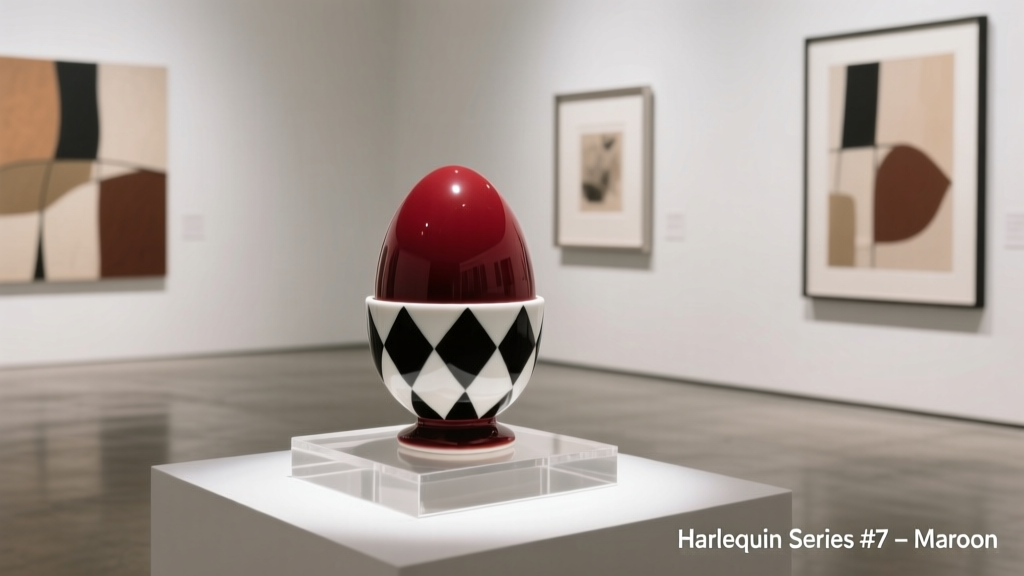
Harlequin Eggcup Maroon: Authentication, Market History, and Collectibility of the Iconic Royal Doulton Design
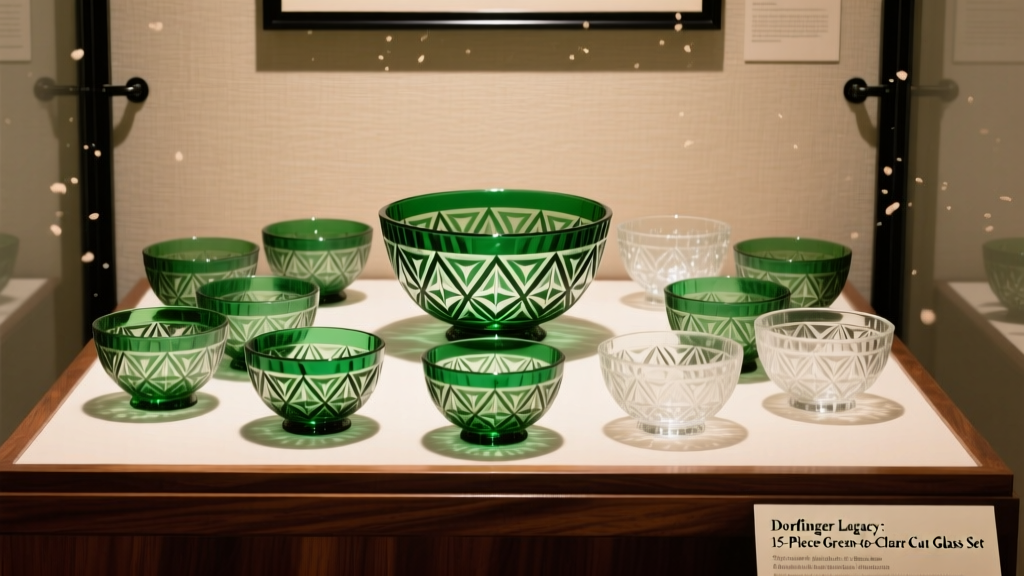
Dorflinger’s Green Cut-to-Clear 15-Piece Punch Bowl Set: Provenance, Craftsmanship, and Market Authentication
Paperweights, Snow Domes, and the Frog Prince: A Collector’s Guide to German Manufactured Novelty Glassware (1950–1985)
Authenticating the Galle Vase 'Delicate Purple Orchids, Deep Yellow Leaves' — A Cameo-Signed 6½-Inch Masterpiece
Toy Roller Skates 'Tu Weeler' (1931): Authentication, Market Value, and Historical Context of a Rare Early American Plaything
Camark Pottery Vase White 14-Inch: Authentication, Market Value, and Historical Context
Weather Vanes: The Horse Head in Copper and Cast Iron — Authentication, Provenance, and Market Value
The Howard Silver American Pitcher: Authentication, Provenance, and Market Value of the 9½-Inch Octagonal Water Pitcher with C-Scroll Handle
Beswick Figurine Basset Hound: Authentication, Market Value, and Collecting Insights