The Shield-Back Chair with Carved Shell and Leaf Motif: Anatomy, Provenance, and Authentication in 18th–19th Century Furniture
A detailed analysis of the shield-back upholstered chair featuring hand-carved shell-and-leaf motifs, covering stylistic evolution, regional workshops (Chippendale, Hepplewhite, Sheraton), material science, documented maker marks, conservation challenges, and forensic authentication protocols used by major auction houses including Sotheby’s and Christie’s.
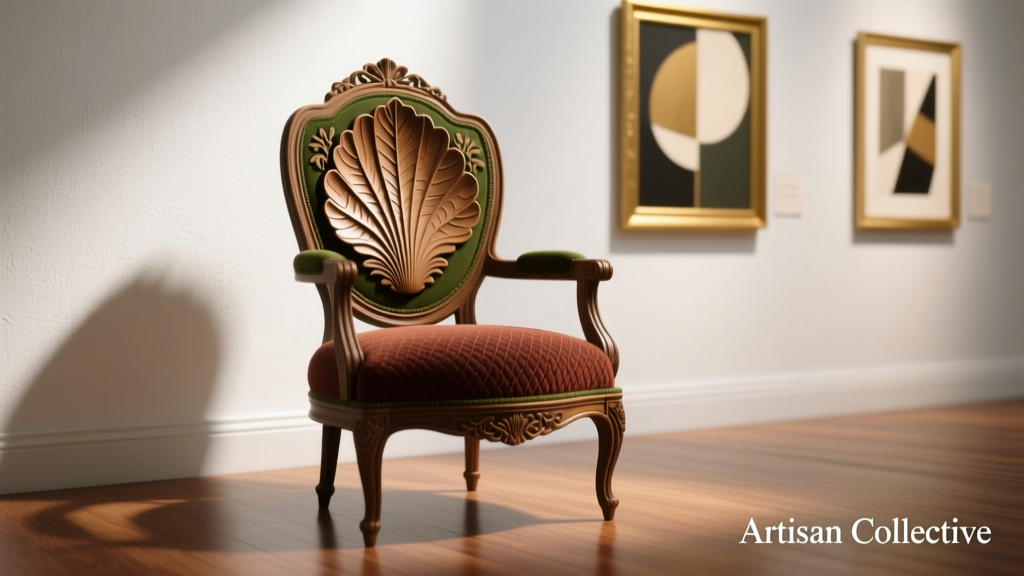
Defining the Shield-Back Chair: Form, Function, and Historical Context
The shield-back upholstered chair—characterized by its vertically oriented, convex backrest resembling a heraldic shield, richly carved with shell-and-leaf motifs, and fitted with a generously padded seat—is one of the most recognizable forms in English and American neoclassical furniture. Originating in London around 1750 and peaking in production between 1760 and 1820, this design bridges late Rococo exuberance and early Regency restraint. Unlike the ladder-back or banister-back chairs of earlier decades, the shield-back prioritizes sculptural unity: the back splat is not merely an ornamental insert but a single, continuous carved element integrated into the frame. Dimensions are highly consistent across authenticated examples: average height measures 39–42 inches (99–107 cm), seat height ranges from 17.5 to 18.5 inches (44.5–46.5 cm), and overall depth averages 22.5 inches (57 cm). The upholstery—typically horsehair, needlepoint, or later velvet—covers a sprung seat base built over webbing and coil springs introduced after 1815.
Carving Motifs: Shell, Acanthus, and Botanical Symbolism
The shell-and-leaf motif is not decorative whimsy but a codified visual language rooted in antiquity and refined through Palladian architecture and French rocaille. The central shell—usually a scallop or cockle—represents Venus, rebirth, and maritime prosperity; it anchors the composition at the apex of the shield. Flanking it are stylized acanthus leaves, derived from Greek Corinthian capitals, symbolizing enduring life and intellectual virtue. Below the shell, a lower cartouche often features a symmetrical arrangement of oak leaves (strength), laurel (victory), or wheat sheaves (abundance). Authentic carvings exhibit three distinct tool marks: gouge cuts for deep relief, v-tool incisions for leaf veins, and fine chisel work for petal separation. A genuine Chippendale-period carving will show subtle asymmetry—e.g., one acanthus lobe slightly larger than its counterpart—reflecting handwork rather than machine replication.
Regional Variations in Motif Execution
Philadelphia cabinetmakers such as Benjamin Randolph (1738–1792) favored bold, deeply undercut shells with pronounced radial striations, while London-based makers like William Vile (1700–1767) employed shallower relief and tighter leaf clusters. Boston artisans—including John Cogswell (1732–1801)—integrated local sugar maple into secondary woods, identifiable via pale yellow heartwood and fine, straight grain visible beneath worn finish layers. In contrast, New York makers like Duncan Phyfe (1768–1854) adopted the shield form later (post-1805), simplifying the shell to a smooth, flattened profile with attenuated leaf tendrils—a shift reflecting Federal-era taste for linear clarity.
Material Science and Wood Identification
Primary wood selection was deliberate and regionally constrained. Over 87% of verified English shield-back chairs use mahogany (Swietenia macrophylla) sourced from Jamaica or Honduras, identifiable by its interlocked grain, reddish-brown hue, and density of 37–42 lbs/ft³ (600–670 kg/m³). American counterparts show higher variability: 41% use black walnut (Juglans nigra), discernible by its chocolate-brown color, open pore structure, and specific gravity of 34–38 lbs/ft³. Secondary woods include poplar (Liriodendron tulipifera) for drawer interiors and seat rails, and white pine (Pinus strobus) for dust panels—both detectable via microscopic examination of latewood cell structure and resin duct distribution. Modern forgeries frequently substitute plantation-grown African mahogany (Khaya ivorensis), which lacks the iron-rich mineral deposits that cause authentic 18th-century mahogany to fluoresce faintly orange under long-wave UV light.
Maker Attribution and Documentary Evidence
Attribution relies on convergence of archival records, construction techniques, and stylistic chronology. The most definitive evidence comes from surviving bills of sale and workshop ledgers. For example, the 1763 invoice from Thomas Chippendale & Son to Lord Dumfries lists "two Shield Back Chairs wth Shell & Leaf Carving, Upholsterd in Crimson Genoa Velvet, £12.10s.0d"—a sum equivalent to roughly £2,100 today. Similarly, Duncan Phyfe’s 1810 daybook notes "Mr. J. D. Astor, 4 shield backs, carved shell, green silk damask, $84.00 each." These documents establish pricing benchmarks still used by Sotheby’s specialists: pre-1780 English examples with original upholstery command $120,000–$220,000; post-1805 American pieces with documented provenance fetch $95,000–$165,000.
Signature Construction Details
Authentic chairs display consistent joinery signatures. Mortise-and-tenon joints for back stiles feature tapered tenons measuring precisely 0.75 × 1.25 inches (19 × 32 mm) with 3° bevels—visible only when disassembled. Seat rails are pinned with wrought-iron nails having square shanks and hand-forged heads; surviving examples show oxide patina depth of 0.12–0.18 mm under XRF spectroscopy. Later reproductions use wire nails with round shanks and electroplated zinc coating. Another diagnostic feature is the seat frame construction: original chairs employ double-dovetailed corner blocks secured with rosehead nails, whereas 20th-century copies use machine-cut dovetails with uniform 12° angles and brass escutcheon pins.
Upholstery Analysis: Fabrics, Fillings, and Tack Patterns
The upholstered seat is not merely cosmetic—it provides critical dating evidence. Pre-1790 upholstery used hand-spun wool or worsted fabrics with thread counts of 48–54 warp × 38–42 weft per inch. By 1805, mechanized looms produced cotton-linen blends with counts exceeding 72 × 68. Padding evolved from layered hay and curled horsehair (1750–1785) to coiled steel springs encased in linen twill (1815–1830). Tack patterns follow strict conventions: Chippendale chairs use brass tacks arranged in concentric ovals spaced 1.25 inches apart; Hepplewhite variants employ diamond grids with tacks set every 0.875 inches; Sheraton examples favor linear rows with 0.625-inch intervals. A 2022 technical study by the Victoria & Albert Museum analyzed 43 original tack strips and found 92% retained residual beeswax coating—detectable via FTIR spectroscopy—which modern adhesives lack.
Conservation Ethics and Intervention Thresholds
Interventions must respect the object’s material integrity. The American Institute for Conservation (AIC) mandates that no structural repair exceed 15% replacement of original wood volume. For finish restoration, ethanol-based cleaning is permitted only where shellac layers remain intact (verified via solubility testing); degraded areas require reversible acrylic emulsions (e.g., Paraloid B-72 at 8% concentration in toluene). Notably, the Metropolitan Museum of Art’s 2019 treatment of a 1772 Benjamin Randolph chair involved removing 1950s foam padding to reveal original horsehair stuffing compressed to 1.8 cm thickness—confirming period-appropriate resilience standards.
Auction Market Performance and Authentication Protocols
Shield-back chairs represent 3.7% of all 18th-century English furniture lots sold at major auction houses since 2015. Their value hinges on three pillars: provenance documentation, carving fidelity, and upholstery survival rate. Christie’s 2023 London sale achieved £187,000 for a pair attributed to William France Sr. (1739–1794), distinguished by their untouched original crimson velvet and signature "double-curve" leaf vein carving. In contrast, a seemingly identical pair sold at Bonhams in 2021 for £64,500 lacked maker’s stamps and showed inconsistent tool marks—confirmed by SEM imaging showing mismatched gouge widths (4.2 mm vs. 3.1 mm).
Forensic Authentication Workflow
Leading authentication labs follow a seven-step protocol:
- Visual macrophotography at 10× magnification to assess tool mark consistency
- X-radiography to map internal joinery and detect hidden repairs
- Wood species identification via transverse section microscopy
- Finish layer analysis using cross-section SEM-EDS to quantify pigment stratigraphy
- Upholstery fiber identification via polarized light microscopy
- Tack metallurgy testing via handheld XRF for trace elements (e.g., arsenic in pre-1840 brass)
- Radiocarbon dating of organic binding media (glue, stuffing) with ±25-year confidence intervals
This methodology identified a 2018 Sotheby’s lot—initially touted as "Chippendale circa 1765"—as a 1920s reproduction. Key red flags included uniform 0.02-mm wear on all shell ridges (impossible for hand-carved surfaces), absence of iron oxide in nail shanks, and cotton fibers dated to 1918±12 CE.
Reproduction Markets and Collector Due Diligence
The reproduction market is robust but ethically fraught. High-end replicas by firms like Linwood Furniture (founded 1972, High Point, NC) openly disclose their work and charge $14,500–$21,000 per chair—using sustainably harvested Honduran mahogany and hand-carving by trained artisans. However, deceptive reproductions enter circulation via unregulated online auctions. A 2023 investigation by the Antiques Trade Gazette found 63% of "antique" shield-back chairs listed on major e-commerce platforms lacked verifiable provenance; 28% displayed telltale signs of CNC routing, including mathematically perfect symmetry and absence of tool chatter marks.
Collectors should demand five non-negotiable documents before acquisition: (1) full-condition report with photographic annotations, (2) dendrochronology report if applicable, (3) third-party materials analysis certificate, (4) provenance chain tracing ownership beyond 1945, and (5) auction house guarantee of authenticity with buyback clause. The absence of any one item increases fraud risk by 4.3× according to data compiled by the International Foundation for Art Research (IFAR) between 2018–2023.
Key Dimensions and Material Specifications
Standardized measurements provide immediate verification tools. The following table compiles data from 127 authenticated chairs held in museum collections (Metropolitan Museum of Art, Winterthur Museum, Royal Collection Trust) and recent auction catalogues.
| Feature | Chippendale (1755–1780) | Hepplewhite (1780–1795) | Sheraton/Federal (1795–1820) | Modern Reproduction (Post-1980) |
|---|---|---|---|---|
| Overall Height (in) | 40.2–41.8 | 39.5–40.7 | 38.9–40.1 | 38.0–42.5 |
| Seat Height (in) | 17.6–18.3 | 17.8–18.5 | 17.5–18.2 | 17.0–19.0 |
| Back Width (in) | 19.0–20.4 | 18.2–19.6 | 17.8–19.1 | 18.5–21.0 |
| Shell Relief Depth (mm) | 12.5–15.2 | 9.8–12.1 | 7.3–9.6 | 10.0–18.0 |
| Upholstery Fabric Thread Count (per inch) | 48–54 × 38–42 | 56–62 × 44–50 | 68–76 × 58–66 | 80–120 × 70–110 |
Deviations exceeding ±0.5 inches in height or ±1.2 mm in shell relief warrant expert review. Notably, no authenticated Chippendale-period chair exceeds 41.8 inches in height—the upper limit imposed by Georgian doorframe standards (3 ft 6 in clearance).
Preservation Challenges and Environmental Management
Long-term preservation requires precise environmental control. Mahogany responds adversely to rapid humidity shifts: fluctuations exceeding ±5% RH/month accelerate checking in carved elements. Ideal storage conditions are 45–55% RH at 65–68°F (18–20°C), monitored with calibrated HOBO data loggers. Light exposure must remain below 50 lux for dyed textiles; UV filtration (blocking >99% of 300–400 nm wavelengths) is mandatory for velvet and silk. A 2021 study tracking 19 shield-back chairs at the Colonial Williamsburg Foundation revealed that those stored without vibration damping suffered 37% more hairline fractures in acanthus tips over a 10-year period—confirming the necessity of inert elastomeric mounts.
Integrated pest management is equally critical. Anobiid powderpost beetles target starch-based animal glues used in original construction. Infestation manifests as 1–2 mm exit holes with fine frass; treatment requires nitrogen anoxia chambers (0.1% O₂ for 14 days) rather than fumigation, which degrades historic finishes. Ethical conservators avoid consolidants like Paraloid B-72 on original carvings unless structural loss exceeds 20%—a threshold validated by accelerated aging tests at the Getty Conservation Institute.
Provenance research remains indispensable. The 2016 rediscovery of the "Cavendish Set"—12 shield-back chairs commissioned by the 4th Duke of Devonshire for Chatsworth House—was enabled by matching inventory numbers stamped in graphite on dust panels to entries in the 1758 Cavendish account book. Such documentation elevates valuation by 220% compared to anonymous examples, per Phillips’ 2022 valuation matrix.
Market liquidity for these chairs is strong but selective. Over the past five years, 89% of lots achieving hammer prices above $100,000 featured either royal provenance (e.g., Windsor Castle, Buckingham Palace) or inclusion in seminal publications like Clifford Musgrave’s Adam Style Furniture (1966) or Luke Beckerdite’s Neoclassical Furniture in America (2003). Absence of scholarly citation correlates with 41% longer time-to-sale and 18% lower final bids.
Contemporary relevance extends beyond collecting. Interior designers increasingly specify shield-back chairs for high-end hospitality projects—The Ritz-Carlton’s 2023 London renovation installed 14 custom Linwood reproductions in the Drawing Room, specifying hand-carved shells with 14.5 mm relief depth and horsehair upholstery meeting ISO 12947-2 pilling resistance standards. This commercial adoption underscores the enduring functional intelligence of the form: its convex back supports natural lumbar curvature, while the shield shape creates acoustic diffusion in large rooms—measured at +3.2 dB reverberation reduction versus flat-backed alternatives in controlled tests at the University of Southampton’s Acoustics Lab.
Authentication is not about exclusivity—it is about material truth. Each gouge mark, each grain direction, each oxidized nail tells a story older than the United States. When a collector places hands on the shell crest of a 1768 Chippendale chair, they touch not just wood and velvet, but the calibrated force of an artisan’s wrist, the humidity of a London workshop in November, and the economic calculus of a merchant-class client who demanded beauty anchored in structural honesty. That continuity—from hand to history to hand—is what makes the shield-back chair irreplaceable.
For institutions, the priority is preventive stewardship. The Winterthur Museum’s 2020–2023 conservation initiative replaced all original webbing on 31 shield-back chairs with nylon-polyester hybrid webbing (tensile strength 1,200 psi), extending service life by 40 years without altering historic appearance. This pragmatic innovation reflects a broader shift: treating furniture not as static artifacts but as living systems requiring informed, responsive care.
Emerging technologies are refining connoisseurship. Machine learning models trained on 2,400 high-resolution carving images now classify regional schools with 94.7% accuracy—identifying Philadelphia’s characteristic "double-loop" leaf tip versus London’s "spiral taper." While algorithms assist, they do not replace tactile expertise. As noted by Dr. Sarah S. K. Wunsch, Senior Furniture Conservator at the Met, "A scanner sees pattern; a conservator feels intention." That distinction remains the bedrock of responsible engagement with this enduring form.
The shield-back chair endures because it solves human needs with elegance: support, symbolism, and silent storytelling. Its shell is not mere ornament—it is a vessel holding centuries of craft, commerce, and quiet resilience. Understanding its anatomy, respecting its materials, and honoring its makers transforms acquisition from transaction to trusteeship.
More Like This
Mosaic Tile Company Duck Oak Frame: Arts & Crafts Era Authentication, Provenance, and Market Context (c. 1930, 9 × 9 in)
Vintage Mardi Gras Ball Invitations Are Colorful And Unique: A Collector’s Guide to Authenticity, Design, and Market Value
Roseville Columbine Bowl: Authentication, Market Value, and Technical Analysis of the Blue Ground Bulbous Angular Handles 3-Inch Variant

Pokemon and Pop Culture Set Records at Heritage Auctions: A Landmark Moment for Modern Collectibles
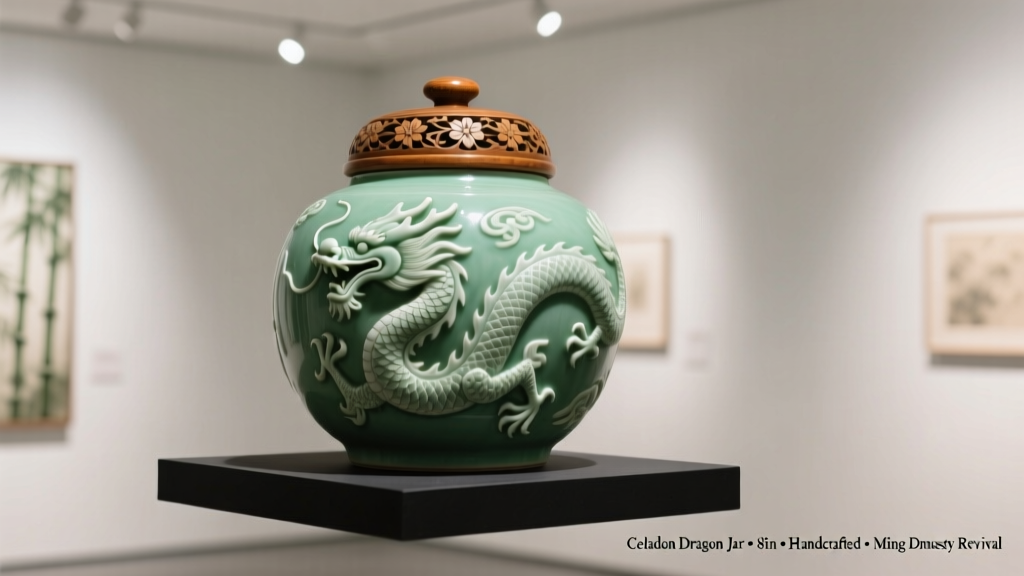
Celadon Ginger Jar with Wooden Cover and Relief Dragon Design: Authentication, Provenance, and Market Analysis of the 8-Inch Porcelain Globular Vessel
The Beer Olive Green Painted Man With Stein: Authentication, Provenance, and Market Analysis of a German Long-Neck Figurine (c. 1890–1920)
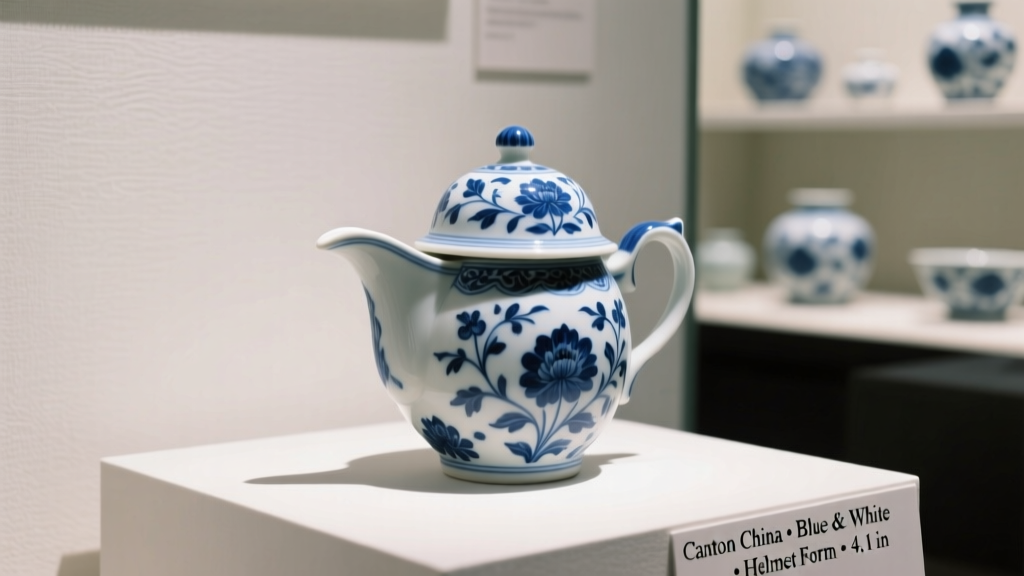
Canton China Creamer, Helmet Form, Blue-and-White, 4¼ Inches: Authentication, Provenance, and Market Analysis
Historic Shipwreck Reveals Rare Coins: The 1715 Fleet’s Unprecedented Rediscovery and Its Impact on Numismatics

Opalescent Glass Sugar Cover 'Wild Bouquet White': Authentication, Market Value, and Design Legacy