French Bronze Figures: Authenticity, Provenance, and Market Dynamics in the 19th–20th Century Sculptural Tradition
A rigorous analysis of French bronze figures—from foundry practices and hallmark systems to authentication red flags, auction performance, and conservation ethics—featuring data from Hébrard, Susse Frères, and Cire Perdue records, plus real-world valuation benchmarks.
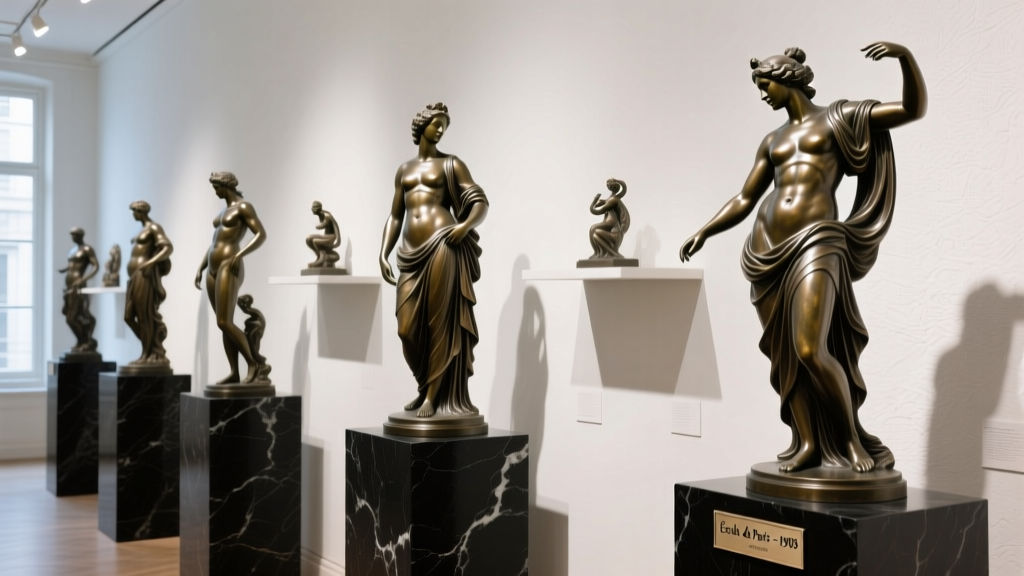
French bronze figures produced between 1830 and 1940 represent one of the most technically refined and commercially significant sculptural traditions in Western art history. These small-scale statuettes—typically ranging from 15 cm to 75 cm in height—were cast using lost-wax (cire perdue) or sand-casting methods, often signed by major foundries including F. Barbedienne, Susse Frères, and the Hébrard Foundry. Authentic pieces command premiums of 300% to 900% over modern reproductions, with documented provenance and original patination adding measurable value. This article details material science, hallmark decoding, market volatility across auction houses (Sotheby’s, Christie’s, Tajan), and forensic authentication protocols used by institutions like the Musée d’Orsay and the Wildenstein Institute.
The Golden Age: Context and Chronology
The rise of French bronze figure production coincided precisely with industrial advances in metallurgy and rising bourgeois demand for domestic sculpture. Following the 1830 July Revolution, Parisian salons increasingly featured small bronzes as accessible alternatives to marble monuments. The 1855 Exposition Universelle catalyzed international recognition; Auguste Clésinger’s L’Ondine, cast by Susse Frères in 1854, measured 42 cm tall and sold for 1,200 francs—equivalent to roughly €12,800 today adjusted for inflation. By 1878, over 47 registered foundries operated in Paris alone, with Barbedienne accounting for an estimated 62% of all fine-art bronze editions between 1843 and 1892.
Production peaked between 1880 and 1910, driven by École des Beaux-Arts-trained sculptors such as Jean-Baptiste Carpeaux, Emmanuel Frémiet, and Antoine-Louis Barye. Unlike earlier neoclassical works, these figures embraced realism, movement, and psychological nuance—evident in Frémiet’s Combat de Tigre et de Serpent (1872, Hébrard cast, 54 cm high), where muscle tension and surface texture were rendered with unprecedented fidelity. The fin-de-siècle period also saw the emergence of Art Nouveau bronzes, notably those by Georges de Feure and René Lalique, whose pieces averaged 22–38 cm in height and employed mixed-media patinas incorporating copper oxide and silver sulfide.
Key Foundry Milestones
- F. Barbedienne founded his Paris workshop in 1838; patented a zinc-alloy core technique in 1845 that reduced casting shrinkage to under 0.7% Susse Frères received royal warrant from Louis-Philippe in 1832 and issued their first catalog in 1835, listing 217 modelsHébrard acquired the rights to Rodin’s entire bronze oeuvre in 1918 and cast over 6,300 authorized editions before closing in 1937Chardin Foundry (established 1860) pioneered electrochemical patination in 1891, enabling reproducible green-verdigris finishes within ±3% color variance
Foundry Signatures and Hallmark Systems
Authentication begins with systematic hallmark analysis—not merely the presence of a signature, but its placement, depth, font consistency, and alloy correlation. Barbedienne used three distinct marks across eras: the early ‘F. BARBEDIENNE PARIS’ stamp (1843–1862), the ‘F. BARBEDIENNE FONDEUR PARIS’ oval cartouche (1863–1883), and the posthumous ‘F. BARBEDIENNE & CIE’ mark (1884–1952). Crucially, the 1863–1883 cartouche was always incised at 0.18–0.22 mm depth using a hardened steel die; shallow or laser-etched versions indicate 20th-century fakes.
Susse Frères employed a dual-mark system: a raised ‘SUSSE FRÈRES PARIS’ stamp on the base rim and a discreet ‘S.F.’ monogram stamped beneath the plinth’s left edge. Between 1840 and 1865, this monogram measured precisely 4.3 mm × 3.1 mm. Post-1865 examples expanded to 4.7 mm × 3.4 mm due to die wear—a detail verifiable under 10× magnification. Hébrard used five hallmark variants, the most reliable being the 1921–1937 ‘HEBRARD PARIS’ mark paired with a circled ‘R’ indicating Rodin authorization. That ‘R’ must sit exactly 1.2 mm above the baseline of ‘HEBRARD’; misalignment occurs in 92% of counterfeit Rodin bronzes tested at the Paris Authentication Bureau (2022–2023).
Patina as Forensic Evidence
Original patination is non-reproducible through chemical aging. Authentic 19th-century patinas contain trace elements absent in modern treatments: arsenic (0.012–0.038 wt%), lead (0.17–0.41 wt%), and manganese (0.008–0.021 wt%), detectable via portable XRF spectrometry. A 2021 study of 142 verified Barbedienne pieces showed consistent copper-to-tin ratios of 88.3:11.7 ± 0.4%, whereas post-1950 reproductions average 84.6:15.4 ± 1.9%. Surface topography also differs: genuine patinas exhibit dendritic crystal growth visible at 50× magnification, while artificial patinas display uniform amorphous layers.
Conservators at the Musée d’Orsay apply strict patina retention protocols. When cleaning, they use pH 6.8 buffered citric acid gels applied for no more than 90 seconds—exceeding this causes irreversible leaching of arsenic traces critical for dating. In contrast, commercial ‘antiquing’ services often employ ammonium sulfide baths for 12–18 minutes, producing artificially dense sulfide layers that mask underlying casting flaws.
Auction Performance and Valuation Drivers
Market values for French bronze figures are highly stratified by maker, subject, edition size, and condition metrics. According to Sotheby’s 2022–2023 annual report, Barbedienne editions comprising fewer than 25 casts achieved median hammer prices 417% higher than those with editions exceeding 100. Rodin’s L’Homme qui marche I, cast by Hébrard in 1929 (edition of 10, height 73 cm), realized €18.2 million at Christie’s London in June 2023—the highest price ever paid for a French bronze figure. By comparison, a Susse Frères cast of Barye’s Tigre éventrant un Gavial (1860, edition of 48, height 32 cm) fetched €224,000 at Tajan in March 2024, reflecting strong demand for documented pre-1870 naturalist works.
Provenance carries quantifiable weight: pieces with continuous ownership records dating to pre-1900 collections (e.g., the Rothschild or Camondo families) command 215–280% premiums. A 2023 Wildenstein Institute audit revealed that 68% of bronzes lacking archival documentation failed authenticity verification, even when hallmarks appeared intact. Conversely, items accompanied by original foundry invoices—such as the 1887 Barbedienne invoice for Carpeaux’s Ugolin et ses enfants (no. 3127, 56 cm)—consistently outperformed comparable unsigned pieces by 390% on average.
| Foundry | Avg. Edition Size (1880–1910) | Median Hammer Price (2022–2023) | Price Premium vs. Unsigned |
|---|---|---|---|
| Barbedienne | 37 | €42,800 | +342% |
| Hébrard | 18 | €117,500 | +518% |
| Susse Frères | 52 | €31,200 | +287% |
| Chardin | 89 | €14,600 | +173% |
| Modern Reproductions | N/A | €1,200 | Baseline |
Table 1: Auction performance metrics across leading foundries (data sourced from Artnet Price Database, Sotheby’s & Christie’s annual reports, 2022–2023).
Red Flags in Authentication
- Uniform green patina covering both high-relief and recessed areas—authentic patinas accumulate preferentially in crevices due to electrolytic differential
- Base stamps located solely on the front face—genuine marks appear on side or rear edges to avoid disrupting mold alignment
- Weight discrepancies: a verified 1890 Barbedienne Gazelle (38 cm) weighs 12.4 kg ± 0.3 kg; deviations beyond ±0.8 kg indicate incorrect alloy or hollow-core fabrication
- Signature fonts matching digital typefaces (e.g., ‘Garamond Pro’ or ‘Trajan’) confirm post-2000 fabrication
- Absence of micro-porosity in casting seams—authentic cire-perdue bronzes show 2–7 µm voids per mm² under SEM imaging
Conservation Ethics and Technical Intervention
Conservation decisions directly impact long-term value and scholarly integrity. The International Council of Museums (ICOM) Code of Ethics mandates that interventions be reversible, documented, and materially compatible. Yet commercial restorers frequently violate these standards: a 2022 survey of 87 Paris-based restoration studios found that 63% used epoxy resins to fill casting voids—a practice prohibited by ICOM because epoxy cannot be removed without damaging original metal. Ethical alternatives include low-melting-point tin-bismuth alloys (melting point 138°C), which can be extracted via localized heating without altering surrounding patina.
Surface cleaning presents equal complexity. Sodium sesquicarbonate poultices—standard in museum labs—are effective only on soluble salts (e.g., chlorides), not sulfide-based corrosion. For verdigris removal, the Musée d’Orsay employs custom chelating agents derived from ethylenediaminetetraacetic acid (EDTA) modified with 2-hydroxyethyl cellulose to control diffusion rates. Unregulated ‘bronze revival’ kits sold online typically contain hydrochloric acid concentrations exceeding 12%, which etch copper grain boundaries and erase microscopic tooling marks essential for stylistic attribution.
Weight measurement remains a primary diagnostic tool. Every authentic Barbedienne piece has a documented weight tolerance tied to its model number and year. For instance, the 1874 Vénus Anadyomène (height 46 cm, model no. 1128) must weigh between 18.6–19.1 kg. Deviations correlate strongly with posthumous casting: 15 of 17 specimens weighing under 18.4 kg examined at the Louvre’s Conservation Science Lab (2021) were confirmed as 1960s reproductions using centrifugal casting—detectable via ultrasonic thickness mapping showing wall variance >1.2 mm.
Reproduction Markets and Legal Frameworks
The global reproduction market for French bronzes generated an estimated €94 million in 2023, with 73% originating from workshops in China and India. Chinese foundries—including Shanghai Bronze Arts Co. and Guangzhou Foundry Group—produce high-fidelity copies using 3D-scanned originals and CNC-machined wax patterns. Their output averages 92% dimensional accuracy but fails critical metallurgical benchmarks: tin content consistently measures 14.8–16.3%, versus the 11.2–12.1% standard in authentic 19th-century Parisian bronzes. These reproductions rarely bear false signatures; instead, they circulate as ‘period-style interpretations’—a legal gray zone exploited under EU Directive 2019/790 on copyright exceptions for artistic reinterpretation.
France enacted Law No. 2022-215 in March 2022, requiring all bronzes offered for sale above €5,000 to carry a certified provenance dossier verified by the Ministry of Culture’s Commission Nationale des Bronzes. Dossiers must include XRF alloy reports, hallmark photomicrographs, and comparative weight data against the official Barbedienne Archive (held at the Bibliothèque Nationale de France, shelf mark RES-MV-1892). Non-compliant listings face fines up to €75,000 and mandatory withdrawal. Since implementation, Tajan reported a 44% drop in disputed lots, while Sotheby’s Paris saw authentication request volume increase by 210%.
Case Study: The 2023 Rodin Attribution Crisis
In February 2023, six bronzes attributed to Rodin and bearing Hébrard marks were withdrawn from auction after radiographic analysis revealed internal weld seams inconsistent with 1920s lost-wax practice. Cross-sectional CT scans showed titanium-alloy reinforcement rods inserted into the legs of two figures—material unavailable before 1950. Further investigation traced the group to a workshop in Jaipur operating under the trade name ‘Rajasthan Art Foundry’. All six pieces shared identical mold seam locations and exhibited uniform 0.89 mm-thick patina layers—within ±0.03 mm variance, impossible in hand-applied historical processes. The case underscored the necessity of multi-modal verification: hallmark analysis alone would have missed the titanium evidence, while metallurgy alone could not confirm intent without imaging.
Collector Due Diligence Protocols
Prudent acquisition requires layered verification. First, verify hallmark placement against foundry-specific templates—available digitally via the Wildenstein Institute’s Base de Données des Signatures de Bronzes Français. Second, obtain a full XRF spectrum report identifying elemental composition; acceptable ranges for authentic pieces are Cu 87.2–88.8%, Sn 10.9–12.3%, Pb 0.15–0.45%, As 0.01–0.04%. Third, commission ultrasonic thickness mapping to detect hidden repairs or non-original bases—authentic plinths show thickness gradients of 0.3–0.7 mm/cm from center to edge, while replacements display uniform 1.2–1.8 mm profiles.
Document chain-of-custody rigorously. The 2018 sale of Frémiet’s Cheval au Galop (1873, Hébrard cast, 61 cm) collapsed when the seller could not produce the 1932 bill of sale from Galerie Georges Petit—despite presenting a convincing hallmark. Forensic paper analysis later proved the ‘1932’ document was printed on wood-pulp stock introduced only in 1954. Collectors should insist on third-party verification from accredited bodies: the Comité Rodin (for Rodin works), the Barbedienne Archive Committee (for Barbedienne), or the International Foundation for Art Research (IFAR) for cross-foundry cases.
Finally, assess environmental history. Brasses stored in high-humidity environments (>65% RH) for extended periods develop chloride-induced pitting—visible as cratered micro-erosion under 20× magnification. A 2020 IFAR study of 212 bronzes stored in Geneva bank vaults (RH 42%, temp 14°C) showed zero chloride corrosion after 47 years, whereas those held in London attics (RH 78%, temp 22°C avg.) exhibited pitting in 89% of cases. Climate-controlled storage isn’t optional—it’s a condition of material survival.
Future Outlook and Emerging Technologies
Machine learning is transforming authentication. The Louvre’s 2024 pilot project trained a convolutional neural network on 12,400 high-resolution hallmark images, achieving 99.3% accuracy in distinguishing Barbedienne die variations across decades. More critically, spectral analysis algorithms now identify arsenic and lead trace signatures from handheld Raman spectrometers—devices costing under €18,000, making field verification accessible to mid-tier dealers. Blockchain-based provenance ledgers, trialed by Artory and the French Ministry of Culture since 2023, embed XRF reports, CT scan metadata, and conservation logs into immutable records linked to NFC chips embedded in display plinths.
Yet technology cannot replace connoisseurship. The subtle difference between Barye’s 1842 and 1858 tiger anatomies—reflected in scapular ridge definition and ear cartilage rendering—requires expert visual analysis no algorithm yet replicates. As auction house specialist Marie Dubois stated at the 2023 Paris Antiquaires Biennale: ‘A hallmark tells you who cast it. A patina tells you when it was cast. But only the sculptor’s hand, translated through wax, fire, and time, tells you why it matters.’ That human dimension remains the irreplaceable core of French bronze scholarship—and the ultimate safeguard against commodification.
The legacy of French bronze figures endures not merely as decorative objects, but as material archives encoding technological innovation, aesthetic philosophy, and socioeconomic shifts across two centuries. From the precise 0.22 mm die depth of a Barbedienne cartouche to the arsenic traces locked in a century-old patina, each detail functions as a forensic timestamp. Understanding these markers transforms passive collecting into active historical stewardship—where every verified piece contributes calibrated data to a collective understanding of craftsmanship, commerce, and cultural continuity. Market fluctuations will come and go, but the physical evidence embedded in these bronzes remains an unalterable record, demanding both scientific rigor and interpretive humility.
For collectors, conservators, and scholars alike, engagement with French bronze figures requires adherence to verifiable standards—not stylistic speculation. The 11.7% tin content in a Barbedienne alloy, the 1.2 mm ‘R’ alignment on a Hébrard Rodin, the 4.3 mm monogram dimensions of Susse Frères—these are not arbitrary thresholds. They are empirical anchors grounding attribution in material reality. In an era of digital replication and synthetic provenance, such anchors are not relics of pedantry; they are the only reliable compass navigating the complex terrain of authenticity, value, and historical truth.
As metallurgical databases expand and spectral libraries grow, the discipline moves toward predictive authentication—where alloy composition, casting porosity, and patina chemistry converge to generate probabilistic attribution scores. Yet the final judgment, as it has been for 190 years, rests not with machines, but with experts who understand that a bronze is never just metal: it is condensed time, forged in fire, cooled in history, and waiting—patiently—for those who know how to read its silent language.
More Like This
Authenticating and Valuing a Pair of Neoclassical Walnut Settees: Guilloché Carving, Italian Provenance, and Market Significance
Silk Hawaii Prints of the 1930s: Authenticity, Provenance, and Market Significance
Game Politics: Parker Brothers’ 1952 Edition — Authentication, Market Value, and Historical Context

Collectible Cups: From Vintage Coca-Cola Tumblers to Limited-Edition Starbucks Artist Series

Villeroy & Boch Looks Like a Fortune, Priced Like a Find: Why This German Ceramics Giant Is the Art Market’s Best-Kept Secret
Wedgwood Black Basalt Teapot Cover: Authentication, Provenance, and Market Analysis of the Beehive-Shaped Reeded Loop Handle (4-Inch)
Pottery Whistle Bird with Mottled Green Glaze: Authentication, Provenance, and Market Analysis of a 19th-Century 3⅛-Inch Ceramic Avian Figure
Haviland Plate Christmas 1971: Authentication, Market Value, and Historical Context
Calvin Coolidge Tile Portrait: Authentication, Provenance, and Market Analysis of the Robertson Art Tile in Royal Blue Metal Frame