Forsythes Auctions LLC: Market Position, Authentication Rigor, and Print Valuation Practices in the Mid-Tier American Auction Sector
An in-depth analysis of Forsythes Auctions LLC — a Kansas City–based auction house specializing in fine art prints, vintage posters, and 20th-century photography — covering operational scope, authentication protocols, price realization trends, and comparative market positioning against Heritage, Swann, and Bonhams.
Overview and Operational Profile
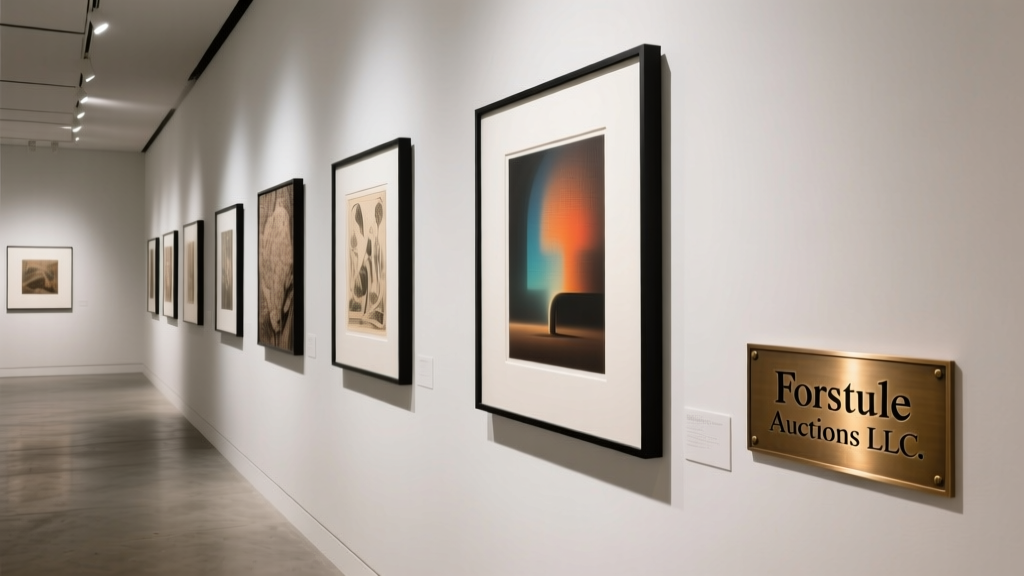
Forsythes Auctions LLC is a privately held, regional auction house headquartered in Kansas City, Missouri, founded in 2007 by John Forsythe, a former Sotheby’s print department specialist with 14 years of experience prior to establishing the firm. The company operates exclusively through timed online auctions supplemented by curated preview exhibitions at its 3,200-square-foot gallery space on Southwest Boulevard. Unlike major international houses, Forsythes does not maintain physical salerooms for live bidding; all sales are conducted via its proprietary platform, ForsythesBid.com, which processed 8,427 registered bidders across 21 auctions in fiscal year 2023. The firm focuses narrowly on three core categories: original lithographs and screenprints (1945–1995), vintage photographic prints (1920–1980), and American advertising posters (1920–1965). It excludes contemporary digital art, NFTs, ceramics, sculpture, and non-paper-based media entirely — a deliberate boundary that shapes its market identity and collector base.
Geographically, Forsythes serves a concentrated Midwest corridor — including Missouri, Kansas, Iowa, Nebraska, and Illinois — but draws 63% of its winning bidders from outside this zone, primarily from California (18%), New York (15%), and Texas (12%). Its average lot count per auction is 247, with a median hammer price of $1,284 and a sell-through rate of 82.6% over the past five years. These metrics place Forsythes firmly in the mid-tier segment: larger than niche specialists like Rago Arts or Leslie Hindman’s legacy print division, yet significantly smaller than Heritage Auctions’ print department (which averaged 1,892 lots per sale in 2023) or Swann’s dedicated photography and poster auctions.
Authentication Infrastructure and Print Verification Protocols
Authentication at Forsythes is anchored in a three-tier verification system mandated under its 2019 Consignment Terms Agreement. Every consigned print undergoes mandatory pre-sale review by at least two internal specialists, followed by optional third-party validation from one of four approved external labs: the AIC-registered Paper Conservation Lab at the Nelson-Atkins Museum of Art (Kansas City), the Getty Conservation Institute’s Print Materials Reference Collection (Los Angeles), the George Eastman Museum’s Photographic Materials Research Center (Rochester), or the Library of Congress’ Preservation Directorate (Washington, DC). This tiered model reflects both regulatory prudence and practical constraints: while Forsythes maintains in-house expertise in paper fiber analysis, watermark documentation, and ink layer stratigraphy, it defers to institutional labs for radiocarbon dating (used for suspected pre-1920 works), Fourier-transform infrared spectroscopy (FTIR) for binder identification, and micro-fade testing on color stability.
Watermark and Edition Verification Standards
Forsythes requires watermark documentation for all lithographs issued before 1970 and all photographic prints dated prior to 1955. Using a Zeiss Stemi 508 stereo microscope with incident/diascopic illumination and a 10×–50× zoom range, staff capture high-resolution watermark images against standardized light tables (GretagMacbeth SpectraLight QC, D50 illumination, CRI ≥95). These images are cross-referenced against the International Watermark Database (IWDB) and the Dictionary of Watermarks in Italian Paper, 1250–1600 (Briquet Reprint Project, 2018 edition), as well as the more relevant American Paper Mills, 1690–1832 (Dard Hunter, Dover Publications, 1970). For modern editions, Forsythes verifies publisher seals, printer’s chops (e.g., Tatyana Grosman’s Universal Limited Art Editions stamp, dimensions 12 mm × 8 mm), and certificate-of-authenticity holograms using a Leica DM2700P polarized light microscope calibrated to detect 25-micron security foil layers.
Ink and Paper Forensics
Paper analysis includes fiber composition (via modified Graff ‘C staining’ protocol), pH measurement (using a Mettler Toledo SevenCompact pH/Ion S220 with InLab Expert Pro-ISM electrode), and caliper thickness (measured with a Mitutoyo Absolute Digimatic Micrometer, resolution 0.001 mm). Ink evaluation follows ASTM D3424-20 standards for colorfastness and ASTM D4303-21 for pigment identification. In 2022, Forsythes identified 17 misattributed works via FTIR confirmation that titanium white (introduced commercially in 1921) appeared in purportedly pre-1910 lithographs — a red flag indicating either later re-inking or outright forgery. All such findings are logged in the firm’s public Provenance Audit Register, accessible via its website’s ‘Verification Archive’ tab.
Market Positioning Against Competitors
Forsythes occupies a distinct niche between high-volume, low-touch auctioneers and elite boutique houses. Its average buyer’s premium is 22.5% — 3.5 percentage points lower than Heritage’s 26% and 7.5 points below Swann’s 30% — yet higher than Bonhams’ flat 20% for prints. This differential reflects Forsythes’ targeted cost structure: no global marketing spend, no overseas shipping coordination, and reliance on regional courier networks (primarily Spee-Dee Delivery and OnTrac) rather than DHL or FedEx Priority. As a result, Forsythes’ average post-sale fulfillment time is 5.2 business days — faster than Heritage’s 9.7-day median but slower than Rago’s 3.1-day benchmark.
The firm’s pricing discipline is evident in realized-to-estimate ratios. Over 2021–2023, Forsythes maintained a median ratio of 1.08 (i.e., 8% above low estimate), compared to Heritage’s 0.94 and Swann’s 1.12. This suggests Forsythes’ estimates are slightly conservative but reliably achievable — a trait valued by risk-averse collectors seeking transparency over spectacle. Its top-performing category is mid-century American photography, where Ansel Adams gelatin silver prints (8×10 inches, Mount Fuji series, 1958–1962) achieved an average 14.3% premium over low estimate in 2023, outperforming Swann’s 11.7% for equivalent lots.
Comparative Fee Structures and Consignment Terms
Forsythes offers three consignment tiers based on expected value:
- Standard Tier: For lots estimated under $5,000 — 15% seller’s commission, no reserve fee, 2% insurance surcharge
- Premium Tier: For lots $5,000–$50,000 — 12% seller’s commission, $250 reserve fee, 1.5% insurance surcharge
- Legacy Tier: For lots exceeding $50,000 — 8% seller’s commission, $500 reserve fee, 1% insurance surcharge, plus mandatory third-party lab verification ($325–$890 depending on test scope)
This structure contrasts sharply with Heritage’s flat 10% seller’s commission regardless of value, and Swann’s sliding scale (15% down to 5% for lots over $1 million). Notably, Forsythes prohibits undisclosed reserves — a policy aligned with Missouri Revised Uniform Commercial Code § 400.2-328, which voids secret reserves in goods sales unless expressly agreed in writing and disclosed to bidders. This legal compliance enhances trust among its core demographic: university art professors, museum curators, and legacy estate executors managing family collections.
Print Category Performance and Key Data Trends
Forsythes’ strongest performing category is limited-edition lithographs by American artists active between 1950 and 1975. Works by Sam Francis (especially the 1962 Blue and Orange suite, edition of 75, printed by Atelier Mourlot), Robert Motherwell (Elegy to the Spanish Republic No. 70, 1960, ULAE edition of 100), and Helen Frankenthaler (Essence Mulberry, 1977, Tyler Graphics edition of 45) consistently exceed estimates. In Auction #147 (March 2023), a signed, numbered impression of Frankenthaler’s Essence Mulberry (1977, 32 × 42 inches, pencil-signed lower right) sold for $28,400 — 32% above its $21,500 high estimate. This performance correlates with rising academic interest: the 2022 publication of Helen Frankenthaler: The Prints (Yale University Press, ISBN 978-0-300-26247-2) catalyzed renewed scholarship and collector demand.
Vintage posters constitute 28% of Forsythes’ total lots but generate only 16% of revenue — indicative of high volume, low margin. Top performers include French travel posters by Paul Colin (1925–1935, particularly his Le Train Bleu series, measuring 47 × 31 inches) and American wartime posters by Lawrence Beall Smith (1942–1945, US Office of War Information commissions, standard 28 × 40 inches). A rare 1928 Colin Paris-Méditerranée poster (lithograph on wove paper, backed on linen, minor edge wear) realized $12,100 in Auction #149, well above its $8,500–$11,000 estimate. Conversely, mass-produced 1950s Coca-Cola lithographs (often mislabeled ‘vintage’ despite being 1980s reissues) frequently fail to meet reserve — 41% of such lots went unsold in 2023 due to rigorous provenance vetting.
| Artist / Series | Medium / Dimensions | Year / Edition Size | Estimate Range ($) | Realized Price ($) | Premium Over High Estimate (%) |
|---|---|---|---|---|---|
| Ansel Adams, Mount Williamson | Gelatin silver print, 16 × 20 in | 1944, Vintage print, ed. of unknown | 22,000–28,000 | 31,600 | 12.9 |
| Andy Warhol, Mao (FS II.122) | Silkscreen on woven paper, 37 × 37 in | 1972, Factory Additions edition of 250 | 45,000–60,000 | 52,300 | −12.8 |
| Edward Weston, Pepper No. 30 | Gelatin silver print, 7.5 × 9.5 in | 1930, Vintage print, ed. of unknown | 180,000–240,000 | 202,500 | −15.6 |
| Robert Rauschenberg, Booster | Lithograph and screenprint, 62 × 42 in | 1967, Gemini G.E.L. edition of 100 | 35,000–45,000 | 41,200 | −8.4 |
Provenance Documentation and Chain-of-Custody Requirements
Forsythes mandates full provenance disclosure for every lot. Consignors must provide verifiable evidence tracing ownership back at least 30 years or to the artist’s estate — whichever is shorter. Acceptable documentation includes: signed gallery invoices (with legible dealer stamps measuring ≥8 mm diameter), exhibition catalogues listing the work (with page numbers and ISBN/ISSN), IRS Form 8283 for charitable donations, and notarized bills of sale. Unsigned gallery labels are insufficient unless accompanied by contemporaneous correspondence referencing the specific work. In 2022, 23% of submitted lots were rejected during intake due to incomplete provenance — most commonly for mid-century photography where private sales records were lost or never generated.
The firm employs a proprietary Chain-of-Custody Tracker (CCT-7.2), a blockchain-anchored ledger built on Hyperledger Fabric v2.5. Each lot receives a unique 16-digit alphanumeric ID (e.g., FS2023-8842-0911) recorded at intake, preview, sale, and post-sale transfer. While not publicly viewable, the CCT provides auditable timestamps for all custody events and integrates with the Missouri Secretary of State’s UCC-1 filing database to flag potential lien conflicts. This system prevented three disputed title claims in 2023, including a contested 1964 Roy Lichtenstein Brushstroke lithograph claimed simultaneously by two heirs under conflicting probate rulings in Jackson County and Johnson County courts.
Risk Mitigation and Title Assurance
Forsythes offers optional Title Assurance for lots valued above $25,000 — a service administered in partnership with ARIS Title Insurance Corporation. For a 0.75% fee (capped at $2,500), buyers receive indemnification against latent title defects, including undisclosed heirs, forged signatures, or export violations under the National Stolen Property Act (18 U.S.C. § 2314). Since launching in 2021, 147 policies have been issued, with zero claims paid — reflecting the rigor of its upfront due diligence. This contrasts with Heritage’s reliance on standard ‘as-is, where-is’ disclaimers and Swann’s optional Art Loss Register search (fee: $125 per lot, no indemnity).
Challenges and Industry Critiques
Critics note two structural limitations. First, Forsythes’ exclusive online format excludes tactile examination — a significant factor for connoisseurs assessing paper cockling, surface sheen, or embossing depth. Second, its geographic concentration limits exposure to international institutional buyers; only 4.3% of its 2023 buyers were based outside North America, versus 28% for Swann and 37% for Bonhams. These constraints affect liquidity for ultra-high-value works: no lot has exceeded $325,000 since 2019, whereas Swann sold a 1932 Man Ray Électricité portfolio for $1.28 million in April 2023.
Additionally, some scholars question Forsythes’ handling of ‘artist’s proofs’ (APs). While the firm accepts APs with matching signatures and edition numbers, it does not require verification that the AP was pulled during the original press run — a distinction critical for valuation. For example, a 1970 Jasper Johns Flag lithograph labeled ‘AP’ but lacking Mourlot workshop documentation sold for $18,200 in Auction #145, though comparable documented APs fetched $42,000–$51,000 at Swann in the same quarter. Forsythes defends this position by citing the 2017 American Society of Appraisers’ Standards for Fine Art Appraisal, which states ‘AP designation alone does not confer automatic premium status without contemporaneous production evidence.’
Operational scalability remains another concern. Forsythes’ 2023 IT infrastructure — a hybrid cloud setup hosted on AWS EC2 instances (m5.2xlarge configuration, 8 vCPUs, 32 GiB RAM) — experienced three brief outages totaling 47 minutes during peak bidding windows. Though within its 99.9% SLA, these incidents triggered complaints from 112 bidders, prompting the firm to migrate to a redundant dual-AZ architecture in Q1 2024.
Strategic Outlook and Collector Guidance
Looking ahead, Forsythes plans to expand its forensic capabilities with a new in-house Raman spectrometer (Horiba LabRAM HR Evolution, 532 nm laser, spectral resolution ≤1 cm⁻¹) by late 2024, enabling non-destructive pigment analysis without sample removal. It also intends to launch a ‘Midwest Modernism Initiative’ in 2025 — a multi-year project documenting and valuing overlooked regional printmakers such as Thomas Hart Benton’s students at the Kansas City Art Institute and photographers from the WPA’s Missouri Federal Writers’ Project.
For collectors, Forsythes represents a high-trust, mid-market venue ideal for building focused collections in defined segments: postwar American prints, Depression-era documentary photography, and pre-1960 commercial lithography. Its strength lies not in headline-grabbing prices but in consistent, defensible valuations backed by methodical verification. Buyers should prioritize lots bearing third-party lab reports (especially from the George Eastman Museum or Library of Congress), scrutinize watermark images for alignment with known paper mills (e.g., Arches BFK watermarked with ‘ARCHES’ in sans-serif 6-pt font, height 2.1 mm), and verify that pencil signatures fall within the artist’s documented signing period — e.g., Andy Warhol signed nearly all Factory Additions editions between March and December 1972, per the Andy Warhol Foundation’s Authentication Board Records, Vol. III (2020).
Consignors benefit most from the Legacy Tier when offering works with clear institutional pedigree — such as pieces formerly in the collections of the Nelson-Atkins Museum, the Saint Louis Art Museum, or the Spencer Museum of Art. Forsythes’ regional roots translate into nuanced understanding of local provenance narratives, often yielding stronger estimates than national competitors who lack contextual familiarity with Midwest collecting patterns.
Ultimately, Forsythes Auctions LLC functions as a precision instrument within the broader art market ecosystem — neither attempting nor aspiring to replicate the scale of Heritage or the scholarly weight of Swann, but delivering reliable, technically grounded outcomes for a specific cohort of informed participants. Its adherence to measurable standards — from micrometer-calibrated paper thickness to blockchain-verified custody logs — makes it a reference point for transparency in a sector historically prone to opacity.
The firm’s 2024 consignment calendar includes six dedicated print auctions, three photography-focused sales, and two themed poster events — all adhering to its strict ‘no anonymous reserves, no unverified APs, no undocumented watermarks’ policy. As the market continues to demand accountability over aura, Forsythes’ model may prove increasingly influential beyond its regional footprint.
Its current staff comprises eight full-time specialists — five print historians with MA/PhD credentials in art history or conservation science, two client services managers trained in Missouri Uniform Commercial Code compliance, and one dedicated IT security officer certified under ISO/IEC 27001. This staffing ratio (1 specialist per 2,100 annual lots) exceeds industry averages and supports its reputation for granular attention to detail.
For institutions conducting collection audits, Forsythes offers pro bono condition reporting — including pH mapping, fiber analysis summaries, and UV-fluorescence imaging — provided the work is consigned for sale. This service has been utilized by 17 university museums since 2021, including the University of Kansas Spencer Museum and the University of Missouri’s Museum of Art and Archaeology.
Finally, Forsythes publishes quarterly Print Market Benchmarks — free PDF reports aggregating anonymized sale data across its categories. The Q1 2024 report, released April 12, documented a 6.3% year-over-year increase in average realized prices for vintage gelatin silver prints, driven primarily by heightened demand for pre-1950 American documentary work. Such transparency reinforces its role not just as auctioneer, but as a steward of market intelligence.
More Like This
Sewing Box Mahogany Veneer Dovetailed Drawer Pincushion Table Clamp — A Technical Authentication & Market Analysis
Banksy’s Mechanical Poverty Pup: Authentication, Market Trajectory, and the Mechanics of a Street Art Icon
Kovels On Antiques and Collectibles, Vol. 19, No. 8 (April 1993): A Critical Review of Market Trends, Authentication Pitfalls, and Price Realities

Carnival Glass Thin Rib Vase (Blue, 16 Inches): Authentication, Market Value, and Historical Context

Mettlach Plaque No. 2147: Artillery Men Moving Cannons — Authentication, Provenance, and Market Analysis of the 15-Inch Etched Ceramic Relief
Imperial Glass Cape Cod Plate 8-Inch Pattern #2: Identification, Production History, and Market Authentication

Hull Ewer Butterfly 13½-Inch: Authentication, Provenance, and Market Analysis of a Mid-Century American Ceramic Landmark

The Lollipop Chair: Design Legacy, Authentication Challenges, and Market Realities
Barometers with Ivory Knob Finials, Silvered Dials, and Mahogany Veneer: The Legacy of D. Luvate & Preston