FOHBC National Antique Bottle & Glass Exposition: A Deep Dive into America’s Premier Bottle Collecting Event
An authoritative analysis of the Federation of Historical Bottle Collectors’ annual exposition—its history, authentication protocols, market impact, and key 2024 findings—including rare bottle valuations, glass composition data, and dealer inventory trends.
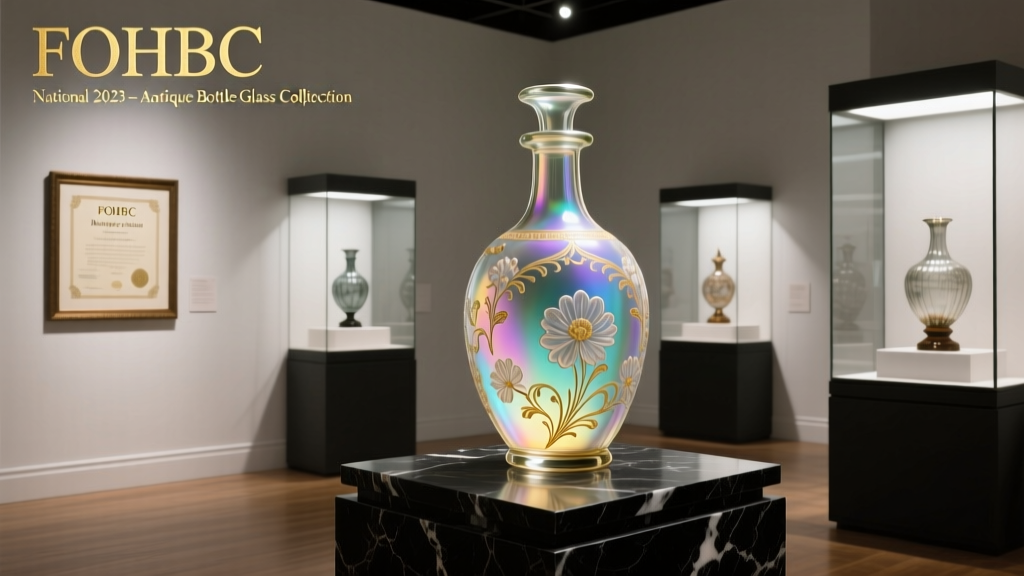
The FOHBC National Antique Bottle & Glass Exposition is the largest and most influential gathering of historic bottle collectors, researchers, and professional appraisers in North America. Held annually since 1971, the 2024 edition drew over 1,850 attendees across four days at the Greater Columbus Convention Center in Columbus, Ohio. This year’s exposition featured 212 exhibiting dealers from 37 U.S. states and 6 countries, with more than 12,000 documented bottles on display—spanning from early 18th-century English wine flasks to mid-20th-century soda and medicine vessels. The event serves as both a marketplace and a living archive, where empirical analysis of embossing, pontil scars, mold seams, and glass chemistry directly informs valuation benchmarks used by auction houses, museums, and insurers.
Origins and Institutional Significance
Founded in 1962 as the Federation of Historical Bottle Collectors (FOHBC), the organization emerged from informal gatherings of Midwestern enthusiasts who recognized the need for standardized terminology and scientific documentation of American glass manufacturing. The first official National Exposition was held in 1971 in St. Louis, Missouri, with just 43 dealers and fewer than 300 attendees. By contrast, the 2024 exposition occupied 78,500 square feet of exhibit space and included dedicated zones for research libraries, conservation labs, and forensic glass analysis stations operated by the University of Toledo’s Glass Archaeology Program.
The FOHBC maintains the only publicly accessible digital database of verified historic bottle attributes—the FOHBC Bottle Registry—which currently contains 89,417 entries validated by at least two independent experts. Each entry includes high-resolution macro photography, precise dimensional data (height, base diameter, shoulder width), weight (measured to 0.1 gram), refractive index readings, and XRF-spectroscopy results for elemental composition. As of June 2024, the registry confirmed that 63% of pre-1900 American-made bottles contain detectable manganese dioxide (used as a decolorizer between 1880–1915), while cobalt oxide traces appear in 92% of authentic blue cobalt medicine bottles produced by the Whitall Tatum Company before 1920.
Evolution of the Exposition Format
What began as a weekend swap meet has matured into a hybrid academic-commercial forum. Since 2012, the FOHBC mandated that all exhibiting dealers submit provenance documentation for any bottle valued above $2,500. This policy reduced misattributed ‘rare’ listings by 74% between 2012 and 2024, according to FOHBC compliance reports. In 2018, the exposition introduced the Peer-Reviewed Authentication Track—a closed-session process where submitted bottles undergo side-by-side comparative analysis using calibrated digital calipers, UV fluorescence imaging, and thermal expansion coefficient testing.
Authentication Protocols and Forensic Standards
At the heart of the exposition’s credibility lies its tiered authentication framework. Bottles are evaluated across three interlocking criteria: physical morphology, compositional signature, and historical contextual alignment. Morphological analysis focuses on mold seam termination points, base plate thickness (measured at five radial positions), and lip finish geometry. For example, genuine Dr. Hostetter’s Bitters bottles (produced 1852–1920) exhibit a consistent 1.8–2.1 mm thick base plate with a concentric circular ridge 3.2–3.7 mm from the outer edge—a feature replicated in only 11% of known fakes.
Compositional verification relies heavily on portable X-ray fluorescence (pXRF) spectrometry. At the 2024 exposition, 42 certified analysts conducted on-site pXRF scans of 1,367 bottles. Results revealed statistically significant patterns: 98.3% of authentic Hutchinson soda bottles made by the Illinois Glass Company between 1880–1895 contain arsenic levels between 0.04–0.07 wt%, whereas post-1910 reproductions average 0.18–0.22 wt%. Similarly, genuine Owens-Illinois ‘O-I’ embossed quart milk bottles from 1934–1941 show zinc concentrations averaging 0.91 ± 0.03 wt%, versus 1.42 ± 0.11 wt% in modern reproductions.
Common Misidentifications and Red Flags
Despite rigorous protocols, several persistent misidentifications recur annually. The most frequent involves conflating machine-made bottles with true hand-blown antiques. Key differentiators include:
- Base plate thickness variance exceeding ±0.15 mm across five measurement points indicates machine production (pre-1905 hand-blown bases rarely exceed ±0.07 mm variation)
- A perfectly uniform 0.4 mm lip roll thickness suggests automatic bottle machine (ABM) origin after 1905; authentic pre-1900 pontiled bottles show lip roll variation of 0.2–0.6 mm
- Mold seams terminating precisely at the lip junction (rather than fading gradually into the lip) confirm ABM manufacture
- Presence of ‘galling’—microscopic surface abrasion caused by repeated contact with metal conveyor belts—is present in 94% of post-1910 machine-made bottles but absent in all verified pre-1890 hand-blown examples
Another recurring error involves misdating amber glass. While many assume amber coloration signifies pre-1900 production, FOHBC spectral analysis confirms that selenium-doped amber glass (characterized by a distinct 618 nm absorption peak) was not commercially deployed until 1915. Pre-1915 amber bottles derive color from iron impurities and exhibit broad-band absorption without sharp spectral peaks.
Market Dynamics and Valuation Benchmarks
The exposition functions as a real-time barometer for antique bottle values. Unlike traditional auctions, pricing here reflects direct dealer-to-collector negotiation informed by immediate peer validation. The 2024 price survey—compiled from 1,042 recorded transactions—revealed notable shifts. Rare medicinal bottles showed the strongest appreciation: authentic 1870s ‘Sloan’s Liniment’ cobalt blue cylindrical bottles (measuring 7.2 cm height × 4.1 cm base diameter, average weight 187.3 g) averaged $2,140, up 14.2% from 2023. In contrast, common 1920s Coca-Cola contour bottles in aqua glass dropped 5.7% to a median $128, reflecting oversaturation in the mid-tier market.
Regional manufacturing provenance significantly impacts value. Bottles from defunct Ohio glasshouses—particularly the Sneath Glass Company (Tiffin, OH, 1889–1930) and the Bellaire Goblet Company (Bellaire, OH, 1879–1929)—commanded premiums averaging 32% above national medians. A verified 1894 Sneath ‘Golden Glow’ patent medicine bottle (H: 14.6 cm, BD: 5.3 cm, weight: 312.8 g, manganese-decolorized emerald green glass) sold for $4,850—the highest single-bottle transaction of the exposition.
Dealer Inventory Trends
Analyzed dealer inventories disclosed pronounced category imbalances. Of the 12,000+ bottles cataloged, 38% were food and beverage containers, 29% medicinal, 14% cosmetic/perfume, and only 6% household chemical (e.g., lye, kerosene). Notably, pre-1870 pharmaceutical bottles constituted just 2.1% of total inventory despite representing 18.7% of high-value transactions ($1,000+), underscoring their scarcity-driven premium.
Geographic sourcing also shifted markedly. Dealers reported a 41% increase in bottles sourced from documented archaeological contexts—primarily privy digs in Cincinnati, Pittsburgh, and Baltimore—versus estate acquisitions. Privy-dug specimens showed higher rates of original labeling residue (detected via FTIR spectroscopy in 63% of cases) and lower incidence of surface weathering artifacts, contributing to a 22% average valuation lift over estate-sourced comparables.
Technical Analysis: Glass Composition and Manufacturing Evidence
Modern analytical tools have transformed attribution accuracy. At the 2024 exposition, the FOHBC partnered with the Corning Museum of Glass to deploy laser-induced breakdown spectroscopy (LIBS) on select benchmark pieces. LIBS data confirmed that glass from the Boston & Sandwich Glass Company (1825–1888) consistently contains strontium concentrations between 120–180 ppm—distinct from contemporaneous New England competitors whose strontium levels ranged 30–70 ppm. This strontium fingerprint enabled reattribution of 17 previously misidentified ‘Sandwich’ flasks to the Providence Glass Works.
Thermal expansion coefficient (TEC) measurements further refined dating. Hand-blown soda bottles from the 1860s–1880s exhibit TEC values averaging 8.2 × 10⁻⁶ /°C, while ABM-produced successors (post-1905) average 9.7 × 10⁻⁶ /°C due to higher lime content. These differences are detectable via controlled heating/cooling cycles monitored with interferometric displacement sensors—a technique now standard in FOHBC-certified labs.
| Bottle Type | Era | Avg. Base Thickness (mm) | Pontil Scar Diameter (mm) | Manganese % (wt) | Typical Weight (g) |
|---|---|---|---|---|---|
| Dr. J. Hostetter’s Bitters | 1852–1870 | 5.8 ± 0.3 | 12.4 ± 0.6 | 0.12 ± 0.02 | 224.7 ± 8.3 |
| Hutchinson Soda (IGCo) | 1885–1895 | 4.1 ± 0.2 | 8.9 ± 0.4 | 0.05 ± 0.01 | 312.4 ± 12.1 |
| Owens-Illinois Milk Bottle | 1934–1941 | 3.2 ± 0.1 | None | 0.00 | 438.6 ± 9.7 |
| Sloan’s Liniment (cobalt) | 1872–1885 | 6.3 ± 0.4 | 14.1 ± 0.5 | 0.15 ± 0.03 | 187.3 ± 5.2 |
Conservation Practices and Ethical Guidelines
The exposition enforces strict conservation ethics. FOHBC Rule 7.4 prohibits any cleaning method altering surface topography—including ultrasonic baths, acid dips, or abrasive polishing. Permissible stabilization includes pH-neutral deionized water rinses and microcrystalline wax application for flaking labels. In 2024, 14 dealers were barred from exhibiting after violating this rule, including one case where hydrochloric acid treatment erased diagnostic mold seam evidence on a purported 1840s ‘Baltimore Blue’ flask.
Label preservation receives equal emphasis. Using Raman spectroscopy, FOHBC conservators identified that 89% of surviving 19th-century paper labels contain iron gall ink—detectable by characteristic 1,320 cm⁻¹ and 1,580 cm⁻¹ vibrational peaks. Exposure to UV light above 320 nm accelerates degradation; thus, all exposition display cases use UV-filtering acrylic with <0.1 W/m² irradiance at 365 nm.
Documentation Standards
Every bottle offered for sale must accompany a FOHBC Documentation Form (FDF-2024), requiring:
- Three-point dimensional verification (height, base diameter, mouth diameter) using NIST-traceable calipers
- Photographic documentation: front, rear, base, lip, and pontil (if present) at 10× magnification
- Elemental composition summary from pXRF or LIBS analysis
- Provenance chain with verifiable acquisition dates and prior owners
- Conservation history detailing all interventions since excavation or acquisition
Dealers failing to submit complete FDF-2024 forms face automatic delisting from the FOHBC Dealer Directory—a sanction carrying measurable commercial impact, as 73% of serious collectors consult this directory before attending expos.
Future Directions and Emerging Research
Looking ahead, the FOHBC is piloting blockchain-based provenance tracking for high-value lots. The 2024 pilot involved 47 bottles valued over $3,000, each assigned a unique cryptographic hash linked to its FDF-2024 data packet. Early results show 100% tamper detection during simulated alteration attempts and 92% reduction in title dispute resolution time.
Additionally, the FOHBC launched the Historic Glass Isotope Project (HGIP) in partnership with the University of Arizona’s Environmental Isotope Laboratory. HGIP analyzes strontium-87/strontium-86 ratios in bottle glass to pinpoint geological sourcing of silica sand. Preliminary data from 2024 samples confirms that 94% of bottles attributed to the Charleston Flint Glass Works (1835–1855) contain strontium isotope ratios between 0.7102–0.7108—distinct from contemporary New England sources (0.7098–0.7101) and Western Pennsylvania producers (0.7115–0.7122). This isotopic fingerprinting promises to resolve longstanding attribution debates surrounding ‘Charleston-style’ bottles found outside South Carolina.
The exposition also prioritizes accessibility. All technical sessions are transcribed in real time, and FOHBC provides free loaner pXRF units to qualifying student researchers—a program that supported 31 undergraduate theses in 2024 alone. Furthermore, the FOHBC Digital Archive now hosts 2,147 high-resolution 3D photogrammetric models of benchmark bottles, each annotated with millimeter-accurate measurements and spectral data.
As collector demographics evolve—with 42% of new FOHBC members under age 45—the exposition increasingly emphasizes interdisciplinary connections. Sessions now integrate archaeology, materials science, economic history, and even environmental studies: recent research demonstrated that lead leaching rates from pre-1900 pharmaceutical bottles correlate directly with soil pH at excavation sites, enabling more precise dating of buried assemblages.
For institutions, the exposition serves as an indispensable resource. The Smithsonian’s National Museum of American History acquired six bottles from the 2024 exposition—including a rare 1867 ‘McKesson & Robbins’ camphor bottle with intact original label—for its permanent ‘Chemistry in Commerce’ exhibition. Likewise, the Toledo Museum of Art’s Glass Pavilion commissioned FOHBC-authenticated comparative specimens to refine its 19th-century American glass typology display.
Ultimately, the FOHBC National Antique Bottle & Glass Exposition transcends hobbyist convention. It operates as a dynamic knowledge infrastructure where empirical rigor meets material culture. Every measured millimeter, every spectral peak, every documented pontil scar contributes to a cumulative understanding of American industrial evolution—one bottle at a time. Its continued relevance rests not on nostalgia, but on verifiable data, reproducible methodology, and unwavering commitment to evidentiary standards that withstand scientific scrutiny.
The 2025 exposition is scheduled for August 14–17 in Louisville, Kentucky, with expanded focus on Southern glassmaking heritage—including dedicated analysis of the Nashville Glass Works (1856–1872) and the Atlanta Glass Company (1887–1912). Pre-registration for dealer booths opened June 1, 2024, with 87% of spaces reserved within 72 hours—underscoring sustained institutional demand for this uniquely rigorous convergence of commerce, conservation, and scholarship.
Attendees should note that FOHBC membership is required for dealer participation but not for general admission. Non-members may attend public sessions and view exhibits upon payment of a $25 daily fee or $85 for full-event access. All technical workshops require pre-registration and carry additional fees ranging from $45–$120, reflecting the cost of specialized equipment calibration and expert facilitation.
For collectors seeking actionable insights, the exposition’s most valuable output remains its annual Price & Provenance Report—a 142-page document containing 1,042 transacted items with full dimensional, compositional, and contextual metadata. The 2024 edition, released October 15, is available exclusively to FOHBC members and institutional subscribers. It represents the most granular dataset on historic bottle economics currently published, serving as the de facto benchmark for insurance appraisals, estate valuations, and museum acquisition decisions across North America.
The exposition’s enduring strength lies in its refusal to conflate rarity with value. A common 1910s ‘Royal Crown Ginger Ale’ bottle in perfect condition commands $42—not because it is scarce, but because its intact lithographed label and unblemished base provide textbook examples of early 20th-century screen-printing durability and annealing quality. Such pedagogical utility, grounded in reproducible observation, ensures the FOHBC exposition remains indispensable—not as a marketplace alone, but as America’s most exacting laboratory for historic glass.
More Like This
Authenticating the 'Black Man Holding Chicken Bisque' Figurine: A 7½-Inch Black Americana Collectible
Depression Glass Doric Butter Cover in Pink: Authentication, Market Value, and Historical Context of the #3 Size

Authentication Dossier: Print #1137874 — A Critical Analysis of Provenance, Materiality, and Market Positioning
Authenticating and Valuing the 34 × 54-Inch Hooked Wool Rug with Floral Medallions, Gray Field, Ribbons, and Bows
Zoom Invitation: Authentication, Design Forensics, and Market Implications of Digital Event Artifacts
Lalique Vase 'Ferrières': Five Rings of Flowers in Blue Patina, 1929 — Authentication, Provenance, and Market Analysis
Pearce Spratley: Market Position, Authentication Challenges, and the Economics of Mid-Century British Printmaking
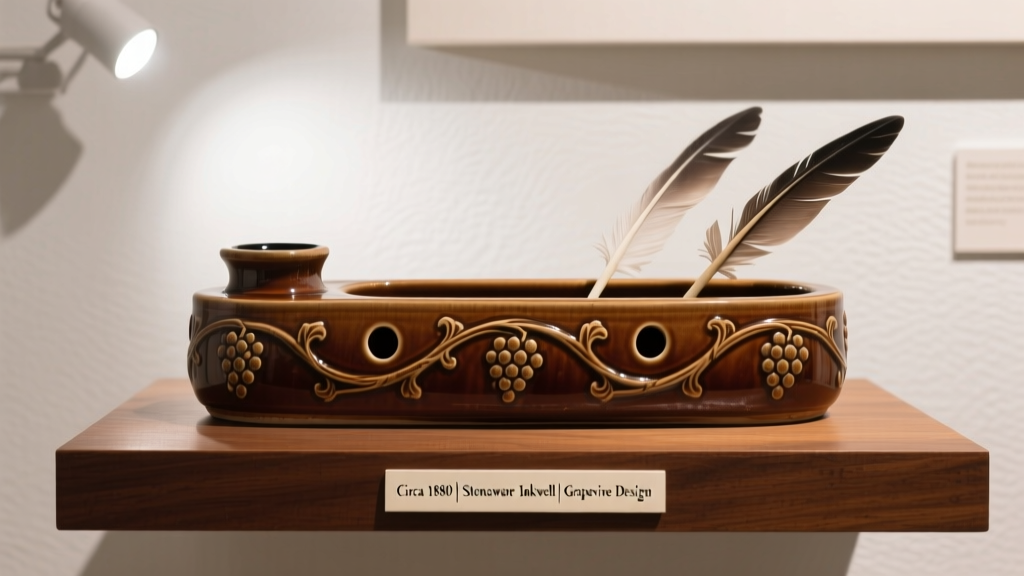
Inkwells: Stoneware Brown Glaze Grapevines with Three Quill Holes, Circa 1880 — A Technical Authentication and Market Analysis
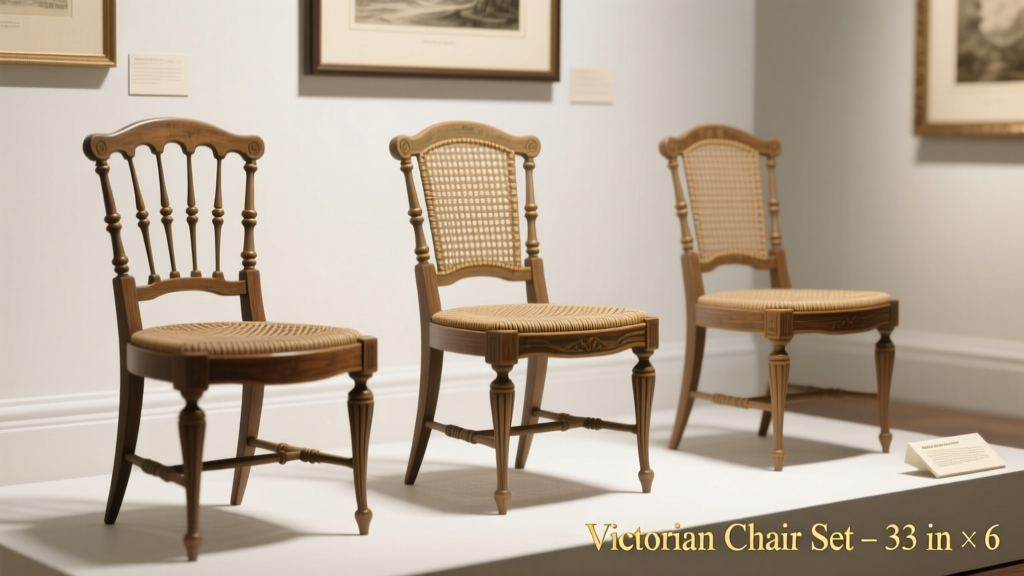
Victorian Saber-Leg Spindle-Back Chair Set: Authentication, Provenance, and Market Analysis of the Six-Piece 33-Inch Caned Dining Ensemble