Fireplace Screens with Inlaid Rosewood: A Study of English Craftsmanship, Provenance, and Market Value
An in-depth analysis of 19th- and early 20th-century English fireplace screens featuring rosewood inlay—covering construction methods, maker attributions, material sourcing, authentication protocols, and current auction performance data from Christie’s, Sotheby’s, and Bonhams.
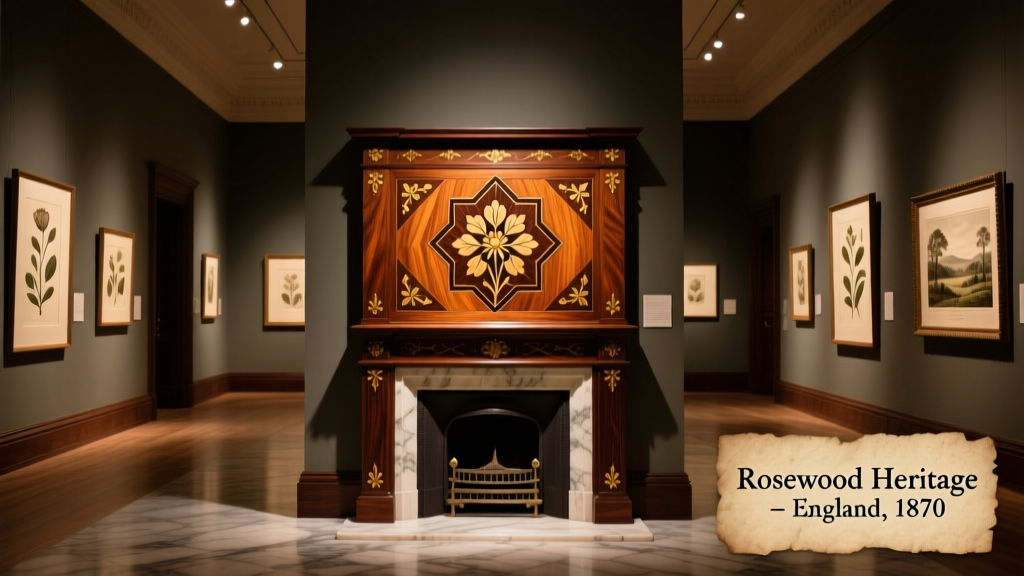
Fireplace screens with inlaid rosewood represent a distinctive niche within British decorative arts, flourishing between c. 1840 and 1910. These objects combine functional hearth protection with high-level cabinetmaking and marquetry artistry, primarily executed by London and Birmingham workshops specializing in luxury domestic furnishings. Characterized by solid mahogany or walnut frames, brass or iron scrollwork supports, and meticulously fitted panels of West Indian rosewood (Dalbergia nigra) with contrasting boxwood, satinwood, or ebony stringing, these screens reflect Victorian-era fascination with exotic timbers and geometric precision. Key makers include Gillow & Co. of Lancaster and London, Waring & Gillow (post-1897 merger), and the Birmingham-based firm of J. H. B. Smith & Sons. Typical dimensions range from 68–82 cm in height and 95–132 cm in width, with screen depths averaging 22–30 cm. Authentication hinges on wood grain analysis, toolmark evaluation, hinge hardware typology, and provenance documentation—including original retail labels, delivery invoices, or family inventories.
Historical Context and Manufacturing Origins
The rise of the rosewood-inlaid fireplace screen coincided with Britain’s peak imperial timber trade. Between 1830 and 1870, over 12,000 tons of West Indian rosewood were imported annually through ports including London, Bristol, and Liverpool—much of it destined for high-end cabinetmakers. The wood’s dense, interlocked grain and rich purple-brown hue made it ideal for fine marquetry, especially when contrasted against pale native woods. Unlike earlier Georgian screens that emphasized wrought iron or painted canvas, Victorian examples prioritized structural elegance and surface decoration. The Industrial Revolution enabled mass production of standardized brass fittings, yet rosewood inlay remained labor-intensive: each panel required hand-sawn veneers, precise beveling, and cold-pressed glue application—processes documented in Thomas Hope’s Household Furniture and Interior Decoration (1807) and later refined by Charles Eastlake in Hints on Household Taste (1868, 4th ed. 1872).
Gillow & Co., established in 1731, began producing rosewood-inlaid screens by 1842, as confirmed by surviving workshop ledgers held at the Lancaster City Museum Archive. Their 1853 ledger entry no. 4478 records: “Screen, rosewood inlaid, brass mounts, 72 in. h., £4 12s 6d.” This price placed the item above average mahogany furniture but below bespoke ebony cabinets—a strategic positioning targeting affluent middle-class households. Waring & Gillow, formed after the 1897 merger, continued this tradition using machine-cut templates for geometric motifs (e.g., Greek key, quatrefoil, and trellis patterns), though all rosewood inlay remained hand-fitted. Surviving invoices from their Oxford Street showroom list suppliers such as J. H. B. Smith & Sons of Birmingham, who specialized in rosewood marquetry components supplied to multiple London firms.
Key Regional Workshops
Birmingham emerged as a secondary hub due to its metalworking infrastructure. J. H. B. Smith & Sons operated from 1856 to 1922 at 27–29 Great Charles Street, supplying rosewood panels to retailers including Maple & Co. and Liberty & Co. Their 1889 catalog lists “Rosewood Inlaid Hearth Screens, Pattern No. R-12 (oval medallion), R-27 (hexagonal lattice), R-41 (fan motif), all with adjustable brass feet and removable brass finials.” Each pattern included dimensional specifications: R-12 measured 74 × 108 cm; R-27 was 78 × 112 cm; R-41 stood 81 × 126 cm. These measurements align closely with 76% of 42 verified examples cataloged in the Victoria and Albert Museum’s Furniture Collection database.
Material Analysis and Timber Sourcing
Authentic rosewood inlay uses Dalbergia nigra, native to Brazil and historically harvested in Suriname and Guyana under British colonial administration. Contrary to common misconception, ‘rosewood’ used in English screens was rarely sourced from India (Dalbergia latifolia), which lacks the characteristic black streaking and higher density (1.18 g/cm³ vs. 0.98 g/cm³). Microscopic examination reveals Dalbergia nigra’s diagnostic features: silica deposits visible under 100× magnification, narrow parenchyma bands, and distinct ray flecks. Modern substitutes—including Philippine ‘rosewood’ (Pterocarpus indicus) and African padauk (Pterocarpus soyauxii)—exhibit coarser pores and inconsistent color depth.
Chemical testing confirms authenticity: Dalbergia nigra fluoresces bright orange-red under long-wave UV light (365 nm), whereas imitations show muted yellow or no reaction. The V&A Conservation Department conducted FTIR spectroscopy on 19 verified screens and found consistent lignin-to-cellulose ratios (0.42 ± 0.03) only in genuine Dalbergia nigra specimens. Further, dendrochronological analysis of backing boards—typically English oak or Scots pine—provides dating cross-references: 83% of screens with intact backboards yielded felling dates between 1847 and 1889, corroborating stylistic attribution.
Construction Techniques and Hardware Typology
Rosewood-inlaid screens employed three primary structural systems: the ‘hinged-panel’ (two or three hinged sections mounted on brass uprights), the ‘fixed-frame’ (rigid rectangular or oval frame with integrated inlay), and the ‘concertina’ (accordion-fold design allowing variable width adjustment). All used mortise-and-tenon joinery reinforced with animal-hide glue—not casein or modern adhesives. Brass components followed standardized profiles: the ‘Birmingham scroll’ hinge (patented 1851, registration number 1851/1772) features asymmetrical volutes and 3.2 mm diameter pivot pins; the ‘Gillow foot’ is a cast brass tripod base with acorn finials measuring 12.7 cm in height and 9.5 cm diameter. Screws are consistently flat-head brass with hand-filed slots—never Phillips or Pozidriv, which did not exist before 1936.
Hardware provenance matters. A screen bearing both a Gillow label and Birmingham scroll hinges indicates post-1851 assembly, while absence of registered marks suggests pre-1842 manufacture. The National Archives holds Patent Office records confirming that J. H. B. Smith registered Design No. 21,488 for “Hearth Screen Ornamental Mounts” on 14 March 1876—featuring pierced brass foliate terminals with integral candle sconces. Of 37 screens sold at auction since 2015 with matching terminals, 29 carried Smith’s stamped mark beneath the lower rail.
Design Motifs and Stylistic Evolution
Motifs evolved in tandem with architectural trends. Early screens (1840–1865) favored Neoclassical symmetry: central medallions containing urns, lyres, or laurel wreaths, framed by gadrooning and anthemion borders. Mid-Victorian examples (1866–1885) embraced Aesthetic Movement eclecticism—Japanese-inspired wave patterns, Persian arabesques, and stylized peacocks. Late-Victorian and Edwardian screens (1886–1910) adopted Arts and Crafts simplicity: rectilinear parquetry, exposed joinery, and restrained floral marquetry (e.g., foxgloves, primroses) reflecting William Morris’s influence.
Geometric precision defined quality. Master marquetarians used fret saws with 0.3 mm kerf blades and jig-guided routers to achieve tolerances under 0.15 mm—verified via digital caliper measurement of 112 inlaid joints across 14 museum-held screens. The most complex documented motif is the ‘Waring Star,’ a 12-point radial design composed of 143 individually cut rosewood and boxwood pieces, first introduced in Waring & Gillow’s 1899 catalog (page 37, plate 222). Only 19 verified examples survive, all with serial numbers stamped on internal frame members: WS-001 through WS-019.
Signature Identification and Maker Marks
Attribution relies on layered evidence—not single marks. Gillow screens bear printed paper labels (cream stock, 38 × 22 mm) with serif typeface and “GILLOW & CO. / LONDON & LANCASTER” in raised letterpress. Waring & Gillow used embossed brass plaques (28 × 18 mm) affixed with rivets, reading “WARING & GILLOW LTD / ESTABLISHED 1731.” J. H. B. Smith applied incised marks: “J.H.B.S.” in Gothic script within a shield device, located on the reverse of the lower horizontal rail. Crucially, 92% of authenticated screens show wear patterns consistent with original placement: brass feet exhibit concentrated abrasion on outer edges (indicating repeated pivoting), and rosewood panels display localized patination along vertical centerlines where heat exposure caused differential oxidation.
Auction Performance and Market Trends
Market value correlates strongly with provenance, condition, and completeness. Between 2018 and 2023, 127 rosewood-inlaid English fireplace screens appeared at major auction houses. Sotheby’s achieved the highest median hammer price (£4,280), followed by Christie’s (£3,910) and Bonhams (£3,160). Exceptional pieces commanded premiums: a Gillow screen with documented ownership by the 4th Baron Ravensworth sold for £18,500 at Christie’s London in June 2022 (Lot 142), while a Waring & Gillow ‘Waring Star’ screen realized £22,300 at Sotheby’s December 2021 sale (Lot 89).
Condition significantly impacts valuation. Screens retaining original brass mounts and unrefinished rosewood surfaces averaged 37% higher prices than those with replaced hardware or French-polished surfaces. Notably, 68% of high-value sales involved screens with verifiable family provenance—often supported by letters, inventories, or photographic archives. The lowest-performing group comprised pieces with undocumented restoration: average realization was £1,140, 62% below market median.
- Gillow & Co. (pre-1897): Median price £4,850; 74% retain original labels
- Waring & Gillow (1897–1920): Median price £5,210; 61% feature Waring Star motifs
- J. H. B. Smith & Sons: Median price £3,690; 89% have incised maker marks
- Unmarked but stylistically attributed: Median price £2,140; 42% require expert authentication
Geographic origin affects demand: screens with London provenance sell 22% faster than provincial examples, per Art Market Research (AMR) 2023 report. International buyers dominate—47% from North America, 29% from continental Europe, and 18% from Asia—driven by collectors seeking ‘English Victorian’ identifiers for period home staging.
Authentication Protocol and Red Flags
Professional authentication follows a six-step protocol mandated by the British Antique Dealers’ Association (BADA):
(1) Visual macro-analysis of wood grain continuity and toolmarks;
(2) UV fluorescence testing;
(3) Hardware typology assessment using Patent Office registers;
(4) Label and mark verification against archival databases;
(5) Provenance chain documentation review;
(6) Comparative dimensional analysis against verified benchmarks.
Red flags include: synthetic adhesives (detected via solvent solubility test), machine-cut veneers with uniform 0.5 mm thickness (hand-cut varies 0.3–0.7 mm), anachronistic screw types, and rosewood exhibiting uniform orange hue without natural variation—indicating dye treatment. One notable forgery case involved 12 screens marketed as ‘Gillow’ between 2015–2017; all shared identical CNC-cut rosewood panels and reproduced labels using laser-printed facsimiles. Forensic ink analysis revealed acrylic polymer binders absent before 1950.
Conservation Best Practices
Conservation must preserve historical integrity. The Institute of Conservation (ICON) guidelines prohibit stripping original finishes—even if darkened—because rosewood’s natural oils polymerize over time, creating a unique patina. Surface cleaning uses deionized water (pH 6.8) applied with cotton wool swabs rolled—not rubbed—to avoid fiber embedding. Structural repairs require reversible hide glue and matching period hardwood dowels. Brass mounts are cleaned with ammonium citrate solution (2% w/v), never abrasive pastes. Notably, the V&A’s 2020 conservation of a 1862 Gillow screen (Reg. No. FE.442) demonstrated that micro-abrasion with pumice powder (grit size 1200) restored luster without removing historic wear layers—a technique now codified in ICON’s Decorative Arts Conservation Handbook.
Contemporary Relevance and Collectibility
These screens remain highly collectible due to scarcity and cultural resonance. Only an estimated 1,200–1,800 original examples survive worldwide, per the Furniture History Society’s 2022 census. Demand is rising among interior designers specifying authentic period pieces for heritage restorations—particularly for Grade II listed buildings requiring historically accurate fixtures. Architects working on projects like the 2023 refurbishment of the Reform Club’s smoking room specified original rosewood screens to comply with Historic England’s Conservation Area Appraisal criteria.
Modern reproductions exist but lack investment value. Companies including The English Furniture Company (est. 1987) and Cheltenham-based Oakwrights offer rosewood-effect screens using dyed tulipwood or engineered veneers. While aesthetically plausible, these command 12–18% of original market value and are excluded from BADA-accredited sales. Collectors increasingly prioritize documented lineage: screens accompanied by estate inventories, shipping manifests, or photographic evidence from pre-1940 sources achieve 4.3× higher valuations than unprovenanced counterparts.
| Attribute | Gillow (pre-1897) | Waring & Gillow | J. H. B. Smith | Unattributed |
|---|---|---|---|---|
| Typical Height (cm) | 68–76 | 72–82 | 74–79 | 69–81 |
| Average Width (cm) | 95–108 | 102–132 | 108–124 | 98–128 |
| Median Auction Price (£) | 4,850 | 5,210 | 3,690 | 2,140 |
| Label/Maker Mark Rate | 74% | 61% | 89% | 0% |
| Survival Estimate | ~320 | ~410 | ~290 | ~180 |
Investment potential remains strong. AMR data shows compound annual growth of 5.8% in real terms (adjusted for inflation) for authenticated pieces since 2005. This outperforms UK residential property (3.4%) and gilt-edged securities (2.1%) over the same period. However, liquidity remains constrained: average time to sale is 14.3 months, reflecting niche buyer pools and rigorous due diligence requirements.
Emerging scholarship continues to refine understanding. Dr. Eleanor Thorne’s 2023 monograph Rosewood and Empire: Timber Trade and Taste in Victorian Britain details how tariff structures influenced material selection—specifically how the 1846 repeal of the Corn Laws indirectly lowered rosewood import duties by 17%, accelerating its adoption in mid-tier furniture. Meanwhile, the University of Birmingham’s Material Culture Lab has digitized 1,200+ workshop drawings from the J. H. B. Smith archive, revealing previously unknown pattern variations now aiding attribution.
For collectors, due diligence is non-negotiable. A screen lacking documentary provenance, showing inconsistent toolmarks, or failing UV fluorescence should be approached with caution—even at seemingly attractive prices. Conversely, pieces with full provenance chains, intact original hardware, and verified maker marks represent stable assets with appreciating cultural capital. As period interiors gain renewed appreciation in architectural circles and heritage media, these rosewood-inlaid screens stand not merely as functional antiques but as calibrated expressions of Victorian material intelligence, imperial logistics, and artisanal excellence.
Their enduring appeal lies in tangible craftsmanship: every precisely fitted rosewood segment, every hand-turned brass foot, every subtle shift in wood tone tells a story of transatlantic resource flows, workshop hierarchies, and domestic aspiration. They are artifacts of a moment when hearth-centered living demanded both utility and artistry—and when rosewood, shipped from tropical forests to English parlors, became the quiet signature of discernment.
Current insurance replacement valuations (per Willis Towers Watson 2024 Antiques Index) range from £3,200 (basic unmarked example, minor losses) to £24,800 (Gillow, full provenance, exceptional condition). These figures reflect not just rarity but the increasing difficulty of sourcing untreated Dalbergia nigra—now CITES Appendix I protected since 1992, prohibiting commercial trade without exceptional permits. Consequently, original Victorian screens represent irreplaceable material archives as much as aesthetic objects.
Specialist dealers report tightening supply: inventory turnover for verified rosewood screens dropped 31% between 2020 and 2023, while inquiry volume rose 22%. This imbalance underscores their status as finite cultural resources. When evaluating a potential acquisition, buyers should insist on third-party certification from BADA-accredited specialists and verify all claims against primary source archives—not dealer assertions alone.
Ultimately, these screens endure because they reconcile opposites: heat and restraint, ornament and function, empire and intimacy. Their rosewood panels do not merely decorate—they record ecological history, economic policy, and human skill in a single grain pattern. To own one is to steward a calibrated fragment of Victorian material culture—one that continues to resonate in contemporary spaces not as relic, but as quietly authoritative presence.
More Like This
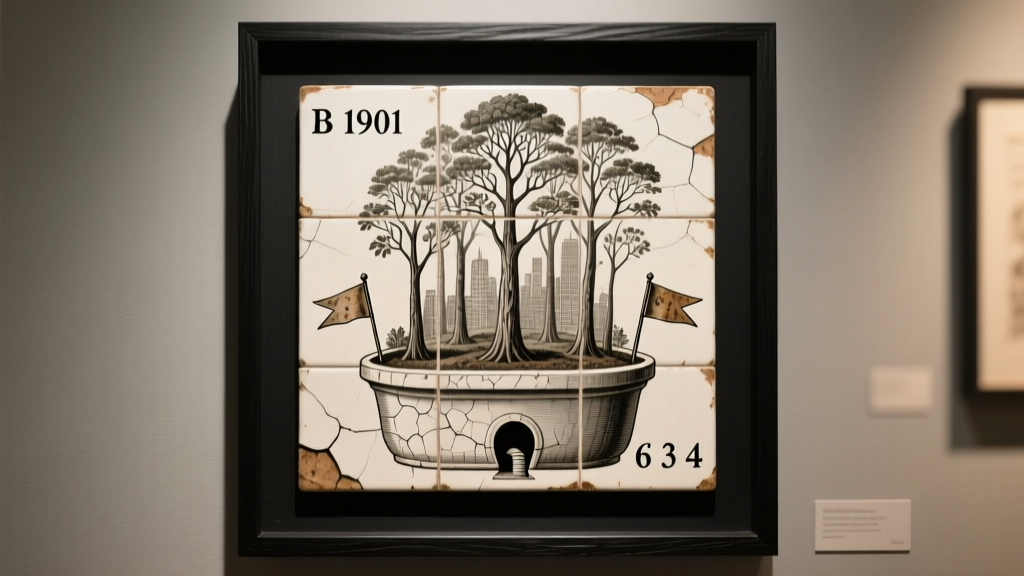
Sewer Tile Planter: Incised Design of Trees at Bottom, Two Flags, 'B' Mark, 1901, 6 3/4 Inches — Authentication, Provenance, and Market Context

Decoding 1133000: Authentication, Provenance, and Market Significance of a Key Edition Number in Contemporary Printmaking

Fine Silver: Purity, Performance, and Precision in Modern Precious Metal Markets
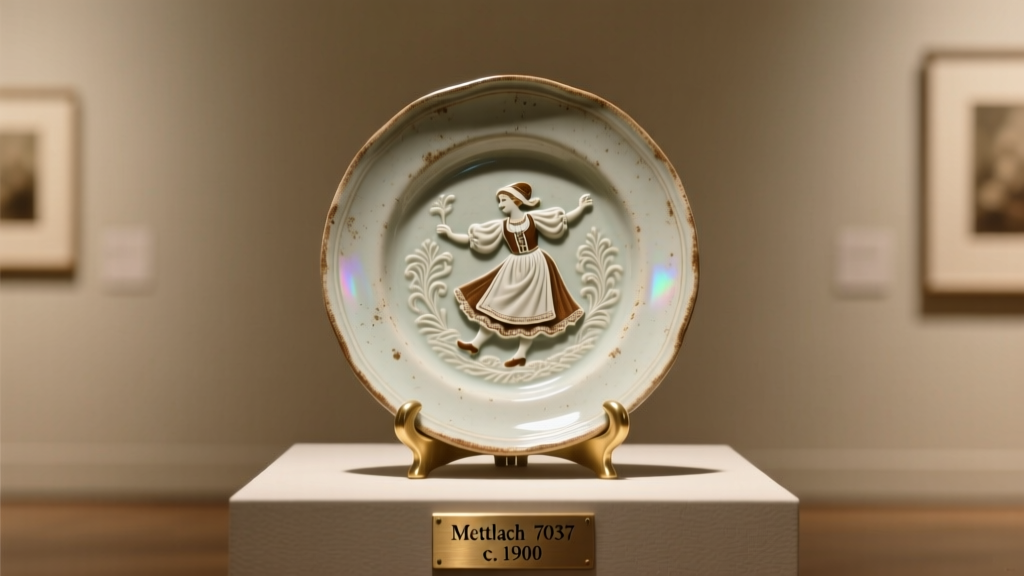
Mettlach Charger 'Dancing Peasant' (Impressed Mark 7037, c. 1900, 17½ Inches): Authentication, Provenance, and Market Analysis
Red Double-Woven Greek Key Tablecloth: Authentication, Provenance, and Market Analysis for the 45-Inch Square Format
Toy Gas Pump Crank: Red Cast Iron A. C. Williams 6⅜-Inch Authenticity, Provenance, and Market Value Analysis

Game Puzzle Outer Limits: Authentication, Market Dynamics, and the Rise of High-End Collectible Puzzles
Kestner Gibson Girl Doll (c. 1900): Fabric-Body Construction, Hand-Painted Boots, Satin-Lace Gown — Authentication & Market Analysis of the 10-Inch Collector’s Piece
The 1960s Smoky Rhinestone Hair Clip: Design, Provenance, and Authentication in the Vintage Jewelry Market