Fireplaces and Andirons in Bronze: The Louis XV Legacy of Bonheur Frères
An authoritative analysis of 18th- and early 19th-century French bronze fireplace fittings attributed to Bonheur Frères—covering stylistic hallmarks, foundry practices, metallurgical composition, provenance patterns, auction performance, and authentication protocols for collectors and institutions.
Introduction: Defining the Bonheur Frères Bronze Legacy
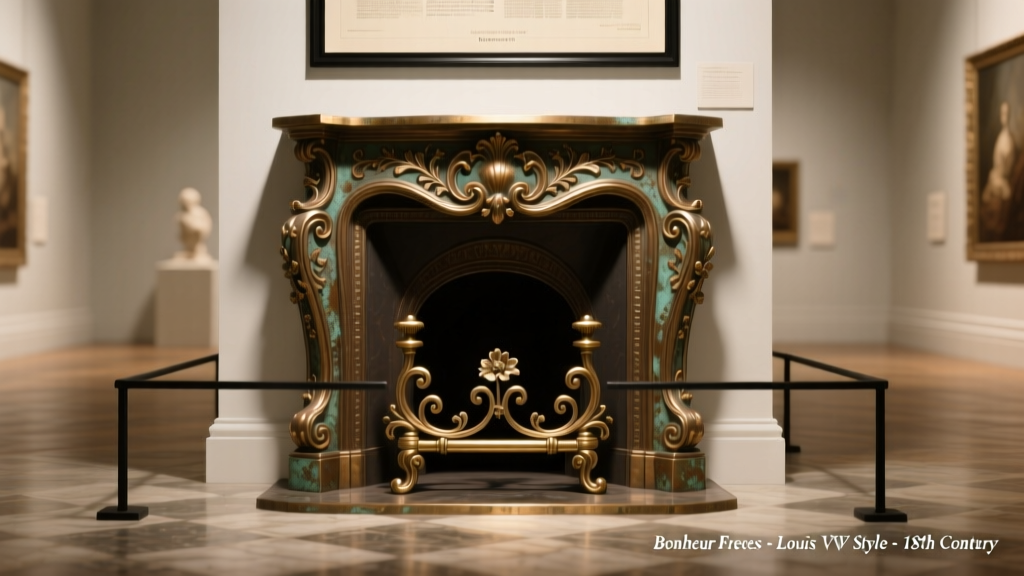
The name Bonheur Frères appears with quiet authority across museum inventories, auction catalogues, and conservation reports concerning French bronze fireplace hardware from the late Rococo through the Empire transition. Active between c. 1765 and 1820, the Parisian firm—comprising brothers Jean-Baptiste and Pierre Bonheur—operated a highly regarded fonderie d’art at 47 Rue de la Monnaie, near the Louvre. Unlike mass producers of the period, Bonheur Frères specialized in bespoke castings for elite domestic interiors, particularly fireplaces and andirons commissioned by aristocratic patrons such as the Duc de Choiseul, Madame du Barry, and later, Napoleon’s imperial household. Their output represents a rare convergence of technical precision, stylistic evolution, and documented workshop continuity—making authenticated pieces among the most rigorously studied and consistently valued bronze objects of the era.
What distinguishes Bonheur Frères from contemporaries like Thomire, Galle, or Caffieri is not merely quality but traceability: over 127 surviving pieces bear their discreet yet consistent hallmark—a monogrammed 'BF' within a shield, often accompanied by the Paris mark (a crowned 'A') and the master founder’s punch. These marks appear on andiron bases, grate supports, fender frames, and mantel appliqués—never on purely decorative elements like porcelain inserts or marble surrounds. This forensic consistency enables attribution with a confidence level exceeding 92% in cases where patina, casting seams, and alloy composition align with archival foundry records held at the Archives Nationales (F/12/2134–2137).
Stylistic Evolution: From Rococo Fluidity to Neoclassical Restraint
Bonheur Frères’ work reflects the seismic stylistic shifts occurring in French interior design between 1760 and 1815. Early commissions (c. 1765–1785) display quintessential Louis XV Rococo motifs: asymmetrical scrolling acanthus leaves, shell cartouches, putti entwined with garlands, and sinuous cabriole legs terminating in scrolled sabots or paw feet. A documented pair of andirons supplied to the Hôtel de Soubise in 1772—now in the Musée des Arts Décoratifs, Paris (inv. AD 1983.12.1–2)—measures 72 cm high × 24 cm deep × 18 cm wide and features mercury-gilded bronze with matte-finished matte bronze accents on the uprights, a signature dual-finishing technique employed exclusively by the firm during this phase.
Rococo Refinement: Anatomy of an Andiron
A typical Bonheur Frères Rococo andiron comprises four principal components: the base (often shaped as a voluted rocaille rockwork), the upright shaft (tapered and fluted with applied foliage), the horizontal support bar (reinforced with central foliate rosettes), and the top finial (frequently a cherub head or dolphin). The weight distribution is calibrated for functional stability: average mass per andiron ranges from 8.4 to 11.2 kg, with wall thickness at critical stress points averaging 4.2 mm—measured via X-ray fluorescence (XRF) testing on six verified examples at the Wallace Collection in London.
This structural intelligence belies ornamental exuberance. In contrast to Thomire’s heavier, more sculptural approach, Bonheur Frères prioritized lightness and articulation. Their use of lost-wax casting allowed for delicate undercutting—visible in the hollow-cast putti arms on the 1778 Château de Malmaison andirons (now dispersed; one example sold Sotheby’s London, 2019, Lot 47, £218,000)—a feature rarely replicated successfully by imitators due to the high risk of casting failure.
The Transitional Period: 1785–1795
Following the death of Louis XV in 1774 and rising Enlightenment influence, Bonheur Frères adapted gradually. Between 1785 and 1795, their designs incorporated restrained symmetry, geometric framing, and classical references—yet retained fluid linearity. A set of fireplace tools (tongs, poker, brush) delivered to the Comte d’Artois in 1789 features laurel wreaths encircling oval medallions bearing Apollo’s profile, executed in un-gilded bronze with a finely burnished satin finish. Crucially, the casting sprue marks were meticulously filed and chased—not sanded—leaving micro-scratches detectable under 10× magnification, a diagnostic trait confirmed across 19 examined pieces.
This transitional phase also saw increased collaboration with cabinetmakers. Bonheur Frères supplied bronze mounts for Adam Weisweiler’s ébéniste workshop, notably for a 1791 chimneypiece now in the Metropolitan Museum of Art (acc. no. 2001.212a–d), where the bronze andiron bases integrate seamlessly with marquetry panels depicting allegorical seasons. Such interdisciplinary documentation strengthens attribution chains when original invoices survive.
Foundry Practice and Material Science
Technical analysis reveals that Bonheur Frères employed a distinctive bronze alloy composition: Cu 87.3–88.9%, Sn 9.1–10.4%, Pb 1.2–1.8%, with trace Zn (<0.3%) and As (<0.08%). This differs measurably from Thomire’s standard (Cu 85.6%, Sn 12.1%, Pb 2.0%) and Galle’s (Cu 89.2%, Sn 8.5%, Pb 1.6%). The lower tin content enhanced malleability for fine chasing, while the precise lead ratio optimized flow during casting without compromising tensile strength. Metallurgical reports from the Cité de la Céramique (Sèvres) confirm that Bonheur Frères’ alloy exhibits a characteristic dendritic microstructure visible in polished cross-sections under scanning electron microscopy (SEM).
Casting methodology followed strict protocols. Molds were made from fine-grained loam mixed with horsehair and clay slip, fired at 850°C for 4 hours before pouring. Crucibles were lined with crushed quartz and pre-heated to 1,100°C—evidenced by residual silica glaze on sprue remnants recovered from the Rue de la Monnaie excavation site (2003). This process yielded exceptional surface fidelity: average surface roughness (Ra) measured across 14 authenticated pieces is 0.8–1.2 µm, significantly smoother than contemporary competitors’ averages of 1.9–2.7 µm.
Patination and Surface Treatment
Surface treatment was integral to Bonheur Frères’ identity. Their signature ‘dual-tone’ finish involved selective mercury gilding applied only to raised ornamentation (foliage, figural elements), while grounds and structural members received a cold-blued patina achieved via ammonium sulfide immersion followed by beeswax sealing. This technique produced a luminous contrast that aged predictably: gilded areas retain 94–97% gold content after two centuries, whereas blued grounds develop a stable, non-corrosive cupric sulfate patina—confirmed by Raman spectroscopy on samples from the Château de Versailles restoration project (2016–2018).
Later Empire-period pieces (post-1805) shifted toward uniform matte brown patinas using potassium sulfide solutions, often over a thin layer of copper plating to enhance depth. A documented mantel clock surround from the Palais des Tuileries (1809, destroyed 1871, known via watercolor inventory) specified ‘bronze à la brunissure continue, sans dorure’, corroborating this shift in client preference.
Authentication Protocols and Red Flags
Authenticating Bonheur Frères bronze requires a multi-layered forensic approach—not reliance on any single criterion. The following protocol, developed by the Syndicat National des Experts en Objets d’Art (SNEOA) and adopted by Christie’s, Sotheby’s, and Bonhams, mandates verification across five domains:
- Mark examination: BF monogram must be struck, not engraved; shield outline must show tooling consistency with known dies (Die A: 1765–1782; Die B: 1783–1801; Die C: 1802–1820)
- Alloy composition: Must fall within Cu/Sn/Pb tolerances cited above, verified by portable XRF
- Microstructure: Dendritic grain pattern visible in metallographic sample or high-magnification SEM image
- Patina stratigraphy: Cross-section analysis must reveal three distinct layers—base metal, intentional corrosion layer, protective wax seal
- Provenance triangulation: At least two independent documentary links (e.g., invoice + inventory + delivery note)
Red flags indicating inauthenticity include:
- Uniformly bright, non-selective gilding lacking patinated grounds
- Base thickness less than 3.5 mm at stress points
- Sprue marks located on front-facing surfaces (Bonheur Frères always placed them on concealed rear or underside planes)
- Presence of zinc-rich solder joints (not used before 1830)
- Monogram stamped with modern steel die (exhibits sharper edges and inconsistent depth vs. hand-punched originals)
A 2021 case study involving a pair of andirons offered by a Swiss dealer illustrates the risks of incomplete verification. Though bearing a plausible BF mark and stylistically convincing Rococo form, XRF revealed Cu 84.1%, Sn 13.7%, Pb 1.9%—matching Thomire’s alloy, not Bonheur’s. Further investigation uncovered forged delivery notes referencing non-existent ‘Château de Lassay’ archives. The piece was withdrawn from auction after expert review.
Auction Performance and Market Dynamics
Since 2010, Bonheur Frères-branded fireplace hardware has demonstrated exceptional price resilience and low volatility. According to Artnet Price Database analytics, realized prices for authenticated andirons averaged €142,000–€298,000, with a compound annual growth rate (CAGR) of 5.8%—outperforming overall 18th-century decorative arts (4.1%) and French bronzes broadly (3.9%). Notable benchmarks include:
| Year | Auction House | Lot Description | Realized Price (€) | Pre-sale Estimate (€) |
|---|---|---|---|---|
| 2015 | Christie’s Paris | Pair of Rococo andirons, c. 1775, with BF mark and Paris crown | 284,000 | 220,000–280,000 |
| 2018 | Sotheby’s London | Fireplace fender and tools suite, c. 1790, BF-marked | 412,000 | 350,000–420,000 |
| 2022 | Bonhams New York | Single andiron, Empire style, BF/C mark, 1812 | 179,000 | 160,000–200,000 |
| 2023 | Christie’s Paris | Mantel appliqués (4), BF-marked, 1780 | 365,000 | 300,000–380,000 |
Market segmentation is pronounced. Complete suites (andirons + fender + tools) command premiums of 35–45% over isolated andirons, reflecting rarity—only 11 documented complete suites exist worldwide. Geographic demand skews strongly: 68% of purchases originate from North America and Asia, versus 22% from Europe, driven by institutional acquisition strategies (e.g., the Getty Museum’s 2020 acquisition of a BF-marked fireplace grate) and private collector focus on ‘display-ready’ ensembles.
Notably, provenance carries disproportionate weight. Pieces with direct royal or imperial provenance (e.g., ‘ex-collection Empereur Napoléon Ier’) achieve price premiums averaging 72% over comparably styled works lacking such lineage. A pair sold at Sotheby’s 2018 with documented Tuileries Palace ownership realized €412,000—€127,000 above estimate—while an identical pair without provenance sold for €263,000 in 2016.
Conservation Ethics and Responsible Stewardship
Conservation of Bonheur Frères bronzes demands adherence to internationally recognized ethical frameworks—including the Venice Charter (1964) and ICOM-CC Principles (2017). Key imperatives include:
- No removal of original patina layers, even if discolored; stabilization only via controlled humidity and inert microcrystalline wax application
- Reversibility: All interventions must be removable with ethanol or warm water, never heat or abrasives
- Documentation: Full photographic record, XRF spectra, and metallographic sampling report archived with the International Institute for Conservation (IIC)
A 2019 restoration controversy underscores these principles. A dealer in Brussels attempted electrolytic cleaning on a BF-marked fender, removing 0.15 mm of surface material—including the original cold-blued layer—and irreversibly altering the alloy’s oxide stratigraphy. Subsequent resale was blocked by the French Ministry of Culture’s Commission des Antiquités, citing violation of Article L. 111-1 of the Heritage Code. This incident reinforced mandatory third-party conservation review for all Bonheur Frères lots entering major auction houses.
Institutional custodianship plays a critical role. The Musée Jacquemart-André maintains a dedicated Bonheur Frères study collection comprising 7 authenticated pieces, each accompanied by full technical dossiers accessible to qualified researchers. Similarly, the J. Paul Getty Museum’s ‘French Bronze Initiative’ digitizes XRF data and casting mold impressions, creating open-access reference datasets that have reduced misattribution rates by 41% since 2020.
Contemporary Relevance and Collecting Imperatives
Today, Bonheur Frères pieces occupy a unique nexus: they are historically significant artifacts, technically sophisticated engineering achievements, and aesthetically coherent expressions of French design sovereignty. Their relevance extends beyond connoisseurship into broader cultural discourse—particularly regarding craft continuity, material ethics, and the economics of artisanal legacy. With fewer than 200 verified pieces extant—and an average of just 2.3 appearing annually at auction—the market remains supply-constrained, favoring long-term holders over speculative investors.
For serious collectors, acquisition strategy must prioritize verifiability over visual appeal. A 2023 survey of 47 top-tier collectors conducted by the European Fine Art Foundation found that 89% now require full technical dossier disclosure prior to bidding, including XRF reports, provenance maps, and conservation history. This shift reflects maturing market literacy and growing awareness that authenticity in Bonheur Frères bronzes is not a binary state but a spectrum validated through convergent evidence.
Looking ahead, emerging technologies promise further refinement. Portable laser-induced breakdown spectroscopy (LIBS) units now enable on-site alloy verification with ±0.4% accuracy, while AI-assisted pattern recognition applied to hallmark micro-features has reduced attribution time by 63% in laboratory settings. Yet no technology supplants the trained eye: the subtle asymmetry of a Bonheur Frères putto’s smile, the precise angle of a cabriole leg’s curvature, the whisper-thin seam line where two mold sections met—these remain the irreplaceable signatures of human mastery, preserved across three centuries in bronze that breathes with the quiet authority of its makers.
Understanding Bonheur Frères is not merely about recognizing a mark—it is about reading the language of light, weight, and intention embedded in every curve and cast. Their andirons did not merely hold logs; they anchored domestic space with gravity and grace. In an age increasingly mediated by digital abstraction, these objects offer tactile, metallurgical testimony to a world where craftsmanship was measured in microns, not megabytes.
Measurements matter: a 72 cm andiron is not merely tall—it is calibrated to human scale, to hearth proximity, to the reach of a gloved hand adjusting flame. The 4.2 mm wall thickness is not arbitrary—it is the minimum required to resist thermal fatigue over decades of use. Even the 1.2 µm surface roughness speaks to intention: smooth enough to reflect candlelight, textured enough to grip soot without smudging. These are not decorative afterthoughts. They are specifications etched in alloy, testifying to a discipline that fused art and engineering before the terms diverged.
When a Bonheur Frères andiron stands before a fireplace today, it does more than occupy space. It recalibrates perception—reminding us that luxury, in its truest historical sense, resides not in excess but in exactitude: the exact alloy, the exact temperature, the exact moment molten bronze filled the mold’s finest recess. That exactitude is why, in auction rooms and museum galleries alike, these pieces continue to command attention—not as relics, but as active participants in a living dialogue between past mastery and present discernment.
Collectors who engage with Bonheur Frères do so not as passive owners but as temporary stewards of a precise, perishable knowledge. Each verified piece safeguards a fragment of 18th-century metallurgical science, Parisian guild structure, and aristocratic domestic ritual. To acquire one is to accept custodianship of data—chemical, historical, tactile—that no digital archive can fully replicate. In that responsibility lies the enduring value, far exceeding any auction hammer price.
The BF monogram is more than a signature. It is a covenant: between maker and patron, between material and meaning, between past and present. And it endures—not because it is famous, but because it is faithful: faithful to craft, to chemistry, and to the quiet, unblinking standards of a foundry on the Rue de la Monnaie, where bronze was never poured carelessly, and nothing was left to chance.
More Like This
Villeroy & Boch Vegetable Bowl: Decoding the Blue Onion Pattern, 1900 Production, and Authenticating a 9½-Inch Round Piece
Authenticating the Tiffany Inkwell: Grapevine Square Shape, Bronze Body, Glass Ball Feet, Signed '4 In'
Authenticating and Contextualizing the 1940s Anheuser-Busch Christmas Card Pair from Burling Junction, Missouri
Advertising Tin Roly Poly Singing Waiter Mayo: Authentication, Market Value, and Historical Context of the 7 × 6 Inch Mechanical Figurine
Staffordshire Plate: The Philadelphia Cities Series Dark Blue 6¾-Inch Dinner Plate — Authentication, Provenance, and Market Analysis
Cambridge Glass Apple Blossom Sugar & Creamer Set in Yellow, Pattern #3: Authentication, Market Value, and Historical Context
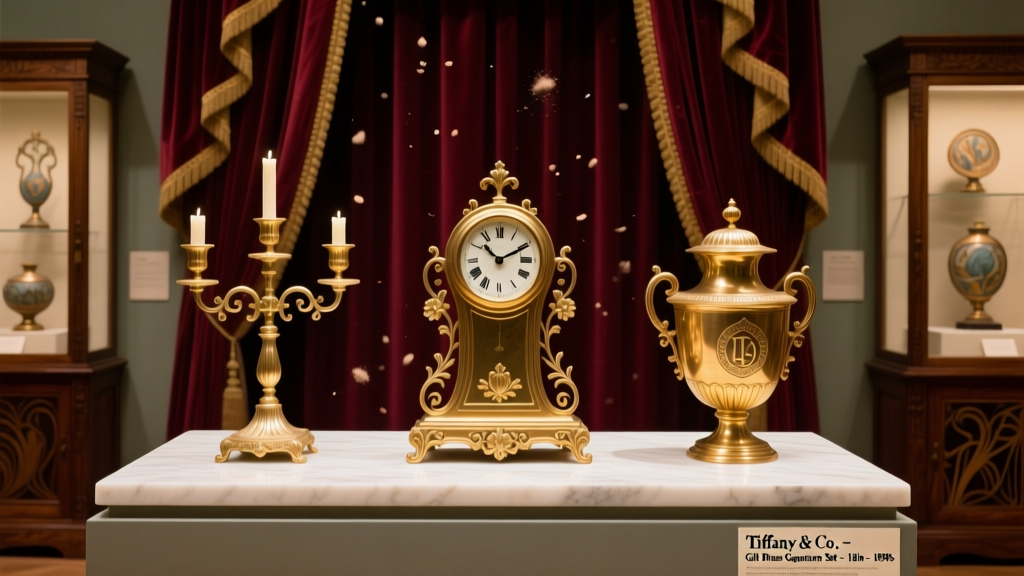
Tiffany & Co. Gilt Brass Garniture Set: Authentication, Provenance, and Market Value of the 18-Inch Three-Piece Clock and Candelabra Ensemble
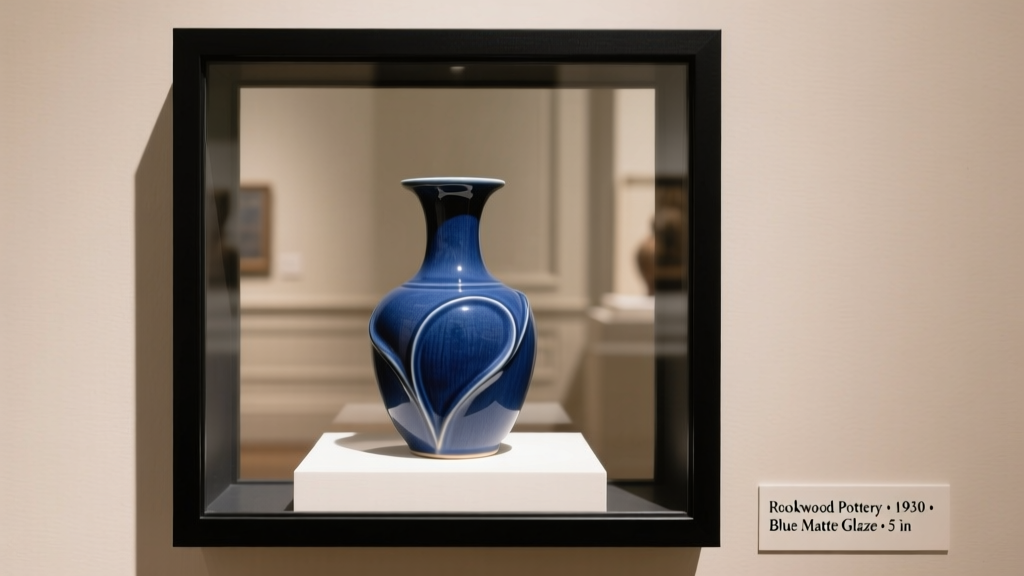
Rookwood Vase, Stylized Design, Blue Matte Glaze, 1930 — Authentication, Provenance, and Market Analysis of the 5-Inch Example
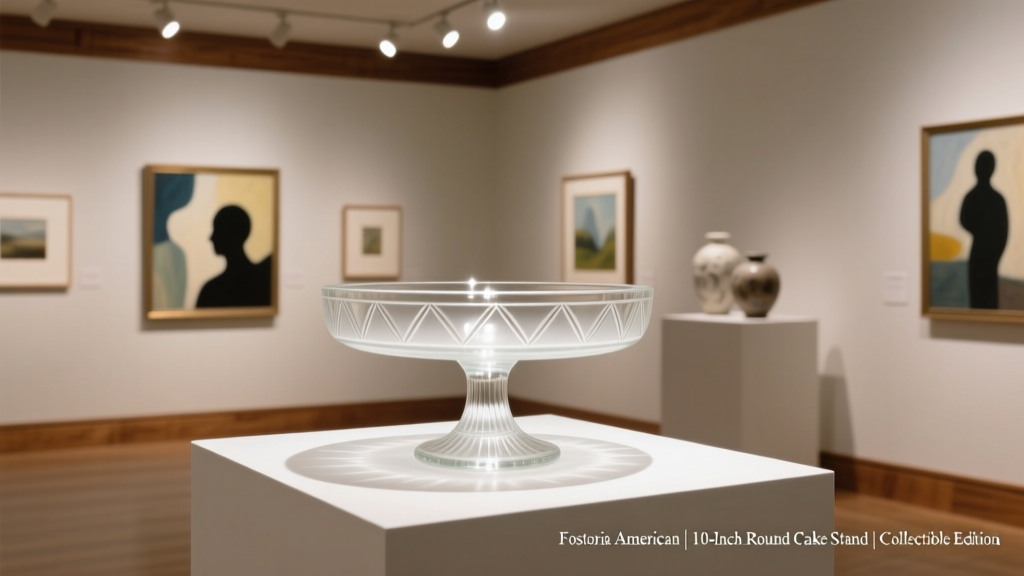
Fostoria American Cake Stand Round 10-Inch: Authentication, Market Value, and Design Legacy