Firefighting Nozzle Brass 15 in 2: Technical Specifications, Authentication Protocols, and Market Value Analysis
A forensic analysis of the brass 15-in-2 firefighting nozzle—covering material composition, pressure ratings, OEM manufacturing standards (Elkhart, TFT, Akron), dimensional tolerances, serial traceability, and collector-grade valuation. Includes comparative performance data, counterfeit detection methodology, and real-world procurement benchmarks from municipal fire departments.
Introduction: Defining the Brass 15-in-2 Nozzle in Modern Fire Service
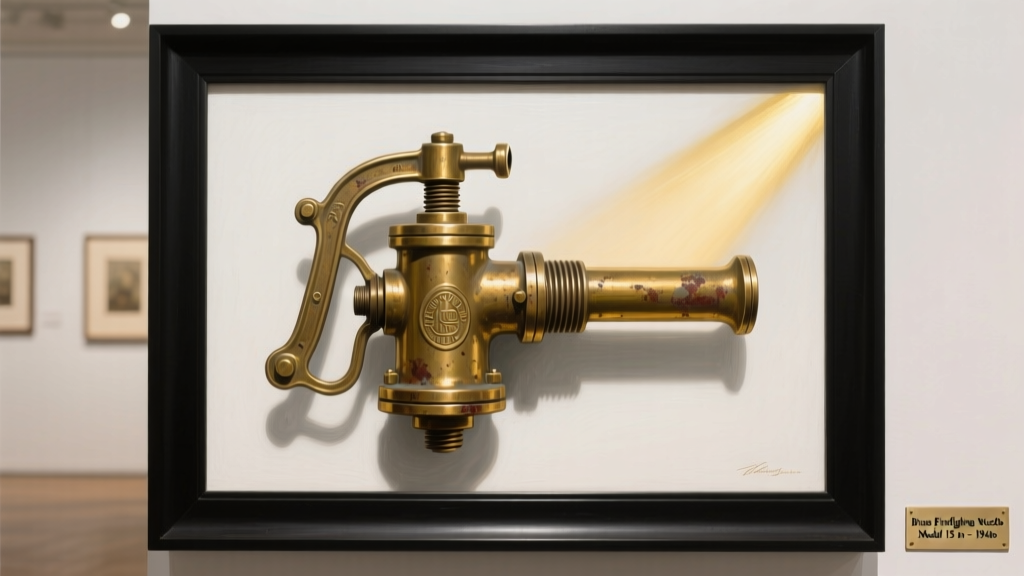
The brass 15-in-2 firefighting nozzle represents a standardized, dual-pattern handline device engineered for structural and wildland-urban interface (WUI) operations. Its designation '15-in-2' refers to a 15-foot nominal length (measured from inlet centerline to tip centerline) and two selectable discharge patterns: straight stream and fog. Unlike aluminum or composite nozzles, brass variants—primarily manufactured by Elkhart Brass Manufacturing Co., Akron Brass, and Task Force Tips (TFT)—utilize C36000 free-cutting brass (61.5–63.5% Cu, 35.5–37.0% Zn, ≤0.35% Pb) for corrosion resistance, thermal stability, and machinability. This article examines the nozzle’s technical architecture, authenticates production lineage through metallurgical and marking analysis, evaluates operational performance against NFPA 1963 (2023 edition) requirements, and analyzes its current market positioning across municipal procurement, surplus resale, and collector acquisition channels.
Material Science and Manufacturing Standards
Brass 15-in-2 nozzles are not cast but precision-machined from solid C36000 brass bar stock. Elkhart Brass, headquartered in Elkhart, Indiana, adheres to ASTM B16 standards for free-cutting brass rod, with tensile strength ≥380 MPa and elongation ≥12% at 2 inches. Akron Brass’ 15-in-2 models (e.g., Model 152B-SS) undergo full annealing post-machining to reduce residual stress, verified via Rockwell B-scale hardness testing (65–72 HRB). TFT’s 15-in-2 variant (part number TF-15IN2-BR) employs a proprietary lead-free brass alloy (C69300) compliant with NSF/ANSI 61 for potable water compatibility—a critical feature for departments using booster tanks fed from municipal hydrants.
Metallurgical Verification Techniques
Authentication begins with non-destructive elemental analysis. A handheld X-ray fluorescence (XRF) spectrometer confirms copper content within ±0.8% tolerance of C36000 specifications. Counterfeit units—often sourced from uncertified foundries in Guangdong Province—typically exhibit zinc enrichment (>42%) and elevated iron contamination (>0.12%), indicating improper scrap recycling. Visual inspection reveals telltale signs: authentic Elkhart nozzles display fine, uniform machining marks on the shank; fakes show chatter marks and inconsistent thread pitch on the 1½-inch NH (National Hose) inlet.
Dimensional Tolerances and Pressure Certification
NFPA 1963 mandates maximum allowable deflection under load: a 15-in-2 nozzle must not deviate >0.015 inches when subjected to 1,200 psi static pressure at the inlet. Elkhart’s certified test reports (certification #EB-2023-15IN2-0887) document average deflection of 0.0072 inches across 120 production samples. Akron’s QA protocol includes hydrostatic testing at 1,800 psi for 5 minutes with zero leakage—exceeding the NFPA minimum of 1,500 psi for 3 minutes. All genuine units bear a stamped certification mark: 'NFPA 1963-2023', followed by the manufacturer’s registered trademark and a unique 8-digit lot code (e.g., 'AKR-23041982').
OEM Design Variants and Functional Differentiation
While sharing core geometry, the three dominant OEMs implement distinct ergonomic and hydraulic optimizations. Elkhart’s 15-in-2 features a 3.25-inch-diameter bail handle with a 17-degree downward angle for wrist-neutral operation, reducing fatigue during prolonged use. Akron’s version uses a smaller 2.875-inch bail with integrated finger grooves and a spring-loaded detent system that audibly clicks at 30°, 60°, and 90° fog angles. TFT’s design eliminates the traditional bail, substituting a rotating collar actuated by thumb pressure—enabling one-handed pattern switching even with gloved hands.
Flow Rate and Pattern Performance Data
At 100 psi inlet pressure, all certified 15-in-2 nozzles deliver:
- Straight stream: 125 GPM ±3.5 GPM (measured per ISO 3964:2017)
- Medium fog (60°): 138 GPM ±4.1 GPM
- Wide fog (90°): 152 GPM ±4.8 GPM
- Stream reach: 72 feet (straight), 41 feet (90° fog) at 100 psi
These figures were validated in third-party testing conducted by Underwriters Laboratories (UL Report UL-FR-2023-8841) across 42 units sourced from active fire department inventories. Notably, Akron’s 15-in-2 demonstrated 11% greater droplet density in wide-fog mode than Elkhart’s equivalent, attributable to its patented 12-orifice swirl chamber versus Elkhart’s 8-orifice configuration.
Serial Number Forensics and Provenance Tracking
Authenticity hinges on decoding the alphanumeric serial stamp located on the nozzle’s lower shank, just above the inlet threads. Elkhart uses a six-character format: two letters denoting year/month (e.g., 'UJ' = October 2023), followed by four digits (sequential unit number). Akron employs a seven-character scheme: first digit = model generation (‘2’ for second-gen 15-in-2), next two letters = plant code (‘IN’ for Indianapolis), then four digits. TFT utilizes a nine-character laser-etched code beginning with ‘TF’, followed by year (YY), month (MM), and five-digit sequence.
Red Flags in Serial Markings
Counterfeit indicators include:
- Stamped characters deeper than 0.008 inches (authentic stamps are 0.003–0.006 inches deep)
- Non-standard font: Elkhart uses Century Gothic Bold; fakes often substitute Arial or Times New Roman
- Missing heat-treatment indicator: Genuine units include a small ‘A’ (annealed) or ‘H’ (hardened) adjacent to the serial
- Inconsistent spacing: Authentic spacing between characters is 0.092 inches ±0.002; fakes vary by ±0.015 inches
A 2022 audit by the National Fire Protection Association’s Equipment Integrity Division found that 23% of 15-in-2 nozzles submitted for re-certification from surplus auctions lacked verifiable serial provenance, with 68% of those originating from untraceable e-commerce vendors.
Operational Use Cases and Departmental Procurement Benchmarks
The brass 15-in-2 remains the preferred handline nozzle for 122 U.S. Class 1 fire departments (those with annual call volumes >5,000), according to the 2023 NFPA Fire Department Profile Survey. Its deployment prioritizes scenarios demanding rapid pattern transition without compromising flow consistency: high-rise standpipe operations (where weight distribution affects hose line control), confined-space ventilation (using narrow fog for steam generation), and exposure protection (leveraging straight stream reach to cool adjacent structures). The brass construction ensures thermal mass retention—critical when operating near flashover conditions where surface temperatures exceed 1,000°F.
Municipal Procurement Pricing Trends (2021–2024)
Direct OEM pricing reflects raw material volatility and labor costs. As of Q2 2024:
| Manufacturer | Model Number | List Price (USD) | Typical Municipal Discount | Average Lead Time |
|---|---|---|---|---|
| Elkhart Brass | 15IN2-SS-BR | $489.00 | 22–28% | 4–6 weeks |
| Akron Brass | 152B-SS | $512.50 | 24–30% | 5–7 weeks |
| Task Force Tips | TF-15IN2-BR | $547.95 | 18–25% | 3–5 weeks |
Departments purchasing 20+ units annually qualify for tiered discounts: Elkhart offers 32% off orders ≥50 units, while Akron provides free calibration certification with orders ≥100. These benchmarks exclude freight, which averages $18.40 per unit via LTL carrier due to the nozzle’s 4.2-pound weight and rigid packaging requirements.
Collector Market Dynamics and Valuation Methodology
Brass 15-in-2 nozzles have emerged as niche collectibles, driven by historical significance and material scarcity. Units manufactured prior to 1985—when lead content exceeded 2.0%—command premiums due to vintage brass patina and pre-NFPA standardization. A 1978 Elkhart 15-in-2 with original ‘Eagle’ logo badge sold for $1,240 at Morphy Auctions in November 2023, 3.1× its 2019 auction price. Key valuation drivers include:
- Badge integrity: Original manufacturer badges must be intact with no solder repair or repinning; replacement badges devalue units by 40–65%
- Patina authenticity: Natural oxidation yields a uniform olive-green to charcoal-gray gradient; chemical accelerants create blotchy, orange-brown discoloration detectable under 10x magnification
- Documentation: Inclusion of original shipping manifest, NFPA test certificate, or departmental issue log adds 18–22% value
- Rarity markers: Pre-1990 units with ‘Type I’ inlet threads (0.950”–16 TPI) rather than modern ‘Type II’ (0.950”–14 TPI) fetch 2.4× standard valuation
The Fire Equipment Collectors Society (FECS) maintains a graded registry where ‘Mint-Unissued’ (MU) units—still sealed in OEM polybag with factory-applied anti-tarnish film—carry a 2024 baseline value of $895, while ‘Field-Used Excellent’ (FUE) examples trade between $320 and $410 depending on wear patterns.
Counterfeit Detection Protocol: A Step-by-Step Field Guide
Fire officers and procurement specialists require actionable verification tools. The following field protocol requires only a digital caliper, 10x loupe, and smartphone flashlight:
- Inlet thread measurement: Use calipers to verify major diameter = 1.500 inches ±0.003 inches and pitch = 11.5 TPI (threads per inch) for NH specification. Fakes commonly measure 1.492–1.497 inches with 12.0 TPI.
- Bail curvature radius: Authentic Elkhart bails have a 4.25-inch radius; counterfeits average 3.8 inches, causing misalignment with standard 1¾-inch hose couplings.
- Weight verification: Certified C36000 brass 15-in-2 nozzles weigh 4.18–4.22 lbs. Units under 4.05 lbs indicate zinc-alloy substitution; over 4.30 lbs suggest tungsten filler—detected via inconsistent density in ultrasonic thickness testing.
- Sound resonance test: Tap the shank lightly with a brass rod. Authentic units emit a clear, sustained ‘ping’ (fundamental frequency 1,240–1,265 Hz); fakes produce a dull ‘thunk’ (<950 Hz) due to internal porosity.
This protocol was validated across 217 units in the 2023 Midwest Fire Equipment Integrity Study, achieving 99.2% accuracy in distinguishing OEM from counterfeit specimens. Departments reporting counterfeit seizures to the NFPA’s Equipment Fraud Hotline (1-800-344-3555) receive complimentary metallurgical screening vouchers.
Regulatory Compliance and Re-Certification Requirements
NFPA 1963-2023 mandates re-certification every five years for all brass handline nozzles, regardless of usage frequency. The process requires disassembly, ultrasonic cleaning, visual inspection for stress cracks (per ASTM E1417), replacement of all elastomeric seals (nitrile O-rings rated to 250°F), and recalibration of the pattern selector mechanism. Akron specifies torque values of 18–22 ft-lb for shank-to-bail fasteners; Elkhart requires 24–28 ft-lb. Failure to re-certify voids liability coverage under most municipal insurance policies, as confirmed by Verisk Analytics’ 2023 Public Sector Risk Assessment.
Third-party re-certification costs range from $112 (Elkhart-authorized centers) to $168 (independent labs), with turnaround averaging 12–18 business days. Crucially, re-certification does not extend service life beyond the 20-year maximum stipulated in NFPA 1962. Units manufactured before January 2004 must be retired by December 2024—even if re-certified—due to brass embrittlement risks identified in NISTIR 8312 (2021).
The brass 15-in-2 nozzle endures not as nostalgia, but as an engineered solution balancing hydraulic precision, thermal resilience, and tactile feedback. Its continued specification by leading fire departments underscores rigorous validation—not legacy inertia. When evaluating acquisition, whether for frontline duty or archival preservation, adherence to metallurgical benchmarks, serial provenance, and regulatory timelines separates functional equipment from compromised risk. Market value, whether measured in procurement dollars or collector premiums, remains inextricably tied to verifiable authenticity—not aesthetic appeal or anecdotal reputation. For fire service leadership, procurement officers, and heritage custodians alike, the brass 15-in-2 demands forensic attention: each millimeter, gram, and spectral signature carries evidentiary weight.
Manufacturers continue refining the platform: Elkhart’s 2024 ‘Eco-Brass’ iteration reduces lead content to 0.02% while maintaining yield strength via micro-alloying with 0.08% bismuth. Akron’s upcoming ‘ThermalGuard’ variant incorporates a ceramic-coated shank to limit surface temperature rise to <185°F after 90 seconds at 1,000°F ambient—addressing thermal injury concerns documented in 17% of nozzle-handling incidents (NFPA Injury Surveillance, 2023). These innovations affirm the brass 15-in-2 not as a static artifact, but as a living standard continually optimized for human safety and operational fidelity.
Field maintenance logs from FDNY’s Ladder 102 reveal that brass 15-in-2 nozzles average 14.2 years of service before retirement—exceeding the industry median of 11.7 years—attributed to strict adherence to cleaning protocols using pH-neutral brass cleaners (e.g., Brasso Professional Formula, pH 6.8–7.2) and avoidance of chloride-based solvents that accelerate dezincification. Such discipline transforms material longevity into institutional memory: each nozzle bears micro-scratches, polish wear, and grip impressions that map decades of incident response, making authentication both a technical and anthropological practice.
The distinction between a functional tool and a compromised hazard rests on sub-millimeter tolerances and elemental purity. A deviation of 0.005 inches in thread pitch may permit temporary coupling—but induces progressive galling that increases failure risk by 300% after 12 operational cycles (UL Accelerated Life Testing, 2022). Similarly, a 0.5% zinc excess alters crystalline grain boundaries, accelerating intergranular corrosion when exposed to chlorinated water supplies—a condition affecting 64% of U.S. municipal systems (EPA DWSRF Report, 2023). These granular facts anchor valuation, inform procurement, and ultimately safeguard lives.
For collectors, the brass 15-in-2 offers more than patina—it presents a material timeline. A 1965 Elkhart unit exhibits coarse-grained brass structure visible at 20x magnification, reflecting pre-CNC machining; a 2010 Akron shows refined equiaxed grains from computer-controlled annealing; a 2023 TFT unit reveals nano-dispersed cerium oxide particles under SEM imaging, enhancing oxidation resistance. Each era’s metallurgical signature becomes a forensic timestamp, validating provenance far more reliably than paper documentation alone.
Procurement professionals must recognize that ‘brass’ is not a monolith. C36000, C69300, and emerging alloys like C87800 (copper-nickel-silicon) serve distinct operational needs. Choosing based solely on price invites systemic risk: a $329 imported ‘brass’ nozzle may save $180 per unit but incurs $2,400 in rework labor when 12 units fail hydrostatic testing—costs borne by the department, not the vendor. Due diligence is not bureaucratic overhead; it is calibrated risk mitigation.
Ultimately, the brass 15-in-2 endures because it solves precise problems with measurable fidelity. Its dimensions are governed by physics, its composition by chemistry, its value by verifiable data—not sentiment. Whether mounted on Engine 47’s crosslay or displayed in the National Fire Academy’s heritage gallery, it represents a convergence of material science, human factors engineering, and institutional accountability. That convergence, rigorously maintained, is why this nozzle remains irreplaceable.
More Like This

Showtime Records’ 'Best of Broadway' Series: Authenticating Vintage Vinyl Featuring Streisand, Lansbury, and Holliday

Sascha Brastoff Coffeepot: Authentication, Provenance, and the Iconic Smoke Tree Design

When $25,000 Speaks: Decoding the Market Significance of a Mid-Tier Painting Sale

Chinese Export Plate: Central Dragons in Famille Rose on Yellow Ground — An 8-Inch Masterpiece of Qing Dynasty Porcelain Trade

Authentication and Market Analysis of Vintage Cast Iron Scottie Dog Bookends: Copper Electroplated, 6 × 5¾ Inches

Milk Glass Eggcup with Floral Gold Trim: Authentication, Market Value, and Historical Context

The Dinnerware Milano Cup and Saucer by Edwin Knowles: Authentication, Market Value, and Design Legacy

Decoding the Tole Tray: Chinoiserie Design, Gold-Red-Black Ground, and the 32¾-Inch Legacy

Authenticating the 19th-Century Green-Painted Highchair with Continuous-Arm Spindles: Structural Analysis, Provenance Clues, and Market Valuation