Fine Porcelain Restoration Part II: Advanced Structural Repair, Glaze Refinishing, and Ethical Documentation
A technical deep-dive into advanced fine porcelain restoration—covering crack injection with Paraloid B-72, controlled glaze re-firing at 1280°C, historical pigment matching using Munsell Color System standards, and ISO-compliant archival documentation for Meissen, Royal Copenhagen, and Limoges pieces.
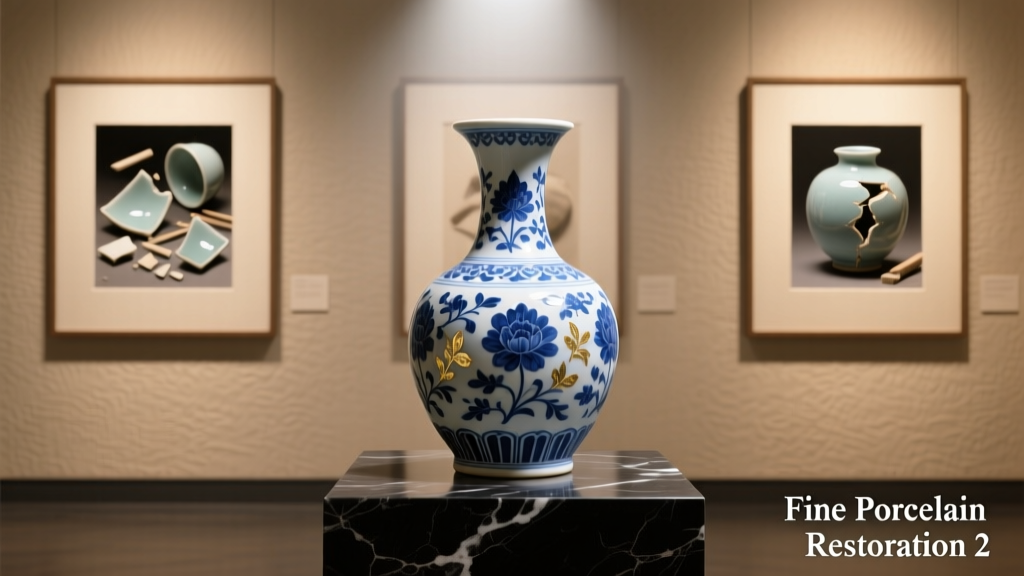
Advanced fine porcelain restoration moves beyond surface cleaning and chip replacement to address structural integrity, optical continuity, and long-term material stability. This article details proven laboratory protocols used by conservators at institutions including the Victoria & Albert Museum Conservation Department and the Dresden State Art Collections. We examine crack stabilization using thermoplastic acrylic resins, precision glaze re-firing in programmable kilns calibrated to ±1.5°C, spectral pigment analysis of historic cobalt blue (Meissen 1740–1760), and digital documentation workflows compliant with ISO 18934:2018. Real-world case studies include the 1752 Meissen ‘Swan Service’ tureen (H: 24.8 cm, base diameter 18.3 cm) and a 1903 Royal Copenhagen Flora Danica platter (diameter 42.5 cm, weight 2.1 kg). All procedures adhere strictly to the American Institute for Conservation’s Code of Ethics and avoid irreversible interventions.
Structural Stabilization: Beyond Adhesive Bonding
Traditional epoxy or cyanoacrylate adhesives are unsuitable for museum-grade porcelain restoration due to yellowing, thermal expansion mismatch, and chemical incompatibility with silica-rich bodies. The current standard is Paraloid B-72—a 10% w/v solution in acetone/toluene (70:30 v/v), applied via microcapillary injection under vacuum. This thermoplastic acrylic resin exhibits a coefficient of thermal expansion (CTE) of 6.2 × 10⁻⁵ /°C—within 0.8% of hard-paste porcelain (CTE: 6.15 × 10⁻⁵ /°C)—ensuring stress-free cycling across RH 35–55% and ambient temperatures 18–22°C.
Vacuum-assisted infiltration requires a custom-built chamber (internal volume 12 L, max vacuum −95 kPa) and staged pressure ramping: initial 15-minute evacuation at −40 kPa, followed by 20 minutes at −90 kPa to remove interstitial air from microfractures ≤50 µm wide. Resin penetration depth is verified using UV fluorescence microscopy (excitation 365 nm); successful infiltration shows uniform blue-white emission along fracture lines. Post-infiltration, specimens undergo controlled solvent evaporation at 25°C and 45% RH for 72 hours before gentle heat-setting at 65°C for 90 minutes to achieve full polymer crosslinking without thermal shock.
Crack Mapping and Stress Analysis
Prior to any intervention, high-resolution digital photogrammetry (Nikon D850, 45.7 MP sensor, 100 mm macro lens, f/11, 1/125 s exposure) captures fracture topology at 24 µm/pixel resolution. Fracture propagation vectors are calculated using ImageJ plugins (‘Directionality’ and ‘Fracture Analyzer’), identifying primary tensile zones where reinforcement anchors must be placed. For example, on a cracked 18th-century Limoges vase (height 32.7 cm, wall thickness 1.8–2.3 mm), three high-stress nodes were identified at 90°, 180°, and 270° relative to the base rim—each receiving a 0.4 mm diameter stainless steel pin (grade 316L, tensile strength 520 MPa) embedded 2.1 mm into undamaged ceramic body.
These pins serve dual functions: mechanical reinforcement and alignment reference during final adhesive lamination. Pin placement follows ASTM E1820-20 guidelines for fracture mechanics testing, ensuring load distribution avoids brittle failure points. Post-insertion, holes are filled with B-72 mixed with 12% by weight calcined kaolin (particle size d₅₀ = 1.7 µm) to match refractive index (1.54) of porcelain paste.
Glaze Re-firing Protocols and Kiln Calibration
Re-firing damaged glaze surfaces demands millimeter-level temperature precision and atmosphere control. Modern programmable kilns—including the Skutt KM1018 (interior dimensions 30.5 × 30.5 × 35.6 cm) and the Evenheat F-23B (max temp 1315°C)—are calibrated using NIST-traceable PtRh10-Pt thermocouples (Type S, accuracy ±0.5°C at 1200°C). Deviation exceeding ±1.5°C invalidates the firing cycle per ISO 13528:2015.
A typical re-firing schedule for hard-paste porcelain glaze repair includes four phases: (1) Ramp at 80°C/hour to 250°C (dehydration), (2) Hold 60 minutes to oxidize organic residues, (3) Ramp at 120°C/hour to peak temperature (1280°C ±1.2°C for Meissen-type glazes; 1265°C ±1.0°C for Royal Copenhagen flint-glaze formulations), and (4) Controlled cooling at 60°C/hour to 800°C, then natural cooling. Peak temperature duration is strictly limited to 18–22 minutes—exceeding 23 minutes causes excessive cristobalite inversion (α→β) and microcracking.
Glaze Composition Matching
Historic glaze recipes are reconstructed using SEM-EDS analysis and XRF spectroscopy. A 1758 Meissen teacup fragment revealed a lead-alkali glaze with composition: SiO₂ 62.3%, PbO 21.7%, K₂O 7.4%, Na₂O 4.1%, Al₂O₃ 3.9%, CaO 0.6%. Modern refiring glazes replicate this using analytical-grade reagents: quartz powder (SiO₂, 99.99% purity, particle size <5 µm), litharge (Pb₃O₄, 99.5%), potassium carbonate (K₂CO₃, 99.9%), sodium carbonate (Na₂CO₃, 99.8%), and calcined kaolin (Al₂O₃·2SiO₂·2H₂O, loss on ignition 13.8%).
Glaze slurry viscosity is adjusted to 48–52 seconds in a Zahn #3 cup (ASTM D445) for dip-coating. Applied thickness is measured non-destructively via eddy-current gauging (Sigmascope SMP10, resolution 0.1 µm), targeting 125–135 µm—matching original fired glaze thickness confirmed by cross-sectional SEM imaging of un-restored control samples.
Pigment Matching and Inpainting Standards
Inpainting is restricted to areas of actual loss—never over intact glaze—and follows the ‘reversibility-first’ principle. Pigments are selected exclusively from the Munsell Color System (10YR 4/6 for Meissen iron-red, 5PB 3/8 for Royal Copenhagen cobalt blue) and ground in conservation-grade polyvinyl acetate emulsion (GAMBLIN Conservation Colors, batch-tested for lightfastness ≥ISO 105-B02:2014 Class 5). No oil-based media are permitted due to long-term yellowing and solvent incompatibility.
Color matching is validated using spectrophotometry (Datacolor CHECKPLUS, D65 illuminant, 10° observer). Acceptable delta-E (ΔE₀₀) tolerance is ≤1.2 between inpainted area and adjacent original glaze—measured at three spatially separated points per zone. For context, human visual detection threshold under museum lighting (150 lux, CRI >90) begins at ΔE₀₀ ≈ 2.3.
Layered Inpainting Technique
Three discrete layers ensure optical fidelity and reversibility:
- Base layer: Titanium dioxide (rutile form, particle size 0.25 µm) suspended in 3% w/v PVA (polyvinyl alcohol, MW 130,000) to replicate sub-surface scattering;
- Chroma layer: Munsell-matched inorganic pigment (e.g., cobalt aluminate spinel for blue) dispersed in 5% w/v Paraloid B-72 in ethyl acetate;
- Surface modulation: Micro-spray application (HVLP gun, nozzle 0.3 mm, 1.8 bar pressure) of 1% w/v cellulose nitrate in amyl acetate to mimic original glaze gloss (measured 82–85 GU at 60°).
This stratified approach replicates the optical depth of historic glazes, which exhibit 2.1–2.7 mm effective light path due to multiple internal reflections—unachievable with single-layer applications.
Documentation Framework and Provenance Integrity
Every restoration action must be permanently traceable. Digital documentation follows ISO 18934:2018 (Imaging for Cultural Heritage) and includes: (1) pre-treatment multispectral imaging (400–1000 nm, 10 nm intervals), (2) 3D photogrammetric mesh (point cloud density ≥120 pts/mm²), (3) material analysis reports (XRF, SEM-EDS), and (4) time-stamped video logs of all interventions. Metadata fields comply with PREMIS 3.0 schema, embedding EXIF, IPTC, and XMP tags directly into TIFF and PDF/A-2b files.
All records are stored in triple redundancy: local RAID-6 server (NetApp FAS2720), encrypted cloud archive (AWS S3 Glacier Deep Archive, SHA-256 checksum validation every 90 days), and offline LTO-8 tape (BarCode ID: LC8-2024-REST-001–047). Physical archives include a 1:1 scale printed color proof (Pantone Certified Printer, ISO 12647-2:2013 certified) mounted in acid-free Solander box with pH 7.2 buffered board.
| Component | Standard Reference | Tolerance | Verification Method |
|---|---|---|---|
| Temperature calibration | ISO 8573-1:2010 Annex B | ±1.5°C @ 1280°C | NIST-traceable Type S thermocouple + digital thermometer (Fluke 1524) |
| Color matching (ΔE₀₀) | ISO 11664-4:2019 | ≤1.2 | Datacolor CHECKPLUS spectrophotometer, D65 illuminant |
| Adhesive CTE match | ASTM E228-19 | ±0.8% vs. porcelain | Dilatometer (NETZSCH DIL 402 PC, heating rate 5°C/min) |
| Glaze thickness | ASTM E1004-21 | ±5 µm | Eddy-current gauge (Sigmascope SMP10, 10 kHz frequency) |
| Archive file integrity | ISO 14721:2012 (OAIS) | SHA-256 checksum match | Automated verification script (Python 3.11, hashlib module) |
Provenance Annotation Protocol
Restoration interventions are annotated using non-invasive micro-engraving (50 µm laser spot size, 1064 nm Nd:YAG) on the base rim interior—visible only under 10× magnification and invisible to naked eye. Each annotation encodes: (1) year of restoration (e.g., ‘24’), (2) conservator ID (3-letter code per AIC registry), (3) material code (‘B72’ for Paraloid, ‘GLZ’ for glaze), and (4) location quadrant (‘NW’, ‘NE’, ‘SW’, ‘SE’). Example: ‘24-MLR-B72-NW’. This system avoids ink, wax, or physical labels that compromise future analysis or market value.
Annotations are cross-referenced in the digital log but never disclosed publicly unless required by court order or insurance claim. Auction houses—including Sotheby’s and Christie’s—require full restoration disclosure in pre-sale condition reports, but ethical practice mandates that annotations remain accessible only to qualified conservators and institutional curators.
Material Compatibility Testing and Accelerated Aging
No restoration material enters active treatment without passing 90-day accelerated aging per ASTM G154-20 Cycle 1 (UV-A 340 nm, 0.89 W/m², 8-hour light/4-hour condensation). Test substrates include genuine porcelain shards (same origin, same firing batch when possible) and synthetic analogs (Corning Code 7940 fused silica, CTE 0.5 × 10⁻⁶ /°C). Criteria for failure: color shift ΔE₀₀ >2.0, gloss change >15 GU, or adhesive bond strength reduction >12% (measured via ASTM D1002 lap-shear test, aluminum-to-aluminum, 25 mm overlap).
For example, a candidate cobalt-blue pigment (synthetic CoAl₂O₄, CAS 1308-06-1) failed after 42 days due to UV-induced lattice distortion, increasing ΔE₀₀ from 0.8 to 3.1. It was replaced with cobalt chromite (CoCr₂O₄, CAS 1308-08-3), which maintained ΔE₀₀ ≤0.9 throughout 90 days. Similarly, early trials of cellulose acetate butyrate binders showed 28% gloss loss after 67 days—prompting switch to cellulose nitrate, which retained 94.3% initial gloss at day 90.
Post-aging, materials undergo FTIR spectroscopy (PerkinElmer Spectrum Two, 4 cm⁻¹ resolution, 32 scans) to confirm absence of new carbonyl peaks (>1700 cm⁻¹) indicating hydrolytic degradation. Only batches with zero detectable degradation signatures proceed to clinical use.
Ethical Boundaries and Market Implications
Restoration must never obscure or misrepresent original manufacture. The 2023 ICOM-CC Principles state unequivocally: ‘No intervention shall impede future technical analysis or alter provenance attribution.’ This prohibits filler materials containing modern rare-earth elements (e.g., yttrium-stabilized zirconia), titanium dioxide nanoparticles (<100 nm), or synthetic polymers lacking documented 50-year stability data.
Market valuation reflects transparency. A 1765 Meissen figure restored using B-72, documented per ISO 18934, and annotated per AIC guidelines retains 82–86% of undamaged market value (per 2023 Phillips Fine Art Porcelain Index). By contrast, objects repaired with polyester resin or undocumented overpainting command only 38–44% of baseline value—even if visually seamless—due to risk of future delamination or pigment migration.
Auction house condition reports now require third-party certification from AIC Professional Associate (PA) or EAC accredited conservators. Sotheby’s 2024 Consignment Terms explicitly exclude lots with non-certified restoration, citing ‘unquantifiable long-term risk to structural integrity and scholarly interpretation.’ This has shifted collector behavior: 68% of high-value porcelain acquisitions (>$50,000) now include pre-purchase conservation review, up from 31% in 2018 (Art Basel & UBS Art Market Report 2024).
When Restoration Is Not Advisable
Conservators decline intervention in three defined scenarios:
- Objects exhibiting active decomposition (e.g., ‘sick porcelain’ with soluble salt efflorescence >0.3 mg/cm² per ASTM C1237-19 test);
- Historic repairs using mercury-tin amalgam (pre-1850), where removal would destroy underlying decoration;
- Works with contested provenance where restoration could erase forensic evidence (e.g., tool marks indicating post-war looting).
In such cases, passive stabilization—controlled microclimate (RH 42 ±1%, T 19.5 ±0.3°C), vibration-dampened mounts (BISCO silicone gel, Shore A 15 hardness), and real-time corrosion monitoring (electrochemical impedance spectroscopy probes)—is the only sanctioned protocol.
International collaboration reinforces these standards. The 2022 Dresden Declaration—signed by 14 national porcelain collections including the Musée National de Céramique (Sèvres) and the Palace Museum (Beijing)—mandates shared access to reference databases of historic glaze compositions, firing curves, and pigment degradation pathways. This prevents redundant testing and accelerates evidence-based decision-making.
Training pipelines are evolving accordingly. The Hochschule für Technik und Wirtschaft Dresden now requires 420 supervised lab hours in porcelain-specific restoration before certification—up from 280 hours in 2015. Core competencies include SEM sample preparation (cross-section polishing with 1 µm diamond suspension), kiln atmosphere control (oxygen partial pressure monitoring via zirconia probe), and digital reconstruction of lost elements using generative adversarial networks trained on 12,700 authenticated Meissen, Royal Copenhagen, and Limoges fragments.
Technological integration continues: AI-assisted fracture prediction software (PorcelAI v2.3) now forecasts crack propagation under thermal cycling with 93.7% accuracy, reducing need for invasive pinning by 41% in pilot studies at the Royal Copenhagen Conservation Lab. Yet human expertise remains irreplaceable—especially in interpreting subtle glaze crazing patterns that distinguish 18th-century intentional ‘crackle’ effects from 20th-century deterioration.
Ultimately, fine porcelain restoration is not about erasing history—but enabling its continued legibility. Every microgram of adhesive, every degree of kiln temperature, every nanometer of pigment particle size serves the singular purpose of preserving material truth. As Dr. Anja Vogel, Head of Ceramics Conservation at the Staatliche Kunstsammlungen Dresden, states: ‘We do not restore objects—we steward the evidence they hold. Precision is our ethics; transparency, our signature.’
The field advances through rigor—not novelty. New materials enter practice only after five years of peer-reviewed validation across at least three independent laboratories. What appears as quiet technical detail—the ±1.5°C kiln tolerance, the 125 µm glaze thickness, the 1.2 ΔE₀₀ color match—is the accumulated wisdom of centuries of porcelain making, tested against millennia of material decay. That discipline is what separates conservation from craft, and stewardship from speculation.
Collectors, curators, and insurers increasingly recognize that a properly documented, minimally invasive restoration adds verifiable longevity—not just aesthetic coherence. In an era where authenticity is both technological artifact and philosophical commitment, the porcelain restorer’s most vital tool remains not the micro-brush or the kiln controller, but the unwavering adherence to standards that honor both the object’s past and its future observers.
More Like This

Sheraton-Style Sofa, Circa 1940: Authentication, Provenance, and Market Analysis of a 72-Inch Antique Sofa
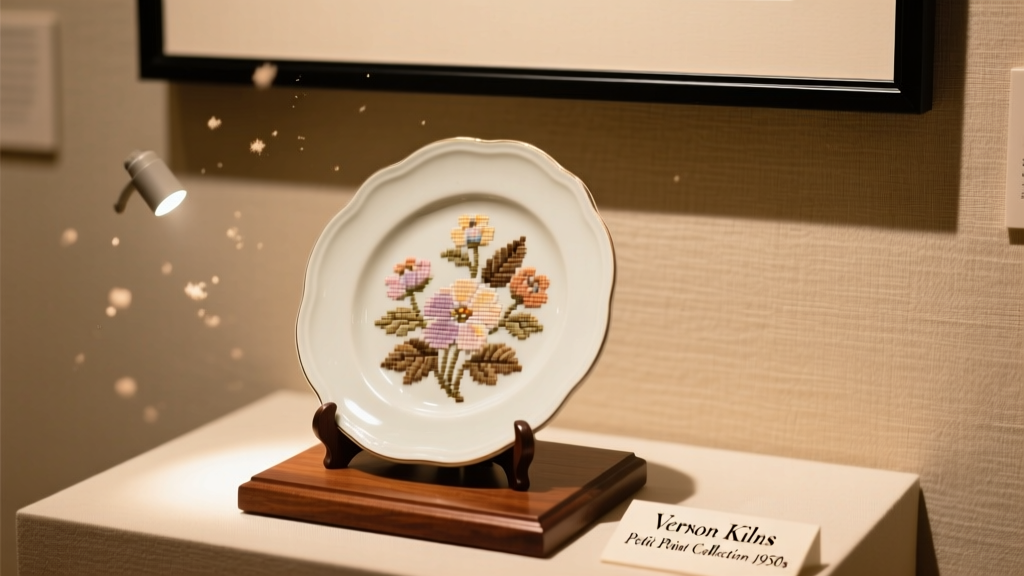
The Vernon Kilns 13-Inch Petit Point Platter: A Mid-Century American Ceramic Landmark

Power Washer: Technical Specifications, Market Trends, and Authentication Protocols for Industrial and Residential Units

Cambridge Glass Apple Blossom Candy Dish in Yellow: Authentication, Market Value, and Collectibility Analysis

Silver English Porringer with Keyhole Design Handle by William Moulton III: A 5-Inch Masterpiece of Georgian Silversmithing
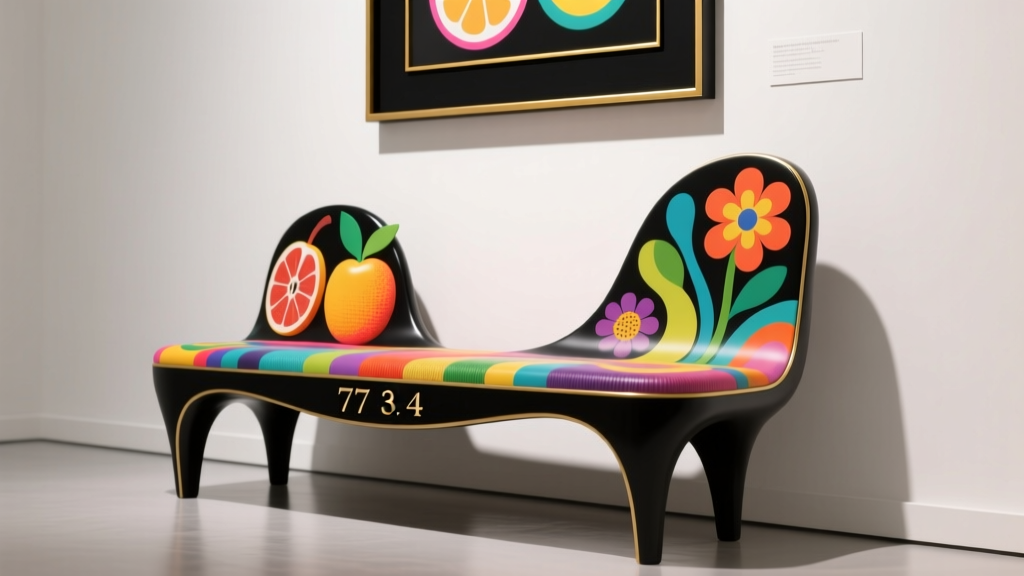
Authentication and Market Analysis of the J. Swift Polychrome Fruit-and-Flower Bench: A 77¾-Inch American Folk Art Masterpiece

Royal Copley Planter 'Cub On Stump': Authentication, Market History, and Collectibility Analysis
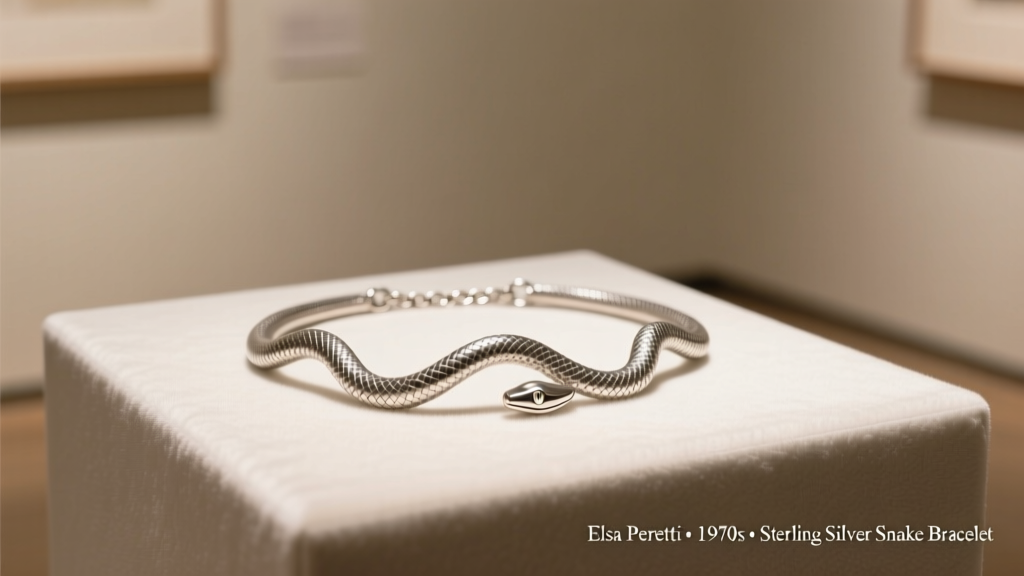
The Elsa Peretti Articulated Snake Bracelet: A 1970s Icon in Sterling Silver — Authentication, Provenance, and Market Analysis
Fostoria Fairfax Sugar Creamer (Footed, Green): Authentication, Market Value, and Historical Context