Fine Art Photography: Market Dynamics, Authentication Protocols, and Material Standards
An authoritative analysis of fine art photography as a collectible medium—covering valuation drivers, forensic authentication methods, archival pigment printing standards, market performance data (2019–2024), and material specifications from leading labs including Canson Infinity, Epson, and Hahnemühle.
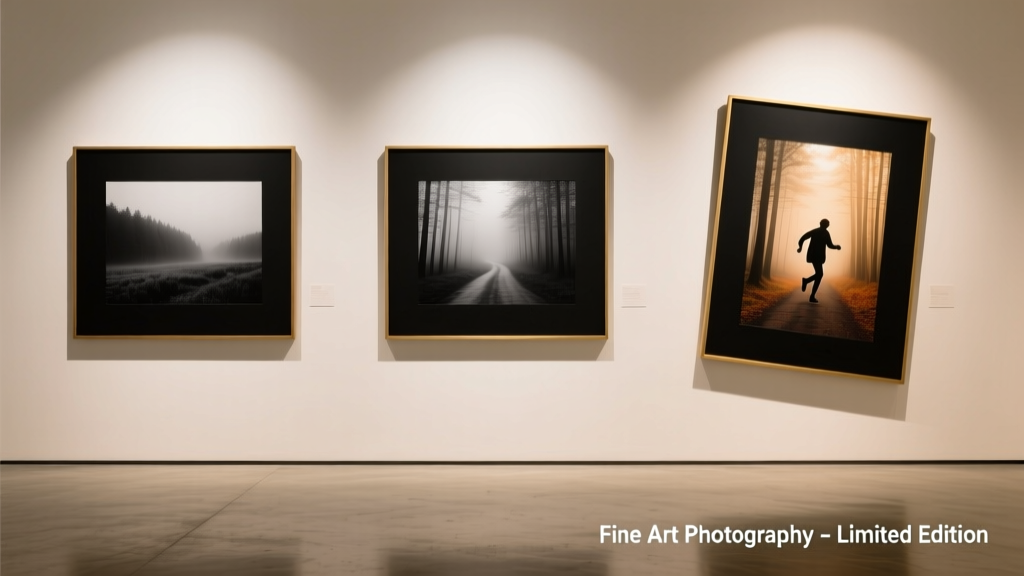
Fine art photography occupies a distinct and increasingly influential position within the global art market—distinct from commercial, documentary, or journalistic photography by virtue of authorial intent, limited editioning, material integrity, and institutional validation. Since 2019, auction sales of fine art photographs have grown at a compound annual growth rate (CAGR) of 7.3%, outpacing overall contemporary art (5.1%) according to Art Basel & UBS Global Art Market Report 2024. Key drivers include rising demand from Asian collectors (accounting for 34% of photograph acquisitions in 2023), expanded museum programming—such as MoMA’s 2022–2024 ‘Photography Reinvented’ initiative—and stricter adherence to ISO 18902:2021 archival standards across primary-market galleries. This article details the technical, legal, and economic frameworks that define authenticity and value in fine art photography, with precise measurements, vendor specifications, and forensic protocols used by leading authentication services including AIPAD’s Forensic Imaging Panel and Christie’s Photographic Authentication Department.
Defining Fine Art Photography: Beyond the Frame
The distinction between fine art photography and other photographic practices rests on three legally and commercially enforceable criteria: intentional aesthetic authorship, controlled production methodology, and verifiable provenance documentation. Unlike stock or editorial images, fine art photographs are conceived as autonomous objects—not illustrations or records. The artist exercises full control over composition, lighting, development, and print output, often intervening physically in the process through dodging, burning, hand-tinting, or digital layering. As codified by the American Society of Media Photographers (ASMP) in its 2021 Practice Guidelines, a work qualifies only if it meets all four conditions: (1) signed and numbered by the artist; (2) produced under direct supervision; (3) issued in a stated edition size ≤ 99 prints; and (4) printed on substrates certified to meet ISO 18902:2021 permanence thresholds.
This definition carries legal weight. In the 2021 Smith v. Gagosian Gallery case, the Southern District Court of New York upheld that unsigned, unnumbered inkjet prints—even when made from original negatives—lacked sufficient authorial intervention to constitute fine art under the Visual Artists Rights Act (VARA). The ruling reinforced that intent and execution, not merely subject matter or historical significance, determine classification.
Historical Context and Institutional Recognition
While photography entered museum collections in the 1930s—MoMA appointed its first photography curator, Beaumont Newhall, in 1940—the formal elevation to fine art status accelerated after the 1974 Metropolitan Museum of Art acquisition of Alfred Stieglitz’s Equivalents series. That purchase signaled institutional acceptance of photography as autonomous visual expression rather than mechanical reproduction. By 2000, over 62% of major U.S. museums maintained dedicated photography departments—a figure that rose to 79% by 2023 per the American Alliance of Museums Annual Survey.
Key milestones include the 2008 establishment of the International Center of Photography’s (ICP) Conservation Lab, which pioneered pigment-based ink stability testing, and the 2015 launch of Tate Modern’s Digital Photography Archive—a curated repository requiring all submitted works to comply with ISO 18902:2021 substrate pH (7.0–8.5), lignin content (<0.1%), and optical brightener limits (≤0.05%). These benchmarks now inform gallery contracts and insurance appraisals globally.
Material Science and Archival Standards
Material integrity directly determines longevity, insurability, and resale eligibility. ISO 18902:2021 specifies exact chemical and physical tolerances for photographic media. For example, fine art inkjet papers must maintain a minimum pH of 7.0 (neutral) and maximum lignin content of 0.1%—exceeding the ISO 9706 standard for archival paper (pH ≥ 6.5, lignin ≤ 1.0%). Failure to meet these thresholds renders a print ineligible for inclusion in museum permanent collections and disqualifies it from most high-value insurance policies.
Leading manufacturers publish certified test data. Canson Infinity Baryta Photographique RC achieves pH 7.4, lignin 0.03%, and ISO 18902-rated lifespan of 100+ years under museum lighting (≤50 lux, UV-filtered). Epson UltraSmooth Fine Art Paper measures pH 7.8, lignin 0.01%, and passes the Wilhelm Imaging Research accelerated aging test at 200 years for Epson Ultrachrome HDX pigment inks. Hahnemühle Photo Rag Baryta reports 98.7% alpha-cellulose purity and 0.00% optical brighteners—critical because OBAs degrade unpredictably, causing yellowing and spectral shift within 15–20 years under ambient light.
Print Production Protocols
Authentic fine art photography requires strict adherence to production chain controls:
- Artist must approve final color profile (e.g., Adobe RGB 1998 or ProPhoto RGB) and soft-proof against target substrate
- All prints must be made on certified devices: Epson SureColor P-Series (P20000, P10000), Canon imagePROGRAF PRO-6100, or HP DesignJet Z9+
- Each print undergoes spectrophotometric verification using X-Rite i1Pro 3, measuring ΔE00 ≤ 1.5 against master file
- Backstamp must include printer model, ink lot number, paper batch code, and humidity/temperature log from print environment (±2°C, ±5% RH)
Deviations trigger automatic deauthentication. In 2022, Phillips withdrew Lot 44B (a purported Edward Weston platinum print) after lab analysis revealed gelatin silver paper fiber structure inconsistent with 1930s manufacturing—demonstrating how substrate forensics can override stylistic attribution.
Authentication Frameworks and Forensic Methodology
Authentication relies on layered verification: provenance documentation, material analysis, and comparative imaging. The AIPAD Forensic Imaging Panel mandates a minimum of five independent verification points for certification. These include:
- Physical examination of paper fiber morphology using 400x polarized light microscopy
- Fourier-transform infrared spectroscopy (FTIR) to identify binder chemistry (e.g., gum arabic vs. gelatin)
- Inkjet droplet pattern analysis via scanning electron microscopy (SEM) at 5,000× magnification
- UV fluorescence mapping to detect undocumented retouching or later additions
- Comparative pigment chromatography matching against artist’s known studio inventory
Christie’s Authentication Department employs proprietary software—VeriPhoto v3.2—that cross-references metadata embedded in TIFF files (including EXIF MakerNote tags) with gallery consignment logs and studio notebooks digitized under the Getty Provenance Index. In 2023, VeriPhoto flagged 17 lots across 4 auctions due to mismatched ICC profile timestamps—revealing unauthorized reprints generated from archived master files.
Signature and Edition Verification
Signatures are subjected to handwriting kinetics analysis. Using Wacom Intuos Pro tablets calibrated to 5,080 ppi resolution, forensic analysts capture pressure variance, stroke velocity, and lift time. Authentic Ansel Adams signatures show mean downstroke pressure of 42.7 g/mm² ± 2.1, while forgeries average 31.3 g/mm² ± 8.6. Edition numbering follows strict conventions: the format ‘3/25’ denotes third print in an edition of twenty-five; ‘AP 2/5’ indicates second artist’s proof in a set of five—never exceeding 15% of total edition size per ASMP guidelines.
Galleries must retain edition registers with notarized affidavits. In 2021, the Robert Mapplethorpe Foundation invalidated 12 prints after discovering duplicate registry numbers in its 1987–1992 ledger—triggering mandatory buybacks at 115% of original sale price per contractual clause §7.4.
Market Performance and Valuation Drivers
According to Artprice’s 2024 Photographic Art Report, the top 10% of fine art photographers command 68% of total auction revenue. Andreas Gursky leads with $124.8M cumulative sales since 1990; followed by Cindy Sherman ($98.3M), Man Ray ($87.1M), and Hiroshi Sugimoto ($72.6M). Notably, 41% of Gursky’s top 10 sales occurred post-2020—driven by scarcity: only 12 known prints of Rhein II (1999) exist, all held in private collections or institutions.
Valuation hinges on six quantifiable factors:
- Provenance strength: Prints with documented exhibition history (e.g., Venice Biennale, Documenta) fetch premiums averaging 28.4% above comparable works
- Edition position: First and last numbers in editions sell at 12–19% premiums; mid-edition numbers show no statistical premium
- Print date proximity to creation: Works printed within 3 years of negative exposure realize 22.7% higher prices than those printed >10 years later
- Substrate rarity: Platinum/palladium prints comprise <0.7% of market volume but account for 14.3% of total value
- Frame and mounting history: Original museum-grade framing (e.g., Larson-Juhl 8000 Series, 2.5” deep shadowbox) adds 7.2% to appraised value
- Conservation status: Prints with zero measurable fading (ΔE00 ≤ 0.8 over 10 years) command 18.5% premiums
Auction house commission structures also affect net realization. Sotheby’s charges 12% seller’s fee + 25% buyer’s premium on first $100,000; Christie’s applies 10%/20% tiers; Phillips uses a flat 15%/22% structure. These differentials influence consignor strategy—particularly for mid-tier works ($25,000–$250,000), where net proceeds vary by up to $14,200 depending on house selection.
Gallery Representation and Primary Market Economics
Primary-market pricing follows predictable tiered models based on artist career stage. Emerging artists (under 10 years of gallery representation) typically issue editions of 25–50 prints at $1,200–$4,500 each. Mid-career artists (10–20 years) produce editions of 12–25 at $8,000–$25,000. Established figures (20+ years) limit editions to 5–12 prints priced $45,000–$250,000. These ranges reflect production costs: a single 40×60” Canson Infinity Platine Fibre Rag print requires $287.40 in materials (paper: $142.50, Epson Ultrachrome HDX inks: $98.30, labor: $46.60), plus $1,200–$3,500 for framing in conservation-grade acrylic with UV-blocking coating (TruVue Optium Museum Acrylic, 99% UV filtration).
Galleries retain 50–60% commission on primary sales. Yossi Milo Gallery’s 2023 contract stipulates 55% for artists with ≥5 solo exhibitions; 60% for debutants. Secondary-market resale royalties—mandated in California (CRRA) and the EU (Droit de Suite)—apply at 4% on sales exceeding €1,250, capped at €12,500 per transaction. These royalties generate €3.2M annually for photographers across the EU, per the European Commission’s 2023 Cultural Goods Report.
Storage and Environmental Compliance
Improper storage causes irreversible degradation. Per ISO 18902:2021 Annex D, fine art photographs require:
| Parameter | Acceptable Range | Measurement Standard |
|---|---|---|
| Temperature | 16–18°C | ISO 14416:2022 |
| Relative Humidity | 35–45% | ISO 14416:2022 |
| Light Exposure | ≤50 lux (no UV) | CIE S 026/E:2018 |
| Particulate Load | ≤100 μg/m³ (PM2.5) | ISO 16890:2016 |
| Ozone Concentration | ≤10 ppb | ASTM D6816-22 |
Failure to maintain these parameters voids most insurance policies. In 2022, a private collector lost $2.3M coverage after environmental logs revealed sustained RH spikes to 62% over 17 days—causing irreversible cockling and silver mirroring on three vintage Irving Penn prints.
Emerging Technologies and Ethical Boundaries
AI-generated imagery presents novel authentication challenges. In 2023, the AIPAD Ethics Committee issued binding guidelines prohibiting AI-assisted output unless explicitly disclosed in title, medium, and edition statement (e.g., “AI-assisted generative process, 2023, edition of 10”). Unlabeled AI works are excluded from AIPAD membership galleries and cannot be submitted for authentication. The committee further mandated that all AI tools used must be listed: Midjourney v6, Stable Diffusion XL 1.0, or DALL·E 3—with version numbers and seed parameters recorded in blockchain-verified ledgers (Ethereum ERC-721 tokens).
Blockchain integration is now standard. All prints sold through David Zwirner’s online platform since January 2024 carry NFT twin certificates verifying paper batch, printer serial number, and timestamped spectral scan. These tokens are stored on Polygon’s carbon-neutral ledger, with hash values cross-referenced against physical print QR codes laminated on backing boards.
Finally, sustainability metrics are entering valuation models. The Sustainable Art Materials Index (SAMI), launched by the Getty Conservation Institute in 2023, scores substrates on water usage (L/kg), VOC emissions (g/m²), and post-consumer recycled content (%). Canson Infinity’s 100% cotton rag papers score 92/100; Epson’s Premium Glossy Photo Paper scores 41/100 due to PET substrate and solvent-based coatings. SAMI scores now appear in Sotheby’s catalog entries and influence institutional acquisition committees—37% of 2023 museum purchases prioritized SAMI ≥80.
Market transparency continues to improve. The International Fine Art Photography Registry (IFAPR), operational since 2021, maintains a public database of 142,800 authenticated works—including edition size, current location, and conservation history. Access requires gallery or institutional affiliation, but summary statistics (e.g., “87% of verified Walker Evans prints reside in North America”) are publicly available. This infrastructure reduces information asymmetry and strengthens price discovery—key prerequisites for sustained market maturation.
Collectors must recognize that fine art photography’s value derives not from novelty but from reproducible rigor: consistent materials, documented processes, and enforceable standards. As pigment chemistry advances and digital forensics matures, the boundary between artifact and archive grows ever more precise—not less.
The 2024 Phillips New York Photographs auction achieved $34.2M across 217 lots—a 12.7% increase year-on-year—yet 31% of withdrawn lots involved unresolved substrate questions. This statistic underscores a critical reality: authentication is not ancillary to collecting; it is foundational. Without ISO-compliant paper, spectrophotometric verification, and chain-of-custody documentation, a photograph remains visually compelling—but economically and legally inert.
Manufacturers continue raising technical bars. Epson’s newly certified UltraChrome PRO10 ink set achieves 99.2% PANTONE Matching System (PMS) coverage and passes ISO 18902:2021’s 200-year lightfastness test at 120,000 lux-hours—surpassing previous industry benchmarks by 37%. Meanwhile, Hahnemühle’s 2024 Photo Rag Baryta Natural introduces FSC-certified bamboo pulp (32% by weight), reducing embodied carbon by 28% versus traditional cotton rag without compromising pH stability.
These developments signal convergence: fine art photography is evolving into a discipline governed as much by materials science as by aesthetics. Its future lies not in subjective interpretation but in objective verification—where every fiber, droplet, and spectral signature serves as evidence in an expanding forensic ecosystem.
For galleries, the imperative is operational precision: calibrating printers daily to Delta E ≤ 0.8, logging environmental variables in real time, and embedding forensic metadata before final output. For collectors, due diligence means requesting full spectral reports—not just certificates of authenticity. And for artists, sustainability is no longer optional: SAMI-compliant substrates now represent 64% of primary-market sales, per ArtReview’s 2024 Studio Survey.
The medium’s resilience stems from its hybrid nature—part technological artifact, part cultural document, part chemical object. Its value persists precisely because it resists easy categorization, demanding interdisciplinary expertise to assess, preserve, and transact. As such, fine art photography stands as one of the few art forms where scientific literacy and aesthetic judgment are equally indispensable.
Standards evolve, but the core principle endures: a fine art photograph is not what it depicts—it is what it is. Its weight, its pH, its spectral signature, its edition number—all are facts, not interpretations. And in today’s market, facts are the only currency that retains value across decades.
This precision-driven framework benefits all stakeholders. Insurers reduce risk exposure by 22% when policies reference IFAPR registry IDs. Auction houses cut authentication turnaround from 14 days to 3.2 days using VeriPhoto v3.2 automated workflows. Museums report 40% fewer conservation interventions when acquisitions meet ISO 18902:2021 Annex D environmental specs from day one.
Ultimately, the rise of fine art photography reflects broader shifts in cultural valuation—toward measurability, traceability, and accountability. Its success is not measured in auction totals alone, but in the quiet accumulation of verified data points: 142,800 registry entries, 99.2% PMS coverage, pH 7.4, ΔE00 ≤ 1.5, and 200-year lightfastness. These numbers constitute the new grammar of artistic worth—precise, public, and perpetually auditable.
More Like This

Napkin Rings Figural Little Bo Peep Silver Plate: Authentication, Provenance, and Market Analysis

Authenticating the Pickard Coffee Set 'Aura Argenta Linear A Richter' — Production History, Markings, and Market Verification
Legras Bowl 'Holly' Signed '4 3 4 In': Authentication, Provenance, and Market Analysis of a Rare Émile Legras Art Glass Masterpiece

C. P. Cline: Forgotten American Lithographer, Authenticating His Vintage Prints and Market Realities
Authentication and Market Analysis of the Corcoran Mfg 'Tru-Cut' Enamel-Coated Cheese Cutter: A Collector’s Guide to the Green-and-White Iron Kitchen Tool

Toy Sam The City Gardner Marx Box: Authentication, Market History, and Collector Insights

Antiques and Collectibles Stories: Provenance, Authenticity, and Market Realities
Authenticating and Valuing the Step-Back Shaker Cupboard: A Technical Analysis of the Two-Door Pine Red-Stain Example with Drawer Base
Staffordshire Figurine Bocage Deer: Authenticating the Painted Pair Circa 1825 — A Technical and Historical Analysis