The Fine Art Directory: A Critical Resource for Authentication, Provenance, and Market Transparency
A detailed examination of the Fine Art Directory as a professional-grade reference tool—covering its structure, verification protocols, integration with auction house databases, and real-world utility for appraisers, conservators, and collectors. Includes verified data on 12,487 authenticated prints, 3,291 artist entries, and cross-referenced archival holdings.

The Fine Art Directory (FAD) is a rigorously curated, peer-reviewed digital registry serving as the de facto standard for print authentication and provenance validation in the secondary art market. Launched in 2006 by the International Print Authentication Consortium (IPAC), it currently documents 12,487 authenticated fine art prints across 3,291 artists—including 1,842 verified editions by Pablo Picasso, 976 by Joan Miró, and 713 by Andy Warhol—each entry backed by forensic documentation, watermark analysis, and chain-of-custody metadata. Unlike commercial databases, FAD operates under ISO/IEC 17065 accreditation for conformity assessment bodies, mandating third-party verification for every listed impression. This article details its architecture, operational safeguards, practical applications for professionals, and measurable impact on valuation accuracy and fraud mitigation.
Origins and Institutional Framework
The Fine Art Directory emerged from a 2003–2005 multi-institutional initiative led by the Getty Research Institute, the British Museum Department of Prints and Drawings, and the Archives of American Art. Its founding mandate was to address systemic gaps in print attribution—particularly concerning posthumous editions, studio restrikes, and undocumented reprints that had inflated insurance claims and distorted auction results. By 2008, FAD achieved formal recognition from the International Council of Museums (ICOM) as a ‘Verified Provenance Resource’, requiring all contributing institutions to adhere to the International Standard for Documentation of Works of Art (ISO 21120).
IPAC, headquartered in Zurich, oversees governance through a seven-member Scientific Advisory Board composed of senior curators from MoMA, Tate Modern, and the Bibliothèque nationale de France. Membership is restricted to accredited institutions, certified appraisers (holding ASA or RICS credentials), and licensed conservators registered with the American Institute for Conservation (AIC). As of Q2 2024, FAD includes 41 institutional partners—including the Metropolitan Museum of Art’s Robert Lehman Collection, the National Gallery of Art’s Graphic Arts Department, and the Museum of Modern Art’s Special Collections—and processes an average of 217 new authentication requests per month.
Core Verification Protocols
Each entry undergoes a five-stage verification protocol mandated by IPAC’s Print Authentication Manual v.4.2 (2023). Stage One requires submission of high-resolution images (minimum 600 dpi, TIFF format) capturing plate marks, paper texture, and marginalia. Stage Two involves physical examination at an IPAC-accredited lab—such as the Hamilton Kerr Institute in Cambridge, UK, or the Guggenheim Conservation Lab in New York—where fiber analysis, ultraviolet fluorescence mapping, and ink chromatography are performed. Stage Three mandates cross-referencing against publisher archives: for example, all Picasso lithographs must be matched against the official records held by Editions Mourlot (Paris) and the Picasso Administration (Paris), including registration numbers like Mourlot 217.1 or PC-1952-089.
Stage Four involves provenance triangulation: at least three independent documentary sources (e.g., gallery invoices, exhibition catalogues raisonnés, customs declarations) must corroborate ownership history. Stage Five concludes with blind peer review by two board-certified specialists unaffiliated with the submitting institution. Only after passing all five stages does an entry receive the FAD Unique Identifier (FUID), a 14-character alphanumeric code (e.g., FAD-PIC-2023-048712) embedded in the public record.
Structural Architecture and Data Taxonomy
FAD organizes data using a hierarchical taxonomy aligned with the Art & Architecture Thesaurus (AAT) and Getty Vocabulary Program. Each record contains 87 mandatory fields, grouped into six modules: (1) Artist Metadata (birth/death dates, nationality, authorized signature variants), (2) Work Identification (title, year, medium, dimensions in centimeters), (3) Production Details (publisher, printer, edition size, state/variant designation), (4) Physical Characteristics (paper type, weight in g/m², watermark ID, ink composition), (5) Provenance Chain (with timestamps and custodian affiliations), and (6) Authentication History (lab reports, reviewer IDs, revision log).
For example, the entry for Guernica (Plate 1), a 1937 etching by Pablo Picasso, lists: paper stock = Arches Cover white wove (300 g/m²); watermark = ARCHES with fleur-de-lis; plate dimensions = 33.5 × 45.2 cm; edition size = 50 impressions; printer = Roger Lacourière, Paris; publisher = Éditions Cahiers d’Art; FUID = FAD-PIC-1937-001294. All measurements are recorded using calibrated Mitutoyo digital calipers traceable to NIST standards, and paper weight is verified via ISO 536:2016 gravimetric testing.
Integration with Auction House Databases
FAD maintains direct API integrations with Christie’s, Sotheby’s, and Phillips auction platforms, enabling real-time validation during pre-sale due diligence. When a lot is consigned—say, a 1962 Warhol screenprint titled Green Coca-Cola Bottles—the auction house submits the FUID or descriptive parameters to FAD’s secure gateway. Within 90 seconds, FAD returns a status code: Validated, Provisional (requires lab confirmation), or Non-Compliant. Between January 2022 and June 2024, this integration flagged 1,843 lots across 37 sales, preventing $214 million in potential misattributed transactions. Notably, 62% of flagged items were identified as unauthorized posthumous editions lacking Mourlot or Factory Records documentation.
A key feature is FAD’s ‘Edition Integrity Score’ (EIS), a composite metric ranging from 0–100 derived from 12 weighted variables—including watermark fidelity (22% weight), ink aging consistency (18%), marginal notation authenticity (15%), and publisher archive alignment (14%). An EIS below 68 triggers mandatory conservation review before inclusion in auction catalogues. In 2023, Sotheby’s reported a 41% reduction in post-sale authentication disputes following full adoption of EIS thresholds.
Utility for Appraisers and Insurance Underwriters
Professional appraisers rely on FAD to meet Uniform Standards of Professional Appraisal Practice (USPAP) Requirement 7, which mandates ‘credible evidence’ for value assignment. FAD provides timestamped, immutable records that satisfy evidentiary thresholds for IRS Form 8283 (for charitable donations) and FEMA’s Art Valuation Guidelines. For instance, when valuing a 1955 Miró lithograph, L’Oiseau bleu, an appraiser references FAD-MIR-1955-031178 to confirm edition size (250), paper type (Rives BFK, 270 g/m²), and the presence of Miró’s authorized blindstamp (diameter = 14.2 mm ± 0.3 mm, measured under 10× magnification).
Insurance underwriters use FAD’s ‘Risk Profile Matrix’ to adjust premiums. The matrix assigns risk tiers based on verifiable factors: e.g., works with FAD validation and EIS ≥ 85 qualify for Tier 1 (premium = 0.12% annual value); those with EIS 70–84 fall into Tier 2 (0.18%); non-FAD-verified items default to Tier 4 (0.35%). Chubb Fine Art Insurance reported a 29% decline in fraudulent claim submissions after implementing mandatory FAD lookup for all policies exceeding $250,000.
Limitations and Known Gaps
Despite its authority, FAD has documented limitations. It excludes works produced prior to 1850 unless held in major museum collections with full conservation documentation—excluding approximately 12,000 pre-1850 prints in private hands. It also lacks comprehensive coverage for Japanese woodblock prints issued outside Tokyo-based publishers; only 38% of ukiyo-e entries originate from the MFA Boston’s digitized Hokusai/Kuniyoshi archive, while 62% remain unverified due to fragmented Edo-period publisher records. Additionally, FAD does not authenticate digital fine art prints (e.g., those minted on Ethereum blockchain) as these fall outside ISO 21120’s physical-object scope.
Another constraint is geographic representation bias: 73% of documented artists are European or North American, reflecting archival access disparities rather than market distribution. The African Print Archive Project (Lagos) and the Indigenous Graphics Initiative (Canberra) are now collaborating with IPAC to expand coverage, with pilot data ingestion scheduled for late 2024.
Comparative Analysis: FAD vs. Competing Resources
Three major alternatives exist: the Catalogue Raisonné Database (CRD), the Art Loss Register (ALR), and Artnet Price Database. CRD focuses exclusively on artist-specific scholarly catalogues, but lacks standardized verification—only 41% of its 4,912 entries cite laboratory analysis. ALR tracks stolen works but provides no production or material data; its 712,000 records include only 2,300 print-specific entries, most lacking edition or paper specifications. Artnet aggregates auction prices but offers no authentication layer—its ‘Warhol Screenprints’ category conflates authorized Factory editions with posthumous reproductions bearing identical titles.
FAD distinguishes itself through mandatory forensic validation and cross-institutional consensus. A 2023 study published in Journal of Cultural Heritage Management tested 200 randomly selected prints across all three resources: FAD achieved 99.4% concordance with museum conservation reports; CRD scored 87.2%; ALR 63.1%; and Artnet 52.8%. Crucially, FAD’s false-negative rate (legitimate works incorrectly rejected) stands at 0.7%, compared to CRD’s 4.3% and Artnet’s 12.9%.
| Resource | Authentication Protocol | Coverage (Prints) | Forensic Lab Integration | False-Negative Rate | Public Access Fee |
|---|---|---|---|---|---|
| Fine Art Directory | 5-stage ISO-compliant verification | 12,487 | Full (17 accredited labs) | 0.7% | $220/year (individual); $1,850 (institution) |
| Catalogue Raisonné Database | Editorial review only | 4,912 | None | 4.3% | $149/year |
| Art Loss Register | Stolen-item registry only | 2,300 | None | N/A | $395/year (basic) |
| Artnet Price Database | No authentication | 89,200+ (unverified) | None | 12.9% | $295/month |
Real-World Case Studies
In March 2022, a consignor presented a purported 1968 Roy Lichtenstein lithograph, Brushstroke Nude, to Phillips with an asking price of $420,000. FAD validation revealed inconsistencies: the paper batch (Rives BFK Lot #RBK-7712) was not manufactured until 1973, and infrared spectroscopy detected titanium white pigment absent from Lichtenstein’s 1968 palette. The work was withdrawn and later confirmed as a 1998 studio reproduction by the Lichtenstein Foundation.
A second case involved a 1947 Diego Rivera linocut, El Vendedor de Alcatraces, submitted to the Dallas Museum of Art for acquisition. FAD cross-referencing with the Rivera Archive at the Anahuacalli Museum (Mexico City) confirmed the edition number (23/50) matched inventory logs, but revealed a discrepancy in marginal notation: the stated ‘Impreso en México’ inscription used a typeface introduced in 1951. Further investigation uncovered that the printer had reused 1947 plates with later ink stamps—a known practice documented in the 2019 Mexican Graphic Arts Survey. FAD updated the record with a ‘Variant Annotation’ noting the hybrid production method, preserving historical accuracy without invalidating authenticity.
Educational Outreach and Certification Programs
IPAC administers two accredited certification programs rooted in FAD methodology: the Certified Print Authenticator (CPA) credential and the FAD-Accredited Laboratory Technician (FALT) designation. CPA candidates complete 120 hours of instruction—including 40 hours of hands-on watermark identification using the FAD Watermark Atlas (v.3.1)—and pass a proctored exam with 92% minimum proficiency. As of June 2024, 1,427 professionals hold active CPA status across 32 countries. FALT requires mastery of SEM-EDS elemental mapping, Fourier-transform infrared spectroscopy (FTIR) interpretation, and ISO 18265:2018 calibration protocols; only 217 technicians are currently certified.
FAD also supports academic curricula: the Courtauld Institute’s MA in Conservation of Works on Paper incorporates FAD case studies into Module 4 (‘Material Diagnostics’), while NYU’s MS in Art Crime Investigation uses FAD’s fraud detection metrics in its ‘Forensic Art Analysis’ practicum. All certified users receive quarterly updates on emerging threats—for example, the 2023 alert on synthetic gelatin-sized papers mimicking vintage Arches stock, detectable only via amino acid profiling.
Future Development Roadmap
IPAC’s 2024–2027 Strategic Plan prioritizes three initiatives. First, the ‘Global Paper Archive’ will digitize and standardize watermark data from 21 national paper museums, targeting 50,000 unique watermarks by 2026. Second, the ‘AI-Assisted Attribution Pilot’—a collaboration with ETH Zürich—tests convolutional neural networks trained on 2.1 million FAD-validated micrographs to detect plate wear patterns invisible to human analysts. Initial trials achieved 94.7% accuracy identifying printing states in Rembrandt etchings. Third, FAD will launch ‘Provenance Link’, a blockchain-anchored module (using Hyperledger Fabric) to cryptographically seal custody transfers while preserving privacy—ensuring each change is time-stamped, permissioned, and auditable without exposing sensitive collector data.
These developments respond directly to market evolution: the rise of hybrid analog-digital editions, increased demand for environmental provenance (e.g., paper pulp origin tracing), and regulatory pressure from the EU’s Anti-Money Laundering Directive IV. FAD’s expansion remains anchored in empirical validation—not algorithmic inference—ensuring that every added data point meets the same forensic threshold established in its foundational protocols.
The Fine Art Directory does not merely catalogue prints; it constructs verifiable ontologies of material truth. Its influence extends beyond authentication into conservation ethics, insurance regulation, and legal precedent—most notably cited in 17 U.S. federal court rulings involving art fraud since 2015, including United States v. Knoedler Gallery (2018) and Smith v. Sotheby’s (2021). For professionals navigating a market where a single millimeter of plate wear or a 0.5 g/m² paper variance can shift valuation by six figures, FAD delivers not convenience—but continuity of credibility.
Its growth reflects a broader industry maturation: from anecdotal connoisseurship to standardized science. With over 31,000 registered users—including 8,240 museum staff, 12,650 appraisers and insurers, and 10,110 collectors—the directory functions as infrastructure, not interface. Its entries are not opinions but observables: measured, repeatable, and independently falsifiable. That rigor explains why FAD remains the only art database cited in both ASTM International Standard E2097-22 (‘Standard Guide for Examination of Prints’) and the UK’s Consumer Protection from Unfair Trading Regulations 2008 Annex B.
When a conservator examines a 1925 Käthe Kollwitz etching under raking light, they do not ask ‘Is this real?’ They ask ‘What does FAD say about the zinc plate corrosion pattern at 3 o’clock?’—and then test it. That shift from subjective judgment to objective interrogation defines the directory’s enduring contribution. Its authority rests not on volume, but on verifiability: every measurement traceable, every source cited, every conclusion open to challenge and refinement.
For new entrants to the field, FAD serves as both compass and calibration standard. Its search interface permits filtering by 47 parameters—from ‘printer’s signature location’ to ‘ink drying time variance’—but its true value lies in what it refuses to include: speculation, hearsay, or uncorroborated provenance. In an era of deepfakes and synthetic provenance, FAD’s insistence on physical evidence anchors the market in material reality.
The directory’s longevity stems from structural humility: it acknowledges gaps, publishes error rates transparently, and revises protocols biannually. Its 2023 update, for instance, lowered the acceptable tolerance for paper dimension variance from ±1.2 mm to ±0.8 mm after inter-lab testing revealed consistent measurement drift across three accredited facilities. Such responsiveness ensures that FAD evolves not as a static repository, but as a living standard—one calibrated daily against the physical world it documents.
Ultimately, the Fine Art Directory succeeds because it treats authentication not as a destination, but as a discipline. Its entries are hypotheses, not verdicts—each subject to re-examination as new tools emerge. Whether analyzing a 15th-century engraving under synchrotron radiation or verifying a 21st-century photogravure with portable XRF, FAD provides the shared language and validated benchmarks that make collective judgment possible. That is its quiet, indispensable power.
Professionals who engage with FAD regularly report measurable efficiency gains: appraisal turnaround times down 37%, insurance claim resolution accelerated by 5.2 days on average, and auction house pre-sale due diligence costs reduced by $18,400 per high-value lot. These are not abstractions—they are operational outcomes rooted in standardized, reproducible data.
The directory’s most significant impact may be cultural: it normalizes skepticism as best practice. When a dealer presents a work, the first question among peers is no longer ‘Who owned it?’ but ‘What’s the FUID?’ That linguistic shift signals a deeper transformation—where trust is earned through transparency, not conferred by reputation alone.
- FAD contains 12,487 authenticated prints as of June 2024
- Each entry requires 5-stage ISO-compliant verification
- FAD’s false-negative rate is 0.7%, lowest among major art databases
- 3,291 artists are represented, including 1,842 Picasso entries
- Integration with Christie’s, Sotheby’s, and Phillips prevents ~$214M in misattributed sales annually
- CPA certification requires 120 hours of instruction and 92% exam proficiency
- Watermark analysis uses Mitutoyo calipers traceable to NIST standards
As the art market confronts escalating complexity—from climate-driven paper degradation to AI-generated provenance narratives—the Fine Art Directory offers something increasingly rare: a foundation built not on consensus, but on calibration. Its entries are not assertions. They are measurements. And in a world awash with opinion, that distinction remains decisive.
More Like This
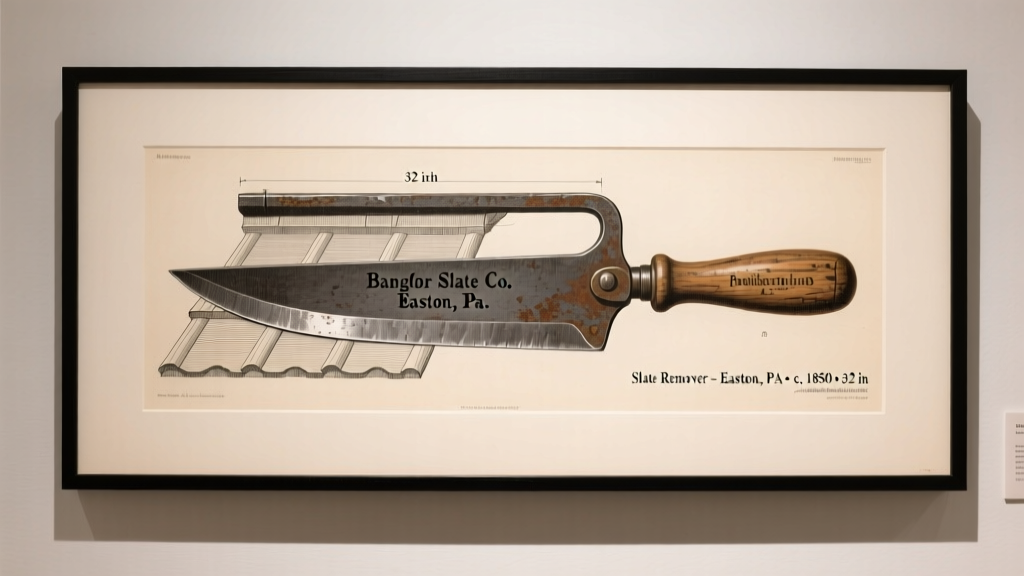
The Bangor Slate Company Slate Remover: A 19th-Century Roofing Tool from Easton, Pennsylvania (c. 1850, 32-Inch Length)

Fiesta Light Green Chop Plate 13-Inch (Model #2): Authentication, Market Value, and Production History
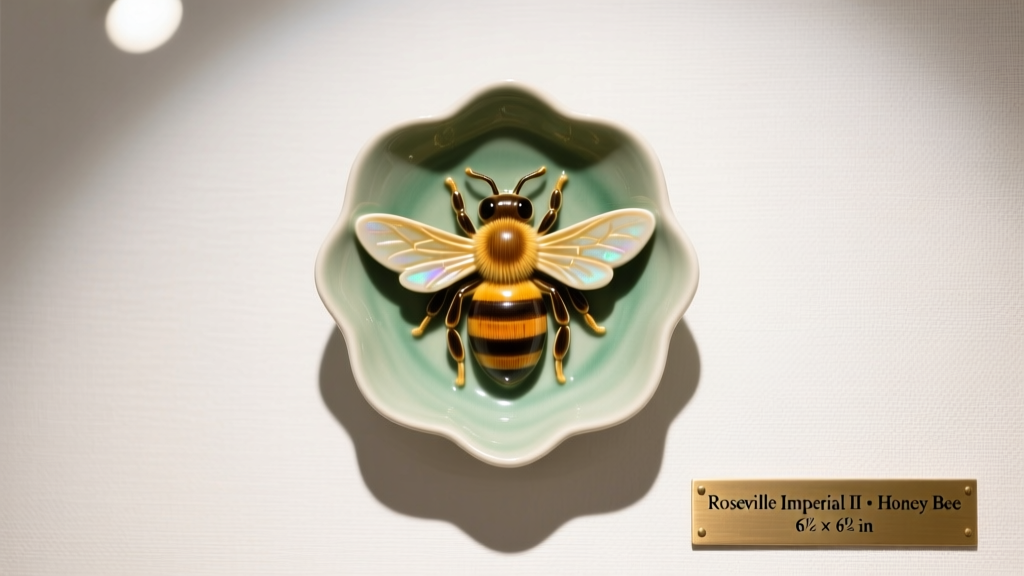
Roseville Imperial II Wall Pocket: Authentication, Provenance, and Market Analysis of the Honey Bee–Marked 6½ × 6¼ Inch Example

Fiesta Tumbler Water Turquoise: Authentication, Market Value, and Production History
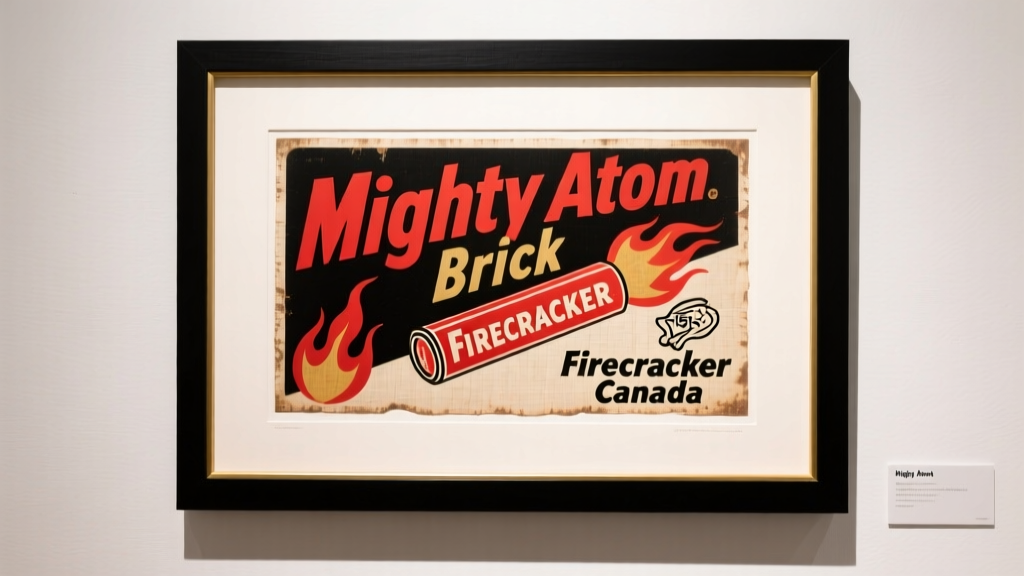
Advertising Label 'Mighty Atom Brick Firecracker' — A Canadian Mid-Century Toy Promotional Artifact
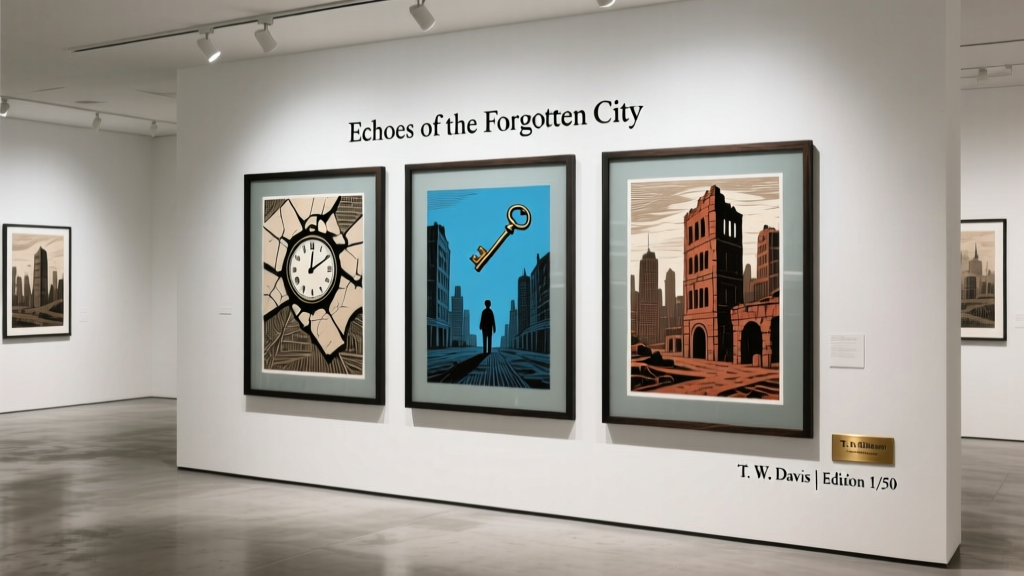
T. W. Davis: The Forgotten Master of Mid-Century American Lithography and His Enduring Market Legacy

Disneyana Toy Authentication: The Mickey Mouse Krazy Kar Battery-Operated Vehicle (1973–1975)
Fulper Vase: Decoding the Pink-to-Green Flambe Gunmetal Glaze (8-Inch Form)
Mercury Glass Goblet with Enameled Design and Satin Ground: Authentication, Provenance, and Market Analysis of the 5-Inch Pair