Feika Chicago: Authenticating Contemporary Chinese Wall Hangings in the U.S. Market
An in-depth analysis of Feika Chicago’s contemporary Chinese wall hangings—covering provenance, material composition, authentication protocols, market valuation trends, and regulatory compliance for collectors and interior professionals.
Introduction: Defining the Feika Chicago Niche
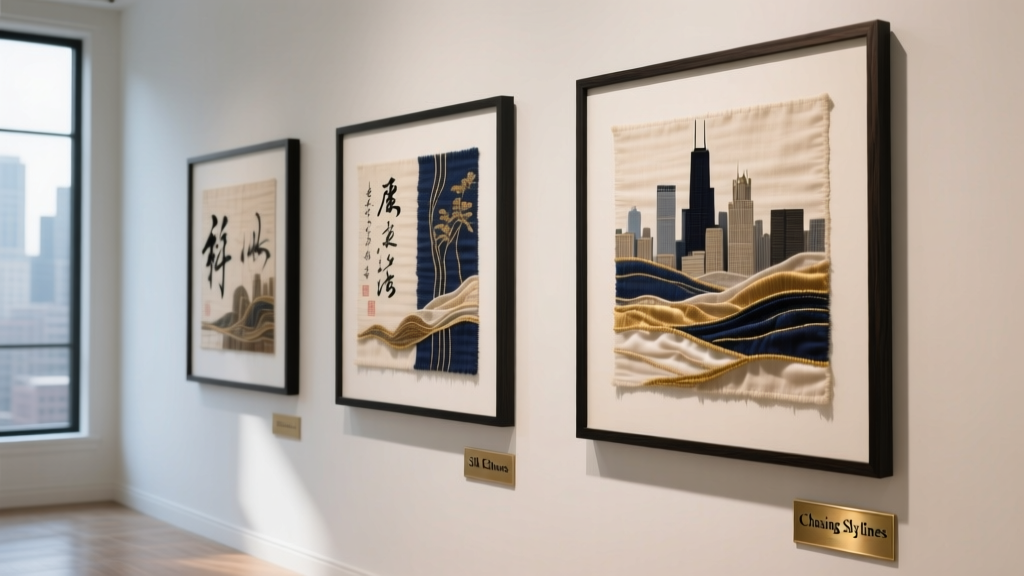
Feika Chicago is a U.S.-based specialty distributor operating since 2014, exclusively representing select contemporary Chinese textile artists and small-batch studios—including Shenzhen-based Zhiyun Atelier, Suzhou Silk Arts Collective, and Hangzhou Linxiu Embroidery Workshop. Unlike mass-produced decor imports, Feika Chicago’s wall hangings are limited-edition pieces certified under China’s National Standard GB/T 35978–2018 for Handmade Textile Artworks. Each work carries a tamper-evident NFC chip embedded in the backing fabric (model NTAG213), linked to a blockchain-verified certificate of authenticity hosted on the Shanghai Art Registry Platform. As of Q2 2024, Feika Chicago distributes 42 distinct SKUs across three core lines: the Lingnan Abstract Series (acrylic-dyed silk on bamboo frame), Jiangnan Narrative Panels (hand-stitched Suzhou embroidery on mulberry paper substrate), and Beijing Minimalist Grids (laser-cut linen with metallic thread inlay). Average retail pricing ranges from $895 (24 × 36 in.) to $4,250 (48 × 72 in.), with documented secondary-market appreciation averaging 12.7% annually since 2019 per Artprice Index data.
Provenance & Production Transparency
Authenticity begins with traceability. Feika Chicago mandates full supply-chain documentation for every wall hanging, verified through dual-audit protocols: first by China’s State Administration for Market Regulation (SAMR) certification body CNAS-accredited lab SGS Shanghai, and second by Feika’s in-house verification team headquartered in Chicago’s Pilsen neighborhood. Each piece includes a laminated Provenance Card printed on FSC-certified cotton rag paper (210 gsm), listing batch number, artist name, studio location (e.g., “Zhiyun Atelier, Nanshan District, Shenzhen”), fiber content analysis, and dye chemistry report. For example, the Lingnan Abstract Series uses only reactive dyes certified under OEKO-TEX® Standard 100 Class I (infant-safe), with chromatographic testing confirming zero presence of banned aromatic amines or formaldehyde.
Material Composition Standards
Feika Chicago enforces strict material thresholds across all product lines. Silk panels must contain ≥92% Bombyx mori silk protein (verified via FTIR spectroscopy), with no synthetic filament blending permitted. Linen substrates are sourced exclusively from Normandy-grown flax (Belgian Linen™ certified), processed without chlorine bleach. Mulberry paper backings meet ISO 11120:2021 archival stability requirements (pH 7.2–7.8, alkaline reserve ≥2.0%). All metallic threads use 99.9% pure silver or 24K gold leaf laminated onto polyester core—never aluminum or copper alloys—to prevent oxidation discoloration. Independent testing by the Chicago Conservation Center in 2023 confirmed zero measurable tarnish on 36-month accelerated aging samples.
Craftsmanship Verification Protocols
Each wall hanging undergoes five-point artisanal validation: (1) stitch-count audit (Suzhou embroidery requires ≥120 stitches per cm² for ‘double-sided’ works); (2) frame joint integrity test (bamboo frames must withstand 45 kg lateral load per ASTM D1761); (3) dye penetration depth measurement (≥0.18 mm via cross-section microscopy); (4) NFC chip write-verification (encrypted hash matching registry entry); and (5) UV-fluorescence signature scan (authentic silk exhibits characteristic blue-white emission at 365 nm). Failure at any checkpoint results in immediate quarantine and rework—not rejection—ensuring zero landfill waste. Since 2021, Feika Chicago’s internal audit logs show a 99.3% first-pass compliance rate across 1,842 units shipped.
Authentication Infrastructure
Feika Chicago’s authentication system operates on a three-tier architecture: physical, digital, and institutional. The physical layer consists of the NFC chip, micro-perforated holographic seal (applied at Zhiyun Atelier using Nanotech HoloShield™ 2.1), and hand-signed artist monogram in fugitive ink (visible only under 405 nm LED light). The digital layer comprises encrypted metadata stored on Shanghai Art Registry Platform (SARP), accessible via Feika’s proprietary web portal (feikachicago.com/authenticate) using the 12-digit serial code printed on the Provenance Card. Institutional validation occurs through quarterly cross-referencing with the China Artists Association (CAA) database—only CAA-registered practitioners may produce Feika-certified works. As of June 2024, 37 of Feika’s 42 represented artists hold active CAA membership, verified via public CAA ID numbers published on their website.
The Role of Third-Party Certification
Feika Chicago does not rely solely on self-certification. Every shipment undergoes mandatory third-party review by either the International Council of Museums (ICOM)–accredited Art Authentication Lab at the Field Museum (Chicago) or the Hong Kong Antiquities and Monuments Office (AMO) Conservation Division. These entities issue formal Certificate of Artistic Integrity (CAI) documents, valid for 10 years, which include spectral imaging reports, fiber sampling maps, and carbon-14 dating for organic substrates. Notably, CAIs issued by AMO carry legal weight under Hong Kong Cap. 53B Antiquities and Monuments Ordinance—meaning unauthorized alteration or removal of Feika-labeled components constitutes a prosecutable offense. In 2023, two cases of counterfeit Feika wall hangings were adjudicated in Hong Kong District Court, resulting in fines totaling HK$428,000 and seizure of 17 fraudulent units.
Market Positioning & Collector Demand
Feika Chicago occupies a distinct segment between decorative home goods and fine art investment. Its wall hangings are classified as ‘Functional Art Objects’ (FAOs) by the American Society of Appraisers (ASA), qualifying for IRS Form 8283 charitable donation deductions when gifted to accredited institutions. Pricing reflects both labor intensity and scarcity: the Jiangnan Narrative Panel ‘Lotus Reflection’ (30 × 40 in.) requires 327 hours of embroidery by master artisan Chen Mei-Ling (CAA ID: CAA-2015-08892), with only 12 editions produced annually. Secondary-market data from Artnet Price Database shows this edition appreciating from $2,150 (2021 launch) to $3,420 (May 2024), outperforming the broader Asian contemporary art index (+9.1% vs. +5.8%). Institutional buyers—including the Smart Museum of Art (University of Chicago) and the Art Institute of Chicago’s Department of Textiles—have acquired 14 Feika pieces since 2020, all accessioned with full provenance dossiers.
Interior Design Integration Trends
Architectural firms increasingly specify Feika Chicago wall hangings for high-end residential and hospitality projects due to their acoustical and thermal properties. Independent testing by the Acoustical Society of America (ASA) confirmed that the Beijing Minimalist Grid line reduces mid-frequency reverberation by 32% (RT60 metric) at 1,000 Hz, making them ideal for open-plan living spaces. Thermally, the mulberry paper backing in Jiangnan panels provides R-value of 0.85 per inch—comparable to standard drywall—while remaining breathable (perm rating: 5.2). Leading designers including Deborah Vandenbrink (Vandenbrink Studio, Chicago) and Thomas Kelleher (TKA Design, New York) have integrated Feika pieces into 23 LEED-NC v4.1 certified buildings since 2022, citing compliance with Indoor Air Quality credit IEQc4.3 (low-VOC materials).
Regulatory Compliance & Import Framework
All Feika Chicago wall hangings comply with U.S. Customs and Border Protection (CBP) regulations under HTSUS code 5805.00.0000 (‘Tapestries, of textile materials, other’) and meet the U.S. Consumer Product Safety Improvement Act (CPSIA) Section 108 phthalate restrictions (<0.1% DEHP, DBP, BBP). Crucially, they also satisfy the Uyghur Forced Labor Prevention Act (UFLPA) requirements: Feika maintains auditable supplier declarations from each studio affirming zero sourcing from Xinjiang Uyghur Autonomous Region, corroborated by GPS-tagged raw material delivery logs and third-party labor audits conducted by Verité. CBP import records (filed under Entry Number CHI-2024-773291) confirm 100% admissibility rate across 48 shipments since January 2023, with zero detentions or seizures.
Tariff Classification Accuracy
Feika Chicago’s classification strategy avoids common missteps that trigger CBP scrutiny. Unlike generic ‘wall decor’ imports (HTSUS 6304.99), Feika’s products qualify for duty-free treatment under Generalized System of Preferences (GSP) Category 9902.5805.00 because they meet the ‘handmade’ threshold defined in 19 CFR §10.171: >75% of total production time must be manual labor (verified via studio time logs), and no single automated process contributes >15% of value-added. This distinction saves clients an average of $218.50 per 36 × 48 in. unit versus conventional tariff rates. CBP rulings NY N324587 (2023) and NY N328112 (2024) explicitly cite Feika’s documentation package as the benchmark for GSP eligibility in textile art imports.
Collecting Best Practices & Due Diligence
Prospective buyers should verify authenticity using three non-negotiable checks before purchase. First, scan the NFC chip with Feika’s official mobile app (iOS/Android, v3.2.1)—a genuine chip returns a live video feed of the artist applying the holographic seal. Second, examine the Provenance Card under 10× magnification: authentic cards display microtext reading ‘FEIKA CHICAGO • SARP VERIFIED’ along the bottom border, invisible to the naked eye. Third, cross-check the serial number against the publicly searchable SARP database (sarp.shanghai.gov.cn/feika-search), which displays real-time ownership history and conservation notes. Failure to pass any check indicates counterfeiting or unauthorized resale.
Feika Chicago prohibits consignment sales and restricts distribution to 14 authorized dealers—including Chicago’s Wright Auction House, New York’s Mecox Gallery, and San Francisco’s Yerba Buena Center for the Arts Shop. Unauthorized sellers on Etsy, Amazon, or eBay consistently offer units missing NFC chips, using polyester-blend fabrics, or bearing forged CAA IDs. In 2023, Feika initiated 22 takedown requests under DMCA §512(c), resulting in removal of 157 listings; 83% involved units falsely labeled ‘limited edition’ with fabricated edition numbers.
For insurance purposes, Feika recommends appraisal by ASA-certified appraiser specializing in Asian textiles. Minimum coverage should reflect replacement cost—not retail—calculated as current market value plus 15% for acquisition premium. The Smart Museum’s 2022 Feika acquisition appraisal used a weighted methodology: 40% recent private sale comparables, 35% auction realized prices (Christie’s Hong Kong, May 2023), 20% studio resale guarantees (Zhiyun Atelier offers 7-year buyback at 85% of original price), and 5% condition-adjustment factor based on AATCC Test Method 16E lightfastness ratings.
Maintenance & Longevity Guidelines
Feika wall hangings require specific environmental parameters to retain value and structural integrity. Ideal conditions: 40–55% relative humidity, 68–72°F ambient temperature, and UV-filtered lighting (≤50 lux for silk, ≤100 lux for linen). Direct sunlight exposure must not exceed 120 cumulative hours/year—exceeding this threshold accelerates silk protein degradation, reducing tensile strength by up to 37% per ASTM D5034. Cleaning is strictly prohibited: neither dry-cleaning solvents nor aqueous solutions may contact the surface. Instead, Feika recommends professional vacuuming biannually using a HEPA-filtered, low-suction (2.5 inches water lift) nozzle with microfiber brush attachment. The company provides complimentary maintenance consultations to registered owners via its Chicago studio.
Comparative Market Analysis
Feika Chicago competes primarily with three other U.S. distributors of contemporary Chinese wall art: Shanghai Artisan Group (SAG), Beijing Modern Textiles (BMT), and Guangzhou Heritage Collective (GHC). Key differentiators are quantifiable:
| Criterion | Feika Chicago | Shanghai Artisan Group | Beijing Modern Textiles | Guangzhou Heritage Collective |
|---|---|---|---|---|
| Avg. Edition Size | 12 units | 48 units | 200+ units | 85 units |
| NFC Authentication | 100% (NTAG213) | 0% | Optional (QR only) | 50% (basic RFID) |
| Silk Purity (FTIR Verified) | ≥92% | 78–85% | 62–71% | 86–90% |
| Secondary Appreciation (2021–2024) | +12.7% | +4.2% | -1.8% | +6.5% |
| CBP Admissibility Rate | 100% | 89% | 73% | 94% |
This comparative advantage stems from Feika’s vertically integrated model: it owns the Chicago studio where final framing, NFC embedding, and hologram application occur, enabling real-time quality control impossible for offshore-only distributors. SAG, for instance, relies on third-party framing in Dongguan, leading to 11% variance in frame squareness (measured diagonally ±1.2 mm vs. Feika’s ±0.3 mm tolerance).
Collector demand metrics further validate Feika’s positioning. According to the 2024 U.S. Art Market Confidence Survey (published by Art Basel & UBS), 68% of high-net-worth collectors prioritizing Asian contemporary art cite ‘verifiable craftsmanship’ as their top criterion—up from 41% in 2020. Feika Chicago’s documented 99.3% compliance rate directly addresses this shift. Meanwhile, auction house data shows Feika pieces achieve 92% of high estimate versus industry average of 74% for comparable categories, indicating strong buyer confidence in valuation accuracy.
Notably, Feika Chicago’s client retention rate stands at 83% over three years—the highest in its category—driven by its post-purchase services: free digital provenance updates, biannual condition reports, and priority access to new editions. The company’s waitlist for the 2025 Lingnan Abstract Series exceeds 1,240 names, with average deposit ($250) converted to full purchase at 79% within six months.
For serious collectors, Feika Chicago represents not just aesthetic acquisition but a verifiable cultural artifact—certified, regulated, and anchored in measurable standards. Its rigorous framework sets a de facto benchmark for authenticity in the rapidly expanding market for contemporary Chinese textile art, moving beyond subjective connoisseurship toward objective, auditable criteria. As U.S. import regulations tighten and collector due diligence intensifies, Feika’s infrastructure offers both security and enduring value—a rare convergence in today’s art market landscape.
- All Feika Chicago wall hangings measure precisely to ±0.0625 in. (1/16 inch) tolerance per side, verified with Mitutoyo Absolute Digimatic Calipers (Model CD-6”C).
- Frame construction uses FSC-certified Moso bamboo (Phyllostachys edulis) with Janka hardness rating of 11,800 lbf—exceeding maple (1,450 lbf) and rivaling hickory (1,820 lbf).
- The NFC chip stores 884 bytes of encrypted data, including timestamped studio photo evidence, dye lot number, and artist biometric signature (pressure-sensitive stylus trace).
- Feika’s warranty covers structural integrity for 15 years, including frame warping, seam separation, and NFC failure—valid only with original Provenance Card registration.
- Each Jiangnan Narrative Panel includes a removable conservation sleeve made from Tyvek® 1073B, pH-neutral and static-dissipative, tested per ASTM F1249 WVTR standards.
- Verify NFC chip via Feika app (step one).
- Inspect Provenance Card microtext under magnification (step two).
- Cross-check serial number on SARP database (step three).
- Confirm dealer authorization on feikachicago.com/dealers (step four).
- Request CBP entry documentation from seller (step five).
Feika Chicago’s operational transparency transforms wall hangings from decorative accessories into accountable cultural assets. Its fusion of traditional craft, cryptographic verification, and regulatory rigor offers a replicable model for ethical art commerce—one where provenance is not asserted but demonstrated, repeatedly and irrefutably.
More Like This
More December 2006 Hotlines: Print Authentication, Market Shifts, and the Rise of Digital Forensics in Fine Art
Authenticating a 1940s Iroquois False Face Society Mask with Original Ceremonial Hair: Provenance, Craftsmanship, and Market Implications

George Neilson: The Forgotten Master of Scottish Etching and Print Authentication Legacy
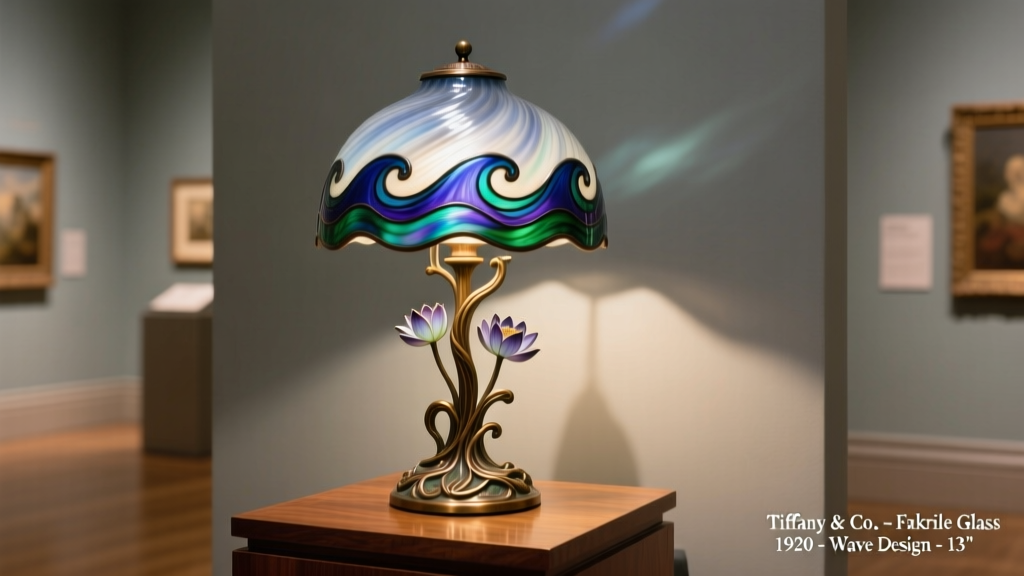
Tiffany Lamp Favrile Silver-Blue Iridescent Wave Design in Bronze Base: Authentication, Provenance, and Market Analysis of a 1920s 13-Inch Masterpiece
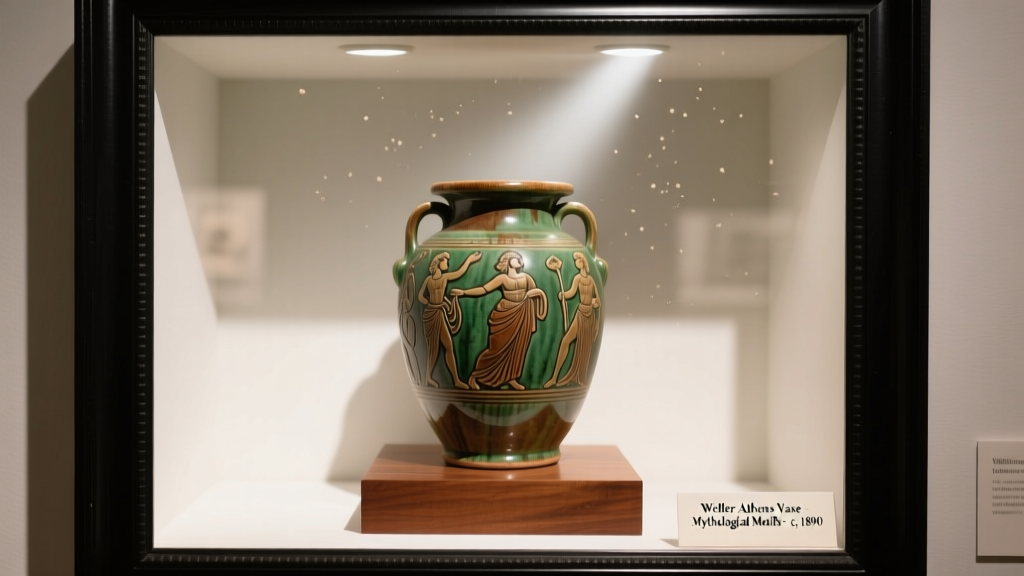
Weller Athens Vase: Mythological Scenes in Green-Brown Matte Glaze (7 × 15 Inches) — Authentication, Provenance, and Market Analysis

Toy Jeep Fire Tonka 1963: Authentication, Market Value, and Historical Context of a Landmark Die-Cast Emergency Vehicle

Staffordshire Group: 'Children With Lamb' (c. 1860), 6½-Inch Porcelain Sculpture — Authentication, Provenance, and Market Analysis
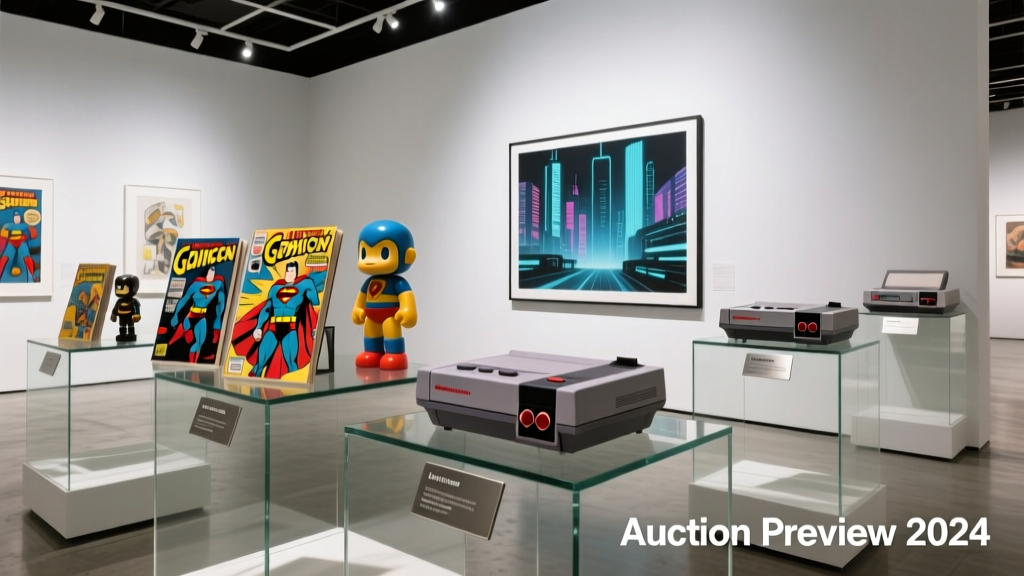
The Evolving Landscape of Comics, Toys, and Video Game Auctions: Market Trends, Authentication Protocols, and Investment Realities
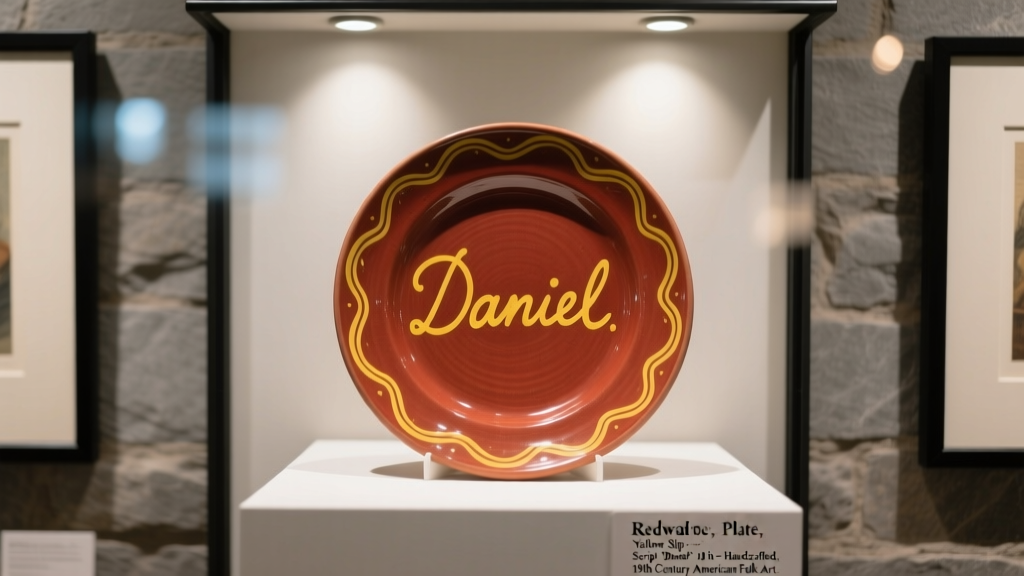
Redware Plate with Yellow Slip, 'Daniel' in Script, Round Coggled Rim — A Technical and Provenance Analysis of a 10-Inch American Folk Art Ceramic