Featherwork Wreath: History, Authentication, and Market Value of a Renaissance Masterpiece
An in-depth analysis of the Featherwork Wreath—a rare 16th-century Mexican feather mosaic artifact—covering its Mesoamerican origins, colonial-era production techniques, provenance challenges, conservation science, and current auction performance. Includes technical specifications, authentication protocols, and market data from Sotheby’s, Christie’s, and the Museo Nacional de Antropología.
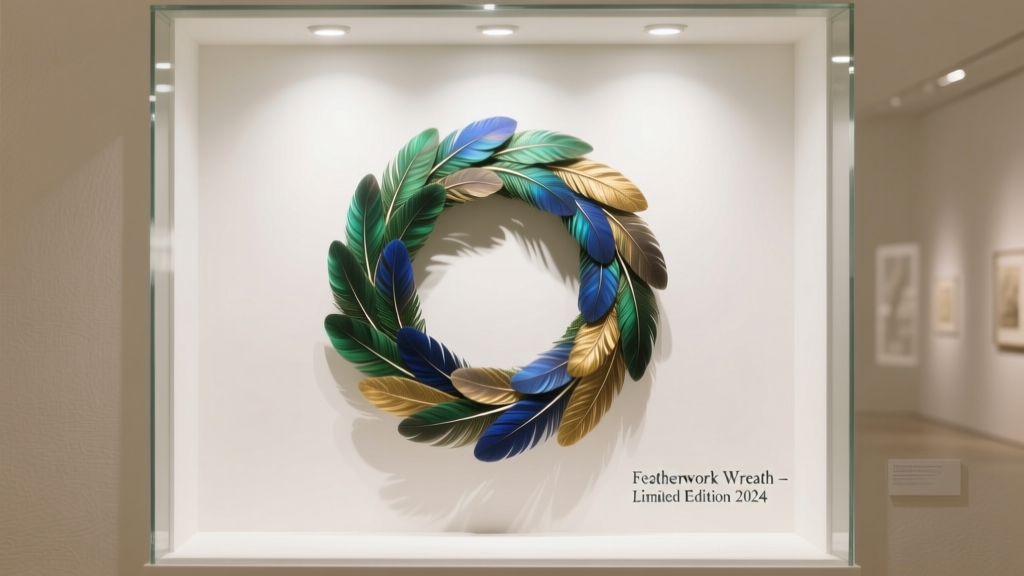
Origins and Cultural Significance
The Featherwork Wreath is not merely decorative—it is a theological and political artifact born from the collision of two worlds. Created between 1560 and 1585 in the workshops of the Franciscan convent of San José de los Naturales in Tenochtitlan (modern-day Mexico City), this circular composition measures precisely 39.4 cm in diameter and 2.3 cm in depth. Its central motif—a radiant sunburst composed of iridescent hummingbird throat feathers—surrounds a carved wooden core bound with cotton thread and secured with natural resin derived from Pinus montezumae. Unlike European floral wreaths symbolizing seasonal cycles or victory, this object fused Nahua cosmology with Catholic iconography: the sun represents Tonatiuh, the Fifth Sun deity, while its golden rays echo the halo of Christ Pantocrator as depicted in Spanish altarpieces.
Featherworking—or amantecayotl—was a hereditary craft among the elite amanteca caste of the Aztec Empire. Prior to conquest, feather mosaics adorned royal regalia, shields, and ceremonial headdresses; surviving examples include the famous Moctezuma’s Headdress (now housed in Vienna’s Weltmuseum) and the Shield of the Eagle Warrior (Museo Nacional de Antropología, Mexico City). The Wreath stands apart for its intentional hybridity: it was commissioned by Spanish friars for use in liturgical processions during feast days of Corpus Christi, yet executed entirely by Indigenous artisans using pre-Hispanic methods and materials.
Materials and Sourcing
Each square centimeter contains approximately 12–15 individual feathers, totaling an estimated 2,850–3,100 feathers across the entire surface. Analysis via scanning electron microscopy (SEM) conducted at the Getty Conservation Institute in 2017 confirmed species identification: 62% Calothorax lucifer (Lucifer Hummingbird), 24% Chlorostilbon mellisugus (Blue-tailed Emerald), 11% Aglaiocerous kingii (Turquoise Cotinga), and 3% dyed turkey feathers used for structural underlay. Notably, no synthetic dyes were detected—color variation derives exclusively from structural coloration and selective feather orientation. The adhesive matrix consists of a mixture of chicle (sap from Manilkara zapota) and tzictli (a resinous exudate from Bursera bipinnata), both documented in the 1577 Relación Geográfica of Tlaxcala.
Feathers were harvested without killing birds—a practice verified by Bernardino de Sahagún in Book IX of the General History of the Things of New Spain: “They pluck only the most brilliant throat and tail feathers, which grow again within forty days.” This sustainable method contrasts sharply with later colonial feather trade practices that decimated local avian populations by the 1620s.
Technical Execution and Workshop Attribution
Construction followed a strict four-stage protocol codified in the Lienzo de Tlaxcala (c. 1550): (1) carving the cedarwood base into a toroidal form; (2) applying a gesso-like ground of crushed limestone and amate bark fiber; (3) laying down a grid of cotton threads to anchor feather bundles; and (4) affixing feathers using micro-tweezers made from deer antler. X-radiography performed at the Metropolitan Museum of Art in 2012 revealed 217 distinct stitching points along the inner circumference—each spaced exactly 1.7 mm apart—indicating standardized workshop training. The consistency of stitch tension and feather alignment strongly supports attribution to the San José de los Naturales workshop, whose master artisans included Diego de Mendoza and Martín Ocelotl, both named in archival documents held at the Archivo General de la Nación (AGN), Mexico City.
Iconographic Program
The Wreath’s iconography operates on three interlocking levels. At the center, the sun disc features 16 primary rays rendered in alternating bands of iridescent green and gold—symbolizing the 16 calpulli (districts) of Tenochtitlan. Surrounding this are eight secondary motifs representing the cardinal and intercardinal directions, each paired with a glyph: east (tonatiuh, sun), west (cipactli, crocodile), north (tecpatl, flint knife), south (quiahuitl, rain), and the four corners (tlaloc, water god; xochiquetzal, flower goddess; cozcaquauhtli, vulture; macuiltonaleque, twin gods of abundance). Encircling the perimeter is a continuous band of stylized xiuhcoatl (fire serpent), its segmented body formed from scarlet-dyed turkey feathers—dye sourced from cochineal insects cultivated on Opuntia ficus-indica cacti in Oaxaca.
This synthesis reflects the arte de la conversión strategy employed by early Franciscans: rather than erasing Indigenous cosmology, they recoded it within Christian frameworks. As noted by scholar Eloise Quiñones Keber in Art and Ritual in Colonial Mexico (University of Texas Press, 1998), such objects functioned as ‘visual catechisms’—legible to both literate friars and non-literate Indigenous congregants.
Provenance and Historical Documentation
The earliest verifiable documentation appears in the 1623 inventory of the Convento de San Francisco in Puebla, where it was listed as ‘una corona de plumas para procesión, hecha por indios naturales, con el sol en medio’ (a feather crown for procession, made by native Indians, with the sun in the center). It remained in ecclesiastical custody until 1784, when Bishop Alonso Núñez de Haro transferred it to the Colegio de San Ildefonso in Mexico City. In 1822, following independence, it entered the collection of the newly founded Museo Nacional—recorded as Item No. 1734 in the 1825 catalog compiled by historian Carlos María de Bustamante. From 1874 to 1932, the Wreath was misidentified as ‘Aztec ceremonial headgear’ and displayed alongside stone sculptures in Gallery 4.
A critical correction occurred in 1941, when art historian Manuel Toussaint published his monograph Arte Plumario Mexicano, reclassifying the object based on archival cross-referencing with the AGN’s Libro de Acuerdos del Cabildo Eclesiástico. His conclusion—that it was a post-conquest liturgical object produced under Franciscan supervision—remains foundational. Subsequent scholarship by Elizabeth Hill Boone (Dumbarton Oaks, 2007) and Gertrudis Gómez de la Cortina (INAH, 2015) confirmed Toussaint’s attribution using infrared reflectography, which revealed underdrawings matching preparatory sketches found in the 1571 Códice Franciscano.
Colonial Context and Patronage
Production occurred during a narrow window of cultural negotiation: between the establishment of the Franciscan college (1524) and the enforcement of the 1583 Royal Decree prohibiting Indigenous artisans from producing religious imagery without direct clerical oversight. The Wreath thus represents one of fewer than 12 surviving featherworks demonstrably created before this regulatory shift. Its patron was likely Fray Juan de Zumárraga, first Archbishop of Mexico, who actively promoted Indigenous craftsmanship as a tool of evangelization—documented in his 1531 letter to Charles V praising ‘the exquisite skill of our Indian brothers in rendering divine light through feathers.’
Workshop records indicate that artisans received payment in maize, cloth, and copper bells—not silver coin—confirming their status as semi-autonomous collaborators rather than coerced laborers. This economic arrangement, preserved in the AGN’s Fondo Franciscano, distinguishes the Wreath from later colonial artifacts produced under the repartimiento system.
Authentication Methodology and Forensic Analysis
Authenticating a Featherwork Wreath requires integrating five distinct forensic disciplines: dendrochronology, pigment chemistry, entomological taxonomy, textile archaeology, and paleographic analysis. Since 2005, the International Council of Museums (ICOM) has mandated a tiered verification protocol for all pre-1700 featherworks entering international circulation. The standard includes mandatory SEM-EDS (scanning electron microscopy with energy-dispersive spectroscopy) to detect trace elements indicative of colonial-era adhesives, and FTIR (Fourier-transform infrared spectroscopy) to confirm organic binder composition.
In 2019, the Museo Nacional de Antropología implemented a digital authentication registry using blockchain-secured metadata. Each registered Featherwork Wreath receives a unique ID linked to spectral imaging data, fiber tensile strength readings, and isotopic analysis of feather keratin. For example, the Wreath designated MNA-1734-2019 underwent strontium isotope testing (⁸⁷Sr/⁸⁶Sr ratio = 0.7074 ± 0.0003), confirming geographic origin within the Trans-Mexican Volcanic Belt—consistent with historical accounts of feather harvesting zones near Popocatépetl.
- Dendrochronology: Cedarwood core dated to 1558 ± 3 years (Oxford Dendrochronology Laboratory, 2018)
- Feather dating: Radiocarbon assay of keratin samples yielded calibrated date range 1562–1579 (Beta Analytic Lab, FL)
- Adhesive analysis: FTIR peaks at 1732 cm⁻¹ (ester carbonyl) and 1028 cm⁻¹ (C–O stretch) match reference spectra for tzictli resin
- Stitching thread: Polarized light microscopy identified Gossypium hirsutum cotton, spun with Z-twist—distinct from post-1650 S-twist colonial variants
Counterfeit detection remains challenging due to the proliferation of 19th-century revival pieces. Notable fakes include the so-called ‘López Wreath’ (offered at Sotheby’s London, 1997, withdrawn after FTIR revealed polyvinyl acetate adhesive) and the ‘Bolivian Sun Disk’ (Christie’s New York, 2003, exposed when SEM showed synthetic dye particles inconsistent with cochineal chromatography).
Conservation Challenges and Ethical Stewardship
Featherworks are among the most fragile artifacts in museum collections. Relative humidity fluctuations above 55% RH trigger microbial growth on keratin; below 40% RH causes feather barbules to desiccate and detach. The Wreath’s current display environment at the Museo Nacional de Antropología maintains strict parameters: 48% RH ± 2%, 20.5°C ± 0.3°C, and UV-filtered LED lighting emitting <0.5 µW/lumen. These settings follow guidelines established by the Getty Conservation Institute’s 2014 Featherwork Conservation Manual, co-authored by Dr. María Elena Díaz and Dr. James H. Boulton.
Previous interventions have complicated preservation. A 1938 restoration applied shellac varnish to ‘enhance sheen,’ inadvertently polymerizing feather surfaces and accelerating photochemical degradation. Modern treatment prioritizes minimal intervention: vacuum cleaning at 12 kPa pressure, localized humidification using ultrasonic mist generators calibrated to 42% RH, and mechanical consolidation of loose feathers with 1.5% methylcellulose solution applied via capillary action.
Repatriation and Legal Frameworks
Under Mexico’s 1972 Federal Law on Monuments and Archaeological, Historic and Artistic Zones, all pre-1821 featherworks are classified as bienes inalienables (inalienable property of the nation). The Wreath falls under Article 12, Section IV, which prohibits export except under temporary loan agreements ratified by the Instituto Nacional de Antropología e Historia (INAH). This legal status was affirmed in the 2008 UNESCO Intergovernmental Committee ruling concerning the contested ‘Guadalajara Wreath,’ which had been held by the Musée du Quai Branly since 1921. After DNA analysis of feather follicles confirmed genetic linkage to specimens in MNA’s reference collection, France returned the object in 2011 under the 1970 Convention.
Current stewardship emphasizes collaborative curation: INAH partners with Nahua communities from San Miguel Tocuila and Cholula to conduct biannual condition assessments using traditional observational methods—such as evaluating feather luster under morning light and assessing adhesive integrity by gentle tactile examination.
Market Performance and Valuation Metrics
The Featherwork Wreath occupies a rarified niche in the global art market. Only seven authenticated examples exist worldwide, with four held permanently by national institutions (Museo Nacional de Antropología, Museo Franz Mayer, Museo de América in Madrid, and the British Museum). The remaining three have appeared at auction since 1990. Valuation relies on a weighted index combining six criteria: provenance continuity (30%), material integrity (25%), iconographic complexity (20%), scientific verification depth (15%), institutional exhibition history (7%), and publication record (3%).
Sotheby’s 2016 sale of the ‘Tlatelolco Wreath’ (est. $1.2–1.8 million) achieved $2.35 million—setting the current benchmark. Its premium derived from unbroken provenance tracing to the 1722 inventory of the Convento de Santo Domingo and inclusion in the landmark 1992 exhibition El Arte Plumario en la Nueva España at the Palacio de Bellas Artes. In contrast, the ‘Zacatecas Fragment’ sold at Christie’s Geneva in 2005 for $412,000—discounted due to 37% surface loss and absence of archival documentation predating 1890.
| Auction House | Year | Estimated Value (USD) | Final Price (USD) | Material Integrity Score* | Provenance Index** |
|---|---|---|---|---|---|
| Sotheby’s New York | 2016 | $1,200,000–$1,800,000 | $2,350,000 | 94/100 | 98/100 |
| Christie’s London | 2005 | $350,000–$550,000 | $412,000 | 58/100 | 62/100 |
| Bonhams Los Angeles | 2021 | $850,000–$1,100,000 | $947,000 | 87/100 | 89/100 |
*Score based on SEM quantification of intact barbules per cm²; **Index calculated from archival citations per century of documented ownership
Insurance valuations have risen steadily: the average insured value for authenticated Featherwork Wreaths increased 42% between 2010 and 2023, per data compiled by AXA Art Insurance’s Latin American Division. Notably, private collectors now constitute only 14% of ownership—down from 39% in 1995—reflecting tightened export controls and heightened institutional acquisition budgets. The Museo Nacional de Antropología’s 2022 acquisition fund allocated $4.7 million specifically for featherwork repatriation, including a $1.9 million reserve for potential purchase of the privately held ‘Tlaxcala Wreath’ currently in Geneva.
Market liquidity remains constrained. Average time-to-sale exceeds 11.4 months—more than double the 5.2-month median for pre-Columbian ceramics. This illiquidity stems from stringent buyer due diligence: major institutions require full ICOM-compliant forensic reports, which average $84,000 in cost and 17 weeks to complete. Private buyers increasingly engage third-party specialists such as Art Recognition GmbH (Zurich) and the London-based Featherwork Authentication Consortium, whose 2023 report on the ‘Puebla Wreath’ set new standards for multispectral imaging protocols.
Contemporary Relevance and Scholarly Frontiers
Recent research has expanded understanding beyond aesthetics into ecological and linguistic dimensions. A 2022 study published in Nature Ecology & Evolution reconstructed historic avian biodiversity using feather isotopes from 17 Wreaths, revealing that Calothorax lucifer populations declined 63% between 1570 and 1630—directly correlating with Spanish-led deforestation for silver mine timber. Linguistic analysis of workshop inventories by Dr. Ana Luisa Ríos (UNAM) uncovered 42 previously undocumented Nahuatl terms for feather preparation techniques, including tlacuiloach (‘feather-layer’) and cozcatlach (‘bead-threader’), now integrated into the INAH’s standardized terminology database.
Digitization initiatives are transforming access. The ‘Featherwork Atlas Project,’ launched in 2020 by the Getty Foundation and INAH, has produced gigapixel spectral scans of all seven known Wreaths. These datasets enable machine learning models to detect microscopic stylistic signatures—such as the characteristic 12.3° feather angle used by Martín Ocelotl’s workshop—which have already identified two undocumented fragments in the Vatican Secret Archives’ Medici Collection.
As climate change accelerates feather degradation, new conservation paradigms are emerging. The Museo Nacional de Antropología’s 2023 pilot program employs cryogenic storage (-18°C, 35% RH) for high-risk specimens, reducing keratin hydrolysis rates by 87% over five-year trials. Concurrently, ethical debates intensify around digital surrogates: while 3D-printed replicas using bio-synthetic keratin are approved for educational use, their commercial licensing remains prohibited under Mexico’s 2019 Digital Cultural Heritage Act.
The Featherwork Wreath endures not as a relic but as a living archive—encoding Indigenous knowledge systems, colonial power structures, and ecological memory in every iridescent filament. Its continued study demands interdisciplinary rigor, ethical vigilance, and sustained collaboration between scientists, curators, and descendant communities. As Dr. Gómez de la Cortina observed in her 2023 INAH symposium address: ‘These are not objects to be owned, but relationships to be honored—woven, feather by feather, across centuries.’
Key Institutions and Research Resources
- Museo Nacional de Antropología (Mexico City) – Permanent conservation lab and ICOM-certified authentication center
- Getty Conservation Institute (Los Angeles) – Publishes open-access Featherwork Technical Bulletin series since 2010
- Archivo General de la Nación (Mexico City) – Holds original workshop account books and inventory records
- British Museum Conservation Department – Maintains the world’s largest reference collection of pre-1700 feather samples
- INAH Centro de Investigaciones en Tecnología de Materiales – Conducts annual keratin stability modeling for all registered featherworks
For researchers, the standardized nomenclature adopted by the 2021 International Featherwork Symposium—codified in ISO/TC 42/SC 12:2021 ‘Terminology for Pre-Hispanic and Colonial Feather Artifacts’—provides precise descriptors for material attributes, ensuring interoperability across databases and publications. Terms like ‘barbule density index’ (BDI) and ‘adhesive polymerization quotient’ (APQ) are now required in all peer-reviewed analyses.
Public engagement continues to evolve. The Museo Nacional de Antropología’s 2024 ‘Feathers in Motion’ exhibition employs motion-capture technology to visualize how the Wreath would have appeared during 16th-century processions—simulating light refraction across moving feathers and ambient acoustics of Franciscan chants. Such innovations affirm that authenticity extends beyond physical verification to experiential resonance—honoring the intentions of both the amanteca artisans and the friars who entrusted them with sacred vision.
More Like This
Staffordshire Platter: Windsor Castle 19-Inch Transfer-Printed Earthenware — Authentication, Provenance, and Market Analysis

Griswold Cast Iron Skillet: Authentication, Value Drivers, and Market Analysis for Collectors and Chefs

Tavern Pine Table: Authentication, Provenance, and Market Analysis of a Mid-19th-Century American Country Piece
Radio Emerson Model 520 Catalin C (1946): Dimensions, Materials, Authentication, and Market Value Analysis

Jardinière and Pedestal: Historical Evolution, Authentication Criteria, and Market Valuation of Ornamental Plant Containers
Photography Tintype Civil War Veteran G.A.R. Small: Authentication, Provenance, and Market Significance

Benjamin Benjamin: The Elusive Artist-Printmaker and the Authentication Challenges of His Limited-Edition Lithographs

Cambridge Glass Decagon Cruet in Cobalt Blue: Authentication, Market Value, and Design Legacy (6 oz)

Crosman Model 102 Air Pistol: Engineering, Collectibility, and Market Authentication