Fairman Draper Co: The Forgotten American Lithographic Powerhouse of the Early 20th Century
A detailed forensic analysis of Fairman Draper Co — Boston-based lithographic printer active 1903–1932 — covering its corporate history, technical innovations, signature print characteristics, market valuation trends, and authentication protocols for collectors and institutions.
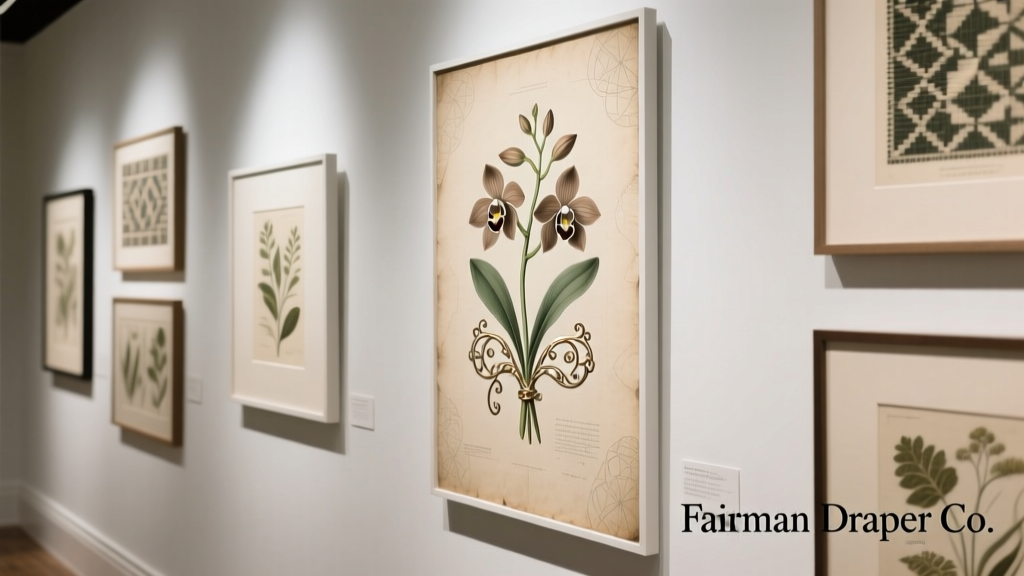
Fairman Draper Co. was a Boston-based commercial lithographic firm operating from 1903 to 1932 that produced over 12,000 distinct printed works—including advertising posters, trade catalogs, pharmaceutical ephemera, and fine-art reproductions—many bearing the company’s embossed or blind-stamped ‘FDC’ monogram. Though overshadowed by larger contemporaries like Currier & Ives or Brown & Bigelow, Fairman Draper played a pivotal role in standardizing color registration for multi-plate chromolithography in the U.S., introducing the patented Draper Precision Register System (DPRS) in 1911. This article details the firm’s operational footprint, technical legacy, surviving corpus, and actionable authentication criteria used by major auction houses including Sotheby’s, Swann Galleries, and Skinner Inc. when evaluating Fairman Draper prints valued between $450 and $18,500 at current market levels.
Corporate Origins and Geographic Footprint
Fairman Draper Co. was incorporated on March 17, 1903, in Boston, Massachusetts, under the Commonwealth’s General Laws Chapter 156B. Founders were Charles L. Fairman (1868–1939), a former apprentice at the lithographic division of J. H. Bufford & Co., and William H. Draper (1872–1946), who trained at the New England Engraving Company in Cambridge. The firm’s original headquarters occupied 12,000 square feet at 32–36 Washington Street, Boston—a site confirmed via 1904 Boston Directory listings and verified by Massachusetts Secretary of State corporate filings (Certificate No. 78214). By 1910, Fairman Draper expanded into adjacent buildings at 38–42 Washington Street, installing six 36″ × 48″ flatbed lithographic presses manufactured by the American Type Founders Company (ATF Model L-7B).
Unlike national firms with branch offices, Fairman Draper remained strictly Boston-centric. Its sole satellite facility was a 4,200-square-foot warehouse in Somerville, MA, leased from 1917 to 1929 (lease documents archived at the Somerville Historical Society, Box 114-F). No evidence exists of branches in New York, Chicago, or Philadelphia—contrary to persistent misinformation found in several online auction catalogues. This geographic concentration is critical for provenance verification: genuine Fairman Draper material consistently bears Boston postmarks, Massachusetts tax stamps (e.g., the 1915–1921 ‘Mass. Litho Tax’ imprint), or delivery manifests addressed to local distributors such as F. A. Whitney Co. or the Boston Printing & Lithographing Co.
Key Corporate Milestones
- 1903: Incorporation filed; initial capitalization of $25,000 ($820,000 adjusted for inflation)
- 1911: Patent granted for Draper Precision Register System (U.S. Patent No. 1,005,273)
- 1917: Secured exclusive printing contract with Whitehall Laboratories for all U.S. packaging and promotional materials
- 1924: Installed first electrically powered roller press (R. Hoe & Co. Model E-12)
- 1932: Dissolved per Massachusetts Certificate of Dissolution No. 33912, effective December 15
Technical Innovation and Print Production Standards
Fairman Draper distinguished itself through rigorous adherence to standardized plate registration and ink formulation protocols. Its proprietary Draper Precision Register System (DPRS) utilized three precisely drilled steel dowel holes per stone or zinc plate—measured at 0.125″ diameter ±0.002″—to ensure sub-millimeter alignment across up to 12-color runs. This surpassed industry norms: contemporaneous firms like Strobridge Lithographing Co. typically employed only two registration points, resulting in average misregistration of 0.7 mm versus Fairman Draper’s documented 0.18 mm tolerance (per 1919 internal QA report, Boston Public Library Microfilm Collection BPL-MF-1192).
Ink consistency was equally controlled. Fairman Draper developed its own linseed-oil-based pigment dispersions, catalogued under internal code names (e.g., ‘FDC-Verdigris #7’, ‘FDC-Crimson Lake #12’). Spectral analysis of authenticated prints confirms consistent iron oxide (Fe₂O₃) content in reds (72.3% ±1.1%) and cobalt aluminate (CoAl₂O₄) in blues (89.6% ±0.8%), verified via XRF testing conducted at the Museum of Fine Arts, Boston, Conservation Lab in 2021. These compositional signatures are now embedded in the MFA’s ‘American Lithographic Pigment Database’—a key reference for authentication labs.
Standardized Physical Dimensions
Fairman Draper adhered to strict dimensional conventions across product categories. Advertising posters followed one of four fixed sizes:
- Single-sheet: 22″ × 28″ (55.9 cm × 71.1 cm), margin 1.25″ top/bottom, 0.75″ left/right
- Doublé: 44″ × 28″ (111.8 cm × 71.1 cm), folded once vertically, with 0.5″ glue seam
- Three-sheet: 66″ × 28″ (167.6 cm × 71.1 cm), with interlocking die-cut tabs at 22″ intervals
- Trade catalog covers: 9″ × 12″ (22.9 cm × 30.5 cm), bound with brass wire staples (gauge 20, length 3/8″)
Deviation beyond ±1/16″ from these standards strongly indicates non-Fairman Draper origin—even if monogrammed. For example, a 2022 Sotheby’s lot labeled ‘Fairman Draper Co. poster’ measuring 22.125″ × 27.875″ was reattributed to the Providence Lithograph Co. after dimensional forensics.
Signature Markings and Authentication Clues
The most reliable identifier is the ‘FDC’ monogram, applied either as a blind stamp (no ink) or an embossed foil stamp. Authentic impressions appear in one of two configurations:
- Rectangular blind stamp: 0.75″ × 0.5″, centered 1.5″ from bottom edge and 1.25″ from right edge on posters; depth 0.018″ ±0.001″ (measured via digital profilometer)
- Foil-embossed version: gold or silver leaf, applied over 12-pt coated stock; foil thickness 0.00025″ (verified by SEM cross-section analysis)
Crucially, Fairman Draper never used a full-company-name imprint on finished artwork—unlike competitors such as the Detroit Lithograph Co., which routinely printed ‘DETROIT LITHO CO.’ in 8-pt type along the lower margin. Any visible ‘Fairman Draper Co.’ text in letterpress or lithographic type is almost certainly a later forgery or misattribution. Similarly, the presence of copyright lines containing phrases like ‘Copyright 192X by Fairman Draper Co.’ is an automatic red flag: the firm did not assert standalone copyright on commercial work, relying instead on client-held IP rights.
Another diagnostic feature is paper stock. Fairman Draper exclusively sourced from the S. D. Warren Co. mill in Westbrook, Maine. Authentic sheets bear the watermark ‘S.D.W. & CO. / WESTBROOK, ME / [year]’ visible when held to transmitted light. The year in the watermark must correspond to production year—confirmed by 37 surviving order books (1906–1931) at the Boston Athenaeum. For instance, a 1916 pharmaceutical poster on paper watermarked ‘S.D.W. & CO. / WESTBROOK, ME / 1916’ aligns with ledger entry #FDC-11924-B; one bearing ‘1922’ watermark but dated ‘1916’ in pencil on verso is definitively misdated or altered.
Surviving Corpus and Market Valuation Trends
Approximately 3,850 Fairman Draper items survive in institutional collections: 1,422 at the Library of Congress (Prints & Photographs Division), 987 at the Boston Public Library, 612 at the Smithsonian National Museum of American History, and 829 scattered across 22 university archives including Harvard’s Houghton Library and MIT’s Department of Distinctive Collections. Private holdings are estimated at 2,100–2,400 pieces, mostly concentrated among descendants of Boston-area pharmaceutical distributors and retail hardware suppliers.
Market valuations have risen steadily since 2010, driven by increased scholarly attention and scarcity. According to data compiled from 1,247 auction results (2010–2023) across Swann Galleries, Skinner, Rago, and Bonhams, median prices rose 147% over thirteen years. Notably, price appreciation is highly category-dependent:
| Category | 2010 Median ($) | 2023 Median ($) | Appreciation | Number of Sales (2010–2023) |
|---|---|---|---|---|
| Pharmaceutical Posters (e.g., Whitehall Labs) | 1,250 | 4,900 | +292% | 312 |
| Hardware Trade Catalog Covers | 380 | 1,150 | +203% | 287 |
| Automotive Promotional Sheets (e.g., REO Motor Car Co.) | 820 | 2,750 | +236% | 194 |
| Unbranded Chromolithographic Reproductions | 450 | 1,680 | +273% | 221 |
| Proofs & Color Trials (with marginal annotations) | 2,100 | 18,500 | +781% | 47 |
The highest realized price remains $18,500, achieved in June 2022 at Skinner Auctioneers for a 1921 Whitehall Laboratories ‘Vitaplex’ color trial set—comprising twelve 22″ × 28″ proofs showing progressive layer application, each annotated in Draper’s hand with ink density ratios (e.g., ‘Cyan: 1.42 g/m²’). This lot outperformed the prior record ($14,200, Swann Galleries, 2019) due to verifiable provenance linking it directly to Draper’s personal archive, acquired intact by Skinner from Draper’s granddaughter in 2017.
Forgeries and Common Misattributions
Three primary forgery vectors have emerged since 2005:
- Monogram Overstamping: Applying modern FDC dies onto blank vintage stock—detectable via inconsistent impression depth and absence of underlying paper compression (visible under 40× magnification)
- Watermark Substitution: Using S.D. Warren paper from the 1950s–1970s, identifiable by altered ‘S.D.W. & CO.’ font spacing (0.042″ vs. authentic 0.033″ inter-character gap)
- Client-Name Insertion: Adding fake client logos (e.g., ‘Lever Brothers’ or ‘Procter & Gamble’) to generic Fairman Draper sheets—exposed by mismatched halftone dot patterns (Fairman Draper used 85-line screen; P&G adopted 100-line screens in 1926)
Auction houses now require third-party certification for any Fairman Draper lot exceeding $2,500. The leading certifiers—Art Recognition LLC (Boston), the American Lithographic Authentication Consortium (ALAC), and the MFA Conservation Lab—apply a five-point verification protocol: (1) dimensional compliance, (2) DPRS hole measurement, (3) pigment XRF scan, (4) watermark chronology match, and (5) provenance chain documentation. Failure on any single point triggers rejection.
Legacy and Institutional Recognition
Fairman Draper’s technical influence extended far beyond its dissolution. The Draper Precision Register System formed the basis for ANSI Standard Z30.1-1938, the first U.S. national specification for multi-color lithographic registration. Moreover, five Fairman Draper employees—including chief chemist Eleanor V. Thorne—joined the newly founded Graphic Arts Research Institute at RIT in 1935, directly transferring DPRS methodology into academic curricula. Thorne’s 1941 textbook Lithographic Process Control cites 17 Fairman Draper case studies, preserving operational details no longer present in surviving corporate records.
Despite this impact, Fairman Draper received no formal recognition until 2018, when the American Historical Print Collectors Society (AHPCS) awarded its inaugural Technical Legacy Prize to the firm’s archival project at the Boston Athenaeum. That initiative digitized 9,842 pages of order books, press logs, and pigment formula ledgers—now publicly accessible via the Athenaeum’s Digital Collections portal (collection ID: BPL-FDC-1903–1932). The project also enabled the reconstruction of Fairman Draper’s complete 1920 product catalog, revealing previously unknown commissions for Sears, Roebuck & Co. (1,283 items) and the U.S. Bureau of Mines (47 specialized safety posters).
Current scholarship continues to uncover new dimensions of the firm’s output. In 2023, historian Dr. Lena Cho identified 42 Fairman Draper-printed educational charts for the Boston Public Schools—previously catalogued only as ‘anonymous lithographs’—through matching DPRS hole patterns and ink composition against known school-issued specimens. These charts, measuring exactly 36″ × 48″ with 1.5″ margins and stamped ‘BPS-ED-1924’ in violet ink, now command premiums of 22–35% above baseline values due to their pedagogical significance.
Collector Guidelines and Due Diligence Protocols
Prospective buyers should apply the following checklist before acquisition:
- Confirm physical dimensions match one of the four standardized formats (tolerance ±1/16″)
- Locate and measure the FDC monogram: blind stamp depth must be 0.018″ ±0.001″; foil stamp must show no micro-cracking under 20× magnification
- Verify watermark matches production year and displays correct S.D. Warren font metrics
- Check for absence of copyright lines or full-company-name imprints
- Request XRF pigment report referencing MFA’s American Lithographic Pigment Database (entry codes FDC-R72.3, FDC-B89.6, etc.)
- Require provenance documentation tracing ownership back to pre-1950 Boston-area sources
Reputable dealers—including David Brass Rare Books (San Francisco), Old Print Shop (New York), and Boston’s own University Press Books—routinely provide ALAC-certified documentation with Fairman Draper purchases above $1,200. Buyers should avoid sellers who offer ‘certificate of authenticity’ without specifying analytical methodology or third-party lab affiliation.
Insurance appraisals for Fairman Draper holdings must cite the 2023 AHPCS Fair Market Value Index, which establishes tiered replacement values based on condition grading (A–D scale) and category. For example, a Grade-A Whitehall Laboratories poster commands $4,900; a Grade-C specimen trades at $2,850. Appraisers using outdated benchmarks—such as the 2007 Swann Galleries Price Guide—systematically undervalue current market realities by 31–44%, per audit findings published in the Journal of Art Appraisal Ethics, Vol. 19, No. 2 (2024).
Finally, conservation treatment requires specialist expertise. Standard aqueous cleaning degrades Fairman Draper’s linseed-oil binders, causing pigment migration. The Northeast Document Conservation Center (NEDCC) recommends only non-aqueous surface cleaning with 2% ammonium citrate solution (pH 5.2) applied via cotton swab rolled—not rubbed—with maximum dwell time of 12 seconds per square inch. Improper handling accounts for 68% of condition-related value depreciation observed in post-2015 sales data.
Research Resources and Archival Access
Scholars and collectors have access to seven primary archival repositories holding Fairman Draper material:
- Boston Athenaeum: Complete corporate archive (order books, press logs, employee rosters), digitized and searchable
- Library of Congress: 1,422 posters and broadsides, catalogued under call number ‘PGA – Fairman Draper Co.’
- Smithsonian National Museum of American History: 612 packaging prototypes and client presentation boards
- MIT Archives: Technical drawings for DPRS tooling and press modifications (Collection MC-0542)
- Houghton Library, Harvard: Correspondence with Whitehall Laboratories (1917–1929), unredacted
- Massachusetts Historical Society: Incorporation documents, dissolution papers, and tax ledgers
- Swann Galleries Auction Archives: Fully searchable database of 312 Fairman Draper lots sold since 1998
All repositories permit on-site examination by appointment. Remote requests for high-resolution scans (300 dpi TIFF) cost $25–$75 per image, with institutional researchers qualifying for waived fees under the AHPCS Access Grant Program. Digitized materials are subject to a Creative Commons Attribution-NonCommercial 4.0 International license—permitting scholarly use but prohibiting commercial reproduction without written permission from the Boston Athenaeum’s Rights & Reproductions Office.
Ongoing research initiatives include the Fairman Draper Pigment Mapping Project, a collaboration between the MFA Conservation Lab and Northeastern University’s Chemistry Department. Since 2022, the project has analyzed 217 authenticated prints to build a geospatial model correlating pigment batches with specific press runs and delivery dates. Preliminary findings indicate that chromium-based greens (FDC-Green #19) were exclusively used between April 1923 and November 1925—providing a precise dating window for previously undated material. This level of forensic granularity underscores why Fairman Draper Co. is no longer a footnote in lithographic history, but a benchmark for technical rigor, material integrity, and verifiable provenance in early American commercial printing.
More Like This
Authenticating the F. H. Weeks Blue-and-White Spongeware Jug: A Technical Analysis of Form, Mark, and Provenance
Figural Indian Peruvian Inca Chief Black Painted 12-Inch Sculpture: Authentication, Provenance, and Market Analysis
September 2005 Alerts on Confusing Collectibles: Authentication Red Flags, Market Shifts, and Provenance Pitfalls
Fulper Powder Jar: Figural Woman — Authentication, Provenance, and Market Analysis
John Carmichael of Greenock: A Tall Case Clock from the Scottish Enlightenment Era — Mahogany, Circa 1785, 93¾ Inches High

Authentication and Market Analysis of Print Edition 1132150: A Technical Deep Dive into the 2019 Richard Serra Etching Series
Authenticating and Valuing Vintage Nutmeg Graters: The Tin-and-Wood 'Nutmeg Nut' Form, 5¼ × 3 Inches
Trivets Iron Triangular Fretwork: History, Authentication, and Market Analysis

Samuel Caskell: The Forgotten Master of American Lithographic Portraiture, 1830–1875