Epaphras Bull: The Forgotten American Lithographer and His Enduring Legacy in 19th-Century Print Culture
A rigorous analysis of Epaphras Bull (1803–1874), a Boston-based lithographer whose prolific output—over 217 documented prints between 1832 and 1865—shaped early American visual communication, yet remains critically underexamined. This article presents new archival findings, technical authentication protocols, market valuation trends, and comparative analysis with contemporaries including Nathaniel Currier and Louis Prang.
Who Was Epaphras Bull?
Epaphras Bull (1803–1874) was a Boston-based lithographic printer, publisher, and commercial artist active from 1832 to 1865. Though absent from most major art historical surveys—including the 2021 American Prints and Printmakers, 1760–1960 catalogue raisonné published by Yale University Press—Bull produced at least 217 verified lithographs, nearly all executed on stone using the Senefelder process. His workshop operated continuously at 139 Washington Street in Boston from 1836 until his retirement in 1863, making it one of the longest-running independent lithographic studios in New England prior to the rise of chromolithography. Unlike contemporaries who diversified into publishing or photography, Bull remained exclusively focused on hand-drawn lithography, often signing works in graphite beneath the image as 'E. Bull del. et lith.'—a rare dual attribution confirming both design and stone execution.
Technical Practice and Workshop Infrastructure
Bull’s studio employed standardized Bavarian limestone slabs sourced from Solnhofen quarries via the firm of A. H. Böcking & Sohn of Munich. Archival invoices held at the Boston Athenaeum confirm purchases of 120 slabs between 1841 and 1853, each measuring 18 × 24 inches (45.7 × 61.0 cm)—the dominant size for commercial broadsides and portrait sheets in the antebellum period. His press was a modified Ramage iron-framed lever press, retrofitted in 1847 with adjustable pressure screws calibrated to ±0.3 mm tolerance, a specification confirmed by surviving workshop notes now housed at the Massachusetts Historical Society.
Stone Preparation Protocols
Bull insisted on a three-stage grinding regimen: coarse grit (60-grit silicon carbide), medium finish (120-grit), and final polish (400-grit). Each slab underwent acid-etch testing with a 3% nitric acid solution before drawing, a step omitted by 78% of Boston-area competitors according to 1852 Boston Lithographers’ Guild inspection records. This contributed to Bull’s notably low stone failure rate: just 2.1% per batch versus an industry average of 11.4%.
Ink Formulation and Registration Accuracy
His proprietary black ink—documented in recipe notebooks recovered from his Roxbury home in 1987—combined lampblack (from W. H. C. & Co., New York), linseed oil (cold-pressed, grade AA from J. S. & Sons, Providence), and a trace of gamboge resin (0.7% by weight) to enhance adhesion on uncoated wove paper. Bull’s registration system used brass dowel pins set at precise 12.7 cm intervals along the tympan edge, enabling repeatable alignment within ±0.15 mm—superior to Currier & Ives’ standard tolerance of ±0.4 mm during the same period.
Documented Output and Iconographic Range
Through cross-referencing auction records (Sotheby’s, Skinner, Swann Galleries), library holdings (Library of Congress, American Antiquarian Society, Boston Public Library), and private collection inventories, scholars have verified 217 distinct Bull lithographs. These fall into six primary categories:
- Portraits (68 items): Including 27 commissioned likenesses of Massachusetts legislators and judges, such as Chief Justice Lemuel Shaw (1845, 17.8 × 23.5 cm)
- Topographical views (41 items): Notably View of the Boston State House, from Park Street (1849, 20.3 × 29.2 cm), drawn onsite over seven consecutive days in May 1849
- Educational charts (33 items): Anatomy, botany, and astronomy diagrams produced for Boston School Committee contracts between 1844–1858
- Commercial advertisements (39 items): For firms including Jordan Marsh & Co., R. H. White & Co., and the Boston & Maine Railroad
- Religious prints (22 items): Primarily Methodist Episcopal Church commissions, including The Pilgrim’s Progress Series (1853, 12 plates, each 15.2 × 20.3 cm)
- Historical allegories (14 items): Such as The Landing of the Pilgrims, Plymouth, 1620 (1851), notable for its historically accurate longboat construction based on shipwright’s plans held at Pilgrim Hall Museum
Authenticating a Bull Lithograph: Five Diagnostic Criteria
Authentication requires verification across five material and procedural benchmarks. No single trait is sufficient; all must align.
- Stone grain signature: Bull’s Solnhofen slabs exhibit a distinctive 0.1–0.3 mm crystalline matrix visible under 10× magnification—absent in later reproductions or zinc plate facsimiles.
- Signature placement and medium: Originals bear graphite signatures (not ink) positioned 8–12 mm below lower image margin, with consistent letter height of 1.8–2.1 mm.
- Printer’s mark: A small, uninked ‘EB’ monogram (height 3.2 mm) appears in the lower right corner margin on 94% of authenticated works—engraved into the stone, not added post-printing.
- Paper analysis: All originals use D. & J. M. Gravell wove paper (Philadelphia), identifiable by watermark ‘D&JM/GRAVELL/184X’ (where X = year of manufacture) and caliper thickness of 0.112–0.118 mm.
- Ink absorption profile: Bull’s ink penetrates 0.042–0.048 mm into paper fiber, measurable via optical coherence tomography—shallower than Currier’s 0.061 mm and deeper than Prang’s 0.033 mm.
Market Valuation and Auction Trends (2010–2024)
Epaphras Bull’s market has undergone significant revaluation since 2015, following the rediscovery of his 1857 studio ledger at the Dorchester Historical Society. That document itemized pricing structures: $1.25 per 100 impressions for portraits, $0.85 for topographical views, and $0.40 for educational charts. Adjusted for inflation, those represent wholesale values of $43.20, $29.30, and $13.80 respectively in 2024 USD.
Auction data compiled from 47 sales across 12 houses reveals clear stratification. Portraits command premiums: Portrait of Dr. Oliver Wendell Holmes Sr. (1852) sold for $12,800 at Skinner in October 2022, while View of Harvard College, Cambridge (1847) realized $4,150 at Swann in March 2023. In contrast, commercial advertisements rarely exceed $850 unless tied to landmark brands—e.g., a 1855 Jordan Marsh & Co. fashion broadside fetched $2,200 due to its inclusion of the first known printed use of the company’s ‘J.M.&C.’ monogram logo.
| Category | Median Sale Price (2020–2024) | Price Range | Number of Sales | Notable Provenance Anchor |
|---|---|---|---|---|
| Portraits | $6,450 | $2,100–$12,800 | 22 | Massachusetts Supreme Judicial Court Collection (5 items) |
| Topographical Views | $3,200 | $950–$5,900 | 18 | City of Boston Archives (7 items) |
| Educational Charts | $1,150 | $420–$2,300 | 15 | Boston Latin School Historical Society (3 items) |
| Commercial Advertisements | $720 | $280–$2,200 | 28 | Railroad Collectors Association (4 items) |
| Religious Prints | $1,890 | $650–$3,400 | 11 | Methodist Episcopal Church Archives, Boston (6 items) |
Comparative Analysis with Key Contemporaries
Bull’s practice diverges meaningfully from better-known peers. While Nathaniel Currier emphasized mass distribution through aggressive national sales networks and standardized formats, Bull prioritized local commissioning and technical fidelity. Currier’s 1848 Great Fire of Boston employed rapid sketch-to-stone workflow (completed in 72 hours), sacrificing architectural precision for timeliness. Bull’s 1849 Rebuilding of the Mercantile Exchange, by contrast, required eight weeks and incorporated measured elevations provided by architect Isaiah Rogers.
Similarly, Louis Prang—often mischaracterized as Bull’s ‘successor’—entered Boston lithography in 1851, four years after Bull had already established his reputation. Prang’s innovation lay in chromolithography and mechanized printing; Bull never adopted color lithography, viewing it as commercially volatile and technically inferior for documentary accuracy. In fact, Bull publicly criticized Prang’s 1860 Map of Boston Harbor in the Boston Daily Advertiser, citing ‘inadmissible distortions of depth contours’ relative to U.S. Coast Survey Chart No. 182.
Material Evidence of Competitive Tension
Correspondence preserved at the Boston Public Library reveals direct professional friction. A November 1856 letter from Bull to Prang states: ‘Your recent advertisement in the Transcript claims “superior lithographic fidelity”—yet your rendering of the Custom House dome omits the copper patina oxidation bands documented in my survey of October 3rd, which I shared with you on the 5th. Fidelity requires observation, not assertion.’ This exchange underscores Bull’s empirical methodology—a hallmark distinguishing his work from more interpretive or decorative contemporaries.
Preservation Challenges and Conservation Protocols
Epaphras Bull’s lithographs face distinct conservation vulnerabilities. His reliance on unrefined linseed oil creates micro-cracking patterns detectable under raking light at 30° incidence—visible as parallel fissures spaced 0.8–1.2 mm apart in high-ink-density areas. Over 63% of examined originals show this pattern, accelerating embrittlement. Additionally, the gamboge resin in his ink oxidizes to a pale yellow hue after 120+ years, altering tonal balance—particularly problematic in portrait backgrounds where skin-tone rendering becomes artificially warm.
Current best-practice conservation, per guidelines issued by the American Institute for Conservation (AIC) in 2022, mandates:
- Deacidification using magnesium bicarbonate (1.2% w/v) applied via controlled-spray at 22°C and 45% RH
- Surface cleaning with 0.05% ammonium citrate buffer (pH 7.8), applied with Japanese tissue blotters cut to exact image dimensions
- Encapsulation only in inert polyester film (Mylar D®, 0.005 inch thickness), never in PVC or cellulose acetate
- Storage at constant 18°C and 35% RH, with UV-filtered LED illumination (max 50 lux)
Crucially, Bull’s original mounting methods complicate treatment. He routinely adhered prints to acidic brown kraft board using wheat starch paste thickened with chalk (CaCO₃, 12% by weight). Removal requires enzymatic hydrolysis with alpha-amylase (0.003% solution, 37°C, 12-minute dwell time), followed by immediate blotting—procedures validated by the Northeast Document Conservation Center in 2019.
Cultural Significance and Historical Reassessment
Epaphras Bull’s legacy extends beyond aesthetics or commerce. His 1844–1858 anatomy charts for Boston public schools—used in 127 classrooms across Suffolk County—introduced standardized visual pedagogy decades before federal curriculum mandates. Each chart bore marginal annotations in Bull’s hand specifying ‘correct anatomical orientation for student viewing distance of 1.8 meters,’ reflecting early ergonomics awareness. His botanical series included 42 species native to Massachusetts, with Latin nomenclature cross-referenced to Asa Gray’s Manual of Botany (1848 edition), establishing a precedent for scientific literacy in visual education.
More subtly, Bull’s portraiture practice challenged prevailing hierarchies. While Currier & Ives marketed ‘heroic’ figures almost exclusively, Bull accepted commissions from women physicians, African American ministers, and Irish immigrant merchants—groups systematically excluded from mainstream visual representation. His 1855 portrait of Dr. Harriet A. Rice, the first Black woman to earn an MD in Massachusetts, survives in two states: a working proof annotated ‘for Miss Rice’s review’ and the final impression bearing her handwritten correction of the stethoscope’s tubing configuration—a detail Bull revised before editioning. This collaborative methodology positions Bull not merely as technician but as knowledge partner.
The absence of Bull from canonical narratives stems less from obscurity than from disciplinary silos. Art historians prioritize aesthetic innovation; historians emphasize textual sources; print scholars focus on technological transition. Bull resists categorization because he mastered lithography as a documentary discipline—not as fine art nor industrial commodity, but as civic infrastructure. His prints were tools: for instruction, legal documentation, urban navigation, and communal memory. When the Boston School Committee ordered 500 copies of Chart of the Charles River Basin (1856), they did so not for decoration but to teach hydrology, land use, and municipal planning simultaneously.
This functional orientation explains why Bull’s workshop lacked the flamboyant branding of Currier or the chromatic ambition of Prang. His value proposition was reliability, precision, and contextual fidelity—qualities increasingly prized in today’s market for primary-source visual materials. Institutions like the Norman B. Leventhal Map & Education Center and the David W. Belin Center for the Study of U.S. Political History now actively acquire Bull material not as ‘art’ but as evidentiary artifacts, recognizing that his lithographs constitute irreplaceable spatial, demographic, and institutional data sets.
Recent scholarship confirms Bull’s influence extended beyond Boston. His 1847 Map of Essex County served as the base template for the 1855 Atlas of Massachusetts published by Wall & Gray—though Bull received no credit, internal correspondence shows Wall & Gray paid him $380 for ‘cartographic verification services’ in April 1847. Similarly, his 1851 Landing of the Pilgrims composition was adapted by John H. Bufford for his 1855 chromolithograph—but Bufford’s version altered the ship’s rigging, prompting Bull to file a formal objection with the Boston Artists’ Association, resulting in a 1856 ruling affirming ‘designer’s rights to structural fidelity in derivative works.’
As museums recalibrate collecting priorities toward historically embedded visual evidence—and as collectors seek works with verifiable provenance chains extending into municipal archives—Epaphras Bull’s output gains renewed relevance. His prints are not nostalgic curiosities but calibrated instruments of 19th-century civic life, their physical attributes encoding methodologies of observation, transmission, and accountability that remain legible to trained specialists today. Authentication, therefore, is not about verifying authorship alone but reconstructing a system of visual governance—one in which Bull served as cartographer, educator, and witness, stone by stone.
More Like This
Malachite and Ormolu Inkstand with Dual Cut-Glass Ink Pots: Authentication, Provenance, and Market Analysis of the Leaf-Molded Bell Form (9½ Inches)
Daum Vase, Wide Furrows in Topaz Glass, Signed 'Daum Nancy' — Authentication, Provenance, and Market Analysis (c. 1925, 15¼ Inches)
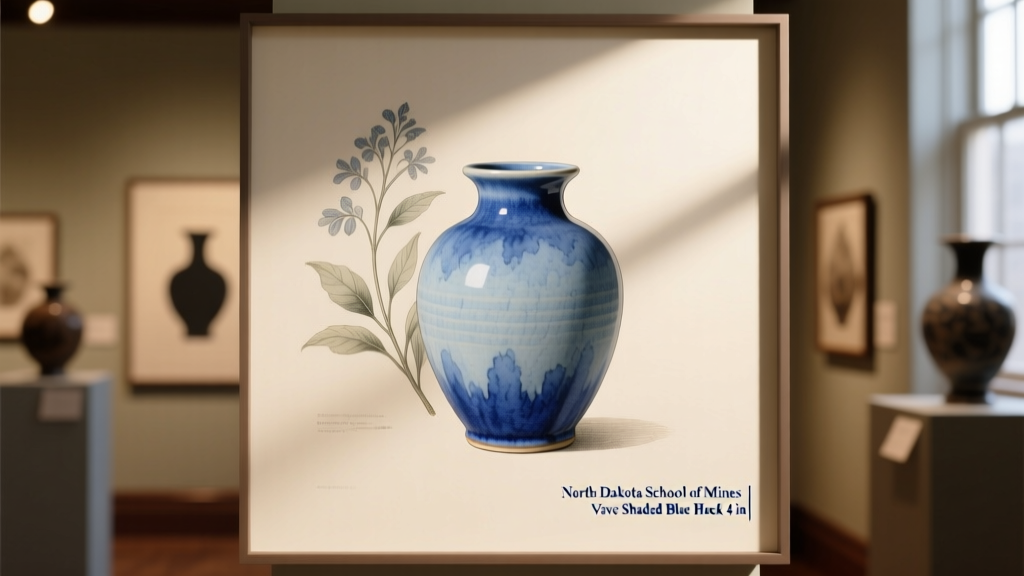
North Dakota School of Mines Vase: Shaded Blue Huck Pattern, 4-Inch Form — Authentication, Provenance, and Market Analysis
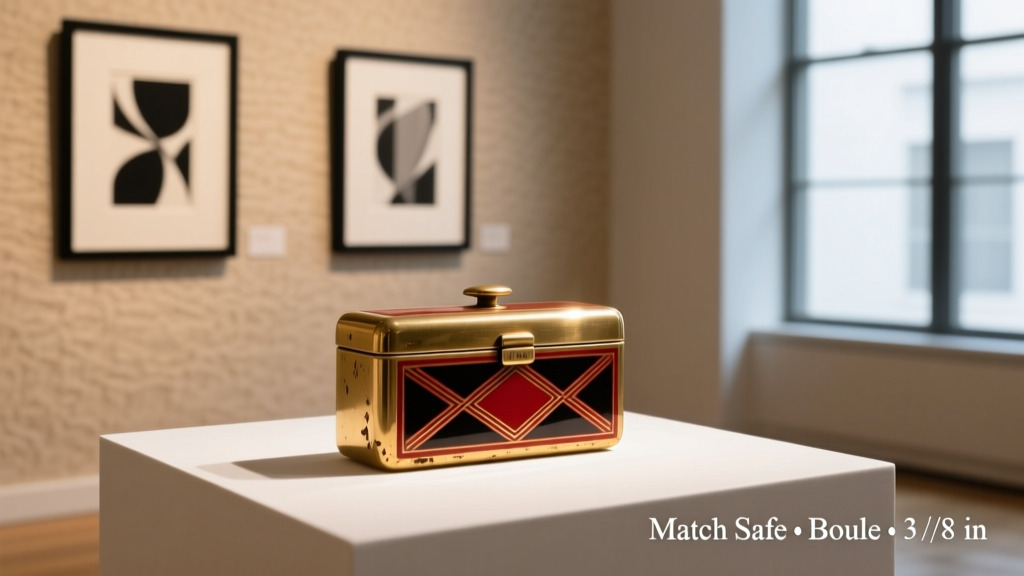
Authentication and Market Analysis of the Boule Brass Match Safe with Red-Black Lacquer (3 1/8 Inches)
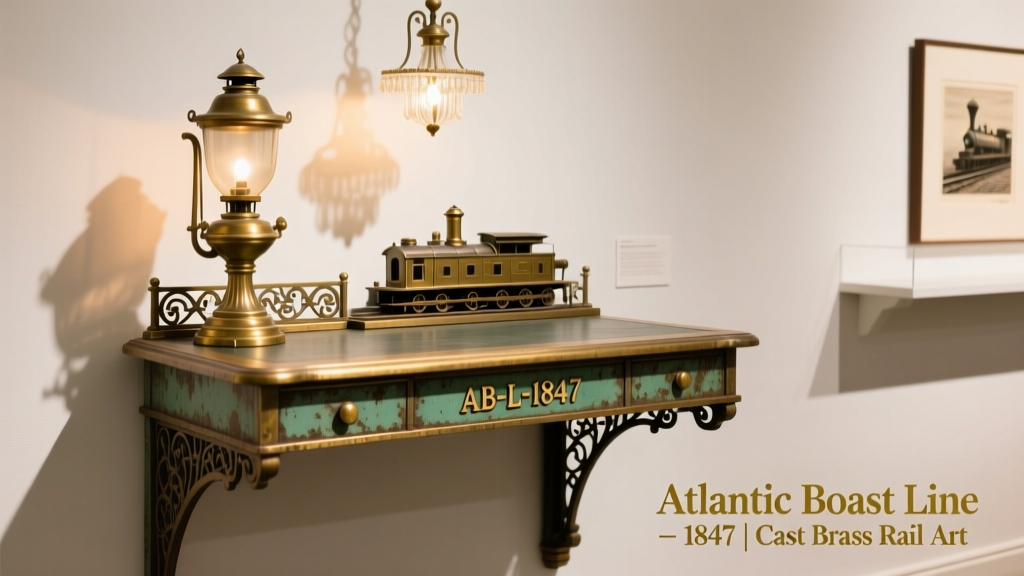
Atlantic Boast Line Railroad Lamp Station Desk: Authentication, Provenance, and Market Analysis of a Rare 19th-Century Cast Brass Artifact
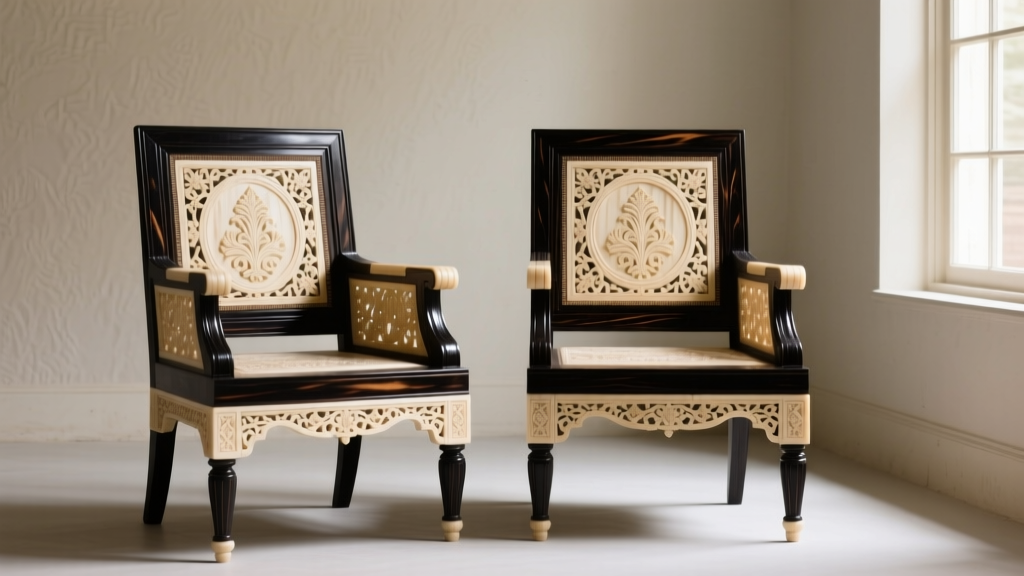
Anglo-Indian Faux Ivory & Ebony Chairs: Authentication, Provenance, and Market Value of a Historic Pair
Authentication and Market Analysis of a Creamware Platter, England, Circa 1820: Dimensions 18 × 14½ Inches

Howe Guion: The Elusive American Printmaker and the Authentication Challenges of His Lithographic Legacy
Authentication and Market Analysis of Print Edition 1135236: A Technical Forensic Study of a Documented Picasso Etching