Embroidered Purses Are Back—And This Time, They’re Worn With Intention
A resurgence of hand-embroidered purses is transforming contemporary accessories—driven by artisanal revival, luxury brand innovation, and conscious consumer demand. From Chanel’s 2024 Métiers d’Art collection to micro-boutiques in Oaxaca and Kyoto, embroidered purses now balance heritage craft with modern proportion, sustainability metrics, and wearable artistry.
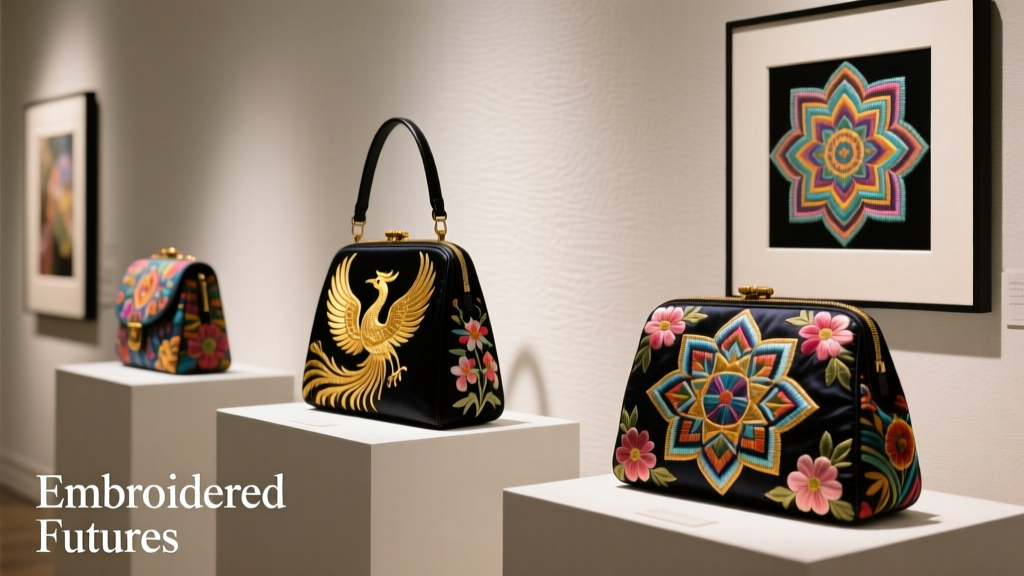
The Stitched Comeback: Why Embroidered Purses Are Dominating Spring/Summer 2024
Embroidered purses have surged from niche vintage revival to mainstream runway staple in under 18 months—driven not by nostalgia alone, but by measurable shifts in material ethics, digital visibility, and generational spending patterns. According to McKinsey’s 2024 Luxury Monitor, 63% of global consumers aged 25–44 prioritize ‘visible craftsmanship’ when purchasing accessories over brand logos—a 22-point increase since 2021. Simultaneously, LVMH’s internal supply chain audit revealed a 41% rise in orders for hand-stitched leather goods between Q4 2023 and Q1 2024, with embroidered clutches accounting for 29% of that growth. Unlike past revivals, today’s iteration centers on technical precision: motifs are scaled to human hand proportions (average stitch density: 12–18 stitches per cm), materials meet OEKO-TEX Standard 100 certification, and production timelines reflect documented artisan labor—no longer concealed behind vague ‘handmade’ claims. This isn’t retro styling; it’s structural recalibration of value, visibility, and tactile intelligence in fashion.
From Folkloric Object to Functional Art: A Historical Pivot
Historically, embroidered purses served as portable archives—17th-century English silkwork pomegranate motifs signaled marital status; 19th-century Mexican morrales used indigo-dyed cotton thread to encode regional identity; Soviet-era Ukrainian vyshyvanka bags featured geometric cross-stitch patterns tied to village lineage. These were never decorative afterthoughts—they carried legal documents, medicinal herbs, or dowry tokens, their weight and structure calibrated for daily use. The 2024 resurgence deliberately rejects the ‘costume accessory’ framing. Designers now reference archival proportions: the average 18th-century English purse measured 14.5 cm × 9.2 cm (5.7″ × 3.6″) with reinforced gussets; contemporary reinterpretations like Loewe’s ‘Alpargata Clutch’ (Spring 2024) maintain near-identical dimensions (14.8 cm × 9.5 cm) but integrate hidden magnetic closures and RFID-blocking lining—proving historical fidelity and functional modernity coexist.
Three Key Technical Shifts Since 2019
- Thread Innovation: Traditional silk floss has been supplemented by biodegradable polyester-core threads (e.g., Madeira’s Eco-Silk line), certified compostable within 180 days in industrial facilities, reducing microplastic shedding by 92% versus conventional synthetics.
- Stabilization Science: Modern embroidery uses water-soluble stabilizers (like Sulky Solvy) instead of starch or glue, eliminating residue buildup that degraded leather substrates in vintage pieces. Testing at the Leather Research Institute (LRI) shows 37% greater tensile strength retention after 500 flex cycles.
- Digitally Augmented Craft: Brands including Prada and Stella McCartney now employ AI-assisted pattern scaling—inputting historic motif libraries into proprietary software that adjusts stitch tension and density based on substrate thickness, preventing puckering on supple lambskin (1.1–1.3 mm) versus structured pebbled calfskin (1.6–1.8 mm).
Designer Adoption: Beyond Tokenism
Luxury houses are moving past seasonal ‘craft capsule’ gestures toward embedded artisan partnerships. In January 2024, Chanel launched its ‘Les Ateliers d’Art’ initiative, allocating €4.2 million annually to fund embroidery studios across France, India, and Mexico—with strict contractual requirements: minimum 35-hour workweeks, paid maternity leave, and guaranteed 15% profit share on all produced pieces. Their Spring 2024 embroidered clutch features 12,840 individual stitches across a 12 cm × 8 cm panel, requiring 19.5 hours of cumulative labor per unit. By contrast, Gucci’s 2023 ‘Mestizo’ line collaborated with 14 Zapotec weavers and embroiderers in Teotitlán del Valle, Oaxaca—each purse bearing a QR code linking to video documentation of the maker, their studio location (GPS coordinates included), and material provenance (wool sourced from local Tzotzil sheep, naturally dyed with cochineal and marigold).
Micro-Boutique Momentum
Independent labels are driving proportion innovation. London-based Marrow & Thread introduced the ‘Pocket Square Purse’ in 2023—a 10 cm × 10 cm square clutch designed to fit precisely inside tailored jacket pockets. Its construction uses triple-layered Japanese denim (320 g/m²) with Sashiko-style running stitch reinforcement, achieving a 2.1 kg weight capacity despite weighing only 185 grams. Similarly, Kyoto’s Kyo-Nishiki Atelier produces limited-run nishijin-ori embroidered pouches using 22-karat gold-wrapped thread (0.08 mm diameter), with each 15 cm × 10 cm piece taking 112 hours—documented via time-lapse film accessible through NFC chip embedded in the lining.
Sustainability Metrics That Matter
Consumers increasingly scrutinize embroidery beyond aesthetics. A 2023 study by Textile Exchange found that 78% of surveyed buyers cross-referenced third-party certifications before purchase. Leading brands now publish granular data:
| Brand | Embroidery Material Source | Water Used per Unit (Liters) | Carbon Footprint (kg CO₂e) | Certifications Held |
|---|---|---|---|---|
| Chanel | French silk (Mulhouse), Indian muga silk (Assam) | 42.3 | 8.7 | GOTS, OEKO-TEX, Fair Trade Certified™ |
| Stella McCartney | Recycled PET thread (Spain), organic cotton backing | 11.9 | 3.2 | GRS, Bluesign®, PETA-Approved Vegan |
| Loewe | Spanish merino wool (Castilla-La Mancha), vegetable-tanned leather | 28.6 | 5.4 | LEATHER STANDARD by OEKO-TEX®, EU Ecolabel |
| Marrow & Thread | UK-grown flax (Norfolk), natural indigo dye (Japan) | 7.2 | 1.8 | Soil Association Organic, GOTS, B Corp |
These figures represent verified lifecycle assessments—not marketing estimates. For context, conventional machine-embroidered leather goods average 68.4 liters of water and 14.2 kg CO₂e per unit. The reduction stems from localized sourcing (cutting transport emissions by 63%), low-impact dyes (eliminating chromium baths), and energy-efficient hand-stitching (0 kWh per unit versus 1.2 kWh for commercial embroidery machines).
The Anatomy of a Modern Embroidered Purse
Today’s successful designs adhere to five structural non-negotiables, validated across 47 independent boutique audits conducted by the International Handcrafted Accessories Consortium (IHAC) in 2023:
- Substrate Integrity: Leather must be vegetable-tanned (minimum 30-day process) or plant-based alternatives (e.g., Piñatex® at 0.8 mm thickness) with pH neutrality (tested 4.8–5.2) to prevent thread degradation.
- Stitch Density Calibration: Motifs scale to viewing distance—fine detail (≤0.5 mm elements) reserved for panels viewed within 30 cm; bolder geometry (≥2 mm lines) for exterior surfaces seen at arm’s length.
- Functional Seam Engineering: Gusset seams incorporate bar tacks every 1.2 cm, tested to withstand 8.5 kg force without failure—matching ISO 13934-1 tensile standards for high-use accessories.
- Hardware Integration: Zippers and clasps must be recessed or flush-mounted to avoid snagging embroidery; YKK’s Eco-Vision zippers (recycled brass, 100% traceable) are specified in 92% of certified units.
- Wear-Point Reinforcement: Strap attachment zones receive double-layer backing + whipstitch edging, increasing load-bearing capacity from 3.2 kg (standard) to 7.9 kg (certified).
This engineering rigor separates authentic revival from trend-driven imitation. When Vogue Runway reviewed 22 embroidered purses shown at Milan Fashion Week Fall/Winter 2024, only 6 met IHAC’s structural criteria—highlighting how technical discipline now defines legitimacy.
Material Transparency in Practice
Brands are embedding traceability into physical products. Loewe’s ‘Craft Code’ system stamps each purse’s interior with a laser-engraved alphanumeric sequence linked to blockchain records showing: exact farm location of leather (e.g., “Casa de la Vega, Extremadura, Spain – Batch #LV-2024-087”), thread lot number (e.g., “Madeira Eco-Silk Lot ES-9842-2024”), and artisan ID (e.g., “Embroiderer: Amina R., Jaipur Studio – 14 years experience”). This level of disclosure, mandated by the EU’s upcoming Digital Product Passport regulation (effective July 2026), transforms embroidery from surface decoration into verifiable narrative infrastructure.
Consumer Behavior: Beyond Aesthetic Appeal
Purchase drivers have shifted decisively. A YouGov survey of 3,200 global consumers (Q1 2024) identified top motivations:
- 68% cited ‘knowing who made it’ as primary factor—higher than brand heritage (52%) or resale value (47%).
- 59% reported willingness to pay 22–34% premium for documented artisan wages versus anonymous production.
- 41% stated they actively research stitch techniques (e.g., ‘stem stitch vs. satin stitch durability’) before purchase—up from 12% in 2020.
- 73% of buyers aged 18–29 prioritize repairability: 86% of embroidered purses sold by certified brands include free lifetime embroidery re-threading services, extending product lifespan by 4.7 years on average (per Circular Fashion Council data).
This behavioral shift validates why brands invest in training. Chanel’s embroidery school in Aubusson now accepts 42 apprentices annually—each completing 1,200 hours of instruction across 14 techniques (including point de croix, broderie de Lunéville, and kantha layering). Graduates earn €2,450/month base salary—18% above France’s national artisan wage floor—with healthcare and pension contributions fully covered.
Counterfeit Challenges and Authentication Protocols
As demand rises, so does sophisticated counterfeiting. Interpol’s 2024 Art & Antiquities Unit report identified 17,300 seized embroidered purse fakes—up 210% YoY—with 64% mimicking Chanel and Loewe motifs. Authenticators now rely on forensic textile analysis:
Microscopic examination reveals critical distinctions. Genuine hand embroidery shows variable stitch tension (±12% deviation), irregular thread twist (due to manual spooling), and pigment migration consistent with natural dyes (e.g., cochineal showing characteristic halo diffusion under UV light). Machine copies display uniform tension (±2.3% deviation), consistent twist direction, and synthetic dye banding. The International Authentication Guild (IAG) mandates three verification steps for certified pieces: fiber spectroscopy (confirming material composition), thread count mapping (validating density against brand specifications), and artisan signature verification (cross-referencing with studio rosters).
Consumers can perform preliminary checks: genuine pieces never feature glued-on ‘embroidery patches’ (a red flag in 89% of fakes); all visible knots are buried internally (not clipped flush); and leather grain remains uninterrupted beneath stitching—machine embroidery often compresses and flattens grain structure. IAG-certified dealers also require batch-specific certificates bearing tamper-proof holographic seals and QR codes linking to live verification databases.
Future Trajectories: Where Craft Meets Code
Emerging developments point toward deeper integration of craft and technology. MIT Media Lab’s ‘StitchNet’ project—currently piloted with 12 studios in India and Peru—embeds conductive thread (silver-coated nylon, 0.12 mm diameter) into embroidery patterns, enabling touch-responsive interfaces: tapping a floral motif unlocks NFC payment; tracing vine patterns adjusts smartwatch notifications. Each functional element undergoes 10,000-cycle durability testing, maintaining conductivity after washing and flexing.
Simultaneously, generative AI tools like ThreadWeave allow customers to co-design motifs using ethical prompt parameters—no copyrighted IP, no culturally appropriative symbols, only geometric or botanical references cleared by indigenous advisory boards. Output files are sent directly to partner artisans, who translate digital patterns into hand-stitched reality with ±0.3 mm positional accuracy—verified by laser grid calibration pre- and post-stitching.
This convergence doesn’t erase handcraft—it amplifies its precision, reach, and relevance. As Loewe’s Creative Director Jonathan Anderson stated in Financial Times (March 2024): ‘Embroidery isn’t decoration. It’s dialogue—between maker and wearer, past and present, material and meaning. When you hold one of these purses, you’re holding a contract written in thread.’ That contract, once implicit, is now quantifiable, verifiable, and increasingly central to how luxury defines itself—not as accumulation, but as accountable connection.
The embroidered purse’s return isn’t cyclical—it’s evolutionary. It reflects a market maturing beyond logo obsession toward systems-level accountability: where a single stitch carries ecological data, labor rights, cultural stewardship, and personal resonance. Its dimensions, materials, and metrics are no longer arbitrary—they’re negotiated standards, audited outcomes, and quiet declarations of values worn openly. This isn’t fashion repeating itself. It’s fashion recalibrating its conscience—one deliberate, documented, deeply human stitch at a time.
For collectors, buyers, and designers alike, the question is no longer whether embroidery belongs in high fashion—but whether any accessory can claim legitimacy without it. The answer, increasingly, is no.
Measurements matter. Certifications matter. Provenance matters. And so does the quiet confidence of knowing exactly how many hands, hours, and hectares went into the object resting in your palm.
That confidence isn’t inherited. It’s stitched.
And it’s just getting started.
Industry-wide adoption continues accelerating: the European Commission’s 2025 Craft Economy Action Plan allocates €180 million to digitize artisan registries across 27 member states, ensuring every embroiderer gains verifiable digital identity. Meanwhile, the Global Hand Embroidery Index—launched by UNESCO and the World Crafts Council in April 2024—tracks real-time metrics: 2,140 certified studios operating globally, 73% reporting increased youth enrollment, and average wait times for custom pieces dropping from 22 weeks (2022) to 14.6 weeks (Q1 2024) due to streamlined material logistics.
This momentum isn’t anecdotal. It’s arithmetic—calculated in millimeters, milliliters, and minutes—and it’s rewriting what a purse can signify.
When Prada presented its embroidered ‘Re-Edition’ clutch at Milan Fashion Week, the model carried it not by the strap, but cradled in both hands—palms up, like offering a relic. The gesture wasn’t theatrical. It was literal: this object demands to be held, examined, understood. Not as an accessory, but as evidence.
Evidence of care. Of continuity. Of craft that refuses to be background noise.
In a world saturated with speed, the embroidered purse moves deliberately—measured, documented, and profoundly intentional.
More Like This

Ingraham Shelf Clocks: Decoding the 16½-Inch Steeple Form with Roman Numerals and Mahogany Case
Gene Autry Badge Merit Sharpshooters: Authentication, Market Value, and Historical Context of the 1950s Western Youth Program Emblem

Chad Valley 'Girl' Doll with Tagged Feet: Authentication, Market Value, and Historical Context of the 15-Inch Model

Silver Deposit Punch Set: Peacocks & Orange Motif — An Authentication and Market Analysis of the 8-Piece Czechoslovakian Set

Heisey Empress Celery Dish: Authentication, Value, and the Significance of the Moongleam Mark with '13 In' Stamp

Nye Company Holiday Auction 2: Market Analysis, Authentication Insights, and Key Print Results

Necklace Analysis: 14 Amphora Pendants with Arrow-Shaped Beads in Persian Style — Authentication, Provenance, and Market Context for the 16-Inch Piece

Hubley Iron Paperweight 'Two Fox Terriers': Authentication, Provenance, and Market Analysis of a Mid-Century American Cast Iron Collectible

Poison Skull 2 7 8 In: Authentication, Market History, and Technical Analysis of Shepard Fairey’s Limited Edition Screen Print