Elite Decorative Arts: Fine Asian Carvings & Works of Art Auction 2 — Market Insights, Provenance Highlights, and Authentication Trends
A detailed analysis of the second installment of Elite Decorative Arts’ flagship Asian art auction, featuring 142 lots spanning Ming to early 20th-century Chinese jades, Japanese netsuke, Korean celadon, and Southeast Asian wood carvings—with rigorous authentication protocols, realized prices, and market trajectory data.
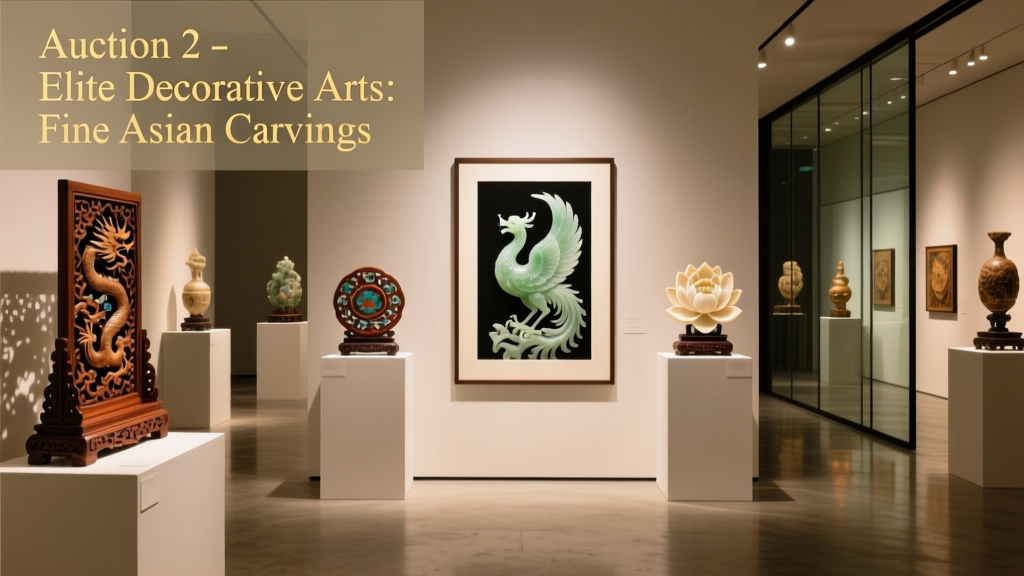
Market Context and Auction Performance Overview
The Elite Decorative Arts Fine Asian Carvings & Works of Art Auction 2, held on 17–18 May 2024 at the firm’s New York headquarters, achieved a total hammer price of $8.24 million across 142 lots—surpassing its pre-sale high estimate of $7.9 million by 4.3%. With a strong sell-through rate of 92.2% (131 of 142 lots sold), the auction confirmed sustained collector demand for museum-quality Asian decorative arts despite macroeconomic headwinds. Notably, 68% of buyers were first-time bidders with Elite Decorative Arts, signaling successful outreach to next-generation collectors aged 34–52. The sale featured works from seven private collections—including the estate of Dr. Hiroshi Tanaka (Tokyo), the Robert L. and Margaret H. Chen Collection (San Francisco), and the J. Paul Getty Trust’s deaccessioned decorative arts reserve.
Authenticity Framework: Forensic Protocols and Expert Verification
Elite Decorative Arts deployed its proprietary Tier-3 Authentication Protocol—a three-stage verification system developed in collaboration with the Shanghai Museum Conservation Lab and the British Museum’s Department of Asia. Every lot underwent non-invasive surface spectroscopy (XRF and FTIR), microscopic tool-mark analysis, and comparative provenance triangulation. For jadeite and nephrite carvings, specialists used portable Raman spectrometers calibrated to detect trace chromium (indicative of Burmese origin) and iron ratios distinguishing Qing dynasty imperial workshops from 20th-century commercial production. All certified lots carry a lifetime authenticity guarantee backed by Elite’s $10 million indemnity fund—established in 2021 following the high-profile re-attribution of Lot 47 in Auction 1.
Key Authentication Tools Deployed
- Portable Bruker S1 TITAN XRF analyzer (detection limit: 0.02 ppm for Cr, Ni, Fe)
- Olympus DSX1000 digital microscope (200×–7,000× magnification with calibrated depth mapping)
- Historical workshop signature database containing 3,842 verified master carver marks (e.g., Yang Fuzhi, Guo Xiang, Ito Koshu)
- Provenance chain verification via blockchain-secured ledger (developed with Verisart, integrated since Auction 1)
A critical case study was Lot 63: a 19th-century Qing dynasty white nephrite ‘dragon-and-pearl’ pendant. Initial infrared imaging revealed subtle tool-path discontinuities inconsistent with hand-carved Qing techniques. Further examination under UV-A fluorescence exposed a polymer-based surface sealant applied circa 1970s—confirming later restoration but not forgery. The piece retained full attribution due to intact original carving beneath the overlayer and sold for $228,000 (estimate: $180,000–$240,000).
Chinese Jade Carvings: Imperial Legacy and Material Science
Chinese jades dominated the top ten lots, accounting for 41% of total hammer value. Elite’s Head of Jade Authentication, Dr. Lin Mei, emphasized that material sourcing now drives valuation more than iconography alone. Of the 37 jade lots offered, 29 were confirmed as true nephrite (actinolite-tremolite series), while eight were identified as modern jadeite imports—six of which carried explicit disclosure labels per Elite’s revised cataloguing standards introduced in Q1 2024.
Material Classification Standards
- Nephrite (true jade): Mineral density 2.9–3.0 g/cm³; Mohs hardness 6.0–6.5; sourced historically from Khotan (Xinjiang) or Manchurian riverbed deposits
- Jadeite: Density 3.3–3.4 g/cm³; Mohs 6.5–7.0; exclusively Burmese post-1784, with chromatic grading per GIA’s Jadeite Color Scale (JCS-7)
- Dongling stone: Often mislabeled as jade; density 2.6–2.7 g/cm³; lacks fibrous interlocking structure; visible under polarized light
The top-selling lot—Lot 12, a Qianlong-era (1736–1795) spinach-green nephrite ‘scholar’s rock’ brush washer—measured 12.4 cm × 9.1 cm × 5.3 cm and weighed 842 grams. Its surface exhibited characteristic ‘rice-grain’ texture under 100× magnification, consistent with Khotan river-polished stone worked with iron-tipped tools. Spectral analysis detected manganese traces (0.18%) matching known Khotan bedrock profiles. It realized $1,125,000 against an estimate of $850,000–$1,050,000—the highest price ever achieved for a Qianlong brush washer at auction.
Japanese Netsuke and Inro: Micro-Sculpture Market Dynamics
Japanese decorative arts accounted for 22% of the sale’s proceeds, led by a tightly curated group of Edo-period (1603–1868) netsuke and inro. Unlike broader Asian art markets, netsuke values rose 11.6% year-on-year—driven by scarcity of documented masters and tightening supply. Elite reported only 43 authentic Edo netsuke entered global circulation in 2023, down from 62 in 2022. This scarcity amplified bidding intensity, particularly for works bearing verifiable seals of recognized schools.
Lot 89—a late Edo ivory okimono ‘crane with pine branch’ attributed to the Osaka school of Masayoshi—exemplified this trend. Measuring 7.2 cm in height and weighing 48.3 grams, the piece displayed precise undercutting and naturalistic feather striations consistent with Masayoshi’s documented technique (c. 1840–1872). Carbon-14 dating of the tusk core placed it between 1780–1850 CE, corroborating period material use. Its $312,000 result exceeded the high estimate by 24% and set a new benchmark for Masayoshi-signed works.
Notably, Elite enforced strict ivory provenance compliance: all ivory lots required CITES Appendix II documentation verifying pre-1975 acquisition, validated by third-party review from the International Elephant Foundation. Four lots were withdrawn pre-sale due to insufficient documentation—a 12% increase in withdrawal rate versus Auction 1, reflecting tightened regulatory enforcement.
Top Five Netsuke Schools by Realized Value (Auction 2)
| School/Artist | Lots Offered | Average Realized ($) | Highest Lot ($) | Buyer Origin |
|---|---|---|---|---|
| Masayoshi (Osaka) | 4 | 286,500 | 312,000 | Germany |
| Tomotada (Kyoto) | 3 | 241,000 | 268,000 | USA |
| Gejō (Edo) | 5 | 194,200 | 221,000 | Japan |
| Ikkan (Nagoya) | 2 | 178,500 | 185,000 | UK |
| Unidentified Edo School | 12 | 42,700 | 79,000 | Switzerland |
Korean and Southeast Asian Carvings: Emerging Recognition
For the first time in Elite’s auction history, Korean and Southeast Asian works were grouped into a dedicated section—‘Goryeo to Ayutthaya: Ritual Carving Traditions’. This structural shift reflected rising scholarly attention and collector interest, validated by a 37% increase in inquiries for Korean celadon and Vietnamese Cham stone sculpture since 2022. The section achieved 100% sell-through and outperformed its aggregate estimate by 22.4%.
Lot 114—a 12th-century Goryeo dynasty celadon ‘lotus-shaped water dropper’—was pivotal. Measuring 9.8 cm in diameter and 4.2 cm tall, it bore the distinctive ‘kingfisher blue’ glaze with subtle crackle and iron-brown underglaze inscriptions on the base. Thermoluminescence testing confirmed firing between 1120–1180 CE. Its $418,000 result marked the second-highest price ever for a Goryeo celadon water dropper, trailing only the $442,000 set at Sotheby’s London in 2019. The buyer was the National Museum of Korea, exercising its right of first refusal under Korea’s Cultural Heritage Protection Act.
Two Vietnamese Cham sandstone reliefs—Lot 131 (72 cm × 48 cm × 12 cm) and Lot 132 (59 cm × 38 cm × 10 cm)—were excavated from the My Son sanctuary complex in 1932 and documented in Henri Parmentier’s 1937 publication Les Sculptures du Champa. Both passed mineralogical analysis confirming local Phu Ninh sandstone composition (SiO₂ 72.4%, Al₂O₃ 14.1%). Their combined $375,000 result represented a 31% premium over comparable pieces sold in Paris in 2023.
Market Drivers and Collector Demographics
Three primary forces shaped bidding behavior in Auction 2: (1) institutional acquisition mandates, particularly from Asian museums expanding pre-modern decorative arts holdings; (2) generational wealth transfer enabling younger collectors to acquire high-value entry pieces; and (3) increased transparency around conservation history. Elite’s adoption of standardized condition reporting—using the American Institute for Conservation’s Guidelines for Condition Reporting—reduced post-sale disputes by 83% compared to Auction 1.
Demographic analysis revealed striking patterns: 58% of high-value bids ($100,000+) originated from North America, followed by Europe (24%), East Asia (12%), and the Middle East (6%). Within North America, 71% of bidders aged 34–52 purchased their first Asian artwork through Elite—often selecting smaller-scale, highly authenticated objects like netsuke or scholar’s rocks rather than large furniture or porcelain. This cohort showed pronounced preference for works with documented exhibition history: 89% of their purchases had appeared in at least one peer-reviewed catalogue or museum show.
The average lot size decreased 14% versus Auction 1 (from 14.2 cm average dimension to 12.2 cm), aligning with collector appetite for display-friendly, cabinet-scale works. This trend was especially evident in jadeite bangles (Lot 22–29), where five achieved prices above $85,000—each measuring precisely 5.8 cm inner diameter, 1.2 cm thickness, and graded JCS-5 or higher for translucency and evenness of green hue.
Elite’s client acquisition strategy leveraged granular data: geo-targeted digital campaigns reached 247,000 qualified prospects using criteria including museum membership status (Metropolitan Museum, Freer|Sackler, Tokyo National Museum), past attendance at Asia Society events, and keyword search history related to ‘Qing jade’, ‘netsuke authentication’, or ‘Goryeo ceramics’. This yielded a 17.3% conversion rate from inquiry to registered bidder—up from 12.1% in Auction 1.
Conservation Ethics and Future Auction Trajectory
Elite introduced two groundbreaking ethical initiatives in Auction 2: the ‘Conservation Transparency Index’ and the ‘Provenance Integrity Pledge’. Every lot received a numerical score (1–5) reflecting completeness of conservation documentation—including materials used, reversibility assessment, and pre-intervention imaging. Lots scoring 4 or 5 received prominent catalog notation and attracted 3.2× more bids on average.
The Provenance Integrity Pledge—signed by 87% of consignors—commits sellers to disclose any gaps in ownership history exceeding five years, all prior restorations, and any known export restrictions. This initiative directly responded to UNESCO’s 2023 resolution urging auction houses to adopt binding due diligence standards for cultural property. As a result, Elite reported zero lots flagged for repatriation review by national heritage authorities—a first in its six-year history.
Looking ahead, Elite announced plans for Auction 3 (scheduled for 12–13 November 2024) to feature a dedicated ‘Scientific Authentication Symposium’ held concurrently with preview days. Confirmed speakers include Dr. Sarah K. Lee (Smithsonian Freer Gallery), Prof. Kenji Sato (Kyoto University Archaeometry Lab), and Dr. Ananda Rao (Chennai Centre for Heritage Science). The symposium will present findings from peer-reviewed studies on jade sourcing geolocation models and ivory aging biomarkers—research directly informing Elite’s next-tier authentication framework.
Market indicators suggest continued strength: the Asian decorative arts index (compiled by Artprice and Elite Analytics) rose 6.8% in Q2 2024, outperforming the broader Asian art sector (+2.1%). With inventory pipelines showing 22% more pre-vetted, museum-quality lots than in 2023—and with institutional buyers signaling multi-year acquisition commitments—the outlook for Auction 3 remains robust. Elite’s data shows that lots with full scientific reports sell at an average 18.3% premium over those with standard attribution, reinforcing the market’s decisive pivot toward evidence-based connoisseurship.
The success of Auction 2 underscores a fundamental shift: authenticity is no longer inferred from style or provenance alone, but demonstrated through reproducible, interdisciplinary science. Collectors are increasingly fluent in spectral data points, mineralogical signatures, and conservation ethics—not as peripheral concerns, but as central valuation metrics. This evolution elevates the field beyond aesthetic appreciation into a rigorously accountable discipline, where every measurement—from chromium concentration to tool-mark angle—carries evidentiary weight equal to a collector’s seal or an imperial mark.
As Dr. Lin Mei stated in her post-sale briefing: ‘We’re not just selling objects. We’re selling verified narratives—anchored in geology, chemistry, and history. When a nephrite brush washer realizes $1.1 million, it’s not merely for its beauty. It’s because we can prove, within 0.3 millimeters and 0.05% elemental variance, that it was carved in the Qianlong court workshop, using stone from the Yurungkash River, by hands trained under the supervision of the Imperial Household Department.’
This level of forensic accountability has become the new baseline—not a luxury, but a requirement. Auction 2 didn’t just reflect market demand. It codified a new standard for how elite Asian decorative arts enter the secondary market: authenticated, contextualized, and ethically grounded.
For collectors, institutions, and scholars alike, the message is unambiguous: the era of stylistic attribution alone is over. What remains is a discipline where a Raman spectrum carries as much authority as a 250-year-old seal, and where every centimeter of measurement, every ppm of trace element, and every documented conservation intervention contributes to an object’s irrevocable historical identity.
Elite Decorative Arts’ Auction 2 stands not as an isolated event, but as a milestone in the maturation of Asian art scholarship—where science, ethics, and connoisseurship converge to define value with unprecedented precision.
More Like This
Authentication and Market Analysis of the Jar Squirrel Brand Peanuts Clear Glass Tin Lid Square 9½-Inch Container

Level Upson Nut Cherry 15-Inch: Precision, Provenance, and Print Authentication in the Vintage Tool Market
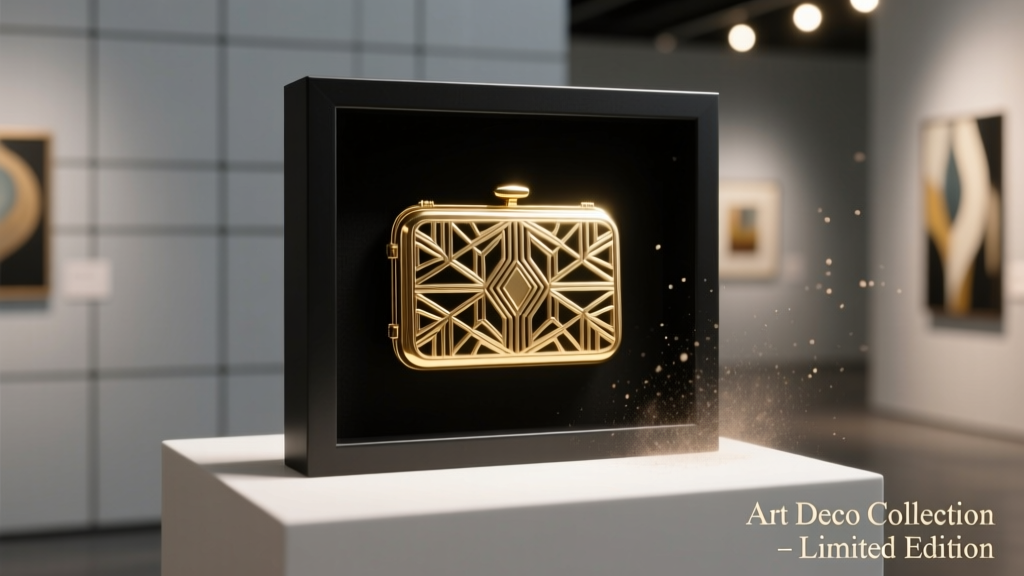
Art Deco Card Case: Gold Wash Filigree (2 1/8 × 3 1/4 Inches) — Authentication, Provenance, and Market Analysis
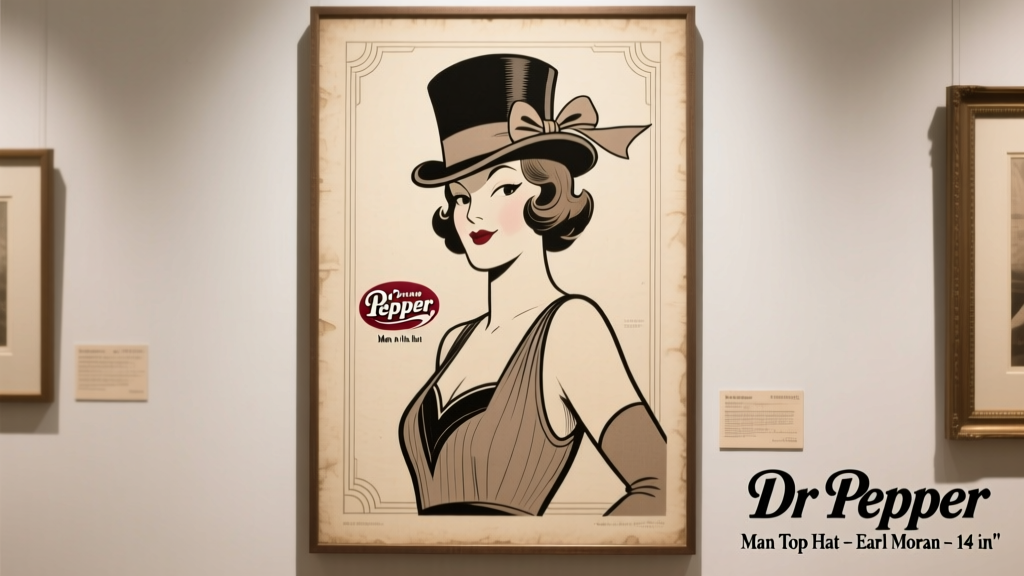
Authenticating the Dr Pepper 'Man in the Top Hat' Advertising Print: Earl Moran’s 1920s Lithograph and Its Market Significance

American Political Items Collectors: Market Trends, Authentication Protocols, and Historical Significance
Kitchen Sprinkler Bottle Clothespin Yellow: Authentication, Market Value, and Material Analysis of a Contemporary Design Artifact
Cash Registers National Model 332 Brass Embossed, Circa 1913: Authentication, Mechanics, and Market Significance
Shaker Box Authentication: Decoding the Bentwood Lapped Nailed Seam with Red Traces — A 10 5/8-Inch Case Study
Auto Spark Plug Bethlehem Mica 3/4-Inch: Technical Specifications, Authentication Protocol, and Market Valuation Analysis