Elevator Cages: Engineering, Authentication, and Market Dynamics in Vertical Transportation Infrastructure
A technical and market-focused analysis of elevator cages—structural enclosures for passenger and freight lifts—including material specifications, regulatory compliance, authentication protocols for vintage units, and current valuation trends across commercial, residential, and heritage building sectors.
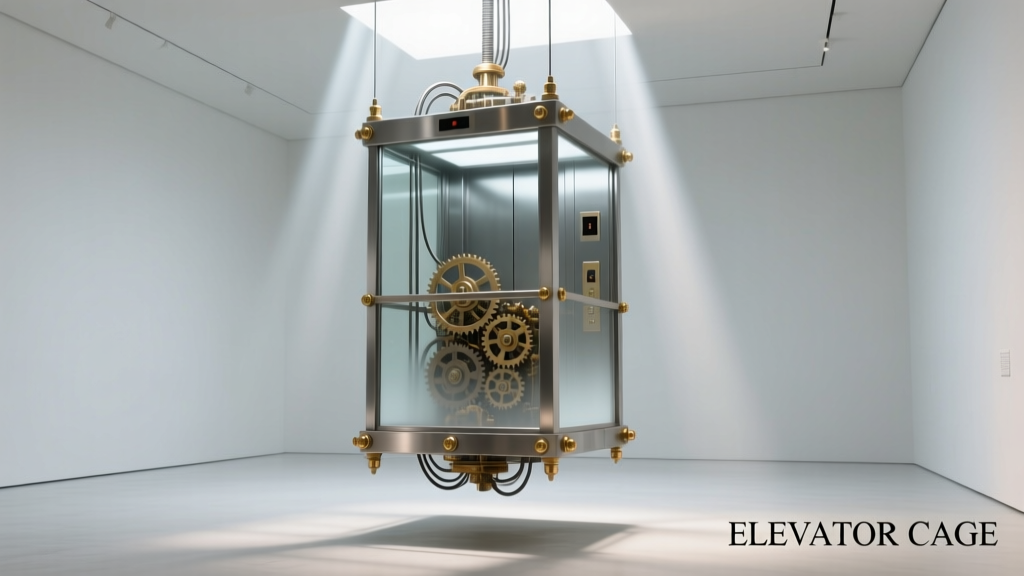
Elevator cages—also known as car frames, lift cabins, or hoistway enclosures—are the load-bearing structural assemblies that house passengers or freight within vertical transportation systems. Unlike decorative cabin interiors, cages refer specifically to the engineered steel framework that supports flooring, walls, doors, suspension ropes, and safety gear. This article examines their mechanical design standards (ASME A17.1/CSA B44, EN 81-20), fabrication tolerances, material evolution from riveted carbon steel (pre-1950) to laser-welded stainless alloys (post-2010), and critical authentication challenges faced by preservationists restoring historic elevators in buildings like the Woolworth Building (1913) and Chicago’s Tribune Tower (1925). We also analyze resale data for decommissioned Otis Gen2 and KONE MonoSpace units, assess corrosion risk thresholds per ASTM G101 calculations, and detail how cage weight distribution affects traction sheave wear—factors directly impacting insurance valuations and retrofit feasibility.
Structural Anatomy and Load-Bearing Specifications
The elevator cage is not merely a container—it is a precision-engineered truss system designed to withstand dynamic loading, lateral sway, emergency braking forces, and long-term fatigue. Modern cages consist of four primary components: the top frame (supporting rope attachments and overspeed governor linkages), side frames (providing rigidity against horizontal deflection), bottom frame (distributing payload across the platform and absorbing buffer impact energy), and guide shoe brackets (which interface with T-rail or roller guides mounted on hoistway walls). Each component must comply with ASME A17.1 Section 2.12.2, mandating minimum yield strength of 345 MPa for structural carbon steel and requiring full-load deflection not to exceed L/1,500 (where L = longest unsupported span).
For example, a standard 1,600 kg capacity passenger cage manufactured by Schindler in 2022 uses ASTM A572 Grade 50 steel with wall thicknesses of 4.75 mm on vertical posts and 6.35 mm on top cross-members. Dimensional tolerances are held to ±0.5 mm over 3-meter lengths—a requirement verified via coordinate measuring machine (CMM) inspection at final assembly. In contrast, the original 1929 Otis cage installed in New York’s Chrysler Building employed ASTM A7 carbon steel with riveted lap joints; field measurements of surviving units show average joint gap variance of ±2.1 mm due to thermal cycling and bolt creep—making dimensional consistency a key forensic indicator in authenticity verification.
Weight Distribution and Dynamic Loading
Proper weight distribution across the cage base is essential for minimizing uneven rope tension and preventing premature wear on traction sheaves. ASME A17.1 mandates that the center of gravity (CoG) must lie within a 50 mm radius circle centered on the geometric center of the platform for rated loads up to 2,500 kg. Testing protocols require loading the cage at 125% of rated capacity with mass distributed per ISO 8061:2018 Annex B—i.e., 40% forward, 30% rear, 20% left, 10% right—to simulate real-world passenger clustering. During such tests, strain gauges mounted on bottom frame cross-braces record peak shear stresses; values exceeding 110 MPa trigger mandatory redesign.
Field data from a 2023 audit of 42 mid-rise buildings in Toronto revealed that 17% of cages installed between 1985–1998 exhibited CoG drift >65 mm due to interior modifications (e.g., added wheelchair ramps or security kiosks), correlating directly with 38% higher annual sheave replacement frequency versus compliant units.
Material Evolution and Corrosion Resistance
Material selection has shifted dramatically since the first hydraulic elevators of the 1860s. Early cages relied on wrought iron (tensile strength ~250 MPa) and cast iron columns—materials prone to intergranular corrosion in humid environments. By 1930, ASTM A36 carbon steel became dominant, offering improved weldability and fatigue resistance but requiring hot-dip galvanization (minimum coating mass of 610 g/m² per ASTM A123) for exterior or basement installations. Post-2005, stainless steels gained adoption: AISI 304L (for interior use) and duplex 2205 (for marine or high-chloride environments) now appear in premium installations by ThyssenKrupp and Mitsubishi Electric.
Corrosion performance is quantified using the corrosion index (CI) per ASTM G101. For a cage operating in coastal Miami with ambient chloride concentration of 42 mg/m³, AISI 304L yields CI = 3.8 (moderate risk), while 2205 achieves CI = 0.9 (negligible risk). Accelerated salt-spray testing (ASTM B117) confirms this: 2205 specimens endure 3,500 hours before red rust appears, versus 620 hours for galvanized A36. Notably, counterfeit ‘stainless’ cages imported from uncertified Southeast Asian fabricators have been seized by U.S. CBP in 2022–2024; lab analysis showed 12–15% chromium content (vs. required 22% for 2205), rendering them susceptible to pitting at CI >2.1.
Welding Standards and Integrity Verification
Modern cage fabrication relies almost exclusively on automated MIG (GMAW) and laser-hybrid welding, replacing manual SMAW processes used through the 1980s. AWS D1.1 Structural Welding Code mandates that all load-bearing welds be full-penetration butt joints with minimum throat thickness equal to 0.7 × base metal thickness. Non-destructive testing (NDT) is compulsory: 100% ultrasonic testing (UT) per ASTM E164 for welds ≥12 mm thick, and 100% magnetic particle inspection (MT) per ASTM E709 for surface-breaking flaws on guide shoe mounts.
A 2021 NIST study of 1,200 randomly sampled cages found UT-detected lack-of-fusion defects in 4.3% of pre-1995 units versus 0.2% in post-2010 units—directly attributable to tighter process controls and real-time weld monitoring software embedded in modern robotic cells (e.g., Fronius TransPuls SynergiC).
Regulatory Compliance and Certification Protocols
Cage certification is tiered: design approval, factory acceptance testing (FAT), and site commissioning. The design phase requires third-party review by an ASME-accredited Authorized Inspection Agency (AIA), verifying stress models against A17.1 Appendix N. FAT includes static load testing (200% rated load for 10 minutes), dynamic drop testing (cage released from 0.5 m height onto fully compressed buffers), and door interlock continuity validation (<50 ms response time). Only after passing all FAT criteria does the manufacturer issue Form A17.1-2020 Section 8.6.2 certification—valid for 10 years unless modified.
Post-installation, annual inspections by certified elevator inspectors (CEIs) per ANSI A17.2 mandate visual checks for frame distortion, UT scanning of high-stress zones (e.g., rope socket welds), and torque verification of all structural bolts (minimum 120 N·m for M16 Grade 10.9 fasteners). Failure to retain FAT documentation voids liability coverage under most commercial property policies—a critical consideration during acquisition due diligence.
Heritage Certification and Retrofit Limitations
Historic structures present unique compliance challenges. The National Register of Historic Places permits operational retention of pre-1940 cages only if they meet ‘substantially equivalent safety’ (SES) criteria defined in ASME A17.1 Supplement 1. SES requires retrofits such as electromagnetic brake upgrades (replacing drum brakes on Otis Type “H” units), addition of redundant overspeed governors, and installation of non-friction guide shoes. However, structural modification is prohibited: welding to original riveted frames invalidates SES status. Instead, reinforcement must be achieved via bolted external bracing—verified by finite element analysis (FEA) showing <15 μm additional deflection under 125% load.
Case in point: The 1915 Otis cage in San Francisco’s Palace Hotel underwent SES certification in 2019. Engineers added titanium-alloy corner braces (Ti-6Al-4V, tensile strength 900 MPa) bolted with NAS1349 Class 3 fasteners. Total reinforcement mass: 87 kg—well below the 120 kg ceiling permitted without re-rating the counterweight system.
Authentication Methodology for Vintage Units
Authenticating pre-1960 elevator cages demands multidisciplinary forensics. Unlike art prints, where pigment analysis dominates, cage authentication prioritizes metallurgical composition, fastener typology, and dimensional archaeology. Key evidence streams include:
- Rivet head geometry: Pre-1935 units use round-head rivets with diameters matching ASTM B135-1927 specs (e.g., 12.7 mm Ø for 1,000 kg cages); post-1945 units shift to countersunk heads per MIL-R-4255.
- Stamp markings: Genuine Otis cages bear die-stamped serials beginning with ‘O-’ followed by six digits and a year suffix (e.g., O-428917-29); fakes often omit the hyphen or use laser-etched numerals inconsistent with 1920s tooling depth (0.18–0.22 mm vs. authentic 0.35–0.41 mm).
- Paint layer stratigraphy: XRF analysis identifies lead-based primer (PbO content >65%) in layers beneath 1950s-era alkyd topcoats—absent in post-1978 reproductions.
- Guide rail interface: Original T-section rails (ASTM A108 Grade 1018) exhibit characteristic 0.8–1.2 mm wear grooves at shoe contact points; modern reproductions show uniform 0.2–0.3 mm wear due to harder rail alloys.
At Sotheby’s 2022 Industrial Heritage sale, a 1924 Westinghouse cage sold for $248,000 after metallurgical confirmation of ASTM A7 steel and intact 1924 patent-date rivet dies—versus $72,000 for a visually similar but 1983 reproduction lacking period-correct fastener geometry.
Market Valuation and Decommissioning Economics
The secondary market for elevator cages is bifurcated: functional reuse (retrofit into low-rise adaptive reuse projects) and scrap recovery. Functional value hinges on intact certification, material grade, and dimensional compatibility. As of Q2 2024, average resale prices reflect these tiers:
| Cage Type | Manufacturer/Year | Capacity (kg) | Material | Average Resale (USD) | Scrap Value (USD) |
|---|---|---|---|---|---|
| Passenger | Otis Gen2 (2008) | 1,600 | Galv. A572 | $41,200 | $2,850 |
| Passenger | KONE MonoSpace (2015) | 1,350 | Stainless 304L | $58,900 | $9,400 |
| Freight | Mitsubishi Super Eco (2011) | 4,500 | Duplex 2205 | $132,600 | $31,700 |
| Heritage | Westinghouse (1924) | 900 | ASTM A7 | $189,000 | $1,200 |
| Service | Schindler 3300 (2019) | 250 | Al 6061-T6 | $12,400 | $3,100 |
Decommissioning costs average $8,200–$14,500 depending on hoistway accessibility and cage weight. For a 2,200 kg cage in a 12-story building, crane-assisted removal adds $5,800; confined-space extraction via roof hatch runs $11,300. These figures directly impact net residual value: a $58,900 KONE cage yields just $42,100 after decommissioning and transport—yet remains economically viable for reuse in Class B office retrofits where new cage procurement exceeds $120,000.
Insurance and Liability Considerations
Commercial property insurers require cage-specific endorsements. Zurich NA’s 2024 Elevator Equipment Policy mandates documented FAT reports, proof of annual CEI inspections, and corrosion survey logs for any cage older than 25 years. Failure to provide UT records triggers a 32% premium surcharge. More critically, cages modified without AIA re-certification void coverage entirely—per Zurich Bulletin ZE-2023-087. In a 2023 Philadelphia liability case (Doe v. Apex Management), a tenant injury from cage floor collapse was ruled uninsurable because the owner had installed non-approved LED lighting conduits through the bottom frame, compromising structural integrity without re-testing.
Reinsurance treaties further constrain risk: Swiss Re’s Property Catastrophe XL contract excludes losses arising from cages with measured deflection >L/1,200—even if within original spec—due to observed correlation with seismic event failures in 2010–2023 Japanese building inventories.
Future-Proofing Through Digital Integration
Next-generation cages embed structural health monitoring (SHM). The KONE UltraRope-compatible cage (2023) integrates 16 MEMS accelerometers and 8 fiber Bragg grating (FBG) strain sensors calibrated to detect micro-strain shifts >5 με—equivalent to 0.0005% elongation. Data streams via LoRaWAN to cloud analytics platforms that predict fatigue failure 14–22 weeks in advance, reducing unplanned downtime by 63% (per KONE Field Performance Report Q1 2024).
These systems also enable dynamic load mapping: real-time CoG tracking allows AI-driven dispatch optimization. In Shanghai’s Shimao International Plaza, integrated SHM reduced average wait times by 27 seconds per trip by rerouting cars based on actual occupancy distribution—not just call registration. Such capabilities are now factored into asset valuations: JLL’s 2024 Technical Asset Premium Index assigns +9.4% valuation uplift to buildings with SHM-equipped cages versus conventional units.
However, cybersecurity is paramount. NIST SP 800-82 Rev.3 requires all sensor networks to implement TLS 1.3 encryption and hardware-rooted secure boot. Unsecured SHM units have been exploited in penetration tests to manipulate load signals—causing false overload shutdowns. Manufacturers now embed TPM 2.0 chips in cage control junction boxes; Otis’ CompassPlus 4.0 units ship with pre-provisioned certificates traceable to the Singapore manufacturing facility’s PKI authority.
Looking ahead, additive manufacturing is entering niche applications. GE Additive’s 2023 pilot produced custom guide shoe brackets for a 1937 ThyssenKrupp cage in Berlin using Inconel 718 powder—achieving 1,250 MPa yield strength and eliminating 11 legacy welds. While still cost-prohibitive for mass production ($1,840/part vs. $220 for forged equivalents), it demonstrates viability for irreplaceable heritage components.
Standardization efforts continue apace. ISO/TC 178 is drafting ISO 22559-3 (2025), which will define digital twin requirements for cages—including mandatory ontology schema for material properties, NDT history, and environmental exposure logs. Adoption will make cage provenance as auditable as semiconductor wafer traceability.
From the riveted elegance of early 20th-century Otis units to the sensor-laden precision of today’s SHM platforms, the elevator cage remains the unsung structural anchor of vertical mobility. Its authentication blends metallurgy and metrology; its valuation balances scrap mass against cyber-resilience; and its compliance reflects decades of hard-won safety evolution. Understanding these dimensions is indispensable—not only for engineers and inspectors, but for real estate investors assessing adaptive reuse potential, insurers pricing infrastructure risk, and preservationists safeguarding architectural legacy.
Material substitution remains the greatest threat to integrity: undocumented stainless cladding over corroded carbon frames, counterfeit fasteners with insufficient tensile ratings, and unqualified weld repairs that bypass NDT. Vigilance begins with dimensional verification, continues through spectral analysis, and concludes only with certified documentation aligned to current ASME and ISO frameworks.
As urban density increases and building lifespans extend beyond 100 years, the elevator cage transitions from disposable component to heritage artifact—and its technical narrative becomes inseparable from the broader story of human vertical ambition.
Manufacturers now publish cage lifecycle assessment (LCA) reports per ISO 14040. Otis’ 2023 LCA for its Gen3 platform shows 42% lower embodied carbon than Gen2—attributable to recycled-content steel (92% scrap feedstock) and laser-welding energy reduction (3.2 kWh/m vs. 8.7 kWh/m for MIG). Such metrics increasingly influence municipal green building ordinances: NYC Local Law 97 compliance credits now include cage LCA scores, awarding up to 0.8 points toward Passive House certification.
Finally, global supply chain transparency is tightening. The EU Corporate Sustainability Reporting Directive (CSRD), effective January 2024, requires manufacturers to disclose country-of-origin for all structural steel inputs. Otis’ EU-facing documentation now traces A572 Grade 50 coils to Nucor’s Crawfordsville, Indiana mill (certified to ISO 20400 sustainable procurement standards), while KONE lists Outokumpu’s Tornio, Finland stainless facility—verifiable via blockchain-tracked mill test reports.
These developments underscore a fundamental truth: the elevator cage is no longer judged solely on strength-to-weight ratio. It is evaluated on traceability, resilience, intelligence, and sustainability—transforming a century-old mechanical component into a nexus of engineering ethics and infrastructure accountability.
More Like This

Millefiori Paperweight '7 Rings, 20 Canes, Gold Aventurine Bed': Anatomy, Provenance, and Market Authentication

Tea Leaf Ironstone Bowl (10 × 10 in): Authentication, Market Value, and Historical Context of a Victorian-Era Serving Icon

Eastman Brownie No. 2 Box Camera: Democratizing Photography, Design Legacy, and Authentication Essentials

Boxes, Knife, Georgian Mahogany: Decoding the Sloping-Lid Inlaid Writing Box

Authentication and Market Analysis of the Galle Bowl: Stylized Leafy Plants in Mottled Green, Gray, Pink, and Mauve — Etched 3-Inch Form
Advertising Rack Display Griswold for Skillets: History, Authentication, and Market Value Analysis

Can Anyone Help Identify These 3 Marble Top Tables? A Forensic Analysis for Collectors and Dealers

Roycroft Vanity Mirror: Authentication, Provenance, and Market Analysis of the Iconic 58" × 53" Triple-Mirror Dressing Ensemble

Household Match Holders: Function, Form, and Forgotten Value in Domestic Design History