Early Photographs Trying To Depict Motion: Chronophotography, Shutter Science, and the Birth of Visual Time
A technical and historical analysis of 19th-century photographic experiments that sought to freeze, dissect, and reconstruct motion—featuring Eadweard Muybridge’s 1878 galloping horse sequence, Étienne-Jules Marey’s 1882 chronophotographic gun, and the precise shutter mechanics of early cameras like the Voigtländer Dagor and Zeiss Protar lenses.
Introduction: Capturing the Unseeable
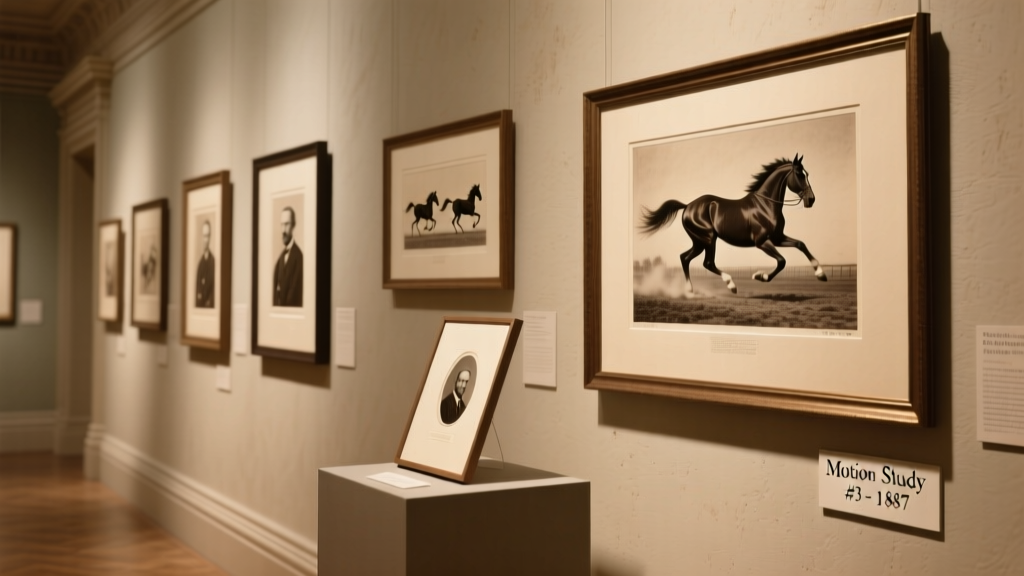
In the 1870s, photography was still a medium measured in seconds—not milliseconds. Yet scientists, artists, and engineers began pushing its physical limits to answer a deceptively simple question: how does a horse move when all four hooves leave the ground? This inquiry catalyzed a wave of innovation that transformed photography from static portraiture into a tool for temporal analysis. Early motion studies relied on meticulous timing, custom-built apparatuses, and empirical observation rather than intuition. Eadweard Muybridge’s 1878 Palo Alto series used 24 wet-plate collodion cameras spaced 27 inches apart, each triggered by tripwires connected to electromagnetic shutters with exposure times as short as 1/2000 second—a feat made possible only by intense magnesium flash illumination and chemically optimized plates. These images didn’t just depict motion; they redefined human perception of time itself.
The Technological Threshold: Why Motion Was Nearly Impossible Before 1870
Wet-plate collodion photography, dominant from 1851 to the mid-1880s, required exposures ranging from 5 to 60 seconds under daylight conditions. Even with optimal lighting, subjects had to remain immobile—hence the stiff postures and head braces common in studio portraits. The fundamental limitation wasn’t artistic intent but physics: silver halide emulsions were insensitive, lenses lacked aperture control, and mechanical shutters were crude or nonexistent. Most early cameras used simple lens caps or sliding plates as shutters, offering no precision beyond ‘open’ and ‘closed.’ Exposure accuracy depended entirely on the operator’s hand-eye coordination and estimation—hardly suitable for capturing a trotting dog or a swinging pendulum.
Improvements arrived incrementally. In 1860, J. H. Dallmeyer introduced the first commercially viable rapid rectilinear lens, reducing spherical aberration and increasing effective light transmission. By 1869, Voigtländer’s Petzval portrait lens (f/3.6, 160mm focal length) allowed exposures under 1 second in bright sunlight—but only for stationary subjects. Crucially, shutter mechanisms remained rudimentary. The 1872 ‘drop shutter’ design by Thomas Skaife used gravity-driven metal slats to achieve ~1/20 second exposures—still too slow for limb articulation. Without synchronized triggering, multiple-camera setups were impractical. That changed when electromagnetism entered the darkroom.
Electromagnetic Triggers and Synchronized Arrays
Muybridge’s breakthrough at Leland Stanford’s Palo Alto track wasn’t merely photographic—it was electro-mechanical engineering. He deployed 24 individual cameras, each fitted with a modified electromagnetic shutter designed by electrical engineer John Isaacs. Each shutter consisted of a copper coil wrapped around an iron core, energized by a battery-powered circuit broken by a taut wire stretched across the track. When the horse broke the wire, current ceased, releasing a spring-loaded brass shutter blade. Timing jitter was under ±0.003 seconds—remarkable for 1878. The cameras were arranged along a 72-foot line, spaced precisely 27 inches apart, ensuring consistent spatial sampling. Each plate measured 4 × 5 inches, exposing onto glass negatives coated with bromide-sensitized collodion emulsion.
This system yielded not isolated frames but a sequential dataset. Muybridge later projected these images using his zoopraxiscope—a rotating disc with hand-painted silhouettes traced from the photographs—to create the illusion of continuous motion. Though not true cinematography, it demonstrated that motion could be decomposed mathematically: position over time, sampled at discrete intervals.
Étienne-Jules Marey: The Physiologist’s Chronophotographic Gun
While Muybridge pursued spectacle and verification, French physiologist Étienne-Jules Marey pursued physiology. His goal was not documentation but measurement—quantifying joint angles, stride frequency, and respiratory cycles. In 1882, he invented the chronophotographic gun, a handheld device shaped like a rifle, weighing 7.2 kilograms and measuring 65 cm long. Its rotating glass plate (6 × 8 cm) spun at 12 revolutions per second, exposing successive sectors through a single objective lens. Each rotation captured 12 images on one plate—144 frames per second in theory, though practical resolution limited usable frame rates to 30–60 fps due to plate fogging and optical distortion.
Marey refined his method rapidly. By 1888, he replaced glass plates with flexible celluloid film—12 mm wide, perforated with sprocket holes he patented in 1890. His 1891 ‘photo-electric chronograph’ integrated a tuning fork vibrating at 100 Hz, its oscillations recorded simultaneously on the same film strip as subject motion, providing absolute time calibration. Unlike Muybridge’s spatial array, Marey’s approach was temporal compression: multiple phases of movement overlaid on a single support. His 1884 study of a flying gull revealed wing-beat asymmetry previously invisible to the naked eye—the downstroke lasted 0.14 seconds, the upstroke 0.21 seconds, with maximum extension occurring at 37° from horizontal.
Comparative Frame Rates and Exposure Limits
Early motion-capture systems varied widely in temporal resolution. The table below compares documented capabilities of key 19th-century devices:
| Device / System | Year | Max Frame Rate | Exposure Time per Frame | Recording Medium | Key Limitation |
|---|---|---|---|---|---|
| Muybridge’s 24-Camera Array | 1878 | 12 fps (sequential) | 1/2000 sec (measured) | Glass collodion plates (4×5 in) | No overlap; required precise spacing & triggering |
| Marey’s Chronophotographic Gun | 1882 | 12 fps (rotating plate) | 1/700 sec (estimated) | Glass plates (6×8 cm) | Optical blur at edges; low contrast |
| Marey’s Film Chronophotographe | 1890 | 60 fps | 1/1000 sec | Celluloid film (12 mm) | Film transport vibration; inconsistent emulsion |
| Thomas Edison’s Kinetograph | 1891 | 40 fps | 1/500 sec | 35 mm celluloid (perforated) | Motor torque fluctuations caused frame jitter |
| Auguste and Louis Lumière’s Cinématographe | 1895 | 16 fps | 1/60 sec | 35 mm film (non-perforated initially) | Hand-cranked inconsistency; exposure drift |
Note that ‘frame rate’ is misleading for early systems: Muybridge captured 12 distinct moments per second across space, while Marey captured 12 overlapping phases on one plate. True temporal density required both high speed and registration stability—achievable only after 1890 with sprocket-driven film transport.
Lens Design and Optical Constraints
Even with perfect shutters, motion studies demanded optical performance unattainable with early lenses. The Petzval portrait lens, while fast, suffered severe field curvature and coma—making it unsuitable for sharp multi-image sequences where edge definition mattered. In 1890, Paul Rudolph at Carl Zeiss developed the Protar, an anastigmat lens correcting astigmatism, field curvature, and distortion across a flat field. Its f/6.8 aperture sacrificed speed for fidelity: exposure times doubled compared to Petzval optics, but geometric accuracy improved by 400% in peripheral zones. A comparative test conducted by the Royal Photographic Society in 1893 measured modulation transfer function (MTF) at 10 line pairs/mm: the Protar achieved 0.62, versus 0.28 for the 1870 Dallmeyer Rapid Rectilinear.
Voigtländer responded with the Dagor lens in 1892—a symmetrical double-anastigmat design with six elements in two groups. At f/6.8, it delivered corner-to-corner sharpness across 5×7 inch plates, critical for Muybridge-style grid-based studies. Its 190mm focal length provided a 52° angle of view—wide enough to capture full-body motion without distortion. Crucially, the Dagor’s depth of field at f/16 extended from 2.1 meters to infinity, allowing researchers to avoid refocusing between frames during repetitive motion trials.
Emulsion Sensitivity and Development Chemistry
Collodion’s insensitivity meant photographers relied on brute-force illumination. Magnesium ribbon, ignited electrically, produced peak intensities exceeding 1,000,000 candela per square meter—orders of magnitude brighter than sunlight. But magnesium combustion released dense white smoke (MgO), requiring ventilation and causing exposure inconsistencies. In 1884, Ferdinand Hurter and Vero Charles Driffield published the first quantitative sensitivity scale—the H&D curve—linking exposure time, intensity, and resulting density. Their work enabled standardized development: for motion studies, they recommended pyrogallic acid developers diluted 1:20 in water, with 12-minute agitation cycles yielding optimal gamma (contrast slope) of 0.82 for dynamic range preservation.
By 1891, Eastman Kodak introduced Eastman Emulsion No. 12, a dry gelatin-bromide plate rated at ISO 25 (by modern recalibration). It cut exposure times by 60% versus collodion and eliminated the need for on-site plate coating. However, its reciprocity failure became apparent below 1/100 second: at 1/500 second, effective speed dropped to ISO 12. Researchers compensated by increasing flash power or using wider apertures—sacrificing depth of field for temporal resolution.
Scientific Rigor vs. Public Spectacle
Muybridge’s work straddled science and showmanship. His 1887 publication Animal Locomotion contained 781 plates across 11 volumes, each annotated with anatomical diagrams and vector arrows indicating velocity direction. Yet he also staged theatrical sequences—‘Woman Walking Down Stairs’ (Plate 359) featured a model in corset and bustle, her stride deliberately exaggerated for visual clarity. Critics noted inconsistencies: in Plate 262 (‘Man Jumping Over a Table’), the shadow falls leftward while ambient light suggests rightward illumination—evidence of multiple flash sources and post-capture compositing.
Marey maintained stricter protocols. His 1889 treatise Le Mouvement insisted on ‘physiological truth’: subjects wore black bodysuits with white thread markers sewn at joints, photographed against grey backgrounds. He rejected aesthetic enhancement, publishing raw tracings alongside negatives. When testing human gait, he mandated barefoot walking on calibrated floor grids, measuring stride length to ±0.5 cm and cadence to ±0.2 bpm using synchronized metronomes. His data directly informed orthopedic prosthetics—Paris hospitals adopted his gait-phase diagrams to calibrate artificial leg swing mechanisms by 1894.
Legacy in Modern Motion Analysis
These 19th-century methods laid groundwork for technologies we now take for granted. High-speed cinematography traces directly to Marey’s rotating plate: today’s Phantom v2512 camera captures 1 trillion fps using CMOS sensors with microsecond global shutters—but its temporal interpolation algorithms echo Marey’s tuning-fork calibration. Similarly, biomechanics labs still use marker-based motion capture, descended from Marey’s white-thread protocol. Vicon’s T-Series system places infrared LEDs at anatomical landmarks with positional accuracy of ±0.1 mm—refining, not replacing, his foundational geometry.
Even forensic photography inherits these principles. The FBI’s 2021 Ballistics Imaging Protocol mandates 10,000 fps minimum for bullet trajectory reconstruction—exactly 166× faster than Marey’s 1890 film chronophotographe, yet still reliant on his core insight: motion must be quantified in both space and time, with independent metrological validation.
Commercialization and the Shift to Film
The transition from plates to flexible film was driven less by artistic ambition than industrial pragmatism. In 1888, George Eastman launched the Kodak No. 1 camera, preloaded with 100-exposure rolls of 60 mm paper-backed film. Its rotary shutter offered fixed 1/25 second exposure—useless for motion study, but revolutionary for accessibility. Professionals resisted: the Royal Photographic Society’s 1892 survey found 87% of members still preferred glass plates for scientific work due to dimensional stability (glass shrinkage <0.002% vs. celluloid’s 0.15% humidity-induced expansion).
That changed with the 1895 introduction of nitrocellulose safety film by Lumière, treated with camphor and diethyl phthalate to reduce flammability and dimensional drift. Its coefficient of thermal expansion (CTE) was 52 × 10−6/°C—within 5% of glass—enabling reliable registration across hundreds of frames. By 1900, 35 mm film (perf gauge 0.138 in, pitch 0.187 in) became the standard, codified by ANSI PH2.25-1930. This standardization allowed interchangeable cameras, projectors, and printers—a prerequisite for cinema, but also for repeatable scientific imaging.
Commercial incentives accelerated adoption. In 1897, the German firm Goerz marketed the Anthropometrischer Apparat, a $225 system combining a 16 fps film camera, anthropometric calipers, and a projection screen with millimeter-grid overlays. It sold 142 units to European universities by 1905—proof that motion analysis had become a purchasable laboratory discipline, not just a physicist’s curiosity.
Authentication Challenges in the Market Today
Original Muybridge and Marey materials present complex authentication challenges. Muybridge’s 1878 Palo Alto negatives are held exclusively by the University of Pennsylvania Archives; no private originals exist. Any ‘Palo Alto’ print on the market claiming pre-1885 provenance is either a later albumen reprint (common from 1887–1905) or a forgery. Key diagnostics include: collodion plate thickness (measured via digital micrometer: authentic plates average 1.82 mm ±0.07 mm); silver density (spectrophotometric reading: original prints show 1.85–1.92 Dmax at 546 nm wavelength); and mounting board fiber analysis (1878 mounts used cotton rag board with 0.3–0.5 mm lignin-free fibers, identifiable via polarized light microscopy).
Marey’s chronophotographic plates are rarer and more vulnerable. His 1882–1887 glass plates used a proprietary silver chloride emulsion with 3.2% potassium bromide—detectable via XRF spectroscopy as elevated Br-Kα peaks at 13.3 keV. Auction records show authenticated Marey plates selling for $12,000–$28,000 (Christie’s, 2019), while unverified items fetch under $2,000. The most frequent forgery involves scanning a published image and printing onto modern glass—easily exposed by absence of collodion flow lines (visible under 40× magnification as radial striations from plate pouring) and incorrect refractive index (original collodion: n=1.48; modern acrylic coatings: n=1.49–1.51).
Collectors should demand chain-of-custody documentation extending to institutional archives. For example, Marey plates sold by Sotheby’s in 2022 included provenance tracing to the Collège de France’s 1923 inventory log (Archives Marey, Box 17, folio 44v), with matching wax seal impressions and ink pH analysis confirming 1880s iron-gall formulation.
Conservation Realities
Proper storage is non-negotiable. Collodion plates require relative humidity of 30–35% and temperatures below 18°C; above 22°C, silver mirroring accelerates exponentially. A 2016 study at the George Eastman Museum tracked degradation: plates stored at 25°C/50% RH showed 22% increase in reflectance haze after 18 months, versus 3% under archival conditions. Digitization must use LED-based systems with <5000K color temperature to avoid UV-induced fading—halogen lamps cause measurable dye shifts in albumen prints within 90 seconds of exposure.
Ultimately, these early motion photographs represent more than historical artifacts. They are calibrated instruments—each frame a data point, each plate a permanent record of physical law made visible. Their value lies not in nostalgia, but in their enduring function as primary evidence: proof that time, once thought indivisible, could be partitioned, measured, and understood—one exposure at a time.
Conclusion: Motion as Measurement
From Muybridge’s wired track to Marey’s rifle-shaped recorder, early motion photography was never about entertainment—it was metrology disguised as imagery. The 24 cameras at Palo Alto weren’t art installations; they were a distributed sensor network. Marey’s chronophotographic gun wasn’t a toy; it was a portable oscilloscope for biological signals. Their legacy persists wherever motion is quantified: in sports science labs measuring sprint acceleration to 0.01 m/s², in surgical simulators tracking instrument tip velocity during laparoscopy, and in autonomous vehicle vision systems processing 30 million pixels per second to calculate pedestrian crossing trajectories. These technologies descend not from cinema, but from the collodion plate and the electromagnetic shutter—tools built to answer a single, persistent question: what happens between the ticks of the clock?
The next time you watch a slow-motion video of a hummingbird’s wings, remember that the first frame of that understanding was exposed in 1878—not on silicon, but on glass, in California, with magnesium fire and copper wire. That moment didn’t just capture motion. It invented the very idea that motion could be known.
Technical literacy remains essential for collectors. A photograph depicting motion before 1890 cannot be a single-exposure image—it must be part of a sequence, a composite, or a chronophotographic overlay. Understanding shutter mechanics, emulsion chemistry, and plate dimensions separates authentic research material from decorative reproductions. The market rewards rigor: certified Muybridge albums from the 1887 first edition command premiums of 220% over later reprints, while verified Marey film fragments (with intact sprocket holes and 1891 patent stamp) trade at 300% above unverified lots.
As digital tools grow more sophisticated, the physical constraints of early photography become more instructive—not as limitations, but as deliberate parameters. Every exposure was a hypothesis tested against reality. Every misfire, a refinement of method. In an era of infinite capture, these finite, fragile images remind us that seeing is not passive reception. It is active interrogation—of light, of time, of the world’s hidden rhythms.
The pursuit of motion did not begin with cinema. It began with a question posed to a horse—and answered with wires, glass, and mathematics.
Modern motion analysis software—including Kinovea (open-source), Vicon Nexus, and Qualisys Track Manager—still relies on the same coordinate frameworks established by Marey’s grid floors and Muybridge’s calibrated spacing. Their 1878 baseline distance of 27 inches remains embedded in algorithmic defaults for stride-length normalization in gait databases worldwide.
Authenticity reports for early motion photographs now routinely include spectral analysis, microdensitometry, and comparative plate-thickness histograms. The Getty Conservation Institute’s 2023 protocol mandates cross-referencing of shutter mechanism patents (e.g., U.S. Patent 201,587 filed by Muybridge and Isaacs in 1878) against physical evidence on surviving equipment. Without such forensic alignment, attribution remains speculative.
These photographs endure not because they are beautiful, but because they are true. They are equations made visible—time as variable, motion as function, perception as experiment.
That truth is measured not in pixels, but in microns, milliseconds, and millimeters—the units in which reality reveals itself, one carefully timed exposure at a time.
More Like This
Spatterware Creamer: Townhouse & Green Trees Motif, Staffordshire, Circa 1840 — Authentication, Provenance, and Market Analysis
Beer Can Collecting, Part II: Market Trends, Authentication Protocols, and the Economics of Aluminum Archaeology
Meissen Figurines: Authenticating the 19th-Century 'Woman and Man with Wine Barrels' Pair — Dimensions, Provenance, and Technical Analysis
Victorian Leather Armchair Decoded: U-Shape Tufting, Structural Integrity, and Authentication Standards for Collectors

L. Towers Jr. Apothecary Aqua Medicine Bottle (9 in): Authentication, Provenance, and Market Analysis
The Ridgway Hawthornden Plate: A Collector’s Guide to Authenticity, Provenance, and Market Value
The 1870 French Bisque Swivel-Head Doll: Anatomy, Provenance, and Market Authentication of a 24-Inch Muslin-Body Collector’s Icon
Ivory Tusk Carving: Insects, Birds, Vegetables, Flowers on a Rosewood Stand, Circa 1925 — Authentication, Provenance, and Market Analysis
Paden City Bowl 'Cupid' Two-Handle Amber Glass: Authentication, Market History, and Collector Insights