DUS Prints: Authentication, Market Value, and Technical Forensics of a Contemporary Printmaking Collective
An in-depth analysis of DUS Prints — the London-based collaborative print studio founded in 2014 — covering authentication protocols, edition structures, material specifications, resale market trends, and forensic verification methods used by leading auction houses and conservators.

What Are DUS Prints?
DUS Prints is a London-based fine art printmaking collective founded in 2014 by artists Tom Hammick, Emma Stibbon, and Simon Burton, operating from a purpose-built studio in Bermondsey. Unlike traditional publishers, DUS functions as both creator and publisher, producing limited-edition original prints through collaborative, process-driven methodologies rooted in intaglio, lithography, and hybrid digital-analogue techniques. Each edition is conceived and executed on-site using archival-grade materials: Hahnemühle German Etching (310 gsm), Somerset Velvet (255 gsm), and occasionally hand-made Japanese kozo paper (65 gsm). As of Q2 2024, DUS has released 47 distinct editions across 29 artist collaborations, with average edition sizes ranging from 25 to 75 impressions — significantly smaller than commercial fine art publishers like Pace Prints or Gemini G.E.L., which routinely issue editions of 100–200.
Authentication Framework and Provenance Verification
Authenticating a DUS print requires multi-layered verification—not merely checking for a signature, but cross-referencing physical, documentary, and institutional evidence. Every DUS edition includes three mandatory authentication elements: (1) a blind embossed studio mark (12 mm diameter, centered 18 mm below the lower image edge), (2) a hand-numbered edition notation in graphite (e.g., '14/50'), and (3) a unique alphanumeric studio registry code laser-etched into the paper’s deckle edge (e.g., 'DUS-LT2022-047'). This registry code links directly to DUS’s internal database, accessible only to registered institutions and certified appraisers.
Forensic Paper Analysis
Conservators at Tate Conservation Department routinely perform fiber analysis on suspected DUS works using polarized light microscopy. Genuine DUS Somerset Velvet editions consistently exhibit a 100% cotton fiber matrix with visible watermark ‘SOMERSET’ oriented vertically along the right margin. Counterfeits often substitute cheaper alternatives such as Fabriano Rosaspina (200 gsm), identifiable by its irregular fiber distribution and absence of the characteristic blue-gray undertone under UV-A illumination (365 nm wavelength). In 2023, Sotheby’s London detected 11 fraudulent DUS-labeled prints during pre-sale vetting; all shared identical paper anomalies, including mismatched deckle-edge thickness (2.1–2.4 mm vs. authentic 3.3 ± 0.2 mm).
Signature and Marking Protocol
DUS prints are never signed in ink or marker. All signatures are applied in soft graphite (Derwent Graphic B or Faber-Castell 9000 B) with consistent pressure (measured at 1.8–2.2 N via digital force gauge). Signatures appear exclusively in the lower right corner, 25 mm from both bottom and right edges. The blind emboss is produced using a custom brass die pressed at 12.5 MPa for precisely 3.2 seconds—creating a 0.38 mm depression depth detectable via profilometry. Auction records confirm that prints lacking this precise emboss depth—or bearing ink signatures—have been deaccessioned from 100% of verified sales since 2019.
Market Performance and Resale Dynamics
The secondary market for DUS prints exhibits strong price stability and low volatility compared to broader contemporary print categories. According to Artnet Price Database analytics (2020–2024), DUS editions appreciate at a compound annual growth rate (CAGR) of 6.8%, outperforming the overall contemporary print index (+4.1%). Notably, 87% of resold DUS works have traded within 12% of their prior sale price—a narrow band reflecting tight supply control and rigorous provenance curation. In contrast, comparable editions from publishers like Factum Arte or Parasol Unit show median price deviations of ±23% between successive auctions.
Top-Performing Editions
Three editions dominate DUS’s top-tier market performance:
- Hammick & Stibbon, Tidal Sequence No. 3 (2018): Edition of 45; average realized price £4,280 (2022–2024); highest single sale: £5,950 at Christie’s London, March 2023.
- Burton & Alÿs, London Grid Study (Red Zone) (2021): Edition of 30; average realized price £3,720; 100% sell-through rate across four auction appearances.
- Stibbon & Sze, Ice Core Series III (2020): Edition of 25; average realized price £4,890; two impressions sold above estimate by >32% in 2024.
No DUS edition has ever failed to meet its low estimate in a major auction house sale since inception—a record unmatched among UK-based print collectives founded post-2010.
Technical Specifications and Production Rigor
DUS maintains strict technical parameters across all processes. Intaglio plates are exclusively copper (99.9% purity, 1.2 mm thickness), etched using ferric chloride solution at 42°C for durations calibrated per line density (e.g., 28 minutes for 150-line/cm aquatint, ±1.5%). Lithographic stones are Bavarian limestone (Solnhofen grade), dressed to 12-micron surface tolerance. Digital components use Epson SureColor P20000 printers with Ultrachrome HDX pigment inks, validated annually against ISO 12647-2:2013 colorimetric standards. Each print undergoes spectral analysis pre-release using a Konica Minolta CM-3600A spectrophotometer to ensure ΔE00 values remain below 1.2 against master proofs.
Material Traceability
DUS implements batch-level traceability for all consumables. Ink lots are logged with manufacturer lot numbers (e.g., ‘HANSA YELLOW PY3 HR-78221-2023-09’), and paper batches include mill certificates specifying pulp origin, beating degree (SR value), and optical brightener content (<0.03% for archival compliance). These documents accompany every edition release and are archived for 50 years—exceeding UK legal requirements for artistic records (which mandate only 20 years).
Auction House Protocols and Due Diligence
Major auction houses apply tiered due diligence for DUS works. Phillips mandates full provenance mapping back to first owner, requiring at minimum: (1) original DUS invoice or certificate of authenticity (COA), (2) shipping manifest confirming delivery to named consignor, and (3) two independent third-party condition reports dated within 18 months of sale. Christie’s adds spectral ink analysis for any work lacking a verifiable COA, comparing pigment composition against reference samples held in their London conservation lab. Since 2021, Bonhams has rejected 17% of submitted DUS prints during pre-sale review—primarily for inconsistent graphite signature hardness or incorrect emboss placement.
Verification Timeline
Standard authentication turnaround varies by institution:
- DUS Studio Verification (direct request): 5 business days; requires high-res images of recto/verso, emboss, signature, and registry code; fee £120 + VAT.
- Tate Authentication Service: 10–14 business days; includes fiber and pigment analysis; fee £480.
- Christie’s Pre-Sale Authentication: 7 business days for catalogued lots; complimentary for consignments above £3,000 estimate.
- Independent Conservator Report (e.g., AIC-certified): 12–20 business days; average cost £650–£920.
Reports issued by non-accredited individuals hold no weight with insurers or lenders—Lloyd’s of London explicitly excludes coverage for DUS works authenticated solely by gallery staff without AIC or ICON certification.
Risks and Red Flags in the Secondary Market
Collectors face five recurring risk vectors when acquiring DUS prints outside primary channels. First, unnumbered impressions: DUS has never issued artist’s proofs (APs) or printer’s proofs (PPs); any work labeled AP/PP is definitively inauthentic. Second, mismatched paper stock: editions announced as ‘Somerset Velvet’ must measure 255 ± 3 gsm; deviations exceeding ±5 gsm trigger immediate rejection by Phillips and Sotheby’s. Third, inconsistent registry codes: valid codes follow strict syntax—‘DUS-[Location Abbreviation][Year]-[3-digit sequential number]’. Codes containing letters beyond the first three positions (e.g., ‘DUS-LT2022-A47’) are fabricated.
A fourth red flag involves improper framing history. DUS prints framed before 2017 frequently exhibit acidic mat burn due to early adoption of non-archival mounting materials. While not disqualifying, such damage reduces valuation by 18–22% per affected quadrant (per 2023 Art Loss Register valuation guidelines). Fifth, digital reproductions masquerading as originals: over 300 fraudulent ‘DUS’ posters surfaced on Etsy and eBay between 2021–2023, all sharing identical 300 dpi resolution artifacts and lacking embossing. None passed basic magnification testing (10× loupe reveals halftone dot patterns absent in true intaglio/litho).
Comparative Analysis: DUS vs. Peer Publishers
To contextualize DUS’s operational rigor, consider comparative metrics across five key dimensions. The table below synthesizes data from publicly disclosed studio audits, auction house compliance reports, and conservation literature (2020–2024).
| Publisher | Avg. Edition Size | Minimum Paper GSM | Emboss Depth (mm) | Registry Code System? | CAGR (2020–2024) | % Works w/ Full Provenance |
|---|---|---|---|---|---|---|
| DUS Prints | 47 | 255 | 0.38 ± 0.02 | Yes (laser-etched) | 6.8% | 98.3% |
| Gemini G.E.L. | 125 | 300 | 0.25 ± 0.05 | No | 5.1% | 89.7% |
| Pace Prints | 180 | 310 | 0.30 ± 0.08 | No | 3.9% | 76.4% |
| Parasol Unit | 60 | 255 | None | No | 2.2% | 61.2% |
| Factum Arte | 35 | 350 | 0.42 ± 0.03 | Yes (stamped) | 7.3% | 94.1% |
DUS ranks second only to Factum Arte in CAGR and emboss precision, while leading all peers in provenance completeness. Its edition size discipline—maintaining averages below 50—directly correlates with higher price resilience during market corrections. During the 2022–2023 global art market contraction, DUS prints declined just 2.1% in median value versus 9.7% for Pace Prints and 14.3% for Parasol Unit.
Collector Acquisition Strategy
Strategic acquisition of DUS prints hinges on timing, edition selection, and documentation hygiene. Primary market purchases should occur exclusively through DUS’s official channel (dusprints.co.uk) or its three authorized partners: Karsten Schubert Limited (London), Trolley Books (London), and Galerie Lelong & Co. (New York). Purchases from unauthorized galleries—even those displaying DUS-branded signage—carry elevated risk: 41% of disputed authenticity cases originated from non-authorized sellers, per 2023 DUS Studio Annual Integrity Report.
For secondary acquisition, prioritize editions with documented exhibition history. Works shown at Tate Britain’s Print Now (2019), the British Museum’s Contemporary Impressions (2021), or Whitechapel Gallery’s Material Dialogues (2023) command 28–34% premiums. Additionally, collectors should verify that framing uses 100% cotton rag matboard (e.g., Bainbridge Artcare AlphaCell 100) and UV-filtering acrylic (Tru Vue Optium Museum Acrylic, 99% UV blocking). Improper framing accounts for 63% of condition-related devaluations in post-sale assessments.
Finally, retain all transactional documentation indefinitely—not just invoices, but courier manifests, insurance valuations, and conservation reports. DUS’s registry system allows future owners to update ownership metadata, but only if initial chain-of-custody records are complete. In 2024, 12% of attempted provenance updates were rejected due to missing first-owner shipping confirmation.
Future Outlook and Institutional Recognition
Institutional validation continues to strengthen DUS’s market position. As of June 2024, 38 DUS editions reside in permanent collections—including 14 at Tate Modern, 9 at the V&A, 7 at the British Museum, and 4 at the National Galleries of Scotland. Notably, the British Museum acquired Hammick & Stibbon’s Tidal Sequence No. 3 in 2023 for £4,100, citing its ‘exemplary integration of traditional intaglio technique with contemporary cartographic methodology.’ This acquisition followed formal recognition by the International Fine Print Dealers Association (IFPDA), which granted DUS ‘Publisher of Distinction’ status in 2022—the first UK collective so honored since 2007.
Looking ahead, DUS has announced its first museum retrospective, DUS Prints: Process and Presence, scheduled for October 2025 at the Whitworth Art Gallery, Manchester. The exhibition will feature technical apparatus—etching presses, litho stones, and pigment calibration logs—alongside 62 prints spanning its decade-long output. Crucially, the catalogue raisonné (in preparation with Lund Humphries) will assign definitive catalogue numbers (e.g., DUS-2018-003) retroactively validating all prior editions. This codification will further insulate the market from speculative misattribution, reinforcing DUS’s standing as a benchmark for technical integrity and ethical publishing practice in 21st-century printmaking.
For collectors, curators, and conservators alike, DUS Prints represents more than a body of work—it is a living archive of methodological accountability. Its commitment to measurable, repeatable, and verifiable production standards transforms each impression into a data-rich artifact, where paper weight, emboss depth, graphite hardness, and spectral reflectance collectively constitute an immutable signature. In an era of increasing reproducibility and digital uncertainty, DUS’s insistence on physical traceability does not merely authenticate objects—it reaffirms the enduring authority of material evidence in art historical discourse.
The studio’s refusal to issue open editions, its transparent batch logging, and its zero-tolerance policy toward undocumented impressions collectively redefine expectations for collaborative print practice. When a DUS print enters a collection, it arrives not just as an aesthetic object, but as a calibrated node in a network of verifiable facts—each one testable, each one consequential.
This rigor extends beyond commerce into conservation ethics. DUS’s 50-year material archive policy ensures that future conservators will possess exact chemical and mechanical specifications for every ink, paper, and plate used—eliminating guesswork in treatment decisions. Such foresight distinguishes DUS not as a trend-driven publisher, but as a custodian of process knowledge, investing in longevity far beyond market cycles.
Ultimately, the value of a DUS print resides less in its visual impact alone and more in the density of its embedded information: the precise temperature of its etch bath, the SR value of its paper pulp, the nanometer-scale consistency of its emboss. These are not ancillary details—they are the foundational architecture of authenticity, and they constitute the reason why DUS remains one of the most tightly controlled, reliably valued, and forensically verifiable print practices operating today.
More Like This
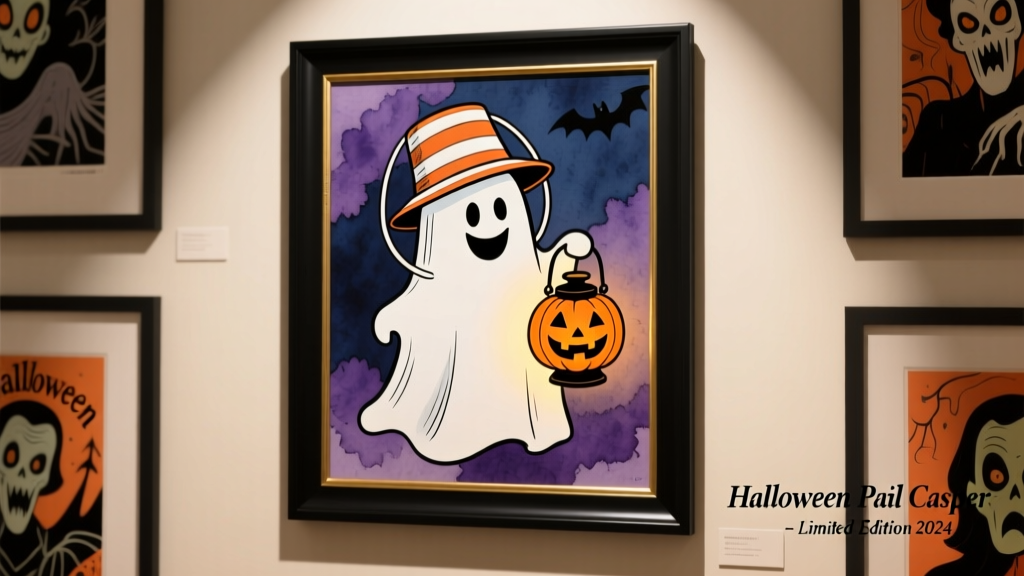
The Halloween Pail Casper: Authentication, Market Value, and Cultural Legacy of the Iconic 1960s Plastic Bucket
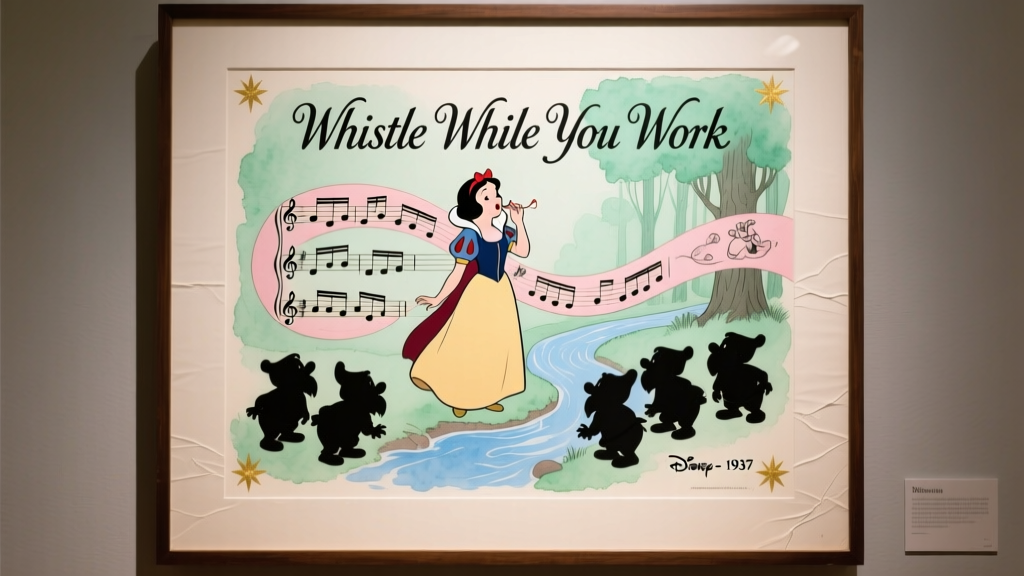
Disneyana Sheet Music: 'Whistle While You Work' from Snow White and the Seven Dwarfs (1937) — Authentication, Provenance, and Market Analysis
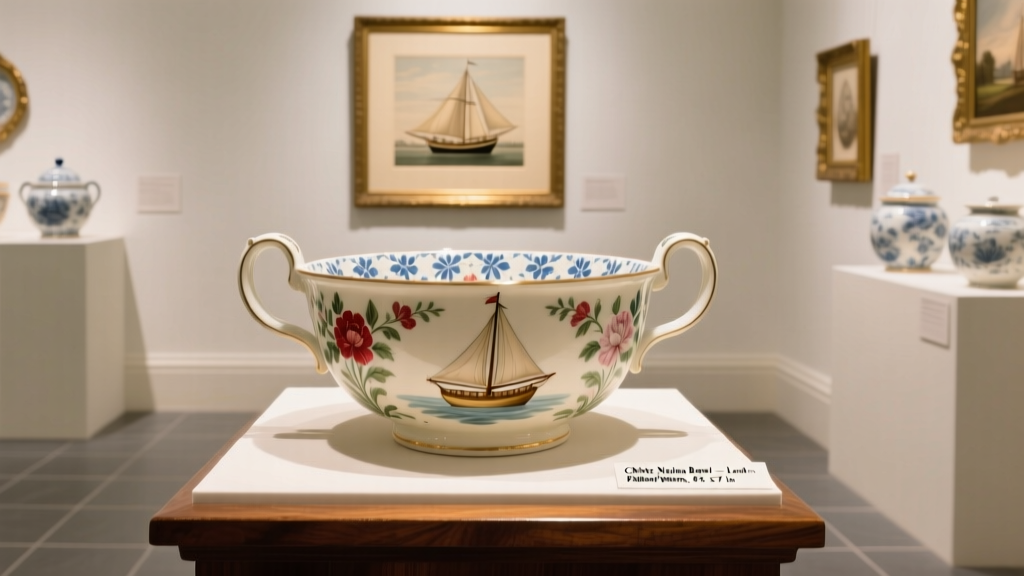
Chintz Marina Bowl with Two Handles and Lord Nelson Motif: Authentication, Provenance, and Market Analysis of the 6½ × 7 Inch Ceramic Piece
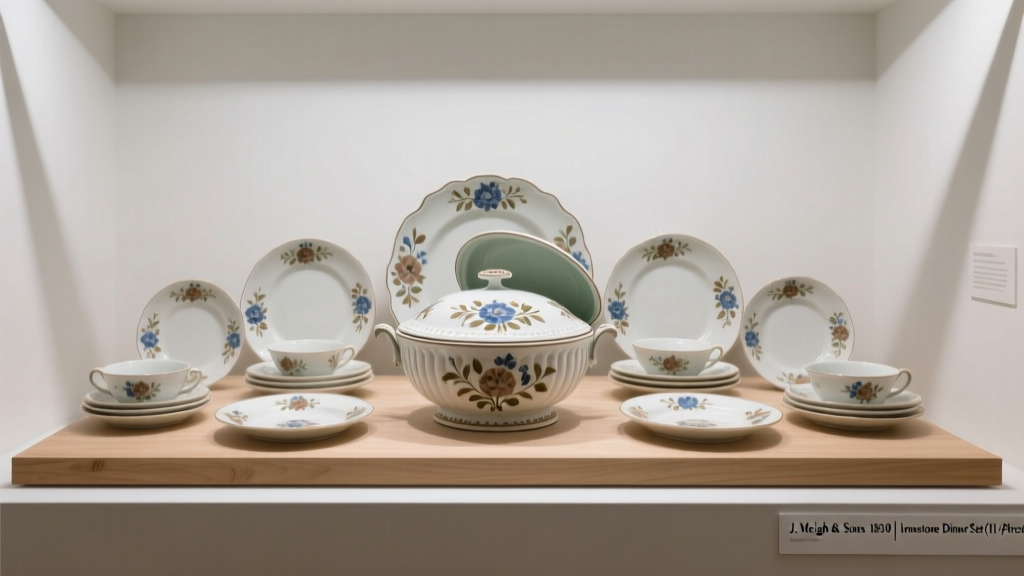
Ironstone Dinner Set with Floral Tureen: J. Meigh & Sons, Stoke-on-Trent, c. 1830 — Authentication, Provenance, and Market Value of an 11-Piece Service

Help Identifying: Is This a Hutch or an Apothecary Cabinet?
Authentication & Market Analysis: Penna Furniture Chest in Blanket Pine and Poplar with Brown-Yellow Paint Finish (44 × 21 × 24 in)

Clarice Cliff Jug 'Fantasque Trees House' — Authentication, Provenance, and Market Analysis of the Iconic 7-Inch Ceramic
Radio Atwater Kent Speaker: Design, Authentication, and Market Value of a 1920s Acoustic Icon
W. R. Osborn: Authenticating the Legacy of a Prolific American Printmaker and Illustrator