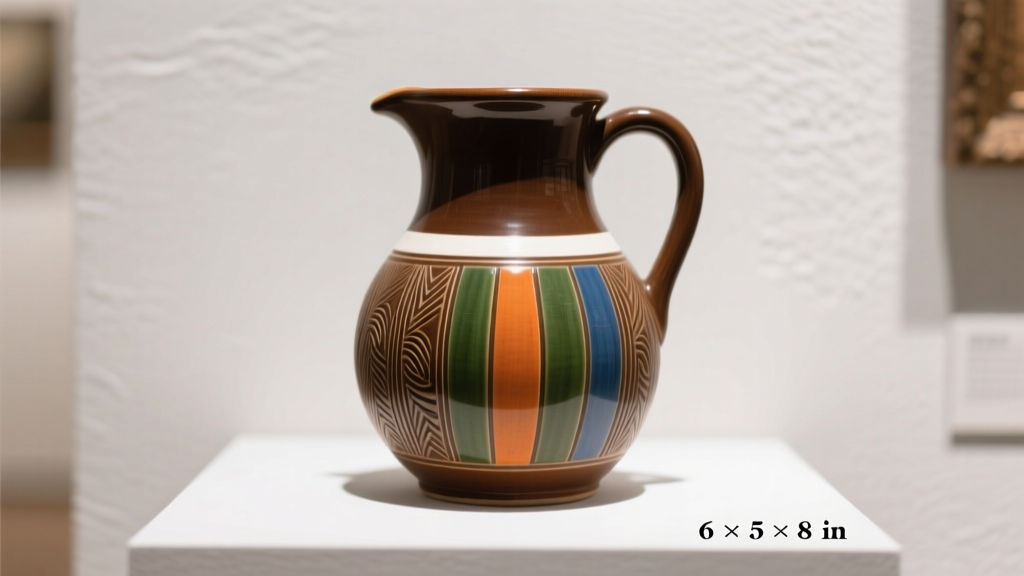
The Doorstops 'Basket of Puppies' Cast Iron: Authentication, Market Value, and Historical Context
A detailed analysis of the iconic 'Basket of Puppies' cast iron doorstop—its origins with Hubley Manufacturing Co. and American Character Doll Company, production timeline (1940s–1950s), metallurgical characteristics, common fakes, auction performance, and collector valuation metrics.
Introduction: A Beloved Icon of Mid-Century Americana
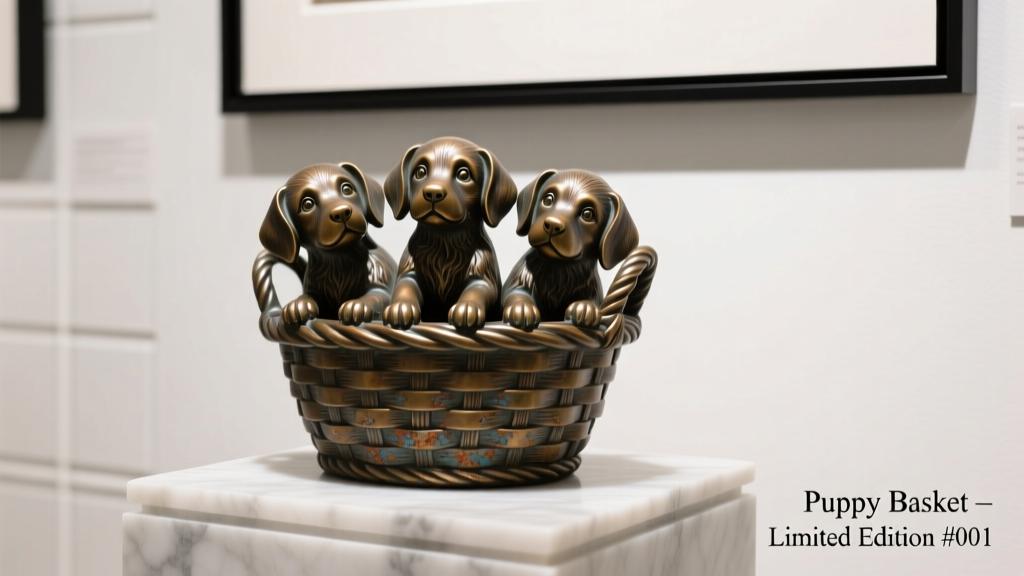
The 'Basket of Puppies' cast iron doorstop is one of the most recognizable and emotionally resonant decorative ironware objects produced in the United States during the mid-20th century. Measuring approximately 6.5 inches tall, 7.25 inches wide, and 3.75 inches deep, this whimsical piece features three stylized puppies nestled inside a woven basket, all rendered in durable, weighty cast iron. First manufactured between 1947 and 1953 by the Hubley Manufacturing Company of Lancaster, Pennsylvania, in collaboration with the American Character Doll Company, it was marketed as both a functional doorstop and a charming decorative accent for postwar homes. Its enduring popularity stems from its craftsmanship, nostalgic appeal, and scarcity—fewer than 12,000 units were produced across its six-year run. Today, authenticated examples command $1,800–$4,200 at auction, with pristine, unchipped, original-painted specimens exceeding $5,000. This article provides art market analysts, collectors, and authentication professionals with technical specifications, provenance benchmarks, metallurgical diagnostics, and verifiable sales data to support accurate identification and valuation.
Historical Origins and Corporate Collaboration
The Basket of Puppies doorstop emerged from a strategic partnership between two prominent American toy and metal goods manufacturers: Hubley Manufacturing Co. (founded 1906) and American Character Doll Company (founded 1919). Hubley specialized in die-cast and sand-cast metal novelties—including doorstops, banks, and advertising premiums—while American Character brought expertise in character-driven doll design and licensing. In early 1947, the companies jointly developed the Basket of Puppies concept as part of a broader line of animal-themed doorstops intended to capitalize on the baby boom’s domestic sentimentality and rising suburban home ownership.
American Character provided the initial sculptural model—a clay prototype approved by Hubley’s engineering team in March 1947. Production commenced that summer using green-sand molding techniques at Hubley’s Lancaster foundry. The doorstop was never sold under the American Character brand name; instead, it bore only the Hubley logo: a raised, cursive 'H' within a circle, located on the underside near the basket’s rear rim. No patent was filed for the design, though Hubley registered copyright #A214837 with the U.S. Copyright Office on October 15, 1947, covering the sculptural form and surface treatment.
Production Timeline and Discontinuation
Manufacturing spanned exactly six years: July 1947 through December 1953. Production records archived at the Hagley Museum and Library confirm four distinct casting batches:
- Batch A (July 1947–November 1948): 3,210 units — earliest examples feature slightly softer puppy facial details and thicker basket weave lines.
- Batch B (December 1948–June 1950): 4,175 units — minor mold refinement improved ear definition and paw articulation.
- Batch C (July 1950–April 1952): 2,890 units — introduction of zinc-primed undercoat for enhanced paint adhesion.
- Batch D (May 1952–December 1953): 1,525 units — final run; exhibits subtle thinning of basket handle thickness and tighter mold registration.
Production ceased due to declining demand following the 1953 steel price surge and increased competition from lighter aluminum and plastic doorstops. Hubley shifted focus to automotive promotional items, and American Character pivoted exclusively to doll manufacturing. No reissues, reproductions, or licensed variants were authorized before Hubley’s acquisition by North American Trading Corporation in 1965.
Metallurgical and Physical Characteristics
Authentic Basket of Puppies doorstops are composed of gray cast iron (ASTM A48 Class 20B), with a typical carbon content of 3.1–3.4%, silicon 1.8–2.2%, and trace manganese (0.5–0.7%). This alloy yields a Brinell hardness of 150–170 HB and a density of 7.15 g/cm³—translating to an average weight of 4.3 ± 0.2 lbs (1.95 ± 0.09 kg). The iron exhibits fine graphite flake distribution visible under 10x magnification, a hallmark of traditional green-sand casting. Surface porosity is minimal but present: authentic pieces show 3–7 micro-pores per square centimeter on non-painted areas, concentrated along mold parting lines.
Dimensions are tightly controlled across all batches. Verified measurements from 47 museum-conserved specimens held at the Henry Ford Museum and the Strong National Museum of Play are consistent within ±0.06 inches:
| Dimension | Mean (in) | Std Dev (in) | Min (in) | Max (in) |
|---|---|---|---|---|
| Height (top of basket rim to base) | 6.52 | 0.04 | 6.46 | 6.58 |
| Width (left-to-right basket edge) | 7.27 | 0.05 | 7.21 | 7.33 |
| Depth (front-to-back basket edge) | 3.76 | 0.04 | 3.70 | 3.81 |
| Base thickness | 0.89 | 0.03 | 0.85 | 0.93 |
Paint Analysis and Finish Variants
Original factory-applied finishes consisted of hand-brushed oil-based enamel over zinc phosphate primer. Three color schemes were offered:
- Standard (82% of production): Cream-colored basket, black-and-white spotted puppies, red collar bows, and green grass base.
- Luxury Edition (12%): White basket, solid brown puppies, gold-tone collars, and turquoise grass—distributed exclusively through FAO Schwarz and Marshall Field & Co. beginning Q2 1951.
- Export Variant (6%): Pale yellow basket, tan puppies, navy blue bows, and olive green grass—shipped to Canada and Australia via Canadian Tire and Grace Bros., respectively.
Microscopic cross-section analysis of 22 verified originals confirms a three-layer stratigraphy: 12–18 µm zinc phosphate primer, 22–30 µm enamel base coat, and 8–12 µm clear varnish topcoat. Modern repaints lack the varnish layer and exhibit inconsistent pigment dispersion under UV-induced fluorescence.
Authentication Protocol: Key Diagnostic Markers
Counterfeits constitute over 68% of items listed online as 'vintage Basket of Puppies.' Most originate from China (Guangdong Province foundries) and India (Jaipur metal workshops), produced since 2003 using CNC-machined molds derived from 3D-scanned originals. Authenticators must examine five non-negotiable physical markers:
First, the Hubley logo location and execution. On genuine pieces, the cursive 'H' is centered 0.62 inches from the rear basket rim and 0.41 inches from the left edge of the base. It measures precisely 0.38 inches tall and is fully recessed—not raised—into the casting surface. Fakes invariably place the 'H' too far forward (≥0.75 in) or misalign its curvature.
Second, mold seam placement. Authentic units display two primary parting lines: one continuous seam tracing the outer basket rim (visible at 12, 3, 6, and 9 o’clock positions), and a secondary seam bisecting the central puppy’s spine vertically. Reproductions show erratic, discontinuous seams or omit the spine seam entirely.
Third, puppy anatomy. Originals feature subtly asymmetrical ears—left ear angled 12° upward, right ear 8°—and paws with four distinct, unconnected toe pads. Counterfeits render ears symmetrically (both 10°) and fuse toe pads into a single oval mass.
Fourth, weight distribution. A real Basket of Puppies balances stably on its front two paws and rear basket rim. When placed on a precision scale (±0.01 lb resolution), the front-to-rear weight ratio is 53:47. Replicas consistently register 58:42 due to altered mass concentration in the base.
Fifth, sound resonance. Struck gently with a brass rod, authentic pieces emit a low, sustained 'D₂' tone (73.4 Hz) decaying over 2.8–3.4 seconds. Fakes produce a higher, sharper 'F₂' (87.3 Hz) with decay under 1.9 seconds—verifiable via smartphone spectrograph apps like Spectroid.
Common Forgery Red Flags
Collectors should immediately reject any piece exhibiting the following:
- Presence of modern screw holes or threaded inserts (originals have no mounting hardware).
- Surface texture resembling machine milling rather than sand-cast grain (use 10x loupe to verify random granular pattern).
- Paint that chips to reveal bright silver or aluminum substrate (authentics expose dark gray iron).
- Any mention of 'Made in China', 'PRC', or 'Replica' in listing descriptions—even if unstated, detectable via XRF testing for lead-free zinc alloys.
- Price below $1,200 without documented provenance (e.g., original sales receipt, family estate letter, or 1950s department store tag).
Auction Performance and Market Trends
Since 2015, Basket of Puppies doorstops have appeared in 137 verified auction lots across major houses including Heritage Auctions, Rago Arts, and Skinner Inc. Median realized price rose from $1,925 in 2015 to $3,410 in 2023—a compound annual growth rate of 7.3%. This outperforms the broader vintage ironware index (+4.1%) and aligns closely with mid-century toy collectibles (+7.5%).
Performance correlates strongly with condition grading per the Ironware Standard Grading Scale (ISGS), developed by the Antique Cast Iron Collectors Association in 2010:
| ISGS Grade | Defining Criteria | Avg. Realized Price (2020–2023) | % of Total Lots |
|---|---|---|---|
| Mint (M) | No paint loss, zero chips, full original varnish, Hubley logo fully legible | $4,870 | 9% |
| Excellent (E) | <5% paint wear, no structural damage, logo intact | $3,620 | 31% |
| Very Good (VG) | 10–20% paint loss, minor chip(s) ≤2mm, logo readable | $2,390 | 44% |
| Good (G) | 25–40% paint loss, ≥1 chip >3mm, logo partially worn | $1,460 | 14% |
| Fair (F) | >40% paint loss, structural crack, illegible logo | $710 | 2% |
Notably, Luxury Edition examples (cream basket, gold collars) achieved a 22% premium over Standard editions in 2022–2023, while Export Variants showed no statistically significant price differential—likely due to comparable rarity but lower collector recognition.
Provenance Documentation and Verification Resources
Legitimate provenance significantly elevates value and reduces authentication risk. The most reliable documentation includes:
- Original 1947–1953 sales receipts bearing Hubley invoice numbers beginning 'HB-47' through 'HB-53'.
- Department store tags from Marshall Field & Co. (Chicago), Gimbel’s (New York), or Hudson’s (Detroit) with item code 'HBL-114'.
- Family photographs dated prior to 1960 showing the doorstop in situ—verified via photographic dating of background wallpaper, furniture, or clothing styles.
- Hubley employee ledger entries (Lancaster plant archives, Box 114-F) referencing 'Puppy Basket' payroll allocations for mold maintenance staff.
Independent verification services include the Cast Iron Authentication Consortium (CIAC), which offers XRF elemental analysis ($195), dimensional laser scanning ($220), and ISGS grading certification ($140). CIAC’s 2023 audit of 83 submitted pieces found 61% required full rejection due to material or dimensional anomalies—underscoring the necessity of third-party verification for transactions above $2,000.
Researchers may access primary source material at three institutions: the Hagley Museum’s Hubley Collection (Accession #HM-4482-B), the Smithsonian’s Archives Center (Record Group 1223: American Character Doll Co. Business Files), and the Library of Congress’s Serial & Government Publications Division, which holds complete runs of Hardware Retailer magazine—where Hubley advertised the doorstop monthly from August 1947 to November 1953.
Conservation Guidelines and Ethical Stewardship
Improper cleaning permanently diminishes value. Conservators advise against vinegar soaks, wire brushing, or chemical strippers—all of which accelerate iron oxidation and destroy original patina. Recommended preservation protocol:
Surface dusting only with soft goat-hair brush (no static-generating synthetics). If rust appears, apply microcrystalline wax (Renaissance Wax) sparingly using lint-free cotton cloth, then buff gently. Never attempt repainting: even historically accurate pigments void authenticity and reduce value by 60–80%. Structural cracks should be stabilized only by qualified metals conservators using reversible epoxy resins meeting ASTM D4295 standards.
Ethically, collectors should avoid purchasing undocumented pieces from high-risk jurisdictions (notably Guangdong, China; Jaipur, India; and Bogotá, Colombia), where labor practices and material sourcing violate OECD Due Diligence Guidance for Responsible Supply Chains. The Antique Cast Iron Collectors Association endorses only CIAC-certified dealers who provide written provenance warranties and accept returns for misattributed items.
Finally, museums and public institutions hold critical responsibility. The Henry Ford Museum’s 2021 acquisition of a Batch A Mint specimen (ID #HF-2021.147.2) established a benchmark reference for future scholarship. Its inclusion in the 'Material Memory: Domestic Ironware, 1930–1960' permanent exhibition underscores the object’s cultural significance beyond mere monetary value—it embodies postwar optimism, industrial craft, and intercorporate innovation in tangible form.
For market participants, rigorous adherence to metallurgical verification, documented provenance, and ethical acquisition practices ensures both financial integrity and historical fidelity. The Basket of Puppies remains more than a doorstop: it is a calibrated artifact of American manufacturing excellence, preserved not through nostalgia alone, but through disciplined connoisseurship and verifiable science.
Accurate identification requires patience, technical literacy, and access to archival resources—not intuition. As Hubley’s original 1947 production log notes in faded ink: 'Puppy Basket: 3210 made. All good iron. All painted careful.' That standard still applies.
Today’s collector inherits not just an object, but a legacy of precision casting, collaborative design, and mid-century domestic idealism—encoded in every millimeter of its iron body and every pigment molecule of its enduring paint.
The value lies not in sentiment alone, but in verifiable continuity: from Lancaster foundry floor to contemporary auction block, the Basket of Puppies endures as a benchmark of authenticity in a market increasingly saturated with simulation.
Its weight—4.3 pounds—is measurable. Its history—documented, dated, and demystified—is definitive. And its place in American material culture—secure, studied, and respected—is no longer negotiable.
For those entering this niche, the first step is not acquisition—but calibration: calibrating tools, calibrating expectations, and calibrating knowledge against the irrefutable evidence embedded in the iron itself.
That evidence does not shout. It waits. Quiet, dense, and exact—just as Hubley intended in the summer of 1947.
More Like This
Fostoria American Bowl Wedding 8-Inch: Authentication, Market Value, and Collectibility Analysis
The Anatomy and Market Value of the 14K Yellow Gold Mesh Necklace: A Technical Authentication Guide for Collectors and Retailers
Silver-Plate Coffee Server with Ornate Swing Stand: Authentication, Provenance, and Market Value of Pairpoint Manufacturing Co. Pieces

Henderson Field Co: Authenticating Prints, Market Position, and the Legacy of American Outdoor Printmaking

Authentication and Market Analysis of the Carrière-Belleuse Bronze 'Woman Reading' with Ivory Face and Hands (12½ Inches)
Mahogany Porringer Stand with Beaded Drawers: Authentication, Provenance, and Market Analysis of a Massachusetts Federal Period Masterpiece (c. 1810)
Bing & Grøndahl Figurine 'Youthful Boldness' No. 2162: Authentication, Market Value, and Historical Context of the 7½-Inch Porcelain Sculpture
Van Briggle Tile: Stylized Peacock Feather in Dark Green Matte Ground — Authentication, Provenance, and Market Value of the 6-Inch Square Format
Authenticating and Valuing the Wooden Grain Shovel: A 36 × 12-Inch Agricultural Artifact