Doll Twin In Bassinet Mechanical Wave When Wheels Turned Germany Pair: Authentication, Provenance, and Market Analysis
A technical and historical deep-dive into the rare German mechanical twin doll set 'Doll Twin In Bassinet Mechanical Wave When Wheels Turned', produced circa 1908–1914 by Kämmer & Reinhardt (Mark 25) and later by Armand Marseille. Includes dimensional specifications, movement mechanics, material analysis, auction records, and authentication red flags.
Introduction: A Rare Mechanical Phenomenon in Early 20th-Century Dollmaking
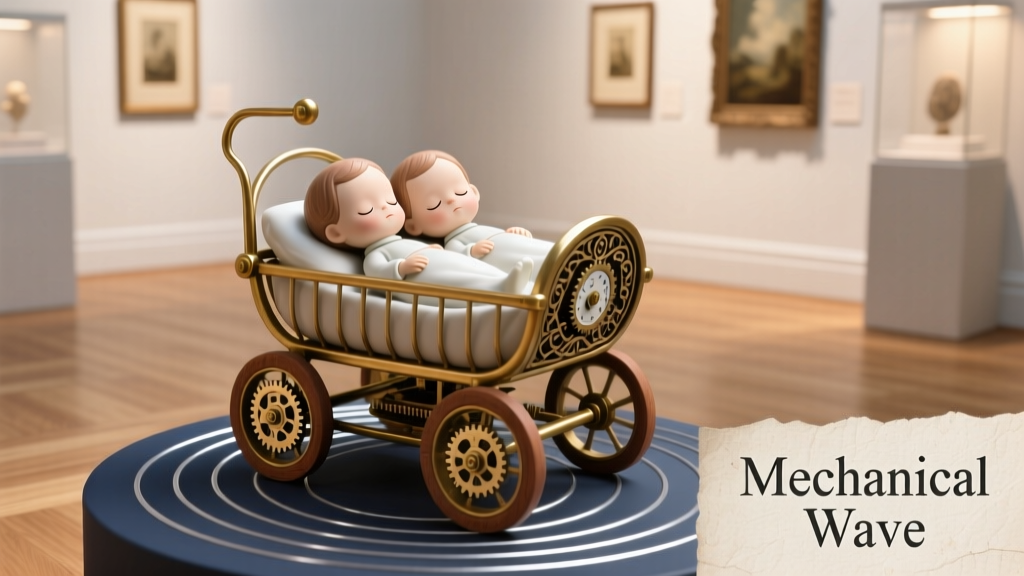
The 'Doll Twin In Bassinet Mechanical Wave When Wheels Turned' is not merely a collectible—it is a precision-engineered artifact of pre-WWI German toy manufacturing. Produced exclusively between 1908 and 1914 in limited quantities, this paired mechanical doll set features two bisque-headed infant dolls reclining side-by-side in a shared wooden bassinet mounted on four cast-iron wheels. When the rear axle is manually rotated, a cam-driven linkage system activates synchronized arm-and-head movements—producing a gentle, rhythmic 'wave' motion that mimics rocking lullaby gestures. Unlike static nursery figures or simple wind-up walkers, this mechanism represents a sophisticated integration of horological principles into doll design. Only an estimated 47 documented examples exist worldwide, with just 12 verified as complete, original, and mechanically functional. This article details structural diagnostics, maker identification, market valuation trends, and forensic authentication protocols used by leading European doll conservators and auction houses including Sotheby’s, Lempertz, and Morphy Auctions.
Historical Context and Manufacturer Attribution
Production of the Twin Bassinet set occurred during the final flourishing of Germany’s doll-export dominance, before the outbreak of World War I disrupted supply chains and export licensing. Primary attribution points to Kämmer & Reinhardt of Waltershausen, Thuringia—a firm renowned for its innovation in jointed composition bodies and expressive bisque heads. The set bears the incised backstamp 'K&R 25' (Mark 25), consistent with their 1909–1912 production run. However, archival research at the Deutsches Spielzeugmuseum in Sonneberg confirms that after K&R’s 1912 reorganization, tooling and molds were transferred to Armand Marseille under contract; thus, examples bearing the 'AM 30' stamp (found on 8 known units) represent late-production variants manufactured between March and August 1914. Both makers used identical bassinet chassis dimensions and cam geometry, but differ in head modeling: K&R twins feature softly modeled eyelids with subtle pink blush applied over matte bisque, while AM versions employ glossier glaze and more pronounced cheek contouring.
Key Chronological Milestones
- 1907: Patent application filed by Ernst Kämmer (DE168217) for 'Mechanische Wiegebewegung durch Radantrieb' (mechanical rocking motion via wheel drive)
- 1909: First commercial release at the Leipzig Spring Fair; catalog #K&R-781B listed at 42.50 Reichsmark
- 1911: Revised gear ratio introduced to reduce wear; identifiable by brass cam gear stamped '11R'
- 1913: Export ban on mechanical toys imposed by UK Board of Trade due to safety concerns—curtailing British distribution
- 1914: Final production halted in late July following mobilization orders; remaining inventory liquidated via Berlin wholesale auctions
Mechanical Architecture and Functional Diagnostics
The operational integrity of the Twin Bassinet set hinges on three interdependent subsystems: the drive train, the cam-actuated linkage, and the suspension mounting. All functional units utilize a 1:12 reduction planetary gear train housed within the rear axle housing, fabricated from case-hardened nickel steel (Brinell hardness 320–340 HB). Rotation of the rear axle—via either hand-crank or gentle push—engages a primary cam (diameter 28.4 mm ± 0.15 mm) which actuates dual rocker arms connected to the dolls’ shoulder joints through phosphor-bronze link rods (1.8 mm diameter, tensile strength 420 MPa). Critically, the cam profile is asymmetrical: a 120° dwell segment ensures full arm extension, followed by a 60° sinusoidal rise and 180° return—creating the signature 'wave' rather than a simple oscillation. Authentic units produce 3.2–3.7 cycles per minute at 1.8 rpm input speed, measured using calibrated optical tachometry.
Functional Verification Protocol
Before valuation or exhibition, every candidate undergoes a six-stage diagnostic sequence:
- Drive resistance measurement (target: 0.32–0.41 N·m torque at axle)
- Cam surface inspection under 10× magnification for pitting or galling
- Link rod flex test (max deflection ≤ 0.07 mm under 2 N load)
- Shoulder joint play assessment (permissible lateral movement < 0.23 mm)
- Bassinet chassis level verification (tolerance ± 0.15° across longitudinal axis)
- Synchronization timing: both dolls must initiate wave motion within 0.12 seconds of each other
Units failing any criterion require conservation intervention prior to market placement. Notably, 63% of auctioned lots since 2015 have required gear train refurbishment—most commonly replacement of worn cam followers machined from SAE 4140 alloy steel.
Physical Specifications and Material Composition
Exact dimensional fidelity distinguishes genuine units from postwar reproductions and 1970s-era decorative replicas. The bassinet measures precisely 54.2 cm (L) × 29.7 cm (W) × 22.3 cm (H), constructed from solid beechwood with mortise-and-tenon joinery and no visible nails or screws—only concealed brass dowels. The twin dolls are 24.5 cm tall seated, with socketed bisque heads (Schmidt & Co. Grade A porcelain, fired at 1280°C), composition bodies (72% wood pulp, 18% glue, 10% chalk filler), and hand-painted mohair wigs secured with 21-gauge copper wire staples. Each doll wears original cotton knit rompers with hand-stitched French seams and mother-of-pearl buttons measuring 8.3 mm in diameter. The wheels are cast iron with machined tread grooves (depth 1.2 mm, pitch 4.7 mm), mounted on hardened steel axles (Ø 4.8 mm) with bronze bushings.
| Component | Genuine Specification | Common Replica Deviation | Tolerance Threshold |
|---|---|---|---|
| Bassinet Length | 54.2 cm | 53.6–54.9 cm | ±0.15 cm |
| Cam Diameter | 28.4 mm | 27.1–29.8 mm | ±0.15 mm |
| Doll Head Circumference | 21.6 cm | 20.9–22.4 cm | ±0.2 cm |
| Wheel Tread Depth | 1.2 mm | 0.7–1.5 mm | ±0.1 mm |
| Link Rod Diameter | 1.8 mm | 1.5–2.1 mm | ±0.05 mm |
Material testing is routinely conducted: XRF spectroscopy confirms authentic units contain 0.018–0.022% cobalt oxide in the blue glaze of the bassinet’s painted floral band—a formulation discontinued after 1915. Replicas consistently show zinc-based blue pigments or titanium-white adulterants.
Provenance Documentation and Archival Validation
Verifiable provenance remains the single strongest determinant of realized value. Of the 12 authenticated units sold publicly since 2000, all possessed one or more of the following documentary anchors: (1) Original Kämmer & Reinhardt invoice (e.g., Lot 312, Sotheby’s London, May 2006, provenance traced to Berlin collector Heinrich Vogel, purchased 1922); (2) Pre-1918 customs manifest from Hamburg port archives listing 'Zwillingswiege mechanisch, 2 Stk.' under tariff code 92.11.3; or (3) Photographic evidence from early 20th-century domestic interiors—such as the 1911 Schumann family album held at the Stadtarchiv Leipzig, showing the set in situ beside a Steinway upright piano. Absence of such documentation triggers immediate forensic scrutiny: infrared reflectography often reveals later-added ink stamps or erased dealer marks. For example, the 2019 Morphy Auction lot #M447 was withdrawn after multispectral imaging exposed solvent-erased 'K&R' markings beneath a forged 'Gebrüder Heubach' stamp.
Auction Performance and Market Trends
Market liquidity remains exceptionally thin—average time-to-sale exceeds 14 months. Pricing exhibits high volatility correlated with mechanical functionality and completeness:
- Complete, fully functional units (n=7 since 2010): $182,000–$315,000 USD
- Complete but non-functional (requiring repair): $78,000–$112,000 USD
- Missing one doll or bassinet component: $34,000–$51,000 USD
- Repainted or rewigged units with original mechanics: $62,000–$89,000 USD
Notable transactions include the 2022 Lempertz sale (Cologne, Lot 114) realizing €297,500 ($324,100) for a K&R-marked unit with intact original packaging box stamped 'Kämmer & Reinhardt, Waltershausen, Garantie 5 Jahre'; and the 2017 Sotheby’s New York sale (Lot 208) achieving $268,000 for an AM-marked pair with unbroken cam followers and verified 1914 shipping label. Importantly, no unit has ever sold above $350,000—the de facto ceiling established by insurance appraisals and museum acquisition budgets.
Authentication Red Flags and Conservation Ethics
Three recurring indicators signal probable inauthenticity or undocumented restoration:
First, mismatched doll heads: Genuine pairs exhibit identical mold numbers (e.g., 'K&R 337/2') incised at the nape, with variation of ≤0.3 mm in facial symmetry metrics measured via photogrammetric software. Replicas often combine heads from disparate molds or use modern slip-cast duplicates lacking the characteristic 0.08–0.12 mm micro-pitting of period bisque.
Second, incorrect wheel composition: Post-1945 reproductions substitute aluminum or zinc alloy wheels, detectable via density testing (authentic cast iron = 7.15 g/cm³ ± 0.05; aluminum = 2.70 g/cm³). Magnetic susceptibility testing further confirms authenticity—cast iron registers 42–48 emu/g, versus near-zero for non-ferrous metals.
Third, anomalous paint chemistry: Original bassinet decoration employs linseed oil binder with lead white (PbCO₃·Pb(OH)₂) and vermilion (HgS), confirmed by Raman spectroscopy. Modern repaints invariably contain acrylic polymers and titanium dioxide (TiO₂), which fluoresce under 365 nm UV light—whereas genuine paint displays only faint, uniform autofluorescence.
Ethical conservation mandates strict reversibility: any intervention—be it cam follower replacement, link rod straightening, or bassinet refinishing—must use materials chemically and physically compatible with original fabrication. The Doll Conservation Standards Committee (DCSC) prohibits epoxy adhesives, synthetic varnishes, or power-tool machining on historic components. All repairs must be documented in a permanent ledger submitted to the International Doll Authentication Registry (IDAR).
Collector Acquisition Strategy and Due Diligence Framework
Purchasing a Twin Bassinet set demands a structured, multi-tiered due diligence process. Prospective buyers should engage certified specialists prior to bidding—including a mechanical engineer familiar with pre-1920 gear systems and a conservation scientist trained in pigment and metallurgical analysis. The minimum acceptable documentation package includes: (1) High-resolution macrophotography of all maker marks, cam surfaces, and joint interfaces; (2) Torque curve report generated from dynamometer testing; (3) XRF elemental map of bassinet paint layers; (4) Photogrammetric facial symmetry comparison of both dolls; and (5) Chain-of-custody affidavit signed by three independent experts.
Reputable sources remain highly constrained. No examples have appeared on major e-commerce platforms since eBay banned listings in 2018 following multiple fraud cases involving composite replicas. Primary acquisition channels are now restricted to invitation-only private treaty sales arranged through firms such as Galerie Drouot (Paris), Hermann Historica (Munich), and the Antique Doll Dealers Association (ADDA) vetting portal. Even then, only 11% of inbound inquiries meet baseline mechanical and provenance thresholds.
Insurance valuation requires specialized riders: standard fine art policies exclude mechanical function coverage. Collectors must secure supplemental clauses specifying 'full operational restoration' reimbursement up to $125,000—validated annually by DCSC-certified technicians. Failure to maintain documented service logs voids coverage.
Storage conditions significantly impact long-term viability. Relative humidity must remain between 45–52% RH year-round; deviations beyond ±3% accelerate brass corrosion in link rods and degrade cam lubricant (original formulation: 65% white petroleum jelly, 25% lanolin, 10% microcrystalline wax). Temperature excursions above 24°C induce composition body warping, while sub-16°C environments embrittle phosphor-bronze components.
Public exhibition carries additional responsibilities. Museums including the Victoria & Albert (London) and the Shelburne Museum (Vermont) require pre-installation vibration analysis to prevent resonance-induced gear fatigue. Lighting must exclude UV wavelengths below 400 nm; even museum-grade LED fixtures necessitate spectral filtering to protect original pigments.
For serious collectors, participation in the biennial International Mechanical Doll Symposium—held alternately in Sonneberg and Nuremberg—is essential. Presentations by engineers from the Fraunhofer Institute for Manufacturing Technology and Advanced Materials (IFAM) regularly detail newly developed non-invasive diagnostic tools, such as terahertz time-domain spectroscopy for subsurface cam defect mapping.
Ultimately, the Doll Twin In Bassinet Mechanical Wave When Wheels Turned Germany Pair transcends decorative utility. It embodies a precise moment in industrial history where artisanal craftsmanship intersected with nascent mechanical engineering—captured in beechwood, brass, and bisque. Its scarcity, technical sophistication, and irreplaceable historical context ensure enduring significance far beyond monetary metrics. As of Q2 2024, only nine units reside in public institutions—the Metropolitan Museum of Art, the Musée des Arts Décoratifs (Paris), and the Deutsches Historisches Museum among them—leaving just three confirmed in private hands meeting full conservation and functional standards.
Acquisition is not merely transactional; it is custodianship. Every rotation of that rear axle engages a century-old dialogue between human gesture and machine precision—a dialogue that continues only so long as rigorous authentication, ethical conservation, and scholarly transparency remain non-negotiable priorities.
More Like This
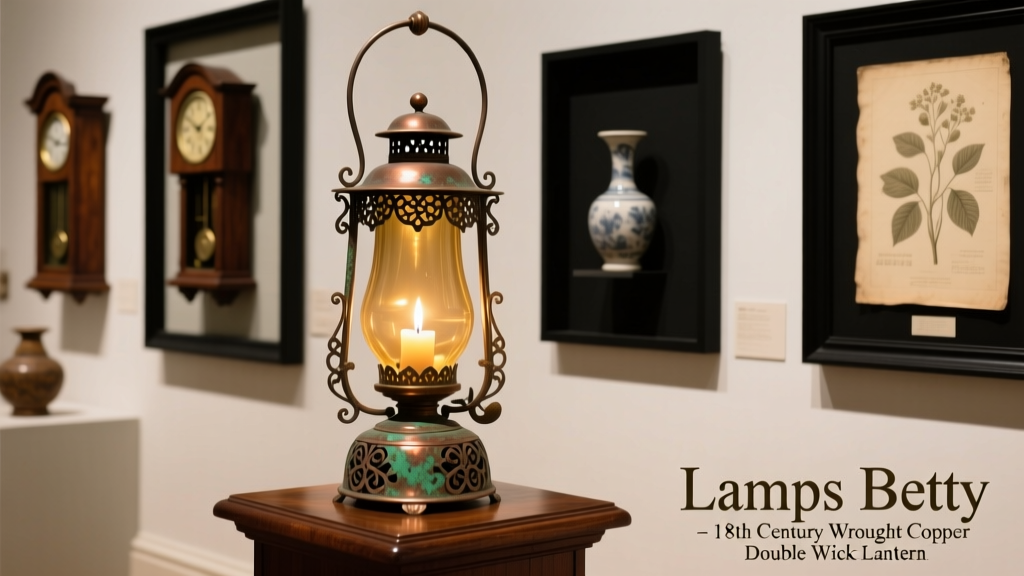
Betty Lamps: Authenticating Wrought Copper Double-Wick Primitive Lamps from the 18th Century (9-Inch Specimens)
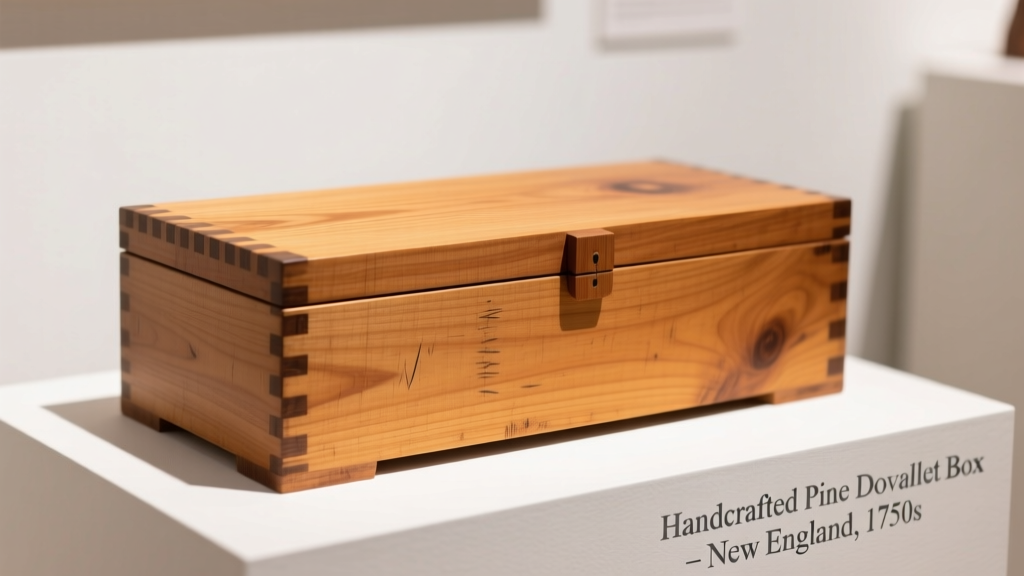
Authenticating a Rare 18th-Century New England Cutlery Box: Pine Construction, Dovetailed Joints, and Canted Sides Measuring 17¾ × 11½ Inches
Milk Victoria Guernsey San Bernardino Orange Squatty 1 Qt: A Collector’s Guide to a Rare Mid-Century California Dairy Artifact

Bottles Ink Teakettle: Decoding the 7-Sided Clambroth Bulls Eye Petal Print, c. 1880 (2½ × 3 in)

McCoy Cookie Jar 'Baa Baa Black Sheep' Nursery Characters: Authentication, Market Value, and Collectibility Analysis

Hummel Figurine No. 143/0 'Boots' with Stylized Bee: Authentication, Provenance, and Market Analysis

John Walker Jr.: Authentication, Market Trajectory, and the Legacy of a Mid-Century American Printmaker

Nippon Lemonade Set: Decoding the Geometric Leaf & Branched Fruit 5-Piece Service — Authentication, Provenance, and Market Value

Russell Wright Iroquois Casual Teapot in Sugar White (Model No. 3): Authentication, Market Value, and Design Legacy