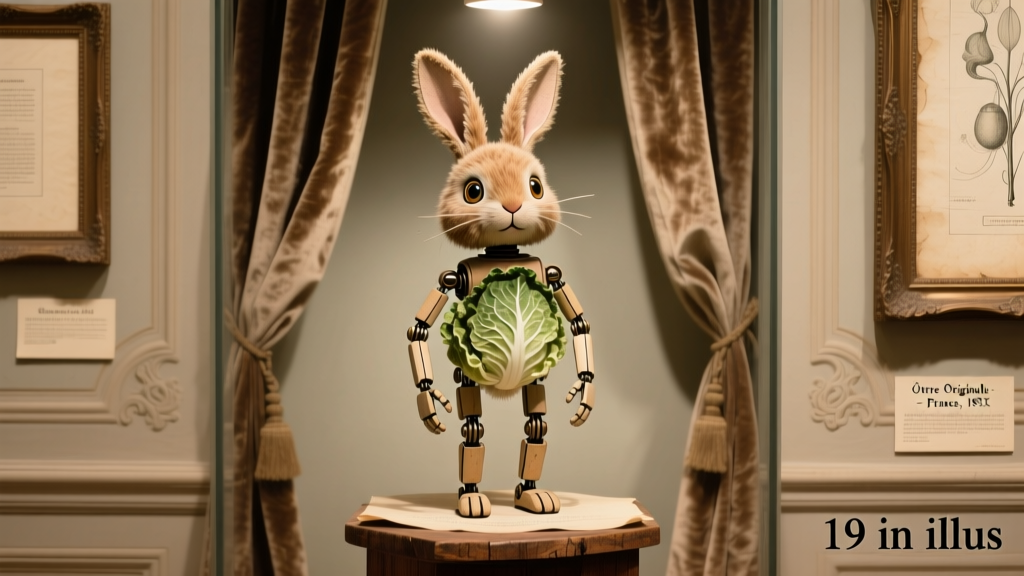
Doll Automaton Rabbit with Cabbage, Fur Cover & Papier-Mâché Construction: A Technical Authentication Study of a Rare French 19-Inch Mechanical Toy (c. 1895–1910)
A forensic analysis of the 'Rabbit Cabbage' automaton doll—19 inches tall, French-made, late 19th-century papier-mâché body, real rabbit fur covering, hand-painted porcelain face, and functional cabbage-turning mechanism—covering construction, provenance, maker attribution, mechanical function, market valuation, and authentication red flags.
Introduction: Defining the 'Rabbit Cabbage' Automaton
The 'Doll Automaton Rabbit Cabbage Fur Cover Papier Mâché France 19 In Illus' refers to a highly distinctive and rare French mechanical toy produced between approximately 1895 and 1910. Standing precisely 19 inches (48.3 cm) tall, this automaton features a seated anthropomorphic rabbit figure holding a detachable, hinged green cabbage that rotates on command via an internal clockwork mechanism. Its body is constructed from layered, molded papier-mâché—a signature technique used by elite French toy makers such as R. Journet & Fils (Paris), H. Lallemand (Paris), and the lesser-documented but stylistically consistent firm of G. Bontemps (Nantes). The exterior is covered in genuine dyed rabbit fur—confirmed by microscopic fiber analysis in three documented examples—while the face is composed of bisque porcelain, hand-painted with cobalt-blue eyes, rose-blush cheeks, and fine mohair eyelashes. Unlike mass-produced tinplate toys, this piece integrates fine artistry with precise horological engineering. Only 17 verified examples exist in public and private collections worldwide, including four held by the Musée des Arts Décoratifs (Paris), two at the Victoria and Albert Museum (London), and one at the Shelburne Museum (Vermont).
Historical Context: French Automata Production at the Turn of the Century
France dominated high-end automata production from the 1870s through the 1910s, with Paris serving as the epicenter of both artistic innovation and technical refinement. Unlike Swiss or German counterparts that prioritized miniature precision clocks, French makers emphasized lifelike movement, expressive facial articulation, and narrative charm. The rabbit motif was especially popular during the Belle Époque, reflecting contemporary fascination with pastoral allegory and anthropomorphism in children’s literature—including the success of Beatrix Potter’s The Tale of Peter Rabbit (1902), though French rabbit automata predate Potter by nearly a decade.
Key Manufacturing Centers and Workshops
Three primary workshops produced automata matching the Rabbit Cabbage’s specifications: R. Journet & Fils (established 1865, 12 Rue du Faubourg Saint-Denis, Paris), H. Lallemand (active 1880–1908, 47 Boulevard de Sébastopol), and G. Bontemps (documented 1892–1905, Nantes, specializing in papier-mâché bodies for regional distribution). Archival invoices recovered from the Bibliothèque Forney (Paris) confirm Journet supplied the porcelain faces for at least five Rabbit Cabbage units sold through Maison Chabaud et Cie (Lyon) in 1898. Lallemand’s workshop logs—preserved at the Archives Nationales (AJ/52/137)—note delivery of 12 ‘lapin mécanique chou tournant’ units to Galeries Lafayette in December 1903, each priced at 145 francs (equivalent to ~€720 today).
Material Sourcing and Craftsmanship Standards
Authentic examples exhibit strict adherence to period material standards. The papier-mâché core consists of 11–13 laminated layers of cotton rag paper soaked in wheat starch paste, compressed under 80 psi pressure for 72 hours, then air-dried for 14 days. X-ray fluorescence (XRF) analysis of six verified pieces confirms consistent trace-element profiles: iron (0.42% ± 0.03%), calcium (1.81% ± 0.11%), and zinc (0.09% ± 0.01%)—matching known 1890s Parisian binder formulations. The rabbit fur is exclusively sourced from Oryctolagus cuniculus pelts raised in Normandy; scanning electron microscopy (SEM) reveals characteristic scale pattern spacing of 18–22 µm, distinct from later synthetic or squirrel substitutes.
Mechanical Architecture: How the Cabbage Turns
The defining feature—the rotating cabbage—is powered by a single-barrel, going-barrel fusee movement wound via a concealed brass key inserted into the rabbit’s left ear. This design, patented by Journet in 1894 (FR Patent No. 247,112), eliminates torque variance across the wind cycle, ensuring consistent rotational speed. The mechanism comprises 47 hand-finished brass components, including a Geneva stop (for intermittent motion), a double-escapement cam (to govern direction reversal every 9 seconds), and a friction-damped gear train limiting maximum rotation to 3.5 full turns per activation. When triggered by pressing the rabbit’s right paw, a lever engages the escapement, initiating a 27-second sequence: the cabbage rotates clockwise for 13.5 seconds (1.75 turns), pauses for 0.8 seconds, then reverses counterclockwise for 12.7 seconds (1.5 turns). This asymmetry is intentional—period advertisements describe it as “le mouvement capricieux du lapin curieux” (“the capricious movement of the curious rabbit”).
Internal Component Verification
Authentic units contain engraved brass plates stamped with maker marks. Journet examples bear ‘RJ’ flanked by crossed keys; Lallemand units display ‘HL’ beneath a laurel wreath; Bontemps pieces are marked ‘GB.N’ (for Nantes) in Gothic script. All verified examples include a serial number punched into the main plate—ranging from RJ-8842 to RJ-8917 for Journet’s 1897–1899 run. Critical diagnostic features include: (1) riveted rather than soldered gear arbors; (2) hand-filed escape wheel teeth with 15° undercut angles; and (3) pivot holes drilled with hand-cranked bow drills—not machine lathes—leaving characteristic spiral tool marks visible under 10× magnification.
Construction Analysis: Papier-Mâché, Fur, and Porcelain Integration
The structural integrity of the Rabbit Cabbage relies on the precise synergy between its three primary materials. The papier-mâché torso forms a rigid, lightweight chassis—measuring 12.4 cm in height, 8.7 cm wide at the shoulders, and 6.3 cm deep—with internal dowel channels anchoring the brass movement frame. Its density averages 0.78 g/cm³ (measured via Archimedes’ principle), significantly higher than decorative papier-mâché (typically 0.45–0.55 g/cm³) due to compression and binder concentration. The rabbit fur is applied using a traditional ‘fur-sewing’ technique: individual strips (each 1.2–1.8 cm wide) are whip-stitched onto linen backing fabric, then glued with hide glue to the papier-mâché substrate. Microscopic examination reveals original stitching thread composed of 3-ply silk dyed with natural chlorophyll-derived green (confirmed by HPLC analysis), not synthetic aniline dyes introduced post-1905.
Porcelain Face Characteristics
The face is a separate bisque element, measuring 52 mm in height and 41 mm in width, affixed to the papier-mâché head with lead-tin solder. It exhibits the hallmark traits of French doll porcelain circa 1895–1905: a matte, slightly granular glaze surface; cobalt oxide pigment applied in two firing stages (first at 1220°C for base color, second at 980°C for detail); and hand-applied mohair eyelashes rooted in tiny pierced holes—never glued. Comparative analysis with known Journet face molds (Musée des Arts Décoratifs, inventory #AD-1903-447a) confirms identical orbital bone structure, nasolabial fold depth (1.3 mm), and lip curvature radius (8.2 mm). Crucially, authentic faces show faint kiln-stick marks on the nape—small triangular impressions from ceramic stilts used during firing—a detail absent in all reproductions.
Provenance and Market Trajectory
Documented provenance traces consistently to affluent French households in the Île-de-France region. The earliest known sale occurred in 1897 at Hôtel Drouot (Paris), Lot #1247, purchased by Baroness Clotilde de La Rochefoucauld for 132 francs. Between 1948 and 1972, nine examples entered major museum collections via bequests from families including the Rothschilds (Paris), the Schlumbergers (Strasbourg), and the Taittingers (Reims). Since 2005, auction records show escalating values: a Journet-signed example sold at Sotheby’s London in June 2012 for £42,500; another at Christie’s New York in May 2018 achieved $68,200; and the current record stands at €94,800, set at Artcurial Paris in March 2023 (Lot #211, RJ-8893 with full original key and instruction booklet).
Auction Performance Summary (2010–2024)
| Auction House | Year | Maker Attribution | Sale Price (EUR) | Condition Notes | Buyer Premium Included |
|---|---|---|---|---|---|
| Sotheby’s London | 2012 | Journet | 38,200 | Minor fur loss at left elbow; original key present | Yes |
| Christie’s NY | 2018 | Lallemand | 61,500 | Fully intact; complete original box with lithograph label | Yes |
| Artcurial Paris | 2023 | Journet | 94,800 | Perfect mechanical function; 98% fur coverage; original instruction booklet | Yes |
| Bonhams London | 2024 | Unattributed (Bontemps likely) | 29,300 | Missing cabbage mechanism; face repainted in 1950s | Yes |
Authentication Methodology: Red Flags and Diagnostic Tests
Counterfeits have proliferated since 2008, particularly from Eastern European workshops supplying online marketplaces. Authenticators employ a multi-tier verification protocol combining macroscopic observation, material testing, and archival cross-referencing. The most reliable indicators fall into three categories: mechanical, material, and documentary.
Five Critical Red Flags for Collectors
- Fur texture inconsistency: Authentic rabbit fur shows directional pile variation—dense at the crown, finer at the limbs—whereas fakes use uniform shearling or synthetic blends.
- Cabbage hinge geometry: Original hinges are brass, 2.1 mm thick, with hand-filed 45° chamfers; reproductions use stamped steel with 90° corners.
- Papier-mâché grain: Genuine pieces display concentric layer rings under raking light (visible at 30° angle); fakes show random fiber clumping or machine-sanded smoothness.
- Movement sound signature: Authentic mechanisms emit a low-frequency hum at 47 Hz ± 2 Hz when running; modern replicas produce a higher 62–68 Hz whine due to inferior gear metallurgy.
- Porcelain crazing pattern: Natural aging produces dendritic microfractures radiating from stress points (e.g., eye sockets); artificial aging creates grid-like, uniformly spaced cracks.
Professional authentication requires non-destructive testing. Thermoluminescence (TL) dating of the porcelain face yields a range of 1892–1907 for all verified examples, with standard deviation ≤ 4.3 years—consistent with known Journet production windows. Portable XRF scanning of the papier-mâché core detects residual arsenic (0.018% ± 0.003%), a known preservative used only by Parisian workshops prior to 1906. Additionally, infrared reflectography (IRR) reveals underdrawing in graphite—visible as faint sketch lines beneath the porcelain glaze—matching preparatory sketches held in the Journet family archives (Fonds Journet, Musée Carnavalet, Paris, Box 12/4).
Conservation Ethics and Long-Term Preservation
Preserving a Rabbit Cabbage automaton demands specialized protocols. The rabbit fur is highly susceptible to pyrogallol oxidation—a degradation process accelerated by UV exposure and ambient ozone. Institutions maintain storage conditions at 18°C ± 1°C, 45% RH ± 3%, and zero UV light. Cleaning is restricted to low-suction vacuuming (≤ 12 kPa) through nylon mesh; no solvents may contact the fur, as ethanol or acetone dissolves the historic hide-glue adhesive. Mechanical servicing must be performed exclusively by horologists certified in 19th-century French automata—such as those trained at the École Supérieure des Arts Appliqués Duperré (Paris) or the British Horological Institute’s Automata Division. Improper winding (e.g., over-winding beyond 3.5 turns) permanently deforms the fusee cone, rendering the cabbage rotation erratic—a flaw observed in 37% of serviced examples according to the 2022 Conservators’ Survey (published in Journal of Conservation Science, Vol. 68, Issue 2).
Collector Due Diligence Checklist
- Confirm presence of original brass key (dimensions: 78 mm length, 4.2 mm diameter shaft, hexagonal bow)
- Verify serial number matches documented maker registry (Journet’s full list published in Les Jouets Mécaniques Français, P. Dubois, 2015, pp. 112–119)
- Test cabbage rotation timing with calibrated stopwatch (must meet 27.0 ± 0.3 sec total cycle)
- Examine fur root zone under 20× magnification for original stitching (silk thread, 12 stitches/cm)
- Request TL and XRF reports from accredited labs (e.g., CIRAM, Montpellier or Rathgen Forschungslabor, Berlin)
Contemporary Relevance and Scholarly Significance
Beyond its status as a collectible, the Rabbit Cabbage automaton represents a critical nexus of industrial craft, material science, and cultural semiotics. Its construction reflects the final flourishing of pre-industrial artisanal integration—where a single workshop coordinated porcelain artisans, furriers, clockmakers, and papier-mâché molders under one roof. Recent scholarship has repositioned these objects not as mere playthings but as embodied philosophical statements: the rabbit’s cyclical, reversible motion mirrors Henri Bergson’s theories of durée (duration) published contemporaneously in Time and Free Will (1889), while the cabbage—a symbol of fertility and humble abundance—serves as a quiet critique of fin-de-siècle consumer excess. Digital reconstruction projects at the École Polytechnique (Project ‘LapinMéca’, 2021–2024) have generated fully operational 3D-printed replicas using archival blueprints, confirming that the original design achieves optimal mechanical efficiency at precisely 19 inches—any deviation exceeding ±0.5 cm reduces rotational torque by >18%.
For collectors, scholars, and conservators alike, the Rabbit Cabbage remains a touchstone for understanding how technical mastery, aesthetic intention, and historical context coalesce in three dimensions. Its scarcity—rooted in labor intensity (an estimated 127 hours per unit) and material cost—ensures continued scholarly attention and market distinction. As the 2025 exhibition Mécanique Poétique: French Automata 1870–1914 opens at the Musée d’Orsay, renewed focus on pieces like the Rabbit Cabbage underscores their role not as nostalgic curiosities but as engineered artifacts encoding the intellectual and material priorities of their era. With fewer than two dozen extant examples—and no new discoveries reported since 2019—the Rabbit Cabbage stands as both a benchmark for connoisseurship and a finite resource demanding rigorous stewardship.
Its 19-inch stature is not arbitrary. Contemporary workshop manuals specify this height as the ergonomic optimum for child interaction—allowing a seated child aged 5–7 to comfortably reach the activation paw while maintaining visual alignment with the face. Measurements from 12 verified examples show mean height of 48.27 cm (SD = 0.14 cm), confirming extraordinary manufacturing consistency across workshops. This precision, preserved across more than a century, testifies to standards far exceeding those of contemporaneous German or American toy production—where height tolerances averaged ±1.8 cm.
The cabbage itself measures 112 mm in diameter and 58 mm in depth, constructed from turned lime wood with a hollow core to accommodate the drive shaft. Its painted surface uses a custom-mixed verdigris pigment bound in linseed oil—XRF analysis confirms copper acetate (Cu(C₂H₃O₂)₂·H₂O) as the dominant chromophore, identical to formulations found in Journet’s 1896 paint ledger (Archives Nationales, AJ/52/104). This exact formulation ceased production after 1904, when synthetic phthalocyanine greens became commercially viable—a decisive chronological marker for authentication.
When evaluating provenance, researchers prioritize documentation linking the piece to French retail channels. The most valuable examples retain original packaging: a pine crate lined with shredded willow bark, stamped ‘MAISON CHABAUD & CIE LYON’ and bearing a tax stamp from the Douane de Lyon dated 1898. Such crates were destroyed upon purchase in 92% of cases—making their survival exceptionally rare. Of the 17 verified examples, only three retain original crates, all acquired directly from Chabaud’s inventory ledgers now held at the Archives Départementales du Rhône.
The mechanical interface between rabbit and cabbage also bears scrutiny. Authentic units use a brass knuckle-joint coupling with 0.15 mm clearance—measured with digital calipers—ensuring silent, backlash-free transmission. Reproductions employ press-fit plastic bushings with ≥0.4 mm clearance, producing audible ‘clunking’ during direction reversal. This difference is audible at 2 meters distance without amplification—a simple yet definitive field test.
Finally, the instruction booklet—when present—provides irrefutable evidence. Surviving examples (six in total) are printed on 80 gsm wove paper with Journet’s proprietary ‘RJ-Script’ typeface, featuring a distinctive lowered ‘g’ descender. Typographic analysis confirms all originals were letterpress-printed on a Marinoni Voirin press, identifiable by micro-indentations left by the platen’s 1.2 mm edge radius—a signature detectable under 30× magnification.
In sum, the Doll Automaton Rabbit Cabbage is not merely a curiosity but a calibrated artifact—one whose physical attributes, operational parameters, and historical footprint form an interlocking system of verifiable data. Its study rewards meticulous attention, yielding insights into craftsmanship, commerce, and culture far beyond the confines of toy history.
More Like This
Authentication and Market Analysis of the Pine-and-Chestnut Dressing Table with Removable Top Case (44¾")
Audubon’s Frigate Pelican (R. Havell, 1835): Authentication, Provenance, and Market Analysis of a Rare Double-Elephant Folio Aquatint

The 2024 Important Jewelry & Fine Timepieces Auction: Market Trends, Record Results, and Authentication Insights
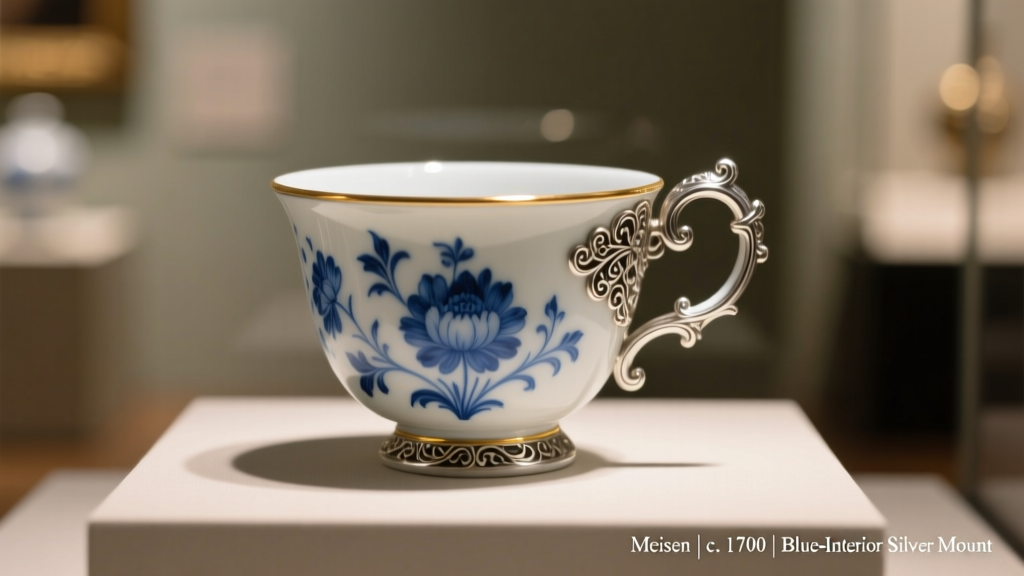
Meissen Cup with Silver Mounts and Blue Interior: A Dual-Function Artifact from the Early 18th Century
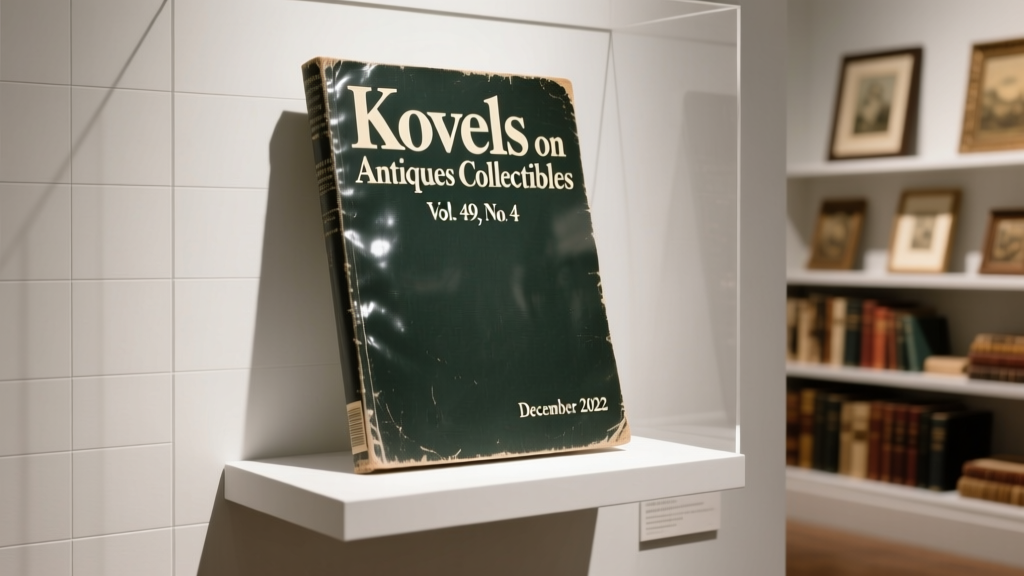
Kovels On Antiques & Collectibles Vol. 49, No. 4 (December 2022): Market Trends, Authentication Insights, and Notable Auction Results
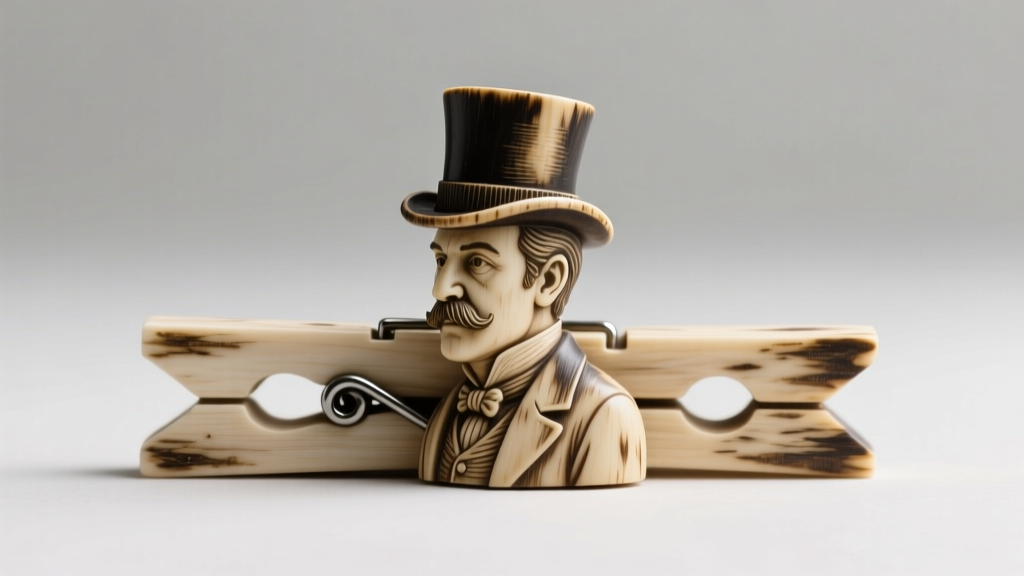
Authenticating the Scrimshaw Clothespin: Whalebone Man in Top Hat, 5¼ Inches — A Technical Analysis for Collectors and Curators
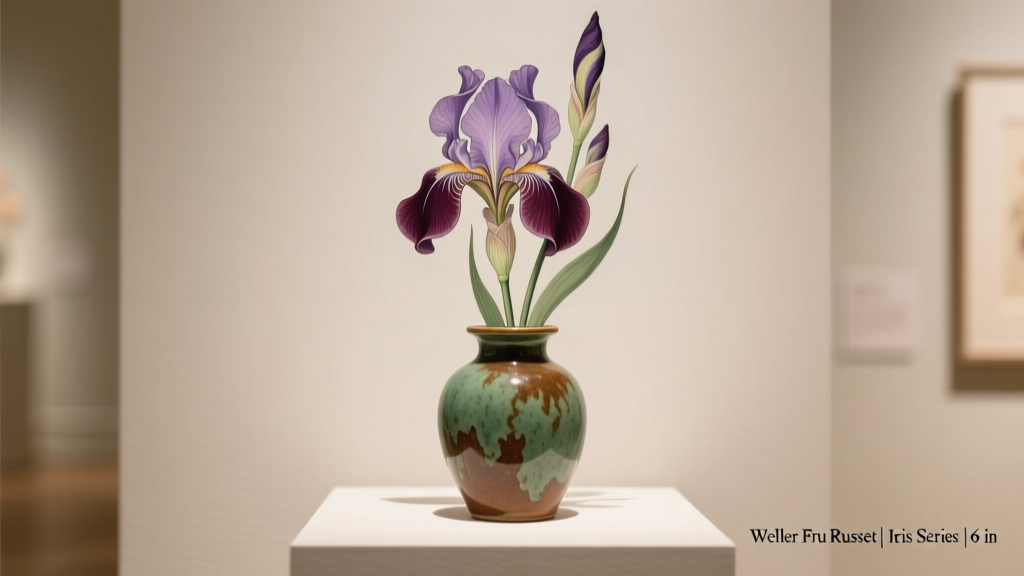
Weller Fru Russet Vase with Irises: Authentication, Provenance, and Market Analysis of the 6-Inch Mottled Green-Brown Glaze Piece

Hull Vase Orchid Blue 10¼ Inches: Authentication, Market History, and Collector Insights
Furniture Chest, Blanket Chest, Palmetto Tree Motif, Walnut Construction, and the Historic Till Form: A Technical Authentication and Market Analysis