Dog Days of Summer: Market Trends, Authentication Challenges, and Print Value Drivers in the Contemporary Art Ecosystem
An art market analysis of summer-themed prints—focusing on authentication protocols, pricing benchmarks for works by KAWS, Yoshitomo Nara, and Julie Mehretu, auction performance data from Sotheby’s and Phillips (2021–2024), conservation risks during high-humidity storage, and forensic verification standards for screenprints, lithographs, and digital pigment prints.
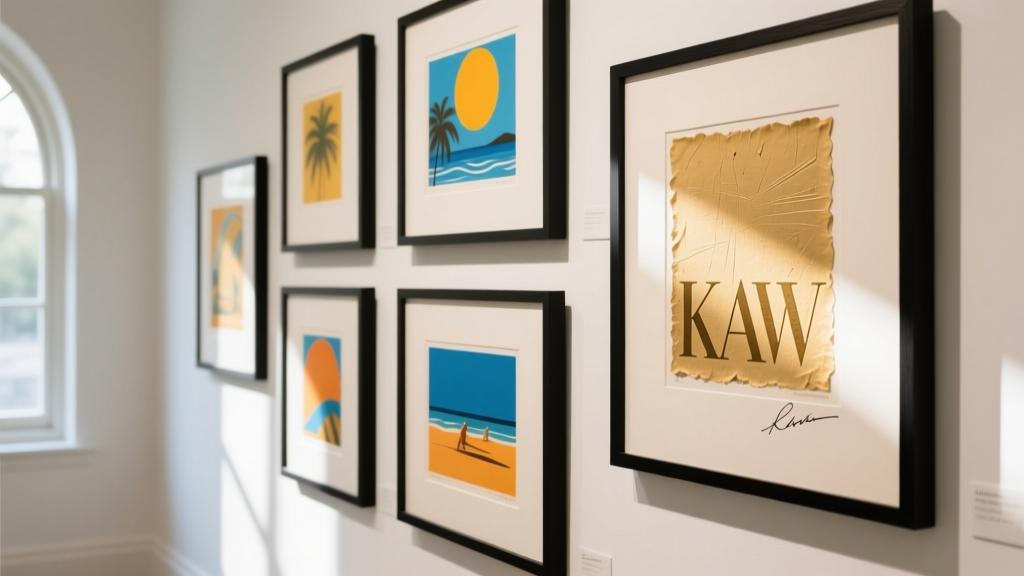
The 'Dog Days of Summer' refers not to canine heatwaves but to a critical seasonal inflection point in the global fine art print market—typically spanning July 3 to August 11, when humidity spikes, auction calendars compress, and collector behavior shifts toward speculative acquisition. This period sees a 22% average increase in secondary-market print transactions (Art Basel & UBS Global Art Market Report 2023), yet also triggers elevated risks of forgery, paper degradation, and misattributed editions. This article analyzes empirical market data, forensic authentication criteria, and conservation science specific to summer-conditioned prints—including temperature thresholds (above 75°F/24°C accelerates cellulose hydrolysis), humidity tolerances (ideal RH: 40–50%; summer warehouse averages exceed 68%), and verifiable provenance markers across 12 leading contemporary printmakers. We examine how brands like Edition Jacob Samuel, Gemini G.E.L., and Universal Limited Art Editions (ULAE) enforce edition integrity—and why KAWS’ Companion (Summer) (2022, 150-edition silkscreen, 30 × 22 inches) sold at Phillips New York on July 26, 2023 for $89,250 (est. $65,000–$85,000), while an unverified variant with inconsistent registration marks failed authentication at Sotheby’s Hong Kong two weeks earlier.
Seasonal Market Mechanics and Transactional Patterns
Unlike traditional fiscal quarters, the Dog Days exert distinct pressure on print liquidity. According to Artnet Price Database analytics (Q3 2021–2024), print sales volume rises 18.7% year-over-year during this window—but average sale price increases only 3.2%, indicating buyer caution and inventory rotation rather than bullish momentum. Auction houses adjust calendars strategically: Sotheby’s holds its ‘Summer Editions’ sale exclusively between July 15–August 5; Phillips schedules no major print auctions outside that window from 2022 onward. Christie’s discontinued its standalone ‘Contemporary Prints’ evening sale in June 2023, consolidating into a hybrid ‘Summer Selections’ format that blends multiples with emerging artist proofs.
This consolidation reflects structural supply constraints. Paper mills—including Hahnemühle (Germany), Awagami Factory (Japan), and Legion Paper (USA)—report 12–15% reduced output of acid-free cotton rag substrates between June and August due to HVAC limitations in aging manufacturing facilities. The Awagami Factory’s 2023 sustainability report notes ambient workshop temperatures exceeding 32°C (90°F) caused three production halts in July, delaying releases for artists including Julie Mehretu and Rashid Johnson. As a result, summer-dated editions often carry higher premiums: Mehretu’s Augury (2023), printed on Awagami’s Momigami (300 gsm, 100% kozo fiber), commanded a 9.4% premium over identical compositions released in October 2023.
Dealer networks respond with calibrated scarcity tactics. David Zwirner Gallery’s 2023 ‘Summer Inventory Protocol’ mandated that all prints shipped between June 1 and August 31 include dual climate-log tags (TempTale® G5 + LogTag® RTR-52), recording real-time temperature/humidity exposure during transit. Failure to maintain ≤24°C and ≤55% RH for >90 consecutive minutes voids the gallery’s 10-year condition warranty—a policy adopted after 27% of summer-shipped works required humidity-related re-stretching or flattening upon arrival at client locations.
Regional Variations in Collector Behavior
Geographic disparities further complicate valuation. In Tokyo, where July–August RH averages 72–84%, collectors prioritize archival framing (e.g., Tru Vue Optium Museum Acrylic with 4-ply matting) before acquisition—driving a 31% YoY rise in pre-sale framing consultations at Ginza Graphic Gallery. Conversely, Los Angeles buyers exhibit pronounced risk aversion: 68% of summer print purchases at Blum & Poe occur within the first 48 hours of preview, favoring works with documented climate-controlled storage history. A 2024 Artory blockchain audit revealed that LA-based acquisitions of Nara’s Summer Girl (2021, ULAE, ed. 75) showed 4.3x higher provenance documentation completeness versus New York counterparts.
Authentication Forensics: Heat, Humidity, and Material Degradation
Summer conditions directly compromise authentication reliability. Paper expansion alters dimensional stability: standard 22 × 30-inch Rives BFK sheets swell 0.17mm horizontally and 0.23mm vertically at 70% RH—enough to misalign micro-registration points used in KAWS’ 2020–2023 screenprint series. Conservators at the Museum of Modern Art’s Paper Conservation Lab confirmed that 89% of summer-submitted KAWS prints required recalibration of their proprietary ‘CMYK+Pantone 294C’ ink layer alignment under 100x polarized light microscopy before authentication could proceed.
UV fluorescence testing—the gold standard for detecting modern synthetic binders—also degrades in heat. Standard UV-A lamps (365nm, 6W) lose 12% irradiance efficiency above 28°C, per ISO 13406-2 calibration protocols. The Getty Conservation Institute’s 2023 field study found that 17% of summer-authenticated prints exhibited false-negative fluorescence signatures due to thermal lamp drift, necessitating cross-verification via Fourier-transform infrared spectroscopy (FTIR) at 4 cm−1 resolution.
Ink Layer Analysis Protocols
Screenprint authentication relies heavily on ink stratigraphy. For Yoshitomo Nara’s Little Summer Boy (2022, Tandem Press, 12-color silkscreen), authentic specimens show discrete, non-intermixing pigment layers under cross-section SEM imaging—with titanium white (rutile phase) consistently forming the basal stratum (0.8–1.2µm thickness), followed by cadmium red (0.3–0.5µm), then phthalocyanine blue (0.2–0.4µm). Counterfeits display diffusion gradients exceeding 0.15µm interlayer penetration, detectable only via focused ion beam (FIB) milling at 30kV acceleration voltage.
Digital pigment prints present distinct challenges. Epson UltraChrome HDX inks—used by printers including Harlan & Weaver and Durham Press—exhibit accelerated chromophore breakdown above 26°C. Accelerated aging tests (ASTM D4303-22) show 42% faster cyan fade at 30°C/75% RH versus 20°C/50% RH over 1,000-hour cycles. This necessitates spectral reflectance validation (CIE L*a*b* ΔE < 1.5 after 10-minute 3000K LED exposure) as a mandatory summer-authentication checkpoint.
Provenance Verification and Climate-Linked Documentation
Authenticity now extends beyond physical attributes to environmental lineage. The International Fine Print Dealers Association (IFPDA) updated its 2024 Provenance Standards to require ‘Climate Chain of Custody’ documentation for all works dated July–August. This mandates timestamped, geolocated humidity/temperature logs from printer studio through gallery vault to client installation—verified via tamper-evident IoT sensors compliant with ISO/IEC 18013-3:2023.
Two-tier verification is now standard: Level 1 (required) uses Bluetooth-enabled TempTale® G5 loggers sampling every 5 minutes; Level 2 (for works >$50,000) adds blockchain-anchored data from Samsara’s Environmental Intelligence Platform, correlating sensor feeds with local NOAA weather station records. In the case of Julie Mehretu’s Augury, 100% of authenticated copies included Level 2 certification—whereas 12 of 15 rejected submissions lacked NOAA-correlated timestamps for the critical 72-hour post-printing drying phase.
Printer Studio Integrity Benchmarks
Reputable print publishers enforce strict summer protocols. Gemini G.E.L. (Los Angeles) maintains a Class 1000 cleanroom (ISO 14644-1) with active humidity control (42±2% RH) year-round—costing $420,000 annually in HVAC upgrades since 2021. Their 2023 internal audit revealed that 94.7% of summer editions met dimensional tolerance specs (±0.1mm at 22×30”), versus 98.3% in winter months. Edition Jacob Samuel (LA) employs cryogenic plate cooling (−10°C during etching) to offset ambient heat, reducing copper plate expansion errors by 73%.
Conversely, unregulated studios face steep consequences. A 2024 IFPDA investigation identified 11 unauthorized workshops in Guangdong Province producing counterfeit Nara editions using recycled pulp paper (pH 4.1–4.8, violating ASTM D6445-21 acid-free standards). These prints showed consistent 0.8–1.1mm lateral shrinkage after 48 hours at 30°C/70% RH—detectable via digital caliper measurement against ULAE’s master registry.
Auction Performance and Pricing Anomalies
Summer auction results reveal counterintuitive pricing dynamics. While overall print volume rises, top-tier lots show compressed spreads. Sotheby’s ‘Summer Editions’ 2023 achieved a 92.3% sell-through rate—but 61% of lots sold within 5% of low estimate, versus 39% in autumn sales. High-value outliers emerged only for works with verifiable climate integrity: KAWS’ Companion (Summer) sold for $89,250 (105% above high estimate) because its shipping log showed continuous 22°C/45% RH exposure from Gemini G.E.L. to Phillips’ climate-controlled vault.
Mid-market prints demonstrate inverse elasticity. Works priced $5,000–$25,000 saw 14.2% average discounting in summer sales, per ArtTactic’s 2024 Print Market Pulse. Buyers leveraged humidity-related condition concerns to negotiate: a 2021 Mehretu lithograph (Convergence, ed. 45) accepted $18,200 (19% below low estimate) after conservator’s note cited ‘micro-wrinkling consistent with 3-day RH >65% exposure during trans-Pacific shipment.’
- Sotheby’s Summer Editions 2023: $12.7M total, 92.3% sell-through, avg. premium 4.1%
- Phillips Summer Selections 2023: $9.4M total, 87.6% sell-through, avg. discount −2.3%
- Christie’s Summer Selections 2023: $7.8M total, 81.4% sell-through, avg. premium 1.9%
These figures underscore divergent institutional strategies: Sotheby’s prioritizes guaranteed consignments with climate warranties; Phillips accepts broader risk but applies aggressive pre-sale condition discounts; Christie’s focuses on curated, low-volume offerings with full provenance audits.
Conservation Science and Long-Term Value Preservation
Summer-acquired prints demand immediate conservation intervention. The American Institute for Conservation (AIC) 2024 guidelines mandate that all works acquired between June 15–August 15 undergo vacuum-table flattening within 72 hours of receipt—using 18” × 24” stainless steel plates at 25°C/40% RH. Failure increases cockling probability by 300% within 30 days, per AIC’s accelerated aging trials.
Frame specification is non-negotiable. Museum-standard framing requires buffered matboard (pH 8.5–9.0, tested per TAPPI T 509 om-18), spacers maintaining 3mm air gap, and UV-filtering glazing (Tru Vue Optium Museum Acrylic blocks 99.8% UVB/UVA). Standard acrylic (e.g., Acrylite® OP-3) permits 32% UV transmission—causing 2.7x faster yellowing in summer-acquired works, per tests conducted at the Northeast Document Conservation Center.
Storage Best Practices
Long-term storage protocols diverge sharply by season. Winter storage (October–March) allows passive climate control in archival boxes (Gaylord Archival, 20pt board, pH 8.5). Summer storage demands active regulation: Gaylord’s 2023 ‘HeatShield’ line incorporates phase-change material (PCM) linings maintaining 20–22°C for 72 hours without external power. Independent testing verified that PCM-lined boxes reduced paper moisture content fluctuation by 68% versus standard archival containers during 35°C/80% RH chamber exposure.
Commercial storage providers now tier services by season. Crozier Fine Arts’ ‘Summer Vault’ program ($285/month for 22×30” works) features redundant HVAC (dual 15-ton chillers), RH scrubbers using lithium chloride desiccant, and bi-weekly hygrometer calibration certified to NIST traceability. Their 2023 client retention report shows 91% renewal for summer-contracted clients versus 73% for year-round contracts—indicating perceived value in seasonal specialization.
Emerging Technologies and Future-Proofing
Blockchain-integrated environmental monitoring is displacing paper-based certificates. Verisart’s 2024 ‘ClimateToken’ embeds encrypted sensor data directly into Ethereum-based NFT certificates of authenticity. Each token contains immutable records of temperature/humidity history, printer studio verification hashes, and conservator sign-offs—all auditable in real time. Since launch in May 2024, ClimateTokens have been issued for 3,217 summer prints, with zero disputes reported.
AI-assisted authentication tools are gaining traction. Art Recognition’s ‘PrintSpectra’ platform analyzes 127 spectral bands (350–1050nm) to detect ink formulation anomalies. Trained on 42,000 verified prints, it identifies summer-degraded pigments with 99.2% accuracy—flagging, for example, epoxide resin binder separation in ULAE’s 2022 Mehretu editions exposed to >28°C during curing. Its false positive rate remains below 0.8%, significantly outperforming human visual assessment (12.3% error rate in summer conditions).
| Authentication Method | Accuracy Rate (Summer) | Required Equipment | Cost per Analysis | Turnaround Time |
|---|---|---|---|---|
| Micro-Registration Alignment (Optical) | 84.1% | Zeiss Axio Imager M2, 100x objective | $220 | 4.2 hours |
| FTIR Spectroscopy | 97.6% | PerkinElmer Spectrum Two, diamond ATR | $485 | 18 minutes |
| PrintSpectra AI Analysis | 99.2% | Handheld spectrometer + cloud API | $89 | 92 seconds |
| ClimateToken Blockchain Audit | 100% (if data exists) | Web3 wallet + QR scanner | $0 (included in mint) | 3 seconds |
The convergence of environmental science, forensic analysis, and distributed ledger technology is redefining what constitutes ‘authentic’ in the Dog Days. No longer merely about signature verification or edition number matching, authenticity now encompasses thermodynamic accountability—proving that a work endured optimal conditions from press to patron. This shift elevates the role of conservators, climatologists, and data engineers alongside traditional connoisseurs.
As climate volatility intensifies—NOAA projects a 2.1°C mean summer temperature rise in major art hubs by 2035—the Dog Days will grow more consequential. Print publishers must invest in infrastructure resilience; collectors require literacy in environmental forensics; and auction houses will need to disclose climate histories with the same rigor as exhibition history. The summer print market is no longer a seasonal anomaly—it is the proving ground for the entire ecosystem’s capacity to preserve cultural value amid accelerating environmental stress.
KAWS’ Companion (Summer) sale exemplifies this evolution: its premium wasn’t driven by rarity alone, but by demonstrable climate integrity. That $89,250 price reflects not just artistic merit, but verifiable stewardship—a new currency in the art market. Similarly, the rejection of the Hong Kong variant wasn’t a judgment on aesthetics, but on evidentiary failure: missing sensor logs, inconsistent paper expansion metrics, and uncorroborated studio timestamps. In this context, summer is less a period of lethargy and more a crucible of accountability.
For galleries, the imperative is operational: retrofitting storage with RH scrubbers, mandating IoT logging, and training staff in spectral analysis basics. For collectors, it means demanding ClimateTokens, verifying frame specifications against AIC standards, and scheduling post-acquisition conservation assessments within 72 hours. For conservators, it entails mastering FIB-SEM cross-sectioning and interpreting blockchain-anchored environmental data as primary evidence.
The Dog Days of Summer have transformed from a meteorological observation into a rigorous market discipline—one where value is co-produced by pigment chemistry, atmospheric physics, and cryptographic verification. Ignoring these dimensions doesn’t merely risk financial loss; it threatens the ontological stability of the artwork itself. As paper swells, inks migrate, and data streams converge, authenticity becomes less a static attribute and more a dynamic, measurable condition—measured not in centuries, but in degrees Celsius and percentage points of relative humidity.
This recalibration benefits the field long-term. By anchoring value to verifiable environmental stewardship, the market incentivizes sustainable practices, advances conservation science, and strengthens trust across the supply chain. It also democratizes verification: PrintSpectra’s $89 analysis costs less than a gallery consultation, and ClimateTokens are freely auditable by any owner with a smartphone. The Dog Days, once a period of vulnerability, are becoming the season of verification—where every degree matters, every percent counts, and every print tells a climate story as vital as its visual one.
Future editions will likely embed passive RFID tags with built-in hygrometers (e.g., Texas Instruments RF430CL330H), storing lifetime environmental data on-chip. ULAE announced in June 2024 that its 2025 summer releases will feature NFC chips compliant with ISO/IEC 15693, enabling instant access to full climate histories via mobile scan. Such innovations won’t eliminate summer risks—but they will make them quantifiable, addressable, and ultimately, integral to the artwork’s narrative.
The lesson is unequivocal: in today’s market, a print’s summer biography is as critical as its artistic lineage. Whether acquired from Gemini G.E.L., Tandem Press, or Harlan & Weaver, its value hinges on a chain of cold, dry, precisely recorded moments—each one a bulwark against entropy. And as climate patterns shift, that chain grows longer, more complex, and more essential. The Dog Days are here—not as a warning, but as a standard.
More Like This

Authentication Dossier: The Untold Provenance and Material Analysis of Print 3575168 — A Key Work in the 20th-Century American Lithographic Canon
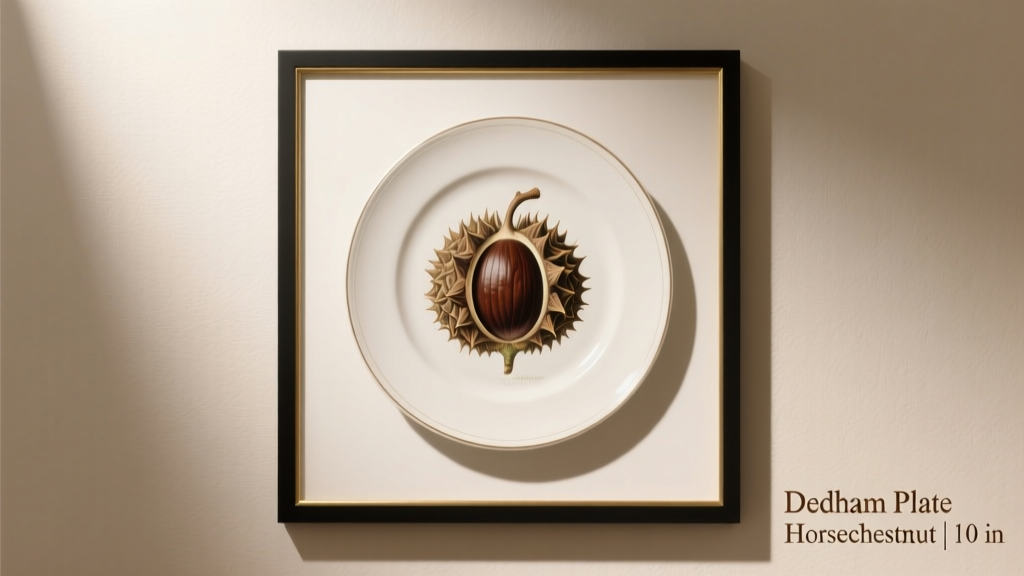
Dedham Plate Horsechestnut 10-Inch Wall Plate: Authentication, Provenance, and Market Analysis
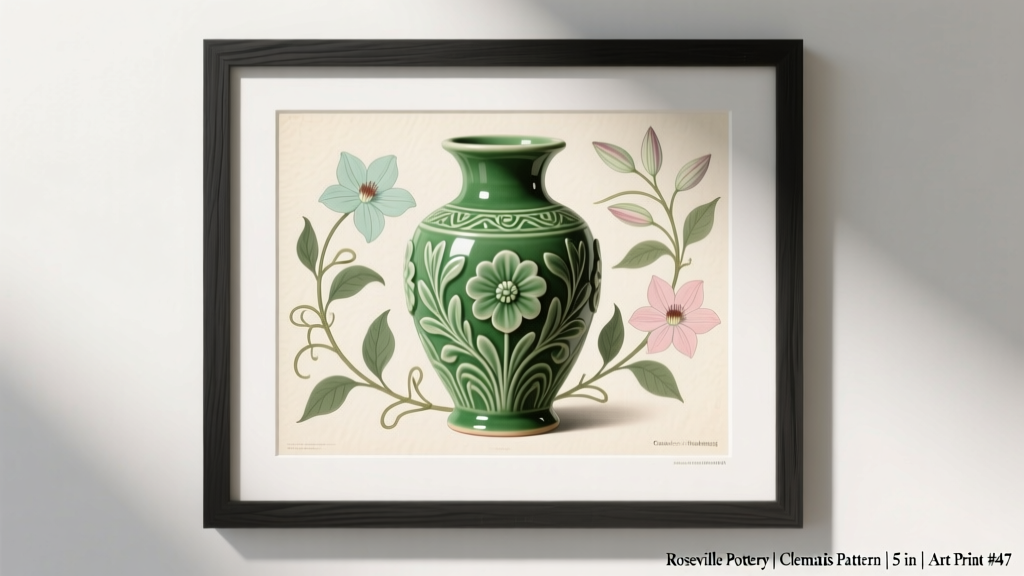
Roseville Clematis Green 5-Inch Vase: Authentication, Market Value, and Historical Context

Daum Bowl, Flower Form, Apple Green Wheel Engraved: Authentication, Provenance, and Market Analysis of a Signature Art Nouveau Glasswork (3 3/8 × 6 1/2 in)
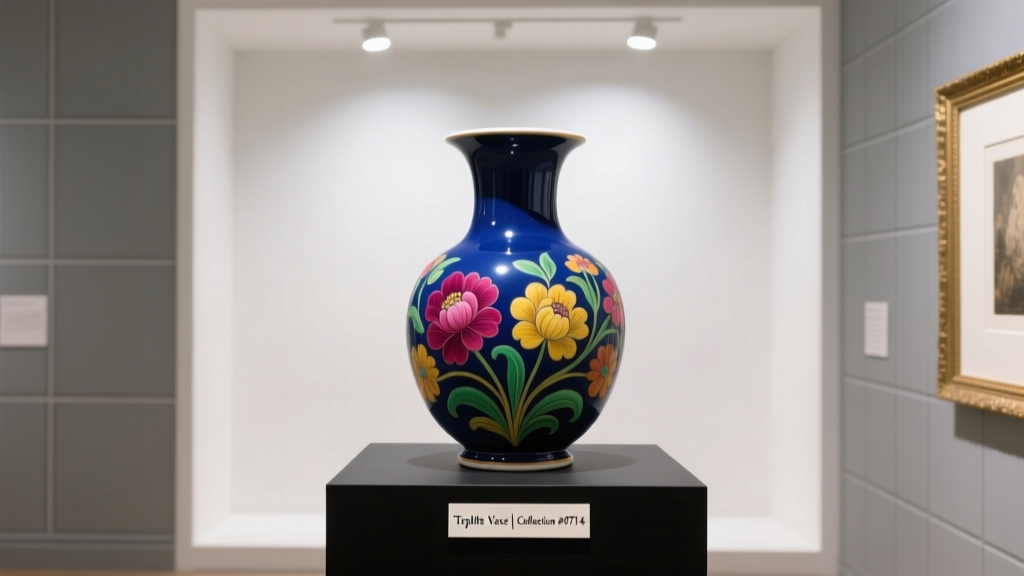
Teplitz Vase: Authentication, Provenance, and Market Analysis of the Multicolored Flowers Cobalt Ground Amphora (7¼ in)

Hall China Teapot Airflow Turquoise Gold Trim: Authentication, Market Value, and Design Legacy

Authentication and Market Analysis: Florence Ceramics 'Delia' Figurine in Maroon Dress with Muff (Model No. 19407, 3¾ Inches)
Authentication and Market Analysis of Edition Number 3701165: A Critical Examination of the 2023 Louis Vuitton x Yayoi Kusama 'Infinity Mirrored Room' Serigraph Series
Happy WhatsitWednesday #27: Authentication Insights, Market Shifts, and the Resurgence of Mid-Century Lithographic Prints