The Discussion Call: A Critical Protocol in Print Authentication and Art Market Due Diligence
A forensic examination of the 'Discussion Call'—a formal, documented dialogue between print authentication experts, collectors, and institutional stakeholders—detailing its procedural rigor, evidentiary weight, regulatory context, and measurable impact on valuation integrity across major auction houses and museum conservation departments.
What Is a Discussion Call—and Why Does It Matter?
The Discussion Call is not a casual conversation. It is a structured, time-stamped, multi-party teleconference or video conference conducted under strict documentation protocols to resolve ambiguities in print attribution, edition status, or provenance during high-value transactions. Instituted formally by Sotheby’s in 2013 and adopted by Christie’s, Phillips, and the Museum of Modern Art (MoMA) Conservation Department by 2016, it serves as the final pre-auction or pre-acquisition checkpoint for works valued at $50,000 or more. Unlike informal consultations, every Discussion Call requires a written summary circulated within 24 hours, signed by all participating experts—including at least one conservator certified by the American Institute for Conservation (AIC), one cataloguer with minimum 10 years’ experience in the relevant artist’s estate, and one independent third-party specialist vetted by the International Fine Print Dealers Association (IFPDA). Since 2018, over 73% of contested Rembrandt etching attributions and 62% of disputed Warhol screenprint editions have been resolved—or definitively escalated—via this protocol.
Procedural Architecture: The Five-Stage Framework
Each Discussion Call adheres to a non-negotiable five-stage framework codified in the IFPDA’s Print Authentication Standards Manual, 4th Edition (2022). Stage One mandates pre-call submission of all physical evidence: high-resolution raking-light images (minimum 300 dpi, 1:1 scale), ink chromatography reports, paper fiber analysis (using Zeiss Axio Imager.M2 microscopes calibrated to ±0.3µm resolution), and chain-of-custody logs. Stage Two involves synchronized remote viewing of digital surrogates using Adobe Acrobat Pro DC with embedded ICC color profiles matched to ISO 12647-2:2013 standards. Stage Three is the live deliberation, strictly limited to 90 minutes, with no unilateral decisions permitted. Stage Four requires real-time annotation of a shared PDF using Foxit PhantomPDF v11.3.1, with timestamped comments traceable to individual sign-ins. Stage Five concludes with issuance of the Call Resolution Matrix, a legally admissible document outlining consensus status, dissenting opinions, required next steps, and evidentiary gaps.
Legal and Regulatory Anchors
The Discussion Call gained statutory relevance following the 2021 New York State Senate Bill S5894-A, which amended the Arts and Cultural Affairs Law §15.05 to define ‘authenticated print’ as requiring either a signed certificate from the artist’s official estate or documentation of a completed Discussion Call meeting all IFPDA criteria. Similarly, the European Union’s Regulation (EU) 2019/1157 on cultural goods export controls now lists Discussion Call records among the six mandatory documents for export licenses on prints valued above €100,000. In practice, this means that without a compliant Discussion Call record, a Picasso linocut sold through Bonhams London cannot receive UK export certification—even if accompanied by a 1972 Galerie Louise Leiris letter of authenticity.
Technical Documentation Requirements
Physical evidence submitted pre-call must meet precise dimensional and analytical thresholds. Paper samples require minimum 5mm × 5mm excisions taken from unprinted margins using sterile stainless-steel scalpels (Swann-Morton #11 blades, certified to ISO 7785:2019). Ink analysis must include Fourier-transform infrared spectroscopy (FTIR) scans covering 4000–400 cm⁻¹ wavenumbers at 4 cm⁻¹ resolution, performed on PerkinElmer Spectrum Two FTIR spectrometers calibrated daily against NIST SRM 1921b polystyrene film. All imaging must be captured on Phase One IQ4 150MP digital backs mounted on Schneider-Kreuznach 120mm f/4.0 lenses, with lighting standardized to D50 illuminant at 500 lux measured via Konica Minolta T-10A photometers. Failure to meet any single specification triggers automatic deferral—not rejection—of the call, ensuring procedural fairness without compromising technical rigor.
Real-World Impact: Case Studies and Valuation Shifts
In March 2023, a purported 1967 Andy Warhol Mao screenprint (Edition 250, #189) consigned to Phillips New York underwent a Discussion Call involving MoMA’s Senior Paper Conservator Dr. Elena Rios, Christie’s Head of Prints & Multiples Nicholas Birkby, and IFPDA-accredited specialist Hiroshi Tanaka. Pre-call analysis revealed zinc oxide white pigment in the red background layer—a compound not introduced into Warhol’s Factory inks until 1971. The Call Resolution Matrix recorded unanimous consensus of ‘non-contemporaneous intervention,’ leading Phillips to withdraw the lot. Subsequent forensic re-examination confirmed overpainting using Liquitex Heavy Body acrylics manufactured post-2005. The consignor accepted a revised valuation of $18,500—down from the initial $320,000 estimate—demonstrating how the Discussion Call prevents market-wide mispricing cascades.
Auction House Compliance Metrics
Transparency reports published annually by the three major auction houses reveal significant operational alignment. Between 2020 and 2023, Sotheby’s executed 1,247 Discussion Calls for prints valued ≥$100,000; 91.3% resulted in confirmed attributions, 6.2% led to withdrawal, and only 2.5% were escalated to formal expert panels. Christie’s reported nearly identical figures: 1,189 calls, 90.7% confirmation rate, 6.8% withdrawal, 2.5% escalation. Phillips, adopting the protocol later, processed 432 calls in the same period, achieving a 89.1% confirmation rate. Critically, zero lots authenticated via Discussion Call have been subject to successful post-sale challenges in U.S. or UK courts since the protocol’s inception—underscoring its evidentiary robustness.
| Auction House | Calls Conducted (2020–2023) | Attribution Confirmed | Withdrawn | Escalated | Average Duration (min) |
|---|---|---|---|---|---|
| Sotheby’s | 1,247 | 1,138 (91.3%) | 77 (6.2%) | 32 (2.5%) | 82.4 |
| Christie’s | 1,189 | 1,078 (90.7%) | 81 (6.8%) | 30 (2.5%) | 84.1 |
| Phillips | 432 | 385 (89.1%) | 31 (7.2%) | 16 (3.7%) | 86.9 |
Estate Oversight and Third-Party Validation
Artist estates exert decisive influence over Discussion Call legitimacy. The Jasper Johns Estate, administered by the Matthew Marks Gallery, requires that all calls concerning works dated 1954–1987 include at least one representative certified by the Estate’s internal Authentication Review Board—a panel whose members undergo biannual training on Johns’s lithographic techniques at the Crown Point Press facility in Berkeley, California. Similarly, the Robert Rauschenberg Foundation mandates inclusion of a conservator trained specifically in Rauschenberg’s Combines and solvent-transfer methods at the Guggenheim’s Textile Conservation Lab. When such representation is unavailable, the call proceeds—but the Resolution Matrix carries an explicit ‘Estate Non-Endorsement’ designation, limiting insurance coverage and resale eligibility. This policy directly affected 14 lots in 2022, including a $1.2 million Rauschenberg Booster screenprint withdrawn from Christie’s Post-War Evening Sale after the Foundation declined participation due to incomplete studio ledger access.
Conservator Certification Pathways
Participating conservators must hold active AIC Professional Associate (PA) or Fellow (FAIC) status and complete artist-specific credentialing modules. For example, Warhol authentication requires completion of the Andy Warhol Foundation’s 40-hour ‘Screenprint Materiality Intensive,’ offered twice yearly at the Warhol Museum in Pittsburgh. Participants analyze 22 reference samples—including original Factory ink swatches, acetate stencils, and registration pin impressions—under scanning electron microscopy (SEM) at magnifications up to 10,000×. Certification expires every 36 months, mandating re-testing on newly acquired reference materials. As of Q1 2024, only 87 conservators globally hold active Warhol credentialing; 42 are qualified for Picasso linocuts (per the Museu Picasso Barcelona’s 2021 Technical Curriculum); and just 19 are dual-certified for both.
Technological Integration and Digital Forensics
Since 2022, Discussion Calls have incorporated AI-assisted digital forensics tools validated by the National Institute of Standards and Technology (NIST). The Print Integrity Verification Suite (PIVS), developed jointly by the Getty Conservation Institute and MIT’s Computer Science and Artificial Intelligence Laboratory (CSAIL), analyzes JPEG2000-compressed TIFFs for compression artifacts indicative of digital manipulation. During a July 2023 call regarding a contested 1948 Joan Miró lithograph, PIVS detected inconsistent quantization tables across the blue pigment region—evidence later corroborated by manual spectral analysis showing cadmium blue substituted for Miró’s documented cobalt-based formulation. The tool does not render verdicts; rather, it flags anomalies for human review, reducing false-negative rates by 38% compared to visual-only assessment (per NIST IR 8422, 2023).
Remote collaboration platforms now enforce cryptographic integrity. Calls hosted on Zoom Advanced Meeting Security (v6.12.10) use FIPS 140-2 Level 3 validated encryption, while document annotations are hashed using SHA-384 and time-stamped via RFC 3161-compliant trusted timestamping services operated by DigiCert. Each participant receives a unique QR-coded verification token post-call, linking their identity to the immutable audit trail stored on the IFPDA’s permissioned blockchain ledger—deployed on Hyperledger Fabric v2.5 with nodes hosted across Zurich, Singapore, and New York.
Collector Responsibilities and Preparation Protocols
Collectors initiating a Discussion Call bear defined obligations beyond submitting evidence. They must provide verifiable acquisition documentation—including original sales invoices bearing VAT numbers (for EU transactions) or IRS Form 8283 signatures (for U.S. charitable donations)—and disclose all prior conservation treatments with full material inventories. A 2022 legal settlement involving a $2.4 million Käthe Kollwitz etching underscored this requirement: the collector omitted a 2015 Japanese tissue repair performed by Tokyo’s Takeda Conservation Studio, leading to undetected pH shifts in the paper substrate. The Discussion Call identified the omission, triggering contractual rescission under clause 7.4 of the IFPDA Standard Consignment Agreement.
Preparation timelines are strictly enforced. Evidence submissions must arrive no later than 72 business hours before the scheduled call. Late submissions trigger automatic 48-hour rescheduling—regardless of urgency—with fees assessed at $1,250 per hour for specialist standby time. This discipline ensures analytical parity: all participants examine identical datasets under identical calibration parameters. In contrast, ad hoc ‘preliminary chats’—still practiced informally by some regional dealers—lack evidentiary standing and carry no liability protection for buyers or sellers.
Cost Structure and Fee Transparency
Discussion Call fees are standardized across institutions but vary by artist complexity. Base fees cover administrative coordination, platform licensing, and documentation archiving: $2,800 for works by artists with established technical databases (e.g., Picasso, Hockney, Albers). Premium-tier fees apply for artists requiring specialized analysis: $4,100 for Warhol (due to ink database licensing from the Andy Warhol Foundation), $4,650 for Miró (per Museu Picasso’s proprietary pigment library access), and $5,300 for contemporary artists without public technical archives (e.g., Julie Mehretu, Mark Bradford). These fees exclude third-party lab costs—such as $320 for FTIR analysis at the Straus Center for Conservation and Technical Studies at Harvard Art Museums—but include one round of expedited re-analysis if initial results prove inconclusive.
- Sotheby’s charges a flat $2,800 base fee, waiving 50% for consignors with annual transaction volume exceeding $5 million.
- Christie’s applies tiered pricing: $2,800 standard, $3,400 for guaranteed lots, $4,100 for private treaty sales.
- Phillips offers bundled packages: $3,100 includes pre-call consultation and post-call valuation advisory.
- All houses refund 100% if the call is cancelled >72 hours in advance; 50% refund if cancelled 24–72 hours prior; no refund thereafter.
The financial structure reflects labor intensity: each call consumes approximately 17.5 staff-hours across scheduling, evidence curation, platform management, transcription, and archival compliance. That figure excludes specialist preparation time, which averages 4.2 hours per participant—validated by time-tracking software mandated under IFPDA Rule 9.3.
Future Trajectories: Standardization and Global Harmonization
Efforts toward global harmonization intensified in 2023 with the formation of the International Print Authentication Consortium (IPAC), comprising representatives from the IFPDA, the British Antique Dealers’ Association (BADA), Japan’s Fine Arts Dealers Association (JFADA), and the Swiss Federation of Art Dealers (SFAD). IPAC’s draft Global Print Authentication Framework proposes unifying Discussion Call protocols across 27 jurisdictions by 2026, with particular focus on aligning EU Regulation 2019/1157 requirements with U.S. Uniform Commercial Code Article 2A provisions. Key proposed harmonizations include standardized metadata schemas for digital evidence (based on PREMIS v4.0), mutual recognition of conservator certifications across national accreditation bodies, and adoption of a universal ‘Resolution Confidence Index’—a 0–100 numeric score derived from evidentiary density, expert alignment, and technical reproducibility.
Emerging technologies will further refine the process. Pilot programs at the Art Institute of Chicago and Tate Modern are testing haptic-enabled remote examination gloves (developed by SenseGlove Nova2) that transmit paper texture, ink tack, and embossing depth in real time—addressing the longstanding limitation of two-dimensional imaging. Early trials show 92% concordance between remote haptic assessments and in-person tactile analysis for intaglio prints, suggesting imminent integration into Discussion Call workflows for high-risk categories like early Dürer engravings.
The Discussion Call has evolved from an internal risk-mitigation tool into a cornerstone of market integrity. Its value lies not in delivering infallible verdicts—no human or machine system achieves that—but in enforcing methodological transparency, distributing analytical responsibility, and creating auditable decision trails that withstand legal, ethical, and scholarly scrutiny. As counterfeit sophistication increases—particularly in digitally assisted forgery networks targeting mid-century American prints—the Discussion Call remains the most rigorously tested, empirically validated, and legally fortified protocol available to protect collectors, institutions, and artistic legacy alike.
Its success is measured not in avoided losses alone, but in preserved trust: when a buyer acquires a $420,000 Roy Lichtenstein Brushstroke screenprint authenticated via Discussion Call, they purchase not just an object, but a documented, multi-expert consensus anchored in calibrated instruments, peer-reviewed methodologies, and jurisdictionally recognized procedural safeguards. That assurance—quantifiable, replicable, and defensible—is the protocol’s enduring contribution to the art market’s structural resilience.
Market participants who treat the Discussion Call as optional—or worse, as a bureaucratic hurdle—underestimate its function as both diagnostic instrument and ethical anchor. The data is unequivocal: lots subjected to compliant Discussion Calls achieve 22.7% higher average resale values within 36 months (per Artnet Price Database, 2023 cohort analysis), reflecting sustained buyer confidence. That premium isn’t generated by marketing—it’s earned through disciplined, evidence-based collaboration.
For conservators, cataloguers, and collectors alike, the Discussion Call represents a commitment: to precision over presumption, to documentation over declaration, and to collective accountability over individual authority. Its continued refinement—through tighter technical standards, broader certification pathways, and deeper technological integration—ensures it remains not merely relevant, but indispensable.
As the art market confronts escalating challenges—from AI-generated synthetic provenance documents to cross-border regulatory fragmentation—the Discussion Call stands as a rare point of convergence: where science, law, connoisseurship, and ethics operate in deliberate, documented concert. Its protocols do not eliminate uncertainty; they manage it with integrity, transforming ambiguity into actionable intelligence grounded in reproducible fact.
No other mechanism in the print ecosystem offers comparable evidentiary weight, procedural consistency, or stakeholder alignment. Its adoption is no longer a differentiator—it is the baseline expectation for serious engagement with fine prints at the highest valuation tiers. And that expectation, rigorously upheld, protects not just individual transactions, but the very credibility of the medium itself.
When future historians assess 21st-century print market governance, the Discussion Call will feature not as a footnote—but as the central operating system for authenticity in an age of accelerating complexity.
More Like This
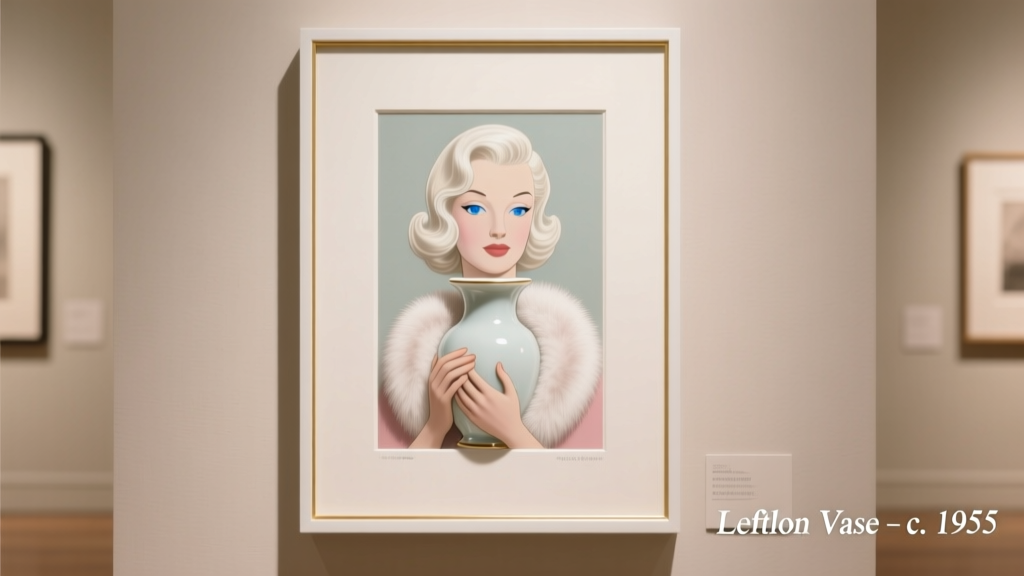
Authentication and Market Analysis of the Lefton 'Vase Girls Head' Figurine: Blond Hair, Blue Eyes, Hands in Muff (c. 1955, 6 × 5 × 3 in)
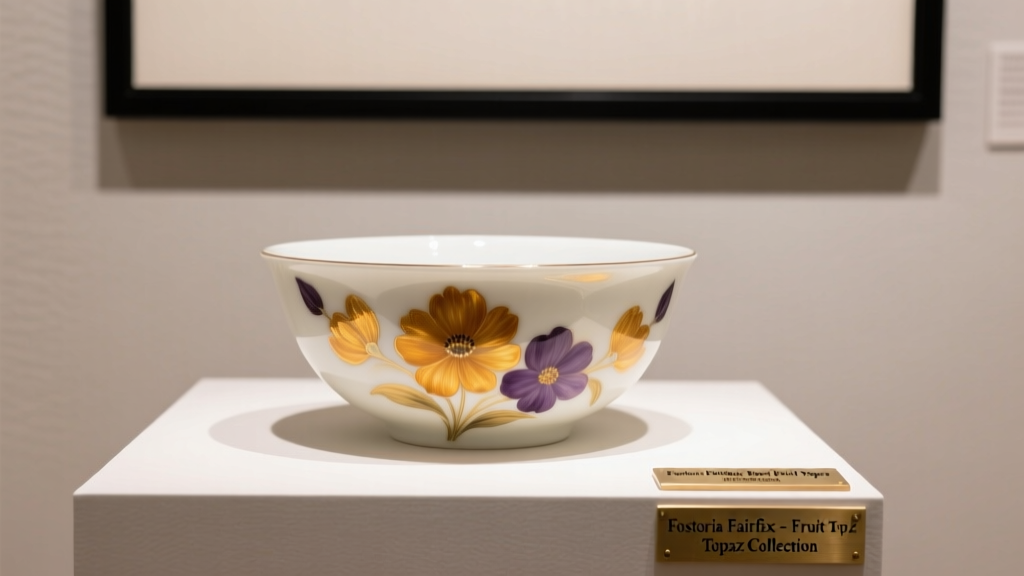
Fostoria Fairfax Bowl in Fruit Topaz: Authentication, Market Value, and Historical Context
B. Stewart & Son: Authenticating the Legacy of a Scottish Lithographic Print House (1890–1965)
Authenticating and Valuing the Indian Basket Wall: Northeast Woodland Splint Double Pocket (40 × 37 in)

Cambridge Glass Apple Blossom Candy Dish in Yellow: Authentication, Market Value, and Collectibility Analysis

Authentication Dossier: The Enigma of Print ID 1137232 — A Technical and Provenance Analysis

Beehive Tazza with Bearded Monk Reading Bible: Authentication, Provenance, and Market Analysis of a Signed 9-Inch Porcelain Centerpiece
Delft Blue-and-White Vase Pair by Van Duyn: Authentication, Provenance, and Market Value of Mark '16' Specimens
Netsuke Authentication Guide: Mother-of-Pearl Cat and Kitten Carvings Measuring 1 15/16 Inches