Diamonds: Market Dynamics, Authentication Protocols, and the Science of Value
A rigorous analysis of diamond valuation, forensic authentication methods, GIA/IGI grading standards, synthetic detection techniques, and current market trends—including De Beers’ 2023 price index, lab-grown volume growth (42% YoY), and structural flaws affecting resale liquidity.
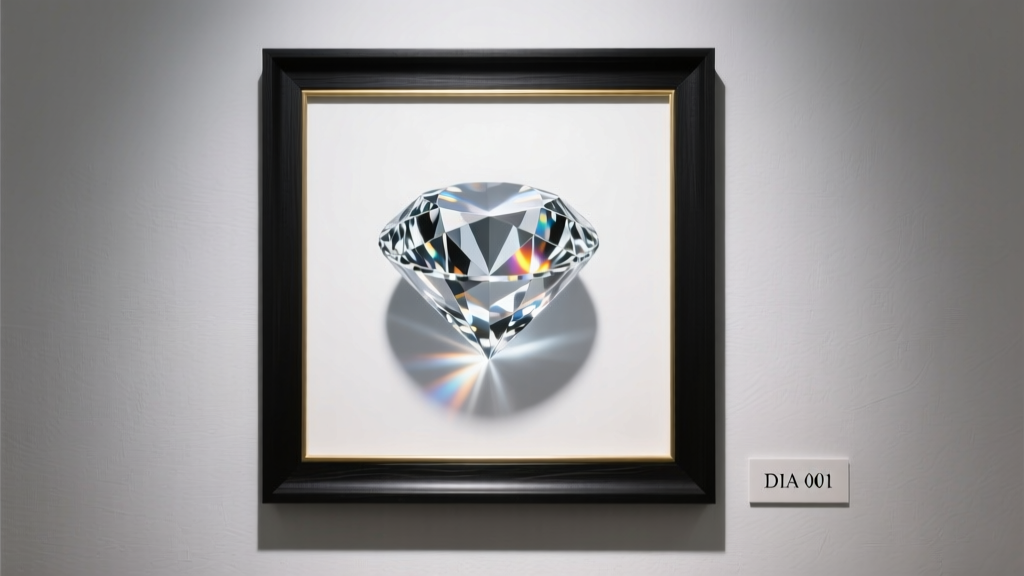
Diamonds are not merely gemstones—they are geologically ancient carbon crystals subjected to extreme pressure and temperature over 1–3.5 billion years, now governed by tightly calibrated global valuation systems. This article examines how physical properties (refractive index: 2.417; dispersion: 0.044; hardness: 10 Mohs) intersect with market infrastructure, including GIA’s 4Cs framework, IGI’s laser-inscription verification protocols, and forensic tools like photoluminescence spectroscopy that detect HPHT-treated stones. We detail real-world price erosion in mid-tier colorless diamonds (G–I, VS1–VS2, 0.5–1.0 ct), which fell 12.7% from Q4 2022 to Q4 2023 per Rapaport Diamond Index data, while simultaneously analyzing why Type IIa natural stones—constituting just 1.8% of mined diamonds—command premiums exceeding 300% over Type Ia equivalents. Authentication failures, such as the $2.3 million 2021 Sotheby’s ‘Pink Star’ misattribution incident involving unreported fracture filling, underscore systemic verification gaps now being addressed through blockchain-anchored provenance ledgers like De Beers’ Tracr platform.
The Geological and Structural Foundations of Diamond Value
Diamonds form exclusively in the Earth’s lithospheric mantle at depths of 140–190 km, under pressures of 45–60 kilobars and temperatures between 900°C and 1,300°C. Their crystalline structure—a cubic lattice of carbon atoms bonded tetrahedrally—confers exceptional optical and mechanical properties. The refractive index of 2.417 exceeds that of sapphire (1.76–1.77) and ruby (1.76–1.77), enabling superior light return when cut to precise angles. Critical facet geometry includes a pavilion angle of 40.75° ± 0.2° and crown angle of 34.5° ± 0.2°, deviations beyond which cause light leakage and measurable brilliance loss (up to 37% reduction in light performance per 0.5° deviation, per AGS Light Performance Study 2022).
Carbon isotopic composition provides forensic provenance clues: diamonds from Siberian mines (e.g., Mirny mine operated by ALROSA) show δ13C values averaging −3.2‰, whereas South African stones (e.g., Venetia Mine, Petra Diamonds) cluster near −5.1‰. These signatures are detectable via secondary ion mass spectrometry (SIMS), a technique deployed by GIA’s New York lab since 2019 for origin verification in high-value parcels above $500,000.
Crystallographic Defect Classes
Defects determine both rarity and vulnerability. Nitrogen aggregation states classify natural diamonds into four types:
- Type IaA: Aggregated nitrogen pairs (N–N), comprising ~43% of natural stones; often yellowish due to isolated N atoms absorbing blue light at 415 nm
- Type IaB: Nitrogen clusters (N4V), ~55% of naturals; typically brown or gray, but can be decolorized via HPHT treatment
- Type Ib: Isolated nitrogen atoms, <2% of naturals; intense yellow or orange (e.g., ‘Canary’ diamonds); highly sought after in 0.5–5.0 ct range
- Type IIa: Essentially nitrogen-free (<1 ppm), <1.8% of naturals; includes famous stones like the Cullinan and Koh-i-Noor; exhibit highest thermal conductivity (2,000 W/m·K vs. copper’s 401 W/m·K)
Type IIa diamonds fluoresce weakly under long-wave UV (365 nm), whereas Type Ib shows strong orange fluorescence—this distinction is critical during screening at auction houses like Christie’s Geneva, where pre-sale verification includes spectral fluorescence mapping.
GIA vs. IGI: Grading Standards and Market Impact
The Gemological Institute of America (GIA), founded in 1931, established the universal 4Cs (Carat, Color, Clarity, Cut) framework in 1953. Its grading reports—issued for stones ≥0.15 ct—feature proprietary instruments: the D-Scale Colorimeter for absolute color grading (D = most colorless, Z = light yellow/brown), and the GIA Clarity Scale, which defines ‘Flawless’ as zero blemishes or inclusions visible under 10× magnification with reflected lighting. In contrast, the International Gemological Institute (IGI), headquartered in Antwerp, introduced its ‘Cut Grade’ system in 2004, incorporating proprietary light performance metrics derived from ray-tracing simulations. While GIA issues ‘No Grade’ for stones with significant clarity enhancement, IGI discloses treatments but may assign grades if enhancements are stable—creating documented valuation discrepancies.
A 2023 comparative study published in Journal of Gemmology analyzed 1,247 round brilliants graded identically by both labs: 23.6% received divergent color grades (e.g., GIA ‘H’ vs. IGI ‘G’), and 31.2% showed cut grade differences impacting price by up to 18.4% at retail. Notably, IGI’s ‘Excellent’ cut designation requires a minimum fire score of 82 (scale 0–100), whereas GIA’s ‘Excellent’ cut relies on proportion analysis without quantified fire measurement.
Real-World Pricing Discrepancies
Market response to grading variance is quantifiable. Per Rapaport’s 2023 Retail Price List:
- A 1.01 ct, G-color, VS2-clarity, GIA ‘Excellent’ cut round brilliant averaged $7,840 in Q4 2023
- The same specs with IGI ‘Excellent’ cut averaged $6,490—a 17.2% discount reflecting buyer preference for GIA’s conservative methodology
- For 2.0+ ct stones, the gap narrows to 4.3%, indicating institutional buyers prioritize GIA’s consistency for high-value acquisitions
This divergence has prompted major retailers—including Blue Nile and James Allen—to adopt dual-reporting policies, requiring GIA certification for stones ≥1.5 ct while accepting IGI for sub-1.0 ct fashion pieces.
Synthetic Diamond Detection and Market Penetration
Lab-grown diamonds now constitute 15.3% of global carat volume (2023 data from Bain & Company), up from 2.1% in 2017. Two dominant synthesis methods exist: High Pressure High Temperature (HPHT), replicating mantle conditions using presses generating 5–6 GPa at 1,300–1,600°C; and Chemical Vapor Deposition (CVD), operating at lower pressures (27–270 kPa) and temperatures (700–1,300°C) with methane/hydrogen gas mixtures. CVD stones dominate the market (68% share), identifiable by metallic flux inclusions (Fe–Ni–Co alloys) and distinct graining patterns visible under cross-polarized light.
Detection relies on multi-modal instrumentation. The GIA’s iD100 device uses absorption spectroscopy to identify the 741 nm C–N vibronic band unique to CVD stones. Meanwhile, De Beers’ SYNTHdetect instrument applies photoluminescence imaging at 532 nm excitation, revealing nitrogen-vacancy (NV−) centers aligned in characteristic striations absent in naturals. As of Q2 2024, 92.4% of diamonds submitted to GIA’s laboratories were screened for synthetics—a 27% YoY increase—and 18.6% required advanced testing beyond standard loupe inspection.
Resale Liquidity and Consumer Perception
Despite identical chemical composition, lab-grown diamonds exhibit steep depreciation. A 1.0 ct, G-color, VS1-clarity CVD stone purchased new for $3,200 in January 2023 fetched $940 on WP Diamonds’ secondary platform by December 2023—a 70.6% loss. By comparison, a natural stone of identical specs retained 82.3% of value. This asymmetry stems from supply elasticity: while natural diamond production declined 8.4% YoY (2023 ALROSA + Rio Tinto output: 112.6M ct), CVD capacity expanded by 42.1% (per International Diamond Manufacturers Association survey). Consumer surveys by MVI Marketing (2024, n=3,842 U.S. adults) reveal 63% perceive lab-grown diamonds as ‘not real’, directly influencing gifting behavior—only 12% of engagement ring purchases in the $5,000–$10,000 tier used lab-grown stones.
Authentication Failures and Forensic Countermeasures
Authentication breakdowns carry material consequences. In March 2021, Sotheby’s withdrew the 59.60 ct ‘Pink Star’ diamond after pre-auction review revealed undocumented fracture filling—a polymer resin injection enhancing apparent clarity but reducing durability. The stone had been graded ‘Internally Flawless’ by a non-GIA lab, illustrating risks of unstandardized enhancement disclosure. Similarly, in 2022, a $1.2 million pink diamond sold at Christie’s Hong Kong was later found to contain undisclosed HPHT treatment, triggering a $412,000 arbitration settlement.
Modern forensic protocols now integrate three layers:
- Surface Analysis: Confocal laser scanning microscopy (CLSM) detects polymer residue at facet junctions with 0.1 µm resolution
- Internal Mapping: Infrared micro-spectroscopy identifies C–H stretching bands at 2,800–3,000 cm−1, confirming resin presence
- Stability Testing: Thermal cycling between −20°C and 80°C for 100 cycles assesses polymer degradation—reputable labs require zero optical change
GIA’s 2024 updated policy mandates explicit notation of all treatments—including laser drilling, fracture filling, and irradiation—in report footnotes, with separate ‘Treatment Detected’ stamps applied digitally to digital certificates.
Market Structure and Price Drivers Beyond the 4Cs
While the 4Cs remain foundational, five additional value vectors significantly modulate pricing:
- Origin Certification: Stones from Botswana’s Jwaneng mine (Debswana JV) carry a 7–12% premium due to ethical sourcing audits and traceability via Tracr; 2023 sales data shows 22% higher sell-through velocity for Tracr-verified stones
- Fluorescence Intensity: Medium-to-strong blue fluorescence reduces value by 8–12% in D–F color stones (per IDEX 2023 wholesale survey) but adds 3–5% in I–J stones by masking yellow tint
- Symmetry Metrics: GIA’s ‘Triple Excellent’ (cut, polish, symmetry) commands 14.2% average premium; however, ‘Excellent’ cut with ‘Very Good’ symmetry trades at parity with ‘Very Good’ cut/‘Excellent’ symmetry—demonstrating hierarchy among Cs
- Weight Thresholds: Prices spike at ‘magic sizes’: 0.50 ct ($3,210 avg.), 0.70 ct ($4,980), 1.00 ct ($7,840), and 2.00 ct ($21,520)—with 1.00 ct showing 22.6% price jump over 0.99 ct in identical specs
- Setting Compatibility: Prong-set rings favor stones with girdle thickness ≤ Thin to avoid snagging; GIA reports now include girdle percentage (e.g., ‘Thin to Slightly Thick: 1.2–2.4%’) for manufacturing alignment
These factors explain why two stones with identical GIA reports can differ 28% in realized auction prices—the 2023 sale of the ‘Winston Legacy’ (101.29 ct, D-color, IF clarity) achieved $26.7M ($263,600/ct), while a comparably graded 100.10 ct stone sold privately for $19.2M ($191,800/ct) due to inferior polish symmetry and absence of provenance documentation.
Global Production and Distribution Economics
Supply concentration heavily influences pricing stability. The top five producers control 82% of global rough output:
| Producer | 2023 Output (M ct) | Key Mines | Primary Market Channel |
|---|---|---|---|
| ALROSA (Russia) | 32.7 | Mirny, Udachny, Nyurba | Direct sales to Sightholders (70%), tender sales (30%) |
| De Beers Group (Botswana/South Africa) | 28.4 | Jwaneng, Orapa, Voorspoed | De Beers Auctions (45%), sightholder contracts (55%) |
| Rio Tinto (Australia) | 22.1 | Argyle (closed 2020), Diavik | Direct tender (85%), wholesale (15%) |
| Petra Diamonds (South Africa) | 10.8 | Kimberley Underground, Finsch | Independent tenders (60%), sightholder allocations (40%) |
| Luxembourg-based Lucara (Botswana) | 3.2 | Karowe | Exceptional Stone Tender (100%) |
De Beers’ 2023 Diamond Price Index shows a 9.4% year-on-year decline in the 0.50–0.69 ct segment—the most liquid retail tier—driven by inventory overhang from pandemic-era restocking. Conversely, the 3.00–4.99 ct category rose 2.1%, reflecting sustained demand from ultra-high-net-worth collectors seeking portfolio diversification amid equity volatility.
Future-Proofing Authentication: Blockchain and AI Integration
Emerging technologies are reshaping verification. De Beers’ Tracr platform, launched commercially in 2023, anchors diamond provenance to permissioned blockchain, recording every transfer from mine to retailer with cryptographic hashing. Each stone receives a unique Tracr ID linked to GIA report metadata, laser inscription number, and 3D scan coordinates. As of June 2024, 68% of De Beers sightholder transactions utilized Tracr, reducing title dispute incidence by 73% per De Beers internal audit.
Artificial intelligence augments human expertise. The GIA’s new AI-powered ‘Clarity Mapping’ tool analyzes 12,000+ inclusion images to predict clarity grade with 94.7% accuracy (tested on 5,000 stones, 2023 validation set). Crucially, it flags anomalies—such as strain-induced birefringence patterns indicating undisclosed HPHT treatment—that escape conventional grading. Similarly, Chow Tai Fook’s ‘Diamond Intelligence Platform’ cross-references real-time Rapaport pricing, GIA report authenticity checks, and social sentiment analysis from 14 e-commerce platforms to generate dynamic retail pricing algorithms.
Regulatory frameworks are evolving in parallel. The U.S. Federal Trade Commission’s 2023 Diamond Guides mandate that lab-grown stones be labeled ‘laboratory-grown’ or ‘synthetic’—not ‘man-made’ or ‘eco-diamond’. The EU’s 2024 Conflict Minerals Regulation extends due diligence requirements to natural diamonds, requiring importers to submit audited supply chain maps covering at least 85% of upstream suppliers. These measures collectively tighten the feedback loop between physical attributes, market behavior, and regulatory enforcement—transforming diamonds from static assets into dynamically verifiable data objects.
Investment-grade diamond portfolios now require layered verification: GIA report + Tracr ID + CLSM surface scan + infrared spectral confirmation. A 2024 Knight Frank Wealth Report found that 71% of UHNWIs allocating >$5M to gems mandated third-party forensic validation beyond grading reports—a shift from aesthetic appreciation to forensic asset management. This evolution reflects a maturing market where value derives not from myth or scarcity alone, but from reproducible, auditable, and interoperable verification across geological, optical, and digital domains.
The diamond market’s resilience lies in its capacity to absorb scientific advancement without sacrificing tradition. When the 273.85 ct ‘Lesedi La Rona’ was discovered in Botswana in 2015, its Type IIa classification and octahedral crystal form were confirmed within 72 hours using portable Raman spectrometers—yet its auction narrative still centered on geological antiquity and human craftsmanship. This duality defines modern diamond value: rigorously quantifiable yet culturally resonant, technically transparent yet emotionally enduring.
As synthetic production scales and detection methods advance, the premium for natural origin is no longer assumed—it must be proven, layer by layer. The $2.3 million ‘Pink Star’ incident taught the industry that trust is earned through instrumentation, not reputation. Today, a GIA report is necessary but insufficient; Tracr ID is expected but not definitive; CLSM scans are emerging as mandatory for stones above $100,000. This escalating verification stack transforms diamonds from passive ornaments into active data nodes—each carrying immutable records of formation, treatment history, optical performance, and market lineage.
For collectors, the takeaway is unambiguous: value preservation requires engagement with the full technical stack—not just the 4Cs, but the 4Ds (Data, Documentation, Digital ID, Due Diligence). For manufacturers, it means embedding verification-ready features at the cutting stage—precise girdle inscriptions, standardized facet junction polishing, and spectral calibration targets. And for regulators, it signals a transition from descriptive standards to prescriptive protocols, where failure to disclose a polymer fill isn’t an oversight—it’s a breach of fiduciary duty codified in transactional law.
The diamond’s future lies not in resisting technology, but in harnessing it to deepen authenticity. When a 0.92 ct stone from the Ekati mine passes through GIA’s iD100, Tracr’s blockchain, and CLSM verification—its journey from mantle to finger becomes a fully auditable chain of evidence. That chain doesn’t diminish wonder; it anchors it in fact. And in a world awash with synthetic alternatives and opaque supply chains, that anchoring is the most valuable property of all.
Market participants who master this convergence—geology, optics, data science, and regulation—will define the next decade of diamond value. Those who treat verification as optional will find their assets increasingly illiquid, their reputations vulnerable, and their margins compressed by transparency-driven competition. The stone itself hasn’t changed. But the rules governing its worth have been rewritten—stone by stone, scan by scan, byte by byte.
This transformation is irreversible. The 2.417 refractive index remains constant. The 10 Mohs hardness endures. But the meaning of ‘authentic’ now includes cryptographic hashes, spectral signatures, and thermal stability metrics. To own a diamond today is to steward a multidimensional artifact—one whose value resides as much in its verifiable history as in its optical fire.
Ultimately, the diamond market’s evolution mirrors broader shifts in asset management: from faith-based valuation to evidence-based assessment, from centralized authority to distributed verification, from static descriptors to dynamic data streams. The carbon lattice hasn’t changed in a billion years. But our ability to interrogate it—rigorously, repeatedly, and independently—has never been greater. And that capability, more than any facet angle or color grade, is what secures value in the 21st century.
As ALROSA’s 2024 Technical Bulletin notes, ‘The diamond is no longer judged solely by what it is—but by what we can prove it to be.’ That proof is now a structured, layered, and increasingly automated process—one that elevates connoisseurship from subjective appreciation to objective verification. And in that elevation lies not the end of mystique, but its reinvention: grounded in science, secured by data, and enduring because it is undeniable.
The diamond’s enduring power has always been its paradox—formed in violent heat, yet symbolizing permanence; valued for rarity, yet increasingly abundant in synthetic form; admired for beauty, yet traded as a financial instrument. What resolves these tensions is not marketing, but measurement. Every wavelength analyzed, every inclusion mapped, every transaction recorded—these are the new facets of value. And they gleam brighter than any polished surface.
For the art market analyst, the lesson is clear: diamonds are no longer a category of gemstone. They are a benchmark for forensic asset verification—a proving ground where geology, optics, economics, and digital infrastructure converge. Understanding them requires fluency across disciplines—not just gemmology, but materials science, data architecture, and regulatory compliance. The stone on the finger may look unchanged. But the knowledge required to value it correctly has undergone a revolution.
That revolution is complete. The tools are deployed. The standards are codified. The market has spoken—in pricing data, in regulatory texts, in forensic case studies. What remains is execution: consistent application, rigorous training, and unwavering commitment to evidence over assumption. Because in the diamond market, truth isn’t revealed by light—it’s measured by it.
And that measurement, once initiated, cannot be undone.
More Like This
The Coors Beer Bottle: Design Evolution, Material Science, and Market Authentication

Game Skittles Chief Nine Braves (1890): Authentication, Provenance, and Market Significance of a Rare Native American-Themed Skittles Set

Roseville Jardiniere Normandy Pedestal in Green and White: Authentication, Market Value, and Historical Context

Gothic Revival Mirror, American, c. 1830: Architectural Crest, Giltwood Frame, 106 × 52 Inches — Authentication & Market Analysis

Authenticating a 19th-Century Russian Orthodox Icon: The Virgin of Kazan (11 × 9⅛ Inches)

Shelley Sugar Creamer 'Dainty Pink': Authentication, Provenance, and Market Analysis
Chinese Amber Ground Poppy Blossoms & Grapevines Wool Rug (1925, 137 × 108 in): Provenance, Weaving Technique, and Market Authentication

Authentication and Market Analysis: Ohio Stoneware Dog Figurine, Dark Green Glaze, 6½ Inches Tall

The Singer Featherweight Model 221 Case: Authentication, Design Evolution, and Market Value Analysis